Where Your EV Battery Begins: Lithium Ore Mining and the Supply Chain
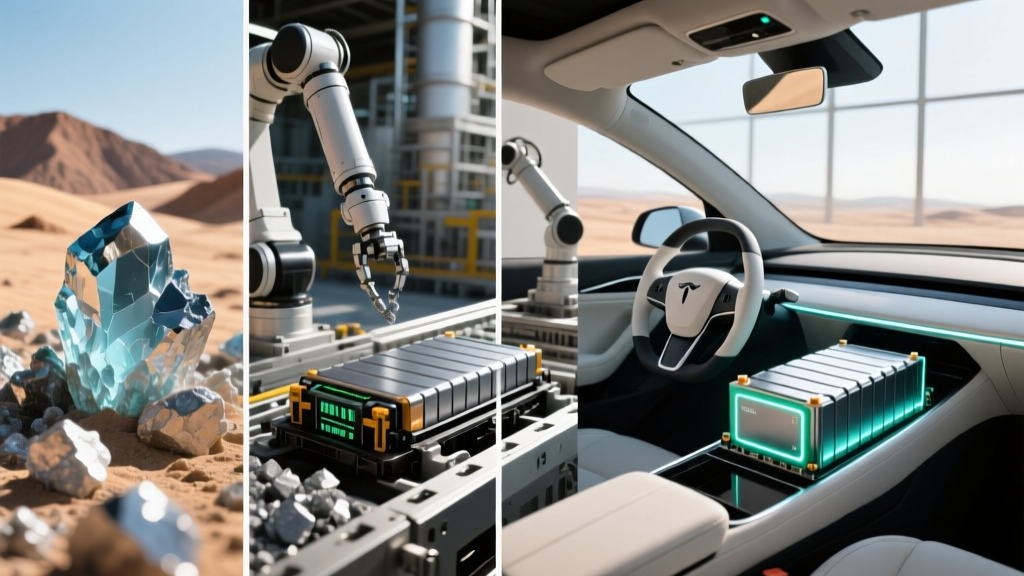
Every kilowatt-hour of EV battery capacity traces back to raw materials extracted from the earth. Lithium ore mining — primarily from hard-rock spodumene deposits in Australia and brine operations in Chile and Argentina — supplies the lithium carbonate or lithium hydroxide that ends up in cathodes of nearly every EV on the road in 2026. According to the U.S. Geological Survey, global lithium production exceeded 180,000 metric tons in 2024, with Australia leading hard-rock output and Chile dominating brine extraction.
For EV buyers, the mining origin matters for two reasons beyond environmental curiosity. First, the IRS §30D federal tax credit includes critical-mineral sourcing requirements: a percentage of battery minerals must be extracted or processed in the U.S. or a free-trade-agreement partner, or recycled domestically. Second, the type of lithium compound produced — and the cathode chemistry it enables — directly affects your vehicle's range, charging behavior, cold-weather performance, and long-term degradation. Understanding the path from mine to module helps you choose the right battery for your driving pattern.
LFP vs. NMC vs. NCA: Chemistry Trade-Offs Explained
Not all lithium-ion batteries are built the same. The cathode chemistry determines energy density, cycle life, thermal stability, and cost. In 2026, three chemistries dominate the U.S. EV market:
- LFP (Lithium Iron Phosphate): Used in standard-range Tesla Model 3 and Model Y, base Ford Mustang Mach-E Select, and several Chinese-market imports. No cobalt or nickel required.
- NMC (Nickel Manganese Cobalt): Found in most long-range and performance EVs — Hyundai Ioniq 5, Kia EV6, BMW iX, Ford F-150 Lightning Extended Range.
- NCA (Nickel Cobalt Aluminum): Primarily used by Tesla in long-range and performance trims, and by Rivian in the R1T and R1S dual-motor configurations.
| Attribute | LFP | NMC | NCA |
|---|---|---|---|
| Energy Density | ~160 Wh/kg (lower) | ~220–260 Wh/kg (higher) | ~250–280 Wh/kg (highest) |
| Typical Cycle Life | 3,000–5,000+ cycles | 1,000–2,000 cycles | 1,000–1,500 cycles |
| Cold Performance (below 32°F) | Moderate loss; preconditioning critical | Better low-temp discharge | Better low-temp discharge |
| Charging to 100% Daily | Recommended by manufacturers | Not recommended; 80% daily target | Not recommended; 80% daily target |
| Cost per kWh (pack-level, 2026 est.) | ~$95–$110 | ~$120–$145 | ~$125–$150 |
| Cobalt/Nickel Dependency | None | High nickel, some cobalt | High nickel, some cobalt |
| Thermal Runaway Risk | Lowest | Moderate | Moderate |
The practical takeaway: If you drive under 250 miles per day and can charge at home, an LFP pack offers superior longevity and the convenience of charging to 100% without degradation anxiety. If you need maximum range (300+ miles EPA) or regularly drive in sub-freezing climates, NMC or NCA chemistries deliver the energy density you need — with the trade-off of slightly faster degradation over a decade or more.
How Long Do EV Batteries Actually Last?
The most persistent myth in EV ownership is that batteries need frequent replacement. Real-world data from fleet operators, telematics studies, and manufacturer reports tell a different story.
Observed Degradation by Mileage (Industry Averages)
Based on aggregated telematics data from Recurrent Auto, Geotab fleet studies, and manufacturer warranty claim rates through 2025:
| Mileage | Average Capacity Retained (NMC/NCA) | Average Capacity Retained (LFP) |
|---|---|---|
| 30,000 mi | ~94–96% | ~97–98% |
| 60,000 mi | ~90–93% | ~95–97% |
| 100,000 mi | ~85–90% | ~92–95% |
| 150,000 mi | ~80–87% | ~88–93% |
| 200,000 mi | ~75–83% | ~85–90% |
These figures represent averages; individual results vary with climate, charging habits, and thermal management system quality. Vehicles with active liquid cooling (Tesla, Hyundai E-GMP platform, GM Ultium) generally outperform passively cooled packs.
At 15,000 miles per year, the average U.S. driver will accumulate 150,000 miles in a decade. Most modern NMC/NCA packs retain 80–87% capacity at that point — well above the 70% threshold that manufacturers use to define "end of useful life" under warranty. LFP packs, with their slower degradation curves, routinely exceed 90% retention at the same mileage. In practical terms, most EV batteries will outlast the vehicle's body, suspension, and interior before reaching a state where replacement is necessary.
Battery Warranty Terms: What's Covered and What Isn't
Federal law mandates that EV batteries carry a minimum warranty of 8 years or 100,000 miles (whichever comes first) in most states, with California Air Resources Board (CARB) states requiring 10 years/150,000 miles. Here's how major manufacturers structure their coverage in 2026:
| Manufacturer | Warranty Period | Capacity Retention Threshold | Notes |
|---|---|---|---|
| Tesla (Model 3/Y LFP) | 8 yr / 100,000 mi | 70% | 120,000 mi for Long Range/Performance (NCA) |
| Hyundai / Kia (E-GMP) | 10 yr / 100,000 mi | 70% | Transferable to second owner |
| GM (Ultium platform) | 8 yr / 100,000 mi | 70% | Covers module-level replacement |
| Ford (Mach-E, F-150 Lightning) | 8 yr / 100,000 mi | 70% | 150,000 mi for CARB states |
| Rivian (R1T/R1S) | 8 yr / 175,000 mi | 70% | Among the most generous mileage caps |
| BMW (iX, i4) | 8 yr / 100,000 mi | 70% | Includes battery management system |
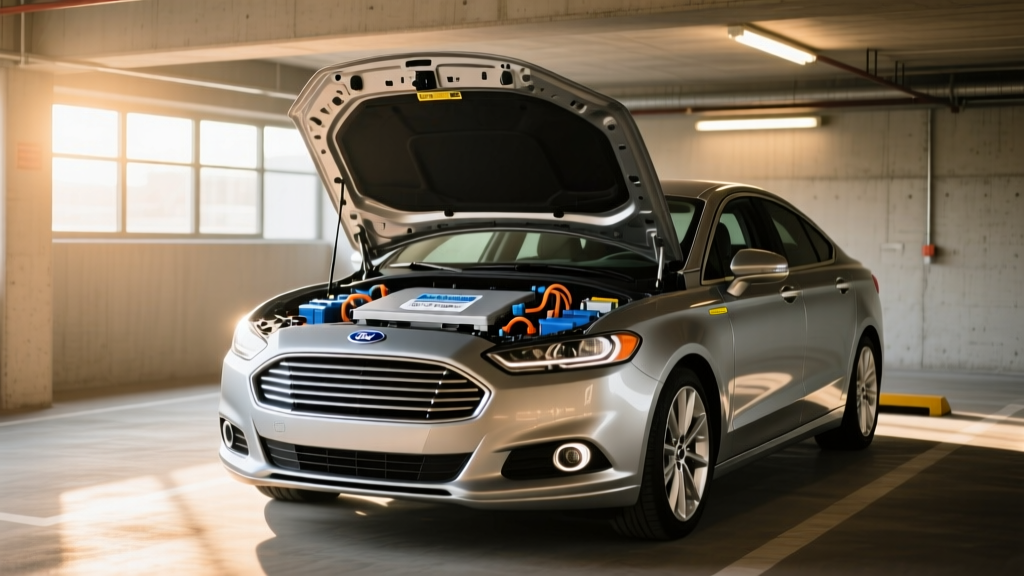
Critical fine print: Warranties cover defects and abnormal degradation — meaning your battery falls below the stated threshold during the warranty period. They do not cover damage from accidents, flooding, or aftermarket modifications. If your 2024 Ioniq 5 shows 88% capacity at 60,000 miles, that's normal degradation and not a warranty claim. If it drops to 68% at 50,000 miles due to a defective module, that's covered.
EV Battery Replacement Costs: When and How Much
Out-of-warranty battery replacement is the scenario that generates the most anxiety — and the most misleading headlines. Here are the actual numbers based on 2025–2026 service data and manufacturer parts pricing:
| Vehicle / Pack Size | Battery Chemistry | Replacement Cost (Parts + Labor) | Typical Replacement Trigger |
|---|---|---|---|
| Tesla Model 3 SR (60 kWh) | LFP | $10,000–$13,000 | Rarely needed before 250,000+ mi |
| Tesla Model Y LR (82 kWh) | NCA | $14,000–$18,000 | 200,000–300,000 mi in extreme use |
| Hyundai Ioniq 5 (77.4 kWh) | NMC | $14,000–$17,000 | 200,000+ mi projected |
| Ford F-150 Lightning Ext. (131 kWh) | NMC | $22,000–$28,000 | Large pack; module repair often possible |
| Chevy Bolt EV (65 kWh, older) | NMC | $14,000–$16,000 | Recall replacements handled by GM |
| BMW iX xDrive50 (111.5 kWh) | NMC | $20,000–$25,000 | Module-level service available |
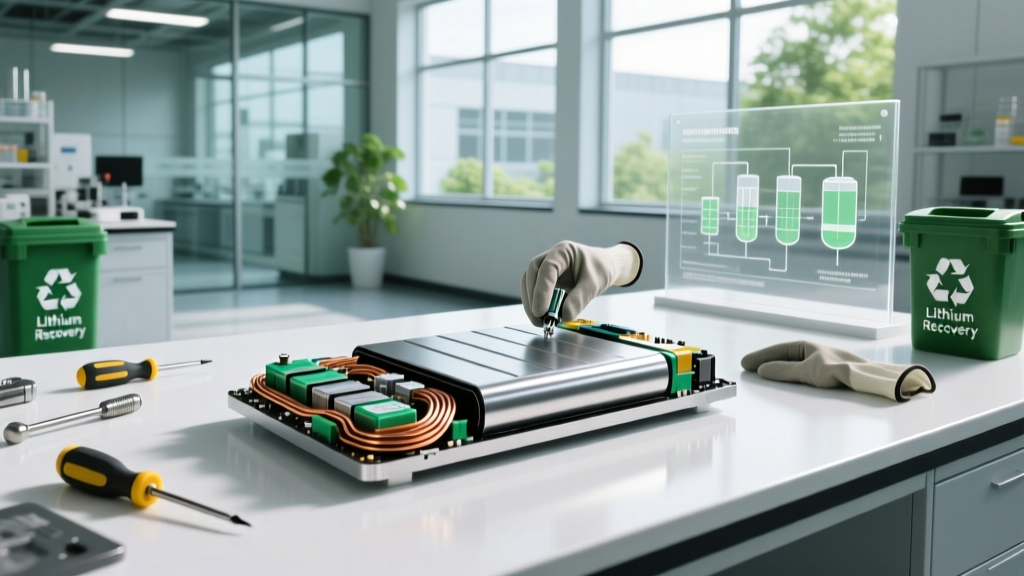
Several factors soften the sticker shock. First, most replacements involve individual modules, not the entire pack. On GM's Ultium platform and Hyundai's E-GMP architecture, technicians can swap a single degraded module for $2,000–$5,000 rather than replacing the full assembly. Second, the secondary market for refurbished EV batteries is growing — companies like Redwood Materials and Li-Cycle are building a recycling pipeline that will reduce replacement costs over time. Third, by the time a battery genuinely needs replacement at 200,000+ miles, most owners have already sold or traded the vehicle.
Factors That Accelerate (or Slow) Battery Degradation
Battery chemistry sets the ceiling, but your habits determine where your pack lands on the degradation curve. The five biggest factors, ranked by impact:
Battery Care Best Practices
- Avoid sustained high State of Charge (SoC): For NMC/NCA packs, set your daily charge limit to 80%. Only charge to 100% when you need the full range for a trip. LFP packs are the exception — Tesla and Ford recommend periodic 100% charges to recalibrate the BMS.
- Minimize DC fast charging when possible: Occasional road-trip fast charging (1–2 times per month) has negligible impact. Daily reliance on 150+ kW DCFC, especially without preconditioning, accelerates degradation by 1–3% over 100,000 miles compared to Level 2 home charging.
- Precondition before fast charging: Most modern EVs do this automatically when you navigate to a charger. A cold battery charged at high power suffers lithium plating — irreversible capacity loss. Ensure preconditioning is active, especially below 40°F.
- Park in shade or a garage in extreme heat: Sustained battery temperatures above 95°F accelerate electrolyte decomposition. If you live in Phoenix or Las Vegas, a garage with ambient cooling makes a measurable difference over 5+ years.
- Don't let SoC sit at 0% or 100% for extended periods: If you're leaving your EV for a week or more, aim for 50–60% SoC. The battery management system (BMS) draws a small parasitic load even when parked; a very low SoC risks the pack dropping below safe voltage thresholds.
Monitoring Your Battery's State of Health (SoH)
State of Health (SoH) is the percentage of your battery's original capacity that remains usable. A new EV starts at 100% SoH; a pack at 85% SoH holds 85% of its original kWh. Here's how to track it:
- In-vehicle displays: Tesla's app shows estimated range compared to when new. Hyundai/Kia's infotainment includes a battery health screen (Settings → EV → Battery) on 2024+ models. GM's Ultium vehicles display SoH through the myBrand app.
- OBD-II diagnostic tools: Devices like the OBDLink SX paired with apps such as EVNotify or ABRP (A Better Route Planner) can read the BMS-reported SoH directly. This is the most accurate consumer-accessible method.
- Dealer diagnostics: During scheduled service, dealerships can run a full capacity test. Request this if you're approaching a warranty threshold and suspect abnormal degradation.
- Third-party services: Companies like Recurrent Auto offer free battery health reports that compare your pack's degradation to a fleet of identical vehicles, giving you percentile context.
If your SoH drops more than 3–4% in a single year, investigate whether a software update, BMS recalibration, or module-level service is warranted. Normal annual degradation is 1–2% for NMC/NCA and 0.5–1.5% for LFP under typical use.
Emerging Battery Technologies: What's Next After 2026
The lithium-ion batteries in today's EVs represent a mature, well-understood technology. But the pipeline of next-generation chemistries is real — with important caveats about timelines and availability.
Solid-State Batteries
Solid-state cells replace the liquid electrolyte with a solid ceramic or polymer separator, promising higher energy density (potentially 350–400 Wh/kg at the cell level), faster charging, and improved safety. Toyota has announced a solid-state EV for 2027–2028, and Samsung SDI is targeting 2027 for mass production. However, manufacturing yield challenges and cost remain significant hurdles. No solid-state EV is currently available for purchase in the U.S. Expect initial deployments in limited, premium models before the technology reaches mainstream pricing.
Silicon Anode Technology
Companies like Sila Nanotechnologies and Group14 are replacing graphite anodes with silicon-dominant composites, boosting energy density by 15–25% without changing cathode chemistry. The Mercedes-Benz G-Class electric (2025) uses a Sila anode in its battery. This technology is closer to mass adoption than solid-state and will likely appear in more 2027–2028 model-year vehicles as production scales.
Sodium-Ion Batteries
Sodium-ion chemistry eliminates lithium entirely, using abundant sodium instead. CATL has begun producing sodium-ion packs for Chinese-market EVs, with energy densities around 140–160 Wh/kg — competitive with LFP but at lower material cost. U.S. availability is unlikely before 2028–2029, and initial applications will target budget city cars and energy storage rather than long-range vehicles.
All of these technologies still depend on the broader battery supply chain — including lithium ore mining for conventional lithium-ion packs that will remain dominant through at least 2030. The transition from mine to module is evolving, but for 2026 buyers, today's LFP and NMC/NCA chemistries are proven, well-warrantied, and more than adequate for a decade or more of driving.
Frequently Asked Questions
How long do EV batteries last in years and miles?
Most modern EV batteries retain 80–90% of their original capacity after 150,000 miles or 10 years of typical use. LFP packs tend to last longer — often exceeding 90% retention at 150,000 miles. Full replacement is rarely needed before 200,000 miles, and many packs will outlast the vehicle itself.
How much does an EV battery cost to replace?
Full pack replacement ranges from $10,000 for a 60 kWh LFP pack (Tesla Model 3 SR) to $28,000 for a 131 kWh NMC pack (Ford F-150 Lightning Extended Range). However, most out-of-warranty repairs involve individual module replacement at $2,000–$5,000, not the entire pack. Full replacement is uncommon before 200,000+ miles.
What does the EV battery warranty cover?
Federal law requires a minimum of 8 years/100,000 miles of battery coverage. The warranty guarantees that your battery will retain at least 70% of its original capacity during that period. If degradation falls below that threshold due to a defect or abnormal wear, the manufacturer will repair or replace the affected modules or pack at no cost. Damage from accidents, floods, or modifications is excluded.
How do I check and maximize my EV battery health?
Monitor State of Health (SoH) through your vehicle's app, an OBD-II scanner with EV-specific software, or a dealer diagnostic. To maximize longevity: charge NMC/NCA packs to 80% daily (LFP can go to 100%), minimize daily DC fast charging, precondition before fast charging in cold weather, avoid parking at extreme SoC levels for extended periods, and use a garage in hot climates.
LFP vs NMC — which battery chemistry is better?
Neither is universally better; it depends on your needs. LFP offers longer cycle life (3,000–5,000+ cycles vs. 1,000–2,000), lower cost, no cobalt dependency, and the ability to charge to 100% daily. Its trade-off is lower energy density, meaning less range in the same physical pack size. NMC delivers higher energy density for 300+ mile range and better cold-weather performance, but degrades slightly faster and should be held at 80% for daily use. If you need maximum range or live in a cold climate, choose NMC/NCA. If you prioritize longevity and charge mostly at home, LFP is the stronger choice.
Does lithium ore mining affect which EV I can buy or the tax credit I get?
Indirectly, yes. The IRS §30D tax credit requires that a growing percentage of critical minerals (including lithium) be sourced from the U.S. or FTA partners, or recycled domestically. This affects which vehicles qualify for the up-to-$7,500 credit. Sourcing rules tighten annually, and eligibility also depends on your income, the vehicle's MSRP cap ($55,000 for sedans, $80,000 for SUVs/trucks), and battery component manufacturing requirements. Consult a tax professional and check the latest IRS guidance before purchasing.