If you have spent any time researching electric vehicles online, you have likely encountered the term lithium leach field — a phrase that conjures images of discarded EV batteries oozing toxic chemicals into groundwater. The image is alarming. It is also almost entirely fabricated.
The term "lithium leach field" does not describe any recognized industrial process, EPA-classified waste site, or battery recycling method. It appears to be an internet-born phrase — sometimes used in bad-faith arguments against EV adoption — that conflates agricultural leach fields (used in septic systems) with imagined battery waste dumps. No such disposal method exists in the EV supply chain.
What does happen to EV batteries at end of life is far less sensational and far more engineered. But understanding the full lifecycle of an EV battery — from chemistry choice through years of degradation, warranty coverage, eventual replacement, and recycling — matters if you are making a purchase decision. This guide covers the real data.
The Chemistry Under the Hood: LFP vs NMC vs NCA
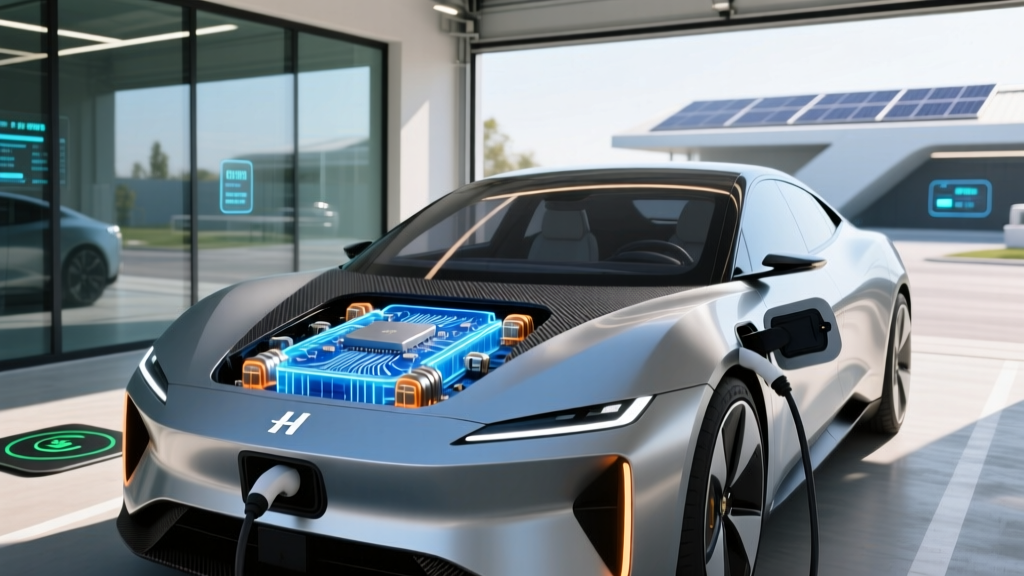
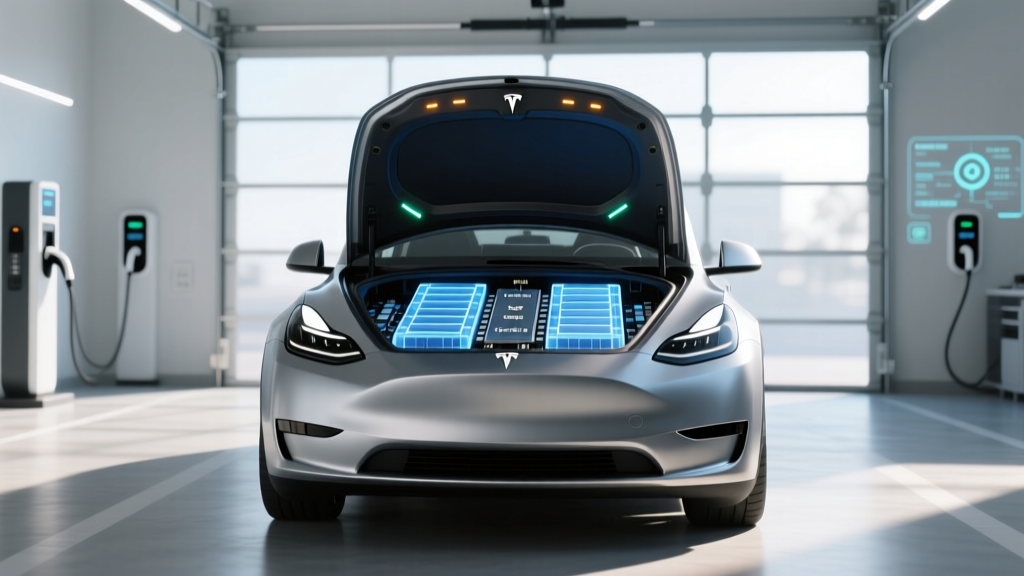
Not all EV batteries are the same. The two dominant lithium-ion chemistries in the 2026 US market are LFP (lithium iron phosphate) and NMC/NCA (nickel manganese cobalt / nickel cobalt aluminum). The chemistry your vehicle uses affects range, longevity, cold-weather behavior, and even how the battery should be cared for daily.
| Attribute | LFP (LiFePO₄) | NMC / NCA |
|---|---|---|
| Energy Density | Lower (~160–180 Wh/kg cell-level) | Higher (~230–280 Wh/kg cell-level) |
| Typical Vehicles | Tesla Model 3 RWD, Ford Mustang Mach-E Select (LFP option), BYD models | Tesla Model Y Long Range, Hyundai Ioniq 5, Rivian R1T, most AWD/Long Range trims |
| Cycle Life | 3,000–5,000+ cycles to 80% SoH | 1,000–2,000 cycles to 80% SoH |
| Cold-Weather Performance | Greater range loss below 32°F; slower cold charging | Better cold tolerance; preconditioning still critical |
| Recommended Daily Charge | 100% SoC is fine (and recommended periodically for BMS calibration) | 80% SoC for daily use; 100% only before trips |
| Cobalt Content | Zero cobalt | Contains cobalt and/or nickel |
| Relative Pack Cost | Lower ($100–$130/kWh pack-level, 2026 est.) | Higher ($130–$160/kWh pack-level, 2026 est.) |
| Thermal Stability | Excellent — higher thermal runaway threshold | Good — requires robust thermal management |
The practical takeaway: LFP is the longevity and cost champion, ideal for standard-range models and owners who plan to keep their vehicle for a decade or more. NMC/NCA delivers the range and cold-weather performance that long-distance drivers and cold-climate buyers prioritize. Neither chemistry is headed to a "leach field" — both are highly recyclable, as we will cover below.
How Long Do EV Batteries Actually Last?
The short answer based on fleet data: most modern EV batteries will outlast the usable life of the vehicle they are installed in. But "outlast" needs definition.
Battery degradation is measured as loss of total capacity relative to when the pack was new. A battery at 80% State of Health (SoH) still holds 80% of its original kWh — meaning an EPA-rated 300-mile vehicle would now deliver roughly 240 miles on a full charge. That is still functional transportation for most drivers, not a dead battery.
Typical Degradation Trajectory (NMC, liquid-cooled packs, 2020–2026 models):
- Year 1 / ~15,000 miles: 2–5% capacity loss (initial formation drop)
- Year 3 / ~45,000 miles: 6–9% total loss
- Year 5 / ~75,000 miles: 8–12% total loss
- Year 8 / ~120,000 miles: 10–15% total loss
- Year 10+ / 150,000+ miles: 12–20% total loss (varies widely by use pattern)
Sources: Geotab fleet data (10,000+ EVs tracked); Recurrent Auto battery health reports. LFP packs typically show slower mid-life degradation but may exhibit a steeper initial drop.
The key insight is that degradation is non-linear. Most capacity loss occurs in the first 12–24 months, then the curve flattens considerably. A battery that has lost 8% over three years is not on track to lose another 8% in the next three — it will typically lose far less.
Real-world examples from owner-reported data and fleet studies:
- Tesla Model 3/Y (NMC, 2021–2024): Average ~10% loss at 100,000 miles (Recurrent Auto data)
- Chevrolet Bolt EV/EUV (NMC, 2017–2023): ~8–12% loss at 80,000 miles; some early 2017 units recalled for fire risk, not degradation
- Hyundai Ioniq 5 (NMC, 2022–2025): Early owner reports show 3–5% loss at 30,000 miles — consistent with normal formation curve
- Tesla Model 3 RWD (LFP, 2022–2025): Very low degradation reported (~3–6% at 50,000 miles), consistent with LFP cycle-life advantage
What Does the Battery Warranty Actually Cover?
Federal law in the United States mandates that EV battery packs carry a minimum warranty of 8 years or 100,000 miles (whichever comes first). In California and states that have adopted CARB (California Air Resources Board) emissions standards, the mandate extends to 10 years or 150,000 miles. Most manufacturers meet or exceed these minimums.
| Manufacturer | Warranty Term | Capacity Retention Threshold | Notes |
|---|---|---|---|
| Tesla (Model 3/Y NMC) | 8 yr / 120,000 mi | 70% SoH | Long Range and Performance trims |
| Tesla (Model 3 RWD LFP) | 8 yr / 100,000 mi | 70% SoH | Standard Range |
| Hyundai / Kia (E-GMP) | 10 yr / 100,000 mi | 70% SoH | Ioniq 5, Ioniq 6, EV6, EV9 |
| Ford (Mach-E, F-150 Lightning) | 8 yr / 100,000 mi | 70% SoH | Extended range battery |
| Rivian (R1T, R1S) | 8 yr / 120,000 mi | 70% SoH | Max and Large packs |
| BMW (i4, iX, i7) | 8 yr / 100,000 mi | 70% SoH | Gen5 eDrive battery |
| Volkswagen (ID.4) | 8 yr / 100,000 mi | 70% SoH | NET battery system |
What triggers a warranty claim? If your battery's State of Health drops below the stated threshold (typically 70%) within the warranty period, the manufacturer must repair or replace the pack at no cost. Some OEMs replace individual modules rather than the full pack — a less expensive and less wasteful approach.
What is NOT covered: Damage from accidents, flooding, unauthorized modifications, or using the battery as a stationary power source (unless the vehicle supports V2H/V2L per manufacturer specs). Gradual degradation above the 70% threshold is considered normal wear and is not warrantable.
For full warranty details and consumer protections, refer to your vehicle's warranty booklet and the EPA's green vehicles guidance.
EV Battery Replacement: Cost, Frequency, and Reality
Here is where the "lithium leach field" fear-mongering usually peaks — the claim that EV owners will face catastrophic $20,000+ battery replacement bills. Let's look at what the numbers actually say.
| Vehicle | Pack Size (kWh usable) | New Pack Cost (parts + labor) | Refurbished Pack Cost | Typical Replacement Trigger |
|---|---|---|---|---|
| Tesla Model 3 RWD (LFP) | ~57 kWh | $10,000–$13,000 | $6,500–$9,000 | Rare before 200,000+ mi |
| Tesla Model Y Long Range | ~75 kWh | $13,000–$16,000 | $8,000–$11,000 | Rare before 180,000+ mi |
| Hyundai Ioniq 5 | ~77.4 kWh | $14,000–$18,000 | $9,000–$12,000 | Rare before 180,000+ mi |
| Ford F-150 Lightning Ext. Range | ~131 kWh | $22,000–$28,000 | $14,000–$18,000 | Rare before 150,000+ mi |
| Chevrolet Bolt EV | ~65 kWh | $13,000–$15,000 | $8,000–$10,000 | Some early units replaced under recall |
| Rivian R1T (Large Pack) | ~128 kWh | $20,000–$25,000 | $13,000–$17,000 | Rare before 150,000+ mi |
When is replacement typically needed? For the vast majority of EVs produced from 2020 onward, battery replacement is not a scheduled maintenance item. It becomes a consideration only if SoH drops below a usable threshold (roughly 60–65%) — which, based on current degradation data, would require 200,000+ miles for most NMC packs and 300,000+ miles for LFP. Many vehicles are totaled or retired for other mechanical reasons before the battery fails.
Module-level repair is increasingly common. Rather than replacing an entire pack, technicians can diagnose and swap individual modules (a pack contains 4–16+ modules depending on architecture). A single module replacement might cost $1,500–$4,000 — a fraction of a full pack swap.
Refurbished and remanufactured packs are a growing market. Companies like Redwood Materials and OEM-certified refurbishers offer packs at 40–60% of new-pack cost, often with their own warranties.
Five Factors That Determine Your Battery's Lifespan
Battery chemistry and warranty set the baseline. Your habits determine whether your pack lands on the high end or low end of the degradation range.
EV Battery Care: What Actually Matters
- Avoid sustained 100% SoC (NMC/NCA only): Daily charging to 80% significantly reduces calendar degradation. LFP owners can and should charge to 100% periodically for BMS calibration.
- Minimize DC fast charging as a daily routine: Occasional road-trip fast charging is fine. Daily 150+ kW sessions accelerate degradation by ~1–3% over the pack's life compared to Level 2 home charging. The charge curve taper above 80% exists partly to protect the battery — let it do its job.
- Precondition before fast charging in cold weather: Lithium-ion cells cannot accept high charge rates when cold. Navigation-based preconditioning (Tesla, Hyundai, Ford) warms the pack to ~95°F before you arrive at the charger, protecting the cells and enabling peak kW rates.
- Avoid prolonged storage at extreme SoC: If leaving your EV for weeks, set the charge limit to ~50% and plug in (the vehicle's thermal management will maintain the pack). Storing at 100% or near 0% for extended periods accelerates calendar aging.
- Park in shade or a garage when possible: Sustained high ambient temperatures (above 95°F for weeks) increase calendar degradation. This is why liquid-cooled packs (standard on nearly all 2022+ EVs) are superior to passively cooled packs (early Nissan Leaf).
How to Check Your Battery's State of Health (SoH)
State of Health is the single most important metric for EV battery longevity — and yet most vehicles make it surprisingly difficult to access. Here is how to find it:
In-vehicle displays:
- Tesla: The mobile app shows battery health percentage under "Battery Health" (added in 2024+ software updates). In-car, navigate to Service → Battery Health Test for a more accurate measurement.
- Hyundai/Kia (E-GMP): The infotainment system's EV menu includes a battery health estimate. Third-party OBD-II readers provide more precise data.
- Ford: The FordPass app displays battery health status (Good / Monitor / Replace) but not a precise percentage.
- BMW: The iDrive system provides a battery health indicator under the vehicle status menu.
OBD-II diagnostic tools (more precise):
Devices like the OBDLink SX paired with apps such as EVNotify or Car Scanner ELM OBD2 can read the BMS (Battery Management System) directly and report SoH as a percentage, along with individual cell voltages, pack temperature, and total energy throughput. These tools cost $30–$80 and are the gold standard for used-EV buyers who want independent verification.
Dealer diagnostics: Any authorized service center can run a full battery health report. Request this during routine service or before a warranty claim.
For used-EV buyers: Services like Recurrent offer battery health reports based on telematics data. Always request an SoH reading before purchase — a 2022 EV at 92% SoH has years of useful life remaining; one at 78% may approach warranty territory.
What Actually Happens to EV Batteries at End of Life
This is where the "lithium leach field" narrative completely falls apart. EV batteries do not go to landfills. They are too valuable.
Second-life applications: A battery at 70% SoH has lost 30% of its capacity — but it still stores a significant amount of energy. These packs are repurposed for stationary storage: solar energy buffering, grid peak-shaving, and backup power. Companies like Redwood Materials, BlueOval SK, and Li-Cycle actively source used EV packs for second-life deployment.
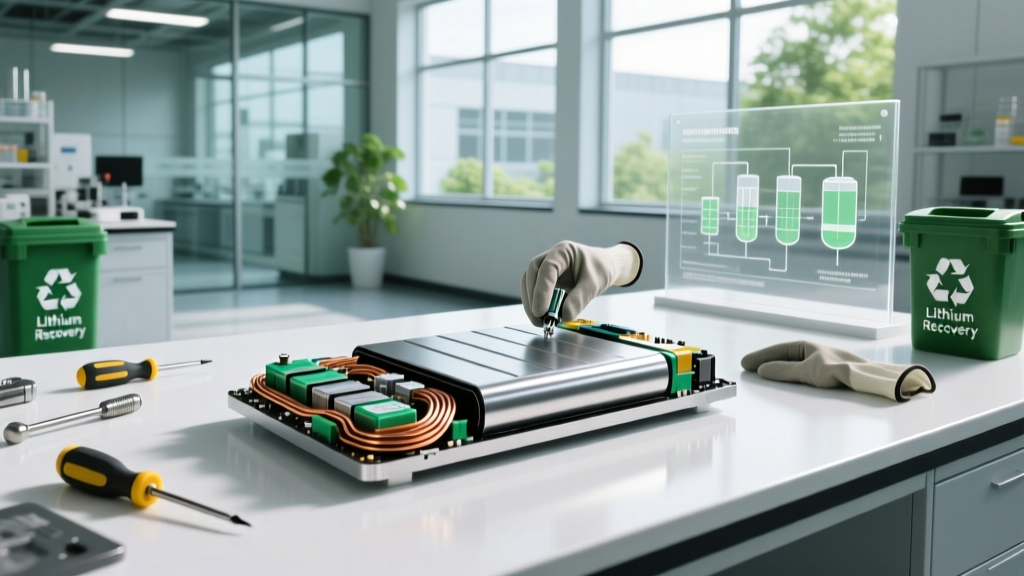
Recycling: When a pack is no longer viable for any application, modern recycling recovers 95%+ of critical minerals — lithium, cobalt, nickel, manganese, copper, and aluminum — through hydrometallurgical processes. Redwood Materials, operating at scale in Nevada, recovers enough material to feed directly back into new battery production. The US Department of Energy has invested over $3 billion in domestic battery recycling infrastructure since 2022.
The economics make landfilling irrational. A single 75 kWh NMC pack contains roughly $1,500–$3,000 worth of recoverable materials at 2026 commodity prices. No rational actor buries that value. The "lithium leach field" scenario would require an industry to voluntarily throw away money — something the market does not tolerate.
Emerging Battery Tech: What's Next (and When)
Current lithium-ion technology is mature and reliable. But the next generation is on the horizon — with realistic timelines that buyers should understand.
Solid-state batteries replace the liquid electrolyte with a solid material (ceramic, sulfide, or polymer), promising higher energy density (potentially 400+ Wh/kg cell-level), faster charging, and improved safety. Toyota has announced a solid-state EV for 2027–2028 with an estimated 600+ mile range. Samsung SDI targets 2027 for mass production. QuantumScape continues pilot production with VW-backed validation. However, solid-state remains announced and pre-production as of early 2026 — no consumer vehicle with a solid-state pack is currently on sale in the US.
Silicon-dominant anodes (replacing graphite) can increase energy density by 20–40%. Sila Nanotechnologies supplies silicon anode material to Mercedes-Benz for the G-Class electric (announced 2025, limited production). Group14 Technologies supplies Porsche and other OEMs. This technology is beginning to reach production vehicles but in limited, premium applications.
Sodium-ion batteries offer lower cost and zero lithium/cobalt dependency, with energy density suitable for city cars and light commercial vehicles. CATL has begun production in China. US-market availability is not expected before 2028–2029.
None of these technologies are available in a vehicle you can buy today. If you need an EV now, current LFP and NMC packs offer proven longevity backed by 8–10 year warranties and extensive fleet validation data.
Frequently Asked Questions
Is there such a thing as a "lithium leach field" for EV batteries?
No. The term "lithium leach field" does not correspond to any recognized battery disposal method, EPA waste classification, or industrial process. It appears to be a fabricated or misunderstood term that conflates septic leach fields with imagined battery waste dumps. EV batteries are recycled through hydrometallurgical and pyrometallurgical processes that recover 95%+ of critical minerals. No EV battery supply chain involves "leaching" batteries into the ground.
How long do EV batteries last in years and miles?
Based on fleet data from Geotab, Recurrent Auto, and OEM reports, modern liquid-cooled EV batteries (2020+) typically retain 80–88% of original capacity at 100,000 miles and 75–85% at 150,000 miles. In years, most will remain functional for 15–20 years under normal use. LFP chemistry extends this further, with cycle life rated at 3,000–5,000+ cycles. Full battery failure (below 60% SoH) before 200,000 miles is uncommon in properly maintained vehicles.
How much does it cost to replace an EV battery?
Out-of-warranty full pack replacement costs range from approximately $10,000–$16,000 for sedans and crossovers (57–80 kWh packs) to $20,000–$28,000 for large-pack trucks and SUVs (120–135 kWh). Refurbished packs cost 40–60% less. Module-level repairs (replacing a single faulty module) cost $1,500–$4,000. However, the vast majority of EVs never need a full pack replacement during their operational life, and the 8-year/100,000-mile federal warranty minimum covers premature degradation.
LFP vs NMC — which battery chemistry is better?
Neither is universally better; they serve different needs. Choose LFP if you prioritize maximum cycle life (3,000–5,000 cycles), lower cost, cobalt-free sourcing, and don't mind slightly reduced range and worse cold-weather performance. Choose NMC/NCA if you need maximum range per charge, better cold-weather efficiency, and faster cold-weather DC charging. LFP is ideal for daily commuting and warm climates; NMC is better for long-distance driving and cold regions.
Does frequent DC fast charging damage the battery?
Exclusive reliance on DC fast charging (150+ kW) as your primary charging method can accelerate degradation by approximately 1–3% over the pack's lifetime compared to primarily using Level 2 home charging. However, occasional fast charging on road trips has negligible impact. Modern battery management systems actively manage charge curves, tapering power above 80% SoC to protect cells. The real risk factor is heat — fast charging in hot weather without adequate preconditioning is more damaging than the charge rate itself.
How do I check my EV battery health before buying used?
Use an OBD-II diagnostic tool (such as OBDLink SX with EVNotify or Car Scanner app, $30–$80) to read the BMS-reported State of Health percentage. Alternatively, request a battery health report from the dealer's service department. Services like Recurrent provide battery health assessments based on connected vehicle data. Look for SoH above 85% on a 3–4 year old EV; anything below 75% may indicate heavy fast-charging use or thermal stress and should factor into pricing or trigger a warranty discussion.