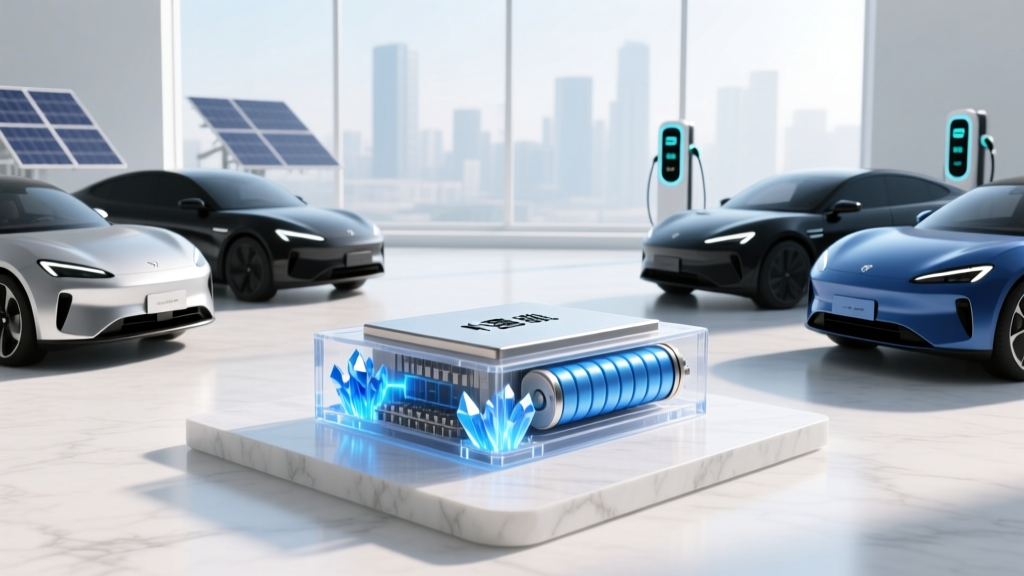
Why Arkansas Lithium Matters for Your Next EV
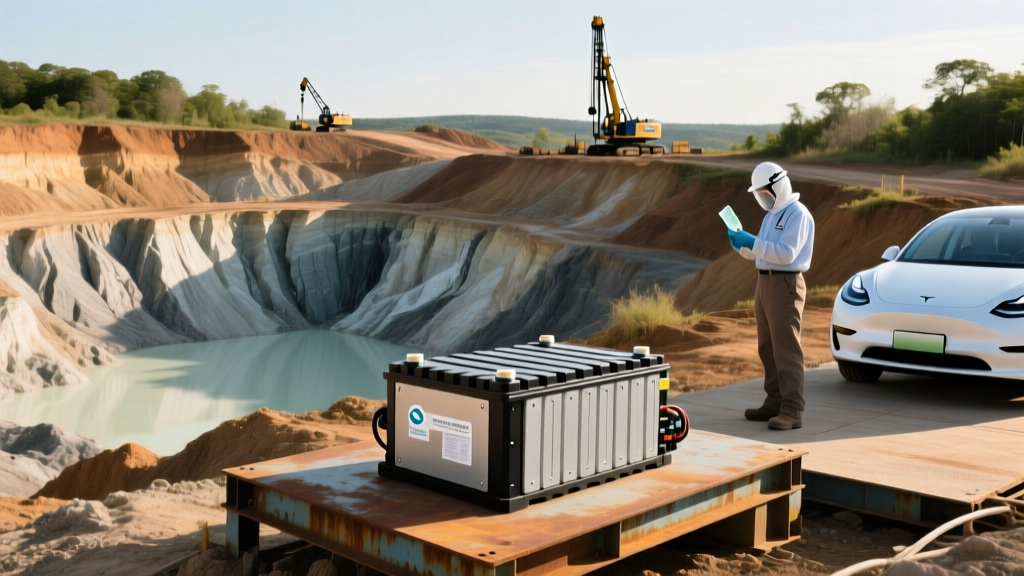
The conversation around EV battery longevity and cost increasingly hinges on where raw materials come from. Recent exploration of lithium mines in Arkansas — specifically lithium-rich brine deposits in the Smackover Formation spanning southern Arkansas and northern Louisiana — has drawn attention from automakers, battery manufacturers, and policymakers looking to onshore the EV supply chain. Companies like Standard Lithium and Albemarle have been advancing extraction projects in the region, with pilot-scale direct lithium extraction (DLE) operations demonstrating the feasibility of producing battery-grade lithium carbonate domestically.
For EV buyers, domestic lithium sourcing has direct implications. The federal §30D tax credit — currently up to $7,500 for qualifying new EVs — includes critical mineral and battery component sourcing requirements that tighten each year. Vehicles using lithium processed in or sourced from the U.S. or free-trade-agreement partners are more likely to qualify for the full credit. Arkansas lithium could help more EVs clear that bar.
But sourcing is only half the equation. Understanding what's inside your EV's battery pack, how it degrades, what it costs to replace, and how to maximize its lifespan is what actually protects your investment over 150,000+ miles of driving. This guide covers the chemistry, the data, and the ownership realities.
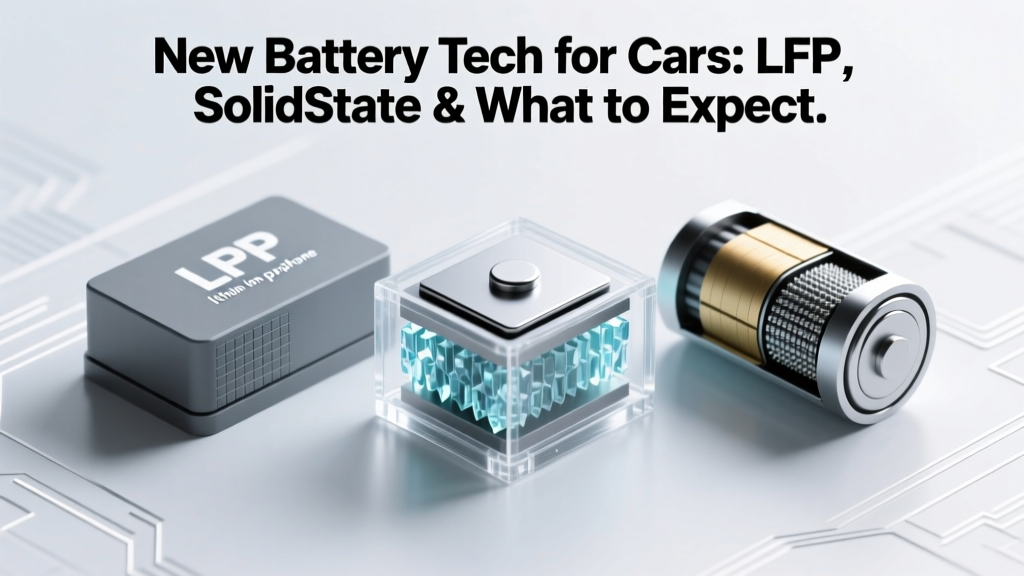
LFP vs NMC/NCA: Which Battery Chemistry Is in Your EV?
Most EVs sold in the U.S. in 2026 use one of two lithium-ion cathode chemistries: LFP (lithium iron phosphate) or NMC/NCA (nickel manganese cobalt / nickel cobalt aluminum). The choice affects range, longevity, cold-weather performance, and price.
| Attribute | LFP (LiFePO₄) | NMC / NCA |
|---|---|---|
| Energy Density | ~160–180 Wh/kg (lower) | ~220–300 Wh/kg (higher) |
| Typical Cycle Life | 3,000–5,000+ cycles | 1,000–2,000 cycles |
| Cold-Weather Performance | Moderate — more range loss below 32°F | Better low-temp discharge capability |
| Cost per kWh | ~$80–100/kWh (lower) | ~$110–140/kWh (higher) |
| Thermal Stability | Excellent — less prone to thermal runaway | Good but requires more active management |
| Recommended SoC for Daily Use | 100% OK (no calendar-aging penalty) | 80% preferred for daily; 100% for trips only |
| Cobalt/Nickel Content | None | Yes — supply chain and cost risk |
| Example 2026 Vehicles | Tesla Model 3 RWD, Ford Mustang Mach-E Select, Rivian Standard | Hyundai Ioniq 5 Long Range, BMW iX, Chevrolet Silverado EV |
Which is better? There's no universal winner. LFP excels for daily commuters who want maximum cycle life, lower cost, and the simplicity of charging to 100% without worry. NMC/NCA is the choice when you need maximum range per pound — longer road-trip capability, better cold-weather output, and smaller pack sizes for a given range target. Arkansas lithium, once processed into battery-grade carbonate or hydroxide, can feed into either chemistry, though DLE brine extraction is particularly well-suited for producing the lithium hydroxide needed by NMC cathodes.
How Long Do EV Batteries Actually Last?
The most persistent fear among prospective EV buyers is premature battery failure. Real-world data tells a more reassuring story.
Typical EV Battery Degradation — Real-World Data Points:
- Year 1 / 15,000 miles: 1–3% capacity loss (initial formation period)
- Year 3 / 45,000 miles: 4–7% total loss
- Year 5 / 75,000 miles: 6–10% total loss
- Year 8 / 120,000 miles: 8–15% total loss (most packs retain 85–92%)
- Year 10+ / 150,000+ miles: 10–20% total loss; packs with LFP chemistry often retain 88–94%
Sources: Recurrent Auto battery degradation reports (2024–2025 dataset), Geotab fleet study of 6,300+ EVs, manufacturer warranty claims data.
Degradation is not linear. Most packs lose capacity quickly in the first 12–18 months, then the curve flattens significantly. A pack that retains 93% at year 3 is statistically very likely to retain 87–90% at year 8. Full battery failure — where the pack needs complete replacement — is rare and typically tied to manufacturing defects caught under warranty, not gradual wear.
Several factors influence where you land on this curve:
- Fast-charging frequency: Exclusive DC fast charging (150+ kW) accelerates degradation by roughly 1–3% over 100,000 miles compared to predominantly Level 2 home charging. Occasional fast charging on road trips has negligible impact.
- Extreme temperatures: Sustained exposure to ambient temperatures above 95°F (common in Arizona, Texas) or frequent operation below 10°F without preconditioning increases calendar aging. Vehicles with active liquid thermal management — standard on most 2026 EVs — mitigate this substantially.
- State of charge habits: For NMC/NCA packs, routinely sitting at 100% SoC for days accelerates calendar degradation. LFP packs tolerate 100% storage far better. Letting any pack sit below 10% for extended periods risks cell imbalance.
- Depth of discharge: Shallow cycles (e.g., 30–70% daily) are easier on cells than full 0–100% cycles, though modern BMS (battery management systems) buffer the top and bottom to protect cells.
What Does the EV Battery Warranty Cover?
Federal law mandates a minimum battery warranty of 8 years / 100,000 miles for EVs sold in the U.S., and many manufacturers exceed this. Here's how major warranties compare for 2026 models:
| Manufacturer | Warranty Term | Capacity Retention Threshold | Notes |
|---|---|---|---|
| Tesla (Model 3/Y RWD — LFP) | 8 yr / 100,000 mi | 70% | Standard Range; Long Range gets 8yr/120,000 mi |
| Hyundai / Kia | 10 yr / 100,000 mi | 70% | Among the longest terms in the industry |
| GM (Ultium-based) | 8 yr / 100,000 mi | 70% | Covers battery and drive components |
| Ford (Mach-E, F-150 Lightning) | 8 yr / 100,000 mi | 70% | LFP and NMC packs covered equally |
| Rivian | 8 yr / 120,000 mi (Standard); 8 yr / 175,000 mi (Max) | 70% | Higher mile limit on Max pack |
| BMW (i4, iX) | 8 yr / 100,000 mi | 70% | Includes battery cooling system |
The key metric is the capacity retention threshold — typically 70% of original capacity. If your battery drops below this within the warranty period, the manufacturer must repair or replace it at no cost. In practice, very few packs fall below 70% within the warranty window based on current degradation data. The warranty protects against outlier failures, not typical wear.
Important caveat: warranties cover defects and abnormal degradation, not damage from accidents, flooding, or unauthorized modifications. Always review the specific warranty language in your purchase agreement.
How Much Does an EV Battery Replacement Cost?
If a battery does need replacement — typically well beyond the warranty period, at 150,000–200,000+ miles — costs vary significantly by pack size and chemistry:
| Vehicle Category | Pack Size (kWh) | Chemistry | Replacement Cost (Parts + Labor) |
|---|---|---|---|
| Compact EV (e.g., Chevy Bolt, Nissan Leaf successor) | 60–65 kWh | NMC | $8,000–$12,000 |
| Mid-size sedan/SUV (e.g., Tesla Model 3, Ioniq 5) | 72–84 kWh | LFP or NMC | $10,000–$16,000 |
| Large SUV/Truck (e.g., F-150 Lightning, Rivian R1S) | 100–135 kWh | NMC | $15,000–$25,000 |
| Luxury/Performance (e.g., BMW iX, Mercedes EQS) | 100–120 kWh | NMC | $18,000–$30,000 |
These figures include the battery pack and dealer/installer labor but can fluctuate based on parts availability. Several trends are working in owners' favor:
- Pack-level costs continue declining. BloombergNEF reports average pack prices fell below $120/kWh in 2025, with LFP packs dipping under $90/kWh at scale. By the time most current EVs need replacement (2035–2040), replacement packs will likely cost significantly less than today's estimates.
- Module-level repair is increasingly viable. Many packs allow individual module replacement rather than full-pack swaps, reducing costs to $2,000–$6,000 for a single failed module.
- Aftermarket and refurbished packs are emerging as an option for older vehicles, similar to how remanufactured engines serve the ICE market.
The realistic takeaway: most EV batteries will outlast the vehicle's economic life. Battery replacement is a distant possibility, not an imminent ownership crisis. For context, the average age of vehicles scrapped in the U.S. is roughly 15 years — a timeframe most current EV packs should reach with 80%+ capacity remaining.
How to Check and Maximize Your Battery's Health
Modern EVs provide several ways to monitor State of Health (SoH) — the percentage of original battery capacity remaining:
Battery Health Monitoring:
- In-car display: Most 2026 EVs show estimated range and some display a SoH percentage or bar graph in the settings menu. Tesla, Hyundai, and BMW include battery health readouts.
- OBD-II dongles and apps: Tools like Recurrent, OBDeleven, or manufacturer-specific apps (e.g., Tesla's service mode) can pull detailed SoH data, cell voltage variance, and cycle counts from the BMS.
- Dealer diagnostics: A service center can run a full battery health report showing capacity retention, internal resistance, and module balance — useful before buying a used EV.
- Range tracking: The simplest method — track your EPA-rated range vs. actual range at a consistent SoC over time. A 310-mile EPA vehicle consistently delivering 270 miles at 100% SoC (vs. 290 miles when new) suggests ~7% degradation.
Best practices to maximize battery lifespan:
- Default to Level 2 home charging. A 240V / 32–48A home charger (7.7–11.5 kW) is the ideal daily charging method. Reserve DC fast charging for road trips.
- Set charge limits appropriately. For NMC/NCA: 80% daily, 100% only before long trips. For LFP: 100% daily is fine and actually recommended periodically for BMS calibration.
- Precondition in extreme temperatures. Use scheduled departure or preconditioning features to warm or cool the battery while plugged in before driving. This reduces stress on cells and improves regen braking effectiveness.
- Avoid prolonged storage at extremes. If storing an EV for weeks, leave it at ~50% SoC in a temperate environment. Don't leave it at 100% or below 10% for extended periods.
- Minimize repeated deep discharges. Occasional runs to 5–10% are fine, but daily 0–100% cycles accelerate wear, especially on NMC packs.
The Arkansas Connection: Domestic Lithium and Battery Supply Chains
The Smackover Formation in southern Arkansas contains some of the highest lithium concentrations found in U.S. brine deposits — reportedly 200–400+ mg/L in certain zones, comparable to productive brine operations in South America. What makes Arkansas particularly interesting is the existing infrastructure: the region has decades of oil, gas, and bromine extraction operations, meaning wells, pipelines, processing expertise, and regulatory frameworks are already in place.
Direct Lithium Extraction (DLE) — the technology being deployed by companies like Standard Lithium in partnership with Equinor — uses selective sorbents or membranes to pull lithium from brine without the massive evaporation ponds used in Chile or Argentina. DLE promises higher recovery rates (reportedly 70–90% vs. 40–50% for evaporation), a smaller land footprint, and faster production timelines.
If Arkansas DLE projects reach commercial scale — expected in the late 2020s based on current timelines — they could supply a meaningful share of U.S. battery-grade lithium demand. For EV buyers, this matters in two concrete ways:
- Tax credit eligibility. As §30D critical-mineral requirements tighten (the percentage of U.S.-sourced or FTA-partner-sourced critical minerals increases annually), domestically extracted lithium helps more vehicles qualify. Check IRS.gov for the latest qualifying vehicle list, as it updates regularly.
- Supply chain resilience and pricing. More domestic supply reduces exposure to processing bottlenecks concentrated in China, potentially stabilizing or reducing battery pack costs over the next decade.
It's worth noting that lithium mining — even DLE — carries environmental considerations, including water usage, subsurface impacts, and energy consumption for processing. Arkansas projects are subject to state and federal environmental review, and DLE proponents argue the technology's closed-loop design minimizes these concerns compared to hard-rock mining or evaporation ponds.
What's Next: Solid-State, Silicon Anodes, and Beyond
While current lithium-ion batteries (LFP and NMC) will dominate EV production through at least 2030, several next-generation technologies are advancing:
- Silicon-dominant anodes: Companies like Sila Nanotechnologies and Group14 are replacing graphite anodes with silicon composites, increasing energy density by 20–40%. Some are already in limited production for consumer electronics and are expected to appear in EVs by 2027–2028. This doesn't change the cathode chemistry (LFP or NMC) but increases how much energy each cell stores.
- Solid-state batteries: These replace the liquid electrolyte with a solid conductor, promising higher energy density (~350–500 Wh/kg), faster charging, and improved safety. Toyota, Samsung SDI, and QuantumScape have announced pilot production, but commercial EV-scale volumes remain in the 2028–2032 window based on current roadmaps. Expect initial deployment in premium/luxury vehicles before reaching mainstream pricing.
- Sodium-ion batteries: CATL and other manufacturers are producing sodium-ion packs for lower-cost, shorter-range EVs. These use no lithium at all, trading energy density (~120–160 Wh/kg) for lower material cost and better cold-weather performance. Likely applications include urban commuter vehicles and stationary storage — not long-range SUVs.
None of these technologies are available in production EVs as of 2026. They represent the forward-looking pipeline, and their timelines should be treated as estimates subject to manufacturing scale-up challenges. Current LFP and NMC packs remain the practical choice, and their cost trajectory continues downward.
Frequently Asked Questions
How long do EV batteries last in years and miles?
Based on fleet data from thousands of vehicles, most EV batteries retain 85–92% of original capacity at 8 years / 120,000 miles, and 80–90% at 10+ years / 150,000+ miles. LFP chemistry packs tend to degrade more slowly than NMC. Full battery replacement before 200,000 miles is uncommon.
How much does it cost to replace an EV battery?
Replacement costs range from roughly $8,000 for a compact EV pack (60 kWh) to $25,000+ for a large truck/SUV pack (130+ kWh), including labor. However, most batteries outlast the vehicle's economic life, and pack prices continue declining. Module-level repairs can cost $2,000–$6,000 when only a portion of the pack has failed.
What does the EV battery warranty actually cover?
Federal law requires a minimum 8-year/100,000-mile warranty. Most manufacturers guarantee the battery will retain at least 70% of original capacity within that period. If it drops below the threshold, the manufacturer repairs or replaces it at no cost. Hyundai and Kia extend this to 10 years. Warranties cover defects and abnormal degradation, not accident damage or unauthorized modifications.
How do I check my EV battery's State of Health?
Check your vehicle's settings menu for a battery health readout, use an OBD-II diagnostic tool or app (Recurrent, OBDeleven) to pull detailed SoH data, or have a dealer run a full battery report. The simplest method is tracking your real-world range at a consistent state of charge over time and comparing it to the vehicle's original performance.
Is LFP or NMC better for my EV?
LFP offers longer cycle life (3,000–5,000 cycles), lower cost, better thermal safety, and the convenience of daily 100% charging — ideal for commuters and daily drivers. NMC provides higher energy density (more range in a lighter, smaller pack) and better cold-weather performance — better for road-trip-heavy drivers and cold climates. Neither is universally superior; the right choice depends on your driving pattern.
Will Arkansas lithium mining lower EV prices?
Domestic lithium production could help stabilize battery material costs and improve §30D tax credit eligibility for U.S.-market EVs. However, battery pricing depends on many factors beyond raw lithium — including cathode processing, cell manufacturing, and global demand. Expect Arkansas lithium to contribute to supply chain resilience rather than dramatic near-term price cuts.
Does frequent DC fast charging damage my battery?
Exclusive reliance on DC fast charging (150+ kW) can accelerate degradation by roughly 1–3% over 100,000 miles compared to primarily Level 2 charging. Occasional fast charging on road trips has negligible impact. The biggest risk factors are sustained high temperatures during charging and repeated charging to 100% at high power — both of which modern thermal management systems actively mitigate.
For the latest EV battery data, consult fueleconomy.gov for EPA range and efficiency ratings, and check IRS.gov for current §30D tax credit eligibility rules and qualifying vehicle lists.