Why EV Buyers Are Researching Battery Tech (and Stocks Like Freyr)
The search for "Freyr battery stock" reflects a broader trend: as electric vehicles mature, buyers and investors alike are scrutinizing what powers them. Freyr Battery, a Norwegian-American company focused on sustainable battery production, represents one piece of a rapidly evolving supply chain. But for the person actually shopping for a 2026 EV — or trying to understand whether their current pack will last — stock tickers matter far less than chemistry, degradation curves, and warranty fine print.
This guide cuts through the investment noise to deliver the technical and practical battery knowledge every EV owner or buyer needs. We cover exact figures: kWh capacities, degradation percentages, warranty thresholds, replacement costs, and the chemistry trade-offs that determine how your EV performs in January versus July.
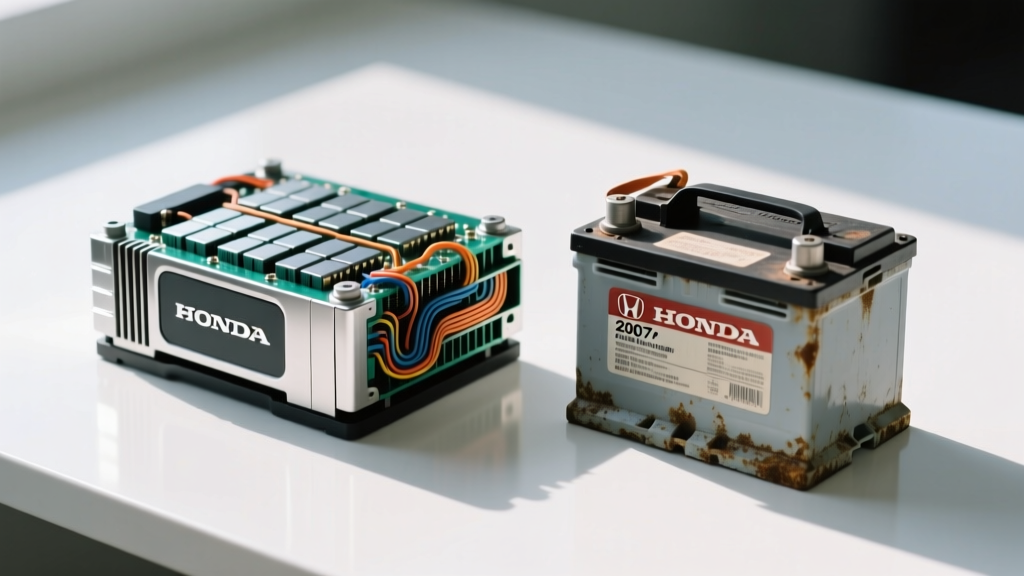
LFP vs NMC/NCA: The Chemistry Decision That Shapes Your EV
Every EV battery uses a specific cathode chemistry, and in 2026, two families dominate the US market:
- NMC (Nickel Manganese Cobalt) / NCA (Nickel Cobalt Aluminum): Higher energy density, better cold-weather performance, and the chemistry behind most long-range models (Tesla Model 3 Long Range, Hyundai Ioniq 5, Ford Mustang Mach-E Extended Range).
- LFP (Lithium Iron Phosphate): Lower energy density but significantly longer cycle life, lower cost, and no cobalt or nickel. Found in the Tesla Model 3 RWD, Model Y Standard Range, and several entry-level EVs from Chinese manufacturers entering global markets.
| Attribute | NMC / NCA | LFP |
|---|---|---|
| Energy Density | 220–300 Wh/kg (cell-level) | 150–200 Wh/kg (cell-level) |
| Typical Cycle Life | 1,000–2,000 full cycles | 3,000–5,000+ full cycles |
| Cold-Weather Performance | Better — retains ~80–85% range at 20°F | Weaker — retains ~70–75% range at 20°F without preconditioning |
| Cost (per kWh, 2026) | ~$110–$130 | ~$75–$95 |
| Recommended Charge Habit | Daily to 80%; 100% for trips only | Can charge to 100% daily; periodic full charges help BMS calibration |
| Thermal Stability | Good — requires active thermal management | Excellent — inherently more stable |
| Common 2026 Vehicles | Tesla Model 3 LR, Ioniq 5, Mach-E ER, Rivian R1T | Tesla Model 3 RWD, Model Y SR, BYD Atto 3 (non-US) |
Which is better? It depends on your use case. If you prioritize maximum range per charge and live in a cold climate, NMC/NCA is the stronger choice. If you want a lower-cost EV you can charge to 100% every night without accelerated degradation, LFP offers compelling longevity — at the cost of some range and winter performance. Neither is universally superior; the right answer is the one matched to your driving pattern.
How Long Do EV Batteries Actually Last? Degradation Data
The fear that EV batteries need replacement every few years is not supported by fleet data. Here's what real-world degradation looks like across major platforms:
| Vehicle / Platform | Battery Chemistry | Mileage | Avg. Capacity Retention | Source |
|---|---|---|---|---|
| Tesla Model 3 / Model Y (NMC) | NMC | 100,000 mi | ~88–90% | Tesla Impact Report 2024, Recurrent Auto |
| Tesla Model 3 RWD (LFP) | LFP | 100,000 mi | ~92–95% | Recurrent Auto fleet data |
| Nissan Leaf (early gen, passive cooling) | NMC | 100,000 mi | ~75–82% | Owner surveys, Plug In America |
| Hyundai/Kia E-GMP (Ioniq 5, EV6) | NMC | 80,000 mi | ~90–93% | Manufacturer data, fleet reports |
| Chevrolet Bolt EV/EUV | NMC | 80,000 mi | ~91–94% | Recurrent Auto |
Key takeaway: Modern liquid-cooled battery packs (which virtually all 2026 EVs use) typically lose 8–12% of original capacity over 100,000 miles. The exception is older designs with passive air cooling (early Nissan Leaf), which degraded faster. The industry consensus, backed by fueleconomy.gov data and fleet aggregators like Recurrent Auto, is that a well-managed pack should deliver 150,000–200,000+ miles before capacity falls below 80%.
What the Battery Warranty Actually Covers
Federal law mandates a minimum battery warranty of 8 years / 100,000 miles for EVs sold in the US (10 years / 150,000 miles in California and states adopting CARB standards). But the details matter:
| Manufacturer | Warranty Term | Capacity Threshold | What Triggers a Claim |
|---|---|---|---|
| Tesla | 8 yr / 100,000–120,000 mi (varies by model) | 70% retention | SoH drops below 70% during warranty period |
| Hyundai / Kia | 10 yr / 100,000 mi | 70% retention | Capacity below 70% as measured by dealer diagnostic |
| Ford | 8 yr / 100,000 mi | 70% retention | SoH below 70% confirmed by Ford diagnostic tool |
| GM (Chevrolet, Cadillac) | 8 yr / 100,000 mi | 70% retention | Capacity below 70% |
| Rivian | 8 yr / 175,000 mi | 70% retention | SoH below 70% |
Critical nuance: The warranty covers capacity degradation below the threshold, not gradual range loss that stays above 70%. If your 300-mile EPA-rated EV drops to 225 miles (75% retention), you have lost noticeable range but have no warranty claim. Most degradation occurs in the first 20,000–30,000 miles (the "break-in" period), after which the curve flattens significantly.
EV Battery Replacement Cost: What It Actually Takes
Battery replacement is the single biggest fear for prospective EV owners. Here's the reality with 2026 pricing:
| Vehicle | Battery Size (usable kWh) | Estimated Replacement Cost (2026) | When Typically Needed |
|---|---|---|---|
| Tesla Model 3 RWD (LFP) | 57 kWh | $8,000–$11,000 | Rarely before 200,000+ mi |
| Tesla Model Y Long Range | 75 kWh | $12,000–$16,000 | Rarely before 200,000+ mi |
| Hyundai Ioniq 5 | 72.6 kWh | $11,000–$15,000 | Rarely before 180,000+ mi |
| Ford Mustang Mach-E ER | 88 kWh | $14,000–$19,000 | Rarely before 180,000+ mi |
| Rivian R1T / R1S (Large Pack) | 128 kWh | $18,000–$25,000 | Rarely before 175,000+ mi |
| Chevrolet Silverado EV | 200 kWh | $28,000–$38,000 | Too new for data; projected 200,000+ mi |
These figures include the battery pack and labor but can vary by region, dealer vs. independent shop, and whether a refurbished pack is available. The important context: the vast majority of EVs are retired, sold, or totaled before their battery needs replacement. Out-of-warranty failures in the first 150,000 miles are statistically uncommon in liquid-cooled packs. According to data aggregated by Recurrent Auto, fewer than 2% of EVs in their studied fleet required a full battery replacement — and most of those were covered under warranty.
Factors That Accelerate (or Protect) Battery Life
Not all miles are equal when it comes to battery wear. These factors have the most measurable impact on long-term State of Health (SoH):
What Hurts Your Battery
- Frequent DC fast charging above 150 kW: Occasional road-trip fast charging is fine, but daily use of 250–350 kW chargers accelerates degradation by an estimated 2–4% over 100,000 miles compared to Level 2 charging. The heat generated at high C-rates stresses cell chemistry.
- Sustained high State of Charge (NMC/NCA): Storing an NMC battery at 100% SoC for days or weeks — especially in hot climates — accelerates calendar aging. Charge to 80% for daily use.
- Extreme heat exposure: Parking in direct sun in 100°F+ climates without thermal management active degrades cells faster. Garage parking or preconditioning helps.
- Deep discharges to 0%: Regularly running the battery to near-empty stresses cells. Most EVs have a buffer (typically 2–5 kWh below the displayed 0%), but habitually arriving at 0% is unnecessary wear.
- High-performance driving in heat: Repeated hard acceleration and sustained high-speed driving generates internal cell heat that compounds degradation.
What Protects Your Battery
- Level 2 home charging (7–11 kW): The gentlest charging method. Overnight home charging at 240V is the gold standard for battery longevity.
- Moderate SoC range (20–80% for NMC; 0–100% acceptable for LFP): Matching your charge habit to your chemistry matters.
- Preconditioning before fast charging: Most 2026 EVs automatically warm or cool the battery when you navigate to a DC fast charger. This optimizes the charge curve and reduces stress.
- Thermal management system maintenance: Ensure coolant loops are serviced per the manufacturer's schedule (typically every 4–5 years or 60,000 miles).
- Software updates: OEMs periodically refine battery management algorithms. Keep your vehicle's firmware current.
Monitoring Battery Health: How to Check Your SoH
State of Health (SoH) is the percentage of original battery capacity remaining. A new EV starts at 100% SoH; a pack at 85% SoH holds 85% of its original kWh.
How to check SoH in 2026:
- In-vehicle displays: Tesla, Hyundai, Kia, and BMW now include battery health indicators in their infotainment or app dashboards. Tesla's app shows estimated range at 100% SoC, from which you can calculate SoH against the original EPA figure.
- OBD-II dongles + apps: Tools like OBDeleven (for VW/Hyundai/Kia) or third-party apps reading CAN bus data can pull SoH directly from the BMS (Battery Management System).
- Dealer diagnostics: Any authorized service center can run a full battery health report. Request this before purchasing a used EV.
- Third-party services: Companies like Recurrent Auto offer battery health reports based on connected-car data, often available free to owners who share telematics.
Rule of thumb: If you're buying a used EV that is 3–5 years old with 50,000–80,000 miles, expect SoH between 88–94% for a liquid-cooled pack. Anything below 85% at that mileage warrants a closer look and may indicate abusive charging habits or a defective module.
Emerging Battery Tech: Solid-State, Silicon Anodes, and Realistic Timelines
Investors tracking companies like Freyr Battery are often betting on next-generation chemistries. Here's where the technology actually stands as of 2026:
- Solid-state batteries: Toyota has announced limited production of solid-state-equipped vehicles for 2027–2028, targeting 750+ km (WLTP) range and 10-minute fast charging. Samsung SDI and QuantumScape are in pilot production. However, solid-state packs remain significantly more expensive than liquid lithium-ion and are expected to debut in premium/limited models before reaching mainstream pricing. Realistic mass-market timeline: 2029–2032.
- Silicon-dominant anodes: Companies like Sila Nanotechnologies and Group14 are supplying silicon-carbon anode materials that boost energy density by 15–25% over graphite. These are entering production in 2026–2027 model-year vehicles (notably in Mercedes-Benz and select GM platforms). This is an incremental but meaningful improvement, not a revolution.
- Sodium-ion batteries: CATL and BYD are producing sodium-ion packs for low-cost, short-range EVs in China. Energy density is roughly 40% lower than NMC, making them unsuitable for long-range US vehicles but viable for urban runabouts. US availability is not expected before 2028.
- LFP improvements: LFP energy density has climbed from ~160 Wh/kg (2022) to ~200 Wh/kg (2026), narrowing the gap with NMC and making LFP viable for mid-range vehicles that previously required nickel-based chemistry.
For buyers: none of these technologies should cause you to delay a 2026 EV purchase. Current lithium-ion packs are mature, well-warranted, and cost-competitive. The next major leap (solid-state) is still 3–5+ years from broad availability at mainstream price points.
Investing in Batteries vs. Owning an EV: Different Calculations
If your interest in "Freyr battery stock" is investment-driven, understand that battery cell manufacturing is a capital-intensive, low-margin business where scale and supply-chain positioning determine winners. Freyr's Giga Arctic facility in Norway and planned US production aim to serve both EV and energy-storage markets. But stock performance in the battery sector has been volatile — companies like NorthVolt have faced financial distress despite strong technology.
For the EV buyer, the practical calculus is simpler: choose a vehicle with the right chemistry for your climate and driving pattern, charge primarily on Level 2, avoid obsessive fast-charging, and trust the warranty. The battery will very likely outlast your ownership of the car.
How long do EV batteries last in years and miles?
Modern liquid-cooled EV batteries (2020 and newer) typically last 150,000–200,000+ miles before falling below 80% capacity. In years, that translates to 12–18 years at average US driving rates (~13,500 miles/year). LFP packs often exceed 200,000 miles with minimal degradation.
How much does an EV battery cost to replace?
Replacement costs range from ~$8,000 for a smaller LFP pack (Tesla Model 3 RWD) to $25,000–$38,000 for large packs (Rivian, Chevrolet Silverado EV). However, full replacements are rare — fewer than 2% of EVs require one, and most failures occur within the warranty period.
What does the battery warranty cover?
Federal minimum is 8 years / 100,000 miles (10/150,000 in CARB states). Warranties cover capacity loss below a threshold — typically 70% of original capacity. If your battery retains 72% at year 7, you have no claim despite noticeable range loss. Check your specific manufacturer's terms, as mileage limits vary (Rivian covers 175,000 miles; Hyundai covers 10 years).
How do I check and maximize my battery's health?
Check SoH via your vehicle's app, an OBD-II diagnostic tool, or a dealer service visit. Maximize longevity by charging primarily on Level 2, keeping NMC packs between 20–80% for daily use (LFP can go to 100%), minimizing frequent 250+ kW DC fast charging, preconditioning before fast charges, and avoiding prolonged storage at 100% or 0% SoC.
LFP vs NMC — which battery chemistry is better?
Neither is universally better. NMC/NCA offers higher energy density (more range per kWh) and better cold-weather performance, making it ideal for long-range and cold-climate drivers. LFP offers longer cycle life (3,000–5,000+ cycles vs. 1,000–2,000), lower cost, and the ability to charge to 100% daily without accelerated wear — ideal for commuters and warm-climate drivers who prioritize longevity over maximum range.
Should I wait for solid-state batteries before buying an EV?
No. Solid-state batteries are not expected in mainstream, affordable EVs until 2029–2032 at the earliest. Current lithium-ion packs are mature, well-understood, backed by strong warranties, and offer 250–400+ miles of range. Waiting 3–6 years for next-gen tech means missing years of fuel savings, available tax credits, and a maturing charging network.