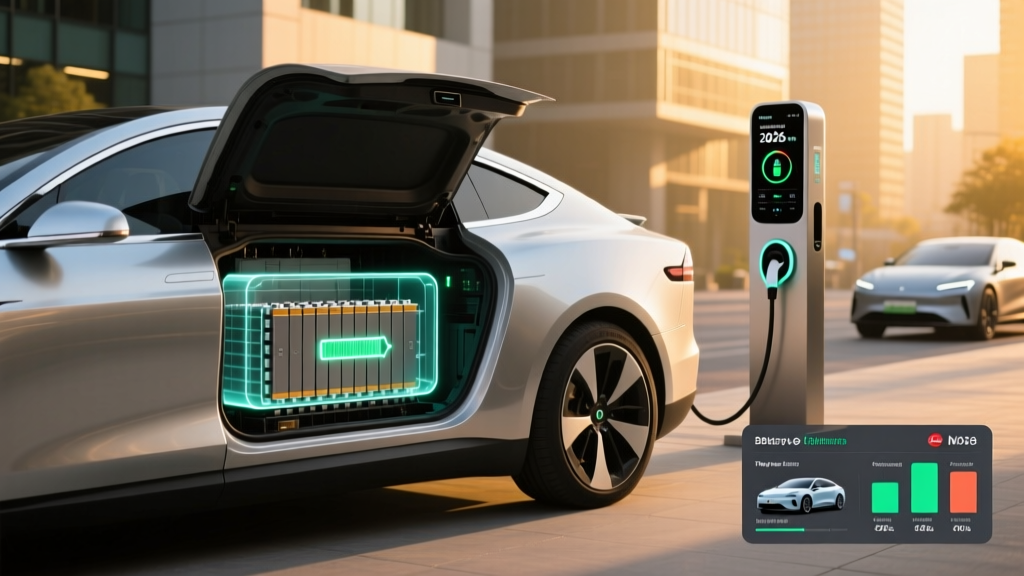
The short answer to "are lithium-ion batteries recyclable?" is yes — and the recycling industry has matured considerably. But for EV buyers and owners, recycling is only the final chapter. What matters more on a day-to-day basis is how long the battery lasts, how much capacity it retains over time, what the warranty actually covers, and what a replacement would cost in the unlikely event you need one. This guide covers all of it, grounded in real-world data rather than marketing claims.
Are Lithium-Ion EV Batteries Actually Recyclable?
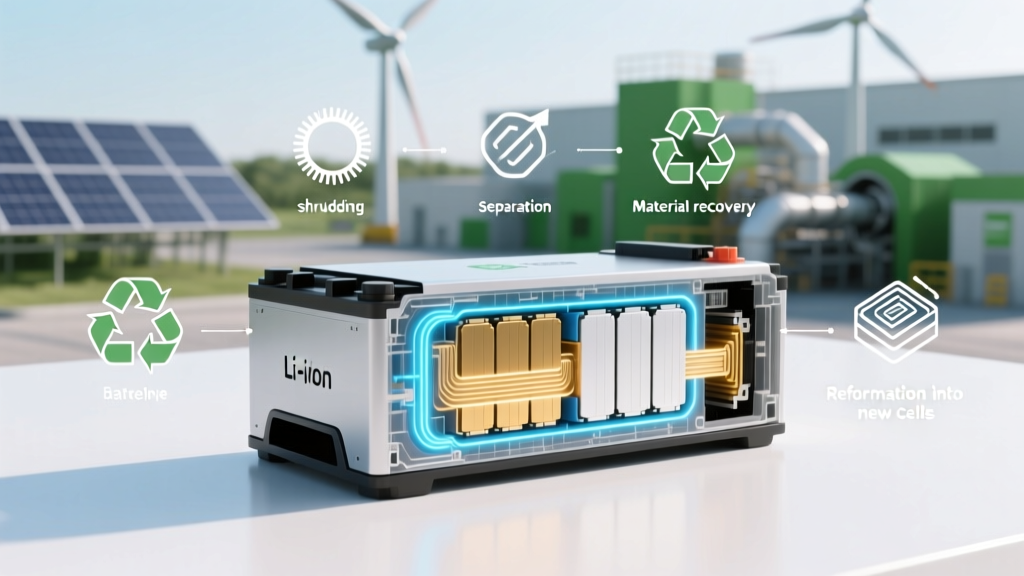
Modern hydrometallurgical recycling processes can recover up to 95% of critical materials from lithium-ion EV batteries — including lithium, cobalt, nickel, manganese, copper, and aluminum. Companies like Redwood Materials, Li-Cycle, and Cirba Solutions (formerly Retriev) operate large-scale facilities in North America that shred and chemically separate battery cells into raw materials suitable for manufacturing new cathodes and anodes.
The economics have shifted dramatically. Where recycling was once a cost center, recovered materials now compete with mined ores. Redwood Materials, for instance, supplies recycled cathode material directly to battery manufacturers, closing the loop. The U.S. Department of Energy has invested over $3 billion in battery recycling and domestic supply chain projects under the Bipartisan Infrastructure Law, signaling that recycling infrastructure will continue scaling through the late 2020s.
For context, most EV batteries don't head to recycling because they've failed. They arrive after 15–20 years of service, often with 70–80% of their original capacity still intact. Many are repurposed first for stationary energy storage (a "second life") before eventual material recovery.
LFP vs. NMC: Which Battery Chemistry Is Right for You?
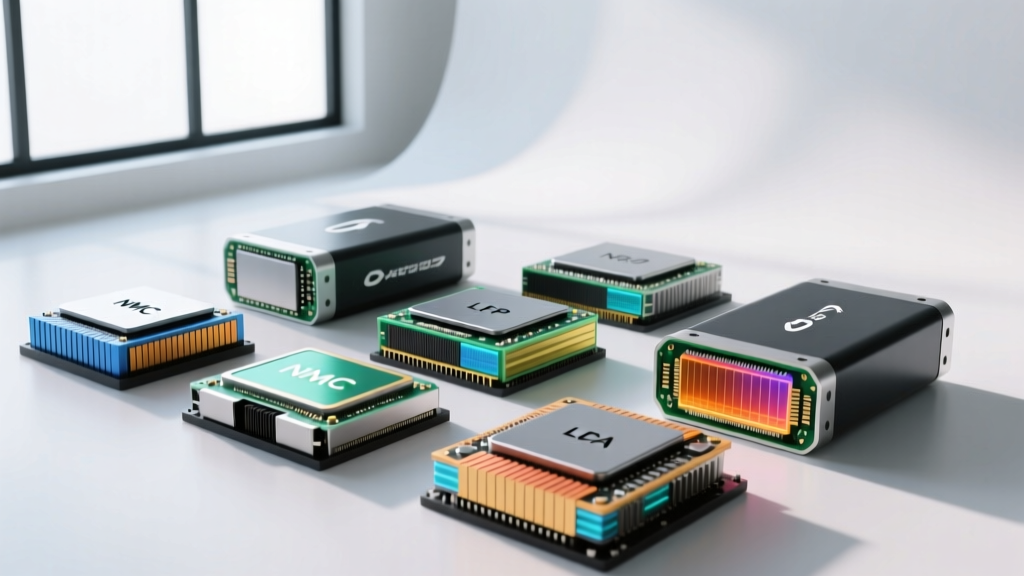
The two dominant chemistries in 2026 EVs are lithium iron phosphate (LFP) and nickel manganese cobalt (NMC), with some performance models using nickel cobalt aluminum (NCA). Each has distinct trade-offs that affect range, longevity, charging behavior, and cold-weather performance.
| Attribute | LFP (Lithium Iron Phosphate) | NMC / NCA |
|---|---|---|
| Energy Density | Lower (~160–180 Wh/kg cell-level) | Higher (~220–280 Wh/kg cell-level) |
| Cycle Life | 3,000–5,000+ cycles | 1,000–2,000 cycles |
| Cold-Weather Performance | More range loss below 32°F (~25–35% reduction) | Better cold retention (~15–25% reduction) |
| Fast-Charging Tolerance | Handles frequent DCFC well; less degradation | More sensitive to repeated high-rate charging |
| Cost | Lower — no cobalt or nickel | Higher — commodity-priced metals |
| Recyclability | Lower material value; still recyclable | Higher material value; strong recycling economics |
| Common In (2026) | Tesla Model 3/Y RWD, Ford Mustang Mach-E Select, Rivian Standard | Long-range/performance trims, Hyundai Ioniq 5/6, GM Ultium vehicles |
Which is better? It depends on your use case. LFP excels for daily commuting, frequent fast-charging, and owners who plan to keep the vehicle 10+ years. NMC delivers more range per pound and handles cold weather better — making it preferable for long-distance drivers and cold-climate owners. Neither is universally superior; the chemistry should match your driving pattern.
How Long Do EV Batteries Last? Real Degradation Data
Based on fleet data from Tesla, aggregated owner reports, and studies by Geotab analyzing thousands of vehicles, here's what typical degradation looks like for modern liquid-cooled EV batteries:
Typical EV Battery Degradation Curve (Liquid-Cooled, NMC/LFP):
- Year 1 / 15,000 miles: ~2–4% capacity loss
- Year 3 / 45,000 miles: ~5–8% cumulative loss
- Year 5 / 75,000 miles: ~8–12% cumulative loss
- Year 8 / 120,000 miles: ~10–15% cumulative loss
- Year 10+ / 150,000+ miles: ~12–20% cumulative loss
Note: Degradation is non-linear. The steepest loss occurs in the first 12–18 months, then the curve flattens considerably. Most batteries plateau well above the 70% capacity threshold used in warranty contracts.
LFP batteries tend to show even slower long-term degradation due to their more stable cathode structure, though they may exhibit slightly faster initial calendar aging. Tesla's 2025 Impact Report noted that Model 3/Y batteries retained an average of 85% capacity at 200,000 miles — a figure consistent with independent fleet analyses.
What Does the Battery Warranty Actually Cover?
Federal law mandates that EV batteries carry a minimum warranty of 8 years / 100,000 miles (10 years / 150,000 miles in California Air Resources Board states). But the details matter enormously — specifically, the capacity retention threshold and what triggers a claim.
| Manufacturer | Duration | Mileage | Capacity Threshold | Notes |
|---|---|---|---|---|
| Tesla (Model 3/Y LFP) | 8 years | 100,000 mi | 70% | Standard Range / RWD trims |
| Tesla (Model 3/Y Long Range) | 8 years | 120,000 mi | 70% | NMC Long Range & Performance |
| Hyundai / Kia (E-GMP) | 10 years | 100,000 mi | 70% | Ioniq 5, Ioniq 6, EV6, EV9 |
| GM (Ultium) | 8 years | 100,000 mi | 70% (estimated) | Equinox EV, Blazer EV, Silverado EV |
| Ford (Mach-E / F-150 Lightning) | 8 years | 100,000 mi | 70% | All trims |
| Rivian (R1T / R1S) | 8 years | 175,000 mi | 70% | Class 2 truck exemption allows higher mileage |
| BMW (iX / i4) | 8 years | 100,000 mi | 70% | All BEV models |
Key nuance: The 70% threshold means you'd need to lose more than 30% of your original battery capacity before a warranty claim is valid. Given that real-world data shows most batteries retain 85–90% at 100,000 miles, the vast majority of owners will never file a battery warranty claim. The warranty exists as a safety net, not a prediction.
EV Battery Replacement Costs: What You'd Actually Pay
Battery replacement is the single biggest fear among prospective EV buyers. Let's put real numbers to it — and add the critical context that most EV batteries outlast the vehicles they're installed in.
| Vehicle | Battery Size | Chemistry | Replacement Cost (Parts + Labor) | Typical Need Timeline |
|---|---|---|---|---|
| Tesla Model 3 RWD | ~60 kWh | LFP | $8,000 – $12,000 | Rarely needed; 200,000+ mi lifespan |
| Tesla Model Y Long Range | ~75 kWh | NMC | $10,000 – $15,000 | Rarely needed; 200,000+ mi lifespan |
| Hyundai Ioniq 5 | 77.4 kWh | NMC | $12,000 – $18,000 | Rarely needed; 150,000+ mi lifespan |
| Ford F-150 Lightning Ext. Range | 131 kWh | NMC | $18,000 – $28,000 | Rarely needed; 150,000+ mi lifespan |
| Chevrolet Equinox EV | ~85 kWh | NMC (Ultium) | $12,000 – $16,000 | Rarely needed; 150,000+ mi lifespan |
| Rivian R1T Dual-Motor | ~106 kWh (Standard) | NMC | $15,000 – $22,000 | Rarely needed; 175,000+ mi lifespan |
These costs have been declining steadily. In 2015, a replacement pack could cost $30,000–$50,000 for comparable capacity. By 2026, pack-level pricing has dropped below $120/kWh for many chemistries, and third-party remanufactured packs are beginning to appear for older models. Additionally, individual module replacement (rather than the full pack) is possible on many platforms, reducing costs to $2,000–$6,000 for a partial repair.
Factors That Accelerate (or Preserve) Battery Health
Battery longevity isn't purely a function of time — your habits matter. Here are the factors with the largest measurable impact on degradation rate:
- State of Charge (SoC) habits: Keeping your daily charge between 20–80% significantly reduces stress on NMC cells. LFP cells tolerate 100% SoC better and Tesla actually recommends periodic 100% charges for LFP to support battery management system (BMS) calibration.
- DC fast-charging frequency: Occasional fast charging has minimal impact. Daily DCFC sessions at 150+ kW can add ~1–2% additional annual degradation for NMC batteries. LFP handles frequent DCFC better due to its more robust cathode structure.
- Extreme heat exposure: Sustained ambient temperatures above 95°F, especially combined with high SoC, accelerate calendar aging. Liquid-cooled batteries (standard on nearly all 2026 EVs) mitigate this substantially, but parking in shade or a garage still helps.
- Extreme cold charging: Charging a cold-soaked battery (below 20°F) without preconditioning can cause lithium plating on the anode. Always use your vehicle's preconditioning feature before fast-charging in winter — this warms the battery to optimal temperature.
- Long-term storage at high SoC: Storing an EV at 100% charge for weeks accelerates degradation. If storing for more than two weeks, aim for ~50% SoC.
- Mileage alone is not the enemy: High-mileage EVs with moderate charging habits often show less degradation than low-mileage vehicles that sit at 100% in hot climates. Calendar aging and SoC matter as much as cycle count.
How to Check and Monitor Your EV Battery Health
Most 2026 EVs provide some form of State of Health (SoH) monitoring, though the level of transparency varies by manufacturer:
In-vehicle displays: Tesla shows battery health percentage in the Service menu (Software > Additional Vehicle Information). Hyundai/Kia displays a battery condition indicator in the EV settings menu. GM's Ultium vehicles show estimated range relative to original when new.
OBD-II diagnostic tools: Third-party tools like OBD2 scanners with EV-specific software (e.g., ABRP-linked OBD dongles, ScanGauge) can read the BMS-reported SoH directly. This gives a more precise figure than dashboard estimates.
Manual calculation: The simplest method is to fully charge to 100% (on an NMC vehicle, do this occasionally for measurement; on LFP, it's routine), note the displayed range, and compare it to the original EPA-rated range. If your 310-mile EPA vehicle now shows 275 miles at 100%, your approximate SoH is 275/310 = ~89%. This isn't perfectly precise — the BMS estimate can drift — but it's directionally accurate.
Pre-purchase inspection: If buying a used EV, request a battery health report from the dealer or use a service like Recurrent, which provides verified range and SoH data based on connected vehicle telemetry.
What's Next: Solid-State and Silicon-Anode Batteries
Forward-looking context — not yet available in production vehicles:
Solid-state batteries replace the liquid electrolyte with a solid material, promising higher energy density (~400+ Wh/kg at cell level), faster charging, improved safety (no flammable electrolyte), and longer cycle life. Toyota has announced plans to begin limited production of solid-state EVs by 2027–2028, and Samsung SDI, QuantumScape, and Solid Power are advancing prototypes. However, manufacturing scale-up remains the primary bottleneck. Realistic mass-market availability is 2029 at the earliest, with broad adoption likely in the early 2030s.
Silicon-anode batteries replace graphite anodes with silicon-dominant materials, boosting energy density by 20–40% without changing the cathode chemistry. Companies like Sila Nanotechnologies and Group14 are supplying silicon-anode materials for some 2025–2026 model-year vehicles in limited applications (e.g., the Mercedes G-Class EV uses a silicon-anode pack from Sila). Expect this technology to expand gradually across premium segments through the late 2020s.
Neither technology changes the recycling equation fundamentally — the cathode materials (lithium, nickel, manganese, iron phosphate) remain recoverable through existing hydrometallurgical processes.
Frequently Asked Questions
How long do EV batteries last in years and miles?
Most modern liquid-cooled EV batteries are designed to last 15–20 years and 200,000+ miles before reaching 70–80% of original capacity. Fleet data from Tesla and independent analyses by Geotab show average capacity retention of approximately 85% at 200,000 miles for NMC packs, with LFP packs often performing even better over extended mileage. The battery will almost certainly outlast other major vehicle components.
How much does it cost to replace an EV battery in 2026?
Full pack replacement costs range from approximately $8,000 for a Tesla Model 3 RWD (60 kWh LFP) to $28,000 for a Ford F-150 Lightning Extended Range (131 kWh NMC). However, full replacement is extremely rare before 150,000+ miles. Many issues can be resolved with individual module replacement for $2,000–$6,000, and costs continue to decline as pack-level pricing drops and remanufactured packs enter the market.
What does the EV battery warranty cover?
Federal law requires a minimum of 8 years / 100,000 miles of battery warranty coverage (10 years / 150,000 miles in CARB states). The warranty covers capacity loss below a specified threshold — typically 70% of original capacity. If your battery degrades below that threshold within the warranty period, the manufacturer must repair or replace it at no cost. The warranty also covers defects in materials and workmanship. It does not cover damage from accidents, misuse, or unauthorized modifications.
How do I maximize my EV battery's lifespan?
For NMC batteries: charge to 80% for daily use, use DC fast charging sparingly (not daily), precondition before winter fast-charging, avoid storing at 100% SoC for extended periods, and park in shade during extreme heat. For LFP batteries: you can charge to 100% regularly (Tesla recommends it for BMS calibration), and LFP tolerates frequent DCFC and high SoC storage better than NMC. For both chemistries: keep the battery within its thermal comfort zone using preconditioning, and don't stress about normal daily use — these batteries are remarkably durable.
Is LFP or NMC better for my EV?
Choose LFP if: you want maximum cycle life, plan to keep the vehicle 10+ years, charge at home most nights (where slower charging is fine), drive primarily in moderate climates, and value lower cost. Choose NMC if: you need maximum range per charge, live in a cold climate where LFP's cold-weather losses are more pronounced, frequently take long road trips requiring fast DC charging in winter, or prioritize performance. Both chemistries are recyclable, and both will comfortably outlast a typical ownership period.
Are EV batteries really recyclable at scale?
Yes. Hydrometallurgical processes recover up to 95% of lithium, cobalt, nickel, manganese, copper, and aluminum from spent cells. North American recyclers like Redwood Materials, Li-Cycle, and Cirba Solutions process tens of thousands of tons of battery material annually, and capacity is expanding rapidly. The recovered materials feed directly back into new battery production. As the first large wave of EVs from 2012–2018 reaches end-of-life in the late 2020s, recycling volumes will increase substantially, further improving economies of scale.