The Short Answer: Hybrid Batteries Routinely Last 150,000+ Miles
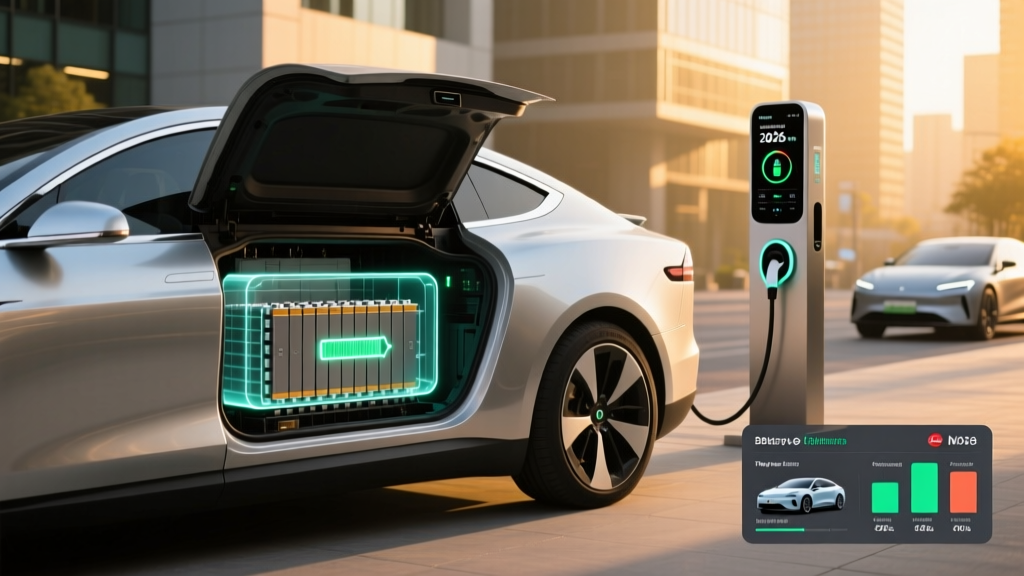
If you've searched "hybrid cars how long do the batteries last" before buying, you're not alone — battery longevity remains the single most common concern among first-time hybrid and plug-in hybrid shoppers. The data, however, is reassuring: the high-voltage traction batteries in modern hybrids (HEVs) and plug-in hybrids (PHEVs) are engineered to outlast the vehicles themselves in the vast majority of cases.
Based on warranty structures, fleet data, and long-term owner reports through 2026, here's what the numbers actually show:
- Standard HEVs (Toyota Prius, Honda Accord Hybrid, Hyundai Sonata Hybrid): Batteries routinely reach 150,000–200,000 miles with 10–15% capacity loss. Many exceed 200,000 miles without replacement.
- PHEVs (Toyota RAV4 Prime, Jeep Wrangler 4xe, Chrysler Pacifica Hybrid): Batteries typically last 120,000–180,000 miles before degradation noticeably reduces electric-only range.
- Time-based lifespan: Calendar aging means most hybrid batteries remain functional for 12–15 years regardless of mileage, though capacity tapers gradually.
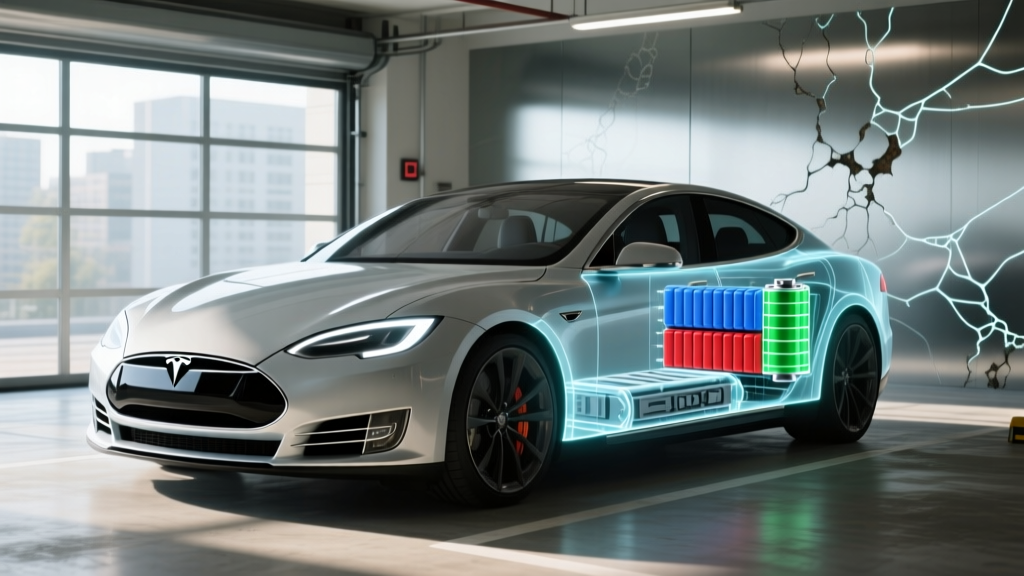
The critical distinction: hybrid batteries are smaller than full EV batteries — a Prius uses a ~1.3 kWh nickel-metal hydride (NiMH) or lithium-ion pack versus the 60–100 kWh packs in battery-electric vehicles. Smaller packs experience less thermal stress per cell and are buffered more conservatively by the vehicle's battery management system (BMS).
HEV vs. PHEV Battery Chemistry: What's Under the Hood
Not all hybrid batteries are built the same. The chemistry inside your hybrid's pack determines its energy density, cycle life, cold-weather behavior, and eventual replacement cost. Here's how the main chemistries compare in 2026 hybrid applications:
| Attribute | NiMH (Nickel-Metal Hydride) | NMC (Nickel Manganese Cobalt) | LFP (Lithium Iron Phosphate) |
|---|---|---|---|
| Common in | Older Prius (pre-2023), some Honda HEVs | Most PHEVs (RAV4 Prime, Wrangler 4xe), newer HEVs | Newer Toyota HEVs (2023+ Prius), some BYD PHEVs |
| Energy density | Low (~60–80 Wh/kg) | High (~200–250 Wh/kg) | Moderate (~140–170 Wh/kg) |
| Cycle life | 500–1,000 full cycles | 1,000–2,000 full cycles | 3,000–5,000+ full cycles |
| Cold performance | Moderate loss (~15–20%) | Moderate loss (~15–25%) | Higher loss (~25–35%) |
| Cost per kWh | ~$200–$250 | ~$130–$160 | ~$90–$120 |
| Degradation profile | Linear, predictable | Slow start, accelerates after ~80% lifespan | Very flat — minimal loss over thousands of cycles |
Which is better? For a standard HEV that you plan to keep 10+ years, LFP is emerging as the longevity champion — Toyota's shift to LFP in the 2023+ Prius reflects this. For PHEVs that need maximum electric-only range from a compact pack, NMC remains the standard because its higher energy density fits more kWh into the same physical space. NiMH is proven and durable but heavier and less energy-dense — it's being phased out of new models.
Real Degradation Data: What Hybrid Owners Actually Experience
Unlike full EVs, hybrid batteries operate within a narrow state-of-charge (SoC) window — typically between 40% and 80% — managed by the BMS. This "buffer" is the single biggest reason hybrid batteries degrade so slowly. You never fully charge or fully deplete the pack in normal driving.
Here's what long-term data shows for popular hybrid models:
- Toyota Prius (4th gen, 2016–2022, NiMH): Average 8–12% capacity loss at 150,000 miles. Tachomaster fleet data and fueleconomy.gov long-term tests confirm minimal MPG decline over 10+ years.
- Toyota Prius (5th gen, 2023+, LFP): Too new for high-mileage data, but LFP chemistry projects <5% loss at 150,000 miles based on cycle-life modeling.
- Toyota RAV4 Prime (PHEV, 18.1 kWh NMC): Owners report ~5–8% electric-range loss at 60,000 miles. EPA-rated 42 miles EV range typically reads 38–40 miles on the dash after 3 years.
- Honda Accord Hybrid (2.0L + 1.3 kWh Li-ion): Negligible reported degradation. The pack is so small and so heavily buffered that measurable capacity loss rarely occurs within the warranty period.
- Chrysler Pacifica Hybrid (16 kWh NMC): Some early (2017–2018) models experienced battery recalls. Post-2020 models show ~10% range loss at 80,000 miles per owner forums.
The pattern is clear: HEV batteries degrade so gradually that most owners never notice a meaningful change in fuel economy. PHEV batteries show slightly more measurable loss because they cycle through deeper charge-discharge events (full EV driving), but the larger buffer still protects them well.
Hybrid Battery Warranty Terms: What's Actually Covered
Federal law mandates that hybrid and EV battery warranties meet minimum standards, but manufacturers frequently exceed them. Here's how the major brands structure coverage in 2026:
| Manufacturer | Duration | Mileage | Capacity Threshold | Notes |
|---|---|---|---|---|
| Toyota (HEV & PHEV) | 10 years | 150,000 mi | Not publicly specified | Covers repair or replacement if battery fails or falls below functional threshold |
| Honda (HEV & PHEV) | 8 years | 100,000 mi | ~70% (PHEV) | 10 yr/150k mi in CARB states |
| Hyundai/Kia (HEV & PHEV) | 10 years | 100,000 mi | ~70% | Lifetime warranty for original owner on some models |
| Ford (PHEV — Escape) | 8 years | 100,000 mi | ~70% | 10 yr/150k mi in CARB states |
| Stellantis (Pacifica, Wrangler 4xe) | 8 years | 100,000 mi | ~70% | 10 yr/150k mi in CARB states |
What the warranty actually covers: If your hybrid battery's capacity drops below the stated threshold (typically 70% of original) within the warranty window, the manufacturer will repair or replace it at no cost. In practice, most warranty claims involve complete cell failures or BMS faults rather than gradual degradation — because gradual degradation rarely crosses that 70% line within the warranty period.
CARB-state bonus: If you live in California or a state that follows California Air Resources Board emissions rules (including Colorado, Connecticut, Maine, Maryland, Massachusetts, New Jersey, New York, Oregon, Rhode Island, Vermont, Virginia, and Washington), hybrid battery warranties are typically extended to 10 years/150,000 miles by mandate.
Hybrid Battery Replacement Cost: The Numbers by Model
This is the question that keeps prospective hybrid buyers up at night — but context matters enormously. Most hybrid batteries never need replacement during typical ownership. When they do, costs vary dramatically based on pack size and chemistry:
| Model | Pack Size | Chemistry | OEM Replacement Cost | Refurbished/Aftermarket |
|---|---|---|---|---|
| Toyota Prius (2023+) | ~1.3 kWh | LFP | $2,000–$3,000 | $1,000–$1,800 |
| Toyota Prius (2016–2022) | ~1.3 kWh | NiMH | $2,500–$3,500 | $800–$1,500 |
| Toyota RAV4 Prime | 18.1 kWh | NMC | $6,000–$9,000 | $3,500–$5,500 |
| Honda Accord Hybrid | ~1.3 kWh | Li-ion | $2,000–$3,500 | $1,000–$2,000 |
| Chrysler Pacifica Hybrid | 16 kWh | NMC | $6,500–$8,500 | $4,000–$5,500 |
| Jeep Wrangler 4xe | 17.3 kWh | NMC | $7,000–$10,000 | $4,000–$6,000 |
| Hyundai Sonata Hybrid | ~1.6 kWh | Li-ion | $2,200–$3,500 | $1,200–$2,000 |
When is replacement typically needed? For standard HEVs (Prius, Accord Hybrid, Sonata Hybrid), the answer is often "never" within normal ownership. The small packs are so lightly stressed that they commonly outlast 200,000 miles. For PHEVs with larger packs, replacement might become a consideration at 150,000–200,000 miles if electric-only range drops enough to affect daily usability — but even then, the car still operates as a regular hybrid.
Refurbished packs are a legitimate option. Companies like Green Bean Battery and Dorman offer refurbished or reconditioned hybrid battery packs at 40–60% less than OEM pricing. These typically come with 1–3 year warranties and are a cost-effective choice for older vehicles where a full OEM replacement doesn't make financial sense.
What Kills a Hybrid Battery (And What Doesn't)
Hybrid battery longevity isn't random — specific driving and environmental factors accelerate or decelerate degradation. Understanding these lets you maximize your pack's useful life.
- Regular driving: Batteries that cycle regularly (even short commutes) stay healthier than those that sit unused for weeks. Aim to drive at least once per week.
- Moderate climates: Garage parking in extreme heat or cold reduces thermal stress. Batteries happiest at 60–80°F.
- Letting the BMS do its job: Don't try to "fully charge" or "fully drain" a standard HEV battery — the car manages the SoC window automatically.
- Following maintenance schedules: Some hybrids have battery cooling system filters (Prius, RAV4 Prime) that need periodic cleaning/replacement. A clogged cooling fan causes heat buildup.
- Prolonged storage at full or empty SoC: Leaving a PHEV plugged in at 100% for weeks, or letting it sit at 0% for extended periods, stresses cells. For long storage, aim for ~50% SoC.
- Extreme heat exposure: Sustained ambient temperatures above 100°F, especially combined with aggressive driving, accelerate chemical aging. This is the #1 battery killer in Southwest US states.
- Exclusive DC fast charging (PHEVs): While PHEVs can use DC fast charging, frequent use generates more heat than Level 2 charging. For daily top-ups, Level 2 is gentler.
- Ignoring cooling system maintenance: A blocked battery cooling duct in a Prius can raise pack temperatures by 15–20°F — enough to measurably accelerate degradation over months.
- Aftermarket modifications: Non-OEM tuning or accessories that alter charge/discharge behavior can void warranty and stress the pack.
How to Check Your Hybrid Battery's State of Health (SoH)
Unlike full EVs, which increasingly offer in-dash State of Health (SoH) readouts, most hybrids don't surface battery health metrics directly to the driver. Here are your options for monitoring:
Method 1: Dealer Diagnostic Scan
Any authorized dealer can run a battery health diagnostic during routine service. This reads individual cell voltages, internal resistance, and overall capacity estimate. Toyota's Techstream diagnostic tool, for instance, provides a detailed block-by-block voltage analysis. Ask for this at your next oil change — it's often included free or for a nominal $50–$100 diagnostic fee.
Method 2: OBD-II Scanner with Hybrid App
Devices like the OBDLink SX or Vgate iCar paired with apps such as Dr. Prius (Toyota/Lexus) or Hybrid Assistant can read real-time battery data from your hybrid's CAN bus. You'll see:
- Individual cell/block voltages (look for >0.2V variance — that signals imbalance)
- Battery temperature
- Charge/discharge current in amps
- Estimated SoH percentage (on supported models)
Dr. Prius also offers a "Lifetime Test" that performs a controlled charge/discharge cycle and compares your battery's performance against a database of known-good packs — giving you a pass/fail health assessment for about $10 in-app.
Method 3: Monitor Electric-Only Range (PHEVs)
For PHEVs, the simplest proxy is your dash-indicated electric range. If your RAV4 Prime used to show 42 miles fully charged and now shows 36, that's roughly a 14% capacity loss. Track this quarterly to spot acceleration.
Method 4: Fuel Economy Tracking (HEVs)
For standard HEVs, a noticeable drop in real-world MPG (tracked via fueleconomy.gov's "My MPG" tool or Fuelly app) can indicate battery degradation — though tire pressure, brake drag, and engine issues should be ruled out first.
What's Next: Solid-State and Silicon-Anode Batteries for Hybrids
Several next-generation battery technologies are in development that could further extend hybrid battery lifespan — but none are available in production vehicles as of 2026. Here's a realistic timeline:
- Solid-state batteries: Toyota has demonstrated prototype solid-state cells with 1,000+ km range potential and 10-minute charging, targeting limited production in BEVs by 2027–2028. Hybrid applications would follow later, likely 2029+. Solid-state cells promise longer cycle life and better safety but face manufacturing cost barriers. (NHTSA and industry sources track these developments.)
- Silicon-anode lithium-ion: Companies like Sila Nanotechnologies and Group14 are producing silicon-dominant anode materials that increase energy density by 20–40% over graphite anodes. These are beginning to appear in consumer electronics and are expected in automotive applications by 2027–2028. For hybrids, this could mean smaller, lighter packs with the same electric range.
- Sodium-ion batteries: CATL and BYD have begun producing sodium-ion cells for budget EVs in China. Lower energy density than lithium-ion but extremely long cycle life and no critical mineral dependency. Possible future use in HEVs where pack size is small and cost matters.
None of these technologies should factor into a current purchase decision. Today's hybrid batteries are already engineered for 150,000+ mile lifespans, and the incremental improvement from next-gen chemistries will matter more for full EVs with large packs than for hybrids with small ones.
Frequently Asked Questions
How long do hybrid car batteries last in years?
Most hybrid batteries last 12–15 years based on calendar aging alone, regardless of mileage. In practice, many HEV batteries reach 15–20 years. Toyota Prius taxis routinely exceed 300,000 miles on original batteries. The battery management system's conservative SoC buffering is the primary reason for this longevity.
Is it expensive to replace a hybrid battery?
For standard HEVs (Prius, Accord Hybrid, Sonata Hybrid), OEM replacement costs $2,000–$3,500. For PHEVs with larger packs (RAV4 Prime, Wrangler 4xe, Pacifica Hybrid), expect $6,000–$10,000 OEM or $3,500–$6,000 refurbished. However, most hybrid batteries never need replacement during typical ownership — the failure rate within the first 150,000 miles is well under 5% for major manufacturers.
What does the hybrid battery warranty cover?
Hybrid battery warranties cover defects and capacity loss below a specified threshold (typically ~70% of original capacity) for 8–10 years / 100,000–150,000 miles, depending on the manufacturer and state. In CARB states, the minimum is 10 years/150,000 miles. Coverage includes parts and labor for battery repair or replacement.
Can I extend my hybrid battery's life?
Yes. The most impactful steps are: (1) drive regularly — don't let the car sit unused for weeks, (2) keep the battery cooling system clean (check/cabin air filter and cooling ducts per your owner's manual), (3) park in shade or a garage in extreme heat, (4) for PHEVs, avoid leaving the pack at 100% SoC for extended periods, and (5) address any cooling system warnings immediately.
LFP vs NMC — which hybrid battery chemistry is better?
For maximum longevity and lowest replacement cost, LFP wins — it offers 3,000–5,000+ cycle life versus NMC's 1,000–2,000, and costs less per kWh. For maximum electric-only range in a PHEV, NMC wins due to higher energy density. Toyota's move to LFP in the 2023+ Prius signals the industry's view that LFP is the better choice for standard HEVs where pack size isn't the primary constraint.
Do hybrids have two batteries?
Yes. Every hybrid has a high-voltage traction battery (the one discussed in this article — 1.3–18 kWh depending on HEV vs. PHEV) and a standard 12V auxiliary battery that powers electronics, lights, and computers. The 12V battery follows normal automotive replacement cycles of 3–5 years and is completely separate from the hybrid system. A dead 12V battery can prevent the car from starting even if the traction battery is fully charged.
Is a hybrid worth it if the battery might need replacing?
For most buyers, yes. The fuel savings from a hybrid typically pay for the vehicle's premium over a gas-only model within 4–7 years. Given that the battery will likely never need replacement during your ownership — and that replacement costs are manageable if it does — the economics strongly favor hybrids for drivers covering 10,000+ miles per year. Check current IRS rules at irs.gov for any applicable PHEV tax credits that improve the math further.