The single most expensive component in any electric vehicle isn't the motor, the screen, or the suspension — it's the high-voltage traction battery. Depending on the model, that battery pack represents 25% to 40% of the vehicle's total manufacturing cost, and its chemistry dictates everything from your real-world range to how the car performs on a freezing January morning. Yet most EV shoppers still treat "lithium-ion" as a monolith, assuming all packs behave the same way. They don't.
This guide breaks down exactly what's inside the lithium ion batteries for electric vehicles sold in 2026, how the two dominant chemistries — NMC/NCA and LFP — compare on hard metrics, what degradation actually looks like over 100,000+ miles, and what you'll pay if (or more accurately, when) a pack eventually needs attention. We'll also cover how to monitor your State of Health and which daily habits move the needle on longevity.
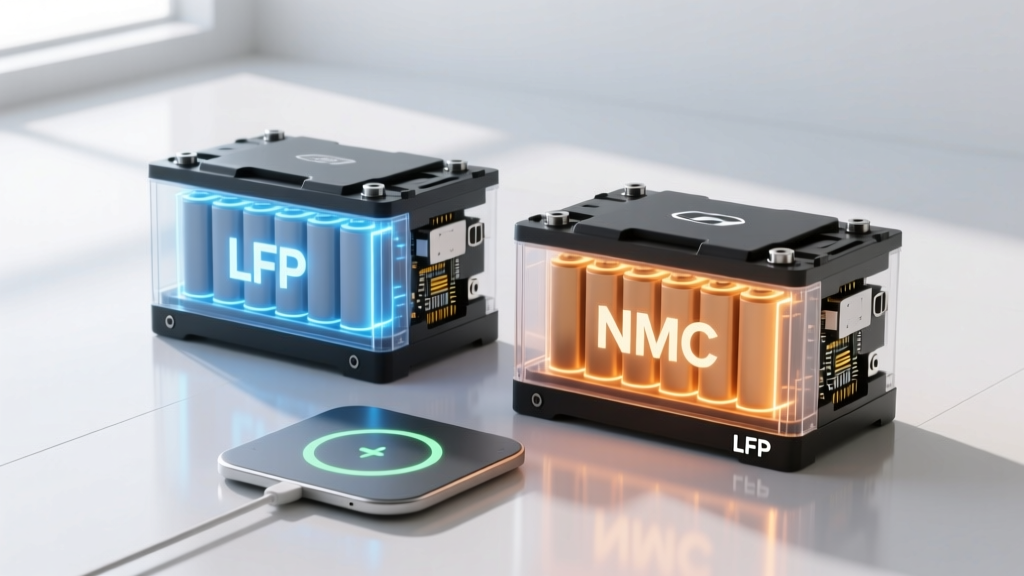
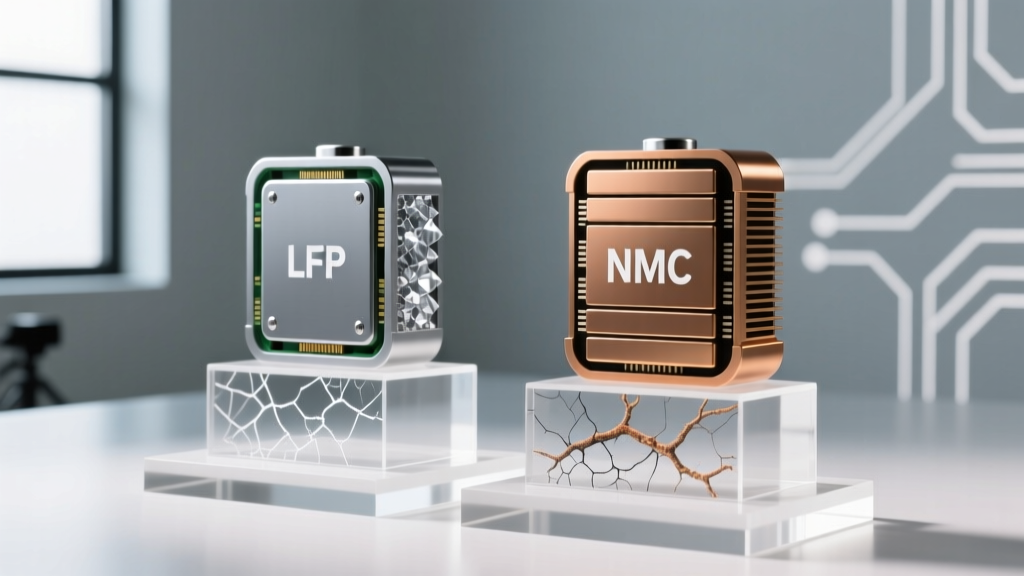
NMC, NCA, and LFP: The Chemistry Decision That Shapes Your EV
Not all lithium-ion cells are created equal. The cathode chemistry — the material that stores and releases lithium ions during charge and discharge cycles — determines a battery's energy density, lifespan, thermal behavior, and raw-material cost. In the 2026 U.S. EV market, three cathode families dominate:
- NMC (Nickel Manganese Cobalt): Used in the Hyundai Ioniq 5, BMW iX, Ford F-150 Lightning (extended range), Rivian R1T, and most Volkswagen ID.4 trims. Nickel-rich formulations (NMC 811 — 80% nickel, 10% manganese, 10% cobalt) maximize energy density.
- NCA (Nickel Cobalt Aluminum): Tesla's preferred chemistry for Long Range and Performance variants of the Model 3, Model Y, Model S, and Model X. Similar energy density to NMC, with aluminum improving thermal stability.
- LFP (Lithium Iron Phosphate): Found in the Tesla Model 3/Y Standard Range, Ford Mustang Mach-E Select (base), and several BYD models sold internationally. LFP eliminates nickel and cobalt entirely, trading energy density for cycle life and cost.
| Attribute | LFP (LiFePO₄) | NMC / NCA |
|---|---|---|
| Energy Density (cell-level) | 160–200 Wh/kg | 220–300 Wh/kg |
| Typical Cycle Life | 3,000–5,000+ cycles | 1,000–2,000 cycles |
| Cold-Weather Performance | Moderate loss; slower charge acceptance below 32°F | Better low-temp discharge; preconditioning still critical |
| Recommended Daily SoC | 100% (LFP benefits from full charges) | 80% daily; 100% only for trips |
| Thermal Runaway Risk | Very low — inherently stable chemistry | Low but higher than LFP; requires robust BMS |
| Raw Material Cost | Lower — no nickel or cobalt | Higher — tied to nickel/cobalt commodity prices |
| Typical Use Case | Standard-range trims, fleet/robotaxi, daily commuters | Long-range trims, performance models, towing-heavy use |
| Example 2026 Vehicles | Tesla Model 3 RWD, BYD Atto 3, Ford Mach-E Select | Tesla Model Y LR, Ioniq 5, Rivian R1T, BMW iX |
The bottom line: If you drive fewer than 40 miles a day and can charge at home, an LFP-equipped EV offers extraordinary cycle life and simpler ownership habits (charge to 100% nightly, no anxiety about sitting at full SoC). If you need 300+ miles of EPA range, tow frequently, or live in a region with harsh winters, NMC/NCA delivers the energy density required — but demands more deliberate charging habits.
How Long Do EV Batteries Actually Last? Real Degradation Data
The fear of a dead battery pack at 60,000 miles persists in online forums, but real-world fleet data tells a far more reassuring story. Lithium-ion traction batteries degrade through two mechanisms: calendar aging (chemical reactions that occur even when the car sits) and cycle aging (wear from charge-discharge cycles). Both are gradual, nonlinear, and heavily influenced by temperature and State of Charge.
Here's what the data shows across major platforms:
| Vehicle / Chemistry | Avg. Degradation at 50k mi | Avg. Degradation at 100k mi | Data Source |
|---|---|---|---|
| Tesla Model 3/Y (NCA/NMC LR) | ~4–5% | ~8–10% | Tesla Impact Report |
| Tesla Model 3 RWD (LFP) | ~2–3% | ~5–7% | Fleet telematics aggregations |
| Hyundai Ioniq 5 (NMC) | ~3–5% | ~7–10% | Owner community tracking |
| Nissan Leaf (NMC, air-cooled) | ~8–12% | ~15–20% | Recurrent Auto fleet data |
| Chevrolet Bolt EV (NMC, liquid-cooled) | ~4–6% | ~8–12% | Recurrent Auto fleet data |
Two patterns emerge immediately. First, thermal management matters enormously. The air-cooled Nissan Leaf degrades roughly twice as fast as liquid-cooled competitors — a critical lesson for used-EV buyers evaluating older packs. Second, degradation follows a hockey-stick curve: the steepest loss (2–4%) occurs in the first 20,000–30,000 miles as the solid electrolyte interphase (SEI) layer forms, then the curve flattens significantly. A pack that has lost 8% at 80,000 miles isn't on a trajectory to lose another 8% by 160,000 — the next 8% might take until 250,000+ miles.
According to fleet analytics from Recurrent Auto, the average EV battery in their dataset retains approximately 90% of original capacity at 100,000 miles — well above the threshold most owners would consider problematic.
What Does the Battery Warranty Actually Cover?
Federal law mandates that EV battery warranties last a minimum of 8 years or 100,000 miles (whichever comes first). In California Air Resources Board (CARB) states — which include California, Colorado, Connecticut, Maine, Maryland, Massachusetts, New Jersey, New York, Oregon, Rhode Island, Vermont, Virginia, and Washington — that minimum extends to 10 years or 150,000 miles. Most automakers meet or exceed these floors.
The critical detail is the capacity retention threshold — the point at which the manufacturer considers the battery "degraded enough" to warrant repair or replacement:
| Manufacturer | Warranty Period | Capacity Retention Threshold | Notes |
|---|---|---|---|
| Tesla | 8 yr / 120,000 mi (Model 3/Y); 8 yr / 150,000 mi (S/X) | 70% | Module-level replacement common, not full pack |
| Hyundai / Kia | 10 yr / 100,000 mi | 70% | Among the longest coverage in the industry |
| Ford | 8 yr / 100,000 mi | 70% | Covers battery and electric drive components |
| General Motors (Ultium) | 8 yr / 100,000 mi | 70% | Modular pack design allows partial replacement |
| Rivian | 8 yr / 175,000 mi | 70% | Highest mileage cap among mainstream EV makers |
| BMW | 8 yr / 100,000 mi | 70% | Covers high-voltage battery only |
A 70% threshold means a 75 kWh pack that has degraded to 52.5 kWh of usable capacity qualifies for warranty service. In practice, very few EVs hit this mark within the warranty window — it's a safety net that rarely gets deployed. What the warranty does not cover is normal, gradual degradation above the threshold. If your 100,000-mile EV retains 75% capacity, you're within spec even though range has noticeably decreased.
EV Battery Replacement Cost: What You'll Actually Pay
This is the question that dominates EV skepticism, so let's address it with specifics. Full battery pack replacement is rare and usually unnecessary — modern packs use modular architectures where individual cell modules can be swapped without replacing the entire assembly. But if a full replacement is required out of warranty, here's what it costs in 2026:
| Vehicle | Battery Size | Chemistry | Replacement Cost (Parts + Labor) |
|---|---|---|---|
| Tesla Model 3 RWD | ~60 kWh | LFP | $12,000–$16,000 |
| Tesla Model Y Long Range | ~75 kWh | NCA | $15,000–$20,000 |
| Hyundai Ioniq 5 | 77.4 kWh | NMC | $14,000–$18,000 |
| Ford F-150 Lightning Ext. Range | 131 kWh | NMC | $25,000–$35,000 |
| Chevrolet Bolt EV | 65 kWh | NMC | $14,000–$17,000 |
| Rivian R1T (Large Pack) | 135 kWh | NMC | $28,000–$38,000 |
Context matters here. These costs apply to out-of-warranty, full-pack replacements — a scenario that affects a tiny fraction of EVs. According to data from Consumer Reports, fewer than 2% of EVs require battery replacement outside of recall campaigns, and the vast majority of those failures occur early in the vehicle's life (covered by warranty). For a vehicle you plan to own for 8–10 years and sell before 150,000 miles, the battery replacement question is largely academic.
Module-level repair — replacing 2–4 degraded modules within a pack — typically costs $2,000–$6,000 and is becoming more common as independent EV shops gain diagnostic capability.
Five Factors That Accelerate (or Preserve) Battery Life
Battery degradation isn't random. It's driven by measurable, controllable variables. Here's what the electrochemistry says:
1. Sustained High State of Charge
NMC/NCA cells held at 100% SoC experience accelerated electrolyte oxidation and cathode surface degradation. This is why Tesla, Hyundai, and Ford all recommend setting daily charge limits to 80% for NMC/NCA vehicles. LFP cells, by contrast, benefit from periodic 100% charges — their flat voltage curve makes cell balancing dependent on reaching full charge, and their chemistry tolerates high SoC without the same degradation penalty.
2. DC Fast Charging Frequency
Occasional DC fast charging (1–2 sessions per week) produces negligible additional degradation in liquid-cooled packs. But daily DC fast charging at 150+ kW, particularly in hot climates, can accelerate capacity loss by 1–3 percentage points over 100,000 miles compared to Level 2 home charging. The issue isn't the speed itself — it's the heat generated during high-C-rate charging. Preconditioning the battery (which most modern EVs do automatically when you navigate to a charger) mitigates this substantially.
3. Extreme Temperature Exposure
Batteries degrade fastest when stored or operated at temperature extremes — below 20°F or above 95°F. Liquid thermal management systems (standard on virtually all 2026 EVs except the base Nissan Leaf) reduce this effect dramatically, but parking in shade during summer and in a garage during winter still yields measurable SoH benefits over a decade of ownership.
4. Depth of Discharge Patterns
Cycling a battery from 90% down to 10% (80% depth of discharge) causes more wear per cycle than cycling from 80% to 30% (50% DoD) for the same total energy throughput. Shallow, frequent charges are gentler than deep, infrequent ones.
5. Calendar Aging at High SoC
An EV sitting at 100% charge in a hot driveway for two weeks degrades more than one sitting at 50% charge for the same period. If you're traveling and leaving the car parked, set the charge limit to 50–60% before you leave.
Daily Battery Care Checklist
- NMC/NCA owners: Set daily charge limit to 80%. Charge to 100% only when departing on a trip, and try to time it so the car doesn't sit at 100% for more than a few hours.
- LFP owners: Charge to 100% at least once per week for cell balancing. Daily 100% is acceptable.
- All owners: Enable scheduled departure preconditioning when possible — it warms/cools the battery before driving and charging, reducing stress.
- Before long parking periods: Leave the car at 50–60% SoC, plugged in if possible (the car's BMS will maintain the level using grid power without cycling the battery).
- DC fast charging: Use freely on road trips. For daily driving, Level 2 home charging is gentler and cheaper.
How to Check Your Battery's State of Health (SoH)
State of Health is expressed as a percentage of original capacity — a 75 kWh pack at 92% SoH holds approximately 69 kWh of usable energy. Monitoring SoH lets you track degradation trends, verify warranty eligibility, and assess value when buying or selling a used EV.
In-vehicle displays: Tesla offers a Battery Health screen (Settings → Service → Battery Health) showing current capacity as a percentage. Hyundai/Kia provides a similar readout in the EV settings menu on 2024+ models. However, these onboard estimates can vary by ±2–3% from actual measured capacity.
OBD-II diagnostic tools: Devices like the OBDLink MX+ paired with apps such as EVnotify or ABRP (A Better Route Planner) can pull detailed BMS data including pack voltage, individual cell voltages, and estimated SoH. This is the most accurate consumer-accessible method.
Dealer diagnostic reports: Any authorized service center can run a full battery health report, often including individual module balance data. Request one before purchasing a used EV or before a warranty claim.
Third-party services: Companies like Recurrent Auto offer free battery health reports that compare your vehicle's degradation to a fleet of identical models, giving you percentile context (e.g., "Your Ioniq 5 is in the 65th percentile for capacity retention at your mileage").
What's Next: Solid-State, Silicon Anodes, and Realistic Timelines
Next-generation battery technologies generate enormous media attention, so it's worth separating lab demonstrations from showroom reality as of 2026:
Silicon-dominant anodes: Companies like Sila Nanotechnologies and Group14 are shipping silicon-carbon composite anode materials that boost energy density by 15–25% over conventional graphite anodes. These are appearing in limited production vehicles (the Mercedes G-Class EV uses a Sila anode in its battery). Expect broader adoption across premium EVs by 2028–2029. This is real, incremental, and happening now.
Semi-solid-state batteries: Nio's 150 kWh semi-solid pack (available in China) demonstrates the viability of solid-electrolyte separators, but production costs remain extremely high. In the U.S. market, Toyota has announced a solid-state battery pilot for 2027–2028 with limited production volume. These are announced and preliminary — not available in any U.S.-spec vehicle as of 2026.
Full solid-state batteries: Promised benefits include 500+ mile range, 10-minute charging, and dramatically improved safety. Multiple automakers (Toyota, Nissan, BMW) have announced timelines targeting 2028–2030 for limited production. Cost per kWh must drop by roughly 60% before solid-state becomes competitive with mature NMC/LFP at scale. Treat any "solid-state is here" headline with skepticism — volume production at competitive pricing is still years away.
For buyers in 2026, today's lithium-ion technology — particularly with liquid cooling, advanced BMS algorithms, and the LFP/NMC options now available — represents a mature, well-characterized platform with proven longevity. Waiting for solid-state is a valid choice for buyers who aren't in the market today, but it shouldn't prevent anyone from buying a current-generation EV with confidence.
How long do lithium ion batteries for electric vehicles last in real-world use?
Based on fleet data from Recurrent Auto and Tesla's own impact reports, the average EV battery retains approximately 88–92% of its original capacity at 100,000 miles and 82–88% at 150,000 miles. Most EV batteries will outlast the vehicle's first ownership cycle. The battery is typically the last major component to fail — electric motors and power electronics usually require attention sooner.
How much does it cost to replace an EV battery in 2026?
Full pack replacement ranges from approximately $12,000 for a 60 kWh LFP pack (Tesla Model 3 RWD) to $35,000+ for a 131 kWh NMC pack (F-150 Lightning Extended Range). However, fewer than 2% of EVs require out-of-warranty battery replacement, and modular architectures increasingly allow $2,000–$6,000 module-level repairs rather than full-pack swaps. Virtually all 2026 EVs carry 8-year/100,000-mile minimum battery warranties.
What does the EV battery warranty cover?
All 2026 EV battery warranties cover defects and capacity loss below a defined threshold — typically 70% of original capacity — for a minimum of 8 years/100,000 miles (10 years/150,000 miles in CARB states). The warranty covers parts and labor for battery repair or replacement. It does not cover gradual degradation above the threshold, damage from accidents or improper use, or 12V auxiliary battery issues (which are covered under a separate, shorter warranty).
LFP vs NMC — which battery chemistry is better for me?
Choose LFP if: you drive under 250 miles between charges, charge primarily at home, want maximum cycle life, and prefer the simplicity of charging to 100% daily. Choose NMC/NCA if: you need 300+ miles of EPA range, frequently road-trip or tow, live in a very cold climate where LFP's low-temperature charge acceptance is a limitation, or prioritize performance. Neither chemistry is universally "better" — they optimize for different ownership patterns.
How do I maximize my EV battery's lifespan?
For NMC/NCA: set daily charge limits to 80%, avoid leaving the car at 100% SoC for extended periods, use Level 2 home charging for daily needs, and enable battery preconditioning before DC fast charging. For LFP: charge to 100% at least weekly for cell balancing. For all chemistries: park in shade or a garage when possible, use scheduled departure preconditioning, and avoid letting the battery sit at very low SoC (below 10%) for weeks at a time.