The Real State of EV Batteries in 2026
If you've spent any time researching electric vehicles, you've encountered the battery question: how long will it last, what will it cost to replace, and which chemistry should you choose? These aren't abstract concerns — the high-voltage traction battery is the single most expensive component in any EV, typically representing 25–40% of the vehicle's total manufacturing cost.
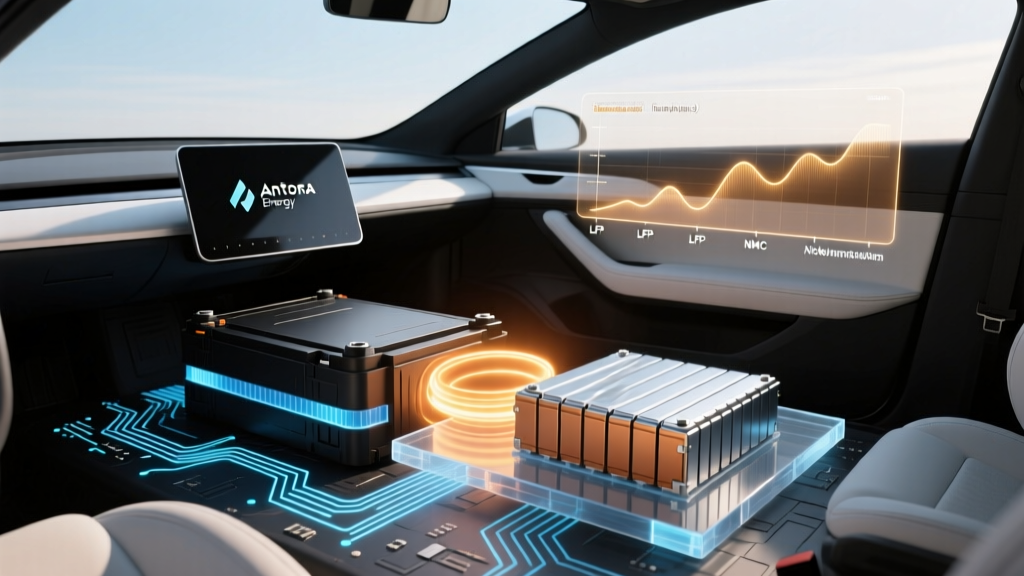
As of 2026, the EV battery landscape has bifurcated into two dominant chemistries — lithium iron phosphate (LFP) and nickel manganese cobalt (NMC/NCA) — each with distinct trade-offs that matter for real ownership. Meanwhile, emerging technologies like solid-state cells and grid-scale innovations such as Antora Energy's thermal battery (detailed on their official website) are reshaping how we think about energy storage broadly, even if they haven't yet reached the passenger-vehicle market.
This guide cuts through the noise with exact numbers: degradation percentages by year and mile, warranty thresholds by manufacturer, replacement cost ranges by model, and a practical framework for maximizing the lifespan of whichever battery chemistry you drive.
LFP vs NMC/NCA: The Chemistry Decision That Matters
Every EV sold in the US in 2026 uses one of two lithium-ion cathode chemistries. Understanding the difference is the single highest-leverage piece of knowledge you can have as an EV buyer.
| Attribute | LFP (Lithium Iron Phosphate) | NMC/NCA (Nickel Manganese Cobalt / Nickel Cobalt Aluminum) |
|---|---|---|
| Energy Density | ~160–180 Wh/kg (cell level) | ~220–300 Wh/kg (cell level) |
| Typical Use | Standard Range models (Tesla Model 3 RWD, Model Y RWD, base Ford Mustang Mach-E) | Long Range / Performance models (Tesla LR, Hyundai Ioniq 5 LR, Rivian, Lucid) |
| Cycle Life | 3,000–5,000+ cycles to 80% capacity | 1,000–2,000 cycles to 80% capacity |
| Cold-Weather Performance | More range loss in freezing temps (~30–40% reduction at 20°F) | Better cold performance (~20–30% reduction at 20°F) |
| State-of-Charge Flexibility | Can be charged to 100% daily without accelerated degradation | Recommended daily limit: 80%; 100% only for trips |
| Cost per kWh (2026) | ~$80–$100/kWh (pack level) | ~$110–$140/kWh (pack level) |
| Thermal Stability | Excellent — inherently resistant to thermal runaway | Good — requires more robust thermal management |
| Cobalt/Critical Minerals | Zero cobalt, zero nickel | Contains cobalt and nickel (supply-chain and ethical concerns) |
Which Chemistry Is Better for You?
Choose LFP if: you want maximum cycle life, plan to own the vehicle 10+ years, charge at home daily to 100%, and don't need the absolute longest range per charge. Tesla's Standard Range vehicles and many base-trim EVs now use LFP — and for most daily commuters, it's the more durable and cost-effective choice.
Choose NMC/NCA if: you need the longest possible range (300+ miles EPA), frequently drive in cold climates, tow heavy loads, or prioritize performance. The higher energy density means more kWh in the same physical space, which is why every long-range and performance EV still relies on NMC-based chemistry.
Neither chemistry is universally "better." The right choice depends on your driving pattern, climate, and ownership horizon. What matters more than chemistry alone is how you treat the battery over time — which we'll cover below.
How Long Do EV Batteries Actually Last? Degradation Data
The fear that EV batteries will fail catastrophically at 100,000 miles is not supported by fleet data. Most modern EV batteries are engineered to outlast the vehicle's useful economic life. Here's what the numbers actually show.
Typical Degradation Curve (NMC and LFP Combined Fleet Data):
- Year 1 / 15,000 miles: 2–5% capacity loss (initial "break-in" degradation)
- Year 3 / 45,000 miles: 5–8% total capacity loss
- Year 5 / 75,000 miles: 7–12% total capacity loss
- Year 8 / 120,000 miles: 10–18% total capacity loss
- Year 10 / 150,000 miles: 12–22% total capacity loss
Sources: Recurrent Auto fleet data (2025 report), Geotab fleet analysis of 10,000+ EVs.
A few critical nuances:
LFP degrades slower than NMC in calendar aging. Tesla's LFP Model 3 fleet shows approximately 8–10% loss at 100,000 miles, compared to 12–15% for NMC Long Range variants over the same distance. However, LFP's degradation curve is flatter — it loses less per additional mile after the initial break-in period.
High-mileage outliers exist. Some Tesla Model S vehicles have exceeded 300,000 miles on the original battery pack with 75–80% remaining capacity. These are exceptions, not the norm, but they demonstrate that catastrophic failure is rare.
Calendar aging matters as much as mileage. A 5-year-old EV with 30,000 miles will show similar degradation to one with 60,000 miles, because lithium-ion cells degrade chemically over time regardless of use. This is why a low-mileage used EV isn't necessarily a better battery bet than a higher-mileage one of the same age.
What Does the Battery Warranty Actually Cover?
Federal law mandates that EV battery warranties cover a minimum of 8 years / 100,000 miles. In California and states that follow CARB (California Air Resources Board) emissions standards, the requirement extends to 10 years / 150,000 miles. Most manufacturers meet or exceed these minimums.
| Manufacturer | Warranty Term | Capacity Retention Threshold | What Triggers a Claim |
|---|---|---|---|
| Tesla (Model 3/Y LFP) | 8 yr / 100,000 mi | 70% | SoH drops below 70% as measured by Tesla diagnostics |
| Tesla (Model 3/Y LR, S, X) | 8 yr / 120,000 mi | 70% | Same threshold, longer mileage coverage |
| Hyundai / Kia | 10 yr / 100,000 mi | 70% | Battery capacity below 70% of original |
| Ford (Mustang Mach-E, F-150 Lightning) | 8 yr / 100,000 mi | 70% | Capacity below 70% or defect |
| Chevrolet (Equinox EV, Blazer EV, Silverado EV) | 8 yr / 100,000 mi | 70% | Capacity below 70% |
| Rivian (R1T, R1S) | 8 yr / 175,000 mi | 70% | Capacity below 70% |
| BMW (i4, iX, i5) | 8 yr / 100,000 mi | 70% | Capacity below 70% |
What the warranty does NOT cover: normal range reduction from degradation above the 70% threshold, damage from accidents, flooding, or unauthorized modifications, and range loss from extreme ambient temperatures. The warranty guarantees the battery will retain at least 70% of its original capacity — not that your range will remain unchanged.
Key insight: The 70% threshold is conservative. A vehicle that started with 320 miles of EPA range will still deliver ~224 miles at the warranty boundary — still very usable for most drivers. The vast majority of EVs never trigger a warranty claim because they remain above 70% for the life of the vehicle.
EV Battery Replacement Cost: What to Expect
This is the number that generates the most anxiety — and the most misinformation. Let's ground it in actual data.
| Vehicle | Battery Size | Estimated Replacement Cost (2026) | Notes |
|---|---|---|---|
| Tesla Model 3 (LFP, Standard Range) | ~60 kWh | $10,000–$13,000 | LFP packs are cheaper; Tesla's vertical integration helps |
| Tesla Model Y Long Range | ~82 kWh | $14,000–$18,000 | NMC pack; labor included in estimate |
| Hyundai Ioniq 5 Long Range | ~77.4 kWh | $14,000–$17,000 | Dealer network pricing |
| Ford Mustang Mach-E Extended Range | ~91 kWh | $16,000–$22,000 | Larger pack drives higher cost |
| Ford F-150 Lightning Extended Range | ~131 kWh | $22,000–$30,000 | Largest consumer pack; highest replacement cost |
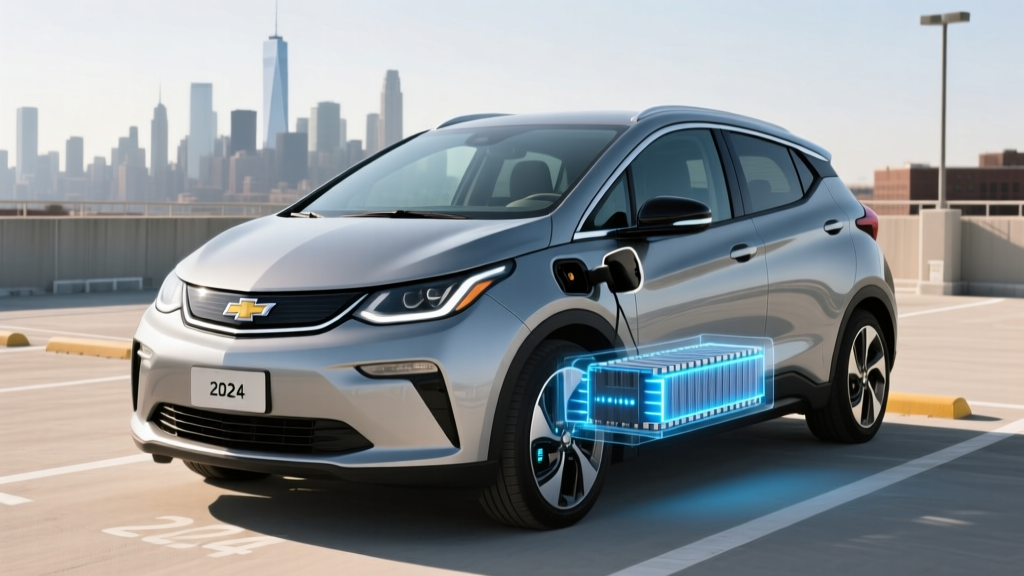
| Chevrolet Equinox EV | ~85 kWh | $13,000–$16,000 | Ultium platform modularity may allow partial replacement |
| Rivian R1T (Max Pack) | ~149 kWh | $25,000–$35,000 | Large pack; limited third-party options |
| Lucid Air Grand Touring | ~112 kWh | $20,000–$28,000 | High-density pack; premium segment pricing |
When is replacement actually needed? Almost never during typical ownership. Battery replacement becomes relevant at 15–20 years of age or 200,000+ miles, if at all. For context, the average age of a vehicle scrapped in the US is 15.6 years (S&P Global Mobility). Most EV batteries will outlast the rest of the vehicle's components.
Costs are declining. Pack-level battery prices have fallen from over $1,000/kWh in 2010 to approximately $100–$130/kWh in 2026 (BloombergNEF). This trend continues, meaning a replacement in 2035 will likely cost significantly less than today's prices.
Module-level repair is an option. Many modern packs (GM's Ultium, VW's MEB) are modular, meaning a single degraded or failed module can be replaced for $2,000–$5,000 rather than swapping the entire pack. Independent EV shops are increasingly offering this service.
Factors That Accelerate (or Slow) Battery Degradation
Not all miles are equal when it comes to battery wear. The following factors have measurable impact on how quickly your pack loses capacity:
Battery Care Best Practices
- Daily charge limit (NMC/NCA): Set to 80%. Charge to 100% only when you need the full range for a trip.
- Daily charge limit (LFP): Charge to 100% regularly — Tesla and other OEMs recommend this for LFP to maintain cell balancing.
- Avoid sustained storage above 90% or below 10%: If leaving the car for more than a week, target 50–60% SoC.
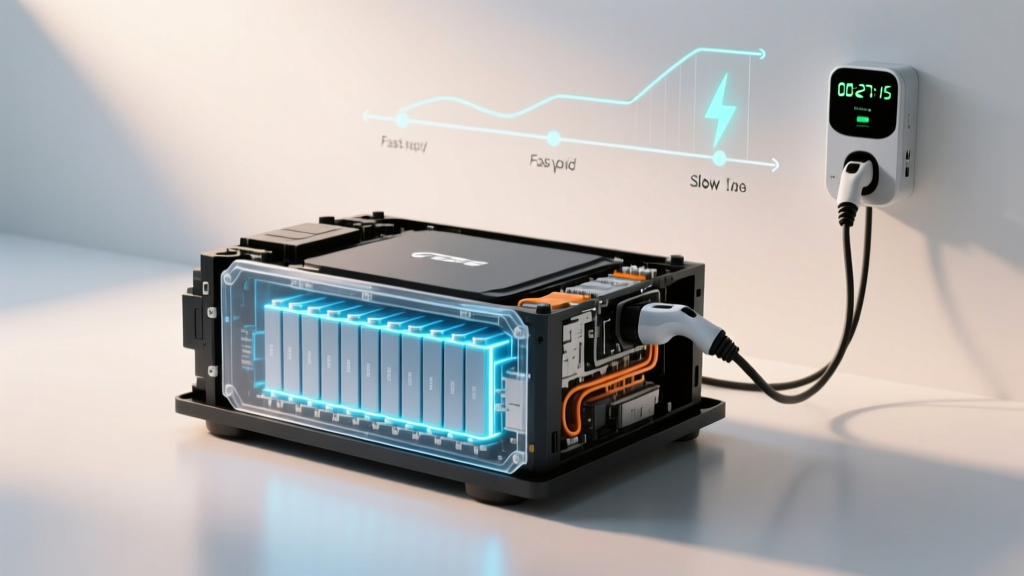
- DC fast charging: Occasional use is fine; daily DCFC sessions (3+ per week) accelerate degradation by ~2–4% over 100,000 miles compared to Level 2 only.
- Extreme heat: Prolonged exposure to 95°F+ ambient temps accelerates calendar aging. Park in shade or a garage when possible.
- Extreme cold: Cold doesn't permanently damage the battery but temporarily reduces range by 20–40%. Preconditioning (warming the battery before driving/charging) restores performance.
- Regenerative braking: Using standard or high regen doesn't meaningfully affect battery longevity — the charge currents involved are well within safe C-rates.
- Software updates: Keep your vehicle updated — OEMs periodically refine battery management algorithms to improve longevity.
The single biggest degradation accelerant is heat combined with high state of charge. A vehicle regularly parked at 100% SoC in Phoenix summer heat will degrade measurably faster than one stored at 60% in a climate-controlled garage. If you live in a hot climate, the practical advice is simple: don't charge to 100% (NMC) unless you're about to drive, and use scheduled charging to finish near your departure time rather than sitting at full charge overnight.
How to Check and Monitor Battery Health (SoH)
State of Health (SoH) is the percentage of original capacity your battery currently retains. A brand-new battery is 100% SoH; a battery that has degraded to hold only 85% of its original energy is at 85% SoH.
Built-In Methods
Tesla: No native SoH display in the vehicle UI. However, you can estimate SoH by comparing your current "typical" or "rated" range at 100% charge to the original EPA figure. Third-party apps like Tessie or the TeslaFi data logger track this automatically over time.
Hyundai/Kia: The EV-specific menu in the infotainment system includes a battery health indicator on many 2024+ models. The Bluelink/UVO connected app also provides periodic health reports.
Ford: The FordPass app provides battery health status alerts. The in-vehicle diagnostic menu (accessible via the settings screen on Mach-E and Lightning) shows a battery health percentage.
GM (Ultium vehicles): The myChevrolet/myCadillac app includes battery health monitoring. OnStar diagnostics can provide a detailed SoH report on request.
Third-Party and OBD-II Methods
Devices like the OBD-II dongle paired with apps such as ABRP (A Better Route Planner) or Car Scanner can read the battery management system's (BMS) internal SoH estimate directly. This is the most accurate method available to consumers and works on most modern EVs.
For used-EV buyers, services like Recurrent Auto offer a battery health report based on telematics data — a useful tool when evaluating a pre-owned vehicle. Some dealers now include a certified SoH reading in their used-EV listings.
Emerging Battery Technologies: Solid-State, Silicon Anode, and Thermal Storage
The EV battery landscape in 2026 is still dominated by liquid-electrolyte lithium-ion cells, but several next-generation technologies are progressing from lab to pilot production. Here's a realistic assessment of each — none are currently available in production passenger vehicles sold in the US.
Solid-State Batteries
What they promise: 30–50% higher energy density, faster charging (potentially 10–80% in under 10 minutes), improved safety (non-flammable solid electrolyte), and longer cycle life.
Current status: Toyota has announced solid-state battery production for a limited-run vehicle expected in 2027–2028. Samsung SDI and QuantumScape are running pilot lines with sample cells sent to OEM partners. Nissan and Honda have also published solid-state timelines targeting 2028–2030.
Realistic timeline for mainstream US vehicles: 2029–2032 for initial premium models; 2032+ for broad market availability. Manufacturing scale-up and cost reduction remain the primary bottlenecks.
Silicon Anode Batteries
What they promise: Replacing graphite anodes with silicon can boost energy density by 20–40% without changing the cathode chemistry.
Current status: Sila Nanotechnologies is supplying silicon-dominant anode material for the Mercedes G-Class electric SUV (announced for 2025–2026 production). Group14 and Amprius are also shipping cells to select OEM and aerospace customers.
Realistic timeline: Already appearing in limited premium applications (2026–2027). Broader adoption expected by 2028–2030 as manufacturing costs decline.
Thermal Energy Storage: Antora Energy's Approach
While not a vehicle battery technology, Antora Energy's thermal battery represents a significant development in grid-scale energy storage that indirectly benefits EV owners. As detailed on Antora Energy's official website, their system stores electricity as heat in modular, insulated units and dispatches it as either electricity or industrial heat when needed.
Why this matters for EV owners: Grid-scale storage like Antora's helps stabilize electricity prices and increase renewable energy penetration — both of which reduce the cost and carbon intensity of charging your EV. As utilities deploy more long-duration storage (8–24+ hours), time-of-use rates become more favorable, and the grid becomes cleaner. Antora's thermal battery is designed for 8–24+ hour duration storage, filling a gap that lithium-ion grid batteries (typically 2–4 hours) cannot address cost-effectively.
Current status: Antora Energy has raised significant venture capital and is deploying commercial-scale thermal storage systems for industrial customers. This is grid infrastructure technology — you won't find a thermal battery in a passenger car — but its impact on the energy ecosystem that powers your EV is worth tracking.
Frequently Asked Questions
How long do EV batteries last in years and miles?
Most modern EV batteries retain 75–85% of their original capacity after 10 years or 150,000 miles. Based on fleet data from Recurrent Auto and Geotab, catastrophic battery failure before 200,000 miles is rare. The federal warranty mandates coverage for at least 8 years / 100,000 miles, and most OEMs guarantee 70% capacity retention through that period. Plan for the battery to outlast the vehicle.
How much does an EV battery cost to replace in 2026?
Full pack replacement ranges from approximately $10,000 for a Tesla Model 3 LFP to $30,000+ for a Ford F-150 Lightning Extended Range or Rivian Max Pack. However, full replacement is rarely needed — most degradation stays within the warranty threshold. Module-level repairs (replacing individual cells or modules within the pack) cost $2,000–$5,000 and are increasingly available through independent EV shops. Costs continue to decline year over year as battery manufacturing scales.
What does the EV battery warranty cover?
The standard warranty covers defects and capacity loss below a defined threshold (typically 70% of original capacity) for 8 years / 100,000 miles (10 years / 150,000 miles in CARB states). It does not cover normal degradation above the threshold, accident damage, or range loss from extreme temperatures. If your battery falls below the threshold within the warranty period, the manufacturer will repair or replace it at no cost. Check your specific owner's manual for exact terms — they vary by OEM and sometimes by trim.
How do I check my EV's battery health?
Methods vary by brand. Tesla owners can estimate SoH by comparing current rated range at 100% to the original EPA figure, or use third-party apps like Tessie. Hyundai, Ford, and GM offer in-app health monitoring. For the most accurate reading, use an OBD-II scanner with an EV-compatible app (ABRP, Car Scanner) to read the BMS-reported SoH directly. If buying used, request a battery health report from the seller or use a service like Recurrent.
LFP vs NMC — which is better and why?
Neither is universally better. LFP offers superior cycle life (3,000–5,000 cycles vs 1,000–2,000), lower cost, better thermal safety, and the ability to charge to 100% daily — making it ideal for daily commuters and long-term owners. NMC/NCA offers higher energy density (more range per kg), better cold-weather performance, and is used in all long-range and performance EVs — making it the right choice for road-trippers, cold-climate drivers, and those who need maximum range. Match the chemistry to your use case, not to marketing claims.
Does frequent DC fast charging damage the battery?
Exclusive DC fast charging (daily use with no Level 2 charging) accelerates degradation by approximately 2–4% over 100,000 miles compared to Level 2-only charging, according to Geotab fleet data. However, occasional DCFC use (1–2 sessions per week) has a negligible impact. Modern battery management systems actively manage charge rates and temperatures during DCFC to minimize stress. If you rely on DCFC daily, consider an LFP vehicle — its chemistry is more tolerant of high charge rates.
Will solid-state batteries make current EVs obsolete?
Not in the near term. Solid-state batteries are expected to reach limited premium production vehicles around 2028–2030, with mainstream availability not until 2032+. Current lithium-ion technology continues to improve incrementally (better electrolytes, silicon-blend anodes, refined BMS algorithms). If you need a vehicle now or within the next 3–4 years, today's EVs offer proven, durable battery technology with comprehensive warranties. Waiting for solid-state means waiting 5+ years for broad availability and likely paying a premium in early model years.