The single most expensive component in any electric vehicle is the high-voltage traction battery. A 75–100 kWh pack represents roughly $10,000–$22,000 in replacement value, yet most owners never need to replace one. Understanding lithium ion care isn't about avoiding an unlikely catastrophe — it's about preserving range, protecting resale value, and getting the most from a battery engineered to outlast the car around it.
This guide covers the chemistry under your floor, the real-world degradation data from hundreds of thousands of vehicles, the warranty protections that back you up, and the daily habits that measurably slow capacity loss. Whether your EV uses an LFP or NMC/NCA pack, the principles below apply.
How Long Do EV Batteries Actually Last?
The short answer: far longer than most buyers assume. Modern liquid-cooled EV battery packs are engineered for 1,500–3,000+ full charge cycles before reaching 70–80% of their original capacity. For a vehicle with 300 miles of EPA range, that translates to 450,000–900,000 miles of theoretical cycle life before significant degradation — well beyond the mechanical lifespan of most cars.
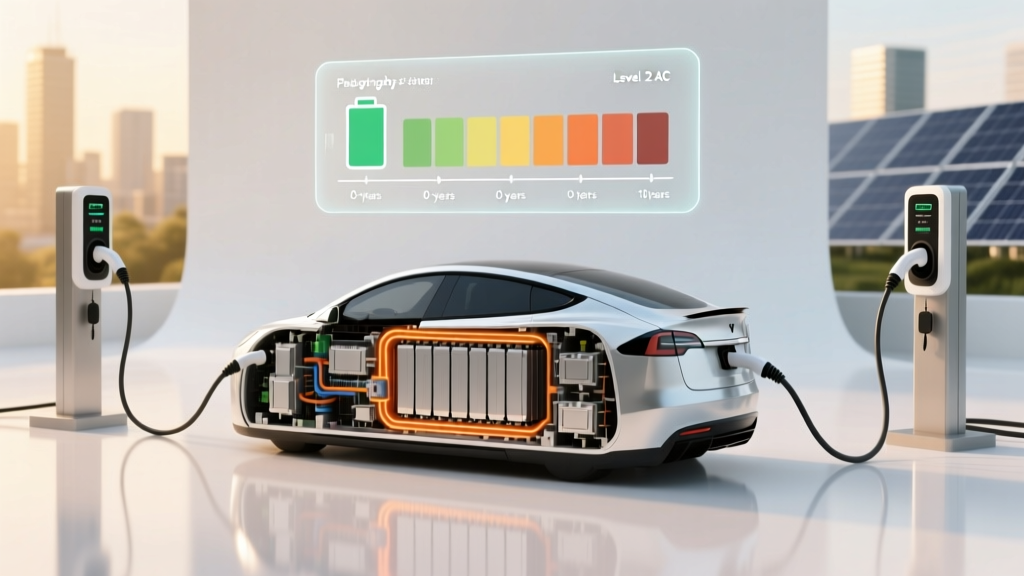
But cycle count is only part of the picture. Calendar aging — the slow chemical changes that occur regardless of use — also plays a role. A vehicle driven 12,000 miles per year will see roughly 2–3% capacity loss annually in the first few years, tapering to about 1% per year afterward. Here's what the data actually shows:
Typical EV Battery Degradation Curve (NMC/NCA Chemistry, Liquid-Cooled)
- Year 1 / 12,000 mi: ~2–3% loss (initial formation loss)
- Year 2 / 24,000 mi: ~4–5% total loss from new
- Year 4 / 48,000 mi: ~7–9% total loss
- Year 6 / 72,000 mi: ~9–12% total loss
- Year 8 / 96,000 mi: ~10–14% total loss
- Year 10 / 120,000 mi: ~12–17% total loss
Sources: Geotab fleet data (6,300+ vehicles), Recurrent Auto battery health reports. Individual results vary with climate, charging habits, and chemistry.
LFP (lithium iron phosphate) packs degrade more slowly in many conditions, often losing just 5–8% over eight years of typical use. Tesla's 2021 Impact Report noted that Model 3 vehicles with LFP packs retained approximately 92% of original capacity after 150,000 miles. These numbers are why the fear of a five-year battery cliff is largely a myth for modern, thermally managed EVs.
LFP vs NMC/NCA: Which Chemistry Is Better and Why?
Not all lithium-ion batteries are identical. The cathode chemistry fundamentally shapes energy density, longevity, cold-weather behavior, and cost. In 2026, two families dominate the US EV market:
| Attribute | LFP (Lithium Iron Phosphate) | NMC / NCA (Nickel Manganese Cobalt / Nickel Cobalt Aluminum) |
|---|---|---|
| Energy Density | Lower (~160 Wh/kg cell-level) | Higher (~250–300 Wh/kg cell-level) |
| Cycle Life | 3,000–5,000+ cycles to 80% SoH | 1,000–2,000 cycles to 80% SoH |
| Calendar Aging | Slower degradation at high SoC | Faster degradation if held at 100% SoC |
| Cold Performance | Moderately worse below 32°F; more range loss | Better low-temp performance, but still reduced |
| 100% Charging Tolerance | Can be charged to 100% regularly without harm | Best kept at 80% daily; 100% only for trips |
| Cost | ~15–25% cheaper per kWh | Higher due to nickel/cobalt content |
| Common In | Tesla Model 3/Y RWD, Ford Mustang Mach-E Select (LFP trims), BYD, Rivian Standard | Long-range/performance trims, Hyundai Ioniq 5/6, BMW iX, most premium EVs |
| SoC Estimation | Flat voltage curve makes % harder to gauge | More linear voltage curve; easier SoC estimation |
The practical takeaway: If you want a lower-cost pack you can charge to 100% every night without guilt, LFP is the lithium ion care choice for daily commuting. If you need maximum range for road trips and can commit to an 80% daily charge limit, NMC/NCA delivers more miles per kWh of battery weight. Neither is universally "better" — the right choice depends on your driving pattern and charging access.
What Does the EV Battery Warranty Actually Cover?
Federal law mandates that EV batteries carry a minimum warranty of 8 years or 100,000 miles (10 years/150,000 miles in California Air Resources Board states). But the details matter enormously. A warranty only triggers when capacity drops below a specified threshold — and that threshold varies by automaker.
| Automaker | Duration / Mileage | Capacity Retention Threshold | Notes |
|---|---|---|---|
| Tesla (Model 3/Y NMC) | 8 yr / 120,000 mi | 70% | Long Range & Performance trims |
| Tesla (Model 3/Y LFP) | 8 yr / 100,000 mi | 70% | RWD / Standard Range |
| Hyundai / Kia | 10 yr / 100,000 mi | 70% | Among the longest coverage terms |
| Ford (Mach-E, F-150 Lightning) | 8 yr / 100,000 mi | 70% | Covers battery and hybrid/electric components |
| General Motors (Ultium) | 8 yr / 100,000 mi | 70% (some trims 60% at yr 8) | Verify specific model terms at purchase |
| BMW | 8 yr / 100,000 mi | 70% | Includes i4, iX, i7 |
| Rivian | 8 yr / 175,000 mi (Max pack) | 70% | Standard pack: 8 yr / 120,000 mi |
Key warranty nuances:
- Threshold matters. A 70% threshold means a 300-mile EPA vehicle could drop to 210 miles before the warranty applies. Most modern packs never reach this under normal use.
- What's covered: Defects, excessive degradation below the threshold, and module/pack replacement. Damage from accidents, flooding, or unauthorized modifications is excluded.
- Transferability: Most factory battery warranties transfer to second owners, which supports EV resale values.
- Out-of-pocket risk: If you're outside warranty and need replacement, costs are real. See the next section.
How Much Does an EV Battery Replacement Cost?
Replacement cost is the number one fear among prospective EV buyers — and the least likely expense they'll actually face. According to data from Recurrent Auto, fewer than 1.5% of EVs in their study fleet of 15,000 vehicles needed a battery replacement outside of a recall or warranty claim. Most packs simply outlive the vehicle.
When replacement is necessary — typically after a collision, manufacturing defect, or extremely high-mileage use — costs scale with pack size:
| Vehicle Class / Example | Battery Size | Estimated Cost Range |
|---|---|---|
| Compact (Chevrolet Bolt, Nissan Leaf) | 40–65 kWh | $6,500 – $14,000 |
| Midsize sedan (Tesla Model 3, Hyundai Ioniq 6) | 60–82 kWh | $10,000 – $18,000 |
| Midsize SUV (Tesla Model Y, Ford Mach-E) | 70–91 kWh | $12,000 – $20,000 |
| Full-size truck/SUV (F-150 Lightning, Rivian R1T, GMC Hummer EV) | 100–215 kWh | $18,000 – $35,000+ |
Context that matters: Battery cell prices have fallen roughly 90% since 2010, from over $1,100/kWh to approximately $100–$130/kWh at the cell level in 2026. Module-level repairs (replacing only degraded sections rather than the full pack) are increasingly available from independent EV shops for 40–60% less than full-pack replacement. As packs age out of warranty in the late 2020s and 2030s, the aftermarket repair ecosystem will continue to grow and reduce costs further.
Factors That Accelerate Battery Degradation
Not all miles are created equal when it comes to battery wear. Research from battery analytics firms and OEM data shows that five factors dominate capacity loss:
5 Factors That Shorten EV Battery Life (Ranked by Impact)
- Sustained high State of Charge (SoC): Storing an NMC/NCA battery at 100% for days or weeks accelerates electrolyte decomposition. LFP is more tolerant, but the principle still applies. Fix: Set daily charge limit to 80% (NMC) or 100% only when needed (LFP).
- Frequent DC fast charging at high power: Repeatedly charging above 100 kW generates heat that stresses cells. Occasional fast charging is fine; daily reliance on 250–350 kW chargers measurably increases degradation. Fix: Use Level 2 (7–19 kW) for daily charging; reserve DCFC for road trips.
- Extreme heat exposure: Prolonged ambient temperatures above 95°F, especially combined with high SoC, cause permanent capacity loss. Vehicles in Phoenix or Houston show slightly higher degradation rates than those in Seattle or Minneapolis. Fix: Park in shade/garages when possible; precondition while plugged in.
- Deep discharge cycles: Regularly driving to 0% or near-zero SoC stresses the anode. The bottom 10% of the battery is a buffer zone you rarely access, but repeatedly hitting it isn't ideal. Fix: Charge before dropping below 10–15%.
- Cold charging without preconditioning: Charging a cold battery (below 40°F) at high power can cause lithium plating on the anode — a permanent degradation mechanism. Fix: Always use the vehicle's battery preconditioning feature before DC fast charging in cold weather.
A note on fast charging specifically: a 2024 study by Geotab found that vehicles using DC fast charging more than three times per month showed an average degradation rate 1.3 percentage points higher per year than those using primarily Level 2. The difference is real but modest — not the battery-killer that early EV forums feared. Modern thermal management systems have made fast charging far safer than it was for first-generation EVs like the early Nissan Leaf.
How to Check and Monitor Your Battery's State of Health
State of Health (SoH) is the percentage of original capacity your battery retains. A new battery is 100% SoH; a battery that holds 75 kWh of its original 82 kWh is at roughly 91% SoH. Monitoring this number is essential lithium ion care — and it's easier than most owners realize.
Built-In Vehicle Methods
- Tesla: The service menu (accessed via the vehicle settings in recent software versions) displays a battery health test. Running it over several days gives a SoH estimate within ~2%.
- Hyundai/Kia (E-GMP): The infotainment system's EV diagnostics page shows estimated battery condition as a percentage.
- Ford: The FordPass app displays battery health indicators for Mach-E and F-150 Lightning.
- BMW: The iDrive system and My BMW app include a battery health certificate.
Third-Party Tools
- OBD-II dongles + apps: Devices like the OBDLink SX paired with apps such as EV Health or LeafSpy (Nissan-specific) can read the battery management system (BMS) directly for precise SoH data.
- Recurrent Auto: A free service that connects to your vehicle's telematics and provides monthly battery health reports benchmarked against similar vehicles.
- Dealer diagnostic: Most dealerships can run a full battery health report during service visits — ask for it by name.
What to watch for: A sudden drop in SoH (more than 3–4% in a month) could indicate a weak cell module and warrants a service visit. Gradual, linear decline of 1–2% per year is entirely normal and no cause for concern.
Daily Lithium Ion Care: Habits That Extend Battery Life
If you take nothing else from this guide, internalize these evidence-based practices. They represent the consensus from battery researchers at Argonne National Laboratory, OEM engineering guidelines, and fleet data from hundreds of thousands of vehicles:
- Set a daily charge limit of 80% for NMC/NCA vehicles. For LFP, charging to 100% at least once weekly is actually recommended to help the BMS recalibrate cell balancing.
- Use scheduled charging so the battery reaches your target SoC just before departure, rather than sitting at high charge for hours.
- Precondition the battery before fast charging in cold weather. Every modern EV with a heat pump or resistive heater supports this — activate it via the app 15–30 minutes before arriving at a DCFC station.
- Avoid leaving the vehicle at 0% or 100% for extended periods. If storing for more than a week, target 50–60% SoC.
- Charge at home on Level 2 (7–11 kW) whenever possible. Slower charging generates less heat and is gentler on the cells.
- Keep the battery cool in summer. Garage parking and preconditioning while plugged in reduce thermal stress. Some vehicles (Tesla, Hyundai E-GMP) actively cool the battery while parked if plugged in and ambient temps are high.
- Don't baby it too much. Occasional 100% charges for road trips, occasional fast charges, and even the rare deep discharge won't meaningfully harm a modern pack. The BMS is sophisticated — it manages buffers, thermal limits, and charge curves automatically. Your job is to avoid chronic extremes, not to obsess over every percentage point.
What's Next: Solid-State Batteries and Beyond
While current lithium-ion technology is mature and reliable, next-generation chemistries are in active development. Here's a realistic, hype-free timeline:
- Silicon-dominant anodes: Companies like Sila Nanotechnologies and Group14 are replacing graphite anodes with silicon composites, increasing energy density by 20–40%. These are entering production in select 2025–2027 model-year vehicles (notably in partnership with Mercedes-Benz and Panasonic). Expect incremental adoption rather than a sudden industry shift.
- Semi-solid-state batteries: NIO's 150 kWh semi-solid pack is available in China as of 2024, offering over 600 miles of range. US availability remains unannounced. These use a hybrid liquid/solid electrolyte and represent a bridge technology.
- Full solid-state batteries: Toyota has announced a target of 2027–2028 for limited production of solid-state EVs, with claims of 450+ mile range and 10-minute fast charging. Samsung SDI and QuantumScape are pursuing similar timelines. However, manufacturing scale-up remains the primary obstacle — lab results and mass production are very different challenges.
- Sodium-ion batteries: CATL and BYD are producing sodium-ion cells for lower-cost, shorter-range EVs in China. These trade energy density for cost and resource availability. US-market adoption is not expected before 2028 at the earliest.
The practical reality: If you're buying an EV in 2026, you're buying lithium-ion — and that's a good thing. The technology is proven, the degradation data is well-understood, and the warranty protections are strong. Waiting for solid-state means waiting years for limited availability at premium prices. The best battery is the one that fits your needs today, maintained with the lithium ion care practices outlined above.
Frequently Asked Questions
How long do EV batteries last in years and miles?
Most modern EV batteries are designed to last 15–20 years or 200,000+ miles before dropping below 70% of their original capacity. Fleet data from Geotab and Recurrent Auto shows average degradation of roughly 1.5–2% per year, meaning a 300-mile EV will still offer approximately 255–270 miles of range after a decade of typical use. Many first-generation Tesla Model S vehicles from 2012–2013 are still running on their original packs with 80–85% capacity retention after 150,000+ miles.
How much does an EV battery cost to replace?
Full battery replacement costs range from approximately $6,500 for a compact EV (40–65 kWh pack) to $20,000+ for a large SUV or truck (100+ kWh pack), including parts and labor. However, fewer than 2% of EVs ever need an out-of-warranty replacement. Module-level repairs — replacing only the degraded section of the pack — are increasingly available for 40–60% less than a full swap. Always check warranty status first; federal law mandates a minimum of 8 years/100,000 miles.
What does the battery warranty cover?
EV battery warranties cover defects in materials and workmanship, plus capacity loss below a specified threshold (typically 70% of original capacity) within the warranty period (usually 8 years/100,000 miles, or 10 years/100,000 miles in CARB states). They do not cover damage from accidents, flooding, unauthorized modifications, or normal wear above the threshold. Most warranties transfer to second owners.
How do I check my EV battery health?
Most modern EVs offer built-in battery health indicators in the infotainment system or companion app (Tesla's service menu, Hyundai's EV diagnostics, FordPass). For more precise data, OBD-II adapters paired with apps like LeafSpy or EV Health can read State of Health directly from the battery management system. Services like Recurrent Auto provide free ongoing monitoring by connecting to your vehicle's telematics.
LFP vs NMC — which battery is better for me?
Choose LFP if you want lower cost, longer cycle life, and the ability to charge to 100% daily without accelerated degradation — ideal for commuters with home charging. Choose NMC/NCA if you need maximum range for frequent road trips and can maintain an 80% daily charge limit. LFP performs slightly worse in extreme cold; NMC offers better cold-weather range retention. Neither is universally superior — the right choice matches your driving pattern.
Is it bad to fast charge my EV every day?
Daily DC fast charging at high power (150+ kW) accelerates degradation modestly — fleet data suggests roughly 1–2 additional percentage points of capacity loss per year compared to Level 2 charging. It's not catastrophic, but it's not ideal. For daily charging, a home Level 2 station (7–19 kW) is gentler on the battery and significantly cheaper per kWh. Reserve DC fast charging for road trips and occasions when you genuinely need a quick top-up.
Does cold weather permanently damage my EV battery?
Cold weather temporarily reduces range (expect 15–30% loss below 32°F, up to 40% below 0°F), but this is reversible — capacity returns as temperatures warm. The real risk is charging a cold battery at high power, which can cause lithium plating. Always use your vehicle's preconditioning feature before DC fast charging in cold weather. Modern BMS systems will also throttle charge speed if the battery is too cold, providing built-in protection.
Sources consulted: Geotab EV Battery Degradation Study, Recurrent Auto Battery Longevity Data, EPA Fuel Economy for model-specific range and efficiency data, and manufacturer warranty documentation for Tesla, Hyundai, Ford, BMW, and Rivian (2026 model year).