From Lead-Acid to Lithium: A Decade of Battery Evolution
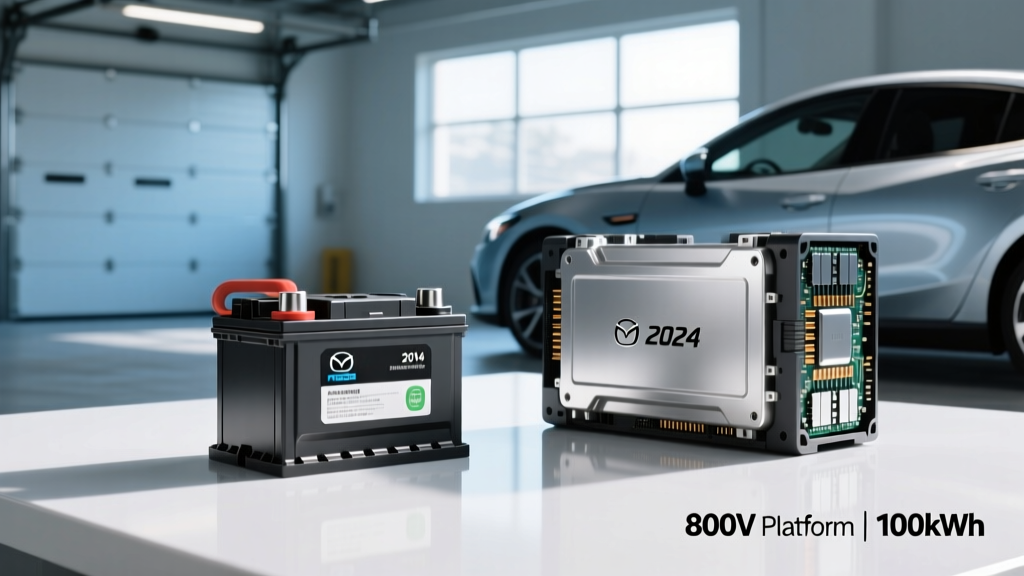
If you've ever searched for a 2014 Mazda 3 battery, you were almost certainly looking for a 12-volt lead-acid starter battery — the kind that sits under the hood, cranks a gasoline engine, and costs $120 to $200 at an auto parts store. That battery has nothing in common with the high-voltage lithium-ion traction packs powering today's electric vehicles. But the contrast is exactly what makes this comparison useful: in just over a decade, automotive battery technology has undergone a fundamental shift in chemistry, energy density, longevity, and cost structure.
This guide uses that generational gap as a lens to explain how modern EV batteries actually work, what they cost, how long they last, and what emerging technologies like solid-state cells might deliver. Whether you're cross-shopping a used Mazda 3 against a new EV or simply trying to understand what you're buying when you commit to an electric powertrain, the data below will ground your decision in real numbers.
The 2014 Mazda 3 Battery: What You're Actually Replacing
The 2014 Mazda 3 uses a conventional 12V flooded lead-acid or AGM (absorbent glass mat) battery, typically a Group 35 or Group 25 size depending on trim and engine. Its job is simple: provide a burst of cold-cranking amps (CCA) to start a 2.0L or 2.5L SkyActiv-G gasoline engine, then get recharged by the alternator. Expected lifespan is 3 to 5 years, and replacement runs $130 to $220 at retailers like AutoZone or Advance Auto Parts.
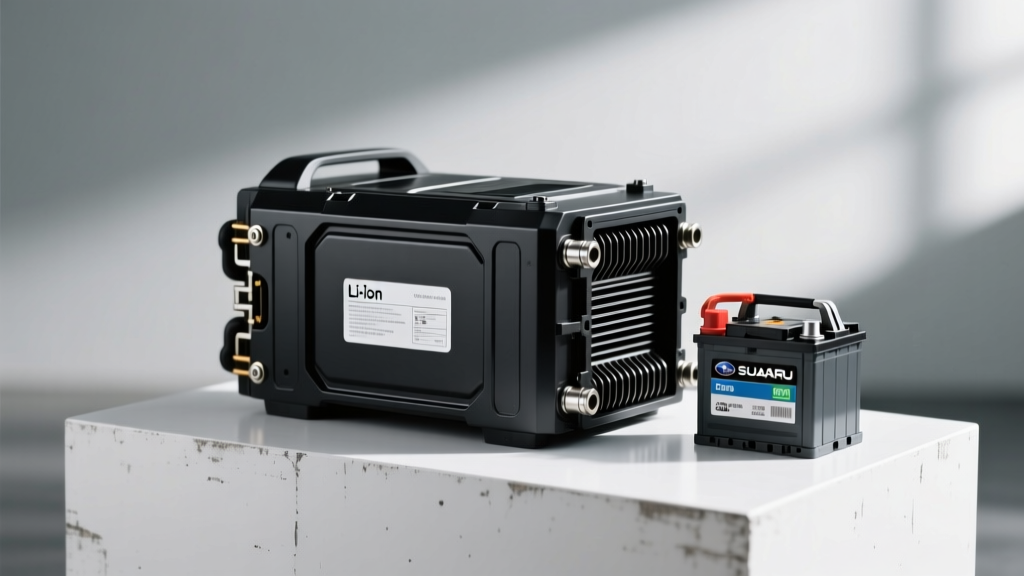
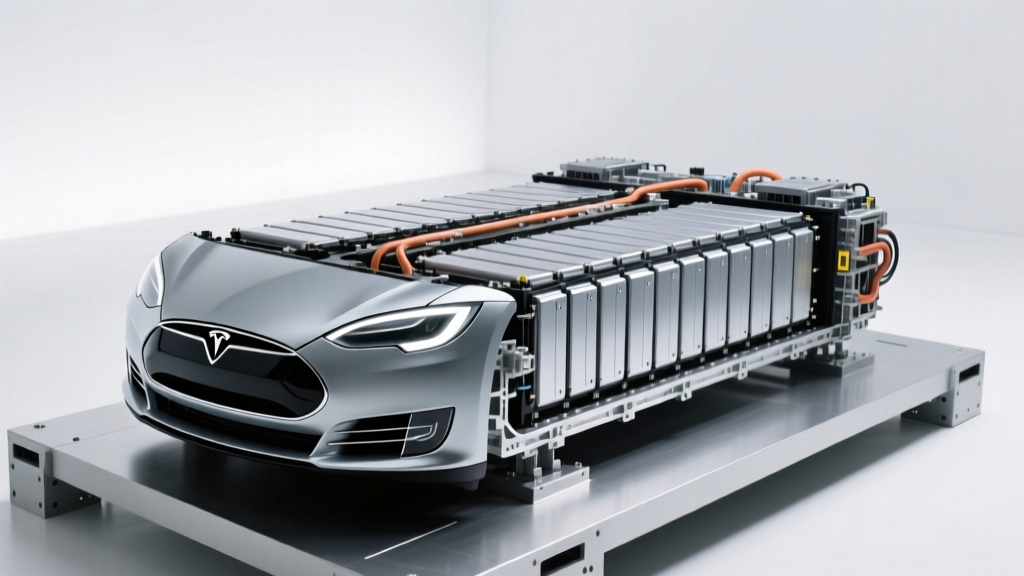
This battery stores roughly 0.5 to 0.7 kWh of energy — enough to turn a starter motor a few dozen times. It has no role in propelling the vehicle. By contrast, a modern EV traction battery stores 60 to 100+ kWh and is the single most expensive component in the car. Understanding this distinction is essential: when EV owners talk about "battery replacement," they mean a high-voltage lithium-ion pack, not a $150 under-hood cell.
EV Battery Chemistry: LFP vs NMC Explained
Modern EV batteries use lithium-ion cells, but not all lithium-ion is the same. The two dominant chemistries in 2026 are LFP (lithium iron phosphate) and NMC/NCA (nickel manganese cobalt / nickel cobalt aluminum). Each has distinct trade-offs that affect range, cost, longevity, and cold-weather performance.
| Attribute | LFP (LiFePO4) | NMC / NCA |
|---|---|---|
| Energy Density | Lower (~160 Wh/kg cell-level) | Higher (~250-300 Wh/kg cell-level) |
| Typical Use | Standard-range models (Tesla Model 3 RWD, BYD, base Ford Mustang Mach-E) | Long-range and performance models (Tesla LR, Hyundai Ioniq 5, Rivian) |
| Cycle Life | 3,000-5,000+ cycles to 80% capacity | 1,000-2,000 cycles to 80% capacity |
| Cold Performance | More range loss below 32°F (~30-40% reduction) | Better cold retention (~20-30% reduction) |
| Charging to 100% | Recommended periodically for BMS calibration | Best kept at 80% daily; 100% for trips only |
| Cost | Lower (no cobalt or nickel) | Higher (cobalt/nickel supply chain) |
| Thermal Stability | Excellent — less prone to thermal runaway | Good — requires more active thermal management |
Which is better? It depends on your use case. If you commute short distances, charge at home nightly, and live in a moderate climate, LFP offers superior longevity and lower cost. If you need maximum range per charge, frequently drive in cold weather, or want the lightest possible pack, NMC remains the better fit. Neither chemistry is universally superior — the choice is application-specific.
How Long Do EV Batteries Actually Last?
The short answer: far longer than most buyers expect. Data from fleet operators, manufacturer warranty claims, and independent studies consistently show that modern liquid-cooled EV batteries retain 85-95% of their original capacity after 100,000 miles. Complete failure before 150,000 miles is rare outside of manufacturing defects (which warranty covers).
Typical Degradation Curve (NMC, Liquid-Cooled)
| Mileage | Average Capacity Retained | Real-World Example |
|---|---|---|
| 25,000 mi | 95-97% | Tesla Model 3 LR: ~300 mi → ~290 mi effective range |
| 50,000 mi | 92-95% | Hyundai Ioniq 5: ~303 mi EPA → ~285 mi real-world |
| 100,000 mi | 87-92% | Chevrolet Bolt EUV: ~247 mi EPA → ~225 mi observed |
| 150,000 mi | 82-88% | Older Nissan Leaf (passive cooling): higher loss, ~75-82% |
| 200,000 mi | 75-85% | High-mileage Tesla Model S: still functional, noticeable range reduction |
Sources: fueleconomy.gov, Tesla Impact Reports, Recurrent Auto battery data (2025). Passive-cooled packs (early Leaf, early Bolt) degrade faster than liquid-cooled systems.
The critical insight: degradation is non-linear. Most capacity loss occurs in the first 20,000-30,000 miles (the "break-in" period), after which the curve flattens considerably. A battery that retains 92% at 50,000 miles is likely to retain 85%+ at 150,000 miles. This is why most EVs will outlive their original owners with the original battery pack intact.
What the Battery Warranty Actually Covers
Federal law in the United States mandates a minimum EV battery warranty of 8 years / 100,000 miles (10 years / 150,000 miles in CARB states like California, New York, and Massachusetts). But the details matter — specifically, the capacity retention threshold that triggers a warranty claim.
| Manufacturer | Warranty Term | Capacity Threshold | Notes |
|---|---|---|---|
| Tesla (Model 3/Y LFP) | 8 yr / 120,000 mi | 70% retention | LFP models get higher mileage allowance |
| Tesla (Model 3/Y NMC LR) | 8 yr / 120,000 mi | 70% retention | Long Range and Performance trims |
| Hyundai / Kia | 10 yr / 100,000 mi | 70% retention | Among the longest calendar coverage |
| Ford (Mach-E, F-150 Lightning) | 8 yr / 100,000 mi | 70% retention | Standard across BEV lineup |
| GM (Ultium platform) | 8 yr / 100,000 mi | 70% retention | Covers Bolt EUV, Blazer EV, Silverado EV |
| Rivian | 8 yr / 175,000 mi | 70% retention | Highest mileage threshold in segment |
| BMW | 8 yr / 100,000 mi | 70% retention | i4, iX, i7 covered |
Warranty terms as of 2026 model year. Always verify with the manufacturer's official warranty guide — terms can change annually. Source: manufacturer press sites and IRS §30D guidance (which references warranty compliance for credit eligibility).
A 70% threshold means that if your 80 kWh pack can no longer hold at least 56 kWh within the warranty period, the manufacturer must repair or replace it at no cost. In practice, very few liquid-cooled batteries fall below 70% within 8 years unless they have a defect. The warranty is effectively insurance against manufacturing failure, not normal wear.
EV Battery Replacement Cost: What the Data Shows
This is where fear-mongering runs rampant, so let's anchor the discussion in actual figures. Yes, an out-of-warranty EV battery replacement is expensive — but it's also rarely needed within the vehicle's useful life.
| Vehicle / Pack Size | Battery Capacity | Estimated Replacement Cost (2026) | Typical Replacement Trigger |
|---|---|---|---|
| Chevrolet Bolt EV/EUV | 65 kWh (NMC) | $14,000 - $16,000 | Defect or damage; rare under normal use |
| Tesla Model 3 (LFP) | 60 kWh | $12,000 - $15,000 | Collision damage or extreme age (200k+ mi) |
| Tesla Model Y LR (NMC) | 75 kWh | $16,000 - $20,000 | Out-of-warranty failure; uncommon |
| Hyundai Ioniq 5 | 77.4 kWh (NMC) | $18,000 - $22,000 | Defect outside 10yr warranty window |
| Ford F-150 Lightning Ext. | 131 kWh (NMC) | $25,000 - $32,000 | Large pack = higher cost; rare scenario |
| Rivian R1T (Large Pack) | 128 kWh (NMC) | $22,000 - $28,000 | Out-of-warranty; high-mileage fleet use |
Costs include parts and labor at OEM service centers. Independent EV shops and refurbished packs can reduce costs by 20-40%. Prices trending downward as cell costs decline. Source: service estimates from OEM dealerships, NHTSA recall/service bulletins.
Context matters: a $16,000 battery replacement on a 12-year-old EV with 180,000 miles is economically questionable — but that's also a vehicle nearing the end of its service life regardless of powertrain. A gasoline car at that mileage might need a $5,000-$8,000 transmission replacement or $4,000 in catalytic converter work. The difference is that EV battery failure is a low-probability event, while gas powertrain repairs at high mileage are nearly certain.
Factors That Accelerate (or Preserve) Battery Life
Not all miles are equal when it comes to battery wear. The following factors have the largest measurable impact on long-term capacity retention:
Battery Care Best Practices
- Daily charge limit: Set to 80% for NMC batteries; 100% is acceptable for LFP. Charging to 100% daily on NMC accelerates electrolyte oxidation and lithium plating.
- DC fast charging frequency: Occasional use (road trips) is fine. Daily DCFC at 150+ kW increases cell temperature and mechanical stress. Studies show exclusive DCFC use can add 2-4% additional degradation over 100k miles vs. Level 2 charging.
- Extreme heat exposure: Prolonged parking in 100°F+ ambient without thermal management active degrades cells. Liquid-cooled packs handle this far better than passive-cooled (early Nissan Leaf).
- Extreme cold charging: Charging below 25°F without preconditioning causes lithium plating on the anode — permanent capacity loss. Always use the vehicle's preconditioning feature before cold-weather DCFC.
- State of charge storage: If storing an EV for weeks, leave it at 50-60% SoC. Storing at 100% or below 10% for extended periods accelerates degradation.
- Regenerative braking settings: High regen in cold weather can push charge current into a cold battery. Most modern EVs limit regen automatically when the pack is cold, but it's worth understanding.
How to Check Your Battery's State of Health (SoH)
State of Health (SoH) is the percentage of original capacity your battery can still hold. A new pack is 100% SoH; a pack that held 80 kWh when new but now holds 72 kWh is at 90% SoH.
Methods to check SoH:
- In-vehicle display: Tesla shows rated range vs. original — a Model 3 LR that originally displayed 358 mi at 100% but now shows 330 mi is at ~92% SoH. Hyundai/Kia includes a battery health indicator in the EV menu.
- OBD-II diagnostics: Tools like the OBDLink SX paired with apps such as ABRP (A Better Route Planner) or Scan My Tesla can read the BMS-reported SoH directly. This is the most accurate consumer-accessible method.
- Third-party services: Companies like Recurrent Auto offer free battery health reports that compare your pack against fleet averages for your make, model, and mileage.
- Dealer diagnostic: Any OEM service center can run a full pack health scan, typically as part of a warranty claim evaluation.
For used-EV buyers, SoH is the single most important data point — more predictive of remaining ownership cost than exterior condition or interior wear. Always request or verify SoH before purchasing a used EV.
Emerging Battery Tech: Solid-State and Beyond
Several next-generation battery technologies are in development, but none are commercially available in production EVs as of 2026:
- Solid-state batteries: Replace the liquid electrolyte with a solid ceramic or polymer, promising higher energy density (400+ Wh/kg), faster charging, and improved safety. Toyota, Samsung SDI, and QuantumScape are leading development. Toyota has announced a 2027-2028 production target, but initial deployment will likely be limited to low-volume, high-end models. Mass-market availability is realistically 2030+.
- Silicon anode cells: Replace graphite anodes with silicon, increasing energy density by 20-40%. Sila Nanotechnologies and Group14 are supplying early production cells. Expect to see these in premium EVs by 2027-2028.
- Sodium-ion batteries: Use abundant sodium instead of lithium, dramatically reducing cost. CATL has begun production for Chinese-market EVs. Energy density is lower (~120 Wh/kg), making these suitable for urban runabouts and energy storage, not long-range vehicles. US-market availability is uncertain.
These technologies are real and well-funded, but the gap between lab announcement and mass production at automotive scale is typically 5-8 years. Buyers should make decisions based on today's proven LFP and NMC technology, not speculative future chemistries.
Frequently Asked Questions
How long do EV batteries last in years and miles?
Most modern liquid-cooled EV batteries retain 85-92% of their original capacity at 100,000 miles and 80-88% at 150,000 miles. In calendar years, expect 15-20+ years of service life before capacity drops below 70%. The vehicle's body, suspension, and interior will typically wear out before the battery becomes unusable.
How much does an EV battery cost to replace?
Between $12,000 and $32,000 depending on pack size and vehicle, including labor at an OEM service center. Refurbished packs and independent shops can reduce this by 20-40%. However, out-of-warranty replacement is rarely needed — most batteries outlast the car's economic life.
What does the EV battery warranty cover?
Federal minimum is 8 years / 100,000 miles (10 yr / 150,000 mi in CARB states). The warranty covers capacity loss below a threshold — typically 70% of original capacity. If your 80 kWh pack drops below 56 kWh within the warranty term, the manufacturer must repair or replace it at no cost.
How do I maximize my EV battery's health?
Charge NMC batteries to 80% daily (100% for LFP), minimize exclusive DC fast charging, precondition the battery before cold-weather charging, avoid storing at 100% or below 10% SoC for extended periods, and use the vehicle regularly rather than letting it sit for weeks.
LFP vs NMC — which is better?
LFP is better for daily commuting, home charging, warm climates, and maximum cycle life at lower cost. NMC is better for long-range driving, cold climates, and performance applications where energy density matters. Neither is universally superior — choose based on your driving pattern and climate.
Is the 2014 Mazda 3 battery the same as an EV battery?
No. The 2014 Mazda 3 uses a 12V lead-acid starter battery (~0.5 kWh, $130-$220, 3-5 year lifespan) that cranks a gasoline engine. An EV traction battery is a high-voltage lithium-ion pack (60-130+ kWh, $12,000-$32,000 replacement, 15-20+ year lifespan) that propels the vehicle. They share no components, chemistry, or function.