Why Lithium Brine Matters to Your Next EV Purchase
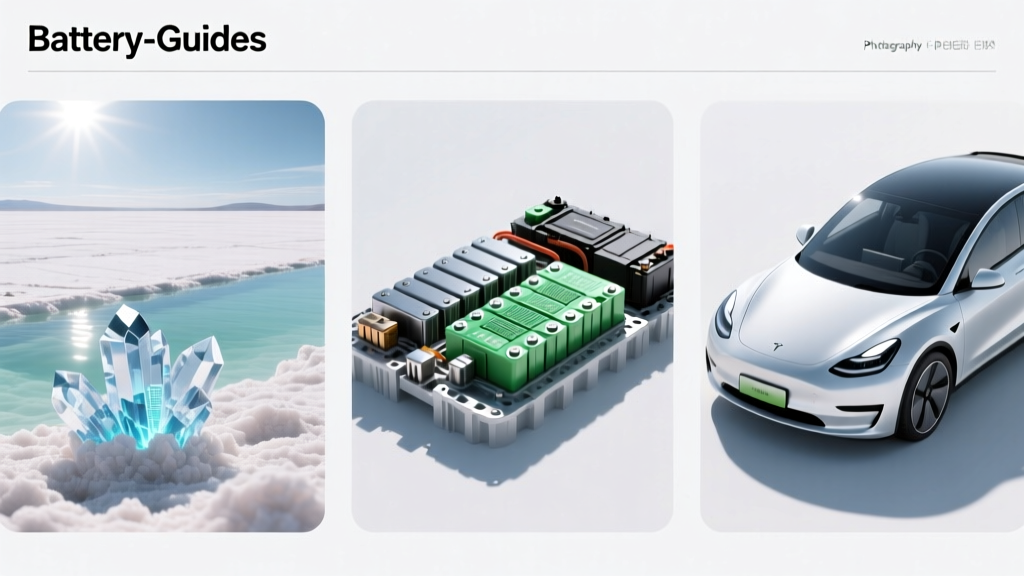
Every EV battery begins as raw material, and a significant share of the world's lithium supply originates from lithium brine — mineral-rich saltwater pumped from underground reservoirs in places like Chile's Atacama Desert, Argentina's salt flats, and increasingly, Nevada's Clayton Valley. The brine is evaporated and processed into lithium carbonate or lithium hydroxide, the precursor chemicals that become the cathode in your EV's high-voltage traction battery.
For buyers, the connection between lithium brine and the sticker on the showroom floor is more than academic. The type of lithium chemistry a manufacturer chooses — and where the raw materials originate — directly determines your EV's range, charging behavior, long-term degradation, and even eligibility for the federal §30D clean vehicle tax credit, which now includes critical-mineral sourcing requirements.
This guide traces the path from lithium brine extraction to the battery pack under your floor, then gives you the exact numbers you need: degradation rates by chemistry, warranty thresholds, real-world replacement costs, and actionable habits to maximize State of Health (SoH) over a decade of ownership.
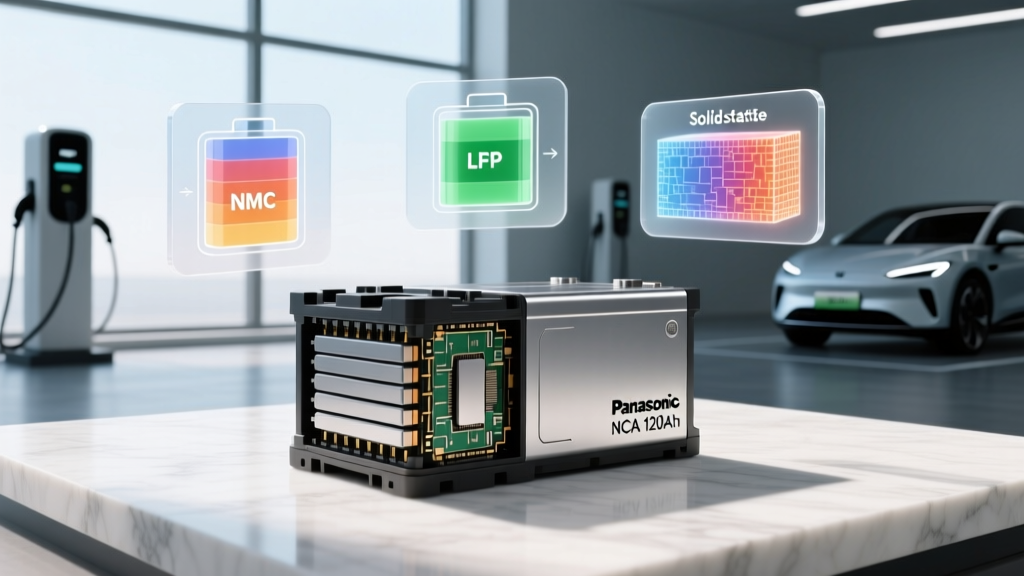
Battery Chemistry 101: LFP vs NMC vs NCA
Two dominant cathode chemistries power today's EVs. Understanding the trade-offs is the single most important battery decision you'll make as a buyer.
| Attribute | LFP (Lithium Iron Phosphate) | NMC / NCA (Nickel Manganese Cobalt / Nickel Cobalt Aluminum) |
|---|---|---|
| Energy density (cell-level) | ~160–180 Wh/kg | ~220–300 Wh/kg |
| Typical pack size in 2026 models | 50–77 kWh usable | 75–131 kWh usable |
| Cycle life (to 80% SoH) | 3,000–5,000+ cycles | 1,000–2,000 cycles |
| Cold-weather range retention | Moderate loss (~20–30% at 20°F) | Similar loss; heat-pump dependent |
| Fast-charge tolerance | Excellent — tolerates frequent DCFC | Good — benefits from preconditioning |
| Recommended daily SoC | 100% OK (no calendar stress) | 80% daily, 100% for trips only |
| Cobalt/nickel content | None (iron + phosphate) | Significant (supply-chain and ethical concerns) |
| Cost per kWh (pack-level, 2026) | ~$90–$110/kWh | ~$120–$150/kWh |
| Example 2026 vehicles | Tesla Model 3 RWD, Ford Mustang Mach-E Select (LFP option), BYD Seal | Hyundai Ioniq 5 Long Range, Kia EV6 GT-Line, Tesla Model Y Long Range, Rivian R1T |
Which is better? There is no universal winner. If you need maximum range in a heavy SUV or live in a region with extreme highway commutes, NMC's higher energy density delivers more miles per kilogram of pack weight. If you prioritize longevity, plan to keep the vehicle 10+ years, charge at home nightly, and want the simplicity of charging to 100% daily without degradation anxiety, LFP is the stronger choice. Tesla's standard-range Model 3 uses LFP precisely for this reason — lower cost, longer cycle life, and simpler ownership habits.
How Long Do EV Batteries Actually Last?
The fear that EV batteries need replacement every few years is not supported by fleet data. Most modern lithium-ion traction batteries outlast the vehicle they're installed in.
Real-World Degradation Data Points (2024–2026 fleet aggregates):
- Tesla Model 3/Y (NMC/NCA, 2018–2022 cohorts): Average ~12% capacity loss at 150,000 miles, per Tesla's 2024 Impact Report. Most packs retain ~88% State of Health at that mileage.
- Nissan Leaf (NMC, passively cooled, 2013–2017): Earlier generations with passive air cooling showed 20–30% loss by 80,000 miles in hot climates — a cautionary tale that drove the industry toward active liquid thermal management.
- Chevrolet Bolt EV (NMC, liquid-cooled): Fleet data shows ~8–10% degradation at 100,000 miles, consistent with modern thermal management effectiveness.
- LFP-equipped vehicles (Tesla Model 3 RWD, BYD models): Projected <5% loss at 100,000 miles based on cycle-life testing; long-term fleet data still maturing as LFP adoption scaled post-2021.
Translated to years: a typical driver covering 12,000–15,000 miles annually can expect an NMC pack to retain 80–90% of original capacity after 8–10 years. LFP packs are projected to retain 90%+ over the same period, though real-world longitudinal data is still accumulating.
Battery Warranty Terms: What's Actually Covered
Federal regulations require a minimum 8-year/100,000-mile warranty on EV battery packs (10 years/150,000 miles in CARB states like California, New York, and Massachusetts). Here's how major manufacturers structure their coverage:
| Manufacturer | Warranty Period | Mileage Cap | Capacity Retention Threshold | What Triggers a Claim |
|---|---|---|---|---|
| Tesla (Model 3/Y) | 8 years | 100,000–120,000 mi (varies by trim) | 70% | SoH drops below 70% during warranty period |
| Hyundai / Kia | 8 years / 10 years (CARB states) | 100,000 / 150,000 mi | 70% | Measured capacity below 70% of original kWh |
| Ford (Mustang Mach-E, F-150 Lightning) | 8 years | 100,000 mi | 70% | Capacity loss exceeding 30% |
| Chevrolet (Equinox EV, Blazer EV) | 8 years | 100,000 mi | 60–70% (model-dependent) | Verified capacity below threshold |
| Rivian (R1T/R1S) | 8 years | 120,000 mi | 70% | SoH below 70% under normal use |
| BMW (iX, i4) | 8 years | 100,000 mi | 70% | Capacity below 70% of original |
The 70% threshold is the industry norm. That means a 75 kWh pack warrantied at 70% would qualify for repair or replacement only if usable capacity drops below ~52.5 kWh. In practice, very few liquid-cooled packs from 2019 onward have crossed that threshold within the warranty window — degradation has proven far more gradual than early skeptics predicted.
EV Battery Replacement Cost: When and How Much
Most EV owners will never need a full battery replacement. But if you plan to keep a vehicle past 200,000 miles, or buy a high-mileage used EV, knowing the cost landscape matters.
| Vehicle | Pack Size | Chemistry | Replacement Cost Range (parts + labor) | Typical Replacement Trigger |
|---|---|---|---|---|
| Tesla Model 3 RWD | ~60 kWh | LFP | $10,000–$14,000 | Rare before 250,000+ mi |
| Tesla Model Y Long Range | ~75 kWh | NMC/NCA | $14,000–$18,000 | 200,000–300,000 mi projected |
| Hyundai Ioniq 5 Long Range | ~77.4 kWh | NMC | $13,000–$17,000 | 200,000+ mi projected |
| Ford F-150 Lightning Extended | ~131 kWh | NMC | $22,000–$30,000 | Large pack = higher cost; rare need |
| Chevrolet Bolt EV | ~65 kWh | NMC | $9,000–$14,000 | Post-recall replacement packs improved |
| Nissan Leaf (40/62 kWh) | 40–62 kWh | NMC | $7,000–$12,000 | Passive cooling = earlier degradation in heat |
Context is critical: these costs apply to vehicles well outside their warranty window. For a $40,000 EV driven 15,000 miles/year, a replacement at year 15 (225,000 miles) represents a cost of roughly $0.03/mile over the vehicle's life — comparable to an engine or transmission rebuild on a gas vehicle at similar mileage. The narrative that EV batteries are a financial time bomb is not supported by the data for liquid-cooled packs from 2019 onward.
Five Factors That Accelerate Battery Degradation
Maximizing State of Health — Evidence-Based Habits:
- Avoid sustained 100% SoC (NMC/NCA only): Lithium-ion cells experience the most calendar stress at high voltage. For NMC packs, charge to 80% daily and reserve 100% for road trips. LFP owners can charge to 100% regularly — the chemistry is inherently stable at full charge, and Tesla actually recommends periodic 100% charges for LFP to recalibrate the BMS.
- Minimize DC fast charging when Level 2 is available: Occasional DCFC (road trips) is fine. Daily DCFC at 150+ kW adds thermal stress. Data from fueleconomy.gov and fleet studies suggest exclusive DCFC use can add 2–5% extra degradation over 100,000 miles versus predominantly Level 2 home charging.
- Precondition before fast charging: Cold batteries charge slowly and experience lithium plating risk. Use your vehicle's built-in preconditioning feature (navigating to a charger on Tesla, or using the app on Hyundai/Kia/GM) to warm the pack to optimal temperature before a DCFC session. This protects the cells and dramatically improves charge speed.
- Avoid extreme SoC + extreme heat: A fully charged pack sitting in 100°F+ ambient heat is the worst-case degradation scenario. If you live in a hot climate, park in shade or a garage, and don't charge to 100% unless you're driving soon.
- Don't let the pack sit at 0%: Deep discharge stresses cells and can trigger the BMS to lock out charging. If storing the vehicle, leave it at 50% SoC and plugged in if possible.
Monitoring Battery Health: How to Check State of Health
Most EVs don't display a prominent SoH percentage on the dashboard, but the data is accessible if you know where to look:
- Tesla: The in-car service menu (hold the model badge on the About screen for ~5 seconds, enter "service") reveals a battery health test that estimates remaining capacity. Third-party apps like Tessie or TeslaFi also track SoH over time using energy-in vs. energy-out calculations.
- Hyundai / Kia (E-GMP platform): The infotainment system's EV diagnostic screen shows estimated battery capacity. Dealers can run a more precise BMS readout during service visits.
- General Motors (Ultium platform): The myChevrolet/myCadillac app includes a battery health indicator. OnStar diagnostics can provide a detailed report.
- OBD-II diagnostic tools: Devices like the OBDLink MX+ paired with apps such as ABRP (A Better Routeplanner) or Car Scanner can read BMS-reported capacity on most EVs. This is the most reliable method for used-EV buyers evaluating a vehicle's pack condition before purchase.
- Dealer BMS readout: Any authorized service center can pull a formal State of Health report. Request this during routine service — it's often free and gives you a documented baseline.
Beyond Lithium Brine: Emerging Battery Technologies
The lithium brine supply chain is evolving alongside the chemistry it feeds. Here's where next-generation technology stands as of 2026 — with realistic timelines, not vaporware promises.
Silicon-dominant anodes: Companies like Sila Nanotechnologies and Group14 are replacing graphite anodes with silicon composites, boosting energy density by 15–25% without changing the cathode. Early deployments are appearing in premium vehicles (Mercedes-Benz has announced silicon-anode cells in the G-Class EV). Expect broader adoption by 2028–2030 as manufacturing scales.
Solid-state batteries: Toyota, Samsung SDI, and QuantumScape continue to prototype solid-state cells that replace the liquid electrolyte with a solid conductor, promising higher energy density, faster charging, and improved safety. Toyota has announced limited production in select models by 2027–2028, but volume manufacturing at competitive cost remains unproven. Solid-state is a genuine technological advance, not a marketing gimmick — but it is not available in any production vehicle you can buy today.
Sodium-ion batteries: CATL and BYD have begun producing sodium-ion cells that eliminate lithium entirely, using abundant sodium instead. These trade energy density (~120–150 Wh/kg) for ultra-low cost and excellent cold performance. Initial applications are in budget city cars and stationary storage in China. US-market adoption for passenger EVs is unlikely before 2029.
Direct lithium extraction (DLE): Rather than evaporating brine over months in open ponds, DLE technologies filter lithium ions directly from brine using membranes or sorbents, cutting extraction time to hours and reducing water use. Companies like EnergySource Minerals and Lilac Solutions are piloting DLE in California's Salton Sea region. If scaled, DLE could make domestic lithium brine a major US supply source, reducing reliance on imports and potentially improving the critical-mineral sourcing profile for §30D tax credit eligibility.
Frequently Asked Questions
How long do EV batteries last in years and miles?
Modern liquid-cooled EV batteries (2019 and newer) typically retain 80–90% of original capacity after 150,000–200,000 miles, which translates to 10–15 years for an average driver. LFP chemistries are projected to last even longer — 3,000–5,000 charge cycles before reaching 80% SoH, which could mean 300,000+ miles for a 250-mile-range vehicle. Very few owners will need a replacement within the 8-year/100,000-mile warranty window.
How much does an EV battery cost to replace?
Out-of-warranty replacement costs range from approximately $7,000 for a smaller pack (Nissan Leaf 40 kWh) to $30,000 for the largest packs (Ford F-150 Lightning Extended Range 131 kWh). Most mainstream EVs (60–80 kWh packs) fall in the $10,000–$18,000 range including labor. However, replacement is rarely needed before 200,000 miles on liquid-cooled vehicles, and many packs will outlast the rest of the car.
What does the EV battery warranty actually cover?
The federal minimum is 8 years / 100,000 miles (10 years / 150,000 miles in CARB states). Coverage triggers when the battery's usable capacity drops below a specified threshold — typically 70% of original. This covers defects, premature degradation, and module failures. It does not cover damage from accidents, flooding, or unauthorized modifications. Check your specific manufacturer's warranty documentation for exact terms, as thresholds and mileage caps vary by model.
How do I check and maximize my EV battery's health?
Check SoH through your vehicle's diagnostic screen, a companion app, an OBD-II reader with EV-compatible software, or a dealer BMS readout. To maximize longevity: charge NMC packs to 80% daily (LFP can go to 100%), use Level 2 home charging when possible, precondition the battery before DC fast charging, avoid leaving the vehicle at 100% SoC in extreme heat, and don't let the pack sit at 0% for extended periods.
LFP vs NMC — which battery chemistry is better for me?
Choose LFP if: you want maximum cycle life, plan to own the vehicle 10+ years, charge primarily at home, prefer the simplicity of daily 100% charging, and don't need the absolute longest EPA range. Choose NMC/NCA if: you need maximum range per charge (300+ miles), drive a larger/heavier vehicle where energy density matters, frequently take long road trips, or live in a region where the extra range buffer offsets cold-weather losses. Both chemistries are proven and reliable — the "better" choice depends entirely on your driving patterns and ownership timeline.
Does lithium brine sourcing affect my federal tax credit?
Potentially. The §30D clean vehicle credit includes a critical-minerals requirement: a percentage of the battery's critical minerals (including lithium) must be extracted or processed in the US or a free-trade-agreement country, or recycled in the US. Lithium brine sourced from Chile (an FTA partner) or from US-based DLE operations can help a vehicle qualify. The specific percentages and eligible countries update annually — consult the IRS or a tax professional for the current year's requirements, as MSRP caps and buyer income limits also apply.