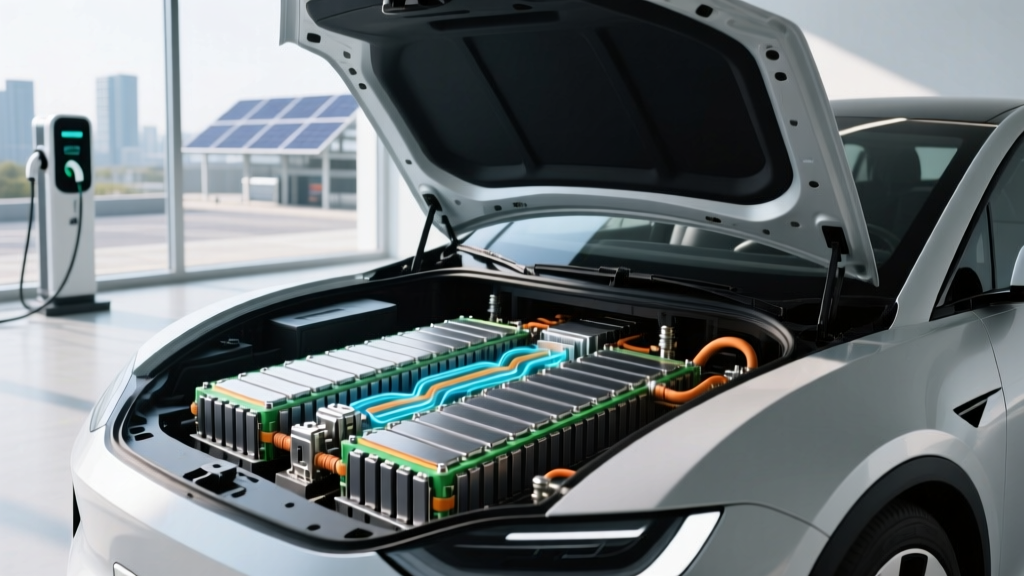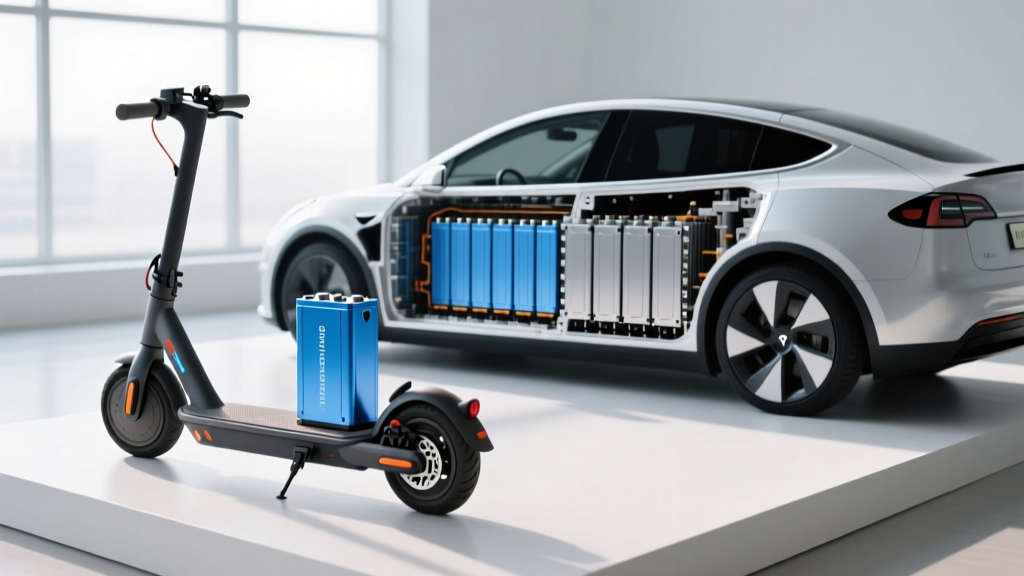
Searches for electric scooters with lithium battery packs have surged as micro-mobility options expand across U.S. cities. But the lithium-ion cells powering a $1,500 commuter scooter share fundamental chemistry with the 75–100 kWh traction batteries in modern electric vehicles. Understanding that shared DNA — and where the two diverge dramatically — helps both scooter shoppers and EV buyers make smarter decisions about what's between the electrodes.
This guide breaks down the battery chemistries, degradation realities, warranty protections, and replacement economics that apply across the lithium-ion spectrum, from two-wheeled scooters to full-size BEVs.
LFP vs NMC vs NCA: Lithium Battery Chemistry Explained
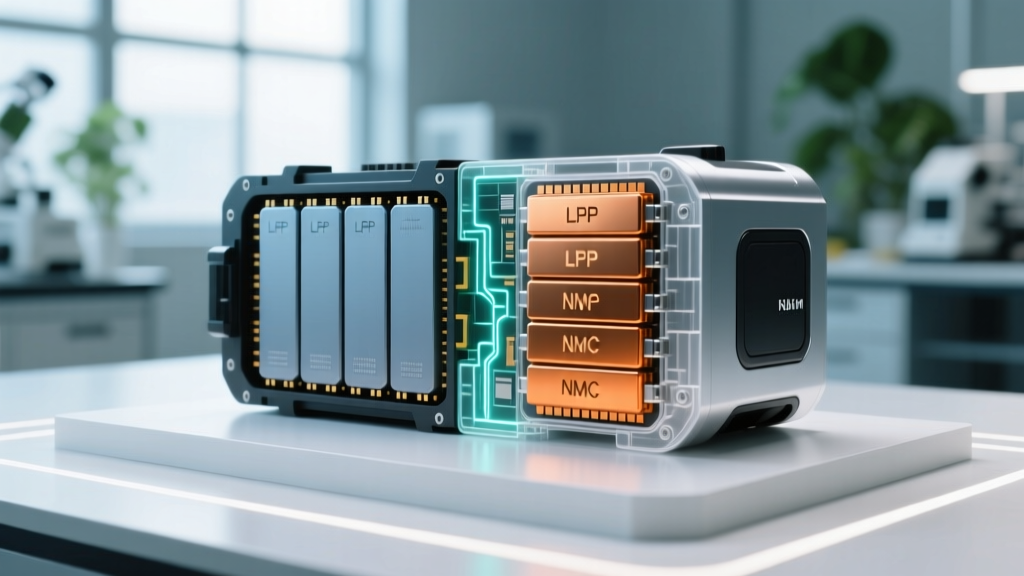
Whether you're evaluating an electric scooter with a lithium battery or a 2026 Tesla Model Y, the cathode chemistry defines the pack's personality. Three chemistries dominate the market:
- LFP (Lithium Iron Phosphate): Known for exceptional cycle life, thermal stability, and lower cost per kWh. Used in the Tesla Model 3 Standard Range, BYD Blade packs, and many premium electric scooters.
- NMC (Nickel Manganese Cobalt): Higher energy density than LFP, making it the default for long-range EVs and performance scooters where pack weight matters.
- NCA (Nickel Cobalt Aluminum): Similar energy-density advantages to NMC; used by Tesla in Model S/X and by Rivian in the R1T/R1S.
| Attribute | LFP | NMC | NCA |
|---|---|---|---|
| Energy Density (Wh/kg) | 150–180 | 220–300 | 250–300 |
| Cycle Life (80% retention) | 3,000–5,000+ | 1,000–2,000 | 800–1,500 |
| Cold-Weather Performance | Moderate loss (~20–30%) | Better low-temp output | Better low-temp output |
| Thermal Stability | Excellent (less prone to thermal runaway) | Moderate (requires robust BMS) | Moderate (requires robust BMS) |
| Cost per kWh (2026 est.) | ~$80–$100 | ~$110–$140 | ~$115–$145 |
| Typical Use | Standard-range EVs, premium scooters, stationary storage | Long-range EVs, performance scooters | Performance/luxury EVs |
Which is better? There's no universal winner. If you want maximum range per pound — critical in an electric scooter you carry upstairs or an EV you drive 400 miles between charges — NMC/NCA delivers. If you prioritize a pack that will still hold 90% capacity after 1,500 charge cycles and costs less upfront, LFP is the stronger pick. Many 2026 electric scooters with lithium battery packs now offer LFP as the default for daily commuters, reserving NMC for performance-oriented models.
How Long Do EV and Scooter Batteries Last?
The short answer: far longer than most buyers expect. The fear that a lithium battery will "die" at 60,000 miles is outdated. Real-world fleet data tells a different story.
Degradation Data Points
Typical capacity retention over time (EV traction batteries):
- Year 1 / ~12,000 miles: ~95–97% State of Health (SoH) — initial calibration drop
- Year 3 / ~36,000 miles: ~90–94% SoH
- Year 5 / ~60,000 miles: ~87–92% SoH
- Year 8 / ~100,000 miles: ~82–90% SoH
- Year 10+ / 150,000+ miles: ~78–88% SoH (many packs still functional)
Data compiled from Geotab's fleet study of 6,300+ EVs and manufacturer-reported figures. LFP packs in the Tesla Model 3 Standard Range have shown <5% degradation after 100,000 miles in taxi-fleet usage.
For electric scooters with lithium battery packs (typically 0.5–3 kWh), the cycle-life math works similarly but in charge cycles rather than miles. A quality scooter LFP pack rated for 3,000 cycles at 80% retention could theoretically deliver 75,000+ miles of use (at ~25 miles per charge) before significant capacity loss. Most scooter owners will replace the entire vehicle before the battery degrades below usable levels.
The critical threshold for "end of life" in the auto industry is 70% capacity retention. Below that, range becomes noticeably compromised. But "end of life" doesn't mean dead — a pack at 70% SoH still functions; it just delivers 70% of its original range.
What Does the Battery Warranty Actually Cover?
Federal law mandates a minimum 8-year/100,000-mile warranty on EV battery packs (10 years/150,000 miles in CARB states). Here's how major manufacturers structure their coverage in 2026:
| Manufacturer | Warranty Period | Capacity Threshold | Coverage Details |
|---|---|---|---|
| Tesla (Model 3/Y LFP) | 8 yr / 100,000 mi | 70% retention | Repair or replacement if SoH drops below threshold |
| Tesla (Model S/X NCA) | 8 yr / 150,000 mi | 70% retention | Same threshold, longer mileage coverage |
| Hyundai (Ioniq 5/6) | 10 yr / 100,000 mi | 70% retention | Among the longest time-period coverage in the U.S. |
| Ford (Mustang Mach-E) | 8 yr / 100,000 mi | 70% retention | Covers battery components and capacity loss |
| GM (Ultium-based EVs) | 8 yr / 100,000 mi | 70% retention | Includes battery management system components |
| BMW (iX / i4) | 8 yr / 100,000 mi | 70% retention | Module-level replacement where possible |
Key nuances: The warranty covers capacity degradation below the threshold, not gradual range loss that stays above 70%. If your 300-mile EV drops to 250 miles (83% retention), that's normal degradation — not a warranty claim. Physical damage, improper charging (e.g., using non-certified equipment), and unauthorized modifications typically void coverage. For electric scooters, warranty terms vary wildly by brand — budget scooters may offer only 6–12 months on the battery, while premium brands like Segway-Ninebot or NIU typically provide 2 years.
EV Battery Replacement Cost: The Real Numbers
This is where fear-mongering thrives, but context matters enormously. Here are actual replacement cost ranges for 2026:
| Vehicle / Category | Battery Size | Replacement Cost Range | When Typically Needed |
|---|---|---|---|
| Tesla Model 3 (LFP, ~60 kWh) | 60 kWh | $12,000–$16,000 | Rarely before 200,000+ mi |
| Tesla Model Y (NMC, ~75 kWh) | 75 kWh | $14,000–$18,000 | Rarely before 200,000+ mi |
| Ford Mustang Mach-E (~91 kWh) | 91 kWh | $18,000–$22,000 | Rarely before 150,000+ mi |
| Hyundai Ioniq 5 (~77.4 kWh) | 77.4 kWh | $14,000–$18,000 | Rarely before 150,000+ mi |
| Chevrolet Bolt EV/EUV (~65 kWh) | 65 kWh | $14,000–$16,000 (post-recall pricing) | Rarely before 150,000+ mi |
| Electric Scooter (premium, 1–3 kWh) | 1–3 kWh | $300–$800 | 3–7 years depending on use |
The critical context most articles omit: According to data from Consumer Reports, the vast majority of EV battery packs outlast the vehicle itself. The average American car is scrapped at around 12 years and 150,000–200,000 miles. By that point, a well-maintained EV battery will still hold 78–90% of its original capacity. Full pack replacement is exceedingly rare — when it does happen, it's often covered by warranty or involves module-level repairs (replacing individual cell groups rather than the entire pack) at a fraction of the full-pack cost.
For electric scooters with lithium battery packs, replacement is more common because scooter packs are smaller, cheaper, and experience more aggressive charge/discharge cycles relative to their capacity. A $400–$600 pack swap at year 5 is routine for daily commuters.
Factors That Kill (or Preserve) Lithium Battery Health
Whether you own a $60,000 EV or a $1,200 electric scooter with a lithium battery, the same electrochemical rules apply. Here's what actually moves the degradation needle:
Battery Care Checklist
- Avoid sustained 100% SoC: Storing any lithium battery at full charge accelerates calendar degradation. For NMC/NCA, target 80–90% daily; LFP tolerates 100% better and actually benefits from periodic full charges for BMS cell-balancing.
- Minimize DC fast-charging frequency: Occasional fast charging is fine. Daily reliance on 150+ kW DC charging adds thermal stress. Data from Geotab shows vehicles that fast-charge more than 3x/month degrade ~1–2% faster over 4 years than those primarily using Level 2.
- Manage extreme temperatures: Lithium batteries degrade faster above 95°F (35°C) and below 14°F (-10°C). Park in shade or a garage when possible. Most modern EVs have active thermal management; most scooters do not.
- Don't store at 0% SoC: Deep discharge can cause copper dendrite formation and permanent cell damage. If storing a vehicle or scooter for weeks, leave it at ~50% SoC.
- Use preconditioning: When navigating to a DC fast charger, most EVs precondition the battery to optimal temperature (~77–95°F), enabling faster charging with less stress. Always use the vehicle's built-in nav for charger routing to trigger this.
- Avoid repeated deep discharges (NMC/NCA): Shallow cycles (20–80%) are gentler than full 0–100% swings. LFP chemistry is more tolerant of deep cycling.
How to Check and Monitor Battery State of Health
State of Health (SoH) is the percentage of a battery's original capacity that remains available. A new EV starts at 100% SoH; at 70% SoH, the industry considers it "end of first life" for automotive use.
How EV Owners Check SoH
- In-vehicle displays: Tesla, Hyundai, BMW, and others provide battery health estimates in the service menu or companion app. Tesla's app shows estimated range at 100% SoC, which you can compare to the original EPA figure.
- OBD-II diagnostic tools: Apps like LeafSpy (Nissan Leaf), Tessie (Tesla), or generic OBD-II readers with EV support can pull SoH data directly from the BMS.
- Dealer diagnostics: Request a battery health report during service visits. Most manufacturers can provide a detailed cell-balance and capacity report.
- Third-party testing: Services like Recurrent Auto provide fleet-comparison data, letting you benchmark your pack against thousands of identical vehicles.
How Scooter Owners Check SoH
Most premium electric scooters with lithium battery packs (NIU, Segway-Ninebot, Apollo) include SoH estimates in their companion apps. Budget scooters rarely offer this — your best proxy is tracking range-per-charge over time. If your scooter delivered 25 miles when new and now delivers 20, you're at roughly 80% SoH.
Emerging Battery Tech: Solid-State and Silicon Anodes
Looking beyond today's lithium-ion cells, two technologies promise meaningful improvements — but neither is available in consumer vehicles or scooters as of 2026.
Solid-State Batteries
Solid-state cells replace the liquid electrolyte with a solid material (ceramic, sulfide, or polymer), enabling lithium-metal anodes that could double energy density to 400–500 Wh/kg. Toyota has announced a solid-state EV prototype targeting 750 km (466 mi) of range with 10-minute fast charging, but mass production is not expected before 2028–2030 and will debut in limited, premium models.
Silicon Anode Technology
Companies like Sila Nanotechnologies and Group14 are replacing graphite anodes with silicon-dominant materials, boosting energy density by 20–40% without the manufacturing upheaval of solid-state. Mercedes-Benz's upcoming G-Class EV is expected to feature silicon anode cells from Group14, with broader adoption anticipated by 2027–2028.
What this means for buyers today: Don't delay a purchase waiting for solid-state. Current LFP and NMC chemistries are mature, affordable, and proven to last 150,000+ miles. The next generation will improve range and charging speed, but today's packs already exceed most ownership lifecycles.
Frequently Asked Questions
How long do EV batteries last in real-world use?
Most modern EV batteries retain 82–90% capacity at 100,000 miles and 78–88% at 150,000+ miles based on fleet data. LFP packs in particular have demonstrated less than 5% loss over 100,000 miles in high-cycle taxi use. Full battery failure before 150,000 miles is rare and typically covered by the 8-year/100,000-mile federal warranty mandate.
How much does it cost to replace an EV battery in 2026?
Full pack replacement ranges from $12,000 to $22,000 depending on battery size and chemistry. However, most packs never need replacement during the vehicle's life. Module-level repairs (replacing individual cell groups) cost $2,000–$6,000. For electric scooters with lithium battery packs, replacement runs $300–$800.
Is LFP better than NMC for daily driving?
For daily commuters who charge at home and don't need maximum range, LFP is often the better choice. It offers 3,000–5,000+ cycle life (vs. 1,000–2,000 for NMC), superior thermal safety, and lower cost. The trade-off is ~15–25% lower energy density, meaning a heavier or larger pack for the same range. If you need 350+ miles of range, NMC/NCA remains necessary.
Does fast charging damage my EV battery?
Occasional DC fast charging causes negligible harm. However, fleet data shows that vehicles fast-charging more than three times per month experience slightly accelerated degradation (~1–2% additional loss over four years). The main risk factor is heat — fast charging at 250+ kW generates significant thermal load. Modern EVs mitigate this with active liquid cooling and preconditioning, but daily reliance on DCFC isn't ideal if Level 2 home charging is available.
Can I check my EV battery health myself?
Yes. Most EVs display estimated range at full charge, which you can compare to the original EPA figure on fueleconomy.gov. Apps like Tessie (Tesla) or LeafSpy (Nissan) pull detailed SoH data from the battery management system via OBD-II or the vehicle API. For a definitive assessment, request a battery health report from your dealer's service department.
Do electric scooter batteries degrade faster than EV batteries?
Not necessarily faster per cycle, but scooter packs face harder conditions: no active thermal management, frequent deep discharges, and exposure to outdoor temperatures. A quality LFP scooter battery rated for 3,000 cycles at 80% retention can last 5–7+ years with daily use. Budget scooter packs with lower-grade cells and no BMS sophistication may show noticeable degradation within 2–3 years.