Every electric vehicle on the road in 2026 runs on a lithium-based traction battery, but the chemistry inside that pack profoundly affects your real-world range, charging speed, longevity, and eventual replacement cost. If you have searched for "lithium auto" battery information and found only marketing copy or alarmist headlines about $20,000 swap bills, this guide replaces the noise with data.
We will walk through the two dominant chemistries — lithium iron phosphate (LFP) and nickel-manganese-cobalt (NMC) — with hard trade-off numbers, actual degradation curves from fleet and consumer data, warranty fine print, and the habits that meaningfully extend or shorten pack life. No hype, no fear: just the figures you need to buy and own an EV with confidence.
LFP vs NMC: The Two Lithium Auto Chemistries Explained
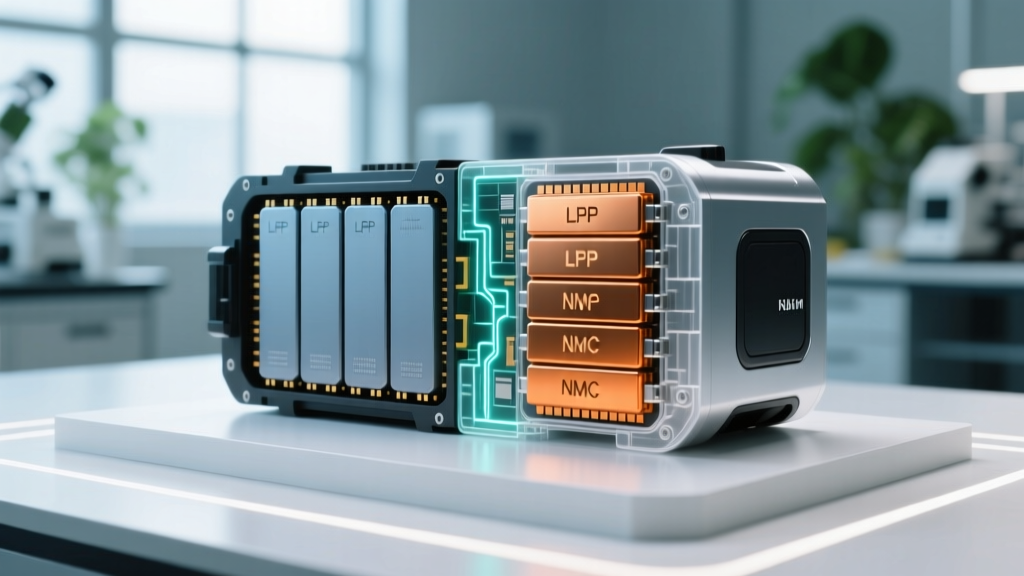
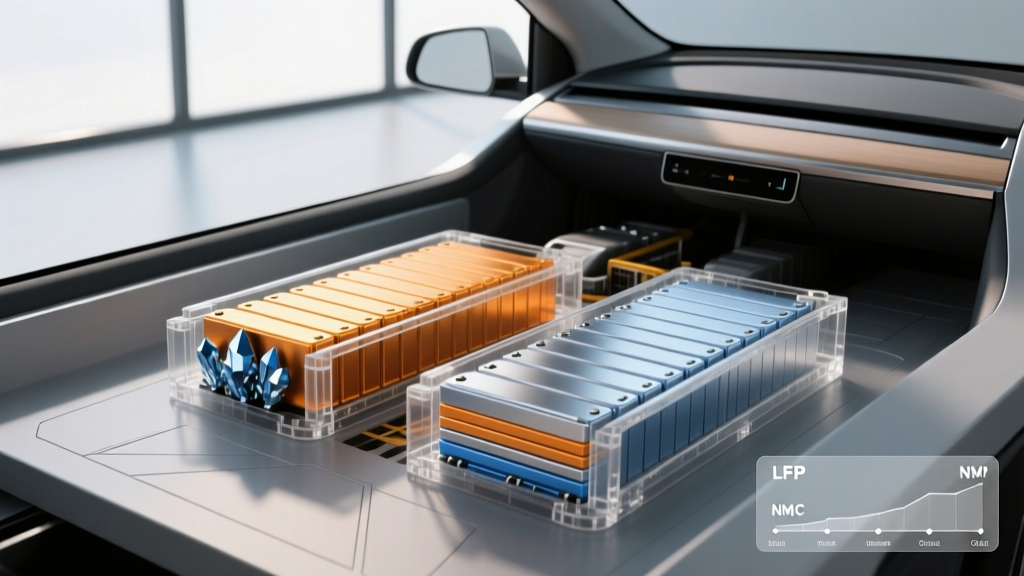
When automakers spec a lithium auto battery, they are almost always choosing between two cell chemistries. Each has distinct physics-driven strengths and weaknesses that show up in your daily driving.
| Attribute | LFP (Lithium Iron Phosphate) | NMC / NCA (Nickel-Manganese-Cobalt / Nickel-Cobalt-Aluminum) |
|---|---|---|
| Energy density (cell-level) | ~160–180 Wh/kg | ~220–300 Wh/kg |
| Typical cycle life | 3,000–5,000+ cycles to 80% SoH | 1,000–2,000 cycles to 80% SoH |
| Cold-weather range retention | Moderate loss; less tolerant below 14°F (-10°C) without preconditioning | Slightly better low-temp discharge, still loses 20–30% in deep cold |
| Thermal stability / safety | Excellent — higher thermal runaway threshold (~518°F / 270°C) | Good with active thermal management; lower runaway threshold (~410°F / 210°C) |
| Cost per kWh (cell) | ~$70–90 (2026) | ~$100–130 (2026) |
| Recommended daily SoC | 100% charging is fine | 80% daily; 100% only for trips |
| Examples in 2026 US market | Tesla Model 3 RWD, Model Y RWD, Ford Mustang Mach-E Select (some trims), BYD (non-US) | Tesla Long Range/Performance, Hyundai Ioniq 5/6, Ford F-150 Lightning Extended, Rivian R1T/R1S, Chevrolet Silverado EV |
What this means for buyers: If your commute is under 150 miles round-trip and you want to charge to 100% every night without worrying about degradation, LFP is the pragmatic choice. If you need maximum range in a single charge — say, 320+ EPA miles for road trips — NMC's higher energy density is why Long Range trims still use it.
Neither chemistry is universally "better." The right lithium auto battery depends on your driving pattern, charging access, and climate. A garage-kept LFP car in Phoenix faces very different stress than an NMC pack parked outside in Minneapolis.
How Long Do Lithium Auto Batteries Actually Last?
The short answer: most modern EV traction batteries outlast the vehicles they power. But "last" needs definition — batteries do not suddenly die; they gradually lose capacity.
Real-World Degradation Data Points
Based on aggregated fleet data and owner-reported studies through 2025–2026:
- Year 1 / 15,000 miles: ~1–3% capacity loss (initial "break-in" drop, steeper in NMC)
- Year 3 / 45,000 miles: ~4–7% total loss for NMC; ~2–5% for LFP
- Year 5 / 75,000 miles: ~7–12% total loss (NMC); ~4–8% (LFP)
- Year 8 / 120,000 miles: ~10–18% (NMC); ~6–12% (LFP)
- Tesla fleet data (2025 Impact Report): Model 3/Y packs retained ~88% capacity at 150,000 miles on average
- Geotab fleet study (13+ models, 6,500+ vehicles): Average degradation of ~1.8% per year across mixed chemistries
Sources: Geotab EV Battery Health Study, Tesla Impact Reports, fueleconomy.gov for baseline EPA range figures used in retention calculations.
At 1.8% average annual loss, a 300-mile EPA range EV would effectively deliver ~270 miles of range at year 8 — still very usable. The battery is not "dead"; it has simply shrunk your buffer. Most owners never experience a battery that drops below 70% capacity within the vehicle's normal first-owner lifespan of 8–12 years.
What Does the EV Battery Warranty Cover?
Federal law mandates a minimum 8-year / 100,000-mile warranty on EV traction batteries (10 years / 150,000 miles in CARB states like California, New York, and Massachusetts). But the details matter enormously.
| Automaker | Warranty Period | Capacity Retention Threshold | Notes |
|---|---|---|---|
| Tesla | 8 yr / 120,000 mi (LR/Perf); 8 yr / 100,000 mi (RWD) | 70% | Covers defects and capacity below threshold |
| Hyundai / Kia | 10 yr / 100,000 mi | 70% | Among the longest in the industry |
| Ford | 8 yr / 100,000 mi | 70% | F-150 Lightning, Mach-E |
| GM (Chevrolet/Cadillac) | 8 yr / 100,000 mi | 70% (60% on some commercial) | Ultium platform vehicles |
| Rivian | 8 yr / 175,000 mi | 70% | Higher mileage cap for adventure use |
| BMW | 8 yr / 100,000 mi | 70% | i4, iX, i7 |
Critical fine print: The warranty covers the battery dropping below the stated threshold — not any degradation above it. If your 300-mile NMC pack degrades to 215 miles (71.7% retained), you are just above the 70% line and the warranty does not trigger. Warranty replacements may also use refurbished or remanufactured packs, not necessarily brand-new cells.
For full federal warranty and consumer protection details, the National Highway Traffic Safety Administration (NHTSA) and your state attorney general's office are authoritative references.
EV Battery Replacement Cost: What Owners Actually Pay
This is the number that generates the most anxiety — and the most misinformation. Here is the 2026 landscape with context.
| Vehicle / Battery Size | Approximate Pack Replacement Cost (Parts + Labor) | Typical Trigger |
|---|---|---|
| Tesla Model 3 RWD (~60 kWh LFP) | $7,000–$10,000 | Out-of-warranty failure; rare before 200K mi |
| Tesla Model Y Long Range (~82 kWh NMC) | $10,000–$14,000 | Out-of-warranty failure |
| Hyundai Ioniq 5 (~77.4 kWh NMC) | $10,000–$15,000 | Out-of-warranty |
| Ford F-150 Lightning Extended (~131 kWh NMC) | $18,000–$25,000+ | Out-of-warranty; large pack |
| Chevrolet Bolt EV (65 kWh NMC) | $9,000–$13,000 | Out-of-warranty; recall replacements were free |
| Rivian R1T (~128 kWh NMC) | $18,000–$22,000 | Out-of-warranty |
Context that matters: Catastrophic battery failure — where the entire pack needs replacement — is rare in modern EVs. Most degradation is gradual. Module-level repairs (replacing a single degraded module rather than the full pack) are increasingly common and cost $1,500–$4,000. The vehicles most likely to need out-of-warranty pack replacements are high-mileage fleet cars and early-generation EVs with less sophisticated thermal management.
For the vast majority of private owners who keep a vehicle 8–12 years and 100,000–150,000 miles, the battery will remain above 70% capacity and never require replacement. The car's suspension, interior, and electronics will likely need more attention than the pack.
Five Factors That Accelerate (or Preserve) Battery Life
Lithium auto battery longevity is not random — it responds directly to how you charge, drive, and store the vehicle.
Habits That Preserve Battery Health
- Limit DC fast charging to road trips. Daily reliance on 150+ kW DC fast charging increases cell stress. Research from the Idaho National Laboratory showed packs exclusively DC fast-charged degraded measurably faster than those primarily Level 2 charged. Use Level 2 (7–11 kW) at home as your daily baseline.
- Avoid extreme SoC for extended periods. For NMC packs, store between 20–80% when possible. LFP packs tolerate 100% better and actually benefit from periodic full charges for BMS calibration.
- Precondition before fast charging. Most EVs automatically warm the battery when you navigate to a charger. This is not optional in cold weather — charging a cold pack stresses cells and dramatically slows charge speed.
- Park in shade or a garage during hot weather. Sustained battery temperatures above 95°F (35°C) accelerate chemical degradation. A garage-kept car in Arizona will show meaningfully better SoH at year 5 than one parked on asphalt.
- Drive moderately in extreme cold. Below 20°F (-7°C), expect 20–30% range loss. This is not degradation — it is temporary physics — but aggressive acceleration in deep cold with a cold pack is harder on cells.
The single highest-impact habit: home Level 2 charging at moderate SoC levels. Owners with reliable home charging consistently show the best long-term State of Health numbers across every chemistry.
How to Check Your EV Battery's State of Health (SoH)
State of Health is the percentage of original capacity your pack retains. A new battery is 100% SoH; a battery that holds 85% of its original energy is at 85% SoH. Monitoring this number lets you track degradation trends and plan ahead.
Methods Available to Owners
1. In-vehicle battery health display. Some manufacturers (Tesla, Hyundai, Kia, BMW) provide a battery health percentage or bar graph in the settings menu. Tesla shows this under Service → Battery Health in recent software versions.
2. OBD-II diagnostic apps. Third-party tools like LeafSpy (Nissan Leaf), Scan My Tesla, or Car Scanner ELM OBD2 can read the battery management system (BMS) directly and report SoH, cell voltage deltas, and pack temperature. A $25–$50 OBD-II dongle plus a smartphone app gives you dealer-level data.
3. Dealer or independent EV shop diagnostic. A service center can run a full pack health report. Request this before purchasing any used EV — the SoH reading is the single most important data point for a used electric car.
4. Range-tracking method. Charge to 100% (on LFP) or your known full charge, note the displayed range, and compare to the original EPA figure adjusted for your typical conditions. This is imprecise but directionally useful over time.
What to watch for: A sudden drop in SoH (more than 3–4% in a month) or a large cell voltage imbalance (one module reading significantly lower than others) warrants a service visit. Gradual, linear decline is normal and expected.
Beyond Today's Lithium Auto Batteries: Solid-State and Silicon Anodes
Emerging battery technologies promise step-changes in energy density, charge speed, and safety. Here is where they actually stand as of 2026 — with realistic timelines, not concept-car hype.
Solid-state batteries replace the liquid electrolyte with a solid material, enabling lithium-metal anodes and potentially 400–500 Wh/kg cell-level energy density (roughly double today's NMC). Toyota has announced a solid-state battery targeting 745 km (~463 miles) of range with a 10-minute 10–80% charge, with initial production planned for 2027–2028 in limited models. Samsung SDI and QuantumScape are also advancing solid-state cells, with pilot production underway but volume manufacturing still unproven at automotive scale.
Silicon-dominant anodes (from companies like Sila Nanotechnologies and Group14) increase energy density by 20–40% over conventional graphite anodes and are already appearing in limited applications. Mercedes-Benz has partnered with Sila for the upcoming G-Class electric SUV. These are closer to market than solid-state — expect broader availability in 2027–2029 model-year vehicles.
Sodium-ion batteries are emerging as a low-cost, cobalt-free alternative for budget and city EVs, with CATL and BYD leading production. Energy density is lower (~140–160 Wh/kg), making them better suited for smaller vehicles with shorter range targets. Not yet in US-market vehicles as of 2026.
Realistic expectation: None of these technologies will appear in a vehicle you can buy at a US dealership in 2026. Plan your purchase based on today's proven LFP and NMC chemistries. When solid-state arrives in volume, it will likely debut in premium models at premium prices before trickling down over 3–5 years.
Lithium Auto Battery FAQ
How long do EV batteries last in years and miles?
Most modern lithium auto traction batteries retain 70–85% of original capacity at 150,000 miles and 8–10 years. Catastrophic failure before 100,000 miles is rare. Tesla's 2025 fleet data showed Model 3/Y packs averaging ~88% retention at 150,000 miles. With proper care, the battery will likely outlast other major vehicle components.
How much does an EV battery cost to replace?
Full pack replacement ranges from roughly $7,000 for a 60 kWh LFP pack (Tesla Model 3 RWD) to $25,000+ for a 131 kWh NMC pack (F-150 Lightning Extended Range), including labor. However, most owners never need a full replacement — module-level repairs cost $1,500–$4,000, and the vast majority of packs remain functional well past 150,000 miles.
What does the EV battery warranty cover?
Federal minimum is 8 years / 100,000 miles (10 years / 150,000 miles in CARB states). Coverage triggers when capacity drops below a threshold — typically 70% of original. It covers manufacturing defects and abnormal degradation but not damage from accidents, misuse, or unauthorized modifications. Always read the specific warranty booklet for your vehicle.
How do I check and maximize my EV battery health?
Check SoH via your vehicle's built-in display, an OBD-II diagnostic app, or a dealer service report. Maximize longevity by relying on home Level 2 charging, avoiding daily DC fast charging, keeping NMC packs between 20–80% SoC for daily use, preconditioning before fast charging, and avoiding prolonged exposure to extreme heat.
LFP vs NMC — which battery chemistry is better?
Neither is universally better. LFP offers longer cycle life (3,000–5,000 cycles vs 1,000–2,000), lower cost, better thermal safety, and tolerance for 100% daily charging — but has lower energy density, meaning less range per kWh of battery weight. NMC delivers more range in a lighter, more compact pack — ideal for long-range and performance trims — but costs more per kWh and benefits from 80% daily SoC limits. Choose LFP for daily commuting and cost sensitivity; choose NMC for maximum range and road-trip capability.
Does fast charging damage my EV battery?
Occasional DC fast charging (road trips, a few times per month) has minimal impact on modern packs with active thermal management. However, exclusive reliance on DC fast charging — especially at rates above 150 kW in hot weather — has been shown to accelerate degradation. The Idaho National Laboratory found measurably higher capacity loss in packs charged exclusively via DC fast charging versus Level 2. Use Level 2 at home as your primary charging method.
Can I replace individual battery modules instead of the whole pack?
Yes, in many vehicles. Module-level replacement is increasingly common and costs significantly less than a full pack swap — typically $1,500–$4,000 depending on the vehicle and which modules are degraded. This is one reason the "$20,000 battery replacement" fear is overstated for most scenarios.
The Bottom Line on Lithium Auto Batteries
The lithium auto battery in a 2026 EV is a mature, well-managed component — not the ticking time bomb that headlines sometimes suggest. LFP chemistry has democratized longevity and lowered costs for daily drivers, while NMC continues to deliver the range and performance that long-distance buyers demand. Both chemistries, when paired with modern thermal management systems and reasonable charging habits, will serve most owners for the full life of the vehicle without requiring replacement.
If you are shopping for an EV, prioritize understanding the chemistry in the specific trim you are considering (it varies even within a single model line), learn your vehicle's SoH monitoring tools, and set up reliable home Level 2 charging. Those three steps will do more for your battery's lifespan than any other factor.