If you have been following EV battery headlines, you have probably encountered the term lithium air battery — a chemistry that promises theoretical energy density multiples higher than anything in a showroom today. But in 2026, every EV you can actually buy still runs on some variant of lithium-ion with either an NMC/NCA or LFP cathode. Lithium air remains a lab-stage technology, years from commercialization. This guide cuts through the hype to give you the exact numbers on the batteries that power today's EVs, how long they last, what replacement actually costs, and where lithium air and other next-generation chemistries realistically fit in.
How Today's EV Batteries Work: LFP vs NMC vs NCA
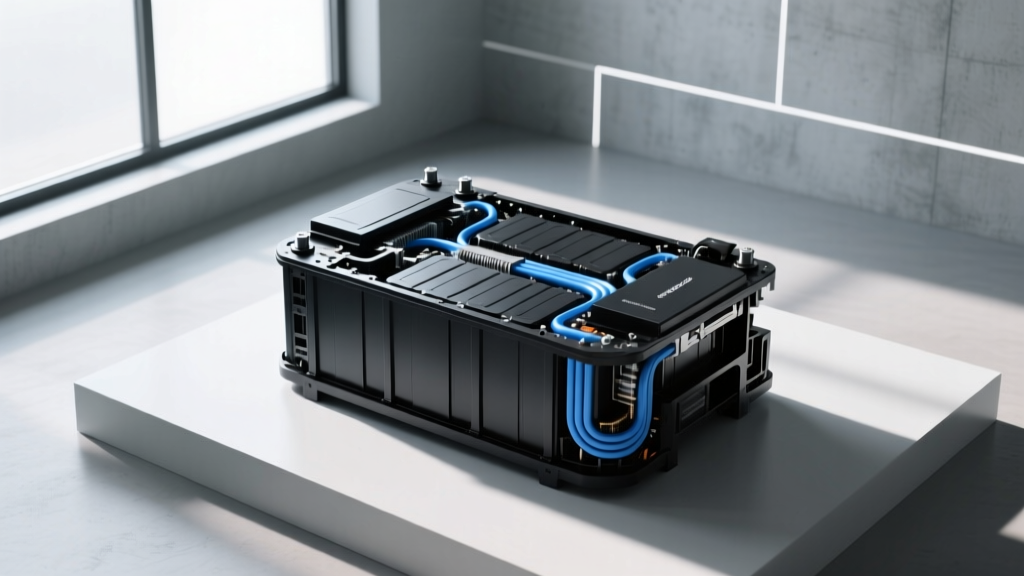
Every production EV battery in 2026 uses a lithium-ion cell, but the cathode chemistry varies significantly. The two dominant families are NMC/NCA (nickel manganese cobalt / nickel cobalt aluminum) and LFP (lithium iron phosphate). The choice between them affects your range, charging behavior, longevity, and price.
NMC/NCA cells pack more energy into a smaller, lighter package. That is why they dominate long-range and performance models — the Tesla Model 3 Long Range (82 kWh usable, NMC, EPA 363 mi), the Hyundai Ioniq 5 (84 kWh, NMC, EPA 305 mi), and the Ford Mustang Mach-E Extended Range (91 kWh, NMC, EPA 320 mi) all rely on this chemistry. The trade-off: NMC cells degrade slightly faster under high-heat and high-SoC conditions, contain cobalt (a supply-chain and ethical concern), and cost more per kWh at the pack level.
LFP cells use iron and phosphate instead of nickel and cobalt. They are cheaper to manufacture, tolerate repeated 100% charging without accelerated wear, and offer longer cycle life (3,000–5,000+ cycles vs roughly 1,000–2,000 for NMC). The trade-off: lower energy density means a heavier, bulkier pack for the same range, and LFP cells lose more usable capacity in freezing temperatures. Tesla's Model 3 Standard Range, the base Chevrolet Equinox EV, and several BYD models sold globally use LFP.
| Attribute | LFP (Lithium Iron Phosphate) | NMC / NCA |
|---|---|---|
| Energy Density (cell-level) | 160–180 Wh/kg | 250–300 Wh/kg |
| Typical Cycle Life | 3,000–5,000+ | 1,000–2,000 |
| Recommended Daily SoC | Up to 100% | 80% (100% for trips only) |
| Cold-Weather Range Loss (20°F) | ~30–40% | ~20–30% |
| Cobalt Content | None | Yes (NMC); No (NCA) |
| Pack Cost ($/kWh, 2026 est.) | $90–$110 | $115–$140 |
| Best For | Daily commuters, cost-sensitive buyers | Long-range, performance, cold climates |
Neither chemistry is universally "better." If you charge at home every night, live in a moderate climate, and want the lowest total cost, LFP is the pragmatic pick. If you regularly drive 300+ miles between charges, live where winters are brutal, or prioritize maximum range in a lighter vehicle, NMC/NCA earns its premium.
Where Does Lithium Air Battery Technology Stand?
A lithium air battery replaces the traditional solid cathode with oxygen drawn from the atmosphere, reacting with lithium ions at the anode. In theory, this yields a specific energy approaching 3,500 Wh/kg — roughly 10× today's NMC cells. A pack that size could push an EV past 1,000 miles of range without adding weight.
The reality in 2026: lithium air cells remain confined to university labs and corporate R&D programs (Toyota, IBM, and several Chinese research consortia have published papers). The core engineering hurdles are unresolved:
- Cycle life: Current lab prototypes achieve 100–200 charge cycles before the lithium metal anode degrades or the air electrode clogs with lithium peroxide byproducts. A production EV needs 1,000+.
- Moisture sensitivity: Ambient air contains water vapor that reacts violently with the lithium metal anode, requiring complex filtration membranes that add weight and cost.
- Round-trip efficiency: Lab cells demonstrate roughly 60–70% energy efficiency (charge in vs discharge out), compared to 90–95% for today's lithium-ion. That means significant energy waste as heat.
- Recharge speed: The oxygen reduction reaction is sluggish, limiting charge rates to levels incompatible with consumer expectations for 20–30 minute DC fast charging.
Realistic timeline: Most battery analysts, including researchers cited by the Nature Energy journal, project that lithium air is at least 10–15 years from commercial automotive use, if it reaches production at all. It is a legitimate area of research, not a near-term product.
How Long Do EV Batteries Actually Last?
The short answer: in most cases, longer than you will own the car. Data from fleet operators, manufacturer warranty claims, and independent testing paints a clear picture.
Real-world degradation data:
- Tesla Model 3/Y (NMC, 2019–2024): Geotab's fleet analysis of over 10,000 vehicles shows an average capacity loss of approximately 1.8% per year, or roughly 10–12% after 150,000 miles. Most packs retain 88–92% State of Health (SoH) at the 8-year warranty mark.
- Chevrolet Bolt EV/EUV (NMC, 2017–2023): Early Bolt packs saw higher degradation rates (~2.5% per year) due to aggressive fast-charging and thermal management limitations. Post-recall replacement packs and later model years improved to roughly 1.5% per year.
- Tesla Model 3 Standard Range (LFP, 2021–2025): LFP packs show slower degradation — roughly 1.0–1.3% per year in fleet data — and tolerate daily 100% charging without the accelerated wear NMC cells experience at high SoC.
- Nissan Leaf (passive air cooling, 2011–2025): The Leaf's lack of active thermal management makes it an outlier. Early 24 kWh packs in hot climates lost 20–30% capacity within 5 years. The 62 kWh Leaf Plus with improved cooling fares better (~2% per year), but it remains a cautionary tale about thermal management.
Degradation trajectory (typical NMC pack, moderate climate, mixed charging): Year 1: ~3% loss (initial formation loss) → Years 2–5: ~1.5–2% per year → Years 6–10: ~1% per year (degradation curve flattens). Projected SoH at 150,000 miles / 10 years: approximately 82–88%.
The critical takeaway: the widely feared scenario of needing a $20,000 battery replacement at 100,000 miles is not supported by data. Most modern, liquid-cooled packs will outlast the vehicle's economic life.
What Does the Battery Warranty Actually Cover?
Federal law mandates a minimum battery warranty of 8 years / 100,000 miles (10 years / 150,000 miles in California Air Resources Board states). But the details matter enormously.
| Manufacturer | Warranty Term | Capacity Threshold | Notes |
|---|---|---|---|
| Tesla (Model 3/Y NMC) | 8 yr / 120,000 mi | 70% SoH | Long Range & Performance trims |
| Tesla (Model 3 LFP) | 8 yr / 100,000 mi | 70% SoH | Standard Range (RWD) |
| Hyundai / Kia | 10 yr / 100,000 mi | 70% SoH | Among the longest terms |
| Ford (Mach-E, F-150 Lightning) | 8 yr / 100,000 mi | 70% SoH | Standard across BEV lineup |
| GM (Ultium platform) | 8 yr / 100,000 mi | 70% SoH | Covers Bolt, Equinox EV, Blazer EV, Silverado EV |
| BMW (iX, i4, i7) | 8 yr / 100,000 mi | 70% SoH | Some models offer 80% threshold in EU |
| Rivian | 8 yr / 120,000 mi | 70% SoH | R1T and R1S |
What triggers a warranty claim: The battery must fall below the stated SoH threshold (typically 70%) within the warranty period. Manufacturers determine SoH through their own diagnostic tools — you cannot simply claim warranty based on a third-party app reading. If your 82 kWh pack can no longer hold at least 57.4 kWh (70%), the manufacturer must repair or replace it at no cost. In practice, most warranty replacements involve swapping individual modules rather than the entire pack.
What voids the warranty: Salvage titles, unauthorized modifications to the high-voltage system, and using non-OEM charging equipment that causes documented damage. Normal fast charging, high-mileage use, and driving in extreme temperatures do not void the warranty.
How Much Does an EV Battery Replacement Cost?
This is the question that generates the most anxiety — and the most misinformation. Here are real-world replacement figures for common 2026-era platforms:
| Vehicle | Battery Size | Chemistry | Full Pack Cost | Module Repair Cost |
|---|---|---|---|---|
| Tesla Model 3 (NMC Long Range) | 82 kWh | NMC | $12,000–$16,000 | $2,500–$5,000 per module |
| Tesla Model 3 (LFP RWD) | 60 kWh | LFP | $8,000–$11,000 | $2,000–$4,000 per module |
| Hyundai Ioniq 5 | 84 kWh | NMC | $14,000–$18,000 | $3,000–$6,000 per module |
| Ford Mustang Mach-E (ER) | 91 kWh | NMC | $15,000–$20,000 | $3,500–$6,500 per module |
| Chevrolet Equinox EV | 85 kWh | NMC (Ultium) | $13,000–$17,000 | $2,500–$5,500 per module |
| Nissan Leaf Plus | 62 kWh | NMC | $9,000–$13,000 | $2,000–$4,500 per module |
Context that matters: Full pack replacements are rare. When degradation does accelerate (usually due to a defective module, not normal wear), technicians typically replace individual modules — a pack contains 4 to 12 modules depending on the platform — at a fraction of the full-pack cost. Out-of-pocket full replacements almost exclusively happen on salvage-title vehicles, accident-damaged cars, or extreme outliers outside warranty coverage. For a properly maintained EV under warranty, the replacement cost is $0.
According to data compiled by fueleconomy.gov, battery pack prices have fallen from over $1,100/kWh in 2010 to roughly $100–$140/kWh at the pack level in 2026. This trend continues to reduce replacement costs year over year.
What Kills an EV Battery (and What Does Not)
Understanding the factors that accelerate degradation lets you make informed daily decisions.
Battery Care Best Practices
- Avoid sustained 100% SoC (NMC/NCA only): Store and daily-drive NMC packs between 20–80% SoC. Charge to 100% only when you will drive immediately. LFP owners can charge to 100% daily — in fact, periodic full charges help the battery management system (BMS) recalibrate cell balancing.
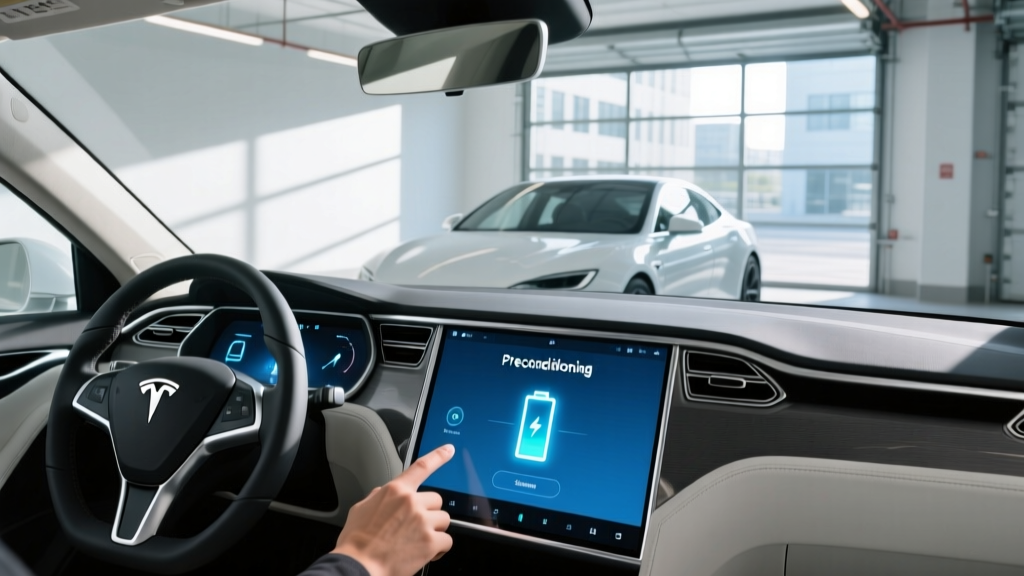
- Minimize DC fast charging in extreme heat: Repeated 150+ kW sessions when ambient temps exceed 95°F stress the thermal management system. If possible, schedule fast charging for early morning or evening in summer. Preconditioning the battery (most EVs do this automatically when you navigate to a charger) significantly reduces thermal stress.
- Do not store at 0% or 100% for weeks: If leaving your EV unused for more than two weeks, set the charge limit to 50–60%. A fully depleted pack left in heat can suffer irreversible cell damage; a fully charged pack left in heat accelerates electrolyte decomposition.
- Cold weather does not permanently damage the battery: Range loss at 20°F (roughly 20–40% depending on chemistry and heat pump availability) is temporary. The battery recovers full capacity once it warms. However, charging a frozen battery at high power without preconditioning can cause lithium plating on the anode — always let the car precondition before a winter fast-charge session.
- Regenerative braking settings have negligible impact on battery health: Whether you use one-pedal driving or coast-to-stop, the BMS manages charge acceptance. Use whatever feels comfortable.
What does NOT harm your battery: Daily Level 2 home charging (240V, 7–11.5 kW) is the gentlest charging method and adds virtually no meaningful degradation compared to occasional DC fast charging. Driving in rain, going through car washes, and using cabin preconditioning while plugged in have zero impact on battery health.
How to Check Your Battery's State of Health
State of Health (SoH) is the percentage of original battery capacity your pack can still hold. A new pack is 100% SoH; a pack that can only store 78 kWh of its original 82 kWh is at 95.1% SoH.
Methods for checking SoH, from most to least authoritative:
- Manufacturer diagnostic (most accurate): Schedule a service visit — Tesla, Hyundai, Ford, and GM dealers can pull a detailed SoH report from the BMS, including per-module voltage deviation. This is the only reading a manufacturer will accept for a warranty claim.
- OBD-II scanner + EV app: Tools like the OBDLink MX+ paired with apps such as Car Scanner EV or ABRP can read BMS data including estimated SoH, cell voltage spread, and battery temperature. Accuracy is within 1–3% of the manufacturer reading for most platforms.
- Manual calculation: Charge to 100%, note the displayed range, and compare to the original EPA figure adjusted for your typical consumption. This is rough (displayed range is influenced by recent driving style and temperature) but gives a ballpark. If your 363-mile EPA Model 3 Long Range consistently shows 325 miles at 100% in moderate weather, your SoH is roughly 89–91%.
- Third-party services: Companies like Recurrent Auto and AVILOO offer battery health reports that some used-EV marketplaces accept. These use telematics data or standardized drive-cycle tests.
For used-EV buyers, insisting on a manufacturer SoH report before purchase is the single most important step — more important than checking the odometer.
Beyond Lithium Air: Solid-State, Silicon Anode, and What Is Actually Coming
While lithium air remains a long-range research project, other next-generation battery technologies are closer to production:
Solid-state batteries: These replace the liquid electrolyte with a solid ceramic, polymer, or sulfide material, enabling lithium metal anodes and higher energy density (projected 350–500 Wh/kg at cell level). Toyota has announced a solid-state battery targeting 2027–2028 production in limited volumes, initially in hybrid vehicles. Samsung SDI and QuantumScape (backed by Volkswagen) have demonstrated prototype cells achieving 800+ cycles with 80%+ capacity retention. However, manufacturing scale-up remains the bottleneck — producing solid-state cells at automotive volumes and costs has not been achieved. Realistic timeline for mainstream EV adoption: 2029–2032 at the earliest.
Silicon-dominant anodes: Companies like Sila Nanotechnologies and Group14 Technologies are replacing graphite anodes with silicon composites, boosting energy density by 20–40% without changing the cathode. These cells are already appearing in limited production (Mercedes-Benz's G 580 EQ uses silicon-anode cells from Sila). Timeline: entering production now, expected to reach mainstream volumes by 2027–2028.
Sodium-ion batteries: CATL and BYD have begun shipping sodium-ion packs in Chinese-market micro-EVs. Sodium is abundant and cheap, but energy density is roughly 30% lower than LFP. Timeline: viable for budget city cars now; unlikely to appear in US-market long-range EVs before 2030.
None of these technologies invalidate your current or near-term EV purchase. Today's lithium-ion packs are mature, well-understood, and backed by data showing they last the life of the vehicle in the vast majority of cases.
Frequently Asked Questions
How long do EV batteries last in years and miles?
Modern liquid-cooled EV batteries (NMC or LFP) typically retain 80–90% of original capacity after 150,000 miles and 10 years. Based on fleet data from Geotab and manufacturer reports, most packs will function well beyond 200,000 miles before approaching the 70% SoH warranty threshold. The vehicle's body, suspension, and electronics are more likely to reach end-of-life before the battery does.
How much does an EV battery cost to replace?
A full pack replacement ranges from $8,000 (smaller LFP packs) to $20,000 (large NMC packs) out of warranty in 2026. However, full replacements are uncommon — most repairs involve replacing individual modules at $2,000–$6,500 each. Under the mandatory 8-year/100,000-mile federal warranty, a qualifying replacement costs you $0. Check current warranty terms on fueleconomy.gov.
What does the EV battery warranty cover?
Federal law requires manufacturers to warrant the high-voltage traction battery for at least 8 years / 100,000 miles (10 years / 150,000 miles in CARB states) against capacity loss below a defined threshold, typically 70% State of Health. This covers defects, premature degradation, and module failures. It does not cover damage from accidents, unauthorized modifications, or salvage-title vehicles. Some manufacturers, like Hyundai, extend coverage to 10 years / 100,000 miles voluntarily.
How do I check and maximize my EV battery health?
Check SoH through a manufacturer service diagnostic (most accurate), an OBD-II scanner with an EV app, or by comparing displayed range at 100% charge to the original EPA figure. To maximize longevity: keep NMC packs between 20–80% for daily use (LFP can charge to 100%), avoid repeated DC fast charging in extreme heat without preconditioning, do not store the vehicle at 0% or 100% SoC for extended periods, and rely on Level 2 home charging as your primary method.
LFP vs NMC — which battery chemistry is better for me?
Choose LFP if you charge at home nightly, want the lowest purchase price, prefer a battery you can charge to 100% daily without worry, and live in a moderate climate. Choose NMC/NCA if you need maximum range (300+ miles), frequently drive in sub-freezing temperatures, or prioritize a lighter vehicle. Both chemistries are proven to last well beyond 150,000 miles with proper care — the "right" choice depends on your driving pattern, not on one being universally superior.
Will a lithium air battery be in the next EV I buy?
No. Lithium air technology has not solved fundamental cycle-life, efficiency, and moisture-sensitivity challenges. It remains a lab-stage research program with no announced production vehicle. Your next EV will use NMC, NCA, or LFP lithium-ion cells — all of which are mature, well-warrantied, and supported by extensive real-world durability data.