What Is CATL's Condensed Battery and Why 500 Wh/kg Matters
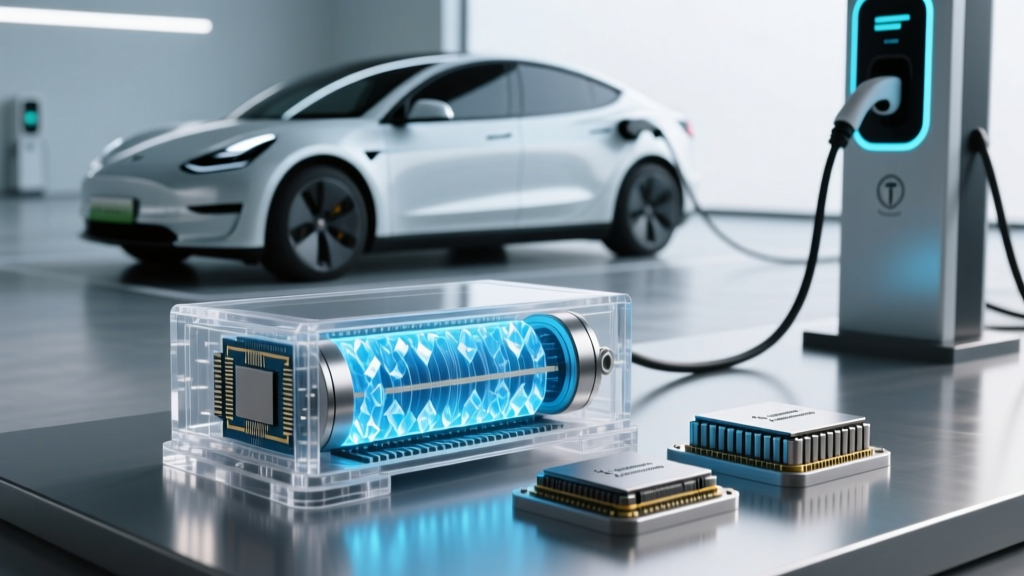
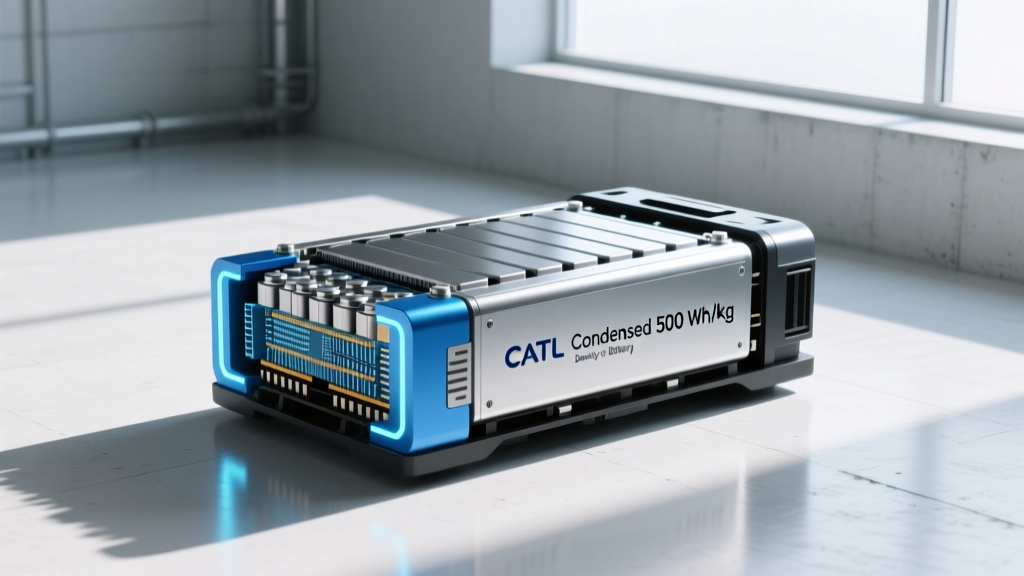
CATL's condensed-matter battery, first unveiled in 2023 and refined through subsequent announcements, targets an energy density of 500 Wh/kg at the cell level — roughly double the ~250–300 Wh/kg seen in today's best nickel-manganese-cobalt (NMC) cells from suppliers like LG Energy Solution and Panasonic. The promise is transformative: a 100 kWh pack that weighs what a 50 kWh pack weighs today, or a pack that delivers 600+ miles of range without exceeding current vehicle weight limits.
But the question EV shoppers and enthusiasts keep asking centers on practicality: what is the CATL condensed battery 500 Wh/kg charging time, and when will it actually reach production vehicles? The honest answer requires separating laboratory milestones from the physics of charging a next-generation cell, and understanding how this technology fits into a battery landscape still dominated by NMC and LFP chemistries.
CATL Condensed Battery Charging Time: What the Physics Tell Us
CATL has not published a definitive 10–80% DC fast-charging time for a production-spec condensed-matter pack as of early 2026. What we can assess is the electrochemistry and what it implies.
Why Ultra-High Energy Density Complicates Fast Charging
Energy density and fast-charging capability are often in tension. Cells optimized for maximum Wh/kg typically use thicker electrodes and silicon-dominant or lithium-metal anodes that are more susceptible to lithium plating — a degradation mechanism where lithium ions deposit as metallic lithium rather than intercalating into the anode during high-current charging. This is why CATL's condensed battery uses a proprietary high-concentration electrolyte and what the company describes as "condensed" electrode architecture: to maintain ion transport at high C-rates without plating.
Estimated Charging Profile Based on Announced Specs
CATL demonstrated a condensed cell capable of sustaining a 4C charge rate in lab conditions. For a hypothetical 100 kWh pack, 4C equates to a peak charge power of 400 kW. At that rate, a 10–80% charge would theoretically require roughly 10–12 minutes under ideal thermal conditions. However, real-world charging curves taper significantly above 60–70% State of Charge (SoC) to protect cell health.
The critical caveat: achieving these speeds requires next-generation 400+ kW charging infrastructure that remains extremely limited in the U.S. Electrify America's 350 kW stalls exist but are far from ubiquitous, and most public DC fast chargers still peak at 50–150 kW. The battery may be ready before the grid is.
LFP vs NMC vs Condensed: Chemistry Trade-Offs Explained
To understand where CATL's condensed battery fits, you need the full chemistry picture. Here is how the three main chemistries compare for passenger EVs:
| Attribute | LFP (Lithium Iron Phosphate) | NMC/NCA (Nickel-Based) | CATL Condensed (Announced) |
|---|---|---|---|
| Cell energy density | 160–200 Wh/kg | 250–300 Wh/kg | ~500 Wh/kg (lab) |
| Typical pack-level density | 120–160 Wh/kg | 180–220 Wh/kg | ~300–350 Wh/kg (est.) |
| Cycle life (to 80% capacity) | 3,000–5,000+ | 1,000–2,000 | TBD (target: 1,500+) |
| Cold-weather performance | Moderate loss; benefits from heat pump | Better low-temp conductivity | Unknown (electrolyte-dependent) |
| Cost per kWh (cell, 2025–2026) | ~$70–$90 | ~$100–$130 | Estimated $150–$200+ initially |
| Fast-charge capability | Good (3–4C capable) | Good (2–4C) | Targeting 4C+ |
| Key risk | Lower range per kg; cold sensitivity | Cobalt/nickel supply chain; thermal runaway | Manufacturing scale; cost; cycle life validation |
| Current use in US EVs | Tesla Model 3/Y RWD, Ford Mustang Mach-E Select | Most long-range AWD models | None (announced/pre-production) |
LFP vs NMC — Which Is Better and Why?
There is no universal winner. LFP is the right choice if you prioritize longevity, lower cost, and can accept slightly less range for the same pack weight — which is why Tesla uses it in base Model 3 and Model Y RWD trims. LFP cells tolerate regular 100% charging without the accelerated degradation that NMC suffers at high SoC, making daily charging simpler.
NMC/NCA wins when maximum range and cold-weather performance are priorities. The Chevrolet Equinox EV, Hyundai Ioniq 5 Long Range, and BMW iX all use NMC-based packs to achieve 300+ mile EPA ranges without excessive weight. The trade-off is a shorter cycle life and a recommendation to keep daily charging below 80–90%.
CATL's condensed battery, if it reaches production at scale, would attempt to deliver NMC-level or better range with improved safety characteristics (the condensed electrolyte is less flammable than conventional liquid electrolytes). But cost and cycle-life validation remain open questions.
How Long Do EV Batteries Actually Last?
The fear that EV batteries need frequent replacement is not supported by fleet data. Analysis of vehicles on the road through 2025 shows that the vast majority of EV traction batteries outlast the vehicles they are installed in.
Degradation Data Points from Real Fleets
- Tesla Model 3/Y (NMC/NCA, 2018–2024): Average degradation of ~12% after 150,000 miles, per Tesla's 2024 Impact Report. Most packs retain 85–90% State of Health (SoH) at 100,000 miles.
- Nissan Leaf (early LMO/NMC, 2011–2017, passively cooled): Higher degradation — some packs lost 20–30% capacity by 80,000–100,000 miles, especially in hot climates. This is the origin story of battery-replacement anxiety, but it reflects outdated thermal management.
- Chevrolet Bolt EV (NMC, LG cells, 2017–2022): Recall-related replacements aside, non-recalled packs showed ~8–10% degradation at 80,000 miles with active liquid cooling.
- LFP-equipped vehicles (Tesla Model 3 RWD, BYD models): Early data suggests <5% degradation at 60,000 miles, consistent with LFP's superior cycle life.
According to data compiled by Geotab's fleet battery study, the average EV battery loses approximately 2.3% of capacity per year under typical use — meaning at year eight, the average pack retains roughly 82% of original capacity. Modern liquid-cooled packs significantly outperform older passively cooled designs.
When Replacement Is Typically Needed
Battery replacement is typically only necessary when SoH drops below 70% — the threshold where range loss becomes materially inconvenient and where most warranty coverage kicks in. For a modern liquid-cooled pack, reaching 70% SoH generally requires 200,000–300,000+ miles or 15+ years. Most original owners never reach this point. When they do, the vehicle's residual value is usually low enough that replacement is an economic decision, not a forced one.
Battery Warranty Terms: What's Actually Covered
Federal law mandates a minimum EV battery warranty of 8 years / 100,000 miles for emissions-related components, and most manufacturers extend this to the traction battery. California and states adopting CARB standards require 10 years / 150,000 miles.
| Manufacturer | Warranty Term | Capacity Retention Threshold | Notes |
|---|---|---|---|
| Tesla (Model 3/Y LFP) | 8 yr / 120,000 mi | 70% | Long Range/AWD: 8yr/120k; Model S/X: 8yr/150k |
| Hyundai / Kia | 10 yr / 100,000 mi | 70% | Among the longest standard coverage in the US |
| Ford (Mach-E, F-150 Lightning) | 8 yr / 100,000 mi | 70% | Covers cells, modules, BMS, cooling |
| General Motors (Ultium platform) | 8 yr / 100,000 mi | 70% | Covers capacity loss + defect |
| BMW | 8 yr / 100,000 mi | 70% | Transferable to subsequent owners |
| Rivian | 8 yr / 175,000 mi | 70% | Higher mileage cap reflects truck use case |
What the warranty covers: Defects in materials/workmanship AND capacity loss below the stated threshold. If your 82 kWh pack drops to 55 kWh (below 70%) within the warranty period, the manufacturer must repair or replace it at no cost.
What it does not cover: Damage from accidents, flooding, improper charging equipment, or unauthorized modifications. Gradual degradation above the 70% threshold is considered normal wear and is not warrantable.
EV Battery Replacement Cost: What You'd Actually Pay
Out-of-warranty battery replacement remains the single largest cost fear for EV buyers. Here is what the numbers actually look like in 2025–2026:
| Vehicle | Pack Size | Chemistry | Estimated Replacement Cost |
|---|---|---|---|
| Tesla Model 3 RWD | ~60 kWh | LFP | $10,000–$13,000 |
| Tesla Model Y Long Range | ~82 kWh | NMC | $14,000–$18,000 |
| Hyundai Ioniq 5 | 77.4 kWh | NMC | $13,000–$17,000 |
| Ford F-150 Lightning Extended | 131 kWh | NMC | $20,000–$28,000 |
| Chevrolet Equinox EV | ~85 kWh | NMC (Ultium) | $14,000–$18,000 |
| Nissan Leaf (older, 40/62 kWh) | 40–62 kWh | NMC | $7,000–$10,000 |
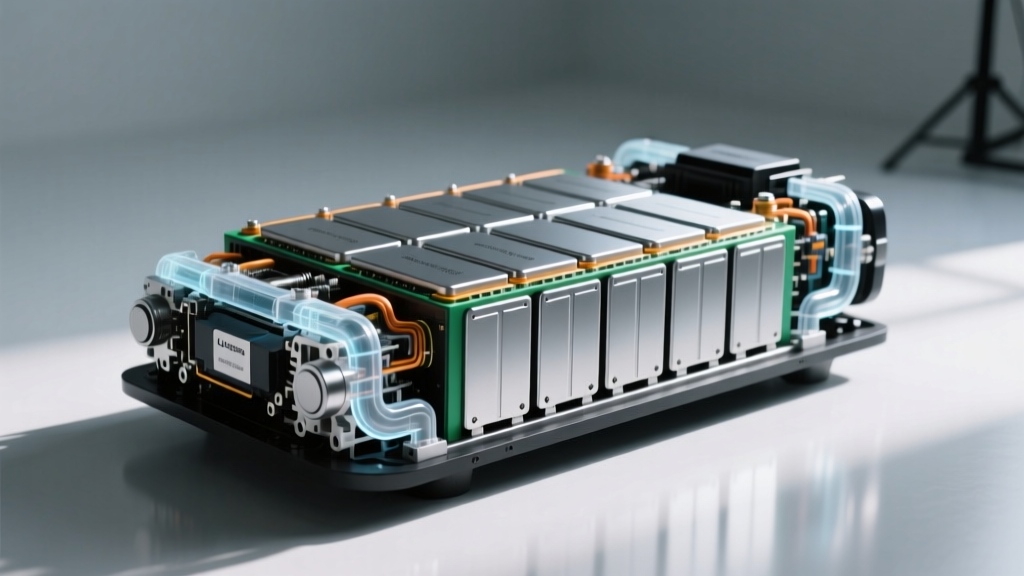
These costs include the battery pack and labor but can vary significantly by region and service center. Importantly, cell-level repair is increasingly common — many shops can replace individual modules rather than the entire pack, reducing cost to $2,000–$6,000 for a partial repair. As battery pack designs move toward cell-to-pack (CTP) and cell-to-chassis (CTC) architectures — like CATL's own Qilin platform — module-level repair becomes harder, potentially pushing replacement costs higher for newer designs.
Battery pack prices have fallen from over $1,200/kWh in 2010 to approximately $110–$140/kWh at the cell level in 2025, per BloombergNEF data. Pack-level costs including housing, BMS, and cooling run $150–$200/kWh. This trajectory means replacement costs will continue to decline, and a pack that costs $16,000 today may cost $10,000–$12,000 by 2030.
Factors That Accelerate Battery Degradation — and How to Prevent Them
Modern EV battery management systems (BMS) do substantial work to protect cells, but owner habits still influence long-term State of Health.
The Big Four Degradation Accelerators
- Chronic 100% SoC storage: Keeping an NMC pack at 100% for extended periods (days/weeks) accelerates electrolyte decomposition and cathode micro-cracking. LFP is more tolerant of high SoC. Fix: Set daily charge limit to 80% for NMC, 100% is fine for LFP.
- Frequent DC fast charging at high power: Sustained high-current charging generates heat and promotes lithium plating, especially in cold weather when cells are not preconditioned. Fix: Use DCFC for road trips; rely on Level 2 home charging for daily needs. Always enable battery preconditioning when navigating to a charger.
- Extreme heat exposure: Sustained ambient temperatures above 95°F (35°C) with a high SoC pack accelerates calendar aging. Fix: Park in shade/garage when possible; avoid leaving the car at 100% SoC in hot weather.
- Deep discharge to 0%: Dropping below ~5% SoC stresses the anode copper current collector. The BMS maintains a buffer (usually 2–5 kWh hidden below 0% displayed), but repeated deep discharges still cause wear. Fix: Charge before you hit single-digit percentages.
- Set NMC daily charge limit to 80%; LFP to 100%
- Use Level 2 home charging as your primary method
- Enable preconditioning before every DC fast charge session
- Avoid storing the vehicle at 100% or below 10% SoC for more than a few days
- In extreme cold (<20°F), plug in when parked to let the BMS maintain battery temperature
- Check tire pressure and alignment — excess rolling resistance increases battery load and heat
How to Check Your EV Battery's State of Health (SoH)
State of Health is expressed as a percentage of original capacity. A new 82 kWh pack at 90% SoH effectively holds ~73.8 kWh. Here is how to monitor it:
Manufacturer Apps and In-Car Displays
- Tesla: No native SoH percentage in the app, but third-party tools like Tessie or Teslamate calculate SoH from charge logs. Service centers can provide a formal health report on request.
- Hyundai/Kia: The EV app and head unit show estimated range based on recent driving; some markets display a battery health indicator in diagnostic mode.
- BMW: The My BMW app includes a battery health certificate accessible through the vehicle's iDrive system under "Battery Health."
- Nissan Leaf: The dashboard displays "battery bars" (out of 12 or 16 depending on generation) — each lost bar represents roughly 6–8% capacity loss.
OBD-II and Third-Party Tools
Devices like the OBDLink MX+ paired with apps such as EV Health Check or Car Scanner ELM OBD2 can read the BMS-reported SoH directly. This is the most reliable method for used-EV buyers. A pre-purchase battery health check should be as standard as a compression test was for ICE vehicles.
The Manual Calculation Method
Charge the pack from a known low SoC (e.g., 10%) to a known high SoC (e.g., 90%) on a Level 2 charger and record the kWh delivered from the charger's display or app. Adjust for charging losses (~5–10%). If your 82 kWh pack accepts only 58 kWh from 10–90% (which should represent 80% of capacity, or ~65.6 kWh in a healthy pack), your SoH is approximately 58/65.6 = ~88%.
Emerging Battery Tech: Solid-State, Silicon Anodes, and Realistic Timelines
CATL's condensed battery is one of several next-generation technologies vying to replace or augment conventional lithium-ion. Here is a realistic assessment of each:
Solid-State Batteries
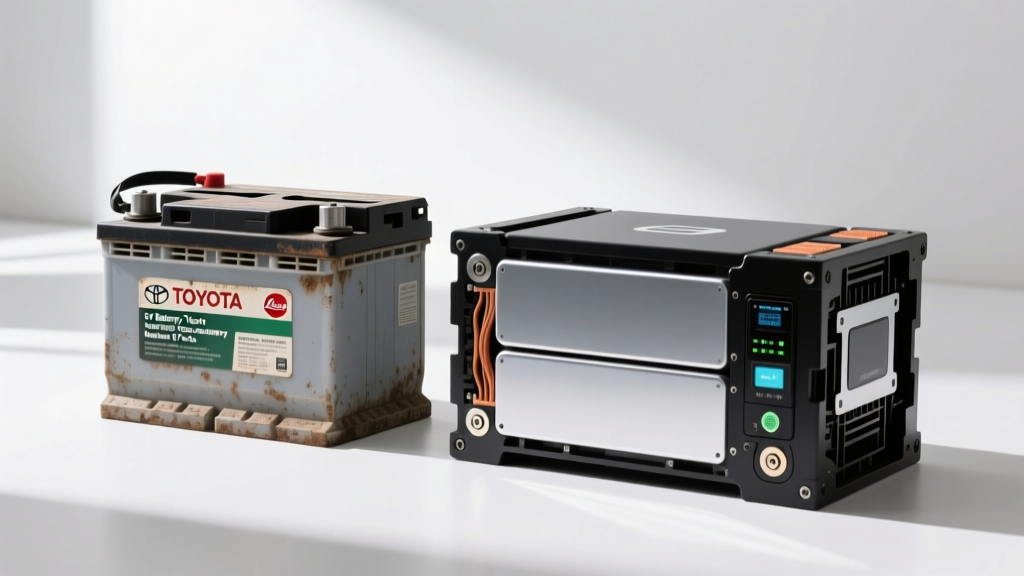
Companies including Toyota, QuantumScape, and Samsung SDI are pursuing solid-state cells that replace the liquid electrolyte with a solid ceramic, polymer, or sulfide conductor. The theoretical advantages are significant: higher energy density (400–500 Wh/kg), faster charging (reduced plating risk), and improved safety (non-flammable electrolyte). Toyota has announced a target of 2027–2028 for limited production in a premium model, with costs initially exceeding $200/kWh at the cell level. Mass-market solid-state is not expected before 2030–2032, and initial deployments will likely be in low-volume luxury or performance vehicles.
Silicon-Dominant Anodes
Companies like Sila Nanotechnologies and Group14 are commercializing silicon-anode materials that replace graphite, offering 20–40% more capacity per cell. These are already appearing in limited applications (Mercedes-Benz's G-Class 580e uses a Sila anode). Silicon anodes are more of an evolutionary improvement to existing NMC cells than a revolution — they boost energy density to ~320–350 Wh/kg without requiring entirely new manufacturing infrastructure. Expect broader adoption in 2026–2028 model-year vehicles.
Sodium-Ion Batteries
CATL and BYD are both producing sodium-ion cells for low-cost, short-range EVs and energy storage. Sodium-ion offers lower energy density (~120–160 Wh/kg) but dramatically lower material costs and no lithium, cobalt, or nickel dependency. These are targeted at city cars, micro-EVs, and stationary storage — not long-range passenger vehicles.
Where CATL's Condensed Battery Fits in the 2026 EV Landscape
CATL's condensed battery at 500 Wh/kg represents a credible path to 600+ mile EVs without the weight penalty of today's large packs. A 120 kWh condensed pack could weigh ~360 kg at the cell level, compared to ~480 kg for a comparable NMC pack — saving 120 kg that translates directly to improved efficiency and handling.
The charging time question resolves to this: the cell chemistry supports rapid charging in theory, but real-world 10–80% times of 12–18 minutes depend on 350–400 kW charging infrastructure that remains scarce. Even at today's more common 150–250 kW chargers, a condensed pack would charge at a comparable pace to current NMC packs — the advantage is carrying more energy, not necessarily charging faster in absolute terms.
For US buyers in 2026, the practical battery decision remains LFP vs NMC. CATL's condensed technology, solid-state cells, and silicon anodes are all on the horizon, but the vehicles on dealer lots today use proven chemistries backed by 8–10 year warranties and degradation data showing most packs will outlast the cars they power.
Frequently Asked Questions
How long do EV batteries last in years and miles?
Modern liquid-cooled EV batteries typically retain 80–90% of original capacity at 150,000 miles and 8–10 years of use. Fleet data from Geotab and manufacturer reports show average degradation of ~2.3% per year. Many packs will reach 200,000+ miles before dropping to the 70% SoH threshold that triggers warranty coverage. The vehicle is more likely to be retired for other reasons before the battery fails.
How much does an EV battery cost to replace?
Out-of-warranty replacement costs range from ~$7,000 for a small pack (Nissan Leaf 40 kWh) to $20,000–$28,000 for a large pack (Ford F-150 Lightning 131 kWh). Most midsize EV packs (75–85 kWh) cost $13,000–$18,000 including labor. Module-level repairs can reduce this to $2,000–$6,000. Costs continue to decline as cell prices fall.
What does the EV battery warranty actually cover?
Standard warranties cover defects and capacity loss below a specified threshold (typically 70% of original capacity) for 8 years/100,000 miles (10 years/150,000 miles in CARB states). This includes cells, modules, the battery management system, and thermal management components. It does not cover damage from accidents, misuse, or unauthorized modifications.
How do I check and maximize my EV battery's health?
Check SoH through your manufacturer's app, OBD-II diagnostic tools, or by manually measuring kWh accepted during a known SoC range. Maximize longevity by setting NMC charge limits to 80% daily, using Level 2 charging as your primary method, enabling battery preconditioning before DC fast charges, and avoiding prolonged storage at very high or very low SoC.
LFP vs NMC — which battery chemistry is better for me?
Choose LFP if you want maximum cycle life, lower cost, and can accept slightly less range — ideal for daily commuting and warmer climates. Choose NMC if you need maximum range, better cold-weather performance, or are buying a long-range AWD model. Both are proven, warrantied chemistries. CATL's condensed battery and solid-state cells aim to combine the best of both, but are not yet in production vehicles.
Will CATL's condensed battery come to US-market vehicles?
CATL supplies cells globally, but US-market adoption faces geopolitical and supply-chain hurdles including the Inflation Reduction Act's battery-sourcing requirements for §30D tax credit eligibility. Vehicles using CATL cells may not qualify for the federal credit under current IRS §30D rules due to foreign-entity-of-concern (FEOC) restrictions. CATL has announced plans for a US-adjacent manufacturing presence, but specific customer commitments for condensed-battery packs in US vehicles have not been confirmed as of early 2026.
Sources: EPA fueleconomy.gov, IRS §30D Clean Vehicle Credit, Geotab EV Battery Health Study, BloombergNEF Battery Price Survey, manufacturer specification sheets.