The single most expensive component in any electric vehicle is its high-voltage traction battery. For buyers and owners alike, understanding the real economics of that battery — what it costs to manufacture, what it costs to replace, and how long it actually lasts — is essential to making a smart purchase. In 2026, the li-ion battery cost per kWh at the pack level has fallen to roughly $120–$135, down from over $1,200/kWh in 2010, according to BloombergNEF's annual battery price survey. But that headline number doesn't tell the whole story for an individual owner facing a potential out-of-warranty replacement. This guide breaks down what the numbers actually mean for your wallet.
Pack-Level vs. Replacement Cost: Why the Headline Number Misleads
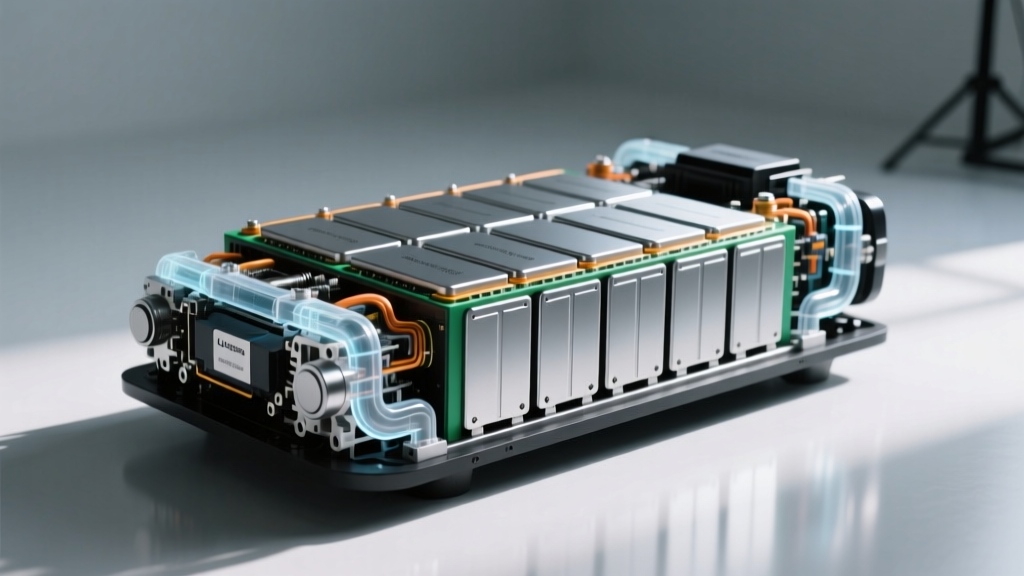
When industry analysts quote the li-ion battery cost per kWh, they're referring to the pack-level price — what an automaker pays to purchase a complete battery pack from a cell supplier like CATL, LG Energy Solution, or Panasonic. This includes cells, modules, the battery management system (BMS), thermal management hardware, and the structural enclosure.
At roughly $120–$135/kWh in 2026, a typical 75 kWh pack costs an automaker around $9,000–$10,125 at the factory gate. But that is not what a consumer pays for a replacement.
A dealer-installed replacement battery involves:
- Parts markup: The OEM replacement pack carries logistics, dealer margin, and warranty overhead — typically 1.8x to 2.5x the pack-level cost.
- Labor: High-voltage battery removal and installation requires certified EV technicians and specialized lifts. Expect 4–8 hours of labor at $150–$220/hour.
- Calibration and programming: The new pack must be paired to the vehicle's BMS, thermal system, and powertrain controller.
- Disposal/recycling credit: Some manufacturers offer a core credit ($500–$1,500) for returning the old pack, which offsets cost slightly.
The result: real-world replacement pricing typically lands between $150–$250 per kWh to the consumer — meaning a 75 kWh battery replacement runs $11,250 to $18,750 before any core credit, depending on the vehicle.
Battery Chemistry: LFP vs. NMC and How It Affects Cost
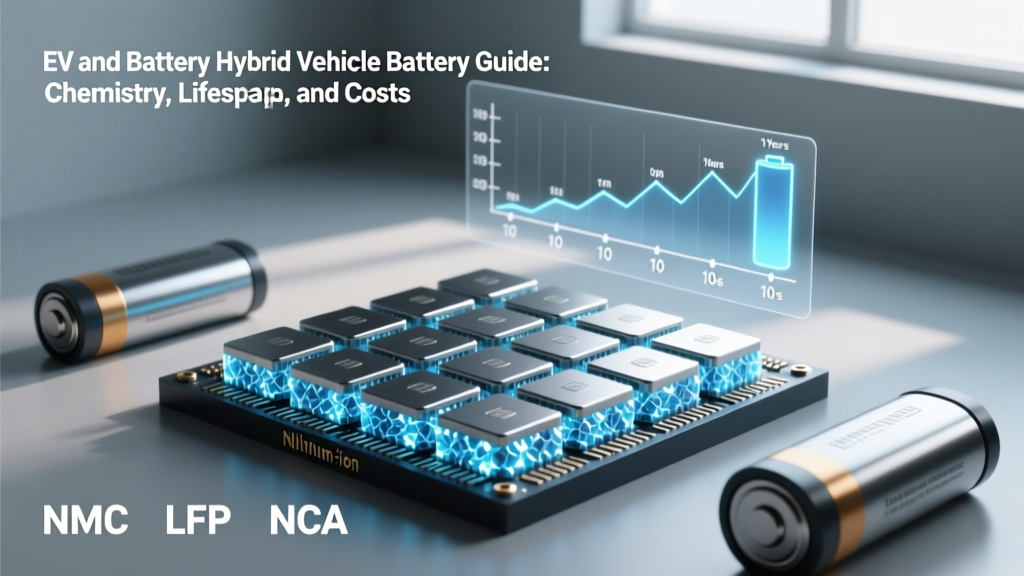
Not all lithium-ion batteries are built the same. The two dominant chemistries in 2026 EVs are LFP (lithium iron phosphate) and NMC/NCA (nickel manganese cobalt / nickel cobalt aluminum). The chemistry your vehicle uses directly affects cost, longevity, range, and cold-weather behavior.
| Attribute | LFP (Lithium Iron Phosphate) | NMC / NCA (Nickel-based) |
|---|---|---|
| Energy Density | ~160–180 Wh/kg (lower) | ~250–300 Wh/kg (higher) |
| Typical Use | Standard-range / base trims (Tesla Model 3 RWD, BYD, some Ford models) | Long-range / performance trims (Model 3 LR, Ioniq 5, EV6, F-150 Lightning Extended) |
| Cycle Life | 3,000–5,000+ full cycles | 1,000–2,000 full cycles |
| Cold-Weather Performance | Greater range loss (~30–40% at 20°F) | Moderate range loss (~20–30% at 20°F) |
| Max State of Charge | Can charge to 100% daily without harm | Best kept at 80% daily; 100% for trips only |
| Pack-Level Cost (2026) | ~$90–$110/kWh | ~$120–$150/kWh |
| Thermal Stability | Higher (less prone to thermal runaway) | Lower (requires more active cooling) |
Which is better? It depends on your use case. LFP is the clear winner for daily commuting, longevity, and cost savings — if you don't need maximum range and can tolerate more cold-weather loss. NMC/NCA delivers more miles in a lighter, smaller package, making it ideal for road-trippers and cold-climate drivers who need every EPA mile. Tesla, Ford, and several Chinese-market vehicles now use LFP in base trims, while Hyundai, Kia, GM, and BMW predominantly use NMC/NCA across their lineups.
How Long Do EV Batteries Actually Last?
This is the question that drives most purchase hesitation. The data, however, is reassuring: the vast majority of EV batteries outlast the vehicle they're installed in.
Real-World Degradation Data Points:
- Tesla Model 3/S (NMC/NCA): Tesla's 2025 Impact Report shows fleet data indicating ~12% average capacity loss at 150,000 miles, with the majority of packs retaining over 85% State of Health (SoH) at that mileage.
- Nissan Leaf (passive air cooling, older generations): Historically the worst-case scenario — early 2011–2017 Leafs showed 20–30% degradation by 80,000–100,000 miles due to lack of active thermal management. Modern liquid-cooled packs from other manufacturers do not share this problem.
- Hyundai/Kia (NMC, liquid-cooled): Owner-reported data on forums and Geotab's fleet study shows ~8–10% degradation over 5 years / 75,000 miles for vehicles with active thermal management.
- LFP packs (Tesla Model 3 RWD, BYD): Early fleet data suggests LFP packs lose only ~5–8% capacity over 100,000 miles, consistent with LFP's inherently longer cycle life.
The typical degradation curve is non-linear: expect a sharper 2–4% drop in the first year or 15,000 miles, followed by a slow, nearly linear decline of roughly 1–2% per year thereafter. A well-maintained, liquid-cooled battery pack in a 2026 EV should retain 80–90% of its original capacity at 150,000 miles.
To put that in perspective: a vehicle with a 300-mile EPA range when new would still deliver roughly 250–270 miles of range at 150,000 miles — more than adequate for daily use and most road trips.
What Does the Battery Warranty Actually Cover?
Federal law mandates that EV batteries carry a minimum warranty of 8 years / 100,000 miles (10 years / 150,000 miles in California Air Resources Board states). Most automakers meet or slightly exceed this floor. Here's how the major manufacturers structure their coverage:
| Manufacturer | Warranty Term | Capacity Retention Threshold | Notes |
|---|---|---|---|
| Tesla (Model 3/Y) | 8 yr / 120,000 mi (LR/AWD); 8 yr / 100,000 mi (RWD) | 70% minimum | Includes drive unit |
| Hyundai / Kia | 10 yr / 100,000 mi | 70% minimum | Longest standard term |
| Ford (F-150 Lightning, Mach-E) | 8 yr / 100,000 mi | 70% minimum | Transferable to second owner |
| GM (Ultium-based: Equinox EV, Blazer EV, Silverado EV) | 8 yr / 100,000 mi | 70% minimum (some trims 60% for fleet) | Ultium modular design may lower repair costs |
| BMW / Mercedes-Benz | 8 yr / 100,000 mi | 70% minimum | Some offer battery leasing programs in Europe |
| Rivian | 8 yr / 175,000 mi | 70% minimum | Highest mileage coverage in the segment |
Key detail: the warranty threshold matters. A 70% retention guarantee means the manufacturer will replace or repair the battery only if its usable capacity drops below 70% of its original kWh within the warranty period. If your 75 kWh pack degrades to 54 kWh (72%), you are still within spec and the warranty does not apply. In practice, very few liquid-cooled packs breach this threshold during the warranty period under normal use.
EV Battery Replacement Cost: What Owners Actually Pay
If your battery fails outside of warranty — or if you're buying a used EV with a degraded pack — here's what replacement looks like in 2026:
| Vehicle | Battery Size | Chemistry | Estimated Parts Cost | Labor + Programming | Total Estimate |
|---|---|---|---|---|---|
| Tesla Model 3 RWD | ~60 kWh | LFP | $8,000–$10,000 | $2,000–$3,000 | $10,000–$13,000 |
| Tesla Model Y Long Range | ~75 kWh | NMC | $12,000–$15,000 | $2,500–$3,500 | $14,500–$18,500 |
| Hyundai Ioniq 5 (Standard Range) | ~58 kWh | NMC | $9,000–$12,000 | $2,500–$3,500 | $11,500–$15,500 |
| Ford F-150 Lightning Extended Range | ~131 kWh | NMC | $20,000–$26,000 | $3,500–$5,000 | $23,500–$31,000 |
| Chevrolet Equinox EV | ~85 kWh | NMC (Ultium) | $12,000–$16,000 | $2,500–$4,000 | $14,500–$20,000 |
| Nissan Ariya | ~87 kWh | NMC | $13,000–$17,000 | $2,500–$3,500 | $15,500–$20,500 |
Critical context: these are worst-case, full-pack replacement figures. In reality, several factors make this scenario rare:
- Most packs never need replacement. Data from Geotab's analysis of over 10,000 EVs shows that fewer than 2% of EV batteries are replaced under or outside of warranty due to failure or excessive degradation.
- Module-level repair is increasingly available. Manufacturers like GM (with Ultium's modular architecture) and some independent EV shops can replace individual modules within a pack for $2,000–$5,000, rather than swapping the entire unit.
- The vehicle may be totaled first. A $45,000 vehicle with a $20,000 battery replacement at 12 years old is often not economically justified — the car is retired or recycled, and the battery enters the secondary market for energy storage.
Factors That Accelerate Battery Degradation
Not all miles are created equal when it comes to battery wear. The following habits and conditions measurably speed up capacity loss:
Battery Care Best Practices — Minimize Degradation
- Limit DC fast charging to road trips. Frequent use of 150+ kW DC fast charging generates sustained heat, which accelerates chemical degradation. Research from the Idaho National Laboratory found that vehicles charged exclusively via DCFC showed ~5–8% more degradation over 50,000 miles compared to Level 2-only charging. Use Level 2 at home as your daily routine.
- Avoid sustained high or low State of Charge. For NMC/NCA packs, store the vehicle at 40–60% SoC if it will sit unused for weeks. Daily charging to 80% is ideal; 100% should be reserved for trip days. (LFP packs are the exception — they benefit from regular 100% charges to recalibrate the BMS.)
- Use preconditioning. Most modern EVs can precondition (warm or cool) the battery before charging or driving. Enable scheduled preconditioning in cold weather — a cold battery charges slower and experiences more lithium plating stress during DCFC.
- Park in shade or a garage during extreme heat. Sustained battery temperatures above 95°F (35°C) accelerate calendar degradation, even when the vehicle is not driven. A hot-soaked battery sitting at 100% SoC is the worst-case wear scenario.
- Don't let the battery sit at 0% SoC. If the vehicle reaches a very low charge state, plug it in within a day or two. Extended time at near-zero SoC can cause copper dissolution in the anode current collector, leading to permanent capacity loss.
- Enable thermal management systems. Keep your vehicle's battery preconditioning and thermal management settings active — do not disable them to save energy. The small energy cost pays for itself in dramatically extended battery life.
How to Check and Monitor Your Battery's State of Health
State of Health (SoH) is the percentage of your battery's current maximum capacity compared to its original factory capacity. A new battery is at 100% SoH; a battery that originally held 75 kWh but now holds 67.5 kWh is at 90% SoH.
Here's how to check it on popular 2026 EVs:
- Tesla: The vehicle does not display SoH natively in the app or on-screen. However, third-party tools like TeslaFi or Scan My Tesla (via OBD-II dongle) can read the BMS-reported SoH. Tesla service centers can also provide a battery health report on request.
- Hyundai / Kia: The infotainment system on Ioniq 5, Ioniq 6, and EV6 includes a battery health indicator under EV settings, showing a percentage-based SoH estimate. This is BMS-derived and reasonably accurate.
- Ford: The FordPass app provides a battery health status indicator, though it's less granular (showing "Good" / "Attention Needed" rather than a percentage). A dealer can pull exact SoH via the diagnostic port.
- GM (Ultium): The myChevrolet / myCadillac app includes a battery health section with estimated SoH percentage.
- Universal OBD-II method: An OBD-II Bluetooth reader ($30–$60) paired with apps like Car Scanner or EVnotify can pull SoH data from most EVs' BMS, regardless of brand. This is the method most used-EV buyers should use when evaluating a pre-owned vehicle.
When buying a used EV: always request the SoH reading before purchase. A vehicle at 92%+ SoH with 40,000 miles is in excellent shape. Anything below 80% SoH should significantly reduce the purchase price to account for range loss and potential future replacement risk.
Emerging Battery Technology: What's Next and When
Several next-generation battery technologies are in active development, each promising improvements in energy density, cost, or safety. Here's a realistic assessment of their timelines — none of these are available in production EVs as of 2026:
- Silicon-dominant anodes: Companies like Sila Nanotechnologies and Group14 are replacing graphite anodes with silicon composites, which can store up to 10x more lithium ions per unit mass. Early commercial deployments (Porsche's Taylan subsidiary, Mercedes-Benz EQG testing) suggest limited production vehicles could appear by 2027–2028, offering ~15–20% more energy density at similar cost. This is the closest to market of any next-gen technology.
- Solid-state batteries: By replacing the liquid electrolyte with a solid ceramic or polymer, solid-state cells promise higher energy density (~400–500 Wh/kg), faster charging, and improved safety. Toyota, Samsung SDI, and QuantumScape are the leading developers. Toyota has announced a 2027–2028 target for limited production in a small number of vehicles, but widespread commercial availability at competitive pricing is not expected before 2030–2032. Treat any claim of "solid-state EVs are here" with deep skepticism.
- Sodium-ion batteries: CATL has begun limited production of sodium-ion cells for low-cost, low-range applications (city cars, energy storage). Sodium is far cheaper and more abundant than lithium, but energy density is significantly lower (~120–140 Wh/kg). These may appear in budget EVs or as range-extender supplements by 2027–2028, but won't replace lithium-ion in mainstream long-range vehicles.
- Lithium-sulfur (Li-S): Offers theoretical energy density of ~2,600 Wh/kg, but suffers from rapid cycle-life degradation (the "polysulfide shuttle" problem). Still in laboratory stage; commercial viability is 8–12+ years away.
The practical takeaway: today's lithium-ion batteries — both LFP and NMC — are mature, well-understood, and declining in cost. Waiting for solid-state or silicon-anode breakthroughs is not a rational reason to delay an EV purchase, as these technologies will debut in premium vehicles at premium prices and take years to reach mainstream affordability.
The Real Economics: Cost Per kWh Over the Life of Your EV
Let's put the li-ion battery cost per kWh into the context of total ownership. Consider a 2026 Tesla Model 3 Long Range with a 75 kWh NMC battery and 341-mile EPA range, priced at roughly $42,990 before incentives.
Over 150,000 miles (a realistic vehicle lifespan):
- Electricity cost: At the U.S. average of $0.16/kWh and an efficiency of 26 kWh/100 miles, total energy cost is ~$6,240.
- Battery degradation cost: If the pack degrades 12% (to ~66 kWh usable), you've "lost" about 9 kWh of capacity. At the consumer replacement rate of ~$200/kWh, that's a theoretical $1,800 in lost battery value — but since the battery still functions and the car remains drivable, this is an opportunity cost, not an out-of-pocket expense.
- Gasoline equivalent: A comparable 30 MPG gas car at $3.50/gallon over 150,000 miles would cost ~$17,500 in fuel alone — nearly $11,300 more than the EV's electricity cost.
Even in the unlikely event of a full battery replacement at year 10 ($15,000), the EV's total energy + battery cost ($6,240 + $15,000 = $21,240) is only modestly higher than the gas car's fuel cost — and the EV saves substantially on maintenance (no oil changes, fewer brake replacements due to regenerative braking, no transmission service).
The li-ion battery cost per kWh matters most as a macro trend: as it continues to decline, new EV prices fall, used EV battery replacements become more affordable, and the total cost of ownership advantage widens further.
Frequently Asked Questions
How long do EV batteries last in years and miles?
Most modern liquid-cooled EV batteries retain 80–90% of their original capacity at 150,000 miles or 10–15 years of typical use. They rarely "die" suddenly — they gradually lose capacity over time. Many EVs will be retired due to body damage, electronic failures, or economic obsolescence long before the battery becomes unusable.
How much does an EV battery cost to replace?
Out-of-warranty full-pack replacement costs range from roughly $10,000 for a small LFP pack (Tesla Model 3 RWD, ~60 kWh) to $25,000–$31,000 for a large NMC pack (F-150 Lightning Extended Range, ~131 kWh). Module-level repairs, where available, cost $2,000–$5,000. However, fewer than 2% of EV batteries ever require replacement, and most failures occur within the warranty period.
What does the EV battery warranty cover?
Federal law requires a minimum 8-year / 100,000-mile warranty on EV batteries (10 years / 150,000 miles in CARB states). The warranty guarantees that the battery will retain a minimum percentage of its original capacity — typically 70%. If capacity drops below that threshold within the warranty period, the manufacturer will repair or replace the battery at no cost. The warranty covers defects and excessive degradation, not damage from accidents, flooding, or unauthorized modifications.
How do I check my EV battery's health?
Some vehicles display State of Health (SoH) in the infotainment system or companion app (Hyundai, Kia, GM). For Tesla and other brands without a native display, an OBD-II Bluetooth reader with apps like Car Scanner or TeslaFi can pull SoH data from the battery management system. Always check SoH before buying a used EV.
Is LFP or NMC better for my EV?
LFP (lithium iron phosphate) is better if you prioritize longevity, lower cost, and daily charging convenience — it tolerates 100% daily charging and lasts 3,000+ cycles. NMC/NCA is better if you need maximum range, better cold-weather performance, and lighter weight. Most commuters are well-served by LFP; road-trippers and cold-climate drivers benefit from NMC.
Will solid-state batteries make current EVs obsolete?
Not for many years. Solid-state batteries are expected to reach limited production around 2027–2028 in premium vehicles, with mainstream availability not expected before 2030–2032. Current lithium-ion technology continues to improve in cost and durability. Buying a 2026 EV does not risk near-term obsolescence from solid-state competition.
Does frequent DC fast charging damage my battery?
Exclusively relying on DC fast charging (150+ kW) adds measurable degradation — research suggests ~5–8% more capacity loss over 50,000 miles compared to Level 2-only charging. Occasional DCFC on road trips is perfectly fine, especially with preconditioning enabled. For daily charging, a home Level 2 charger (7–11 kW) is the best choice for long-term battery health.
The trajectory of the li-ion battery cost per kWh tells a clear story: batteries are getting cheaper, lasting longer, and requiring less anxiety than early EV adopters faced. With pack-level prices near $120–$135/kWh in 2026, warranty protections extending to 150,000 miles in many cases, and degradation rates that keep most packs above 80% capacity for well over a decade, the battery is no longer the liability it was once perceived to be. It's the component that makes the EV economics work.