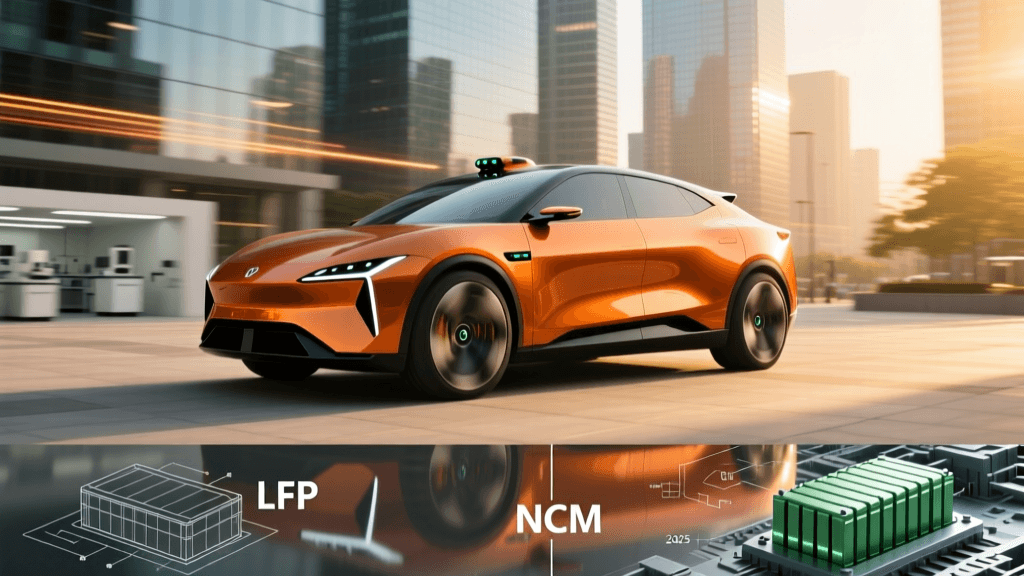
The Chemistry Divide: LFP vs. NMC Explained
As the electric vehicle market matures, the debate between Lithium Iron Phosphate (LFP) and Nickel Manganese Cobalt (NMC) battery chemistries has moved from engineering labs to showroom floors. For consumers, understanding the difference is no longer just an academic exercise; it directly impacts your daily charging habits, winter driving range, and long-term ownership costs. While NMC has historically dominated the EV space due to its superior energy density, LFP is rapidly capturing the standard-range market. To make the right purchasing decision, we must look at how these chemistries perform in the real world and where the industry is heading over the next decade.
Core Differences: Energy Density, Cost, and Thermal Stability
NMC batteries utilize a cathode composed of nickel, manganese, and cobalt. Nickel provides high energy density, allowing automakers to pack more range into a smaller, lighter footprint. However, cobalt is expensive and fraught with geopolitical and ethical supply chain concerns. LFP batteries, on the other hand, replace nickel and cobalt with iron and phosphate. This results in a heavier, less energy-dense battery, but one that is significantly cheaper to produce, highly resistant to thermal runaway (fires), and capable of enduring vastly more charge cycles before noticeable degradation occurs.
Comparative Data: LFP vs. NMC at a Glance
| Feature | LFP (Lithium Iron Phosphate) | NMC (Nickel Manganese Cobalt) |
|---|---|---|
| Energy Density | Lower (Heavier, bulkier pack) | Higher (Lighter, more compact) |
| Recommended Daily Charge | 100% (Required for BMS calibration) | 80% (To preserve longevity) |
| Cycle Life | 3,000+ cycles | 1,500 - 2,000 cycles |
| Cold Weather Performance | Poor (High internal resistance) | Good (Better low-temp conductivity) |
| Thermal Stability | Excellent (Very low fire risk) | Moderate (Requires robust cooling) |
| Upfront Cost | Lower | Higher |
2025 Industry Outlook: The Great Battery Pivot
The automotive industry is undergoing a massive pivot toward LFP for entry-level and standard-range vehicles. According to the International Energy Agency (IEA), the global market share of LFP batteries has surged dramatically, driven by innovations in cell-to-pack (CTP) technology that mitigate the chemistry's traditional weight penalties. Automakers like Tesla have already transitioned all standard-range Model 3 and Model Y vehicles to LFP. Ford is following suit, investing billions in dedicated LFP manufacturing plants to bypass volatile nickel and cobalt supply chains.
From an industry perspective, the future of LFP is bright for urban mobility and fleet vehicles where extreme range is secondary to low cost and high durability. However, LFP is not a silver bullet. Its voltage curve is remarkably flat, making it difficult for the Battery Management System (BMS) to accurately estimate state-of-charge (SOC) without regularly being charged to 100%. Furthermore, LFP cells suffer from severe performance drops in freezing temperatures, forcing automakers to invest heavily in advanced heat pump systems and battery pre-conditioning algorithms to keep the cells viable in northern climates.
NMC’s Future: High-Nickel and the Solid-State Bridge
Does this mean NMC is dying? Far from it. NMC is simply moving upmarket. Researchers at Argonne National Laboratory note that high-nickel NMC formulations (like NMC 811) remain essential for long-range vehicles, heavy-duty electric trucks, and performance cars where weight and space are at a premium. The future outlook for NMC involves reducing cobalt to near-zero while increasing nickel content, bridging the gap toward eventual solid-state batteries. If you are buying a premium EV with over 300 miles of range, you are almost certainly buying an NMC-based battery, and the industry will continue to refine this chemistry for high-performance applications well into the next decade.
Practical Guide: Matching Battery Chemistry to Your Driving Needs
Choosing between LFP and NMC should not be about which chemistry is objectively "better," but rather which aligns with your specific lifestyle, climate, and driving patterns.
Scenario A: The Daily Commuter and Urban Driver (Choose LFP)
If you drive less than 40 miles a day, have access to home charging, and live in a moderate or warm climate, an LFP battery is the superior financial and practical choice. Vehicles like the Tesla Model 3 Rear-Wheel Drive or the standard-range Ford Mustang Mach-E utilize LFP to keep the purchase price down.
- Charging Habit: You must charge LFP to 100% at least once a week. The flat voltage curve requires the BMS to reach the top of the charge to recalibrate; otherwise, your range estimation will become inaccurate.
- Lifecycle Benefit: Because you can charge to 100% daily without fear of rapid degradation, your "usable" daily range is often higher than an NMC vehicle of the same stated capacity, which you must artificially limit to 80%.
- Cold Weather Caveat: If you live in a region with harsh winters, you must diligently use your vehicle's scheduled departure feature to pre-condition the battery while plugged in. LFP cells struggle to accept regenerative braking and DC fast charging when cold.
Scenario B: The Long-Distance Traveler and Cold-Climate Driver (Choose NMC)
If you frequently take road trips, live in a region with sub-freezing winters, or lack reliable home charging (relying on public DC fast chargers), NMC is the better fit. Vehicles like the Hyundai Ioniq 5 Long Range, Rivian R1T, and Chevrolet Silverado EV rely on NMC for its density and thermal resilience.
- Charging Habit: Limit daily charging to 80%. Only charge to 100% when you are about to embark on a long road trip. Charging NMC to 100% and letting it sit in a hot driveway accelerates electrolyte degradation.
- DC Fast Charging: NMC batteries generally handle high-speed DC charging better in varied temperatures. While LFP can charge rapidly in the 10-60% SOC window, NMC offers a more predictable charging curve and better thermal management during back-to-back road trip charging sessions.
- Winter Performance: NMC suffers less from internal resistance spikes in the cold. You will experience less range loss and regain regenerative braking capabilities much faster on a cold morning commute compared to an LFP pack.
Total Lifecycle Cost and Degradation Analysis
When analyzing the total cost of ownership, battery replacement is the ultimate boogeyman for EV skeptics. However, data from the U.S. Department of Energy's Alternative Fuels Data Center highlights that modern EV batteries rarely require full replacement before the vehicle is retired. Still, the degradation curves differ significantly.
An LFP battery can easily endure 3,000 to 5,000 full charge cycles before dropping to 80% of its original capacity. For a vehicle with 250 miles of range, that equates to 750,000 to 1.25 million miles of driving. Essentially, the LFP battery will outlast the chassis, suspension, and interior of the car. NMC batteries typically endure 1,500 to 2,000 cycles, which still translates to roughly 400,000 miles—well beyond the average consumer's ownership period. However, if you plan to keep your vehicle for 15 years, or if you are buying a used EV with high mileage, an LFP battery offers vastly superior peace of mind regarding long-term degradation and resale value.
Final Verdict: Which Chemistry Wins?
The future of the EV industry is not a monopoly of one chemistry, but a bifurcated market. LFP will dominate the affordable, standard-range, and fleet segments, offering unmatched longevity and safety at a lower upfront cost. NMC will remain the king of long-range, high-performance, and cold-weather applications, paving the way for next-generation solid-state technologies. By honestly assessing your daily mileage, local climate, and charging infrastructure, you can select the battery chemistry that will serve you best for the next decade of electric driving.