The Companies Behind Your EV's Battery Pack
Every electric vehicle on the road depends on a high-voltage traction battery built by one of a handful of global manufacturers. Understanding who makes these cells — and what chemistry they use — directly informs what you can expect in range, longevity, charging speed, and eventual replacement cost. As of 2026, the EV battery supply chain remains heavily concentrated, with the biggest battery manufacturers controlling the vast majority of production capacity for passenger electric vehicles.
This guide maps those manufacturers to the vehicles they power, breaks down the two dominant chemistries (LFP and NMC/NCA), and provides the degradation data, warranty terms, and replacement-cost figures every EV buyer and owner needs.
The Biggest Battery Manufacturers Powering EVs in 2026
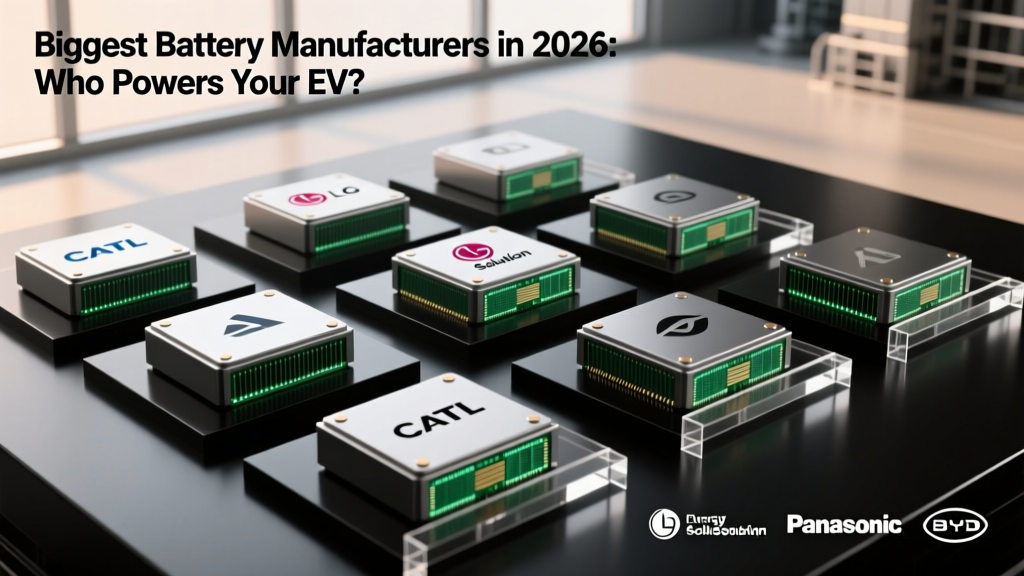
The global EV battery market is dominated by a tier of large-scale cell producers, most headquartered in East Asia. Here is how the major players align with the vehicles sold in the U.S. market:
- CATL (Contemporary Amperex Technology Co. Limited) — China-based, the world's largest battery maker by volume. Supplies Tesla (Model 3/Y Standard Range LFP cells), BMW, Volkswagen, Ford (LFP pack for F-150 Lightning Pro), and Volvo. CATL pioneered large-format LFP prismatic cells and has pushed energy density higher with its Qilin (CTP 3.0) architecture.
- BYD (Build Your Dreams) — Vertically integrated Chinese automaker and battery producer. Its Blade Battery (LFP, prismatic) is used in its own global vehicle lineup and supplied to Tesla for certain Model Y variants sold outside North America. BYD's blade form factor improved pack-level volumetric energy density for LFP significantly.
- LG Energy Solution (LGES) — South Korea-based, a major supplier to GM (Ultium platform), Ford (Mustang Mach-E extended-range), Stellantis, and Hyundai/Kia. LGES produces NMC pouch and cylindrical cells and operates joint-venture plants in the U.S. (Ultium Cells with GM in Ohio, Tennessee, and Michigan).
- Panasonic Energy — Japan-based, Tesla's longest-standing cell partner. Produces 2170-format NCA cylindrical cells at the Gigafactory Nevada for Model 3/Y Long Range and Performance variants. Panasonic is also ramping 4680-format cells for the Cybertruck and next-gen Tesla vehicles.
- SK On — South Korea-based, supplies Ford (F-150 Lightning extended-range, E-Transit) and Hyundai (Ioniq 5/6 for certain markets) through its BlueOval SK joint venture with Ford in Kentucky and Tennessee.
- Samsung SDI — South Korea-based, supplies BMW, Stellantis, and Rivian. Produces NMC prismatic and cylindrical cells, and is developing 46mm-diameter large-format cells for next-generation platforms.
For U.S. buyers, this matters because IRS §30D tax credit eligibility depends on where battery components and critical minerals are sourced — and cells from CATL or BYD can disqualify a vehicle from the credit under current foreign-entity-of-concern (FEOC) rules.
Battery Chemistry: LFP vs NMC vs NCA
The two dominant lithium-ion chemistries in passenger EVs carry distinct trade-offs. NMC (nickel manganese cobalt) and NCA (nickel cobalt aluminum) are grouped here because their performance profiles are similar and both are cathode-dominant chemistries optimized for energy density. LFP (lithium iron phosphate) sacrifices some energy density for cost, longevity, and safety.
| Attribute | LFP (Lithium Iron Phosphate) | NMC / NCA (Nickel-based) |
|---|---|---|
| Energy density (cell-level) | ~160–180 Wh/kg | ~230–300 Wh/kg |
| Typical EPA range in same vehicle platform | ~15–20% less than NMC equivalent | Higher range per kWh of pack weight |
| Cycle life (to 80% capacity) | 3,000–5,000+ cycles | 1,000–2,000 cycles |
| Cold-weather performance | More range loss below freezing (~30–40%) | Better low-temp discharge (~20–30% loss) |
| DC fast-charge tolerance | Handles frequent 100% charging; slower peak charge rate | Faster peak kW; recommended to charge to 80% daily |
| Cobalt / nickel content | Zero cobalt, zero nickel | Contains cobalt and/or nickel (supply-chain and ethical concerns) |
| Cost per kWh (pack-level, 2026 est.) | ~$90–$110/kWh | ~$120–$145/kWh |
| Thermal runaway risk | Very low | Low but higher than LFP |
| SoC recommendation for daily use | Charge to 100% regularly (helps BMS calibration) | Charge to 80% daily; 100% before long trips |
| Common in these U.S. vehicles (2026) | Tesla Model 3/Y RWD, Ford F-150 Lightning Pro, some Volvo EX30 | Tesla Model 3/Y LR, Hyundai Ioniq 5/6, Ford Mach-E ER, GM Ultium vehicles, Rivian R1T/R1S |
Which is better? Neither is universally superior. LFP is the right call if you want maximum cycle life, lower cost, and plan to keep the vehicle 10+ years or 200,000+ miles. NMC/NCA is better if you need maximum range in a given pack size, better cold-weather usability, or faster DC fast-charging. For most buyers who charge at home and drive under 15,000 miles per year, either chemistry will outlast the vehicle's useful life.
Battery Degradation: What the Data Actually Shows
Battery degradation — the gradual loss of usable capacity over time — is the single most common concern among prospective EV buyers. The data, however, is reassuring: modern EV batteries are outperforming early pessimistic projections.
Observed degradation benchmarks (sourced from fleet data and manufacturer reports):
- Tesla Model 3/Y (NMC/NCA, 2170 cells): ~5–7% capacity loss at 100,000 miles; ~8–12% at 200,000 miles. Tesla's 2025 Impact Report states average fleet data shows ~12% degradation at 200,000 miles.
- Tesla Model 3 RWD (LFP, CATL cells): Early fleet data suggests ~3–5% loss at 80,000 miles, with a flatter degradation curve thereafter due to LFP's superior cycle life.
- Hyundai Ioniq 5 (NMC, SK On/LGES): Owner-reported data clusters around 4–6% loss at 60,000–80,000 miles.
- Chevrolet Bolt EV/EUV (NMC, LGES): Post-recall replacement packs (2022+) show minimal degradation; original packs averaged ~8–10% at 100,000 miles before the recall addressed defect-related failures.
- Nissan Leaf (LMO/NMC, air-cooled): The outlier — passive air cooling accelerates degradation, with 24 kWh packs losing 15–25% over 8 years in hot climates. Later 62 kWh packs with improved thermal management perform better but still trail liquid-cooled competitors.
Source: fueleconomy.gov EV technology overview; Tesla Impact Report; Recurrent Auto battery fleet data.
Key insight: Degradation is non-linear. Most packs lose 2–4% in the first year (calendar aging and initial formation), then settle into a slow linear decline of roughly 0.5–1.5% per year or ~1% per 15,000–20,000 miles. A 2026 EV with a liquid-cooled NMC pack driven 12,000 miles/year will likely retain 88–92% of original capacity at 10 years.
Battery Warranty Terms: What's Actually Covered
Federal regulation mandates a minimum battery warranty of 8 years / 100,000 miles for EVs sold in the U.S. (California Air Resources Board states extend this to 10 years / 150,000 miles). Most manufacturers set the capacity-retention threshold at 70% — meaning the warranty covers replacement or repair only if the battery falls below 70% of original usable capacity within the warranty period.
| Manufacturer / Platform | Warranty Term | Capacity Threshold | Notes |
|---|---|---|---|
| Tesla (Model 3/Y Long Range, NMC) | 8 yr / 120,000 mi | 70% | Standard Range (LFP): 8 yr / 100,000 mi |
| Hyundai / Kia (Ioniq 5/6, EV6) | 10 yr / 100,000 mi | 70% | Stronger term than federal minimum |
| GM (Ultium: Blazer EV, Silverado EV, Equinox EV) | 8 yr / 100,000 mi | 70% | Modular pack allows partial module replacement |
| Ford (F-150 Lightning, Mach-E) | 8 yr / 100,000 mi | 70% | LFP (Lightning Pro) may outperform warranty easily |
| Rivian (R1T / R1S) | 8 yr / 175,000 mi | 70% | Higher mileage cap reflects truck-use expectations |
| BMW (i4, iX, i7) | 8 yr / 100,000 mi | 70% | Samsung SDI NMC cells |
What the warranty does NOT cover: Normal degradation above the threshold (e.g., losing 15% over 8 years is considered normal). Damage from accidents, flooding, or unauthorized modifications. The 12V auxiliary battery (a separate, conventional lead-acid or lithium 12V unit that powers accessories and computers — it is not the traction battery and carries its own shorter warranty).
EV Battery Replacement Cost: When and How Much
Full traction battery replacement is rare — the vast majority of EV batteries outlast the vehicle's economic life. When replacement is needed, it typically occurs outside the warranty period at 12–18 years of age, or due to a manufacturing defect covered under warranty.
| Vehicle / Pack Size | Estimated Out-of-Warranty Replacement Cost (2026) | Cost per kWh (pack-level) |
|---|---|---|
| Tesla Model 3 RWD (~60 kWh LFP) | $7,000–$10,000 | ~$115–$165/kWh |
| Tesla Model Y Long Range (~82 kWh NMC) | $12,000–$16,000 | ~$145–$195/kWh |
| Hyundai Ioniq 5 (~77.4 kWh NMC) | $11,000–$15,000 | ~$140–$195/kWh |
| Ford F-150 Lightning Extended Range (~131 kWh NMC) | $18,000–$28,000 | ~$140–$215/kWh |
| Chevrolet Silverado EV (~200 kWh Ultium) | $25,000–$35,000 | ~$125–$175/kWh |
| Rivian R1T Large Pack (~149 kWh) | $20,000–$30,000 | ~$135–$200/kWh |
These figures include the pack and labor but can vary by region, dealership vs. independent EV shop, and whether the full pack or individual modules are replaced. GM's Ultium platform and some Hyundai/Kia packs allow module-level replacement, which can reduce costs to $2,000–$5,000 if only one or two of 8–12 modules have failed.
Context for perspective: Pack-level cell costs have fallen from ~$400/kWh in 2015 to ~$110–$140/kWh in 2026 (per BloombergNEF battery price surveys). By the time a 2026 EV actually needs an out-of-warranty replacement in the late 2030s, replacement costs are projected to be 30–50% lower than today's figures.
Factors That Affect Battery Life (and What You Can Control)
Not all miles are equal when it comes to battery wear. The following factors have the most measurable impact on long-term capacity retention:
- State of Charge (SoC) habits: For NMC/NCA packs, routinely charging to 100% and leaving the vehicle at full SoC for days accelerates calendar aging. Set daily charge limit to 80% and only charge to 100% when departing on a long trip. LFP packs are the exception — charge to 100% at least weekly to allow the BMS to balance cells.
- DC fast-charging frequency: Occasional DC fast charging (1–2 sessions per week) has minimal impact. Daily DCFC at 150+ kW does accelerate degradation modestly (~1–2% additional loss over 100,000 miles) due to sustained high temperatures. If you rely on public DCFC daily, precondition the battery (most EVs do this automatically when you navigate to a charger) and prefer chargers that cap at 80%.
- Extreme temperatures: Sustained exposure to ambient temperatures above 95°F accelerates chemical aging. In cold climates below 20°F, range drops 20–40% temporarily (this is not permanent degradation — capacity returns when the pack warms). Garage parking in hot climates measurably extends battery life.
- Depth of discharge: Shallow cycles (e.g., operating between 30–80% SoC) are gentler than deep cycles (10–100%). You do not need to obsess over this, but avoiding habitual deep discharges below 10% is wise.
- Regenerative braking settings: High regen does not meaningfully increase battery wear — charge current during regen is well within safe C-rates for modern packs. Use whatever regen setting you prefer for driving comfort.
Monitoring Battery Health: How to Check State of Health (SoH)
State of Health (SoH) is expressed as a percentage of the battery's current maximum capacity relative to its original capacity when new. A SoH of 92% means the pack holds 92% of its original kWh.
Methods for checking SoH:
- In-vehicle display: Tesla provides a battery health estimate in the Service menu (Settings → Service → Battery Health). Hyundai/Kia displays a SoH percentage in the EV battery diagnostics screen accessible through the cluster or infotainment system.
- OBD-II diagnostic tools: Devices like the OBDLink MX+ paired with apps such as ABRP (A Better Route Planner) or Car Scanner can read the BMS-reported SoH directly from the CAN bus. This works on most 2020+ EVs.
- Manufacturer service check: Any authorized dealer can pull a full battery health report during a service visit. Request this before purchasing a used EV.
- Third-party services: Companies like Recurrent Auto offer free battery health reports by connecting to your vehicle's telematics data (with your permission). These reports compare your pack's degradation to a fleet baseline.
Red flag threshold: If SoH drops below 80% while still under warranty, push the dealer for a warranty claim. Below 70%, the warranty mandates replacement or repair.
Emerging Battery Technology: What's Next (and When)
Several next-generation battery technologies are in development, but none are available in production passenger EVs as of 2026:
- Solid-state batteries: Replace the liquid electrolyte with a solid conductor, promising higher energy density (~400+ Wh/kg cell-level), faster charging, and improved safety. Toyota has announced a solid-state EV for 2027–2028, but production volumes will be extremely limited initially. Samsung SDI targets 2027 for limited production. Realistically, solid-state will not reach mainstream, affordable EVs until the early 2030s.
- Silicon-dominant anodes: Replacing graphite anodes with silicon can boost energy density 20–40%. Sila Nanotechnologies and Group14 Technologies are supplying early silicon-anode materials to battery makers. Expect incremental adoption in 2027–2029 model-year vehicles, starting with premium segments.
- Sodium-ion batteries: CATL and BYD have begun producing sodium-ion cells for low-cost, short-range EVs (primarily in China). Energy density (~120–140 Wh/kg) limits these to urban vehicles. U.S. availability is uncertain and likely post-2028.
These are announced and in-development technologies — not available for purchase today. If you are buying an EV now, current LFP and NMC chemistries from the manufacturers listed above are mature, well-tested, and supported by extensive real-world data.
Frequently Asked Questions
How long do EV batteries last?
Modern liquid-cooled EV batteries (2020 and later) are lasting 15–20+ years or 200,000–300,000 miles before falling below 70% capacity. LFP packs from CATL and BYD are projected to exceed 300,000 miles based on cycle-life ratings of 3,000–5,000 cycles. The battery will likely outlast the rest of the vehicle.
How much does an EV battery cost to replace?
Out-of-warranty replacement costs range from ~$7,000 for a 60 kWh LFP pack (Tesla Model 3 RWD) to $28,000+ for a 131 kWh NMC pack (F-150 Lightning Extended Range). Module-level repairs on platforms like GM Ultium can cost as little as $2,000–$5,000. Costs are declining and will be significantly lower by the late 2030s when most 2026 EVs might need replacement.
What does the battery warranty cover?
Federal minimum is 8 years / 100,000 miles with a 70% capacity-retention threshold. Some automakers (Hyundai, Kia, Rivian) offer longer terms. The warranty covers defects and premature degradation — not normal wear above the threshold, accident damage, or the 12V auxiliary battery.
How do I check and maximize battery health?
Check SoH via the vehicle's built-in diagnostics, an OBD-II tool, or a dealer service report. Maximize longevity by charging NMC/NCA to 80% daily (100% for LFP), avoiding prolonged storage at extreme SoC, minimizing daily DC fast charging, and parking in shade or a garage in hot climates.
LFP vs NMC — which is better and why?
LFP wins on cost (~$20–35/kWh cheaper), cycle life (2–3× more cycles), safety, and cobalt-free sourcing. NMC wins on energy density (more range in the same pack size), cold-weather performance, and DC fast-charge speed. For a second-owner keeping a vehicle 10+ years, LFP is the longevity play. For maximum range and all-season usability, NMC is preferable. Both will outlast the typical ownership period.