Why LFP Batteries Are Reshaping the EV Market
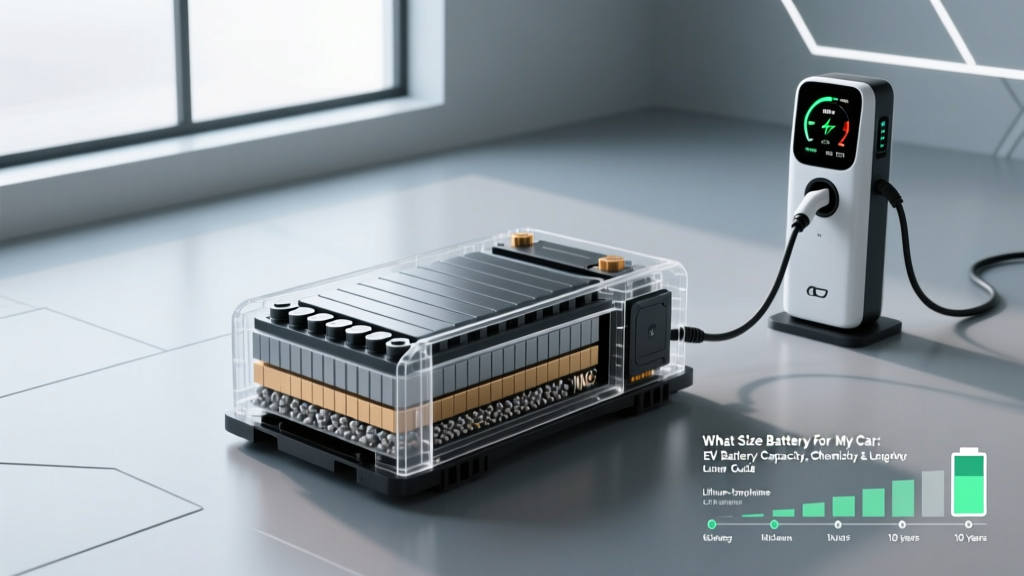
Lithium iron phosphate (LFP) batteries have moved from a niche chemistry to a mainstream EV powertrain choice. Tesla equips the Model 3 and Model Y Rear-Wheel Drive with LFP packs. Ford uses LFP in the Mustang Mach-E Select. BYD builds its entire lineup around its Blade LFP cell. Even legacy automakers like Volkswagen and Stellantis are sourcing LFP for entry-level trims.
The reason is straightforward: LFP cells cost roughly 20–30% less per kWh to manufacture than nickel-manganese-cobalt (NMC) or nickel-cobalt-aluminum (NCA) cells, and they eliminate cobalt entirely — sidestepping both supply-chain risk and ethical sourcing concerns. But lower cost comes with trade-offs in energy density and cold-weather behavior that every EV buyer should understand before choosing a trim.
This guide breaks down exactly what LFP batteries are, how they compare to NMC/NCA, what the degradation data actually shows, what warranties cover, and what replacement costs look like in 2026.
LFP vs NMC vs NCA: Chemistry Trade-Offs Explained
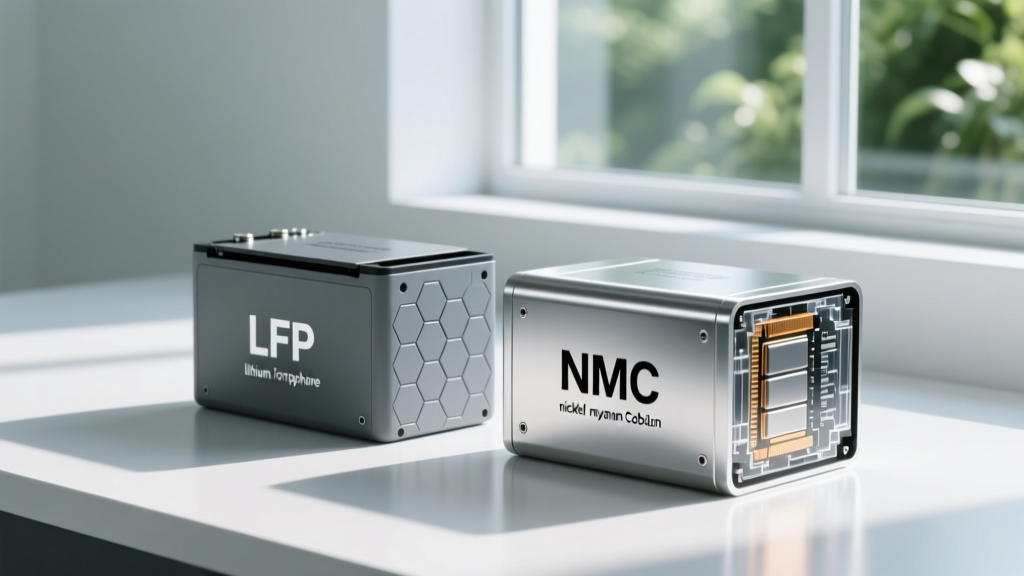
The cathode material defines a lithium-ion cell's characteristics. Here's how the three dominant chemistries stack up across the metrics that matter for daily ownership.
| Attribute | LFP (LiFePO₄) | NMC (Nickel-Manganese-Cobalt) | NCA (Nickel-Cobalt-Aluminum) |
|---|---|---|---|
| Energy Density (cell-level) | 160–180 Wh/kg | 220–260 Wh/kg | 250–280 Wh/kg |
| Cycle Life (to 80% SoH) | 3,000–5,000+ cycles | 1,000–2,000 cycles | 800–1,500 cycles |
| Calendar Life | 15–20+ years (estimated) | 10–15 years | 10–15 years |
| Cold-Weather Performance | Moderate — ~15–25% range loss at 20°F | Better — ~10–20% range loss at 20°F | |
| Fast-Charging Tolerance | Excellent — tolerates frequent DCFC well | Good — heat management critical above 80% SoC | |
| Thermal Stability | Very high — onset ~270°C | Moderate — onset ~210°C | |
| Cobalt Content | None | 5–20% cobalt | ~5% cobalt |
| Cost per kWh (cell) | ~$75–90 | ~$100–120 | ~$105–125 |
| SoC Recommendation | Charge to 100% regularly (BMS needs it for calibration) | 80% daily, 100% for trips | |
| Common In 2026 Models | Tesla Model 3/Y RWD, Ford Mach-E Select, BYD all models, Rivian Standard | Hyundai Ioniq 5/6, Kia EV6/EV9, Chevy Equinox EV, BMW iX |
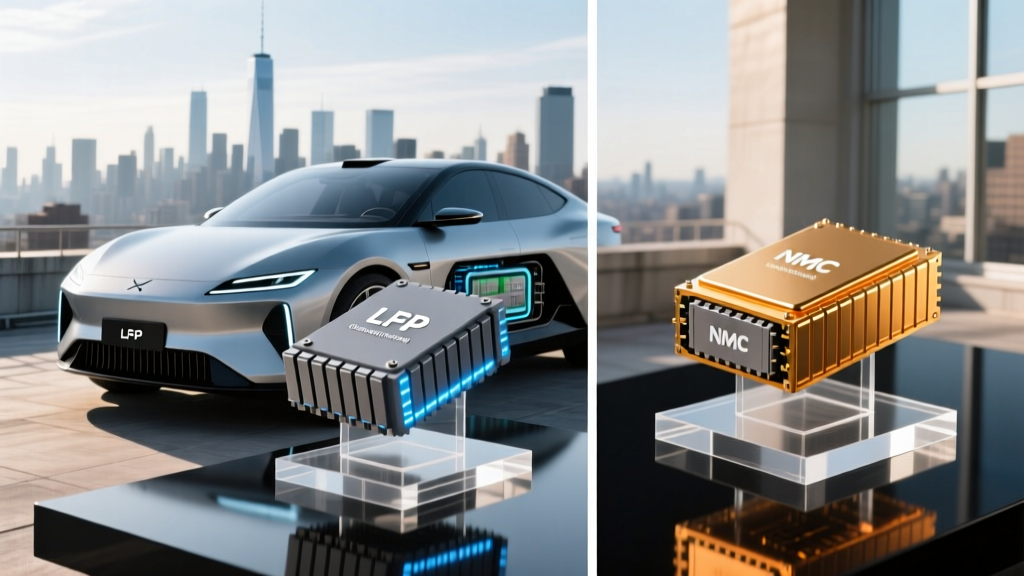
Key takeaway: LFP wins on longevity, safety, cost, and daily charging simplicity. NMC/NCA wins on energy density — meaning more range in a lighter, smaller pack — and cold-weather efficiency. If you need 320+ miles of EPA range in a mid-size crossover, you'll likely get NMC. If 260–280 miles is sufficient and you plan to keep the car 10+ years, LFP is the stronger long-term bet.
How Long Do EV Batteries Actually Last?
The short answer: almost certainly longer than you'll own the car. The long answer requires distinguishing between cycle degradation (wear from charging/discharging) and calendar degradation (chemical aging that happens regardless of use).
Real-World Degradation Data
Observed degradation curves from fleet and owner data (2020–2025 model years):
- LFP packs (Tesla Model 3 RWD, BYD Atto 3): ~2–3% loss in year 1, then ~0.5–1% per year. At 100,000 miles / 5 years, typical State of Health (SoH) is 93–96%. At 200,000 miles / 10 years, projected SoH is 88–93%.
- NMC packs (Hyundai Ioniq 5, Kia EV6, Tesla Model Y Long Range): ~3–5% loss in year 1, then ~1–1.5% per year. At 100,000 miles / 5 years, typical SoH is 89–93%. At 200,000 miles / 10 years, projected SoH is 82–88%.
- NCA packs (older Tesla Model S/X pre-2023): ~4–6% loss in year 1, then ~1.5–2% per year. At 150,000 miles, typical SoH is 84–89%.
Sources: Recurrent Auto fleet data (2024–2025 reports), Tesla Impact Reports, Geotab EV battery health study. Individual results vary with climate, charging habits, and thermal management system quality.
Notice the pattern: the steepest degradation occurs in the first 12–18 months (the "break-in" phase), after which the curve flattens considerably. A well-managed LFP pack losing 1% per year after year 2 could realistically deliver 250,000+ miles before hitting 80% State of Health — the threshold most manufacturers use for warranty coverage.
For context, the average American drives ~13,500 miles per year according to FHWA data. At that rate, an LFP battery reaching 80% SoH at 250,000 miles would last roughly 18–19 years. Most owners will have moved on long before the pack needs attention.
What Does the EV Battery Warranty Actually Cover?
Federal law mandates a minimum 8-year / 100,000-mile warranty on EV battery packs (extended to 10 years / 150,000 miles in California and states that follow CARB standards). But the details vary meaningfully between automakers.
| Manufacturer | Duration | Mileage | Capacity Threshold | Chemistry |
|---|---|---|---|---|
| Tesla (Model 3/Y RWD — LFP) | 8 years | 120,000 mi | 70% SoH | LFP |
| Tesla (Model 3/Y LR/Perf — NMC/NCA) | 8 years | 120,000 mi | 70% SoH | NMC/NCA |
| Hyundai / Kia | 10 years | 100,000 mi | 70% SoH | NMC |
| Ford (Mach-E) | 8 years | 100,000 mi | 70% SoH | NMC / LFP (Select) |
| GM (Ultium platform) | 8 years | 100,000 mi | 70% SoH | NMC |
| Rivian | 8 years | 175,000 mi | 70% SoH | NMC / LFP (Standard) |
| BYD (where available) | 8 years | 100,000 mi | 70% SoH | LFP (Blade) |
| BMW (iX / i4) | 8 years | 100,000 mi | 70% SoH | NMC |
What triggers a warranty claim: If your battery's usable capacity drops below the stated threshold (typically 70% of original) within the warranty period, the manufacturer must repair or replace it — usually by swapping in a refurbished pack that meets the threshold, not necessarily a brand-new one.
What's NOT covered: Gradual range loss that stays above the threshold. If your 300-mile NMC pack drops to 220 miles (73% SoH) at year 7, that's within spec and won't trigger a claim. Physical damage, improper modifications, and using the vehicle as a stationary power source beyond V2L specs may also void coverage.
EV Battery Replacement Costs: What You'd Actually Pay
Battery replacement is the single biggest fear for EV shoppers. Here's what it costs if you're out of warranty — and how rarely it's needed.
| Vehicle | Battery Size | Chemistry | Replacement Cost (Parts + Labor) | Typical Need Timeline |
|---|---|---|---|---|
| Tesla Model 3 RWD | 60 kWh | LFP | $10,000–$13,000 | 250,000+ mi / 15+ years |
| Tesla Model Y Long Range | 82 kWh | NMC | $14,000–$18,000 | 200,000+ mi / 12–15 years |
| Hyundai Ioniq 5 | 77.4 kWh | NMC | $13,000–$17,000 | 200,000+ mi / 12–15 years |
| Ford Mustang Mach-E ER | 91 kWh | NMC | $16,000–$22,000 | 200,000+ mi / 12–15 years |
| Chevy Equinox EV | 85 kWh | NMC | $14,000–$18,000 | 200,000+ mi / 12–15 years |
| Rivian R1T / R1S (Standard) | 106 kWh | LFP | $18,000–$24,000 | 250,000+ mi / 15+ years |
| BMW iX xDrive50 | 111.5 kWh | NMC | $20,000–$28,000 | 200,000+ mi / 12–15 years |
Critical context: These costs are declining roughly 8–12% per year as cell prices fall and the refurbished/remanufactured pack market grows. By the time most 2026 EVs need a replacement (2038–2041), a comparable pack may cost 40–50% less than today's prices. Additionally, module-level repair is increasingly common — a shop can replace individual degraded modules within the pack for $2,000–$5,000 rather than swapping the entire unit.
The honest reality: battery replacement is statistically rare during typical ownership. According to Recurrent Auto's 2025 fleet analysis, fewer than 1.5% of EVs in their 15,000-vehicle dataset required a battery replacement, and most of those were due to manufacturing defects covered under warranty, not degradation.
Factors That Accelerate (or Slow) Battery Degradation
Battery wear isn't random. These are the variables you can actually control.
Battery Care Checklist — Maximize Your Pack's Lifespan
- Avoid sustained high State of Charge (NMC/NCA): Store your vehicle at 40–60% SoC if it will sit unused for weeks. Daily charging to 80% is ideal; reserve 100% for road trips. LFP exception: Tesla and BYD recommend charging LFP to 100% at least weekly for BMS calibration — LFP's flat voltage curve makes SoC estimation difficult without full-charge reference points.
- Minimize DC fast charging when possible: Occasional DCFC (road trips) is fine. Daily DCFC at 150+ kW accelerates degradation by ~1–2% per year vs. Level 2 home charging. If you must DCFC frequently, precondition the battery (most EVs do this automatically when you navigate to a charger).
- Manage extreme temperatures: Lithium-ion cells degrade fastest above 95°F and below 15°F. Garage parking in summer and using preconditioning in winter meaningfully reduce calendar aging. Active thermal management (liquid cooling/heating) — standard on nearly all 2026 EVs — handles most of this automatically.
- Don't let SoC sit at 0% or near-0%: Deep discharge stresses cells. If you're storing the vehicle, leave it at ~50% SoC and plug in if possible.
- Use scheduled/deferred charging: Set your home charger to finish charging right before you leave, rather than sitting at high SoC for 10+ hours overnight.
- Drive it regularly: Calendar aging worsens when batteries sit idle at high or low SoC for extended periods. Regular use with moderate charge cycles is healthier than long-term storage.
How to Monitor Your Battery's State of Health
State of Health (SoH) is the percentage of your battery's original usable capacity that remains. A new 75 kWh pack at 92% SoH has ~69 kWh usable. Here's how to check it.
In-Vehicle Methods
- Tesla: No native SoH display in the app or vehicle. Use third-party tools like Tessie or Teslamate (via the vehicle's API) to calculate SoH from energy consumed vs. distance. Alternatively, charge to 100% and compare displayed range to the original EPA figure — accounting for the fact that displayed range is an estimate, not a measurement.
- Hyundai/Kia: The EV settings menu on 2024+ models includes a battery health indicator showing approximate SoH percentage.
- Ford: The FordPass app displays battery health status ("Normal" / "Service Needed") but not a precise percentage as of 2026.
- GM (Ultium): The myChevrolet/myCadillac app provides a battery health indicator. On the Bolt EV/EUV, the "Battery Health" screen in settings shows estimated capacity.
- BMW: The iDrive system and My BMW app show battery health status. A detailed SoH readout is available through dealer diagnostic tools.
Third-Party Tools
Apps like Recurrent, Tessie, and ABRP (A Better Route Planner) can estimate SoH by tracking your actual energy consumption against the pack's rated capacity over multiple full charge cycles. For a precise measurement, a dealer or EV specialist can perform a controlled discharge test — this takes 2–4 hours and typically costs $100–$200.
When to Be Concerned
A drop below 90% SoH in the first 3 years or 50,000 miles warrants a dealer visit. A sudden range drop of 15%+ that isn't explained by cold weather or driving style changes may indicate a module imbalance or cell failure — both warrantable issues.
What's Next: Solid-State, Silicon Anodes, and Beyond
Several next-generation battery technologies are in development. Here's a realistic timeline — with the caveat that announced timelines in the battery industry have historically slipped by 2–5 years.
- Silicon-dominant anodes (2026–2028): Companies like Sila Nanotechnologies and Group14 are replacing graphite anodes with silicon composites, boosting energy density by 20–40%. Early production cells are shipping to select manufacturers. Expect limited availability in premium models by 2027–2028.
- Semi-solid-state batteries (2027–2030): Toyota, Samsung SDI, and QuantumScape are developing cells with solid or semi-solid electrolytes. Toyota has announced a 2027–2028 target for limited production, claiming 750+ km (466 mi) range and 10-minute fast charging. Real-world availability at scale remains uncertain before 2030.
- Full solid-state batteries (2030–2035+): The theoretical holy grail — higher energy density, faster charging, improved safety, longer cycle life. Manufacturing challenges (especially dry-room requirements and electrolyte-interface stability) remain unsolved at automotive scale. Expect premium vehicles first, mass market later.
- Sodium-ion batteries (2026–2028): CATL and BYD are producing sodium-ion cells for low-cost, short-range EVs in China. Energy density is ~30% lower than LFP, but raw material costs are dramatically lower. Possible in US-market budget EVs by 2028–2029.
Bottom line: If you're buying an EV in 2026, LFP and NMC are mature, proven chemistries with well-understood degradation profiles and robust warranties. Waiting for solid-state is a valid choice if your purchase timeline is 2030+, but current batteries are more than adequate for 15+ years of service.
LFP vs NMC: Which Should You Choose?
Choose LFP if:
- You plan to keep the vehicle 8+ years and want maximum cycle life
- You charge at home daily and want the simplicity of charging to 100%
- You prioritize lower upfront cost (LFP trims are typically $3,000–$6,000 less than NMC equivalents)
- Your daily driving is under 200 miles and 260–280 mi EPA range is sufficient
- You live in a moderate climate (not consistently below 20°F in winter)
- You DC fast-charge frequently (LFP tolerates it better)
Choose NMC/NCA if:
- You need 300+ miles of EPA range for frequent road trips
- You regularly drive in sub-freezing temperatures and want less cold-weather range penalty
- You're buying a larger vehicle (truck, 3-row SUV) where pack weight and volume matter
- You want maximum performance (NMC/NCA cells deliver higher peak discharge rates for acceleration)
- You're comfortable managing 80% daily charge limits for longevity
Frequently Asked Questions
How long do LFP batteries last compared to NMC?
LFP batteries typically last 3,000–5,000+ full charge cycles before reaching 80% State of Health, compared to 1,000–2,000 cycles for NMC. In real-world terms, that translates to roughly 250,000–400,000 miles for LFP versus 150,000–250,000 miles for NMC before hitting the 80% threshold. Calendar aging also favors LFP, with projected lifespans of 15–20+ years versus 10–15 years for NMC.
Is it safe to charge LFP batteries to 100% every day?
Yes — and it's actually recommended. Tesla and BYD both advise LFP owners to charge to 100% at least once per week. LFP's voltage curve is extremely flat across the middle of its charge range, so the battery management system (BMS) struggles to estimate State of Charge accurately without periodic full-charge calibration. Daily 100% charging causes minimal additional degradation on LFP chemistry.
Do LFP batteries perform worse in cold weather?
Yes, modestly. In testing at 20°F, LFP packs typically lose 15–25% of their rated range, compared to 10–20% for NMC. The difference is most noticeable on short trips where the battery doesn't warm up. Preconditioning (heating the battery while plugged in before departure) significantly reduces this penalty. If you live in Minnesota or Montana and regularly drive 150+ miles in winter, NMC's cold-weather advantage is meaningful.
Can I swap from an NMC to an LFP battery in my current EV?
No. Battery packs are engineered for specific vehicle platforms with dedicated mounting points, cooling systems, BMS software, and high-voltage architecture. Swapping chemistries would require re-engineering the entire powertrain integration. When buying, choose the chemistry that fits your needs at the point of purchase.
Does the federal EV tax credit apply differently to LFP vs NMC batteries?
The IRS §30D clean vehicle credit has battery component and critical mineral sourcing requirements that affect eligibility — not chemistry type directly. However, because LFP uses no cobalt or nickel (both subject to Foreign Entity of Concern restrictions), LFP packs sourced from compliant supply chains may more easily meet critical mineral thresholds. Eligibility depends on the specific vehicle, model year, your income, MSRP caps, and where the battery components and minerals were sourced. Check the fueleconomy.gov tax credit tracker for current eligibility by VIN and consult a tax professional for your specific situation.
How much does it cost to replace an LFP battery vs NMC?
LFP replacement packs generally cost less because the cells themselves are cheaper. A 60 kWh LFP pack (Tesla Model 3 RWD) runs $10,000–$13,000 out of warranty, while a comparable NMC pack (77–82 kWh, Hyundai Ioniq 5 or Tesla Model Y LR) runs $13,000–$18,000. However, LFP packs are far less likely to need replacement during typical ownership due to their superior cycle life.