The Big Picture: Who Powers the 2026 EV Fleet?
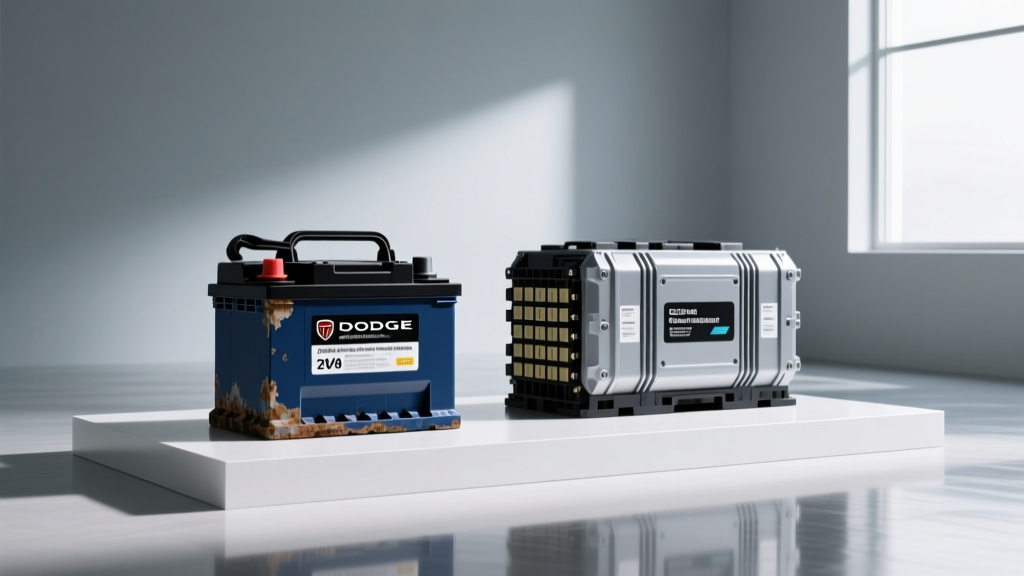
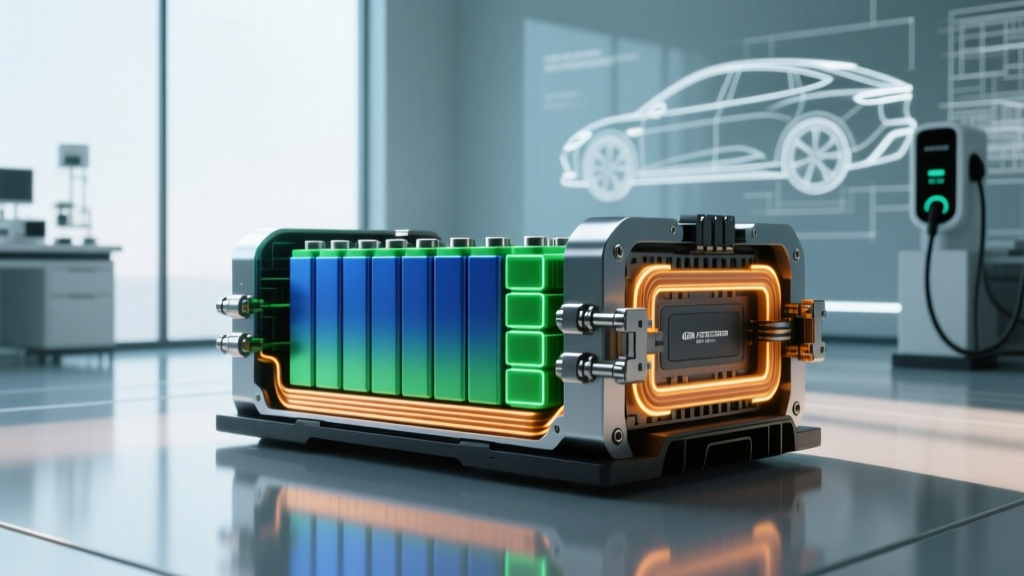
Open the hood — or rather, the skateboard platform — of any mainstream electric vehicle sold in the United States today and you will find cells manufactured by a small handful of global giants. The leading companies in EV battery technology in 2026 are CATL, BYD, LG Energy Solution, Panasonic, SK On, and Samsung SDI. Together they supply over 85% of the world's traction batteries, and their chemistry choices, cell formats, and manufacturing scale directly determine your vehicle's range, charging speed, longevity, and eventual replacement cost.
This guide breaks down what each company supplies, how LFP and NMC/NCA chemistries differ in the real world, what degradation data actually shows, and what you should budget for over a decade of ownership. Every figure cited below reflects 2026 model-year vehicles currently on sale.
Leading EV Battery Manufacturers and What They Supply
The EV battery supply chain in 2026 is defined by vertical integration, localized gigafactories, and an ongoing chemistry war between lithium iron phosphate (LFP) and nickel-based chemistries (NMC/NCA). Here is where the major players stand:
| Company | HQ | Primary Chemistries | Notable OEM Customers (2026) | Key 2026 Development |
|---|---|---|---|---|
| CATL | China | LFP, NMC, sodium-ion | Tesla (Model 3/Y standard range), Ford, BMW, Stellantis | Shenxing LFP cells with 4C charging; Qilin CTP 3.0 packs |
| BYD | China | LFP (Blade Battery) | BYD, Tesla (some markets), Toyota (bZ series) | Blade Battery 2nd-gen with improved energy density |
| LG Energy Solution | South Korea | NMC (high-nickel NCMA) | GM (Ultium), Tesla (US-built), Hyundai/Kia, Ford | Ultium platform cells at Lansing & Spring Hill plants |
| Panasonic | Japan | NCA, high-nickel NMC | Tesla (4680 cells, Model Y/Cybertruck) | 4680 cell production ramp at Kansas gigafactory |
| SK On | South Korea | NMC, NCA | Ford (F-150 Lightning, Mustang Mach-E), Hyundai | BlueOval SK joint-venture plants in Kentucky/Tennessee |
| Samsung SDI | South Korea | NMC (prismatic & cylindrical) | BMW (Neue Klasse), Stellantis, Rivian | PRiMX solid-state pilot line; NMC cells for BMW Gen6 |
The trend is unmistakable: LFP dominates standard-range and cost-sensitive segments, while high-nickel NMC/NCMA and NCA serve long-range and performance trims. Understanding which chemistry is in your vehicle matters more than the brand name on the cell.
LFP vs NMC/NCA: The Chemistry That Defines Your Ownership
The two dominant lithium-ion chemistries in 2026 EVs are LFP (lithium iron phosphate) and NMC/NCA (nickel manganese cobalt / nickel cobalt aluminum). Each has distinct trade-offs that affect range, charging habits, longevity, and cold-weather performance.
| Attribute | LFP (Lithium Iron Phosphate) | NMC / NCA (Nickel-Based) |
|---|---|---|
| Energy Density | ~160–180 Wh/kg (cell level) | ~230–300 Wh/kg (cell level) |
| Typical Pack Size | 50–70 kWh (standard-range models) | 75–120 kWh (long-range/performance) |
| Cycle Life | 3,000–6,000+ cycles to 80% SoH | 1,000–2,000 cycles to 80% SoH |
| Cold-Weather Performance | Moderate loss; ~15–25% range reduction at 20°F | Slightly better; ~10–20% range reduction at 20°F |
| Fast-Charging Tolerance | Excellent; handles frequent DCFC well | Good; high SoC + high heat accelerates wear |
| Daily Charging Recommendation | Charge to 100% freely (per manufacturer) | Daily limit 80%; 100% only for trips |
| Cost per kWh (pack level, 2026) | ~$80–$100 | ~$110–$140 |
| Cobalt Content | None | Some NMC contains 5–10% cobalt |
| Common Vehicles (2026) | Tesla Model 3 RWD, Ford Mustang Mach-E Select, BYD models | Tesla Model Y LR, GM Ultium vehicles, Hyundai Ioniq 5 LR, Rivian |
Which is better? It depends entirely on your use case. If you commute daily, charge at home, and want a vehicle that will outlast 200,000 miles with minimal degradation, LFP is the durability champion. If you need maximum range per charge — say, 320+ EPA miles for road trips — NMC/NCA delivers the energy density that makes it possible in today's vehicle form factors. Neither is universally superior; the choice is application-specific.
How Long Do EV Batteries Last? Real-World Degradation Data
The most persistent question from prospective buyers is longevity. Based on fleet data from Tesla's 2025 Impact Report, Recurrent Auto's 2025 analysis of over 15,000 vehicles, and fueleconomy.gov technical documentation, here is what degradation actually looks like:
Typical Degradation Curve (NMC/NCA packs, average driver):
- Year 1 / 15,000 mi: 2–4% capacity loss (initial "break-in" drop)
- Year 3 / 45,000 mi: 5–8% total loss
- Year 5 / 75,000 mi: 8–12% total loss
- Year 8 / 120,000 mi: 12–18% total loss
- Year 10 / 150,000 mi: 15–22% total loss (most still above 70% SoH)
Typical Degradation Curve (LFP packs, average driver):
- Year 1 / 15,000 mi: 1–2% capacity loss
- Year 3 / 45,000 mi: 3–5% total loss
- Year 5 / 75,000 mi: 5–7% total loss
- Year 8 / 120,000 mi: 7–10% total loss
- Year 10 / 150,000 mi: 8–12% total loss
The data makes clear that most EV batteries outlast the vehicles they are installed in. A 2026 Tesla Model 3 RWD with its LFP pack, charged daily to 100% at home, is statistically likely to retain over 88% of its original capacity at 150,000 miles. An NMC-equipped long-range model driven hard with frequent DC fast charging and regular 100% states of charge may degrade to 75–78% in the same period — still functional, but noticeably reduced range.
Battery Warranty Terms: What's Covered and What Isn't
Federal law in the United States mandates a minimum battery warranty of 8 years or 100,000 miles for EVs, but manufacturers have largely standardized around more generous terms. The critical detail is the capacity retention threshold — the point at which the manufacturer must replace or repair the pack.
| Manufacturer (2026 MY) | Warranty Period | Mileage Limit | Capacity Retention Threshold | What Triggers Coverage |
|---|---|---|---|---|
| Tesla (Model 3/Y RWD, LFP) | 8 years | 120,000 mi | 70% | Falls below 70% SoH or defect |
| Tesla (Model 3/Y LR/Perf, NCA) | 8 years | 120,000 mi | 70% | Falls below 70% SoH or defect |
| GM (Ultium platform) | 8 years | 100,000 mi | 70% | Falls below 70% SoH or defect |
| Hyundai/Kia (E-GMP) | 10 years | 100,000 mi | 70% | Falls below 70% SoH or defect |
| Ford (Mach-E, F-150 Lightning) | 8 years | 100,000 mi | 70% | Falls below 70% SoH or defect |
| Rivian (R1T/R1S) | 8 years | 175,000 mi | 70% | Falls below 70% SoH or defect |
| BMW (iX, i4, Neue Klasse) | 8 years | 100,000 mi | 70% | Falls below 70% SoH or defect |
Two important caveats: (1) Warranties cover defects and capacity loss below the threshold — they do not cover gradual, normal degradation above that threshold. A pack at 72% SoH at year 9 is out of warranty and is considered "normal wear." (2) Most warranties exclude damage from accidents, flooding, improper charging equipment, or unauthorized modifications. Always read your specific warranty booklet.
EV Battery Replacement Cost: What to Budget For
If your battery falls below the warranty threshold within the coverage period, replacement is free. Outside warranty, you are paying out of pocket — and costs vary dramatically by pack size, chemistry, and vehicle architecture.
| Vehicle Category | Pack Size (kWh) | Chemistry | Replacement Cost Range (2026) | When Typically Needed |
|---|---|---|---|---|
| Compact EV (Tesla Model 3 RWD, Chevy Bolt) | 50–66 kWh | LFP / NMC | $8,000 – $13,000 | Rarely before 200,000 mi |
| Mid-size SUV (Model Y LR, Ioniq 5) | 75–84 kWh | NMC / NCA | $12,000 – $18,000 | Rarely before 180,000 mi |
| Full-size truck/SUV (F-150 Lightning, Rivian) | 100–140 kWh | NMC | $18,000 – $28,000 | Rarely before 150,000 mi |
| Luxury sedan (Mercedes EQS, BMW i7) | 100–120 kWh | NMC | $20,000 – $32,000 | Rarely before 150,000 mi |
Context matters: pack prices have fallen from ~$190/kWh in 2020 to approximately $110–$140/kWh at the pack level in 2026, according to BloombergNEF. Refurbished or remanufactured packs (where only degraded modules are replaced) can cut these costs by 30–50%. Additionally, most batteries that reach end-of-vehicle life are repurposed for stationary energy storage rather than landfilled, which supports a growing secondary market for used cells.
The honest takeaway: for the vast majority of owners, an EV battery replacement is not a realistic financial concern. The pack will likely retain 75%+ capacity through 150,000–200,000 miles, at which point the vehicle's resale value, other mechanical wear, and technology obsolescence are more relevant factors than battery health.
Factors That Accelerate — or Preserve — Battery Health
Battery degradation is not purely a function of time and mileage. How you charge, what temperatures you expose the pack to, and your state-of-charge habits all move the needle. Here is a practical framework based on electrochemistry fundamentals and fleet data:
Habits That Preserve Battery Health
- Charge at home on Level 2 (7–11 kW): Gentle charge rates produce far less heat stress than repeated DC fast charging.
- Keep daily SoC between 20–80% (NMC/NCA): High states of charge accelerate electrolyte decomposition in nickel-based cells.
- Charge LFP to 100% at least weekly: LFP's flat voltage curve requires periodic full charges for the BMS to calibrate accurately.
- Use preconditioning: When navigating to a DC fast charger, the vehicle's thermal management system warms or cools the pack to the optimal temperature window (~25–35°C), reducing charge time and cell stress.
- Park in shade or a garage during summer: Sustained pack temperatures above 40°C (104°F), even when parked, accelerate calendar degradation.
Habits That Accelerate Degradation
- Exclusive DC fast charging: Vehicles that rely solely on 150+ kW DCFC show 1.5–2x the degradation of home-charged counterparts over 100,000 miles.
- Storing at 100% SoC for days: A fully charged pack sitting in a hot garage is the worst-case scenario for calendar aging.
- Deep discharges to 0%: Dropping below the low-voltage cutoff can cause copper dissolution in the anode. Keep a 5–10% buffer.
- Repeated high-SoC fast charging in hot weather: The combination of high current + high SoC + high ambient temperature is the triple threat for accelerated wear.
Monitoring Your Battery's State of Health (SoH)
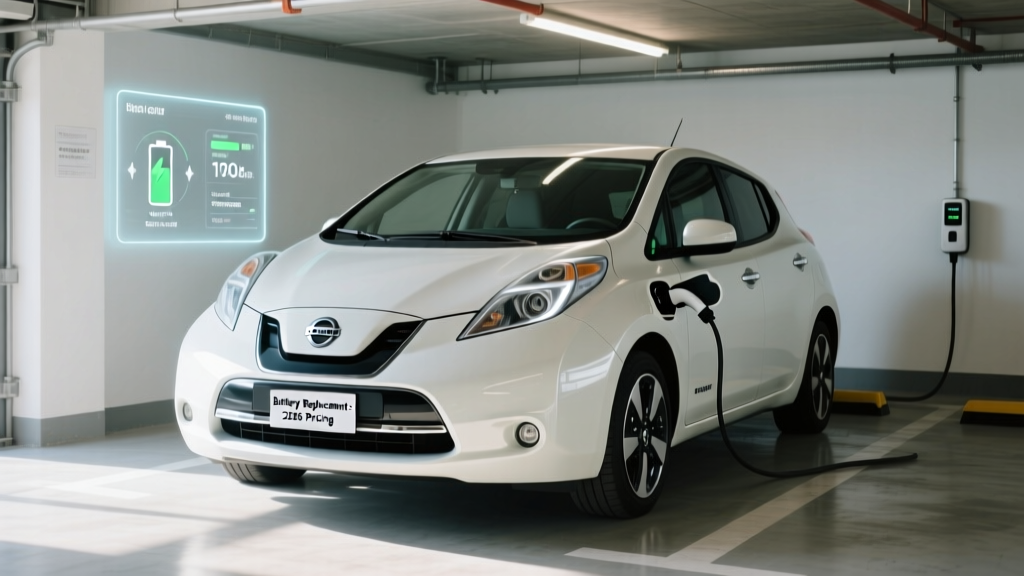
State of Health is the percentage of original capacity your battery currently holds. A new pack is 100% SoH; at 70% SoH, a 75 kWh pack effectively delivers ~52.5 usable kWh. Here is how to check and track it in 2026:
- In-vehicle displays: Tesla's app (Battery Health section), GM's myChevrolet/myCadillac app, Hyundai's Bluelink, and BMW Connected all provide SoH estimates. These are BMS-calculated and may lag by a few percentage points.
- OBD-II diagnostic tools: Devices like the OBDLink MX+ paired with apps such as ABRP (A Better Route Planner) or LeafSpy (for Nissan) can read real-time SoH, cell voltage imbalance, and pack temperature directly from the CAN bus.
- Third-party services: Recurrent Auto offers a free battery health report that connects to your vehicle's telematics and compares your degradation to a fleet average of similar vehicles.
- Dealer diagnostics: During service visits, request a battery health printout. This is especially valuable before a warranty expires to document any borderline capacity loss.
For used-EV buyers, a documented SoH reading is the single most important data point — more predictive of remaining useful life than odometer mileage alone.
What's Next: Solid-State, Silicon Anodes, and Beyond
The leading companies in EV battery technology are investing heavily in next-generation chemistries, but timelines matter. Here is the realistic landscape as of 2026:
Solid-state batteries: Toyota, Samsung SDI, and QuantumScape have demonstrated prototype cells with energy densities exceeding 400 Wh/kg and faster charge times. However, manufacturing yield, cost, and scale remain unsolved challenges. Toyota has announced a limited production run in select 2027–2028 models, but widespread commercial availability at competitive pricing is not expected before 2029–2030. Any vehicle marketed today as having solid-state cells should be treated with skepticism.
Silicon anode technology: Companies like Sila Nanotechnologies and Group14 are supplying silicon-dominant anode materials that increase energy density by 15–25% over conventional graphite. These are already appearing in limited production — the 2026 Mercedes G-Class electric uses a Sila anode — and will expand through the late 2020s as costs decrease.
Sodium-ion batteries: CATL began shipping sodium-ion cells in Chinese-market vehicles in 2024. By 2026, sodium-ion packs (lower energy density but significantly cheaper and cobalt/nickel-free) are appearing in budget-oriented city cars in China and are expected to reach global markets in affordable segments by 2027–2028.
LFP improvements: CATL's Shenxing cells and BYD's second-generation Blade Battery have narrowed the energy-density gap with NMC while retaining LFP's cycle-life and cost advantages. These represent the most impactful near-term advancement for mainstream EV buyers.
Frequently Asked Questions
How long do EV batteries last in years and miles?
Based on fleet data through 2025, the average EV battery retains 78–88% of its original capacity at 150,000 miles (roughly 10 years of average driving). LFP-equipped vehicles tend to retain 85–92% over the same period. Most packs remain functional well beyond 200,000 miles, though range reduction becomes more noticeable. Complete failure before 150,000 miles is statistically rare and typically covered by the 8-year/100,000-mile federal minimum warranty.
How much does it cost to replace an EV battery?
Out-of-warranty replacement costs range from approximately $8,000 for a compact LFP pack to $28,000+ for a large NMC pack in a full-size truck. However, the vast majority of EV batteries never need replacement during normal ownership. Pack costs have declined ~40% since 2020, and refurbished module-level repairs offer a lower-cost alternative to full pack swaps. For context, a $14,000 battery replacement at 180,000 miles is comparable to the cumulative fuel and maintenance costs of a gasoline vehicle over the same distance.
What does the EV battery warranty actually cover?
Standard battery warranties (8 years/100,000 miles minimum; some manufacturers extend to 10 years/100,000 miles) cover capacity loss below a specified threshold — typically 70% State of Health — and manufacturing defects. They do not cover normal degradation above the threshold, accident damage, flooding, or damage from unauthorized charging equipment. Always review the specific warranty booklet for your vehicle. See IRS.gov for how battery sourcing also affects federal tax credit eligibility under §30D.
How do I check and maximize my EV battery health?
Check SoH through your vehicle's mobile app, an OBD-II diagnostic tool, or a service like Recurrent Auto. To maximize longevity: charge primarily at home on Level 2, keep NMC/NCA packs between 20–80% daily (charge LFP to 100% weekly for BMS calibration), use preconditioning before DC fast charging, avoid storing at 100% SoC in hot weather, and minimize exclusive reliance on DC fast charging.
LFP vs NMC — which battery chemistry is better for me?
Choose LFP if you prioritize longevity (3,000–6,000 cycle life), want to charge to 100% daily without worry, and your typical driving fits within 250–280 EPA miles per charge. Choose NMC/NCA if you need maximum range (300–400+ EPA miles), frequently take long road trips, or need the best cold-weather performance. Neither is universally better — the choice depends on your driving pattern, climate, and how long you plan to keep the vehicle.