The race to secure battery minerals has reshaped the electric-vehicle supply chain. Headlines about the largest lithium deposit — from the Thacker Pass project in Nevada to massive brine discoveries in Argentina's lithium triangle and hard-rock finds in Australia — promise a future of cheaper, more abundant battery cells. But for EV buyers, the real question is practical: does a bigger lithium supply actually lower the price you pay for a battery pack, a replacement, or your next EV?
This guide connects the macro story of global lithium reserves to the micro decisions every EV owner faces: which battery chemistry to choose, how long the pack will last, what the warranty actually covers, and how to maximize State of Health (SoH) over a decade of ownership.
Where the World's Largest Lithium Deposits Are — and Why It Matters
Lithium is not rare in absolute terms, but economically extractable concentrations are concentrated in a few regions. As of 2026, the U.S. Geological Survey estimates global identified lithium resources exceed 105 million metric tons, with the largest deposits in:
- Bolivia's Salar de Uyuni — the single largest identified resource (~21 million tons), but limited commercial production due to extraction challenges and state-controlled development.
- Argentina's Hombre Muerto and Olaroz salars — brine operations ramping rapidly, supplying LFP and NMC cathode precursors to global cell makers.
- Chile's Salar de Atacama — the world's most productive brine operation, a primary source of lithium carbonate and hydroxide.
- Australia's Greenbushes and Pilgangoora — hard-rock spodumene mines, the largest active producers by volume.
- Thacker Pass, Nevada (USA) — the largest known domestic lithium deposit (~16 million tons of lithium carbonate equivalent), with initial production expected in the late 2020s, potentially reducing U.S. reliance on imported critical minerals.
For EV buyers, these deposits matter because lithium cost is a major input in battery cell pricing. When lithium carbonate prices spiked above $80,000 per metric ton in late 2022, pack prices climbed and EV MSRPs followed. By 2025–2026, new supply from expanded operations pushed lithium carbonate back toward the $15,000–$25,000 range, contributing to the wave of EV price cuts and more affordable models hitting showrooms. More supply from the largest deposits helps stabilize pack costs — but chemistry choice still determines what you get for your money.
LFP vs NMC: The Chemistry Decision Every EV Buyer Faces
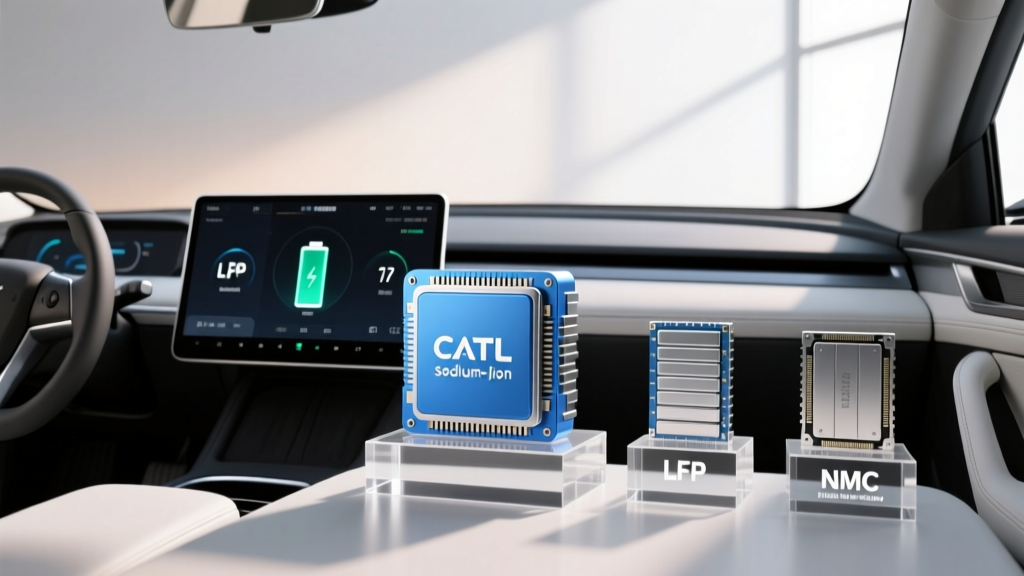
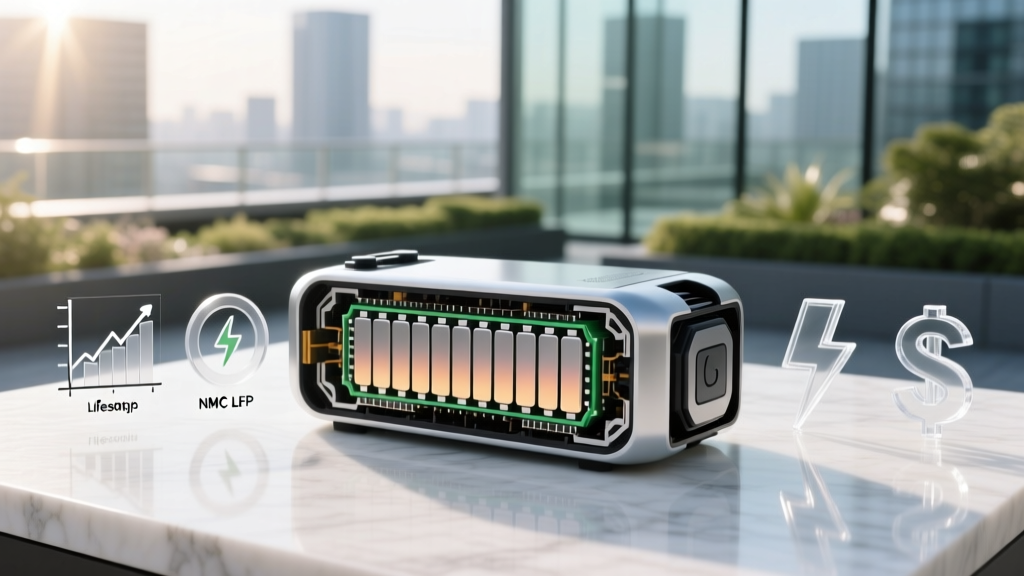
Modern EV traction batteries use one of two dominant lithium-ion chemistries: LFP (lithium iron phosphate) or NMC/NCA (nickel manganese cobalt / nickel cobalt aluminum). The choice affects range, longevity, cold-weather behavior, and price — and it's directly tied to which lithium deposits and supply chains automakers draw from.
| Attribute | LFP (Lithium Iron Phosphate) | NMC / NCA (Nickel-Based) |
|---|---|---|
| Energy Density | Lower (~160–180 Wh/kg cell-level) | Higher (~220–260 Wh/kg cell-level) |
| Typical Use | Standard-range / base trims (Tesla Model 3 RWD, Ford Mustang Mach-E Select) | Long-range / performance trims (Model 3 LR, Hyundai Ioniq 5 LR) |
| Cycle Life | 3,000–5,000+ cycles to 80% SoH | 1,500–2,500 cycles to 80% SoH |
| Cold Performance | Greater range loss below 32°F; slower charge acceptance when cold | Better low-temp performance; preconditioning mitigates most losses |
| Cost per kWh | Lower — no nickel or cobalt; benefits from abundant iron/phosphate | Higher — tied to nickel/cobalt commodity markets |
| Recommended SoC Range | Can charge to 100% regularly without accelerated degradation | Best kept 20–80% daily; 100% only for trips |
| Key Supply Chain | Iron, phosphate, lithium carbonate — less geopolitically constrained | Nickel, cobalt, lithium hydroxide — more concentrated supply |
Which is better? There's no universal winner. If you commute 30–50 miles daily, charge at home, and want a battery that will likely outlast the car, LFP offers superior cycle life and lower cost. If you need maximum range for road trips or live in a cold climate where every mile of buffer counts, NMC's higher energy density is worth the trade-off. Many automakers now offer both chemistries across their lineups, letting you choose based on your driving pattern rather than accepting a one-size-fits-all pack.
How Long Do EV Batteries Actually Last?
The short answer: far longer than most buyers assume. Real-world fleet data shows that modern liquid-cooled EV batteries typically lose 5–10% of capacity over the first 100,000 miles, with degradation slowing significantly after the initial break-in period.
Observed Degradation Data Points
- Tesla Model 3/Y (NMC, 2019–2023 fleets): ~8–10% loss at 100,000 miles, then a nearly flat curve; many packs retain 88–92% SoH at 150,000 miles per Tesla's 2024 Impact Report data.
- Chevrolet Bolt EV/EUV (NMC, 2017–2023): Recurrent fleet data shows ~6–8% loss at 80,000 miles; very gradual decline thereafter.
- Tesla Model 3 RWD (LFP, 2021+): Early fleet data suggests <5% loss at 60,000 miles, consistent with LFP's higher cycle-life rating.
- Hyundai Ioniq 5 (NMC, 77.4 kWh pack): Owner-reported data clusters around 4–7% loss at 50,000 miles with mixed Level 2 and DC fast charging.
- Nissan LEAF (passive air-cooled, older generations): A known outlier — earlier air-cooled packs showed 15–25% loss at 80,000 miles, which is why thermal management matters.
The critical insight: most EV batteries will outlast the vehicle they're installed in. A 2026-model EV with a liquid-cooled pack and 250+ miles of EPA range is likely to retain 80%+ of its original capacity at 200,000 miles — which exceeds the median lifespan of the car itself. Catastrophic battery failure (sudden cell failure, not gradual degradation) is rare and almost always covered under warranty.
Battery Warranty Terms: What's Actually Covered
Federal law mandates that EV batteries carry a minimum warranty of 8 years / 100,000 miles (10 years / 150,000 miles in California Air Resources Board states). But the details vary by automaker, and understanding the capacity-retention threshold is essential.
| Automaker | Warranty Term | Capacity Threshold | Notes |
|---|---|---|---|
| Tesla | 8 yr / 120,000 mi (Model 3/Y LR); 8 yr / 100,000 mi (RWD) | 70% | Includes labor and replacement cell modules |
| Hyundai / Kia | 10 yr / 100,000 mi | 70% | Among the longest terms in the industry |
| Ford | 8 yr / 100,000 mi | 70% | Covers battery and EV powertrain components |
| GM (Chevrolet/Cadillac) | 8 yr / 100,000 mi | 60% (some models 70%) | Verify specific model terms — Ultium packs vary |
| BMW | 8 yr / 100,000 mi | 70% | Extended warranty available for purchase |
| Rivian | 8 yr / 175,000 mi | 70% | Highest mileage cap among major brands |
What triggers a warranty claim? If your battery's State of Health drops below the stated threshold (typically 70%) within the warranty period, the manufacturer must repair or replace the pack at no cost. In practice, this usually means replacing defective cell modules rather than the entire pack. Gradual degradation to, say, 75% at year 8 is normal and not a warranty claim — the pack is still functional with reduced range.
EV Battery Replacement Costs: The Real Numbers
This is where fear-mongering often outpaces reality. Yes, a full battery pack replacement is expensive — but it's rarely needed. The vast majority of EVs are retired or totaled before the pack requires replacement. When replacement is necessary (typically due to physical damage, manufacturing defect outside warranty, or very high-mileage use), here's what owners face:
| Vehicle / Pack Size | Battery Capacity | Estimated Replacement Cost | Typical Trigger |
|---|---|---|---|
| Tesla Model 3 RWD (LFP) | ~60 kWh | $8,000–$12,000 | Collision damage, flood; rare degradation claim |
| Tesla Model Y Long Range | ~75 kWh | $12,000–$16,000 | Same as above |
| Hyundai Ioniq 5 LR | 77.4 kWh | $13,000–$18,000 | Post-warranty high-mileage; physical damage |
| Ford F-150 Lightning Ext. Range | ~131 kWh | $22,000–$32,000 | Largest packs cost most; commercial fleet use |
| Chevrolet Bolt EV | 65 kWh | $9,000–$14,000 | Post-recall replacement packs now widely available |
These costs include the pack and labor. Module-level repair (replacing individual cell groups) is significantly cheaper — often $2,000–$5,000 — and is the more common out-of-warranty service. Independent EV repair shops are increasingly offering module-level diagnostics and replacement, reducing costs further. As lithium supply from the world's largest deposits continues to scale and cell manufacturing matures, pack replacement costs have trended downward roughly 5–8% annually since 2023.
Factors That Accelerate Battery Degradation
Not all miles are equal when it comes to battery wear. The following factors have the most measurable impact on long-term State of Health:
- Frequent DC fast charging above 150 kW: Occasional road-trip fast charging is fine. Daily use of 250–350 kW chargers without preconditioning accelerates electrolyte breakdown. Tesla's own data shows vehicles that primarily charge on Level 2 retain ~2–3% more capacity at 100,000 miles vs. those that rely heavily on Supercharging.
- Sustained high State of Charge (NMC packs): Parking an NMC battery at 100% SoC for days or weeks — especially in hot weather — stresses the cathode. LFP packs tolerate 100% SoC far better, which is why Tesla recommends periodic 100% charges for LFP vehicles to calibrate the BMS.
- Extreme heat exposure: Prolonged ambient temperatures above 95°F without active thermal management accelerate degradation. Liquid-cooled packs (standard on nearly all 2026 EVs) mitigate this significantly.
- Deep discharge cycles: Regularly driving to 0–5% SoC stresses cells. Keeping the pack above 10% for daily use extends life.
- Cold-weather fast charging without preconditioning: Charging a cold battery at high power causes lithium plating on the anode. Always use your vehicle's navigation-based preconditioning (set the charger as your destination) to warm the pack before arrival.
How to Monitor and Maximize Battery Health
Most 2026 EVs provide built-in State of Health (SoH) indicators, and third-party tools offer deeper diagnostics:
Built-In SoH Monitoring
- Tesla: Service menu (accessible via the software screen) shows estimated battery capacity vs. original. Some third-party apps like Tessie or Stats log SoH over time.
- Hyundai/Kia: The EV dashboard includes a battery health estimate in the settings menu. Dealership diagnostic tools provide a more precise SoH percentage.
- Ford: The FordPass app shows estimated range vs. original; dealer OBD-II scans reveal exact SoH.
- GM (Ultium): OnStar diagnostics and the myChevrolet/myCadillac apps include battery health estimates.
Third-Party Diagnostics
- Recurrent Auto: Free service that tracks your battery's real-world range over time and compares it to fleet averages. Provides an SoH score.
- OBD-II dongles + apps: Devices like the OBDLink MX+ paired with apps such as LeafSpy (Nissan) or ABRP can read cell-level voltage data and estimate SoH with high accuracy.
Practical Battery Care Checklist
- Set daily charge limit to 80% for NMC; 100% is fine for LFP
- Use Level 2 home charging as your primary method
- Precondition the battery before DC fast charging (use nav to route to the charger)
- Avoid parking at 100% SoC for extended periods (NMC) — if you need a full charge, time it close to departure
- In extreme heat, plug in when parked so the thermal management system can run on grid power
- Don't let the pack sit below 10% for more than a few days
- Check SoH every 6–12 months via built-in tools or Recurrent
Beyond Lithium-Ion: Solid-State and Silicon Anode Batteries
The next frontier in EV battery technology includes solid-state batteries (replacing the liquid electrolyte with a solid conductor) and silicon-dominant anodes (replacing graphite to boost energy density). These technologies promise step-change improvements:
- Solid-state: Potential for 40–50% higher energy density, faster charging (10–80% in under 10 minutes projected), and improved safety (no flammable liquid electrolyte). Toyota has announced a solid-state EV for 2027–2028, but production volumes are expected to be very limited initially. Samsung SDI and QuantumScape are targeting 2027–2029 pilot production. This technology is not available in any production vehicle as of 2026.
- Silicon anode: Companies like Sila Nanotechnologies and Group14 are already supplying silicon-carbon anode materials to cell makers. The Mercedes-Benz G-Class EV (2025+) uses cells with silicon-anode content for higher energy density. Expect broader adoption in 2026–2028 model-year vehicles, offering 10–20% more range per kWh of pack weight.
These technologies will eventually reduce dependence on the volume of lithium per kWh (solid-state cells may use lithium-metal anodes, which require more lithium per cell but deliver far more energy per cell). For now, the largest lithium deposit projects underway — Thacker Pass, expanded Argentine brines, Australian hard-rock expansions — are sized to meet the demands of current lithium-ion chemistries through the 2030s.
How Global Lithium Supply Connects to Your Purchase Decision
The practical takeaway for 2026 EV buyers:
- Pack prices are falling. Average lithium-ion pack prices dropped below $120/kWh at the cell level in 2025, down from $140+/kWh in 2023, driven in part by new supply from the largest lithium deposits globally. This translates to lower MSRPs and more competitive pricing.
- LFP is gaining share. Because LFP doesn't require nickel or cobalt — only lithium, iron, and phosphate — it benefits most from abundant lithium supply. Expect more standard-range EVs to adopt LFP, pushing base-trim prices lower.
- Replacement costs will continue declining. As raw material costs stabilize and second-life/recycled battery packs become available, out-of-warranty replacement will become more affordable through the 2030s.
- The §30D federal tax credit still requires battery components and critical minerals to meet IRS sourcing rules. Vehicles using lithium from FTA-partner countries (Australia, Chile, Argentina) may qualify; those relying on Chinese-processed minerals may not. Check fueleconomy.gov for the latest eligibility list before purchasing.
Frequently Asked Questions
Will the discovery of the largest lithium deposit lower EV prices?
Increased lithium supply reduces raw material costs, which is one factor in battery pack pricing. However, pack prices also depend on cell manufacturing scale, cathode chemistry, and demand. The net effect has been a gradual decline in per-kWh costs — contributing to more affordable EVs — but single-deposit discoveries don't cause immediate price drops. Supply takes 3–7 years from discovery to production.
Should I worry about my EV battery needing replacement?
Statistically, no. Fleet data from Tesla, Recurrent, and multiple automakers shows that the vast majority of liquid-cooled EV batteries retain 75–90% of their original capacity at 150,000 miles. Most EVs are retired, traded, or totaled before the pack needs replacement. The 8-year/100,000-mile federal warranty minimum provides a strong safety net for early failures.
Is LFP better than NMC for daily commuting?
For daily commuting under 80 miles with home charging, LFP is generally the better choice. It offers longer cycle life (3,000–5,000 cycles), tolerates 100% daily charging, costs less per kWh, and avoids nickel/cobalt supply-chain risks. The trade-off is lower energy density (less range per pound) and reduced cold-weather performance. If you regularly drive 200+ miles between charges or live in sub-freezing climates, NMC's higher density is worth considering.
How do I check my EV battery's State of Health?
Most 2026 EVs include a SoH estimate in the vehicle settings or companion app. For more precise tracking, services like Recurrent Auto provide free fleet-comparison reports. OBD-II diagnostic tools (OBDLink MX+ with compatible apps) can read individual cell voltages and calculate SoH. Check with your dealer for a formal battery health report during routine service.
When will solid-state batteries be available in mainstream EVs?
Low-volume solid-state EVs are announced for 2027–2028 (Toyota, Samsung SDI partners), but mainstream adoption at scale is not expected before 2030+. Silicon-anode technology is already entering production vehicles and will provide incremental gains sooner. If you're buying an EV in 2026, current lithium-ion technology — especially LFP — offers proven longevity and declining costs without waiting for next-generation chemistries.