The EV battery landscape is shifting fast. While today's vehicles rely on proven lithium-ion chemistries like NMC and LFP, next-generation technologies — including the much-discussed iron-air battery — are generating serious attention from automakers and grid-storage developers alike. But what does iron-air actually offer, and how does it compare to the batteries powering EVs you can buy right now?
This guide cuts through the hype. We'll break down current lithium-ion chemistries with hard data on degradation, warranty coverage, and replacement costs, then put iron-air and other emerging technologies into realistic perspective so you can make informed decisions about the EV you drive today and the one you might buy in five years.
Current EV Battery Chemistries: LFP vs. NMC/NCA
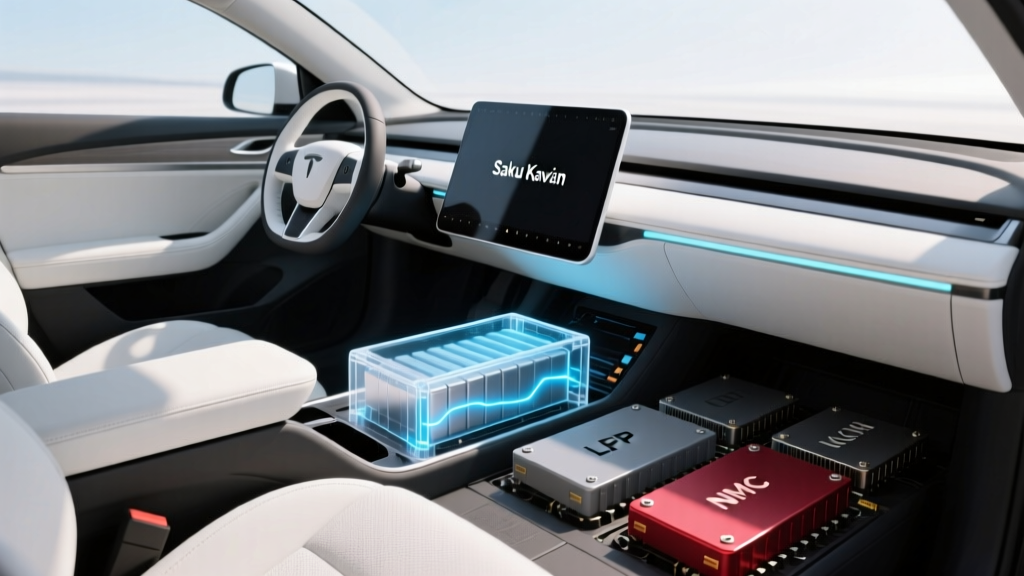
Every EV sold in the U.S. today uses a lithium-ion traction battery, but not all lithium-ion packs are built the same. The two dominant cathode chemistries — LFP (lithium iron phosphate) and NMC/NCA (nickel manganese cobalt / nickel cobalt aluminum) — make fundamentally different trade-offs between energy density, longevity, cost, and cold-weather behavior.
LFP chemistry, used in standard-range Tesla Model 3 and Model Y vehicles, the Ford Mustang Mach-E Select, and many Chinese-market EVs, trades peak energy density for exceptional cycle life and lower raw-material cost. NMC and NCA chemistries, found in long-range and performance variants from Hyundai, Kia, BMW, Rivian, and others, pack more energy into a smaller, lighter package — critical for maximizing EPA range in larger vehicles.
| Attribute | LFP (Lithium Iron Phosphate) | NMC / NCA (Nickel-Based) |
|---|---|---|
| Energy Density (cell-level) | ~160–180 Wh/kg | ~220–300 Wh/kg |
| Typical Cycle Life | 3,000–5,000+ cycles to 80% SoH | 1,000–2,000 cycles to 80% SoH |
| Cold-Weather Performance | Moderate — more range loss below 32°F | Better low-temp conductivity |
| Charging to 100% Regularly | Recommended by most OEMs | Generally advised to stay ≤80–90% daily |
| Cobalt / Nickel Content | None — lower supply-chain risk | Contains nickel and/or cobalt |
| Relative Cell Cost (2025–2026) | ~$70–90/kWh | ~$100–130/kWh |
| Best Suited For | Daily commuting, standard-range, fleet use | Long-range, performance, large SUVs/trucks |
Which is better? There is no universal winner. If your daily driving stays under 200 miles and you want maximum battery longevity with minimal babying, LFP is the pragmatic choice. If you need 300+ miles of EPA range or tow frequently, NMC/NCA's superior energy density is worth the trade-off in cycle life and the need to manage state of charge more carefully.
How Long Do EV Batteries Actually Last?
The data from hundreds of thousands of EVs on the road tells a reassuring story: modern lithium-ion traction batteries are lasting far longer than early skeptics predicted. Most will outlive the vehicle they're installed in.
According to aggregated fleet data and studies from sources like Geotab's long-term degradation research, the average EV battery loses roughly 1.8% to 2.3% of its original capacity per year under typical mixed-use conditions. That translates to approximately 85–90% State of Health (SoH) at the 8-year mark for most vehicles.
Typical Degradation Curve by Milestone
Year 1 / 15,000 mi: ~2–3% loss (initial formation drop, then stabilizes)
Year 3 / 45,000 mi: ~5–7% total loss from new
Year 5 / 75,000 mi: ~8–11% total loss
Year 8 / 120,000 mi: ~12–17% total loss (varies by chemistry and climate)
Year 10+ / 150,000+ mi: ~15–22% total loss — many packs still above 78% SoH
Key nuances: degradation is not linear. Most batteries experience a slightly steeper drop in the first year (as the solid electrolyte interface stabilizes), then settle into a slow, predictable decline. LFP packs tend to flatten out even more after the initial period, which is why they're favored for high-mileage and fleet applications.
Cold-climate owners should note that range reduction from low temperatures (often 20–30% at 20°F) is a temporary effect, not permanent degradation. The battery recovers its rated capacity once it warms up — a distinction that matters when reading your dashboard range estimate in January.
What Does the EV Battery Warranty Actually Cover?
Federal law mandates that EV battery warranties cover a minimum of 8 years / 100,000 miles (whichever comes first). In California and states that follow CARB standards, that extends to 10 years / 150,000 miles. Most manufacturers match or exceed these floors.
| Manufacturer | Warranty Period | Capacity Retention Threshold | Notes |
|---|---|---|---|
| Tesla (Model 3/Y LFP) | 8 yr / 100,000 mi | 70% of original capacity | Long-range/performance: 8 yr / 120,000 mi |
| Hyundai / Kia (E-GMP) | 10 yr / 100,000 mi | 70% of original capacity | Among the longest coverage in the segment |
| Ford (Mach-E, F-150 Lightning) | 8 yr / 100,000 mi | 70% of original capacity | Applies to high-voltage battery pack |
| Rivian (R1T / R1S) | 8 yr / 175,000 mi | 70% of original capacity | Higher mileage cap reflects truck use case |
| GM (Ultium platform) | 8 yr / 100,000 mi | 70% of original capacity (varies by model) | CARB states: 10 yr / 150,000 mi |
Critical detail: the warranty threshold is typically 70% of original capacity. A vehicle that started with 310 miles of EPA range would need to drop below ~217 miles of range before a warranty claim would be honored. In practice, very few modern EVs hit that threshold within the warranty window — which is why out-of-pocket replacement is rare for original owners.
EV Battery Replacement Cost: What You'd Actually Pay
If your battery does fall below the warranty threshold outside the coverage window — or if you're buying an older used EV — replacement costs are a legitimate consideration. Here's what the numbers look like in 2025–2026:
| Vehicle Class | Battery Size (kWh) | Estimated Pack + Labor Cost | Typical Replacement Timeline |
|---|---|---|---|
| Compact / standard-range (e.g., Tesla Model 3 RWD, Chevy Bolt) | 50–65 kWh | $8,000–$13,000 | 15+ years / 200,000+ mi |
| Mid-range / long-range sedan (e.g., Model 3 LR, Hyundai Ioniq 6) | 72–82 kWh | $12,000–$18,000 | 15+ years / 200,000+ mi |
| SUV / truck (e.g., F-150 Lightning, Rivian R1T, Ioniq 5) | 85–135 kWh | $15,000–$25,000+ | 15+ years / 200,000+ mi |
Important context: these costs have been declining roughly 8–12% annually as cell manufacturing scales up and refurbished/remanufactured packs become more available. Companies like Redwood Materials and OEM certified-refurbished programs are creating a secondary market that could cut replacement costs by 30–40% compared to brand-new packs. For most original owners, the battery will simply never need replacement — it's the vehicle's body, electronics, or suspension that reaches end-of-life first.
Factors That Accelerate (or Preserve) Battery Life
Not all miles age a battery equally. The following factors have measurable, data-backed impacts on long-term State of Health:
Battery Longevity: What Matters Most
- State of Charge habits: Keeping an NMC/NCA battery between 20–80% SoC for daily use significantly slows degradation. LFP batteries are an exception — most OEMs recommend charging to 100% at least weekly to keep the battery management system (BMS) calibrated.
- DC fast-charging frequency: Occasional road-trip fast charging is fine. But daily reliance on 150+ kW DC charging generates sustained heat that accelerates cell wear. Data from Geotab's fleet analysis shows vehicles that fast-charge more than 3x per week degrade roughly 0.5–1% faster annually than those primarily using Level 2.
- Extreme heat exposure: Prolonged battery temperatures above 95°F (common in Arizona, Texas summers) accelerate electrolyte breakdown. Vehicles with active liquid cooling (Tesla, Hyundai E-GMP, GM Ultium) manage this far better than passive-cooled packs.
- Extreme cold: While cold temporarily reduces range, it does not cause permanent damage. However, charging a cold battery without preconditioning can cause lithium plating — always use your vehicle's battery preconditioning feature before DC fast charging in sub-40°F weather.
- Storage at extremes: Leaving an EV sitting at 100% SoC in hot weather, or at near-0% SoC for weeks, stresses cells. If storing for extended periods, aim for ~50% SoC in a temperature-moderate environment.
How to Check and Monitor Your Battery's State of Health
Most modern EVs provide some form of battery health visibility, though the level of detail varies by manufacturer:
In-vehicle displays: Tesla's app and service menu show a battery health estimate. Hyundai/Kia provide a battery conditioning status screen. Some vehicles display a "battery health" percentage directly in settings, while others only show estimated range, which is a less precise proxy.
OBD-II diagnostic tools: Third-party apps like Leaf Spy (Nissan Leaf), Scan My Tesla, and Car Scanner ELM OBD2 can read the BMS directly to pull State of Health percentages, cell voltage variance, and cycle counts. An OBD-II Bluetooth adapter (~$30–50) paired with these apps gives you dealership-level insight.
Dealer or certified service center: Requesting a battery health report during routine service is free at most OEM service departments. This is especially smart when evaluating a used EV purchase — ask for a printout showing current SoH percentage and any flagged cell imbalances.
Range tracking: The simplest method — compare your actual range at a consistent SoC (say, 100% charge) against the original EPA rating, adjusting for temperature and driving style. A consistent 10% shortfall at moderate temperatures in year three is normal; a 20%+ drop warrants a diagnostic check.
Iron-Air Batteries and Emerging Tech: Realistic Timelines
The iron-air battery represents a fundamentally different approach to energy storage. Companies like Form Energy are developing iron-air cells that use the reversible oxidation of iron (essentially, controlled rusting) to store and release energy. The appeal is compelling: iron is among the cheapest, most abundant materials on Earth, potentially enabling storage costs well below $20/kWh at the cell level — a fraction of today's lithium-ion costs.
However, iron-air batteries as currently developed are designed for multi-day grid-scale energy storage, not automotive traction. Their power density (the rate at which they can deliver energy) and gravimetric energy density (Wh/kg) are far too low for vehicle use. A hypothetical iron-air EV pack would be prohibitively heavy and unable to deliver the sustained high-current discharge that highway driving demands. Form Energy's own stated target applications are 100-hour grid-duration storage systems — a critical piece of renewable-energy infrastructure, but not something you'll find under the hood of a car.
Other emerging technologies more relevant to future EVs include:
- Solid-state batteries: Toyota, Samsung SDI, and QuantumScape are targeting limited production in 2027–2029 vehicles. Promised benefits include 30–40% higher energy density, faster charging, and improved safety. Real-world availability in volume-production vehicles is realistically 2028–2030 at the earliest.
- Silicon-dominant anodes: Companies like Sila Nanotechnologies and Group14 are already shipping silicon-blend anodes that boost energy density 10–20% over conventional graphite. These are appearing in premium cells now and will proliferate through 2027–2028.
- Sodium-ion batteries: CATL and others are producing sodium-ion cells for lower-cost, shorter-range vehicles — primarily in China. Energy density is roughly 30% below LFP, but raw material costs are dramatically lower. U.S. availability is uncertain in the near term.
For buyers making decisions today: none of these technologies should cause you to delay a purchase. Current lithium-ion batteries offer proven performance, 8–10 year warranties, and real-world longevity data spanning over a decade. Waiting for solid-state is a choice, but it means waiting at least 3–4 years for limited availability at premium pricing.
Frequently Asked Questions
How long do EV batteries last in years and miles?
Based on fleet data, most modern EV batteries retain 80–88% of original capacity at 10 years / 150,000 miles. LFP chemistries tend toward the higher end of that range. Very few batteries require replacement before 200,000 miles under normal use, and many will outlast the vehicle itself.
How much does an EV battery cost to replace?
Out-of-warranty replacement ranges from roughly $8,000 for a compact EV's 50–65 kWh pack to $25,000+ for a large truck or SUV with a 130+ kWh pack, including labor. These costs are declining as refurbished packs and recycling programs scale. Most original owners will never face this expense.
What does the federal EV battery warranty cover?
By federal mandate, all EV batteries carry at minimum 8 years / 100,000 miles of coverage against capacity loss below a stated threshold (typically 70% of original capacity). In CARB states, this extends to 10 years / 150,000 miles. The warranty covers defects and abnormal degradation — not damage from accidents, flooding, or unauthorized modifications.
How do I maximize my EV battery's health?
For NMC/NCA batteries: keep daily SoC between 20–80%, use Level 2 home charging as your primary method, precondition before DC fast charging in cold weather, and avoid leaving the vehicle at 100% SoC in hot weather for extended periods. For LFP: charge to 100% regularly (at least weekly) for BMS calibration, and follow the same temperature-management practices.
Will iron-air batteries ever be used in EVs?
Not with current technology. Iron-air batteries are designed for ultra-low-cost, multi-day grid energy storage where weight and power density are not constraints. Their energy density is far too low for automotive use. The emerging chemistries most likely to reach EVs next are solid-state lithium and silicon-anode lithium-ion, both targeting 2028–2030 production timelines.
Is LFP better than NMC for my daily commute?
For daily commutes under 200 miles with regular home charging access, LFP is generally the more durable and lower-maintenance choice. You can charge to 100% without worry, and cycle life is significantly longer. Choose NMC/NCA if you need maximum range for road trips, towing, or if you live in a very cold climate where NMC's better low-temperature performance matters.
Does frequent DC fast charging really damage the battery?
"Damage" is too strong, but accelerated degradation is measurable. Fleet data shows that vehicles fast-charging 3+ times weekly lose roughly 0.5–1% more capacity per year compared to primarily Level 2-charged vehicles. Modern thermal management systems have reduced this gap significantly. Occasional fast charging on road trips is essentially a non-issue for battery longevity.
For the most current data on EV efficiency and range, consult fueleconomy.gov, the EPA's official source for vehicle energy-economy ratings. For federal tax credit rules that may affect your EV purchase decision, refer to the IRS clean vehicle credit page, noting that §30D eligibility depends on MSRP caps, buyer income limits, and battery component sourcing requirements that change annually.