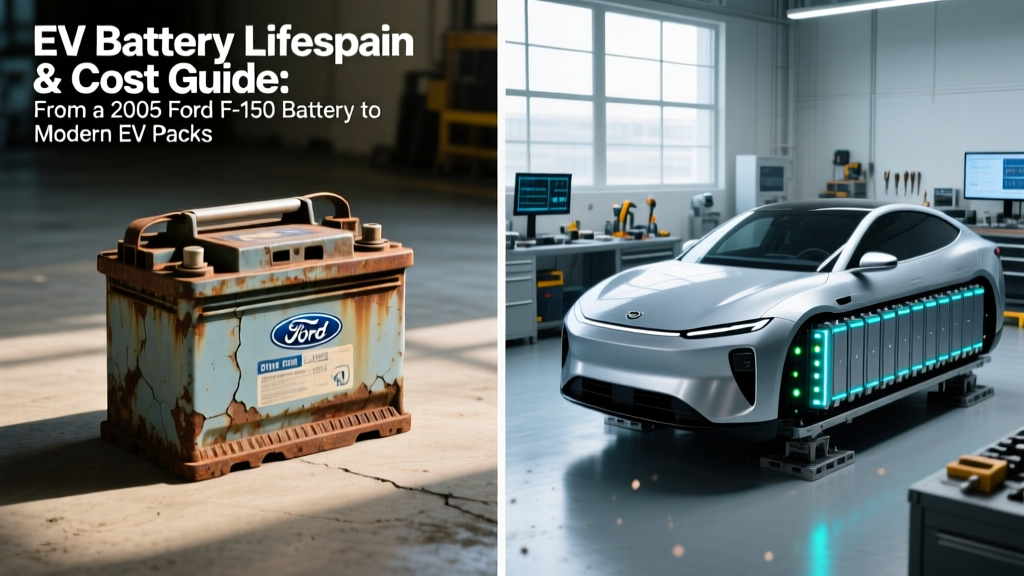
If you have ever replaced the 12V lead-acid battery in a 2005 Ford F-150, you know the drill: $120 to $200 at an auto parts store, a few wrench turns, and you are back on the road for another 40,000 miles or so. That simple, inexpensive maintenance event is exactly what causes anxiety when shoppers consider an electric vehicle. The high-voltage traction battery in an EV is not a $150 drop-in — it is the single most expensive component in the vehicle, and its longevity, replacement cost, and care requirements are the most-searched topics among prospective EV buyers.
This guide breaks down everything you need to know about modern EV battery technology in 2026: chemistry trade-offs, real-world degradation data, warranty coverage, replacement costs, and the habits that maximize pack life. Whether you are coming from a 2005 Ford F-150 battery swap or a brand-new ICE truck, the EV battery ecosystem operates on entirely different principles — and, as the data shows, is far more durable than most buyers assume.
Why a 2005 Ford F-150 Battery Is Nothing Like an EV Traction Battery
The 2005 Ford F-150 uses a conventional 12V lead-acid (or AGM) starting battery. Its job is to crank the engine and power accessories when the alternator is not running. It stores roughly 0.5 to 0.7 kWh of energy, weighs 35–50 pounds, and costs $100–$220 to replace. Typical lifespan: 3 to 5 years.
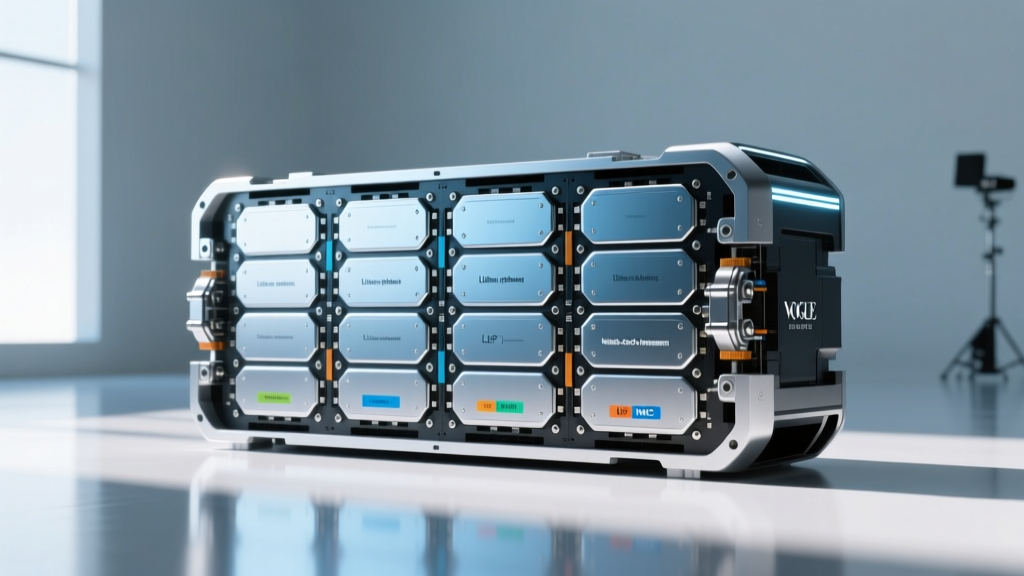
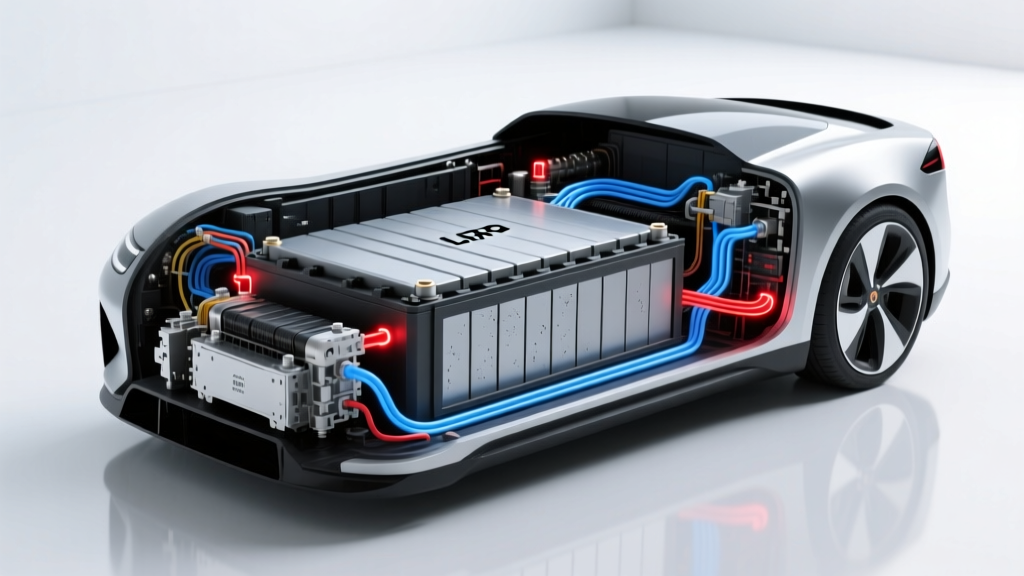
An EV traction battery, by contrast, stores between 40 kWh (compact EVs) and 200+ kWh (heavy-duty trucks like the Ford F-150 Lightning Extended Range). It powers the electric motors directly, manages its own temperature via liquid cooling, and is designed to last the life of the vehicle. To put the scale in perspective:
| Attribute | 2005 Ford F-150 12V Battery | Modern EV Traction Battery (e.g., 2026 F-150 Lightning) |
|---|---|---|
| Voltage | 12V | ~400V (800V on some platforms) |
| Energy capacity | ~0.6 kWh | 98–131 kWh usable |
| Weight | ~40 lbs | 1,200–1,800 lbs |
| Replacement cost | $100–$220 | $12,000–$32,000 (out of warranty) |
| Design lifespan | 3–5 years | 15–20+ years / 200,000+ miles |
| Chemistry | Lead-acid / AGM | NMC, NCA, or LFP lithium-ion |
Importantly, EVs still carry a separate 12V auxiliary battery (or increasingly, a 12V lithium-ion module) for accessories and safety systems. That small battery may still need replacement every 4–6 years, much like the one in your 2005 F-150. The traction battery, however, is a fundamentally different system.
EV Battery Chemistry: LFP vs NMC vs NCA Explained
Not all EV batteries are built the same. The two dominant chemistries in 2026 are LFP (lithium iron phosphate) and NMC/NCA (nickel manganese cobalt / nickel cobalt aluminum). Each has distinct trade-offs that affect range, longevity, cost, and cold-weather behavior.
| Factor | LFP (Lithium Iron Phosphate) | NMC / NCA (Nickel-based) |
|---|---|---|
| Energy density | Lower (~160 Wh/kg cell-level) | Higher (~250–300 Wh/kg cell-level) |
| Cycle life | 3,000–5,000+ cycles to 80% SoH | 1,000–2,000 cycles to 80% SoH |
| Cold-weather performance | Moderate range loss; slower charging in cold | Better low-temp conductivity |
| Cost per kWh | ~$80–$100/kWh (2026 pack-level) | ~$110–$140/kWh (2026 pack-level) |
| Recommended daily SoC | Can charge to 100% daily | Best kept at 80% for daily use |
| Thermal stability | Excellent (less thermal runaway risk) | Good, but requires robust BMS |
| Common in (2026) | Tesla Model 3/Y RWD, Ford Mustang Mach-E Select, BYD models | Long-range AWD trims, Lucid, Rivian, Hyundai Ioniq 5/6 LR |
Which is better? It depends on your use case. If you prioritize longevity, lower cost, and the convenience of charging to 100% daily, LFP is the stronger choice — especially for commuters and high-mileage drivers. If you need maximum range per charge and better cold-weather fast-charging speeds, NMC/NCA packs deliver. Neither chemistry is universally "better"; the right choice aligns with how you drive.
How Long Do EV Batteries Actually Last? Real Degradation Data
This is the question that drives more EV purchase hesitation than any other. The short answer: most EV batteries outlast the vehicles they power. The long answer requires looking at actual fleet data.
According to Recurrent Auto's 2025 fleet analysis of over 15,000 EVs, the average EV battery retains approximately 90–95% of its original capacity after 5 years and 85–90% after 100,000 miles. Degradation is not linear — it follows a curve that drops most sharply in the first 1–2 years (typically 2–5%), then flattens significantly.
Typical EV Battery Degradation Curve (Fleet Average, NMC Chemistry):
- Year 1 / 15,000 mi: ~96–98% State of Health (SoH)
- Year 3 / 45,000 mi: ~92–95% SoH
- Year 5 / 75,000 mi: ~89–93% SoH
- Year 8 / 120,000 mi: ~85–90% SoH
- Year 10 / 150,000 mi: ~82–88% SoH
LFP batteries tend to degrade even more slowly. Tesla's 2025 Impact Report noted that Model 3/Y vehicles with LFP packs retained an average of 93% capacity at 100,000 miles. High-mileage taxi and rideshare EVs — some exceeding 250,000 miles — have been documented with 75–82% SoH, still well within functional range.
The key insight: a battery at 80% SoH has not "failed." It simply offers 80% of its original range. A 300-mile EPA-rated EV at 80% SoH still delivers ~240 miles — more than adequate for the vast majority of daily driving.
EV Battery Warranties: What Is Covered and for How Long
Federal law in the United States mandates that EV batteries carry a minimum warranty of 8 years / 100,000 miles (whichever comes first). In California Air Resources Board (CARB) states, the requirement extends to 10 years / 150,000 miles. Most manufacturers meet or exceed these minimums.
| Manufacturer (2026 Models) | Battery Warranty | Capacity Retention Threshold |
|---|---|---|
| Tesla (Model 3/Y RWD – LFP) | 8 yr / 100,000 mi | 70% |
| Tesla (Model 3/Y LR – NMC) | 8 yr / 120,000 mi | 70% |
| Ford (F-150 Lightning, Mach-E) | 8 yr / 100,000 mi | 70% |
| Hyundai / Kia (Ioniq 5/6, EV6) | 10 yr / 100,000 mi | 70% |
| GM (Chevrolet Equinox EV, Blazer EV) | 8 yr / 100,000 mi | 60–70% (varies by model) |
| Rivian (R1T, R1S) | 8 yr / 175,000 mi | 70% |
| BMW (i4, iX) | 8 yr / 100,000 mi | 70% |
The capacity retention threshold is critical: the warranty triggers only if your battery falls below the stated percentage (typically 70%) within the warranty period. If your battery sits at 72% SoH at year 7, the manufacturer owes you nothing — and a 72% SoH battery is still highly functional. In practice, very few EV batteries breach the warranty threshold under normal use. The U.S. Department of Energy's fueleconomy.gov resource on EV technology confirms that modern battery management systems are designed to keep packs within safe operating windows that minimize degradation.
How Much Does It Cost to Replace an EV Battery?
Out-of-warranty battery replacement is the nightmare scenario EV skeptics cite. The costs are real — but context matters enormously. Most EV batteries never need replacement during the vehicle's useful life, and when they do, it is typically after 150,000+ miles, at which point the vehicle's residual value is low regardless of powertrain.
| Vehicle / Battery Size | Battery Capacity | Estimated Replacement Cost (2026) | Typical Replacement Timeline |
|---|---|---|---|
| Chevrolet Bolt EV/EUV | 65 kWh (NMC) | $14,000–$16,000 | Rarely needed; most packs exceed 200k mi |
| Tesla Model 3 RWD | 60 kWh (LFP) | $12,000–$15,000 | LFP cycle life makes replacement unlikely |
| Tesla Model Y Long Range | 75–82 kWh (NMC) | $16,000–$20,000 | 150,000–250,000 mi if needed |
| Ford F-150 Lightning Ext. Range | 131 kWh (NMC) | $25,000–$32,000 | 200,000+ mi; large packs degrade slowly |
| Hyundai Ioniq 5 Long Range | 77.4 kWh (NMC) | $15,000–$19,000 | 150,000–200,000+ mi |
| Rivian R1T (Large Pack) | 128.9 kWh (NMC) | $24,000–$30,000 | 175,000+ mi |
For perspective, a transmission replacement on a conventional truck can cost $4,000–$8,000, and a major engine rebuild can exceed $7,000 — events that are far more common than EV battery failure. The difference is that EV battery replacements, when needed, are a larger single line item. However, pack prices continue to decline. BloombergNEF's 2025 battery price survey reported average pack prices at approximately $115/kWh, down from $160/kWh in 2022. By the time most 2026 EVs need a battery swap in the 2040s, replacement costs will likely be substantially lower.
Module-level repair is also increasingly available. Many packs allow individual module replacement rather than a full pack swap, reducing costs by 50–70% for isolated cell failures.
Factors That Affect EV Battery Life (and How to Maximize It)
EV batteries degrade from two primary mechanisms: calendar aging (time-dependent chemical changes, accelerated by heat and high state of charge) and cycle aging (wear from charge/discharge cycles, accelerated by deep cycles and high C-rates). Understanding these lets you take concrete action.
Do:
- Charge to 80% daily (for NMC/NCA packs). Reserve 100% charges for road trips. LFP owners can charge to 100% regularly without concern.
- Use Level 2 home charging as your primary method. Slow, steady charging generates less heat and stress than repeated DC fast charging.
- Precondition your battery before DC fast charging in cold weather. Most EVs do this automatically when you navigate to a charger.
- Park in shade or a garage when possible, especially in hot climates. Sustained battery temperatures above 95°F (35°C) accelerate calendar aging.
- Keep the battery between 20–80% SoC for storage. If leaving the car for weeks, set the charge limit to ~50%.
- Drive moderately in extreme heat. Aggressive acceleration generates internal pack heat.
Avoid:
- Daily DC fast charging when Level 2 is available. Occasional fast charging is fine; daily use adds cumulative thermal stress.
- Letting the battery sit at 100% SoC for extended periods. High voltage at high SoC accelerates electrolyte decomposition.
- Regularly draining below 10% SoC. Deep discharges stress the anode.
- Ignoring thermal warnings. If the car limits power due to battery temperature, let it cool before pushing hard.
Following these guidelines, the data suggests most EV batteries will retain 85%+ capacity at 150,000 miles and remain functional well beyond 200,000 miles.
How to Check Your EV Battery's State of Health (SoH)
Most modern EVs provide SoH information through the vehicle's infotainment system or companion app, though the level of detail varies by manufacturer:
- Tesla: The mobile app and service menu display estimated range at 100% charge, which you can compare to the original EPA figure. Third-party tools like Tessie or TeslaFi track SoH over time using API data.
- Hyundai/Kia: The EV settings menu includes a battery health indicator. The Bluelink/UVO app may show estimated range degradation.
- Ford: FordPass provides battery status. For detailed SoH, a dealer diagnostic scan reads the Battery Management System (BMS) directly.
- GM (Ultium platform): The myChevrolet/myCadillac app includes battery health monitoring. OnStar diagnostics can provide detailed SoH reports.
- OBD-II tools: Third-party apps like ABRP (A Better Route Planner) paired with OBD-II dongles (e.g., OBDLink MX+) can read real-time battery data including cell voltages, pack temperature, and estimated capacity.
For a definitive SoH reading — especially important when buying a used EV — request a dealer diagnostic report. This reads the BMS-stored capacity measurement, which is more accurate than range-based estimates (since range also varies with driving style, temperature, and tire condition).
What Comes Next: Solid-State and Silicon-Anode Batteries
Looking forward, two technologies promise to reshape EV batteries:
Solid-state batteries replace the liquid electrolyte with a solid material (ceramic, sulfide, or polymer), potentially doubling energy density, enabling 10–15 minute fast charges, and eliminating thermal runaway risk. Toyota has announced solid-state EV production targeting 2027–2028, while Samsung SDI and QuantumScape are in pilot production. However, manufacturing scale-up remains the major bottleneck. Realistic mass-market availability: 2029–2032 for mainstream vehicles.
Silicon-anode batteries (used in cells by companies like Sila Nanotechnologies and Group14) replace graphite anodes with silicon-dominant composites, boosting energy density by 20–40%. These are already appearing in limited production — the Mercedes G 580 EQ uses silicon-anode cells — and will become more common through the late 2020s. They are an incremental improvement, not a revolution, but they meaningfully extend range without increasing pack weight.
Both technologies are forward-looking and not yet available in mainstream 2026 models. If you are buying an EV today, current lithium-ion chemistries (LFP and NMC) are mature, well-understood, and backed by extensive real-world durability data.
Frequently Asked Questions
How long do EV batteries last in years and miles?
Based on fleet data from Recurrent Auto and manufacturer reports, most EV batteries retain 85–90% capacity at 100,000 miles and 80–88% at 150,000 miles. In terms of years, 15–20 years of service is typical before capacity drops below 70%. LFP batteries often exceed these figures due to their higher cycle life. The vehicle's body, suspension, and interior are more likely to reach end-of-life before the traction battery does.
How much does an EV battery cost to replace in 2026?
Out-of-warranty replacement costs range from approximately $12,000 for smaller packs (Tesla Model 3 RWD, ~60 kWh) to $32,000 for the largest packs (F-150 Lightning Extended Range, 131 kWh). Most owners never pay this — the battery either remains within warranty or the vehicle is retired before replacement is needed. Module-level repairs can reduce costs by 50–70% for isolated failures. Pack prices continue to decline year over year.
What does the EV battery warranty actually cover?
Federal law requires a minimum 8-year/100,000-mile warranty on EV batteries (10 years/150,000 miles in CARB states). The warranty covers defects and excessive capacity loss — typically defined as falling below 70% of original capacity. It does not cover damage from accidents, improper modifications, or (in some cases) failure to follow the manufacturer's charging guidelines. Check your specific warranty booklet for exact terms.
LFP vs NMC — which battery chemistry should I choose?
Choose LFP if you want maximum cycle life, lower cost, the ability to charge to 100% daily, and superior thermal stability — ideal for commuters, fleet drivers, and hot-climate owners. Choose NMC/NCA if you need maximum range per charge, better cold-weather fast-charging performance, and the lightest possible pack — ideal for long-range AWD trims and cold-climate road trippers. Both chemistries are proven and reliable; the choice is about optimizing for your driving pattern.
Can I check my EV battery health myself?
Yes, with limitations. Most EV apps and infotainment systems show estimated range at full charge, which gives a rough SoH proxy when compared to the original EPA figure. For a precise measurement, use an OBD-II dongle with EV-compatible software (like ABRP or Car Scanner) to read BMS data, or request a dealer diagnostic scan. Third-party services like Recurrent also offer battery health reports based on connected-car data.
Does fast charging damage my EV battery?
Occasional DC fast charging causes negligible additional wear. The concern arises with daily fast charging, which subjects the pack to sustained high temperatures and high C-rates. Modern BMS systems actively manage charge rates and cooling to mitigate damage, but heat is the primary degradation accelerator. If you have access to Level 2 home charging, use it as your daily method and reserve DC fast charging for road trips. Your battery will thank you over a 10-year ownership span.
The leap from a 2005 Ford F-150 battery — a $150 consumable you swap every few years — to a modern EV traction battery is vast in engineering terms but reassuring in ownership terms. Today's EV batteries are liquid-cooled, software-managed, warranty-backed systems designed to outlast 200,000 miles with minimal capacity loss. The data supports this: fleet averages show 85–90% retention at the 100,000-mile mark, and very few owners ever face an out-of-pocket replacement. Treat the battery well — moderate charging habits, garage parking when possible, and Level 2 as your daily method — and it will likely outlive the rest of the car.