Why Your Ioniq 5 Won't Start After Sitting Overnight
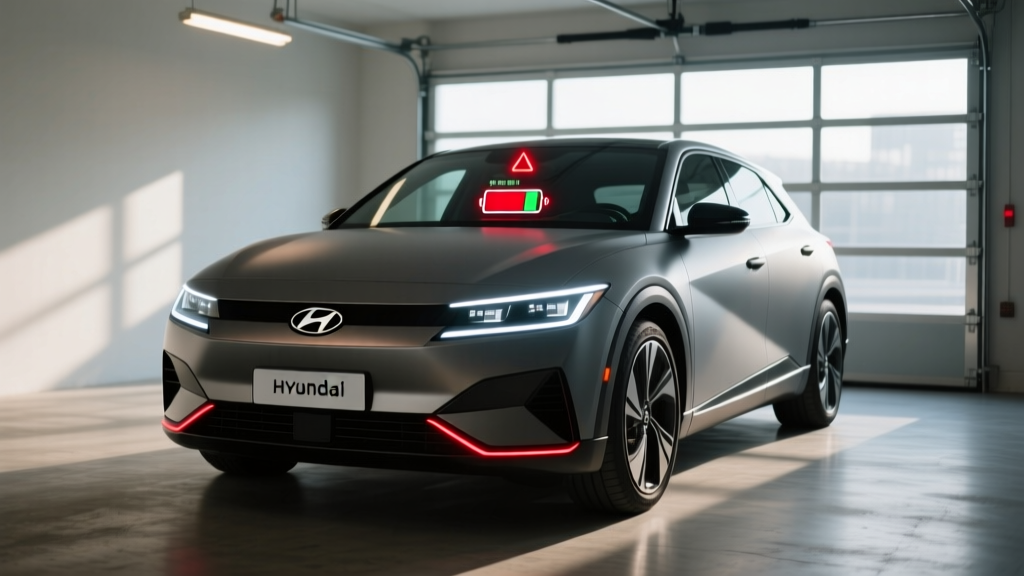
You walk out to your Hyundai Ioniq 5, press the start button, and nothing happens. The screens stay dark, the doors won't unlock via the handle, and the car is completely unresponsive. Your first thought: the massive high-voltage traction battery under the floor must have drained overnight. But that's almost certainly not what happened.
In the vast majority of "Ioniq 5 battery drained overnight and car won't start" cases, the culprit is the 12-volt auxiliary battery — a small, conventional lead-acid or lithium-ion 12V battery that powers the car's computers, door locks, lights, and the contactor that physically connects the high-voltage pack. When that 12V battery dies, the car cannot close the high-voltage contactor, meaning the main traction battery is completely isolated and unavailable, even if it's sitting at 80% state of charge.
Common Causes of 12V Drain in the Ioniq 5
- Extended parking without driving: The Ioniq 5's onboard computers draw a small parasitic load even when parked. Over several days to a couple of weeks (depending on 12V battery age), this can drain a weak 12V battery.
- Aging 12V battery: The stock 12V battery in early Ioniq 5 models (2022–2023) was a conventional lead-acid unit that typically lasts 3–4 years. By 2026, many original batteries are reaching end-of-life.
- Cold weather exacerbation: Lead-acid 12V batteries lose cranking capacity in cold temperatures. A marginal battery that barely works in summer may fail entirely at 20°F.
- Accessory drain: Aftermarket dashcams, OBD-II dongles, or leaving interior lights on can accelerate 12V depletion.
- 12V charging system fault: Rarely, the DC-DC converter that charges the 12V from the traction battery may malfunction, leaving the 12V undercharged.
How to Get Your Ioniq 5 Running Again
If your Ioniq 5 is unresponsive due to a dead 12V, you have a few options:
- Jump-start or boost the 12V: The Ioniq 5 has jump-start terminals under the hood (consult your owner's manual for exact location). A portable lithium jump-starter pack or jumper cables from another vehicle can restore enough 12V power to close the high-voltage contactor and start the car. Once the car is "on," the DC-DC converter takes over and recharges the 12V.
- Use the physical key: If the doors won't unlock electronically, the Ioniq 5's key fob contains a physical mechanical key blade. Use it to access the cabin, then access the 12V jump terminals.
- Hyundai's roadside assistance: If your Ioniq 5 is still under the 5-year/60,000-mile new vehicle limited warranty, Hyundai provides complimentary roadside assistance that covers dead 12V jump-starts.
The Ioniq 5 Traction Battery: Chemistry, Capacity, and Specs
Now let's talk about the battery you actually care about — the high-voltage pack that determines your range, charging speed, and long-term ownership cost.
| Specification | Value |
|---|---|
| Battery Chemistry | NMC (Nickel Manganese Cobalt) — 5th-gen LG Energy Solution / SK On cells |
| Gross Capacity | 84.0 kWh (Long Range AWD/RWD) |
| Usable Capacity | 77.4 kWh |
| Standard Range Battery | 63.0 kWh usable (RWD Standard Range, where available) |
| Voltage Architecture | 800V nominal (E-GMP platform) |
| EPA Range (Long Range RWD) | 303 miles (fueleconomy.gov) |
| EPA Range (Long Range AWD) | 260–290 miles depending on trim/wheels |
| Peak DC Fast Charge Rate | ~240 kW (on 800V-capable 350 kW chargers) |
| 10–80% DC Charge Time | ~18 minutes (optimal conditions, pre-conditioned) |
| Level 2 AC Charge Rate | 10.9 kW (onboard charger) |
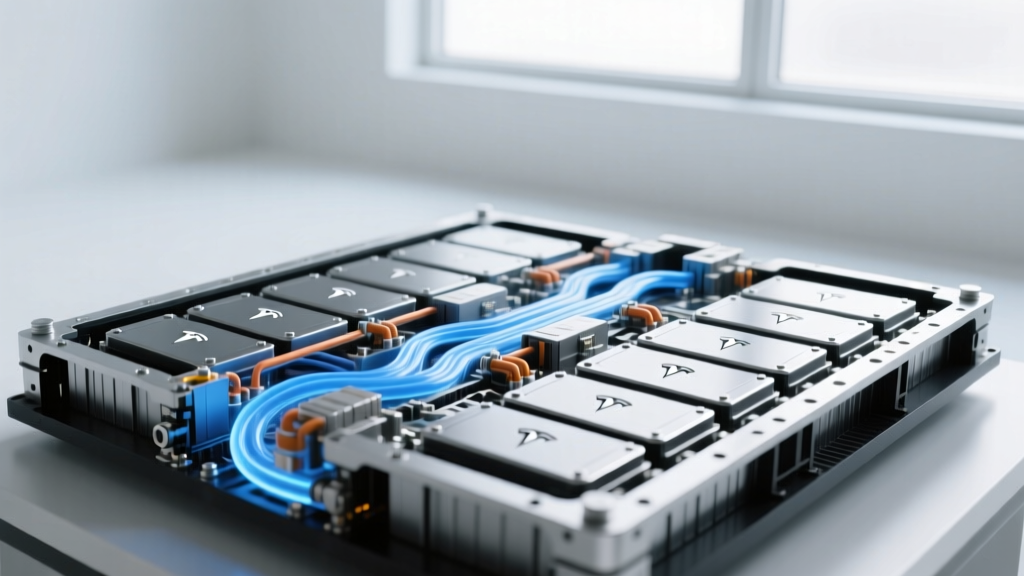
| Thermal Management | Active liquid cooling and heating |
Real-world range note: The EPA 303-mile figure for the Long Range RWD is achievable in mixed city/suburban driving at moderate temperatures. Expect approximately 250–270 miles on sustained highway driving at 70–75 mph, and potentially 200–230 miles in cold weather (below 30°F) due to cabin heating demand and reduced battery efficiency. These figures align with independent testing by multiple EV publications.
LFP vs NMC: Understanding Your Ioniq 5's Battery Chemistry
The Ioniq 5 uses NMC (Nickel Manganese Cobalt) lithium-ion cells, the same chemistry found in most long-range EVs from Hyundai, Kia, Tesla (Long Range models), Ford, and others. But you may have heard about LFP (Lithium Iron Phosphate) batteries, which are used in the Tesla Model 3 RWD, some BYD models, and the base Ford Mustang Mach-E. Here's how they compare and why it matters for your ownership experience.
| Characteristic | NMC (Your Ioniq 5) | LFP |
|---|---|---|
| Energy Density | Higher (~250 Wh/kg cell-level) — more range per pound | Lower (~170 Wh/kg) — heavier pack for same range |
| Cycle Life | ~1,000–2,000 full cycles before significant degradation | ~3,000–5,000+ full cycles — significantly longer |
| Cold Weather Performance | Better low-temp charge/discharge capability | Poor below freezing without active heating; slower cold charging |
| Cost | Higher — uses nickel and cobalt | Lower — iron and phosphate are abundant and cheap |
| Recommended Charge Habit | Daily charge to 80%; 100% only for trips | Can (and should) be charged to 100% regularly for cell balancing |
| Safety / Thermal Stability | Good with active management; higher thermal runaway risk than LFP | Excellent — inherently more stable chemistry |
| Typical Use Case | Long-range, performance, AWD vehicles | Standard-range, cost-optimized, RWD vehicles |
Which is better? It depends on your priorities. NMC gives you more range in a lighter package and better cold-weather charging — which is why the Ioniq 5 uses it. LFP offers dramatically longer cycle life and lower cost, but at the expense of range-per-pound and cold performance. For a buyer choosing between vehicles, chemistry matters less than the total package: an NMC pack managed well will easily outlast typical ownership, while an LFP pack in a shorter-range vehicle may offer a decade of worry-free daily 100% charging.
How Long Do EV Batteries Actually Last? Real Degradation Data
The fear of a degraded battery is one of the most persistent barriers to EV adoption. Let's look at what the data actually shows.
Based on aggregated fleet data from sources including Recurrent Auto and manufacturer reports, modern liquid-cooled EV batteries like the Ioniq 5's NMC pack typically experience the following degradation pattern:
- Year 1 (0–15,000 miles): 2–4% capacity loss. This initial drop is the steepest part of the curve and is normal — it reflects initial electrolyte formation and SEI (solid electrolyte interphase) layer stabilization.
- Years 2–4 (15,000–60,000 miles): Degradation slows to roughly 1–2% per year. Most Ioniq 5 owners at the 50,000-mile mark report 90–94% state of health (SoH).
- Years 5–8 (60,000–120,000 miles): Continued slow decline, typically reaching 83–90% SoH by year 8.
- Beyond 8 years / 120,000+ miles: Data is still emerging for the newest generation of packs, but projections based on cell testing suggest 75–85% SoH at 150,000 miles for well-maintained packs.
The key insight: degradation is not linear. The biggest drop happens early, then the curve flattens significantly. Most EV batteries will retain well above 70% capacity through 10 years and 150,000 miles — which is precisely why manufacturers warranty them to that threshold.
Can an Ioniq 5 Traction Battery Drain Overnight on Its Own?
Under normal conditions, no. The Ioniq 5's high-voltage traction battery loses roughly 1–2% state of charge per week when parked, due to the small vampire drain from the vehicle's always-on telematics and battery management system. Over a single night, the loss is negligible — typically less than 0.5%. If you parked at 60% SoC, you'll wake up at roughly 60%.
Exceptions include:
- Sentry-like features or preconditioning left on: If cabin preconditioning is scheduled or the vehicle's connected services are actively drawing power, drain can be slightly higher but still minimal overnight.
- Extreme cold (below 0°F): The battery management system may activate the battery heater to protect the pack, drawing additional energy. Even then, overnight loss is typically 2–5% — not a full drain.
- A software fault: In rare cases, a software bug can prevent the vehicle from entering sleep mode, leading to higher-than-normal drain. A software update at the dealer typically resolves this.
If your Ioniq 5 shows 0% on the dash and won't power on, the issue is almost certainly the 12V system, not the traction battery. The traction battery cannot drain to true zero overnight under any normal or even moderately abnormal circumstance.
Hyundai's EV Battery Warranty: What's Covered and for How Long
Hyundai provides one of the strongest battery warranties in the industry, and understanding the terms is critical for peace of mind.
| Coverage | Duration | Mileage |
|---|---|---|
| High-Voltage Battery Capacity | 10 years | 100,000 miles |
| Capacity Retention Threshold | Below 70% of original capacity (varies by model year; confirm with dealer) | |
| Electric Powertrain (Motor, Inverter, Reducer) | 10 years | 100,000 miles |
| 12V Auxiliary Battery | 3 years | 36,000 miles |
| New Vehicle Limited Warranty | 5 years | 60,000 miles |
What triggers a warranty claim? If your Ioniq 5's battery state of health drops below 70% within 10 years or 100,000 miles, Hyundai will repair or replace the battery pack at no cost to you. The dealer diagnoses SoH using Hyundai's proprietary diagnostic tool, which reads cell-level voltage data and internal resistance measurements. Note that the warranty covers capacity degradation, not damage from accidents, flooding, or improper modifications.
Federal requirement: Under EPA/CARB emissions-related warranty rules for EVs, the high-voltage battery must be warranted for a minimum of 8 years/80,000 miles. Hyundai exceeds this with 10/100,000. Some states with California Air Resources Board (CARB) adoption may have additional protections — check your state's specific requirements.
EV Battery Replacement Cost: What You'd Actually Pay
If your battery fails outside of warranty — or if you simply want to understand the worst-case scenario — here's what replacement looks like in 2026.
| Vehicle / Pack Size | Battery Pack Cost | Labor (Est.) | Total Estimated |
|---|---|---|---|
| Hyundai Ioniq 5 (77.4 kWh) | $12,000–$16,000 | $1,500–$2,500 | $13,500–$18,500 |
| Tesla Model 3/Y (75–82 kWh) | $12,000–$15,000 | $1,000–$2,000 | $13,000–$17,000 |
| Ford F-150 Lightning (131 kWh ext.) | $20,000–$28,000 | $2,000–$3,500 | $22,000–$31,500 |
| Chevrolet Bolt EV/EUV (65 kWh) | $9,000–$13,000 | $1,000–$2,000 | $10,000–$15,000 |
Important context: Full battery pack replacement is rare for modern liquid-cooled EVs. When issues arise, dealers often replace individual modules (the Ioniq 5's pack contains multiple modules) rather than the entire pack, reducing cost to $2,000–$5,000. Battery cell prices have fallen roughly 80% since 2013, and by 2026, pack-level costs are approximately $110–$130/kWh at the manufacturer level. Aftermarket and refurbished packs are also becoming available for older models, further reducing out-of-pocket costs.
The reality: most EV batteries outlive the vehicles they're installed in. According to data from Consumer Reports and fleet operators, fewer than 2% of modern EV battery packs have required full replacement, and the vast majority of those were covered under warranty.
Maximizing Ioniq 5 Battery Health: A Practical Care Guide
Your Ioniq 5's battery management system does a lot of the work for you — liquid cooling, cell balancing, buffer management (the pack has roughly 6.6 kWh of buffer above and below the displayed 0–100% range). But your habits still matter.
- Set your daily charge limit to 80%: Use the Ioniq 5's infotainment system or Hyundai Bluelink app to set a maximum charge of 80% for daily use. Reserve 100% charges for road trips. This alone can extend NMC battery life by years.
- Avoid letting SoC drop below 10% regularly: Deep discharges stress NMC chemistry. Plug in when you hit 15–20% if possible.
- Use DC fast charging strategically: The Ioniq 5's 800V architecture handles fast charging exceptionally well, but daily use of 350 kW chargers will accelerate degradation compared to Level 2 home charging. Use DCFC for road trips; rely on Level 2 for daily needs.
- Precondition before fast charging: The Ioniq 5 will automatically precondition the battery when you navigate to a DC fast charger via the built-in navigation. This brings the battery to optimal temperature for charging, reducing stress and improving charge speed. Always navigate to the charger rather than just pulling up.
- Park in shade or a garage in extreme heat: Sustained high battery temperatures (above 95°F ambient, especially if the pack is at high SoC) accelerate degradation. A garage or shaded spot makes a measurable difference in hot climates.
- In extreme cold, plug in when parked: When plugged in, the Ioniq 5 can use grid power to maintain battery temperature rather than draining the pack. This preserves range and protects the cells.
- Don't store at 100% or 0%: If you're leaving the car for a week or more, aim for 50–60% SoC. This is the most chemically stable state for NMC cells.
How to Check Your Ioniq 5's Battery State of Health
Hyundai doesn't expose a direct SoH percentage in the Ioniq 5's infotainment system (unlike the Nissan Leaf's health bars). To check your battery's health:
- Dealer diagnostic: Any Hyundai dealer can run a battery health check using their diagnostic tool. This gives a precise SoH percentage based on cell-level data. Request this during routine service visits — it's typically free.
- OBD-II apps: Third-party tools like Car Scanner (with an OBD-II Bluetooth adapter) can read battery SoH data from the Ioniq 5's BMS. The data is not officially supported by Hyundai but is generally accurate.
- Range tracking: Monitor your real-world range over time. If your Ioniq 5 consistently delivered 280 real-world miles when new and now delivers 255 at the same SoC and in similar conditions, that's roughly a 9% degradation — consistent with normal aging at 40,000–60,000 miles.
Looking Ahead: Solid-State and Next-Generation Battery Tech
You may have seen headlines about solid-state batteries promising 600-mile range and 10-minute charging. Here's where the technology actually stands as of 2026:
- Solid-state batteries: Toyota has announced limited production of solid-state-equipped vehicles for 2027–2028, initially in small numbers and likely in Japan-market models first. Hyundai has a partnership with SolidEnergy Systems (SES) and Factorial Energy for solid-state development, but no production timeline has been confirmed for consumer vehicles. Expect solid-state to reach volume production in the US market no earlier than 2029–2030, and likely at a significant price premium initially.
- Silicon-dominant anodes: Companies like Sila Nanotechnologies and Group14 are supplying silicon-carbon anode materials that increase energy density by 20–40% over current graphite anodes. These are beginning to appear in limited production cells (including some from Samsung SDI and SK On) and may reach mainstream EV packs by 2027–2028.
- Sodium-ion batteries: CATL and BYD are producing sodium-ion cells for low-cost, short-range EVs in China. These won't replace NMC in long-range vehicles but could appear in affordable compact EVs globally by 2027.
For current Ioniq 5 buyers: these technologies are promising but not imminent enough to justify delaying a purchase. The NMC pack in the current Ioniq 5 is a mature, well-managed system that will serve reliably for a decade or more.
Frequently Asked Questions
Why did my Ioniq 5 battery drain overnight and the car won't start?
In nearly all cases, this is a 12V auxiliary battery failure, not a traction battery drain. The 12V battery powers the computers that must activate before the high-voltage pack can engage. When the 12V dies, the car appears completely dead even though the main battery may be fully charged. Jump-start the 12V using the under-hood terminals, and the car should power on normally. If this happens repeatedly, replace the 12V battery (typically a Group 47 or AGM unit, $150–$250 installed).
How long will my Ioniq 5's traction battery last?
Based on current data, expect 85–92% state of health at 100,000 miles and 8+ years. The battery is warrantied for 10 years/100,000 miles at a 70% capacity threshold. Most owners will sell or trade the vehicle before the battery reaches meaningful degradation. The Ioniq 5's liquid-cooled thermal management and 800V architecture contribute to excellent long-term battery health.
How much does it cost to replace an Ioniq 5 battery?
A full pack replacement runs approximately $13,500–$18,500 including labor at 2026 pricing. However, full replacements are extremely rare — most issues are resolved by replacing individual modules at $2,000–$5,000. And if the pack degrades below 70% within 10 years/100,000 miles, the repair is covered under Hyundai's warranty at zero cost to you.
Does frequent DC fast charging hurt my Ioniq 5 battery?
The Ioniq 5's 800V architecture and active liquid cooling handle fast charging better than most EVs. That said, exclusive reliance on DC fast charging (never using Level 2) will accelerate degradation by a few percentage points over 100,000 miles compared to predominantly Level 2 charging. The practical recommendation: use Level 2 at home for daily charging, and use DC fast charging freely on road trips. The difference over a typical ownership period is small — perhaps 2–4% additional degradation.
Should I charge my Ioniq 5 to 100% every day?
No. For NMC chemistry (which the Ioniq 5 uses), daily charging to 100% accelerates degradation. Set your charge limit to 80% for daily driving and charge to 100% only when you need maximum range for a trip. The Ioniq 5's charge limit can be set in the infotainment system under EV settings or via the Bluelink app. This single habit is the most impactful thing you can do for long-term battery health.
What is the Ioniq 5's battery warranty?
Hyundai covers the high-voltage battery for 10 years or 100,000 miles, whichever comes first. If the battery's usable capacity drops below 70% of its original specification during that period, Hyundai will repair or replace it at no charge. The electric powertrain components (motor, inverter, reduction gear) are also covered for 10 years/100,000 miles. Always confirm current warranty terms with your dealer, as details can vary by model year and state.