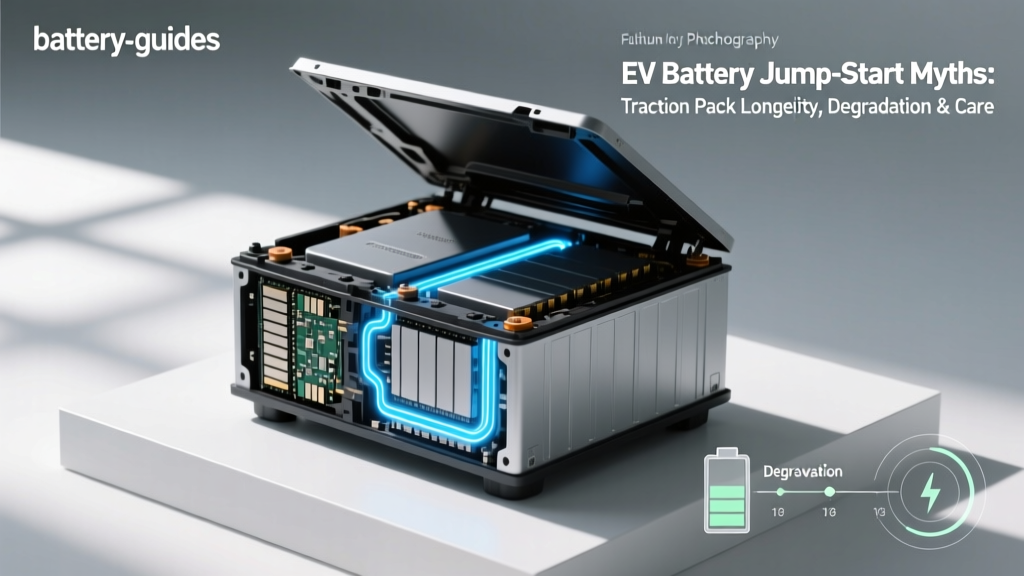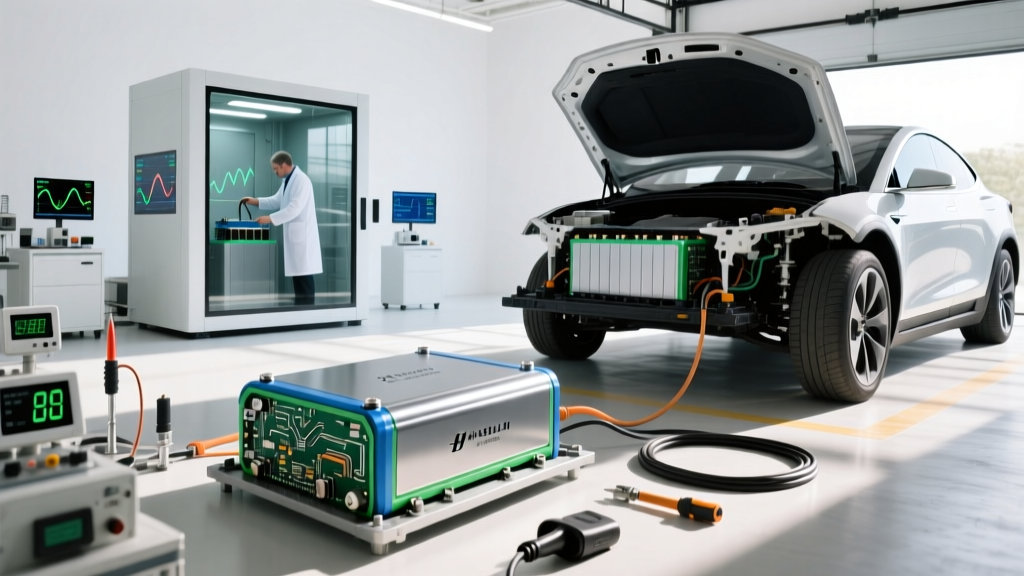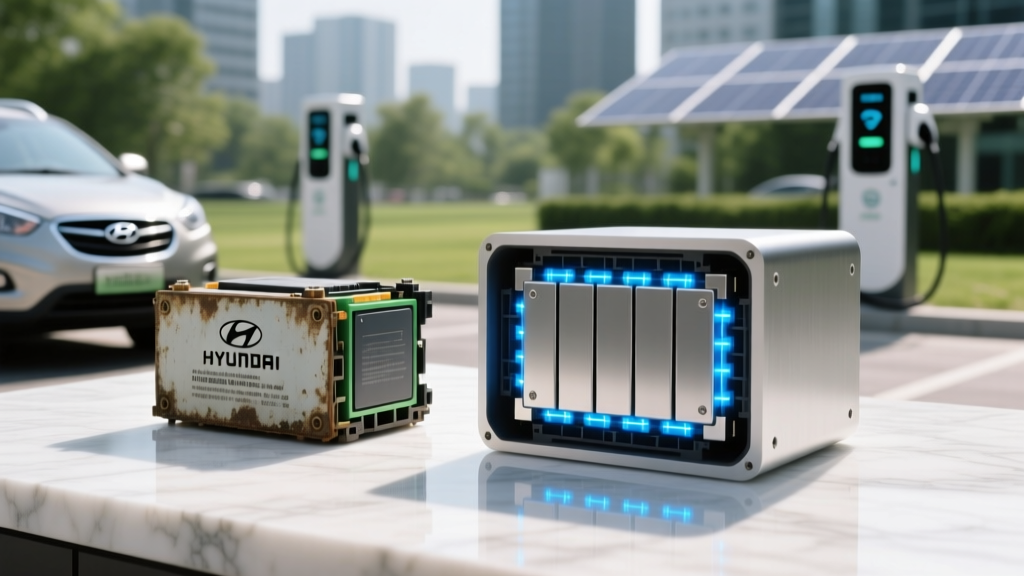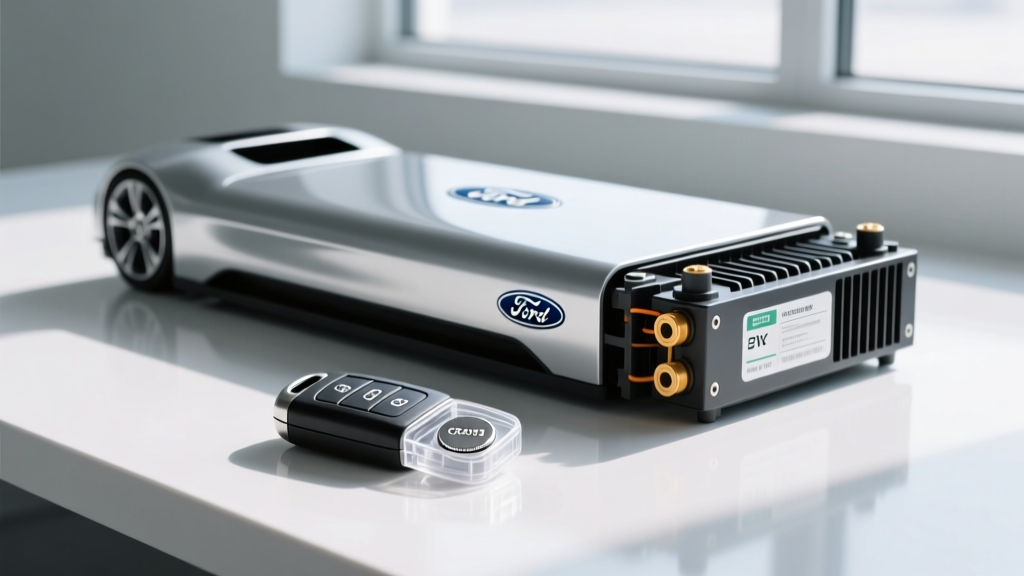
If you've searched for a battery for 2013 Ford Fusion key fob, you likely ended up on auto-parts pages listing CR2032 lithium coin cells — and that's exactly what your key fob needs. But if you're an EV owner or shopper, the word "battery" carries a very different weight. The high-voltage traction battery in a modern electric vehicle is a multi-thousand-dollar, chemically complex energy storage system that powers the drivetrain, and understanding it is critical to making a smart purchase or ownership decision.
This guide draws a hard line between the 12V auxiliary systems (including your key fob) and the high-voltage traction battery, then delivers the data-driven breakdown EV buyers actually need: chemistry trade-offs, degradation curves, warranty terms, replacement costs, and how to maximize battery lifespan in 2026.
The 12V vs. High-Voltage Distinction Every EV Owner Must Know
The 2013 Ford Fusion — whether the gasoline SE, the Hybrid, or the Energi plug-in hybrid — uses a small 12V lead-acid or AGM battery to start the vehicle's computers and accessories. The key fob for that car runs on a CR2032 coin cell, a $3 battery you can swap at home in 30 seconds.
In a modern battery-electric vehicle (BEV) like the Ford Mustang Mach-E or Tesla Model Y, there are two battery systems:
- 12V auxiliary battery: Powers lights, infotainment, door locks, and the computers that manage the high-voltage system. It's typically a small lithium-iron-phosphate (LiFePO4) or lead-acid unit, not the main traction pack.
- High-voltage traction battery: A 60–120+ kWh pack operating at 400V (or 800V in vehicles like the Hyundai Ioniq 5 and Kia EV6) that drives the electric motors and determines your EPA range.
When we talk about "EV battery degradation" or "replacement cost," we mean the traction battery. The 12V system is a routine maintenance item, much like a key fob battery. Confusing the two leads to unnecessary anxiety — so let's focus on what actually matters for EV ownership.
Battery Chemistry: LFP vs. NMC/NCA Explained
Every EV sold in 2026 uses lithium-ion cells, but the cathode chemistry varies significantly. The two dominant types are LFP (lithium iron phosphate) and NMC/NCA (nickel manganese cobalt / nickel cobalt aluminum). Here's how they compare on the metrics that affect your wallet and daily driving:
| Attribute | LFP (Lithium Iron Phosphate) | NMC / NCA (Nickel-based) |
|---|---|---|
| Energy density | ~160–180 Wh/kg (lower) | ~220–300 Wh/kg (higher) |
| Cycle life | 3,000–6,000+ cycles | 1,000–2,500 cycles |
| Cold-weather performance | Moderate; greater range loss below freezing | Better low-temp conductivity |
| Thermal stability / safety | Excellent; very low thermal runaway risk | Good but requires more active thermal management |
| Cost per kWh (2026) | ~$85–$100/kWh at cell level | ~$110–$140/kWh at cell level |
| State of Charge tolerance | Can be charged to 100% daily without harm | Best kept 20–80% for daily use; 100% for trips only |
| Common in (2026 models) | Tesla Model 3/Y RWD, Ford Mustang Mach-E Select (standard range), BYD models | Long-range and performance trims (Model 3 LR, Mach-E Extended Range, Ioniq 5, Rivian) |
The practical takeaway: If you charge at home nightly, drive under 200 miles a day, and want maximum calendar life, LFP is the superior choice. If you need the longest possible EPA range for road trips and don't mind managing charge limits, NMC/NCA delivers more miles per kilogram of battery.
How Long Do EV Batteries Actually Last? Degradation Data
The fear that EV batteries "die" at 100,000 miles is outdated. Real-world fleet data from sources including fueleconomy.gov and independent testing organizations shows that modern lithium-ion traction batteries degrade gradually and predictably.
Typical capacity retention over time (fleet averages, NMC and LFP combined):
- Year 1 / 15,000 miles: ~95–97% State of Health (SoH) — initial "break-in" loss
- Year 3 / 45,000 miles: ~91–94% SoH
- Year 5 / 75,000 miles: ~88–92% SoH
- Year 8 / 120,000 miles: ~84–90% SoH
- Year 10 / 150,000 miles: ~80–87% SoH (LFP typically higher)
Source: Aggregated fleet telemetry data; individual results vary with climate, charging habits, and chemistry. Tesla's 2024 Impact Report noted its fleet averaged ~12% degradation at 200,000 miles.
At 80% capacity, a vehicle with an original EPA range of 310 miles still delivers ~248 miles — more than adequate for most daily driving. The battery hasn't "failed"; it's simply lost some capacity, much like a smartphone after a few years.
Battery Warranty Terms: What's Covered and for How Long
Federal law mandates that EV manufacturers warranty the traction battery for a minimum of 8 years / 100,000 miles (10 years / 150,000 miles in CARB states including California, New York, and others). Here's how major automakers structure their coverage in 2026:
| Manufacturer | Warranty Period | Capacity Retention Threshold | Notes |
|---|---|---|---|
| Tesla (Model 3/Y LFP) | 8 yr / 120,000 mi | 70% | Longer mileage for LFP RWD trims |
| Tesla (Model 3/Y LR/Perf.) | 8 yr / 120,000 mi | 70% | NMC pack |
| Ford (Mach-E, F-150 Lightning) | 8 yr / 100,000 mi | 70% | CARB states: 10/150,000 |
| Hyundai / Kia (Ioniq 5, EV6, EV9) | 10 yr / 100,000 mi | 70% | Among the longest in the industry |
| GM (Chevy Equinox EV, Blazer EV, Cadillac Lyriq) | 8 yr / 100,000 mi | 60–70% (varies by model) | Ultium platform |
| Rivian (R1T, R1S) | 8 yr / 175,000 mi | 70% | Highest mileage cap in segment |
What triggers a warranty claim? If your battery's State of Health drops below the stated threshold within the warranty period, the manufacturer will repair or replace modules (not always the full pack) to bring capacity back above that line. Most owners never reach this threshold.
EV Battery Replacement Cost: Real Numbers and Context
Out-of-warranty traction battery replacement is expensive — but it's also rare. Most EV batteries outlast the vehicle's economic life. When replacement is needed (typically due to physical damage, manufacturing defect outside warranty, or extreme degradation after 15+ years), here's what owners face in 2026:
| Vehicle / Pack Size | Battery Capacity | Estimated Replacement Cost (2026) |
|---|---|---|
| Tesla Model 3 RWD (LFP) | ~60 kWh | $8,000–$12,000 |
| Tesla Model Y Long Range | ~75 kWh | $12,000–$16,000 |
| Ford Mustang Mach-E Extended Range | ~91 kWh | $14,000–$20,000 |
| Ford F-150 Lightning Extended Range | ~131 kWh | $20,000–$30,000 |
| Hyundai Ioniq 5 (Long Range AWD) | ~77.4 kWh | $11,000–$16,000 |
| Chevrolet Silverado EV (Max Range) | ~200 kWh | $30,000–$40,000+ |
These figures include the battery pack and labor but can vary by region and service provider. Module-level repair (replacing only degraded sections) is increasingly common and can reduce costs by 50–70%. Third-party refurbishment shops are also emerging, offering reconditioned packs at 40–60% of OEM pricing.
Context check: The average age of a scrapped passenger vehicle in the US is approximately 15 years. Most EV batteries, based on current degradation data, retain 75–85% capacity at that point. Catastrophic failure requiring full replacement is statistically uncommon — the NHTSA has not flagged widespread out-of-warranty battery failures as a systemic issue.
Factors That Accelerate (or Preserve) Battery Life
Not all miles are equal when it comes to battery wear. Here are the variables you can control:
- DC fast-charging frequency: Occasional road-trip fast charging is fine. Daily use of 150–350 kW DCFC increases thermal stress. If you can charge at home on Level 2 (7–11 kW), do so for daily needs.
- State of Charge habits: For NMC/NCA, keep daily SoC between 20–80%. Charge to 100% only when you'll drive immediately. LFP batteries can (and should) be charged to 100% regularly — Tesla recommends it for accurate BMS calibration.
- Extreme temperatures: Sustained exposure to ambient heat above 95°F accelerates calendar degradation. Cold weather reduces range temporarily (expect 15–30% loss below freezing) but doesn't cause permanent damage unless the battery is charged at high rates while frozen — modern thermal management systems prevent this by preconditioning.
- Preconditioning: Use your vehicle's scheduled departure feature to warm or cool the battery while plugged in. This reduces stress and improves regen efficiency.
- Storage: If the vehicle will sit unused for weeks, leave it plugged in at ~50% SoC (NMC) or ~60–80% (LFP). Avoid leaving any EV at 100% or below 10% for extended periods.
Monitoring Battery Health: How to Check Your SoH
State of Health (SoH) is the percentage of original capacity your battery retains. Here's how to track it:
In-Vehicle Displays
Most 2026 EVs include a battery health indicator in the settings menu. Tesla provides a "Battery Health" percentage under Service mode. Hyundai/Kia displays estimated range trends that reflect degradation. Ford's SYNC system shows battery age and estimated capacity.
Third-Party Apps and OBD-II Tools
Apps like TeslaFi, Tessie, and ABRP (A Better Route Planner) log charge sessions and calculate SoH over time. For non-Tesla vehicles, OBD-II dongles paired with apps like LeafSpy (Nissan Leaf) or Car Scanner can pull raw BMS data.
Dealer Diagnostics
Any authorized service center can run a full battery health report, typically during annual inspections or warranty-related visits. Request this if you're buying a used EV — it's the single most important data point for assessing remaining battery life.
What's Next: Solid-State and Silicon-Anode Batteries
Next-generation battery technologies are frequently hyped, so here's a realistic, data-grounded timeline:
Silicon-anode lithium-ion: Already in limited production (Sila Nanotechnologies supplies Mercedes-Benz for the G-Class EV in 2025–2026). Silicon anodes increase energy density by 20–40% over graphite. Expect broader adoption across premium models by 2028–2029.
Solid-state batteries: Toyota has announced limited production for 2027–2028, targeting 750+ km (WLTP) range and 10-minute fast charging. Samsung SDI and QuantumScape are also in pilot production. However, manufacturing scale-up remains the primary bottleneck. Realistic mass-market availability: 2030 or later.
Sodium-ion: CATL and BYD are producing sodium-ion cells for budget EVs in China, with energy density ~140 Wh/kg. These are viable for city cars and LFP alternatives where cost matters more than range. US-market availability is anticipated in commercial/fleet applications first, likely 2027–2028.
None of these technologies are available in any vehicle you can buy today. If you're shopping now, LFP and NMC remain mature, proven, and well-warrantied options.
Frequently Asked Questions
How long do EV batteries last in years and miles?
Based on 2026 fleet data, most EV traction batteries retain 80–90% capacity at 150,000 miles and 10 years. LFP chemistries often exceed this. Catastrophic failure is rare; gradual capacity loss is the norm. Many batteries outlast the vehicle's body and interior.
How much does an EV battery cost to replace?
Full pack replacement ranges from ~$8,000 for a 60 kWh LFP pack (Tesla Model 3 RWD) to $30,000+ for a 200 kWh pack (Chevy Silverado EV Max Range). Module-level repairs are significantly cheaper. Most owners never need a replacement — the battery is typically covered under the 8-year/100,000-mile federal warranty.
What does the EV battery warranty cover?
Federal law requires a minimum 8-year/100,000-mile warranty on the traction battery (10/150,000 in CARB states). Coverage applies when capacity falls below the manufacturer's threshold (typically 70% SoH). The warranty covers defects, abnormal degradation, and module failures. It does not cover damage from accidents, flooding, or unauthorized modifications. See IRS.gov for related EV tax credit information, which is separate from warranty coverage.
How do I check and maximize my EV battery health?
Check SoH via your vehicle's settings menu, third-party telemetry apps (TeslaFi, Tessie, ABRP), or dealer diagnostics. Maximize lifespan by charging on Level 2 at home, limiting DC fast charging to road trips, keeping NMC packs between 20–80% SoC daily (LFP can be charged to 100%), preconditioning in extreme temperatures, and avoiding prolonged storage at very high or very low charge states.
LFP vs NMC — which battery chemistry is better for me?
Choose LFP if you charge at home nightly, drive under 200 miles daily, want maximum cycle life (3,000–6,000 cycles), and don't mind slightly lower range per charge. Choose NMC/NCA if you need the longest EPA range for frequent road trips, live in a cold climate where NMC performs better in winter, or are buying a performance/long-range trim that only comes with NMC. Neither chemistry is universally "better" — the right choice depends on your driving pattern.
Does my key fob battery have anything to do with my EV's traction battery?
No. The key fob for any vehicle — including the 2013 Ford Fusion (which uses a CR2032 coin cell) — is powered by an independent, disposable battery. Your EV's high-voltage traction battery is a completely separate system. If you need a key fob battery, any auto-parts store carries them for under $5. If you're concerned about EV battery health, that's a different system entirely — and it's covered under the manufacturer's warranty.