What Actually Lives Inside a Tesla Battery Pack
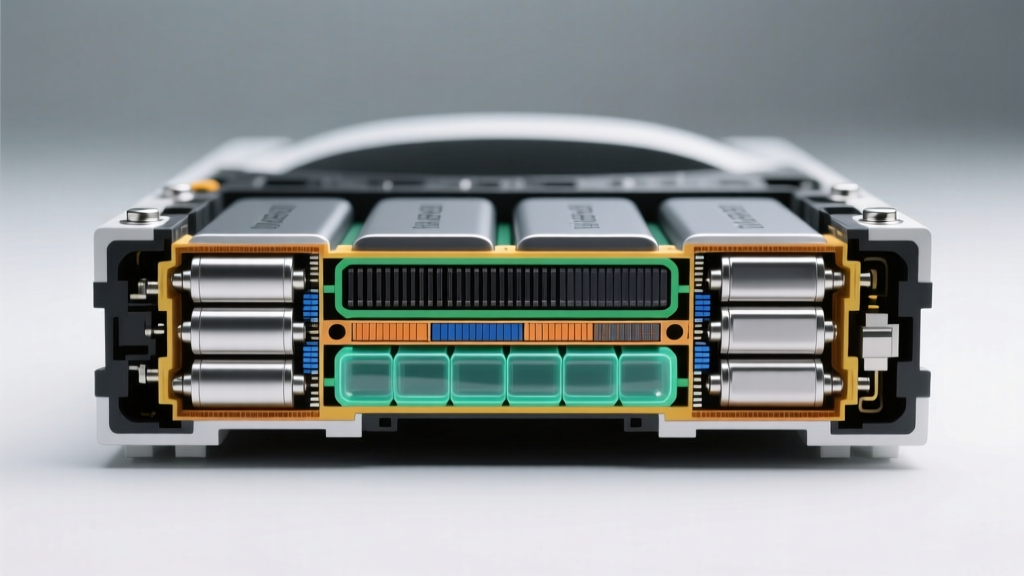
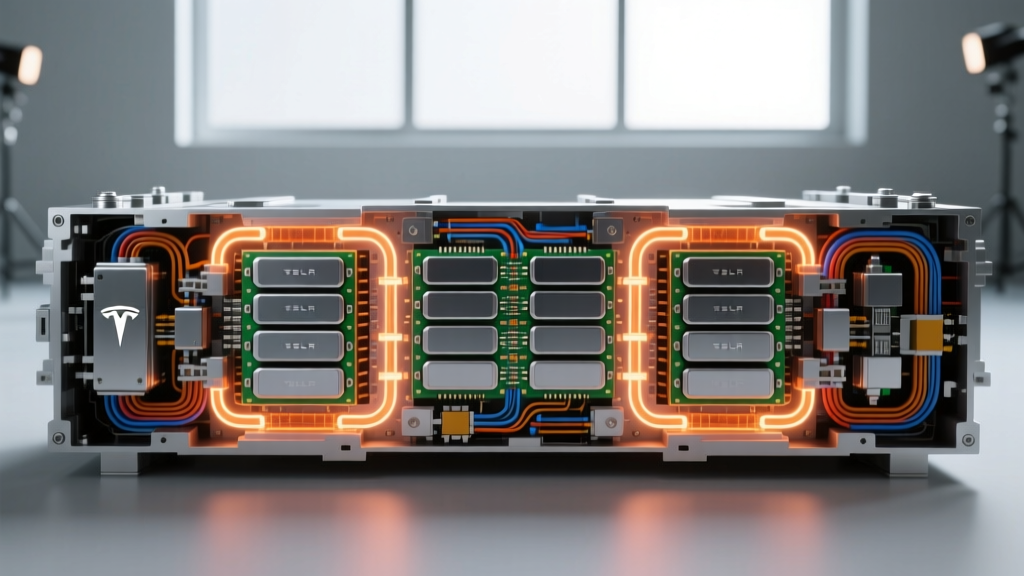
Open the floorpan of any Tesla Model 3, Model Y, Model S, or Model X and you'll find a structural battery pack that doubles as the vehicle's backbone. But the cells inside that pack vary dramatically depending on which trim you buy — and those differences shape everything from your daily range to how the battery ages over a decade of ownership.
Tesla currently uses two distinct lithium-ion chemistries across its 2026 lineup: lithium iron phosphate (LFP) in Standard Range and Rear-Wheel Drive models, and nickel manganese cobalt (NMC) in Long Range and Performance variants. Understanding which chemistry sits beneath your feet is the single most important factor in predicting long-term battery behavior.
This guide walks through the engineering, the real-world degradation data, warranty protections, and the economics of replacement — the questions every Tesla buyer or owner actually needs answered.
LFP vs NMC: The Chemistry Comparison That Matters
Tesla's dual-chemistry strategy means two buyers can drive off the lot in the same Model Y and have fundamentally different battery aging profiles. Here's how the two chemistries stack up across the dimensions that affect ownership:
| Attribute | LFP (Lithium Iron Phosphate) | NMC (Nickel Manganese Cobalt) |
|---|---|---|
| Energy Density | Lower (~160 Wh/kg cell-level) | Higher (~250 Wh/kg cell-level) |
| Cycle Life | 3,000–5,000+ cycles to 80% SoH | 1,500–2,500 cycles to 80% SoH |
| Cold-Weather Performance | Weaker — greater range loss below 32°F, slower charge acceptance | Stronger — better low-temp conductivity and charge speed |
| Recommended Daily SoC | 100% — Tesla recommends charging to full regularly | 80% daily, 100% only for trips |
| Cost (cell-level) | ~$70–90/kWh | ~$110–140/kWh |
| Cobalt Content | Zero — no cobalt or nickel | Contains cobalt and nickel (supply-chain and ESG considerations) |
| Thermal Stability | Superior — higher thermal runaway threshold | Good but requires more aggressive thermal management |
| Typical Tesla Application (2026) | Model 3 RWD, Model Y RWD | Model 3 Long Range/Performance, Model Y LR/Perf, Model S, Model X |
The practical takeaway: LFP gives you a longer-lasting, cheaper, more thermally stable battery at the cost of lower energy density (slightly less range in the same physical pack) and worse cold-weather behavior. NMC gives you maximum range and better winter performance but requires more careful charging habits to maximize lifespan. Neither is universally "better" — the right choice depends on your climate, commute, and how long you plan to keep the car.
Real-World Degradation: What the Data Actually Shows
Tesla's own Impact Reports have consistently shown that their battery packs retain roughly 85–90% of original capacity after 200,000 miles. But that fleet-wide average masks important nuances between chemistries, driving patterns, and charging habits.
Tesla Battery Degradation Curve (Fleet Data Synthesis, 2024–2026 Reports)
- Year 1 / 15,000 mi: ~2–4% loss (initial formation loss; steepest part of the curve for both chemistries)
- Year 3 / 45,000 mi: ~5–8% total loss for NMC; ~4–6% for LFP
- Year 5 / 75,000 mi: ~8–12% total loss for NMC; ~6–9% for LFP
- Year 8 / 120,000 mi: ~10–15% total loss for NMC; ~8–12% for LFP
- Year 10 / 150,000 mi: ~12–18% total loss for NMC; ~10–14% for LFP
Note: These ranges aggregate owner-reported data and Tesla fleet telemetry. Individual results vary significantly based on charging habits, climate, and Supercharging frequency. Sources include Tesla Impact Reports and community data aggregated by Teslascope and Recurrent Auto.
The degradation curve is non-linear — the biggest capacity drop happens in the first year or two, after which the curve flattens considerably. This is normal lithium-ion behavior: early solid electrolyte interphase (SEI) layer formation consumes some active lithium, then the system stabilizes.
What accelerates degradation beyond these norms?
- Frequent DC fast charging above 150 kW — daily Supercharging generates sustained heat that stresses cells. Occasional road-trip Supercharging is fine; daily reliance on DCFC correlates with 2–4% additional loss over 100,000 miles versus Level 2 home charging.
- Sustained high State of Charge in NMC packs — storing an NMC battery at 100% SoC for days or weeks (rather than the recommended 80% daily limit) accelerates cathode degradation.
- Extreme heat exposure — vehicles regularly parked outdoors in 100°F+ climates (Arizona, Texas) without preconditioning show measurably faster degradation than garage-kept vehicles in moderate climates.
- Deep discharge cycles — regularly running the battery below 10% SoC stresses both chemistries, though LFP is somewhat more tolerant.
Tesla's Battery Warranty: What's Covered and What Isn't
Tesla's battery and drive unit warranty is one of the stronger protections in the EV market, but the specifics matter — especially the capacity retention threshold that triggers a claim.
| Model | Warranty Period | Mileage Limit | Minimum Capacity Retention |
|---|---|---|---|
| Model 3 RWD (LFP) | 8 years | 100,000 miles | 70% |
| Model 3 Long Range / Performance (NMC) | 8 years | 120,000 miles | 70% |
| Model Y RWD (LFP) | 8 years | 100,000 miles | 70% |
| Model Y Long Range / Performance (NMC) | 8 years | 120,000 miles | 70% |
| Model S (NMC) | 8 years | 150,000 miles | 70% |
| Model X (NMC) | 8 years | 150,000 miles | 70% |
The 70% threshold means Tesla will repair or replace the battery if its usable capacity drops below 70% of the original kWh within the warranty window. In practice, hitting that threshold within 8 years requires unusually severe degradation — the fleet data above shows most packs retain 85–90% at the 8-year mark under normal use.
What the warranty covers: Manufacturing defects, cell failures, module imbalances that reduce capacity below the threshold, and drive unit failures.
What it doesn't cover: Damage from accidents, flooding, or modifications; cosmetic issues; or capacity loss that stays above 70% (even if you notice meaningful range reduction from, say, 95% to 78% — that's considered normal wear).
Battery Replacement Costs: When and How Much
The fear of a $20,000 battery replacement is the most common objection to EV ownership. Let's put that fear in context with actual numbers.
| Model | Battery Capacity (usable) | Chemistry | Estimated Out-of-Warranty Replacement Cost |
|---|---|---|---|
| Model 3 RWD | ~57.5 kWh | LFP | $10,000–$13,000 |
| Model 3 Long Range | ~75 kWh | NMC | $13,000–$16,000 |
| Model 3 Performance | ~75 kWh | NMC | $13,000–$16,000 |
| Model Y RWD | ~57.5 kWh | LFP | $10,000–$13,000 |
| Model Y Long Range | ~75 kWh | NMC | $13,000–$16,000 |
| Model S | ~95 kWh | NMC | $16,000–$22,000 |
| Model X | ~95 kWh | NMC | $17,000–$23,000 |
When is replacement actually needed? Full pack replacement due to degradation alone is rare within the first 10–15 years. Most replacements that do occur are due to manufacturing defects (covered under warranty), physical damage, or isolated cell/module failures that can often be repaired at a fraction of the full-pack cost by replacing individual modules.
Tesla's service centers and certified third-party shops increasingly offer module-level repairs — replacing only the degraded or failed modules rather than the entire pack — for $3,000–$7,000 depending on how many modules need swapping. This is a significant cost reduction from the early days of EV ownership when full-pack replacement was the only option.
It's also worth noting that cell prices continue to decline. BloombergNEF's annual battery price survey shows pack-level prices have fallen from over $1,200/kWh in 2010 to roughly $115/kWh by late 2025. Replacement costs in 2030 will likely be materially lower than today's figures.
How to Check and Maximize Your Tesla's Battery Health
Tesla doesn't expose a simple "battery health percentage" in the vehicle UI the way a phone does. But there are several reliable methods to monitor your State of Health (SoH) and habits that measurably extend pack life.
Checking State of Health
- Range comparison method: Charge to 100% (LFP) or your normal daily limit and note the displayed range. Compare against the EPA-rated range for your specific model and trim. A Model 3 Long Range that originally displayed 330 miles at 100% but now shows 295 miles has roughly 89% SoH. This is imprecise (displayed range adjusts based on recent driving efficiency) but gives a useful trend line.
- Energy screen: Tesla's Energy app in the vehicle shows energy consumption and can be used to track efficiency trends over time. A gradual increase in Wh/mile at consistent speeds and temperatures suggests capacity loss.
- Third-party tools: Apps like TeslaFi, Teslamate, or Stats (for iOS) log detailed telemetry including estimated battery capacity derived from charge session data. These provide more granular SoH tracking than the built-in UI.
- Service mode: Tesla's Service Mode (accessible through the software menu) displays nominal full-pack capacity in kWh, which can be compared to the original spec to calculate a precise degradation percentage.
Battery Care Best Practices
- LFP owners: Charge to 100% at least once per week (Tesla's recommendation). This keeps the battery management system's cell-balancing accurate and prevents SoC estimation drift.
- NMC owners: Set daily charge limit to 80%. Reserve 100% for road trips, and try to time it so the car doesn't sit at full charge for more than a few hours.
- Minimize DC fast charging as a daily routine. Use Level 2 home charging (7–11.5 kW) as your primary method. Supercharging is fine for road trips — just not as your only charging source.
- Precondition before Supercharging. Navigate to a Supercharger in the Tesla nav system; the car will automatically warm or cool the battery to optimal charging temperature, reducing stress and improving charge speed.
- Avoid prolonged storage at extreme SoC. If leaving the car for more than a week, set the charge limit to 50% and leave it plugged in. The BMS will maintain the pack at a healthy storage voltage.
- In extreme cold, precondition while plugged in. This uses grid power rather than battery energy to warm the pack, preserving range and reducing the cold-weather degradation penalty.
What's Next: Solid-State, Silicon Anodes, and 4680 Cells
Tesla's current 4680-format cells (used in Model Y vehicles built at Giga Texas and select Model 3 refresh units) represent an incremental improvement in manufacturing cost and energy density through a larger form factor, dry-electrode coating process, and structural pack integration. But they remain conventional lithium-ion chemistry.
Silicon anode technology — which replaces graphite anodes with silicon to increase energy density by 20–40% — is being developed by suppliers including Sila Nanotechnologies and Group14. Tesla has not announced a production timeline for silicon-dominant anodes, but industry analysts project limited adoption in premium cells by 2028–2029.
Solid-state batteries — which replace the liquid electrolyte with a solid conductor, promising higher energy density, faster charging, and improved safety — remain in the pre-commercial stage for automotive applications. Toyota has announced a 2027–2028 target for limited solid-state production; QuantumScape continues testing with Volkswagen. Realistic mass-market availability is no earlier than 2030, and likely later for cost-competitive packs.
For buyers making decisions today, these technologies are forward-looking context, not purchase factors. The LFP and NMC cells in 2026 Teslas represent mature, well-characterized chemistries with predictable aging behavior and established supply chains.
Frequently Asked Questions
How long do Tesla batteries last in years and miles?
Based on fleet data, most Tesla battery packs retain 85–90% of original capacity at 200,000 miles. In terms of calendar life, LFP packs are projected to outlast 15 years with normal use, while NMC packs typically deliver 12–15 years before reaching the 70% capacity threshold. The battery will almost certainly outlast the car's body, interior, and suspension components.
How much does it cost to replace a Tesla battery?
Out-of-warranty full-pack replacement ranges from roughly $10,000–$13,000 for Model 3/Y RWD (LFP, ~57.5 kWh) to $17,000–$23,000 for Model S/X (~95 kWh NMC). However, module-level repairs often cost $3,000–$7,000, and full replacement due to degradation alone is rare within the first 10–15 years.
What does the Tesla battery warranty cover?
Tesla covers the battery and drive unit for 8 years / 100,000–150,000 miles (depending on model) against capacity loss below 70% and manufacturing defects. It does not cover accident damage, flood damage, or normal degradation above the 70% threshold.
How do I check my Tesla's battery health?
The most accessible method is comparing your displayed range at full charge to the original EPA rating. For more precision, use Tesla's Service Mode to read nominal pack capacity in kWh, or log data with third-party apps like TeslaFi or Teslamate that calculate SoH from charge session telemetry.
LFP vs NMC — which Tesla battery is better?
LFP offers longer cycle life, lower cost, better thermal stability, and no cobalt — making it ideal for daily commuting in moderate climates. NMC provides higher energy density (more range), better cold-weather performance, and faster DC charging acceptance — making it better for road-trip-heavy drivers and cold-climate owners. Neither is universally superior; the right choice depends on your use case.
Does frequent Supercharging damage the battery?
Occasional Supercharging on road trips has minimal impact. Daily DC fast charging, however, correlates with 2–4% additional capacity loss over 100,000 miles compared to primarily Level 2 charging, due to sustained high temperatures during rapid charge sessions. If Supercharging is your only option, preconditioning and avoiding charging above 90% SoC mitigate most of the penalty.
Can I upgrade my Tesla's battery to a larger capacity later?
No. Tesla does not offer battery capacity upgrades. The pack you buy is the pack the car lives with. However, software-limited trims (if any exist in future model years) could theoretically be unlocked via OTA update, as Tesla has done in limited past instances.
For official warranty terms and specifications, always refer to Tesla's warranty documentation. For EPA range and efficiency data by model year, consult fueleconomy.gov.