Searches for a 05 Jeep Grand Cherokee battery usually point to a familiar pain point: a 12-volt lead-acid or AGM battery dying after three to five years, leaving a once-reliable SUV stranded in the driveway. That $150-$250 replacement is an annoying but predictable cost of ownership for internal-combustion vehicles. But as buyers cross-shop used SUVs and new electric vehicles, a more complex question surfaces: how do EV high-voltage traction batteries compare in longevity, cost, and maintenance?
This guide bridges that gap. We break down modern EV battery chemistry, real-world degradation data, warranty coverage, and replacement economics — giving you the exact numbers needed to weigh a legacy platform like the 2005 Grand Cherokee against a 2026 EV or hybrid.
The Two Batteries in Every EV: Traction vs. Auxiliary
Before diving into chemistry and degradation, let's eliminate the most common confusion. Every EV (and most PHEVs) carries two separate batteries:
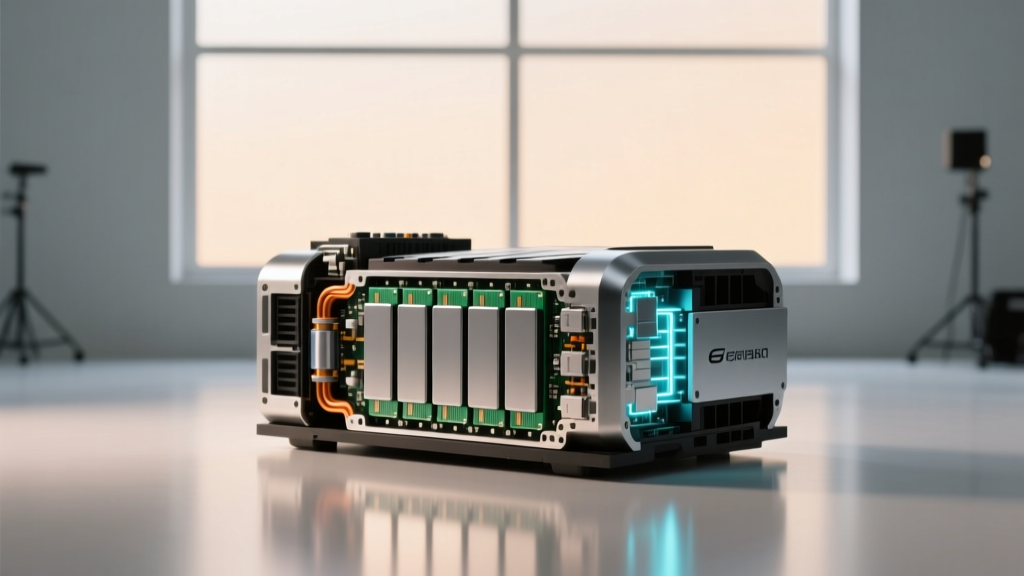
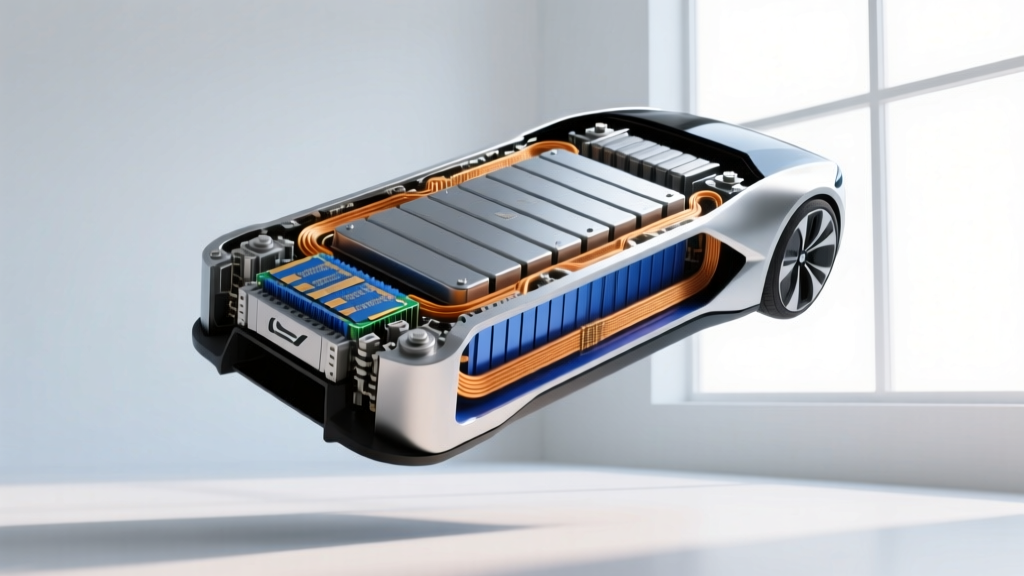
- High-voltage traction battery (kWh scale): The large lithium-ion pack that powers the electric motor(s). Capacities range from ~40 kWh in a Nissan LEAF to 131 kWh in a GMC Hummer EV. This is the expensive, long-life component we focus on here.
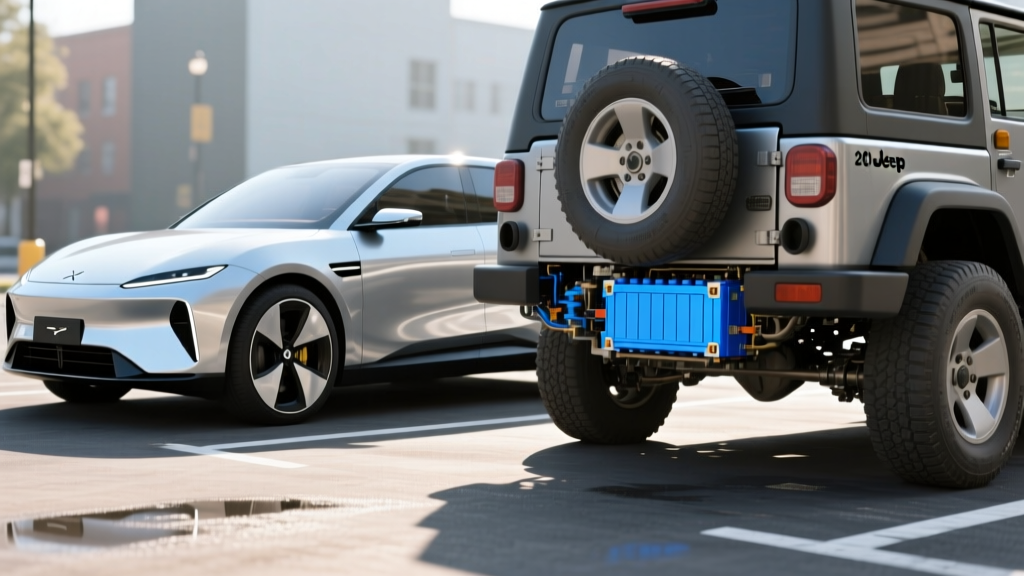
- 12V auxiliary battery: A small lead-acid or lithium unit that runs lights, infotainment, door locks, and onboard computers. This is functionally the same battery you'd replace in a 05 Jeep Grand Cherokee — typically $150-$300, lasting 3-5 years.
When we say "EV battery" in this guide, we mean the traction pack. The 12V system is a minor, routine maintenance item and not what drives EV ownership anxiety.
LFP vs. NMC/NCA: Which Chemistry Powers Your EV?
Not all lithium-ion batteries are the same. Two dominant chemistries power the 2026 EV market, and the choice affects range, longevity, charging behavior, and price.
| Attribute | LFP (Lithium Iron Phosphate) | NMC / NCA (Nickel-based) |
|---|---|---|
| Energy Density | Lower (~160 Wh/kg cell-level) | Higher (~250-300 Wh/kg cell-level) |
| Cycle Life | 3,000-5,000+ cycles | 1,000-2,500 cycles |
| Cold-Weather Performance | Moderate; slower charging below freezing | Better low-temp conductivity |
| Recommended Daily SoC | 100% (BMS calibration benefits) | 80-90% for daily; 100% for trips |
| Cost per kWh | ~$85-$100 (2026 pack-level) | ~$110-$140 (2026 pack-level) |
| Thermal Stability | Superior; higher runaway threshold | Good; requires more active cooling |
| Common 2026 Applications | Tesla Model 3/Y RWD, Ford Mustang Mach-E Select, Rivian Standard | Hyundai Ioniq 5 Long Range, BMW i4, Chevy Silverado EV, Porsche Taycan |
The practical takeaway: LFP wins on cycle life and cost — ideal for daily commuters who charge to 100% nightly. NMC/NCA wins on energy density — critical for long-range and performance models where packing maximum kWh into limited space matters. Neither is universally "better"; the right choice depends on your driving pattern.
Real-World Degradation: What the Data Actually Shows
The fear that EV batteries "need replacing every few years like a laptop" is not supported by fleet data. Modern thermal management systems and conservative buffer strategies have pushed degradation far below early-generation expectations.
- Tesla Model 3/Y (NMC/LFP mixed fleet): Average ~12% capacity loss at 150,000 miles, per Tesla's 2024 Impact Report. Many units retain 85-90% State of Health (SoH) at 100,000 miles.
- Hyundai/Kia E-GMP platform (Ioniq 5, EV6): ~8-10% loss at 100,000 miles in real-world owner tracking via ABRP and Recurrent Auto data.
- Nissan LEAF (passive-cooled, older gens): Higher degradation — 20-30% loss at 80,000-100,000 miles, especially in hot climates. This is why the LEAF became the cautionary tale; modern liquid-cooled packs have largely solved this.
- Chev Bolt EV/EUV (NMC, liquid-cooled): ~8-12% loss at 100,000 miles per Recurrent Auto fleet data.
- LFP packs (Tesla Model 3 RWD, Mach-E Select): Early data shows slower degradation curves — ~5-8% at 80,000 miles, benefiting from LFP's inherent cycle-life advantage.
Most degradation occurs in the first 20,000-30,000 miles (the "break-in" phase), then the curve flattens significantly. A well-managed 2026 EV battery should retain 80-90% of original capacity through 150,000 miles — far exceeding the typical ownership period.
Battery Warranty Coverage: What Automakers Guarantee
Federal law mandates a minimum 8-year/100,000-mile warranty on EV battery packs (10 years/150,000 miles in CARB states like California, New York, and Massachusetts). But the capacity retention threshold varies by manufacturer — and that detail matters.
| Manufacturer | Warranty Term | Capacity Retention Threshold |
|---|---|---|
| Tesla (Model 3/Y) | 8 yr / 120,000 mi (LR) — 8 yr / 100,000 mi (RWD) | 70% |
| Hyundai / Kia | 10 yr / 100,000 mi | 70% |
| Ford (Mach-E, F-150 Lightning) | 8 yr / 100,000 mi | 70% |
| General Motors (Ultium platform) | 8 yr / 100,000 mi | 70% |
| BMW | 8 yr / 100,000 mi | 70% |
| Rivian | 8 yr / 175,000 mi | 70% |
| Volkswagen (ID.4) | 8 yr / 100,000 mi | 70% |
The 70% threshold is industry-standard. If your pack drops below 70% of original capacity within the warranty period, the manufacturer replaces or refurbishes it at no cost. In practice, very few packs trigger warranty claims — Recurrent's fleet data shows warranty replacement rates well under 2% for liquid-cooled packs from 2018 onward.
Replacement Costs: The Numbers Behind the Headlines
Out-of-warranty battery replacement is the single biggest ownership fear. Here's what it actually costs in 2026 — and how rarely it's needed.
| Vehicle / Pack Size | Estimated Replacement Cost | Notes |
|---|---|---|
| Nissan LEAF (40-62 kWh) | $6,500 - $9,000 | Older design; module-level repair sometimes possible |
| Tesla Model 3/Y (60-82 kWh) | $12,000 - $16,000 | Structural pack; typically full replacement |
| Hyundai Ioniq 5 / Kia EV6 (77 kWh) | $13,000 - $18,000 | E-GMP platform; module service available at some dealers |
| Ford F-150 Lightning (98-131 kWh) | $18,000 - $28,000 | Large pack; highest material cost |
| Chevy Silverado EV (200 kWh) | $25,000 - $35,000+ | Largest consumer pack; limited aftermarket options |
| Porsche Taycan (79-93 kWh) | $20,000 - $30,000 | 800V architecture; specialist labor required |
Context that matters: For comparison, a 2005 Jeep Grand Cherokee's 4.7L V8 engine replacement runs $4,000-$7,000, and a transmission rebuild costs $2,500-$4,500. Over 200,000 miles, an ICE vehicle may need both — plus timing chains, water pumps, and catalytic converters. The EV battery is a single large-cost item, but it's also the component least likely to need replacement during typical ownership. Most 2026 EV batteries will outlast the vehicle's body and interior.
Additionally, pack prices have dropped ~90% since 2010 (from ~$1,200/kWh to ~$100-$140/kWh in 2026, per BloombergNEF). By the time a 2026 EV actually needs a new pack in the 2040s, replacement costs will likely be dramatically lower, and refurbished/remanufactured packs will be widely available.
What Kills an EV Battery Early (And How to Prevent It)
- Limit DC fast charging to road trips. Frequent 150+ kW sessions accelerate degradation. For daily use, Level 2 home charging (7-11 kW) is ideal.
- Keep SoC between 20-80% for NMC/NCA. LFP owners can charge to 100% daily — in fact, Tesla recommends periodic 100% charges for LFP to keep the BMS calibrated.
- Precondition before fast charging. Most EVs do this automatically when you navigate to a charger. A warm battery (30-40°C) charges faster and with less stress.
- Avoid prolonged storage at 100% or 0%. If leaving your EV for weeks, set SoC to ~50% and plug in if possible.
- Park in shade or a garage in extreme heat. Sustained 100°F+ ambient temps without thermal management running will accelerate calendar degradation.
- Use scheduled charging. Set your EV to finish charging just before departure rather than sitting at full SoC for hours overnight.
- Don't obsess over regen settings. While aggressive regen increases micro-cycles, the impact on degradation is marginal compared to SoC and temperature management.
The three biggest degradation accelerators, ranked by impact:
- Sustained high SoC + high temperature: A pack sitting at 100% in 95°F heat degrades faster than almost any driving pattern. This is calendar aging, not cycle aging.
- Frequent DC fast charging from low SoC to 100%: High C-rates generate internal heat and lithium plating risk. Occasional road-trip fast charging is fine; daily fast charging is not.
- Deep discharges to 0%: Dropping below the low-voltage cutoff stresses cell chemistry. Most EVs have a buffer (displayed 0% ≠ actual 0%), but habitually running the pack to empty is unnecessary wear.
Monitoring Battery Health: How to Check SoH
State of Health (SoH) is the percentage of original capacity your pack retains. A new EV has 100% SoH; a pack at 85% SoH has lost 15% of its original kWh capacity. Here's how to check it:
- In-vehicle displays: Some EVs (notably the Nissan LEAF with its "battery health bars" and Hyundai/Kia models) show SoH directly in the instrument cluster or infotainment system.
- OEM apps: Tesla, BMW, and Mercedes-EV apps increasingly include battery health or estimated range vs. original metrics.
- OBD-II dongles + apps: Tools like OBDeleven, Car Scanner ELM OBD2, or LeafSpy (for Nissan) can read the BMS-reported SoH directly. Many cost under $40 for the dongle.
- Third-party services: Recurrent Auto offers free battery health reports by connecting to your EV's telematics. They compare your pack's degradation against their fleet of 15,000+ EVs.
- Dealer diagnostic: Any authorized service center can pull a full BMS health report — useful for pre-purchase inspections on used EVs.
For used-EV buyers, checking SoH is as critical as a compression test on a used ICE vehicle. A 2019 Tesla Model 3 Long Range at 92% SoH is a fundamentally different value proposition than one at 78% SoH — even at the same odometer reading.
Beyond Lithium-Ion: Solid-State and Silicon Anode Timelines
Next-generation battery tech is real but not imminent. Here's where things stand as of 2026:
- Solid-state batteries: Toyota has announced a limited production run for 2027-2028, targeting 750 km (~465 mi) range with 10-minute fast charging. QuantumScape's cells are in Volkswagen validation testing. Realistic mass-market availability: 2029-2032. Current challenge: manufacturing cost and electrolyte interface durability at scale.
- Silicon anode cells: Sila Nanotechnologies and Group14 are supplying silicon-dominant anode material to Mercedes-Benz and Panasonic. Expect 10-20% energy density improvement in premium EVs by 2027-2028. Not a full chemistry revolution, but a meaningful incremental gain.
- Sodium-ion batteries: CATL is shipping sodium-ion packs in Chinese-market EVs (BYD, JAC). Lower energy density but cheaper and cobalt-free. Possible in US-market budget EVs by 2028-2030.
None of these technologies are available in any 2026 production vehicle sold in the US. If you're buying today, modern LFP and NMC packs are mature, well-understood, and backed by extensive fleet data. Waiting for solid-state means waiting 4-6+ years for mass availability and affordable pricing.
EV Traction Battery vs. 05 Jeep Grand Cherokee Battery: The Ownership Comparison
To bring this full circle to the original search intent — here's how the maintenance reality compares:
| Factor | 05 Jeep Grand Cherokee (12V System) | 2026 EV (Traction + 12V) |
|---|---|---|
| 12V Battery Replacement | $150-$250 every 3-5 years | $150-$300 every 3-5 years (same component) |
| Traction Battery | N/A | $12,000-$28,000 if needed; typically lasts 15-20+ years |
| Warranty Coverage | 12V: 1-2 years typical | Traction: 8-10 yr / 100,000-175,000 mi at 70% SoH |
| Lifetime Battery Spend (200k mi) | ~$600-$1,200 (12V replacements) | ~$600-$1,200 (12V replacements) + $0 traction (in most cases) |
| Stranded Risk | Dead 12V = no start, jump-start works | Dead 12V = no start, jump-start works; traction failure = tow |
The 12V battery in an EV is essentially the same maintenance item as the battery in a 2005 Grand Cherokee. The traction battery is a different category entirely — a high-cost component that, unlike an engine or transmission, rarely needs replacement within the vehicle's useful life.
Frequently Asked Questions
How long do EV batteries actually last?
Based on 2024-2026 fleet data, modern liquid-cooled EV batteries retain 80-90% capacity at 150,000 miles. Most will functionally outlast the vehicle — 200,000-300,000 miles is achievable with normal care. The 8-year/100,000-mile federal warranty minimum is a conservative floor, not a life expectancy.
How much does it cost to replace an EV battery?
Out-of-warranty replacement ranges from ~$6,500 (small packs like the LEAF) to $28,000-$35,000 (large packs like the F-150 Lightning or Silverado EV). Most 2026 EVs fall in the $12,000-$18,000 range. However, the vast majority of packs never need replacement during typical ownership.
What does the EV battery warranty cover?
Federal law requires 8 years/100,000 miles minimum (10/150k in CARB states). Coverage triggers when capacity drops below 70% of original. The manufacturer replaces or refurbishes the pack at no cost. Some brands (Rivian, Hyundai) offer more generous terms.
Is LFP better than NMC for daily driving?
For daily commuters who charge at home, LFP offers advantages: longer cycle life, lower cost, and the ability to charge to 100% regularly without degradation concerns. NMC is better for buyers who need maximum range in a single charge or frequently drive in very cold climates. Both chemistries are proven and reliable.
How do I check my EV's battery health before buying used?
Use an OBD-II diagnostic tool to read BMS-reported State of Health, request a dealer health report, or connect to a service like Recurrent Auto. Compare the current estimated range (at 100% SoC) against the original EPA figure — a 10-15% reduction at 60,000-80,000 miles is normal; 20%+ warrants caution.
Will solid-state batteries make current EVs obsolete?
Not for years. Solid-state production is targeted for limited premium applications in 2027-2028, with mass-market availability not expected until 2029-2032 at the earliest. Current LFP and NMC batteries are mature technology with proven longevity data. Buying a 2026 EV is not buying into obsolescence.