The ICE Habit vs. EV Reality: Idling Doesn't "Charge" an EV Battery
If you've driven a gasoline car, you've probably heard the advice: "If your 12-volt battery is low, let the car idle for 15–20 minutes to recharge it." That logic maps onto internal-combustion vehicles, where the engine spins an alternator that tops up the small lead-acid 12V battery. It's natural to ask the same question about an electric vehicle: how long to idle a car to charge the battery?
The honest answer: the question doesn't translate to EVs, and treating an EV like an ICE car in this respect is a fast path to confusion — or a bricked car. An EV has two batteries, and they behave very differently:
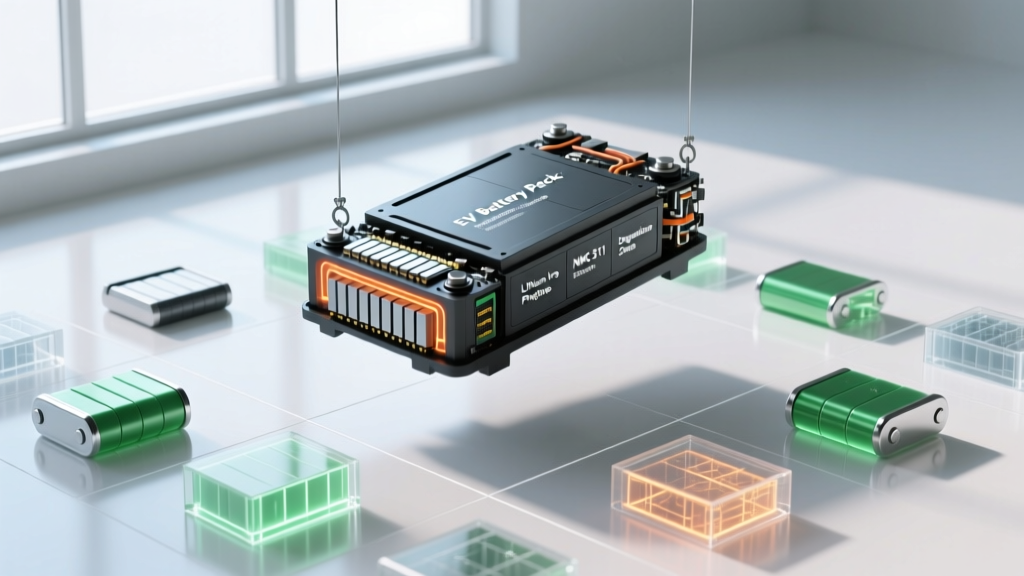
- The high-voltage traction battery (typically 50–110+ kWh, 400V or 800V architecture) that actually moves the car. It charges only from an external power source — a wall outlet, Level 2 charger, or DC fast charger.
- The 12V auxiliary battery (lead-acid or increasingly lithium-ion) that powers lights, infotainment, door locks, and the computers that close the contactors to engage the traction pack.
There is no alternator. There is no "idling." When an EV is parked and powered off, nothing is generating electricity. When it's powered on and stationary, the DC-DC converter can maintain the 12V battery from the traction pack — but that's the opposite of what drivers usually mean. It drains the big battery slightly to sustain the small one.
This guide uses the question as a doorway into the topic EV owners actually need to understand: how the traction battery charges, how long it lasts, what degrades it, and what it costs to replace.
How an EV Battery Actually Charges (And Why Idling Is Irrelevant)
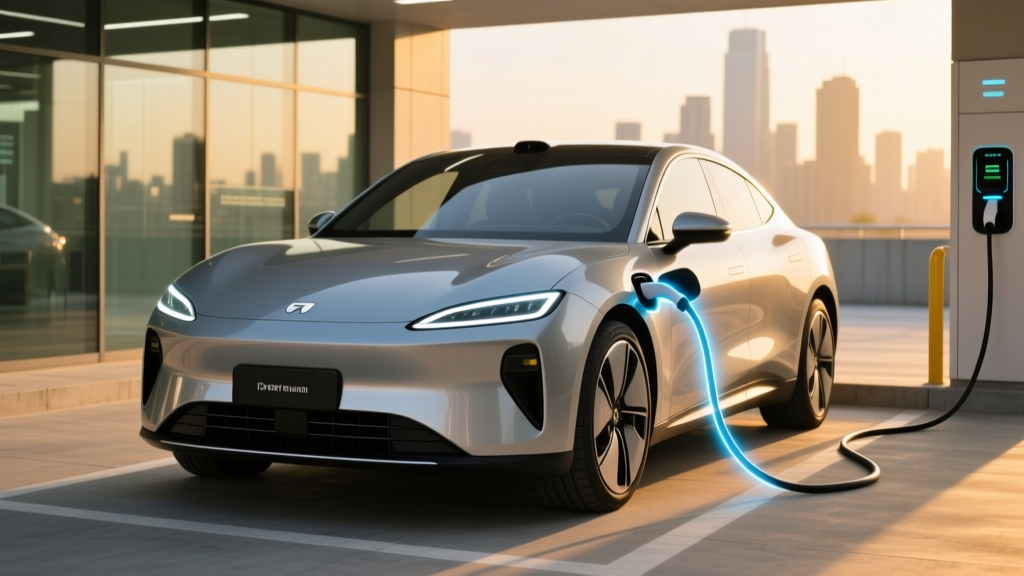
EV traction batteries charge through one of three pathways, none of which involve "idling":
| Level | Voltage / Current | Power (kW) | Typical Miles Added per Hour | Use Case |
|---|---|---|---|---|
| Level 1 (120V AC) | 120V / 12A | ~1.4 kW | 3–5 mi/hr | Emergency / overnight trickle |
| Level 2 (240V AC) | 240V / 32–48A | 7.7–11.5 kW | 25–45 mi/hr | Home, workplace, destination |
| DC Fast Charge | 400–800V DC | 50–350 kW peak | 150–1,000+ mi/hr (peak) | Road trips, highway corridors |
There is also regenerative braking, which recovers kinetic energy during deceleration and feeds it back into the pack. On a long downhill, regen can add a meaningful amount of range — but it's not "idling," and it requires motion.
For the 12V auxiliary battery specifically: modern EVs use a DC-DC converter that tops it up whenever the car is "on" (ready to drive, not merely accessory mode) or while charging. Tesla eliminated the 12V lead-acid battery entirely in newer Model 3 and Model Y vehicles, replacing it with a low-voltage lithium-ion pack integrated into the high-voltage system — meaning there's no separate 12V to worry about.
LFP vs NMC: Which Chemistry Is in Your EV?
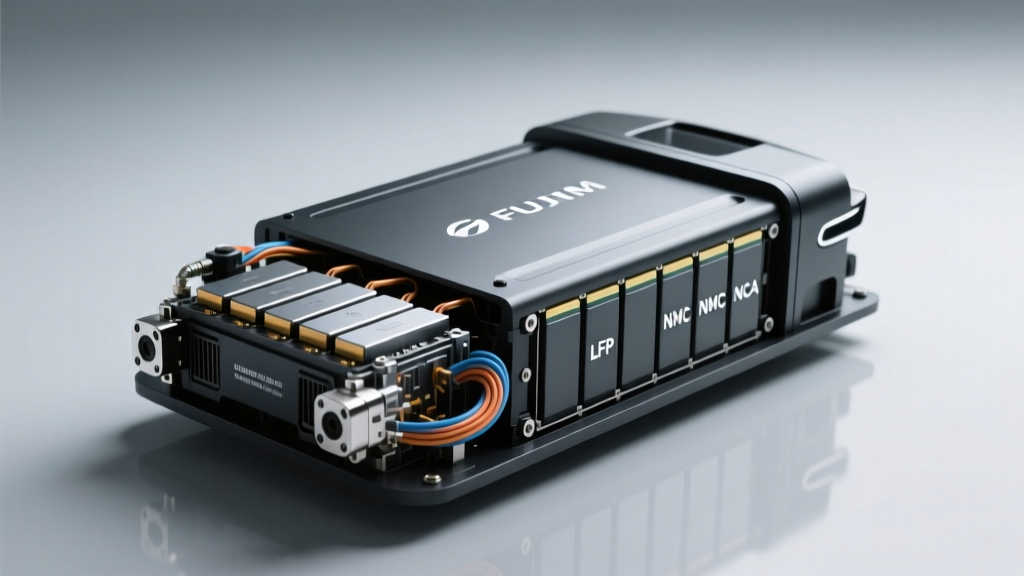
The two dominant lithium-ion chemistries in passenger EVs today are NMC/NCA (nickel-manganese-cobalt or nickel-cobalt-aluminum) and LFP (lithium iron phosphate). The chemistry choice drives range, longevity, cold-weather behavior, and price.
| Attribute | NMC / NCA | LFP |
|---|---|---|
| Energy density | Higher (~250–300 Wh/kg cell) | Lower (~160–200 Wh/kg cell) |
| Typical cycle life | 1,000–2,000 cycles | 3,000–5,000+ cycles |
| Recommended daily SoC | 80% (charge to 100% for trips) | 100% OK — manufacturers recommend it |
| Cold-weather performance | Better low-temp power & charge acceptance | Weaker below freezing; preconditioning critical |
| Cost per kWh | Higher | Lower (no cobalt, less nickel) |
| Thermal stability | Good, needs active management | Excellent, inherently more stable |
| Common in (2026 models) | Tesla Long Range, Hyundai Ioniq 5, Ford Mustang Mach-E Extended Range, Rivian | Tesla Model 3/Y RWD, base Ford Mach-E, BYD (non-US) |
Which is better? Neither, universally. NMC/NCA wins on range-per-kilogram and cold-weather fast charging — the reason long-range and performance trims still use it. LFP wins on cycle life, cost, and calendar longevity, which is why it dominates standard-range trims and fleet applications. If you plan to keep a car 10+ years and charge daily at home, LFP is often the more forgiving chemistry. If you live in Minnesota and road-trip in January, NMC will treat you better.
How Long Do EV Batteries Last? Real Degradation Data
The short answer: longer than most buyers assume. Modern liquid-cooled packs routinely retain 85–92% of original capacity after 100,000 miles and 6–8 years. Catastrophic failure is rare; gradual capacity loss is the norm.
Concrete data points from fleet and owner studies:
- Tesla fleet data (published in Tesla's 2023 Impact Report): Model 3/Y packs showed roughly ~12% degradation at 200,000 miles, with most of the loss in the first 20,000 miles and a slow linear decline afterward.
- Recurrent Auto's 2024 analysis of ~15,000 vehicles across brands found median range retention of ~92% at 3 years and ~87% at 6 years, with LFP packs trending flatter than NMC.
- Nissan LEAF (air-cooled, earlier generations) is the cautionary tale: passive cooling accelerated degradation, with some 2011–2017 packs losing 20–30% capacity within 5–6 years in hot climates. Modern liquid-cooled packs have largely solved this.
A useful rule of thumb: plan for roughly 1–2% capacity loss per year after the initial break-in, with variance driven by climate, charging habits, and chemistry. A 300-mile EPA car driven 12,000 miles/year is likely to still show ~260–275 miles of range at year 8.
What the Battery Warranty Actually Covers
Federal law (via EPA/CARB-influenced standards) effectively mandates that manufacturers warrant the high-voltage battery for at least 8 years / 100,000 miles. California-emissions states extend that to 10 years / 150,000 miles. Most mainstream brands match or exceed the floor.
| Manufacturer | Battery Warranty | Capacity Retention Threshold |
|---|---|---|
| Tesla (Model 3/Y) | 8 yr / 120,000 mi (Long Range) | 70% of original capacity |
| Hyundai / Kia | 8 yr / 100,000 mi (10/100k in CARB states) | 70% |
| Ford (Mach-E, F-150 Lightning) | 8 yr / 100,000 mi | 70% |
| GM (Ultium-based) | 8 yr / 100,000 mi | 70% |
| Rivian | 8 yr / 175,000 mi | 70% |
| Volkswagen (ID.4) | 8 yr / 100,000 mi | 70% |
Key fine print:
- The warranty triggers on capacity falling below the threshold (usually 70%), not on any degradation at all. A pack at 72% SoH at 95,000 miles is out of luck.
- Warranty replacement is typically with a remanufactured or refurbished pack of equivalent capacity, not necessarily a brand-new one.
- Damage from accidents, flooding, improper charging equipment, or unauthorized modifications is excluded.
- The 12V auxiliary battery is covered under the standard bumper-to-bumper warranty (typically 3 yr / 36,000 mi), not the 8-year HV warranty. Don't conflate the two.
How Much Does an EV Battery Replacement Cost?
Out-of-warranty HV battery replacement is genuinely expensive — which is why fear-mongering headlines focus on it. The honest context: most EV batteries outlive the economic life of the vehicle, and replacements are rare before 150,000+ miles. The more common cost event is a 12V auxiliary battery swap (~$200–$400), which mirrors ICE ownership.
| Vehicle / Pack Size | Approx. Pack Capacity | Out-of-Warranty Replacement Range |
|---|---|---|
| Tesla Model 3 RWD (LFP) | ~60 kWh | $10,000 – $13,000 |
| Tesla Model Y Long Range | ~75–82 kWh | $13,000 – $18,000 |
| Hyundai Ioniq 5 / Kia EV6 | ~77.4 kWh | $14,000 – $20,000 |
| Ford F-150 Lightning Extended | ~131 kWh | $20,000 – $30,000+ |
| GMC Hummer EV / Silverado EV | ~200+ kWh | $30,000 – $45,000 |
| Nissan LEAF (older, 40/62 kWh) | 40–62 kWh | $6,500 – $10,000 |
Prices include the pack and labor; module-level repair (replacing only degraded modules within the pack) is increasingly offered by independent EV shops for $3,000–$7,000 on supported models, a meaningful alternative to a full pack swap.
When is replacement typically needed? In practice, almost always after a major impact or coolant intrusion — not from normal aging. Packs that degrade to 70% SoH are still perfectly drivable; they just have less range.
Factors That Actually Shorten Battery Life
Not all miles are equal. Six habits and conditions drive disproportionate degradation:
- Chronic DC fast charging at high power. Frequent 150–350 kW sessions generate internal heat and lithium-plating risk. Occasional road-trip DCFC is fine; daily reliance is not.
- Sitting at 100% SoC for days. High voltage accelerates electrolyte breakdown, especially in heat. For NMC/NCA, charge to 80% daily and 100% only when departing on a trip.
- Deep discharges to 0%. Storing a pack near empty invites copper-shunt formation. Keep storage SoC around 50%.
- Extreme ambient heat without preconditioning. Hot-soaked packs (Phoenix, Las Vegas summers) degrade faster; liquid cooling helps but isn't magic.
- Cold DC fast charging without preconditioning. Charging a sub-freezing pack forces the BMS to limit current severely — or, in older designs, risks lithium plating.
- High-mileage, high-C-rate use. Track days, constant towing near max capacity, and aggressive regen on a hot pack all stress cells.
Conversely, the longest-lived packs share a profile: home Level 2 charging, 20–80% SoC window for NMC (or 100% for LFP), preconditioning before DCFC, and moderate climates or garage parking.
How to Check and Maximize Battery Health (SoH)
State of Health (SoH) is the percentage of original usable capacity a pack still holds. Most owners never need to obsess over it, but monitoring is easy:
- In-car displays. Tesla shows a "Battery Health" percentage in the service menu on recent software. Hyundai/Kia expose SoH via the infotainment diagnostics screen or via the dealer scan tool.
- OBD-II dongles + apps. Tools like OBDeleven, Leaf Spy (for Nissan), or Scan My Tesla read BMS-reported SoH, cell voltages, and pack imbalance.
- Dealer health check. Ask for a "traction battery health report" during service visits. Most brands will run it free under warranty.
- Third-party services. Companies like Recurrent Auto provide a free SoH score by connecting to your telematics, useful when buying used.
A practical care checklist:
- Default daily charge limit to 80% (NMC/NCA) or 100% (LFP).
- Enable scheduled departure + preconditioning when plugged in.
- Limit DCFC to road trips; favor Level 2 at home.
- Avoid parking at 100% or near 0% for more than 24 hours.
- In cold climates, always precondition before charging.
- Keep the car plugged in during extreme heat waves so the thermal management system can run off wall power, not the pack.
What's Next: Solid-State, Silicon Anodes, and Realistic Timelines
The next generational leaps in battery tech are well-documented but not yet in driveways:
- Silicon-anode cells (higher capacity than graphite) are entering production in limited applications — startups like Sila Nanotechnologies and Group14 are supplying automakers, and you'll see them in select 2026–2028 models, primarily as a range bump rather than a cost cut.
- Solid-state batteries (replacing liquid electrolyte with a solid ceramic or polymer) promise higher energy density and faster charging. Toyota, Nissan, and Samsung SDI have announced production targets for 2027–2030, but volumes will be small and initial applications will likely be premium trims only.
- Sodium-ion packs (cheaper, cobalt/nickel-free, lower energy density) are shipping in Chinese-market vehicles from BYD and CATL and may appear in US-market city cars or PHEVs later this decade.
None of these are buyable at mainstream US dealerships today. If you're shopping in 2026, you're choosing between mature NMC/NCA and LFP — and both are excellent.
Frequently Asked Questions
So can I idle an EV to charge anything?
Not in any meaningful way. An EV doesn't idle; it's either off or "on" drawing from the traction pack. The only thing that happens when it's on and stationary is that the DC-DC converter maintains the 12V battery at the expense of the HV pack — the opposite of what most drivers mean by "charging."
How long does it actually take to charge an EV battery?
Depends entirely on the pathway. A 75 kWh pack on a 32A Level 2 home charger (7.7 kW) takes roughly 10 hours from 10% to 100%. On a 250 kW DC fast charger, 10–80% takes ~18–25 minutes depending on chemistry and pack temperature, with a steep taper above 80%.
Should I worry about my EV battery dying like a phone battery?
No. Phone batteries endure 2–3 charge cycles daily, often sit at 100%, and run hot. An EV battery cycles roughly once every 2–4 days, sits at moderate SoC, and is liquid-cooled. The physics of degradation are identical, but the usage profile is dramatically easier on the cells.
What voids an EV battery warranty?
Typical exclusions: accident damage, flood/submersion, unauthorized modifications (aftermarket battery heaters, non-approved chargers causing surges), use as a stationary power source beyond the manufacturer's V2H/V2L specification, and racing/track use. Read your owner's manual's warranty section — it's explicit.
Is an EV battery replacement more expensive than an ICE engine or transmission rebuild?
Comparable, sometimes less. A modern ICE transmission rebuild runs $3,500–$7,000; an engine replacement $5,000–$12,000. A module-level EV pack repair is in the same band; a full pack swap is higher but, again, rarely needed before the car's economic end of life.
Does the §30D federal tax credit apply to a battery replacement?
No. The IRS §30D credit applies to the purchase of a new or eligible used clean vehicle, not to aftermarket parts or repairs. A battery replacement is a maintenance expense, not a vehicle purchase. Consult a tax professional for your specific situation.
Sources referenced: IRS §30D clean vehicle credits, fueleconomy.gov (EPA), manufacturer warranty documentation (Tesla, Hyundai, Ford, GM, Rivian, VW).