Why Hyundai's Solid-State Push Matters — and What You Actually Drive Today
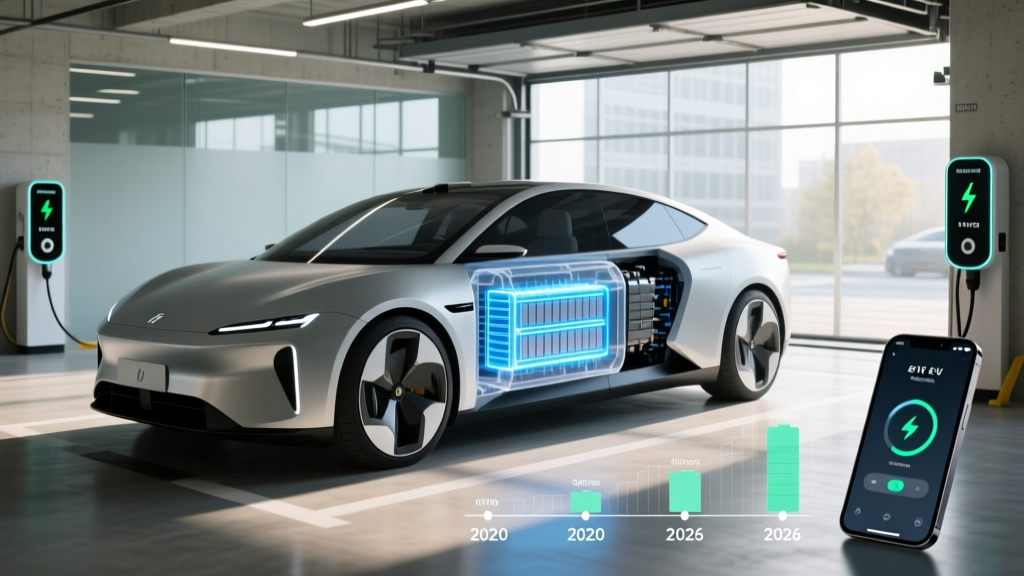
Headlines in late 2024 and 2025 positioned Hyundai Motor Group as a potential Hyundai solid-state battery first mover after the company announced prototype cells and a pilot production line in partnership with Samsung SDI. The promise is tantalizing: solid-state batteries could deliver 500+ miles of range, charge in under 10 minutes, and eliminate fire risk by replacing flammable liquid electrolyte with a solid ceramic or sulfide conductor.
But as of early 2026, no production Hyundai, Kia, or Genesis vehicle ships with a solid-state pack. The Ioniq 5, Ioniq 6, EV6, and GV60 all use conventional lithium-ion cells with liquid electrolyte — specifically nickel-manganese-cobalt (NMC) chemistry. Hyundai's own timeline, reiterated at CES 2025, targets limited solid-state production in 2027–2028, with volume availability not expected until the 2030s.
That gap between announcement and showroom floor is exactly why every EV buyer and owner needs a firm grasp on the battery technology that actually powers their car today. This guide covers the chemistry in current Hyundai/Kia EVs, real-world degradation data, what warranties actually cover, replacement costs, and how to monitor and maximize the pack you already own.
Current EV Battery Chemistry: LFP vs NMC Explained
Every EV battery on the road in 2026 uses one of two dominant cathode chemistries. Understanding the difference is the single most important thing you can know about your pack's longevity, range, and cost profile.
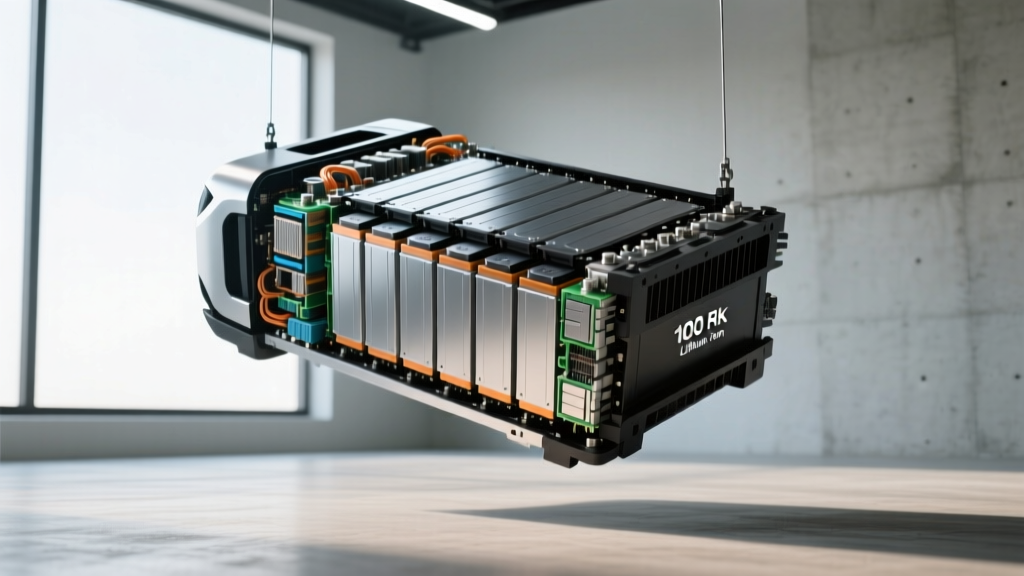
NMC (Nickel-Manganese-Cobalt) and its close cousin NCA (Nickel-Cobalt-Aluminum) dominate the performance and long-range segment. Hyundai's E-GMP platform vehicles — the Ioniq 5, Ioniq 6, Kia EV6, and Genesis GV60 — all use NMC packs supplied primarily by SK On and LG Energy Solution. NMC delivers higher energy density (more kWh in a smaller, lighter package), which translates directly to longer EPA range per kilogram of battery.
LFP (Lithium Iron Phosphate) has surged in popularity thanks to Tesla's Standard Range Model 3 and Model Y, the base Ford Mustang Mach-E Select, and several Chinese-market imports. LFP sacrifices roughly 15–20% energy density compared to NMC but gains dramatically on cycle life, thermal stability, and raw-material cost. LFP contains zero cobalt or nickel, insulating it from the supply-chain price spikes that have plagued NMC.
| Attribute | LFP (Lithium Iron Phosphate) | NMC / NCA |
|---|---|---|
| Energy Density | ~160–180 Wh/kg (cell level) | ~230–280 Wh/kg (cell level) |
| Typical Cycle Life | 3,000–5,000+ full cycles | 1,000–2,000 full cycles |
| Cold-Weather Performance | Greater range loss below 32°F; slower charge acceptance | Better low-temp conductivity; preconditioning helps significantly |
| Thermal Stability | Excellent — no thermal runaway below ~270°C | Good with active cooling; thermal runaway onset ~210°C |
| Cost per kWh (2025–2026) | ~$80–100/kWh (cell level) | ~$110–140/kWh (cell level) |
| Recommended Daily Charge Limit | 100% SoC is fine; periodic full charges help BMS calibration | 80% SoC for daily use; 100% only for trips |
| State-of-Charge Estimation | Flat voltage curve makes SoC harder to estimate; needs periodic 100% calibration | Steeper voltage curve; SoC estimation more linear |
| Used In (2026 Models) | Tesla Model 3/Y RWD, Ford Mach-E Select, BYD models | Hyundai Ioniq 5/6, Kia EV6/EV9, Genesis GV60, Tesla Long Range, Rivian, BMW iX |
Which is better? It depends on your use case. If you prioritize maximum range in a lighter package and regularly drive in cold climates, NMC is the stronger choice — and it's what Hyundai currently offers. If you want maximum cycle life, lower replacement cost risk, and can charge to 100% daily without worry, LFP is compelling. Hyundai has not announced an LFP variant for the U.S. market as of 2026, though industry analysts expect one for a future entry-level Ioniq model.
How Long Do EV Batteries Actually Last? Degradation Data
The fear that an EV battery will "die" at 100,000 miles is not supported by the data. Modern liquid-cooled packs in Hyundai/Kia E-GMP vehicles are engineered for gradual, predictable capacity loss — not sudden failure.
Degradation is measured as the percentage of original capacity lost over time. A battery at 90% State of Health (SoH) has lost 10% of its original capacity, meaning a 77.4 kWh pack (as in the Ioniq 5 Long Range) now holds approximately 69.7 kWh when fully charged.
Based on aggregated fleet data from sources including Recurrent Auto and owner-reported databases, here is what typical NMC degradation looks like in liquid-cooled Hyundai/Kia packs:
| Time / Mileage | Typical SoH (State of Health) | Capacity Loss | Notes |
|---|---|---|---|
| Year 1 / ~12,000 mi | 95–97% | 3–5% | Initial "formation" loss; steepest part of the curve |
| Year 3 / ~36,000 mi | 91–94% | 6–9% | Curve flattens significantly after year 2 |
| Year 5 / ~60,000 mi | 88–92% | 8–12% | Most owners report minimal perceptible range change |
| Year 8 / ~100,000 mi | 82–88% | 12–18% | Within warranty threshold; still very usable |
| Year 10+ / ~150,000 mi | 78–85% | 15–22% | Projected based on current fleet trends |
Several factors make Hyundai/Kia packs degrade more slowly than early-generation EVs:
- Active liquid thermal management: The E-GMP platform circulates coolant through plates beneath the cells, keeping them in the 25–40°C optimal range during driving and charging.
- Buffer zones: Hyundai locks out roughly 2–4 kWh at the top and bottom of the pack that the driver can never access. This "buffer" prevents the cells from experiencing the stress of true 0% or true 100% SoC, even when the dashboard reads those numbers.
- Charge-rate management: The battery management system (BMS) tapers DC fast-charge power as cells warm and as SoC rises, protecting against lithium plating.
Key takeaway: The vast majority of Hyundai/Kia EV batteries will retain 80%+ capacity well past 100,000 miles. Most packs will outlast the vehicle's body, interior, and suspension components.
What the Hyundai/Kia Battery Warranty Actually Covers
Hyundai and Kia provide identical high-voltage battery warranty terms in the United States, and they rank among the strongest in the industry:
| Coverage Item | Term |
|---|---|
| Duration | 10 years / 100,000 miles (whichever comes first) |
| Capacity Retention Threshold | 70% of original capacity (some sources cite 65% for certain model years — confirm with your dealer) |
| What Triggers a Claim | Measured SoH falls below the threshold during the warranty period |
| Remedy | Repair, module replacement, or full pack replacement at Hyundai/Kia's discretion |
| Transferability | Fully transferable to subsequent owners (a strong resale value signal) |
| Exclusions | Damage from accidents, flooding, unauthorized modifications, or use outside normal parameters |
The 10-year/100,000-mile warranty is a critical piece of the ownership equation. Even if you drive 15,000 miles per year, you are covered for nearly seven years. And given that real-world degradation data shows most packs holding 82–88% SoH at the 100,000-mile mark, the likelihood of a warranty claim is low for typical owners.
For comparison, Tesla offers 8 years / 100,000–120,000 miles (depending on model) with a 70% threshold. Ford offers 8 years / 100,000 miles at 70%. Hyundai/Kia's 10-year term is a genuine advantage for long-term ownership peace of mind.
EV Battery Replacement Cost: What to Expect (and When)
This is the question that generates the most anxiety — and the most misinformation. Let's ground it in actual numbers.
| Vehicle / Platform | Pack Size (Usable) | Full Pack Replacement (Parts + Labor) | Module-Level Repair |
|---|---|---|---|
| Hyundai Ioniq 5 / Kia EV6 (E-GMP) | 58 kWh (Standard) / 77.4 kWh (Long Range) | $12,000–$18,000 (LR pack) | $2,000–$5,000 per module |
| Hyundai Ioniq 6 | 77.4 kWh (Long Range) | $13,000–$19,000 | $2,000–$5,000 per module |
| Kia EV9 | 100 kWh (Long Range) | $16,000–$24,000 | $3,000–$6,000 per module |
| Genesis GV60 | 77.4 kWh | $14,000–$20,000 | $2,500–$5,500 per module |
When is replacement typically needed? In practice, full pack replacement due to degradation alone is extremely rare in modern liquid-cooled EVs. The cases where replacement occurs usually involve:
- Physical damage from a collision or ground strike (covered by insurance, not the battery warranty)
- Manufacturing defect in a small number of cells (covered under warranty)
- Extreme neglect — e.g., repeatedly DC fast-charging to 100% in extreme heat without preconditioning over many years
More commonly, if a single module degrades faster than the rest, a dealer can replace just that module rather than the entire pack, at a fraction of the cost. Hyundai's modular E-GMP pack design supports this approach.
Industry-wide, battery cell prices have continued to fall. According to BloombergNEF's 2025 survey, average lithium-ion pack prices dropped to approximately $115/kWh — down from $140/kWh in 2023. This means replacement costs will continue to decline over the life of any vehicle purchased today.
Factors That Affect Battery Life — and How to Maximize It
While modern BMS systems do a lot of protective work automatically, your habits still influence long-term degradation. Here is a practical care framework based on current battery science:
Battery Care Checklist for Hyundai/Kia E-GMP Owners
- Daily charge limit: Set to 80% for NMC packs (use the car's built-in charge-limit setting). Charge to 100% only before long trips.
- Avoid prolonged low SoC: Don't leave the car sitting below 10% SoC for days. If storing for a week+, leave it at 50–60%.
- Minimize DC fast charging when possible: Level 2 home charging (7–11 kW) is gentler on cells than repeated 240 kW DC sessions. Use DCFC for road trips, not as your daily routine.
- Precondition before fast charging: Use the car's navigation-based preconditioning (set a Supercharger/DCFC as your destination). This brings cells to optimal temperature (~35°C) before high-power charging begins, reducing lithium plating risk.
- Extreme heat: Park in shade or a garage when possible. Sustained cell temperatures above 45°C accelerate degradation. The E-GMP's active cooling handles this well during driving, but a parked car in Phoenix summer sun soaks heat for hours.
- Extreme cold: Plug in when possible, even at Level 1 (120V). The car's battery heater will maintain a healthier temperature, and you'll have more range available because energy isn't spent warming the pack on departure.
- Regen braking settings: Using moderate regen levels (Level 2 or 3 on Hyundai's paddle shifters) is fine for battery health. Maximum regen doesn't harm the battery but isn't necessary for longevity.
The single highest-impact habit is the charge-limit discipline. Research from the National Renewable Energy Laboratory (NREL) consistently shows that keeping NMC cells between 20–80% SoC for daily use roughly doubles cycle life compared to 0–100% cycling.
How to Monitor Your Battery's State of Health
Hyundai and Kia provide several ways to check your pack's condition:
1. Dealer diagnostic report: Any Hyundai or Kia dealer can pull a full battery health report using the KDS (Kia Diagnostic System) or Hyundai GDS tool. This shows individual cell voltages, module balance, and overall SoH percentage. Request this at every service visit — it's typically free and takes 10 minutes.
2. In-car display (limited): The Ioniq 5 and EV6 show a basic battery health indicator in the settings menu under EV → Battery. This gives a coarse "Good / Normal / Check" readout rather than a precise percentage, but it's useful for a quick check.
3. Third-party OBD-II tools: Devices like the OBDLink MX+ paired with apps such as Car Scanner ELM OBD2 or Leaf Spy (adapted for Hyundai/Kia protocols) can read detailed SoH data, cell voltage deltas, and cumulative charge energy. These cost $50–$120 for the hardware and are popular among enthusiast owners.
4. Charging data analysis: If you use a smart Level 2 charger (e.g., ChargePoint Home Flex, Emporia Vue), compare the kWh delivered during a full charge to your pack's rated capacity. If your 77.4 kWh pack consistently accepts only 66 kWh from 5% to 100% (accounting for ~5% charging losses), that suggests roughly 87–88% SoH. This is an approximation, not a substitute for a dealer diagnostic.
Solid-State and Silicon-Anode Batteries: The Realistic Timeline
Hyundai Motor Group's solid-state battery ambitions are genuine and well-funded. The company operates a dedicated Solid-State Battery Development Center in Uiwang, South Korea, and has invested in partnerships with Samsung SDI and Solid Power. At the 2024 "CEO Investor Day," Hyundai projected a pilot production line by 2025–2026 and limited vehicle deployment by 2027–2028.
However, translating lab results to mass production has proven enormously difficult across the entire industry. Toyota, the other major solid-state proponent, has repeatedly pushed its timeline from 2025 to 2027–2028. QuantumScape, backed by Volkswagen, has delivered prototype cells to OEM partners but has not announced a specific production vehicle.
What solid-state could deliver (if manufacturing challenges are solved):
- Energy density of 400–500 Wh/kg (roughly 2× current NMC), enabling 500+ mile ranges in mid-size sedans
- 10-minute 10–80% charging without degradation concerns
- Elimination of flammable liquid electrolyte, dramatically reducing fire risk
- Wider operating temperature range, reducing cold-weather range loss
Silicon-anode batteries represent a nearer-term incremental improvement. By replacing graphite anodes with silicon-dominant composites, cells can achieve 10–20% higher energy density. Companies like Sila Nanotechnologies and Group14 are supplying early production cells, and these may appear in premium EVs by 2027. Hyundai has not announced a specific silicon-anode deployment but is actively evaluating the technology.
Bottom line for buyers: If you need an EV in 2026, do not wait for solid-state. The technology is real but is 2–5 years from volume production, and early vehicles will carry a significant price premium. Today's NMC packs with proper care will serve you well for 10–15 years.
Frequently Asked Questions
How long do Hyundai EV batteries last in years and miles?
Based on current fleet data, Hyundai/Kia E-GMP NMC packs are projected to retain 80–88% capacity at 100,000 miles (roughly 8 years at average driving). With proper care, most packs will provide usable service for 150,000–200,000+ miles before capacity loss becomes a meaningful inconvenience. Full failure is extremely rare.
How much does it cost to replace a Hyundai Ioniq 5 battery?
A full Long Range (77.4 kWh) pack replacement runs approximately $12,000–$18,000 including labor at 2026 pricing. However, full replacement due to degradation is exceedingly rare. Module-level repairs (replacing individual degraded sections) cost $2,000–$5,000. The 10-year/100,000-mile warranty covers degradation below the capacity threshold at no cost to the owner.
What does the Hyundai EV battery warranty cover?
Hyundai covers the high-voltage traction battery for 10 years or 100,000 miles against capacity loss below approximately 70% of original capacity. The warranty is fully transferable to subsequent owners. It does not cover damage from accidents, flooding, or unauthorized modifications. Confirm exact threshold terms with your dealer, as they can vary by model year.
Should I charge my Hyundai Ioniq 5 to 100% every day?
No. For NMC chemistry (which the Ioniq 5 uses), Hyundai recommends setting a daily charge limit of 80% to minimize degradation. Charge to 100% only when you need the full range for a trip. This is easily configured in the car's charging settings menu. If you had an LFP battery (not currently offered by Hyundai in the U.S.), 100% daily charging would be recommended.
Does frequent DC fast charging damage the battery?
Occasional DC fast charging (road trips, a few times per month) has minimal impact on modern liquid-cooled packs like the E-GMP platform. However, making DCFC your daily charging routine — especially in hot climates — does accelerate degradation compared to Level 2 home charging. The biggest risk is repeated high-power charging without preconditioning, which can cause lithium plating on the anode. Always use navigation-based preconditioning when heading to a DC fast charger.
Is Hyundai really the first mover on solid-state batteries?
Hyundai is among the most aggressive OEMs pursuing solid-state technology, alongside Toyota and BMW (partnered with Solid Power). However, "first mover" status depends on who reaches volume production first. As of 2026, no automaker has delivered a solid-state EV to consumers. Hyundai's 2027–2028 target is ambitious but unproven. Toyota has a similar timeline. The race is ongoing, and production readiness — not announcements — will determine the actual first mover.