Hydrogen Cell Battery vs Lithium-Ion: Sorting Fact from Future-Tech Hype
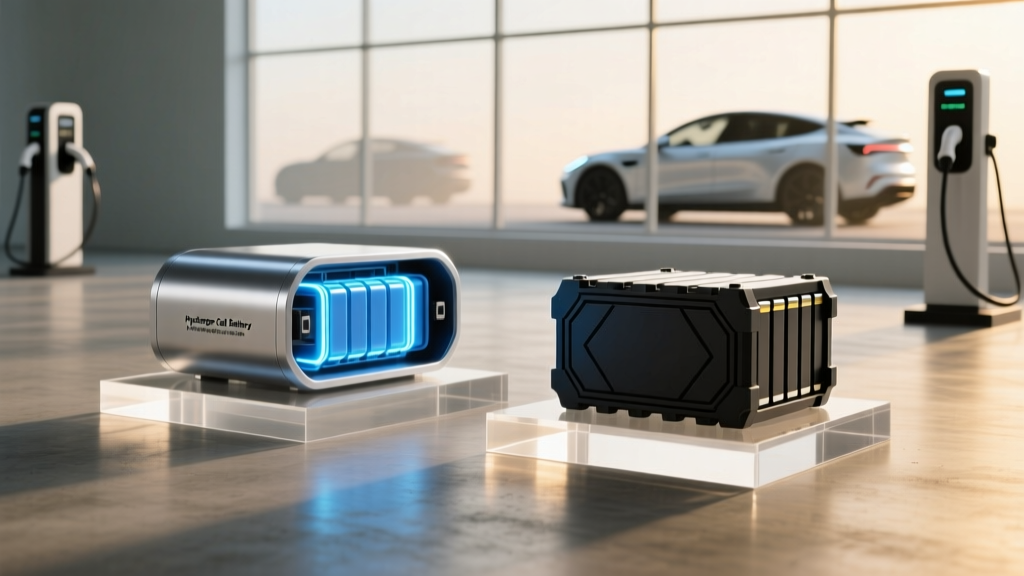
If you've searched for "hydrogen cell battery" while researching your next electric vehicle, you're not alone. The term gets tangled across three very different technologies: hydrogen fuel cells (used in vehicles like the Toyota Mirai and Hyundai Nexo), nickel-metal hydride (NiMH) batteries found in older hybrids like the early Toyota Prius, and the lithium-ion battery packs that power virtually every modern EV on sale in 2026. Each has distinct chemistry, cost structures, degradation profiles, and ownership implications. This guide untangles them — then focuses on what actually matters for today's EV buyer: lithium-ion pack longevity, real-world degradation data, warranty coverage, replacement economics, and the emerging technologies that will eventually succeed current chemistries.
The short version? If you're buying a battery-electric vehicle (BEV) in 2026, you're buying a lithium-ion pack — either NMC/NCA (nickel manganese cobalt / nickel cobalt aluminum) or LFP (lithium iron phosphate). Hydrogen fuel cells remain a niche for specific use cases, and NiMH is effectively legacy tech for new-vehicle buyers. Let's get into the numbers.
LFP vs NMC/NCA: The Chemistry Decision That Shapes Your Ownership
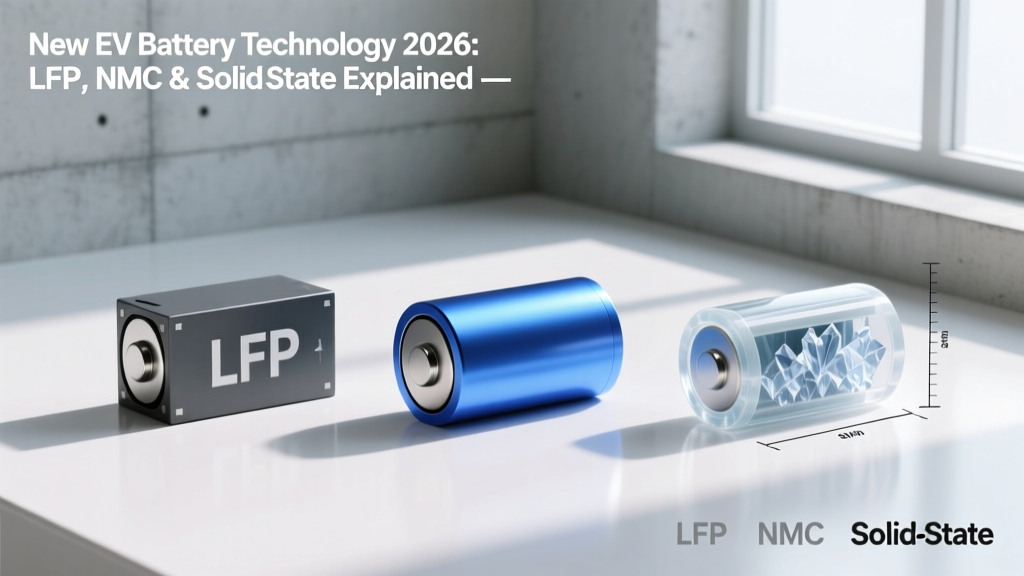
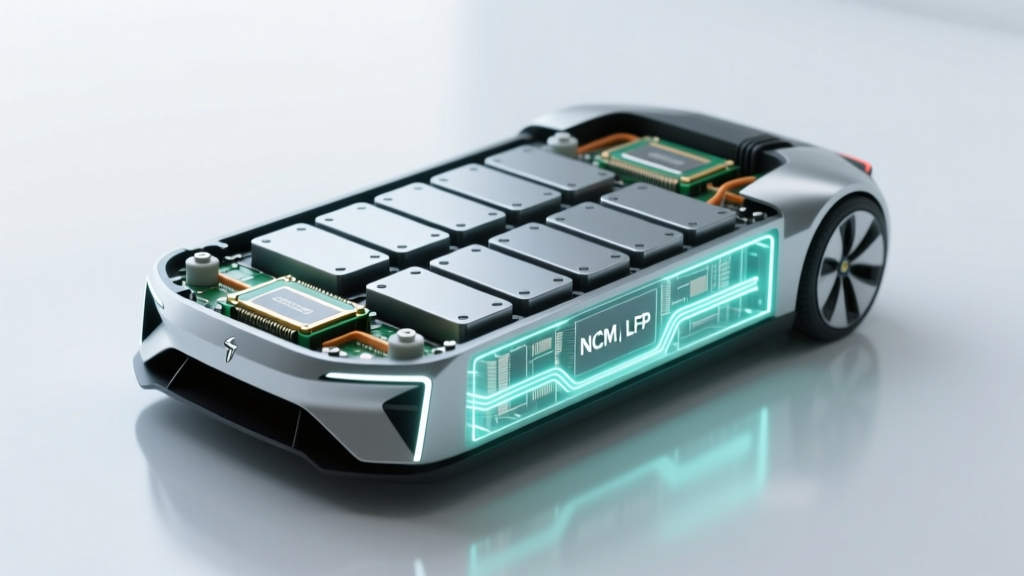
Every modern BEV sold in the U.S. uses one of two dominant lithium-ion cathode chemistries. The choice affects range, longevity, cold-weather behavior, charging habits, and ultimately total cost of ownership. Here's how they stack up:
| Attribute | LFP (Lithium Iron Phosphate) | NMC / NCA (Nickel-Based) |
|---|---|---|
| Energy Density (cell-level) | ~160–180 Wh/kg | ~230–300 Wh/kg |
| Typical Cycle Life | 3,000–5,000+ cycles to 80% SoH | 1,000–2,000 cycles to 80% SoH |
| Cold-Weather Performance | Reduced; slower charge acceptance below 32°F | Better low-temp discharge; preconditioning helps |
| Cost per kWh (pack-level, 2026) | ~$90–$110 | ~$120–$150 |
| Recommended Daily SoC | Can charge to 100% daily; BMS calibration benefits | 80% daily recommended; 100% for trips only |
| Thermal Stability | Excellent; higher runaway threshold (~270°C) | Good; requires active thermal management |
| Common Applications (2026) | Tesla Model 3/Y RWD, Ford Mustang Mach-E Select, base Rivian packs | Tesla Long Range, Hyundai Ioniq 5/6, BMW iX, Lucid Air, Porsche Taycan |
| Cobalt / Critical Mineral Concerns | Zero cobalt; lower supply-chain risk | Contains cobalt/nickel; sourcing scrutiny under §30D rules |
Which is better? Neither is universally superior — the answer depends on your driving pattern. If you mostly commute under 50 miles daily, have home Level 2 charging, and want maximum cycle life with minimal babysitting, LFP is the pragmatic pick. You can charge to 100% every night without accelerated degradation. If you need maximum range per charge (road trips, towing, cold-climate commuting), NMC/NCA's higher energy density gives you more miles in the same physical pack — but you'll want to manage state of charge more carefully.
How Long Do EV Batteries Actually Last? Real Degradation Data
The most persistent myth in EV ownership is that the traction battery will need a $20,000 replacement at 100,000 miles. The data tells a different story. According to long-term fleet analyses and manufacturer-reported figures, most modern lithium-ion packs lose between 8% and 15% of their original capacity over the first 150,000 miles — meaning a vehicle with a 300-mile EPA range might realistically deliver 255–276 miles when a decade old.
Here's what the degradation curve typically looks like, based on aggregated data from sources including Geotab's fleet study of 6,300+ EVs and manufacturer warranty claims:
| Age / Mileage | Average Capacity Retained | Notes |
|---|---|---|
| Year 1 / 15,000 mi | 95–98% | Initial "break-in" loss; steepest part of curve |
| Year 3 / 45,000 mi | 91–95% | Curve flattens significantly after year 1 |
| Year 5 / 75,000 mi | 88–93% | LFP typically outperforms NMC here by 2–4 points |
| Year 8 / 120,000 mi | 84–90% | Warranty threshold period; most packs still above 70% |
| Year 10 / 150,000 mi | 82–88% | Vehicle often retired or traded before pack failure |
| Year 15 / 200,000+ mi | 75–85% | Outlier territory; taxis, high-mile commuters |
Critical nuance: Degradation is non-linear. Most loss occurs in the first 12–24 months, then the curve flattens dramatically. A pack that retains 92% at year 3 is highly likely to retain 85%+ at year 8. Catastrophic failure (sudden, total capacity loss) is rare — well under 1% of packs in major manufacturer warranty databases, according to data cited by Consumer Reports.
What Does the Battery Warranty Actually Cover?
Federal law mandates a minimum 8-year / 100,000-mile warranty on EV traction batteries for emissions-related compliance, but most manufacturers exceed this baseline. The critical detail is the capacity retention threshold — the percentage of original capacity below which the manufacturer must replace or repair the pack.
| Manufacturer | Warranty Period | Capacity Threshold | Notes |
|---|---|---|---|
| Tesla (Model 3/Y LFP) | 8 yr / 100,000 mi | 70% | LFP packs; lowest threshold in lineup |
| Tesla (Long Range / Performance) | 8 yr / 120,000 mi | 70% | NMC/NCA packs; higher mileage coverage |
| Hyundai / Kia | 10 yr / 100,000 mi | 70% | Among longest coverage in market |
| Ford (Mach-E, F-150 Lightning) | 8 yr / 100,000 mi | 70% | Transferable to second owner |
| GM (Ultium-based) | 8 yr / 100,000 mi | 70% | Covers battery management system components |
| Rivian | 8 yr / 175,000 mi | 70% | Highest mileage threshold for consumer EVs |
| BMW | 8 yr / 100,000 mi | 70% | Includes thermal management system |
What's covered: Capacity loss below the stated threshold, manufacturing defects, cell imbalance beyond BMS correction, and thermal management system failures. What's typically excluded: Damage from collisions, flooding, improper charging equipment, unauthorized modifications, or cosmetic issues that don't affect function. Read your specific warranty booklet — language varies, and some manufacturers require documented maintenance (e.g., coolant flushes on liquid-cooled packs) to maintain coverage.
EV Battery Replacement Cost: What You'll Actually Pay (and When)
Here's where context matters enormously. Replacement cost figures that circulate online — $15,000, $20,000, even $30,000 — are technically accurate for specific scenarios but wildly misleading about probability. The vast majority of EV owners will never replace their traction battery. The vehicle will be sold, traded, or retired before the pack drops below usable capacity.
That said, if you're buying a used EV outside warranty, planning to keep a vehicle past 200,000 miles, or simply want to model worst-case total cost of ownership, here are 2026 replacement figures:
| Vehicle / Pack Size | Battery Cost (Parts) | Labor | Total Estimate |
|---|---|---|---|
| Tesla Model 3 RWD (~60 kWh LFP) | $7,000–$9,000 | $1,500–$2,500 | $8,500–$11,500 |
| Tesla Model Y LR (~82 kWh NMC) | $10,000–$13,000 | $1,500–$2,500 | $11,500–$15,500 |
| Hyundai Ioniq 5 (~77 kWh) | $9,500–$12,000 | $2,000–$3,000 | $11,500–$15,000 |
| Ford F-150 Lightning Ext. Range (~131 kWh) | $15,000–$20,000 | $2,500–$4,000 | $17,500–$24,000 |
| Chevrolet Bolt EV (~65 kWh) | $6,500–$8,500 | $1,500–$2,500 | $8,000–$11,000 |
| BMW iX xDrive50 (~111 kWh) | $14,000–$18,000 | $3,000–$4,500 | $17,000–$22,500 |
Two important trends are pushing these costs down: pack-level cell pricing has dropped roughly 14% year-over-year from 2023 to 2026 according to BloombergNEF data, and a growing third-party repair ecosystem now offers module-level replacement (swapping individual degraded cell groups rather than the entire pack) for 40–60% less than full-pack replacement. Not all vehicles support modular repair — unibody packs like Tesla's structural 4680 designs require full replacement — but modular architectures (Hyundai E-GMP, GM Ultium) increasingly allow targeted fixes.
Factors That Accelerate (or Preserve) Battery Life
Not all miles are equal when it comes to battery wear. A vehicle that's DC fast-charged daily in Phoenix will degrade faster than one that's Level 2 charged overnight in Portland. Here's what the data shows about the variables you can control:
Battery Care Checklist: Maximize Your Pack's Lifespan
- State of Charge habits: For NMC/NCA packs, keep daily SoC between 20–80%. Charge to 100% only when departing on a trip. LFP packs can (and should) be charged to 100% regularly — the BMS needs full-charge events to calibrate cell balancing.
- DC Fast Charging frequency: Occasional DCFC (1–2x per week for road trips) has minimal measurable impact. Daily DCFC reliance correlates with 2–4 additional percentage points of degradation over 100,000 miles vs. Level 2 charging, per Geotab fleet data. Use Level 2 as your primary charge source when possible.
- Extreme heat exposure: Sustained ambient temperatures above 95°F accelerate electrolyte decomposition. Park in shade or a garage when possible. Precondition your battery before fast-charging in hot weather — most modern BMS systems do this automatically when a charger is navigated to.
- Extreme cold charging: Charging a cold LFP pack below 20°F without preconditioning can cause lithium plating — permanent capacity loss. Always precondition (most vehicles do this when you set a departure time or navigate to a charger).
- Storage at high SoC: If storing an EV for 2+ weeks, set SoC to 50–60%. Sitting at 100% SoC for extended periods stresses cathode materials, especially in NMC packs.
- Regen braking settings: Aggressive regen in cold weather can push high charge current into a cold pack. Most modern BMS systems limit regen when the pack is cold, but easing off the accelerator manually in freezing conditions adds a margin of safety.
How to Check Your EV Battery's State of Health (SoH)
State of Health (SoH) is the percentage of original capacity your pack currently retains. Unlike a gas car's compression test, you can monitor SoH regularly — and you should, especially when buying used. Here are the primary methods available in 2026:
In-vehicle displays: Tesla provides a battery health percentage in the Service menu (Software > Battery Health on 2025+ models). Hyundai/Kia displays SoH through the dealer diagnostic tool but not directly in the infotainment screen — request a printout at your next service visit. BMW and Mercedes include SoH in their connected-app dashboards (BMW ConnectedDrive, me by Mercedes).
OBD-II diagnostic apps: Third-party tools like LeafSpy (Nissan Leaf), Scan My Tesla, and OBDeleven (VW/Audi) read the BMS-reported SoH directly through the OBD-II port. Accuracy varies — BMS estimates can drift 2–5% from true capacity without a full discharge-recharge calibration cycle — but they're directionally reliable.
Full-capacity test (most accurate):strong> Charge to 100%, drive to near-zero (10% or lower, safely), and measure the kWh consumed against the vehicle's displayed energy use. Divide measured kWh by the pack's original usable capacity. This is the gold standard but impractical for routine monitoring — do it annually or before a used-EV purchase.
Third-party certification: Services like Recurrent Auto (now part of Cox Automotive) provide battery health reports based on telematics data. Some dealerships now offer certified battery health reports for used EVs — request one before purchase.
Hydrogen Fuel Cells, NiMH, and Where They Fit in 2026
To directly address the search that may have brought you here: "hydrogen cell battery" typically conflates two distinct technologies that are largely irrelevant to mainstream EV buyers in 2026, but worth understanding.
Hydrogen fuel cell electric vehicles (FCEVs) like the Toyota Mirai and Hyundai Nexo generate electricity onboard by combining hydrogen gas with oxygen across a proton exchange membrane. The "battery" in an FCEV is actually a small lithium-ion buffer pack (typically 1–2 kWh) that handles regenerative braking and load-leveling — the fuel cell stack is the primary energy source. FCEVs face severe infrastructure limitations: as of early 2026, there are fewer than 60 public hydrogen stations in the U.S., almost entirely in California. Refueling costs $25–$35/kg (roughly equivalent to $7–$10/gallon gasoline on a per-mile basis), and hydrogen production remains predominantly fossil-fuel-derived. FCEVs make sense for heavy-duty trucking and fleet applications where fast refueling and high utilization justify infrastructure investment — not for consumer passenger vehicles in most markets.
Nickel-metal hydride (NiMH) batteries powered the first-generation Toyota Prius and Honda Insight. They're durable (many 20-year-old Prius packs still function), but their energy density (~60–80 Wh/kg) is roughly one-quarter that of modern NMC lithium-ion. No new BEV uses NiMH, and it persists only in some legacy HEV designs still in production. If you're buying any electrified vehicle in 2026, you're almost certainly getting lithium-ion.
What's Next: Solid-State, Silicon Anodes, and Realistic Timelines
Emerging battery technologies promise step-changes in energy density and charge speed, but the gap between laboratory announcements and production vehicles remains significant. Here's where the leading candidates stand as of 2026:
Solid-state batteries replace the liquid electrolyte with a solid ceramic, polymer, or sulfide material, enabling lithium-metal anodes that could double energy density (potentially 400–500 Wh/kg at cell level) and enable 10-minute fast charges. Toyota has announced solid-state production for 2027–2028 in limited models, and QuantumScape is supplying prototype cells to Volkswagen Group. However, manufacturing yield challenges, cost (currently 3–5x conventional lithium-ion per kWh), and cycle-life validation mean mass-market solid-state EVs are realistically a 2029–2031 proposition. Treat any vehicle announced with solid-state specs as preliminary until independent third-party testing confirms production-cell performance.
Silicon-dominant anodes (used in cells from Sila Nanotechnologies and Group14) replace graphite anodes with silicon composites, increasing capacity by 20–40% without changing cathode chemistry. These are already in limited production — the Mercedes G-Wagon electric (2025) uses Sila cells — and will proliferate through 2027–2028 model years. Expect incremental range gains rather than transformative leaps.
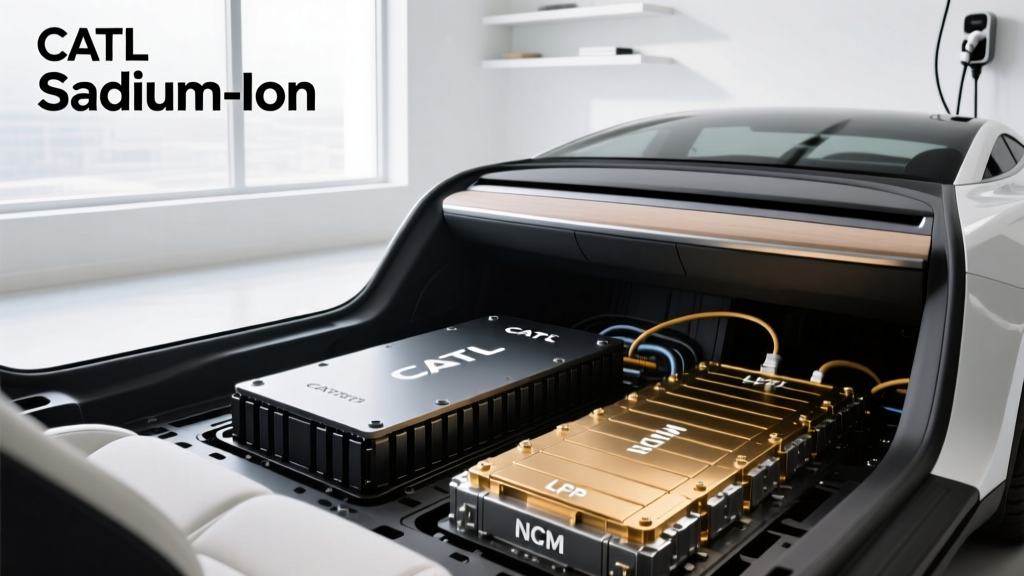
Sodium-ion batteries use abundant, inexpensive sodium instead of lithium. CATL and BYD have begun mass production for Chinese-market vehicles, with energy densities around 140–160 Wh/kg — competitive with LFP but at lower material cost. U.S. market availability depends on §30D tax credit sourcing rules and domestic manufacturing timelines, likely 2028+.
Frequently Asked Questions
How long do EV batteries last in years and miles?
Most modern lithium-ion EV batteries retain 82–90% of their original capacity at 10 years / 150,000 miles based on fleet data. Catastrophic failure is rare (well under 1%). Many packs outlast the vehicle they're installed in — the car is typically sold, traded, or retired for reasons unrelated to battery health before the pack reaches end-of-life (defined as 70% capacity).
How much does an EV battery cost to replace?
Full pack replacement ranges from approximately $8,000 (smaller packs like the Chevy Bolt's 65 kWh) to $24,000 (large packs like the F-150 Lightning's 131 kWh), including labor. However, most owners never need replacement. Module-level repair on modular architectures (Hyundai E-GMP, GM Ultium) can cost 40–60% less. Costs have been declining ~10–15% annually as cell pricing drops.
What does the battery warranty cover?
Typical terms are 8 years / 100,000 miles with a 70% capacity retention threshold (Hyundai/Kia and Rivian offer longer terms). If your pack drops below 70% of original usable capacity within the warranty period, the manufacturer replaces or repairs it at no cost. Exclusions typically include accident damage, improper charging, and unauthorized modifications. Check the IRS §30D guidelines for how battery sourcing affects tax credit eligibility on new purchases.
LFP vs NMC — which battery chemistry is better for me?
Choose LFP if you want maximum cycle life, can charge to 100% daily without worry, don't need absolute maximum range, and prioritize lower cost and cobalt-free sourcing. Choose NMC/NCA if you need the longest possible range per charge, frequently drive in cold weather, or tow. Both chemistries are proven to last the life of the vehicle with proper care — the "better" choice is the one matching your driving pattern.
Is a hydrogen cell battery vehicle a good alternative to a battery-electric car?
For most U.S. buyers in 2026, no. Hydrogen FCEVs (Toyota Mirai, Hyundai Nexo) face extremely limited refueling infrastructure (under 60 stations nationally, almost all in California), high fuel costs ($25–$35/kg), and poor residual values. Battery-electric vehicles offer far wider charging access, lower per-mile fuel costs, and broader model selection. FCEVs may be viable for California residents with verified station access near home and work, or for commercial fleet applications — but they remain a niche choice for consumer passenger vehicles.
How do I maximize my EV battery's lifespan?
For NMC/NCA packs: keep daily SoC between 20–80%, use Level 2 charging as your primary source, precondition before DC fast charging, avoid prolonged storage above 90% SoC, and park in shade during extreme heat. For LFP packs: charge to 100% regularly for BMS calibration, and follow the same thermal and fast-charging best practices. See the battery care checklist above for detailed guidance.
Sources: EPA fuel economy data via fueleconomy.gov; Geotab EV Battery Degradation Study; manufacturer warranty documentation; BloombergNEF Battery Price Survey 2025; IRS §30D Clean Vehicle Credit guidelines.