The single most expensive component in any electric vehicle isn't the motor, the infotainment system, or the interior — it's the high-voltage traction battery. For EV shoppers and current owners alike, understanding electric batteries means understanding chemistry, degradation curves, warranty protections, and the real-world habits that extend (or shorten) pack life. This guide cuts through the noise with exact data points, manufacturer warranty terms, and practical ownership advice.
LFP vs NMC vs NCA: Which Battery Chemistry Powers Your EV?
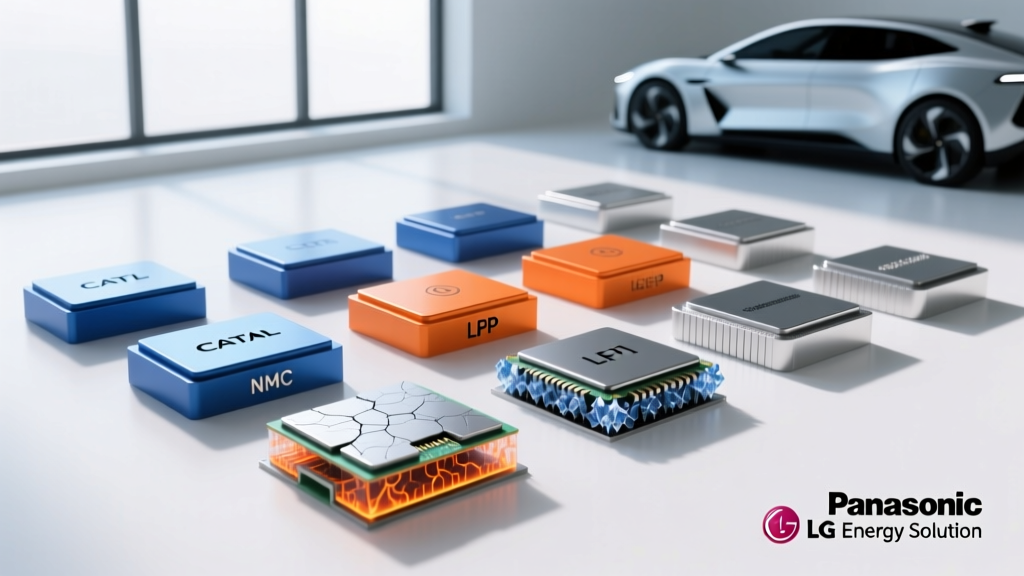
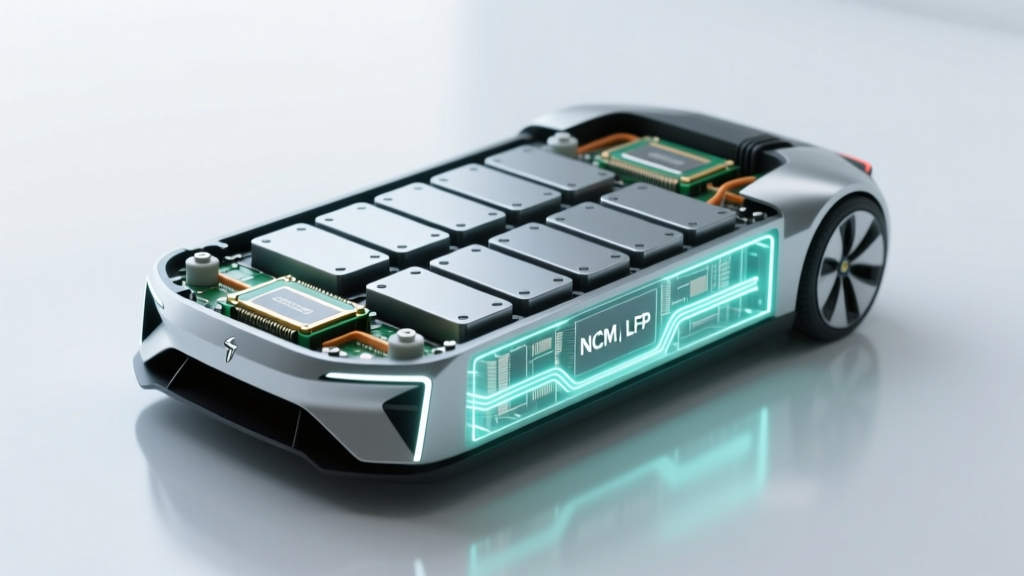
Not all electric batteries are built the same. The cathode chemistry determines energy density, cycle life, thermal stability, cold-weather performance, and cost. In 2026, the two dominant chemistries in passenger EVs are LFP (lithium iron phosphate) and NMC/NCA (nickel manganese cobalt / nickel cobalt aluminum).
NMC and NCA cells offer higher energy density — meaning more kWh packed into a lighter, smaller battery. That translates to longer EPA range in a given vehicle platform. Most long-range EVs (Tesla Model 3 Long Range, Hyundai Ioniq 5, Ford Mustang Mach-E Extended Range) use NMC or NCA chemistry. The trade-off is a somewhat shorter cycle life, greater sensitivity to sustained high state-of-charge, and reliance on cobalt and nickel — materials with volatile supply chains.
LFP cells are heavier and less energy-dense, so vehicles using them typically offer slightly less range for a given pack size. But LFP chemistry excels in cycle life (often 3,000+ full cycles vs. roughly 1,000–2,000 for NMC), thermal stability (far less prone to thermal runaway), and cost. LFP also tolerates regular charging to 100% without the accelerated degradation that NMC suffers at high SoC. Tesla's standard-range Model 3 and Model Y, the base Ford F-150 Lightning, and several BYD models all use LFP.
| Attribute | LFP (Lithium Iron Phosphate) | NMC / NCA (Nickel-based) |
|---|---|---|
| Energy Density | Lower (~140–180 Wh/kg cell-level) | Higher (~220–300 Wh/kg cell-level) |
| Typical Cycle Life | 3,000–5,000+ cycles | 1,000–2,000 cycles |
| Recommended Daily Charge Limit | 100% (LFP benefits from periodic full charges for BMS calibration) | 80% for daily use; 100% for road trips only |
| Cold-Weather Performance | More range loss below freezing; slower charge acceptance in cold | Better cold performance; preconditioning helps significantly |
| Thermal Stability | Excellent — very resistant to thermal runaway | Good but requires more active thermal management |
| Cost (cell-level) | Lower — no cobalt or nickel | Higher — tied to nickel/cobalt commodity prices |
| Common Vehicles (2025–2026) | Tesla Model 3 RWD, Model Y RWD, Ford F-150 Lightning base, BYD models | Tesla LR/AWD, Ioniq 5, Mach-E ER, Rivian, Lucid, most long-range EVs |
Which is better? If you prioritize maximum range per charge and don't mind charging to 80% daily, NMC/NCA is the typical choice. If you want a battery that can handle daily 100% charges, lasts longer in total cycle life, and costs less — and you can accept 20–40 fewer miles of EPA range — LFP is an outstanding option. Neither is universally "better"; the right choice depends on your driving patterns and charging access.
How Long Do Electric Batteries Actually Last?
This is the question that drives more EV purchase hesitation than any other. The short answer: most modern EV traction batteries will outlast the useful life of the vehicle itself.
Real-world degradation data from fleet analyses and owner-reported studies paint a reassuring picture. According to data compiled by Recurrent Auto, which tracks over 15,000 EVs in real-world conditions, the average EV battery retains approximately 90–95% of its original capacity after 5 years and 60,000–100,000 miles. Degradation is not linear — the most noticeable loss occurs in the first 1–2 years (typically 2–5%), after which the curve flattens significantly.
Typical Degradation Curve (NMC Chemistry, Moderate Climate):
- Year 1 / 15,000 mi: ~95–97% State of Health (SoH) — initial formation loss
- Year 3 / 45,000 mi: ~91–94% SoH — gradual linear decline
- Year 5 / 75,000 mi: ~89–92% SoH — curve flattening
- Year 8 / 120,000 mi: ~85–90% SoH — still well above warranty threshold
- Year 10 / 150,000 mi: ~82–88% SoH — projected, based on current fleet data
LFP packs tend to show even slower degradation, with some fleet vehicles exceeding 95% SoH at 100,000 miles. Extreme heat climates (Arizona, Texas) and frequent DC fast charging without preconditioning can accelerate loss by 2–4 percentage points over the same period.
For context, the average age of a vehicle scrapped in the U.S. is around 15 years, and the average vehicle is driven roughly 13,500 miles per year according to the Federal Highway Administration. A well-cared-for EV battery reaching 80–85% SoH at 200,000 miles still provides meaningful, usable range — a 300-mile EPA vehicle at 85% SoH still delivers roughly 255 miles.
What Does the EV Battery Warranty Actually Cover?
Federal law in the U.S. mandates that EV batteries carry a minimum warranty of 8 years or 100,000 miles (whichever comes first). In California Air Resources Board (CARB) states — which include California, Colorado, Connecticut, Maine, Maryland, Massachusetts, New Jersey, New York, Oregon, Rhode Island, Vermont, Virginia, and Washington — the mandate extends to 10 years or 150,000 miles.
Most manufacturers meet or exceed these minimums. The warranty guarantees that the battery will retain a specified percentage of its original capacity — typically 70% — over the warranty period. If capacity falls below that threshold, the manufacturer will repair or replace the battery at no cost to the owner.
| Manufacturer | Warranty Period | Mileage Limit | Capacity Retention Threshold |
|---|---|---|---|
| Tesla (Model 3/Y RWD — LFP) | 8 years | 100,000 mi | 70% |
| Tesla (Model 3/Y LR/AWD — NMC) | 8 years | 120,000 mi | 70% |
| Hyundai / Kia (Ioniq 5, EV6, EV9) | 10 years | 100,000 mi | 70% |
| Ford (Mach-E, F-150 Lightning) | 8 years | 100,000 mi | 70% |
| Rivian (R1T, R1S) | 8 years | 175,000 mi | 70% |
| BMW (i4, iX) | 8 years | 100,000 mi | 70% |
| GM (Ultium-based: Equinox EV, Blazer EV, Silverado EV) | 8 years | 100,000 mi | 70% (60% for certain commercial fleet applications) |
What the warranty does NOT cover: Cosmetic issues, minor capacity loss above the threshold, damage from accidents, flooding, or improper modifications. It also doesn't cover the 12V auxiliary battery — that's a separate, conventional component with its own warranty (typically 3 years / 36,000 miles).
How Much Does an EV Battery Replacement Cost?
This is where fear-mongering often outpaces reality. Yes, a full traction battery replacement is expensive. But the vast majority of EV owners will never need one. Out-of-warranty replacements are rare because degradation is gradual, and most vehicles are sold, traded, or retired before the pack reaches a failure point.
When a replacement is needed — typically due to a manufacturing defect, physical damage, or extreme degradation well beyond the warranty period — costs vary enormously by pack size and vehicle:
| Vehicle | Battery Capacity (kWh) | Chemistry | Estimated Replacement Cost (Parts + Labor) |
|---|---|---|---|
| Tesla Model 3 RWD | ~60 kWh | LFP | $10,000–$14,000 |
| Tesla Model Y Long Range | ~75 kWh | NMC | $13,000–$18,000 |
| Hyundai Ioniq 5 | ~77.4 kWh | NMC | $14,000–$20,000 |
| Ford F-150 Lightning Extended Range | ~131 kWh | NMC | $22,000–$32,000 |
| GMC Hummer EV | ~212 kWh | NMC | $35,000–$45,000+ |
| Chevrolet Bolt EV/EUV (older packs) | ~65 kWh | NMC | $14,000–$16,000 (post-recall replacement pricing) |
Several factors are pushing replacement costs downward over time: cell prices have fallen roughly 80% since 2013 according to BloombergNEF, module-level repair (replacing individual modules rather than the entire pack) is becoming more common, and third-party refurbishers are entering the market. For most buyers, the battery warranty — not the out-of-pocket replacement cost — is the relevant financial protection.
What Actually Degrades an EV Battery? (And How to Prevent It)
Battery degradation is driven by a combination of electrochemical and thermal stress. Understanding the key factors lets you make informed choices about how you charge, drive, and store your EV.
Battery Care Best Practices — Maximizing Longevity
- Avoid sustained 100% SoC (NMC/NCA only): Store and daily-drive between 20–80% SoC. Charge to 100% only when you'll drive immediately. LFP owners can charge to 100% daily without concern.
- Minimize DC fast charging when possible: Occasional DCFC is fine — the BMS manages heat and taper. But daily 150+ kW fast charging without battery preconditioning accelerates degradation. Use Level 2 home charging as your primary method.
- Precondition before fast charging: Most modern EVs automatically precondition the battery when you navigate to a charger. This warms or cools the pack to the optimal temperature window (roughly 25–40°C / 77–104°F), enabling faster charging and reducing thermal stress.
- Avoid extreme SoC in extreme temperatures: Don't leave an EV sitting at 100% SoC in 100°F+ heat. Don't leave it at 5% SoC in sub-zero cold for extended periods. If storing, aim for ~50% SoC.
- Use scheduled charging: Set your EV or charger to finish charging just before you leave — this minimizes time spent at high SoC.
- Don't baby it too much: Modern battery management systems (BMS) are sophisticated. They include top/bottom buffers (hidden capacity the BMS never lets you access), active thermal management, and charge-rate limiting. Following the basics above is sufficient — you don't need to obsess over every percentage point.
The biggest degradation accelerators, ranked by impact:
- Extreme heat exposure at high SoC — parking at 100% in Phoenix summer is the worst-case scenario for NMC chemistry.
- Frequent DC fast charging without preconditioning — sustained high C-rates generate internal heat that accelerates electrolyte breakdown.
- Deep discharge cycles — regularly running the battery to 0% and leaving it there stresses the cells.
- Time and mileage — calendar aging (degradation that occurs regardless of use) is unavoidable but modest. Most packs lose 1–2% per year from calendar aging alone.
How to Check Your EV's Battery State of Health (SoH)
State of Health (SoH) is the percentage of original capacity your battery currently retains. A new EV has 100% SoH; a pack at 88% SoH holds 88% of its original kWh. Monitoring SoH helps you track degradation and identify potential warranty claims.
Methods for checking SoH:
- In-vehicle displays: Tesla provides a rated range figure that indirectly reflects SoH (compare current rated range at 100% to the original EPA figure). Hyundai/Kia's infotainment system includes an EV battery diagnostics screen showing SoH percentage. Nissan Leaf's dash displays capacity bars (12 bars = new, fewer bars = degradation).
- OBD-II diagnostic tools: Third-party apps like Leaf Spy (Nissan), TeslaFi or Scan My Tesla (Tesla), and generic OBD-II readers with EV-compatible software can pull SoH data directly from the BMS. This is the most precise consumer-accessible method.
- Dealer diagnostic reports: Any authorized service center can run a full battery health report. Request one during routine service visits, especially as you approach the warranty mileage threshold — if SoH is near the 70% line, you'll want documentation.
- Third-party services: Companies like Recurrent Auto offer free battery health reports that compare your pack's degradation to their fleet averages for the same make, model, and climate zone.
When to be concerned: If your SoH drops more than 5% in a single year after the initial break-in period, or if you notice sudden range loss that doesn't correspond to cold weather, it's worth a diagnostic visit. A single defective module can sometimes be replaced without replacing the entire pack.
What's Next? Solid-State, Silicon Anodes, and Beyond
The next generation of electric battery technology is in active development, but it's important to separate announced timelines from production reality.
Solid-state batteries replace the liquid electrolyte in current lithium-ion cells with a solid material (ceramic, sulfide, or polymer). The theoretical advantages are significant: higher energy density (potentially 400+ Wh/kg at the cell level), faster charging (some prototypes demonstrate 10–80% in under 10 minutes), improved safety (no flammable liquid electrolyte), and longer cycle life. Toyota has announced plans to commercialize solid-state batteries in limited production vehicles by 2027–2028, while QuantumScape is working with Volkswagen on pilot production. However, manufacturing scale-up remains the critical bottleneck — lab results do not equal mass production.
Silicon anode technology is closer to market. Companies like Sila Nanotechnologies and Group14 are producing silicon-dominant anode materials that increase energy density by 20–40% over conventional graphite anodes. Mercedes-Benz has announced silicon anode cells for the upcoming G-Class EV, and several manufacturers are incorporating silicon blends into existing NMC cells incrementally.
Sodium-ion batteries are emerging as a low-cost alternative for entry-level and urban EVs. CATL has begun shipping sodium-ion packs for Chinese-market vehicles. While energy density is lower than LFP (~120–160 Wh/kg), sodium is abundant and cheap, making these cells attractive for cost-sensitive segments.
Realistic timeline for buyers: Solid-state batteries in mainstream, affordable EVs are likely 2029–2032 at the earliest. Silicon anode blends are already appearing and will incrementally improve range over the next 2–3 model years. If you're buying an EV today or in the next 2–3 years, current lithium-ion technology (LFP or NMC) is mature, well-understood, and backed by robust warranties.
Frequently Asked Questions
How long do EV batteries last in years and miles?
Based on fleet data from Recurrent Auto and manufacturer testing, most modern EV batteries retain 85–90% of original capacity at 150,000 miles and 10 years. Many packs will function well beyond 200,000 miles before reaching the 70% warranty threshold. Catastrophic failure (sudden, total loss) is extremely rare — degradation is gradual and predictable.
How much does an EV battery cost to replace out of warranty?
Replacement costs range from roughly $10,000 for smaller packs (Tesla Model 3 RWD, ~60 kWh LFP) to $35,000+ for very large packs (GMC Hummer EV, ~212 kWh NMC). Most mainstream EVs (75–85 kWh packs) fall in the $13,000–$20,000 range including labor. However, the majority of EV owners will never face this cost — the battery typically outlasts the vehicle's economic life, and warranty coverage protects against premature degradation.
What does the federal battery warranty mandate require?
U.S. federal law requires a minimum of 8 years / 100,000 miles of battery warranty coverage. CARB states extend this to 10 years / 150,000 miles. The warranty guarantees the battery will retain at least 70% of its original capacity. If it falls below that threshold within the warranty period, the manufacturer repairs or replaces it at no cost. This covers defects and abnormal degradation — not accident damage or misuse.
Is LFP better than NMC for daily driving?
For daily commuting and drivers with home charging, LFP has clear advantages: you can charge to 100% daily without degradation concerns, cycle life is 2–3x longer, and the cells cost less. The trade-off is lower energy density (meaning slightly less range in the same vehicle) and worse cold-weather performance. If you need maximum range for frequent road trips or live in a very cold climate, NMC/NCA may be the better fit.
Does fast charging damage my EV battery?
Occasional DC fast charging does not meaningfully accelerate degradation — modern battery management systems limit charge rate, manage temperature, and taper power above 80% SoC to protect the cells. However, exclusive reliance on DC fast charging (especially at 150+ kW without preconditioning) does show measurably higher degradation over time compared to primarily Level 2 charging. The practical recommendation: use Level 2 at home as your daily method, and use DCFC for road trips or when needed. There's no need to avoid fast chargers entirely.
How do I maximize my EV battery's lifespan?
The most impactful habits are: (1) keep daily SoC between 20–80% for NMC/NCA, or charge freely to 100% for LFP; (2) avoid leaving the car at 100% SoC in extreme heat; (3) use battery preconditioning before fast charging; (4) rely on Level 2 home charging as your primary method; and (5) don't let the car sit at very low SoC (below 10%) for extended periods. Beyond these basics, the BMS handles most protection automatically.