If you're shopping for a Toyota RAV4 Hybrid, a Ford Escape Plug-In Hybrid, or any electrified vehicle, one question almost always surfaces: how long will the hybrid battery last? The short answer, backed by over two decades of real-world data, is that most modern hybrid and plug-in hybrid traction batteries are engineered to outlast the vehicles they power. But "most" is not "all," and understanding the chemistry, degradation patterns, warranty coverage, and replacement economics is essential before you sign a purchase agreement.
This guide covers high-voltage traction batteries in both standard hybrids (HEVs) and plug-in hybrids (PHEVs). We'll also touch on full battery-electric vehicle (BEV) batteries where the data overlaps, because the underlying lithium-ion chemistry shares the same aging mechanisms. We will not be discussing the 12V auxiliary battery — the small lead-acid or lithium unit that powers your lights and infotainment — which is a separate, inexpensive maintenance item.
How Long Do Hybrid and PHEV Batteries Actually Last?
Based on fleet data, warranty claim rates, and long-term owner reports, the typical hybrid traction battery lasts between 150,000 and 200,000 miles before capacity loss becomes noticeable enough to affect fuel economy or electric-only range. For plug-in hybrids with larger packs, the window is similar in mileage but can extend further in calendar years because PHEV batteries are cycled less aggressively — the gas engine shoulders more of the workload.
Toyota, which has sold over 25 million hybrids globally since the 1997 Prius, reports that the vast majority of its hybrid batteries never require replacement during the vehicle's first-owner lifespan. Real-world data from fleet operators and sources like fueleconomy.gov confirm that a well-maintained HEV battery at 150,000 miles typically retains 85–92% of its original capacity. That translates to perhaps 1–3 MPG less in combined driving — barely perceptible in daily use.
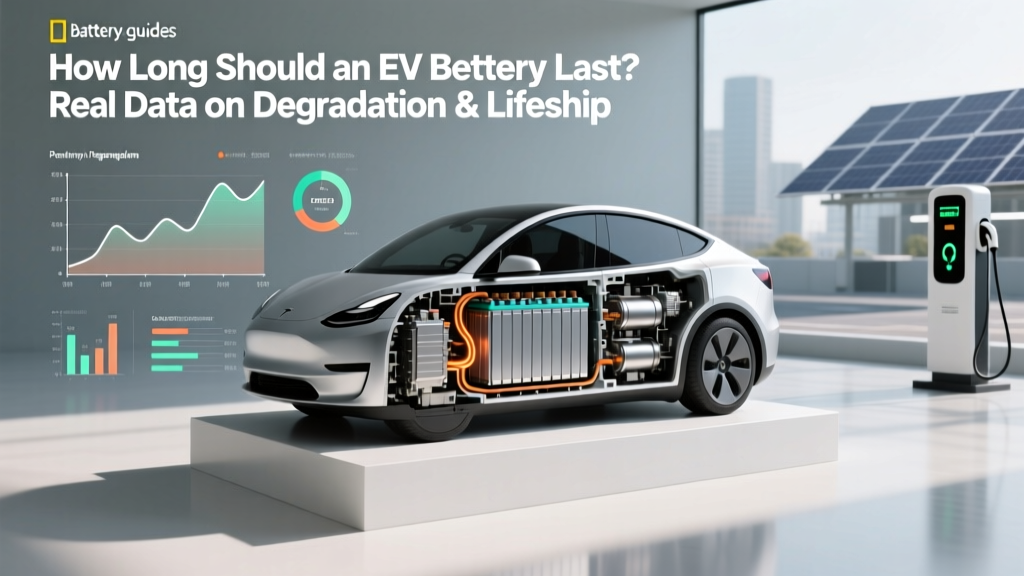
Typical Hybrid Battery Degradation Curve (HEV, ~1.5–2.0 kWh pack):
- Year 1–3 / 0–45,000 mi: 100% → 96–98% capacity (initial formation loss)
- Year 4–7 / 45,000–100,000 mi: 96% → 92–95% (gradual linear decline)
- Year 8–12 / 100,000–175,000 mi: 92% → 85–90% (slower taper)
- Year 12+ / 175,000+ mi: 85% → varies widely based on climate and use
For PHEVs with larger batteries (typically 12–22 kWh usable), the degradation pattern is similar in percentage terms but the absolute range loss is more noticeable. A PHEV rated for 35 miles of electric-only range at new might deliver 30–32 miles after 80,000 miles and 28–30 miles after 150,000 miles. The gas engine seamlessly compensates, so most owners barely notice.
Battery Chemistry: What's Inside Your Hybrid?
Understanding battery chemistry is the foundation for predicting longevity. Hybrid and plug-in hybrid vehicles use several different cell chemistries, each with distinct trade-offs in energy density, cycle life, thermal stability, and cost.
| Chemistry | Common In | Energy Density | Cycle Life | Cold Performance | Cost | Key Trade-Off |
|---|---|---|---|---|---|---|
| NiMH (Nickel-Metal Hydride) | Older Toyota/Lexus HEVs (pre-2020 Prius, Camry Hybrid) | Low | Good (1,000–2,000 cycles) | Fair | Low | Proven longevity but heavy and bulky |
| NMC (Nickel Manganese Cobalt) | Most modern PHEVs (Ford, BMW, Hyundai, VW) | High | Good (1,500–3,000 cycles) | Good | Higher | Best range per kg, but cobalt cost and supply chain concerns |
| NCA (Nickel Cobalt Aluminum) | Some PHEVs and BEVs (Tesla, select Asian OEMs) | Very High | Good (1,500–2,500 cycles) | Good | Higher | Maximum energy density, slightly less thermal stability |
| LFP (Lithium Iron Phosphate) | Newer HEVs/PHEVs (BYD, some 2025+ Toyota models), most BEV standard-range | Moderate | Excellent (3,000–6,000+ cycles) | Fair (reduced in extreme cold) | Lowest | Longest life and safest, but heavier for same capacity |
Which is better — LFP or NMC? It depends on the application. For a standard hybrid where the battery is small (1–2 kWh) and rarely fully cycled, LFP's superior cycle life (up to 6,000 full cycles before 80% retention) makes it nearly immortal in practical terms. For a PHEV where maximizing electric-only range from a compact pack matters, NMC's higher energy density is the better choice. LFP also has a safety advantage: it is far more resistant to thermal runaway, a meaningful consideration in crash scenarios.
The industry trend through 2026 is clear: LFP adoption is accelerating in both hybrids and BEVs, driven by lower cost, longer life, and reduced reliance on cobalt. Toyota has begun integrating LFP cells into select hybrid models, and BYD's Blade Battery (LFP) has demonstrated exceptional longevity in taxi fleets exceeding 300,000 miles.
What Does the Hybrid Battery Warranty Cover?
Federal emissions regulations mandate that hybrid battery components carry a minimum warranty of 8 years / 80,000 miles in most states, and 10 years / 150,000 miles in California Air Resources Board (CARB) states (which include CA, CO, CT, ME, MD, MA, NJ, NY, OR, RI, VT, WA, and others adopting CARB standards).
| Manufacturer | Standard Warranty | CARB-State Warranty | Capacity Threshold |
|---|---|---|---|
| Toyota / Lexus | 10 yr / 150,000 mi | 10 yr / 150,000 mi | Below ~70% capacity or malfunction |
| Honda | 8 yr / 100,000 mi (10/150k in CARB) | 10 yr / 150,000 mi | Below ~70% or failure |
| Hyundai / Kia | 10 yr / 100,000 mi | 10 yr / 150,000 mi | Below ~70% capacity |
| Ford | 8 yr / 100,000 mi | 8 yr / 100,000 mi (varies) | Below ~70% capacity |
| BMW / Mercedes PHEV | 8 yr / 80,000 mi | 10 yr / 150,000 mi (varies) | Below ~70% capacity |
The capacity retention threshold is critical: most warranties trigger replacement or repair only when the battery drops below approximately 70% of original capacity, not from gradual degradation alone. A battery at 75% capacity after 120,000 miles, while noticeably reduced, would not qualify for a warranty claim. In practice, very few modern hybrid batteries breach this threshold within the warranty period — manufacturer claim rates are well below 1%.
How Much Does a Hybrid Battery Replacement Cost?
When a hybrid battery does eventually fail — typically well beyond 150,000 miles — replacement cost depends heavily on battery size, chemistry, and whether you choose OEM new, remanufactured, or refurbished cells.
| Vehicle Type | Battery Size | OEM New (Parts + Labor) | Remanufactured | Cell-Level Repair |
|---|---|---|---|---|
| Toyota Prius / Camry HEV | ~1.0–1.6 kWh (NiMH or LFP) | $2,500–$4,000 | $1,500–$2,500 | $500–$1,200 |
| Toyota RAV4 Hybrid | ~1.6 kWh | $3,000–$4,500 | $1,800–$2,800 | $600–$1,500 |
| Honda Accord Hybrid | ~1.3 kWh | $2,800–$4,000 | $1,600–$2,500 | $500–$1,200 |
| Ford Escape PHEV | ~14.4 kWh | $6,000–$9,000 | $4,000–$6,000 | $1,500–$3,000 |
| Hyundai Tucson PHEV | ~13.8 kWh | $5,500–$8,500 | $3,800–$5,500 | $1,200–$2,800 |
| BMW X5 xDrive50e PHEV | ~25.7 kWh | $8,000–$14,000 | $5,500–$8,000 | $2,000–$4,500 |
A critical point often missed in alarmist coverage: most hybrid batteries are never replaced. The vehicle is typically sold, traded, or retired before the battery reaches end-of-life. For a 2020 RAV4 Hybrid with 90,000 miles in 2026, the battery is likely at 90–93% capacity and has years of useful life remaining. When replacement is needed, remanufactured packs and cell-level repairs (replacing only the degraded modules) can cut costs by 40–60%.
What Kills a Hybrid Battery? Factors That Accelerate Degradation
Lithium-ion and NiMH batteries degrade through electrochemical mechanisms: solid electrolyte interphase (SEI) growth, lithium plating, electrode cracking, and electrolyte decomposition. The rate of these processes depends heavily on how the battery is used and what environment it lives in.
Top Factors Affecting Hybrid Battery Life:
- Extreme heat exposure: Sustained ambient temperatures above 95°F accelerate chemical aging. Garage parking in hot climates can add years to battery life. This is the single largest degradation factor.
- Deep cycling (PHEVs): Routinely draining the battery to 0% and charging to 100% stresses cells more than partial cycling. HEVs avoid this by keeping the battery in a narrow 40–80% State of Charge (SoC) window.
- DC fast charging frequency (PHEVs with DC capability): Repeated high-power DC charging generates heat and promotes lithium plating. Occasional fast charging is fine; daily use accelerates wear.
- Prolonged storage at high SoC: Leaving a PHEV plugged in at 100% for weeks without driving stresses the cells. Most modern systems mitigate this with charge-limiting software.
- Extreme cold charging: Charging below 20°F without battery preconditioning can cause lithium plating on the anode, permanently reducing capacity. Modern thermal management systems largely prevent this.
- High-mileage, stop-and-go driving: Ironically, this is where hybrids thrive. The battery management system (BMS) in a hybrid is specifically tuned for frequent shallow cycles, which are gentler than deep discharges.
The engineering advantage of standard hybrids (HEVs) is that the BMS keeps the battery in a very narrow, gentle SoC window — typically 40–60%. The battery never sees a true full charge or full discharge, which dramatically extends cycle life. This is why a 200,000-mile Prius battery is often still functional while a similarly aged BEV battery that was routinely charged to 100% may show more degradation.
How to Check and Maximize Your Hybrid Battery Health
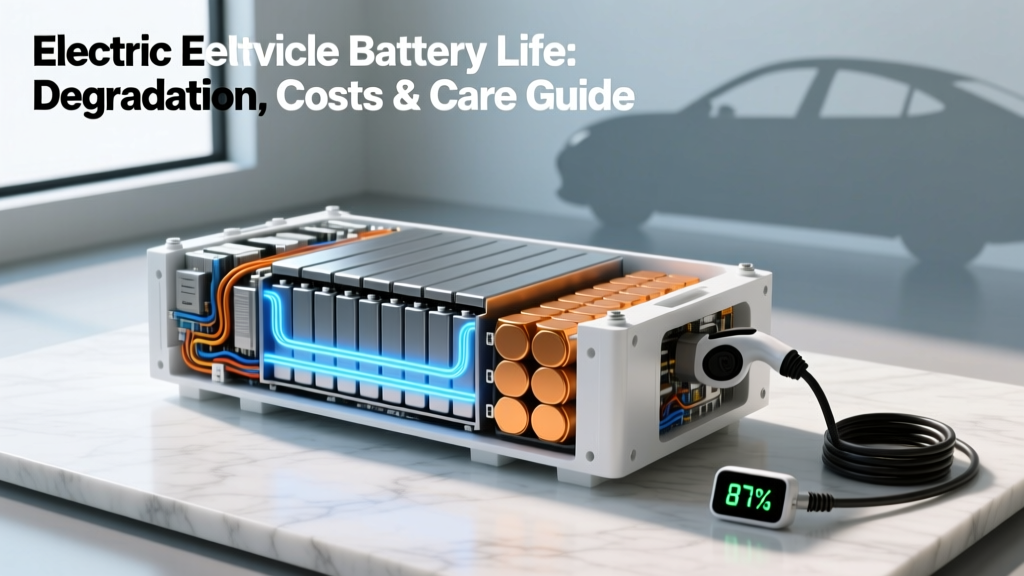
Monitoring State of Health (SoH) — the percentage of original capacity remaining — gives you an early warning of abnormal degradation and helps you make informed decisions about warranty claims and resale value.
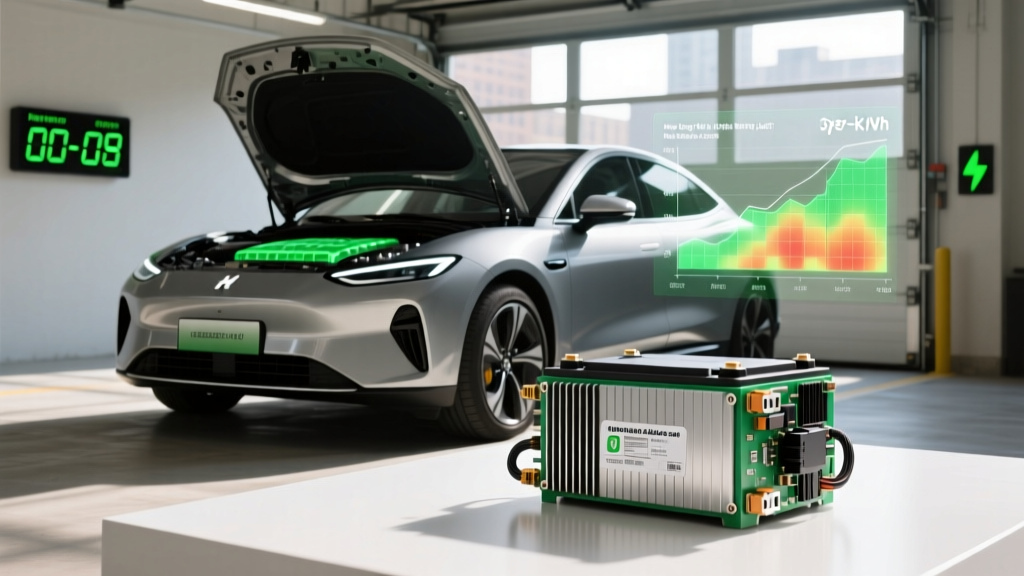
For Toyota/Lexus hybrids: The Dr. Prius app (available for iOS and Android) connects via an OBD-II Bluetooth dongle (e.g., OBDLink MX+) and runs a battery life expectancy test. It reads individual cell voltages, internal resistance, and calculates an SoH estimate. A healthy pack shows cell voltage variance under 0.2V under load.
For Hyundai/Kia PHEVs: The MyHyundai or MyKia app provides battery state information, and the vehicle's infotainment system may display an EV battery health indicator in newer model years (2024+).
For Ford PHEVs: The FordPass app shows battery state, and a dealer can pull a detailed Battery Energy Control Module (BECM) report showing individual cell balance and capacity.
For BMW/Mercedes PHEVs: Dealer diagnostic tools provide the most accurate SoH reading. Independent shops with BMW ICOM or XENTRY access can also pull this data.
Best Practices to Maximize Hybrid Battery Life:
- For PHEVs: Set charge limit to 80–90% for daily use; charge to 100% only before long electric-only trips.
- Park in shade or a garage in hot climates — battery temperature is the #1 longevity factor.
- Drive regularly: Batteries that sit unused for months degrade faster than those in regular use. Even a 10-minute drive every two weeks keeps the BMS active and cells balanced.
- Avoid repeated DC fast charging if your PHEV supports it; Level 2 (240V, 3.3–7.2 kW) is gentler.
- Keep firmware updated: Manufacturers periodically release BMS software updates that optimize charge profiles and thermal management. Check for recalls and service bulletins at NHTSA.gov.
- Don't store at 0% or 100%: If leaving a PHEV for extended periods, aim for ~50% SoC.
What's Next? Solid-State and Silicon Anode Batteries
The next generation of battery technology promises meaningful improvements in longevity, energy density, and charging speed — but timelines remain uncertain and these technologies are not yet available in production vehicles as of 2026.
Solid-state batteries replace the liquid electrolyte with a solid ceramic, polymer, or sulfide material. The theoretical advantages are significant: 2–3x energy density, faster charging (potentially 10–80% in under 10 minutes), dramatically reduced fire risk, and cycle life exceeding 10,000 cycles. Toyota has announced plans for solid-state batteries in limited production vehicles by 2027–2028, initially in BEVs. Samsung SDI, QuantumScape, and Solid Power are also advancing prototypes. However, manufacturing scalability and cost remain unsolved challenges, and hybrid applications are likely several years behind BEV deployment.
Silicon anode batteries replace the graphite anode with silicon, which can store roughly 10x more lithium ions per gram. Companies like Sila Nanotechnologies and Group14 are supplying silicon-dominant anode materials to OEMs. Mercedes-Benz has announced silicon anode cells in the upcoming G-Class EV. For hybrids, silicon anodes could enable smaller, lighter packs with the same capacity — or larger electric-only range in the same physical footprint. Expect initial adoption in premium PHEVs by 2027–2029.
Both technologies are worth watching, but neither should factor into a 2026 purchase decision. Current lithium-ion hybrid batteries are mature, reliable, and well-warranted.
Frequently Asked Questions
How long will a hybrid battery last in years?
Most modern hybrid batteries last 12–15 years or 150,000–200,000+ miles before degradation meaningfully affects fuel economy. Many outlast the vehicle itself. Toyota's NiMH and newer LFP packs have the longest track record, with documented examples exceeding 300,000 miles on the original battery.
How much does it cost to replace a hybrid battery?
For a standard HEV (Prius, Camry, RAV4 Hybrid), OEM replacement runs $2,500–$4,500 including labor. Remanufactured packs cost $1,500–$2,800. For PHEVs with larger batteries, expect $5,500–$14,000 OEM, or $3,800–$8,000 remanufactured. Cell-level module repair can cost as little as $500–$1,500 for HEVs.
Is the hybrid battery covered under warranty?
Yes. Federal law mandates at minimum 8 years/80,000 miles. In CARB states, coverage extends to 10 years/150,000 miles. Toyota covers 10 years/150,000 miles nationwide. The warranty typically triggers when capacity drops below ~70% or the battery malfunctions. Check your specific owner's manual and IRS guidelines if evaluating total ownership costs alongside federal tax credits.
How do I know if my hybrid battery is failing?
Signs include: noticeably reduced fuel economy (3+ MPG drop), reduced electric-only range in a PHEV, the battery cooling fan running constantly, a check engine light with hybrid system codes (P0A80, P0A7F), or visible dashboard warnings. An OBD-II scan tool or dealer diagnostic can confirm State of Health. Apps like Dr. Prius (Toyota) provide affordable at-home testing.
Should I buy an extended warranty for the hybrid battery?
Generally, no. The factory warranty is already 8–10 years, and failure rates within that window are extremely low (well under 1%). An extended warranty may make sense if you plan to keep a PHEV past 150,000 miles and want budget certainty, but the math rarely favors it for standard HEVs given the low replacement cost relative to the warranty premium.
Does fast charging damage a PHEV battery?
Occasional DC fast charging is fine. Daily or near-daily DC fast charging accelerates degradation due to heat generation and lithium plating risk. For daily charging, a Level 2 home charger (240V, 3.3–7.2 kW) is the optimal balance of speed and battery health. Most PHEVs charge fully overnight on Level 2, making DC fast charging unnecessary for routine use.
LFP vs NMC — which battery chemistry should I choose?
If longevity and cost are your priorities, LFP wins: it offers 3,000–6,000+ cycle life, superior thermal safety, and lower cost. If maximizing electric-only range from a compact package matters most (common in PHEVs), NMC's higher energy density is the better fit. For standard hybrids with small packs, the chemistry matters less because the battery is never deeply cycled — both will easily outlast the car.
The data is clear: hybrid battery replacement is a rare event, not an inevitability. With proper care — moderate temperatures, avoiding extreme SoC states, and regular driving — your hybrid's traction battery will very likely serve you well for the life of the vehicle.