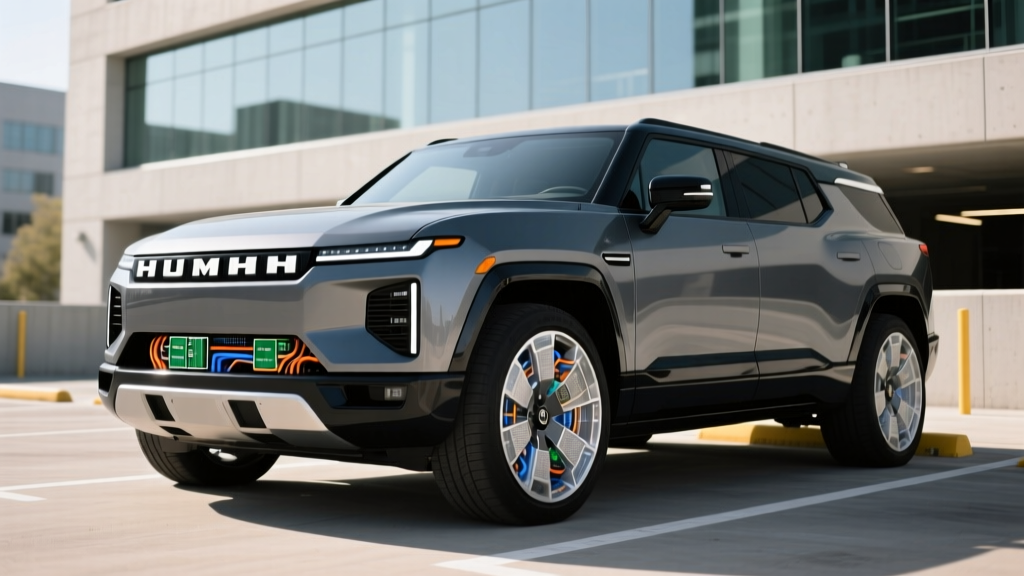
The GMC Hummer EV is an engineering spectacle — 1,000 horsepower, crab-walk steering, and a curb weight north of 9,000 pounds. But the component that truly defines this truck is its battery pack. If you've been searching for details on the Hummer EV battery size, you're not alone: at roughly 246 kWh gross capacity, it is the largest battery ever fitted to a production passenger vehicle. That figure raises immediate questions about chemistry, longevity, replacement cost, and day-to-day care. This guide breaks down every aspect of the Ultium pack powering the Hummer EV, while also providing a broader framework for understanding EV battery technology in 2026.
Hummer EV Battery Size and Ultium Platform Specs
The GMC Hummer EV Pickup and SUV share General Motors' BT1 platform, which houses a double-stacked Ultium battery module arrangement. Here are the headline figures:
| Specification | Value |
|---|---|
| Gross battery capacity | ~246 kWh |
| Usable capacity (est.) | ~212–220 kWh |
| Chemistry | NMC (Nickel Manganese Cobalt) — Ultium |
| Cell format | Large-format pouch cells |
| Module arrangement | 24 modules, double-stacked |
| System voltage | 400V architecture (native); 800V-capable via parallel-to-series switching for charging |
| EPA range (Pickup 3X) | 329 miles |
| EPA range (SUV 3X) | 314 miles |
| Max DC fast charge rate | ~350 kW (peak) |
| 10–80% DC fast charge time | ~35–40 minutes (est.) |
| Level 2 AC charge rate | 11.5 kW (up to 19.2 kW with dual onboard chargers) |
| Battery/Powertrain warranty | 8 years / 100,000 miles |
The gap between gross and usable capacity represents the buffer — a protective reserve at the top and bottom of the state-of-charge window that prevents the cells from reaching true 0% or 100%. This buffer is one of the primary reasons modern EV batteries outlast early-generation packs by a wide margin.
NMC vs LFP: Understanding the Chemistry Inside Your EV
The Hummer EV uses NMC (Nickel Manganese Cobalt) chemistry, which is the dominant choice for high-range, high-performance vehicles. But the broader EV market increasingly offers LFP (Lithium Iron Phosphate) as well. Understanding the trade-offs is essential for any EV buyer.
| Attribute | LFP (Lithium Iron Phosphate) | NMC / NCA (Nickel-based) |
|---|---|---|
| Energy density | Lower (~160–180 Wh/kg cell-level) | Higher (~220–300 Wh/kg cell-level) |
| Typical use case | Standard-range / urban EVs | Long-range / performance EVs |
| Cycle life | 3,000–5,000+ cycles | 1,000–2,500 cycles |
| Cold-weather performance | Moderate — more capacity loss below freezing | Better low-temp discharge performance |
| Thermal stability | Excellent — very resistant to thermal runaway | Good — requires more active thermal management |
| Cost per kWh | Lower (no cobalt or nickel) | Higher (commodity-sensitive) |
| Charging to 100% tolerance | High — can be regularly charged to 100% | Lower — daily charge recommended at 80% |
| State-of-charge estimation | Harder (flatter voltage curve) | Easier (steeper voltage curve) |
| Examples in 2026 | Tesla Model 3 RWD, Ford Mustang Mach-E SR, many Chinese-market EVs | Hummer EV, Tesla Model S/X, Hyundai Ioniq 5 LR, most long-range models |
For the Hummer EV, NMC was the only viable choice. Packing 246 kWh into a vehicle that needs to deliver 1,000 hp and 329 miles of range demands the energy density that NMC provides. An LFP pack of equivalent capacity would be substantially heavier and larger — a non-starter in a truck already pushing the limits of gross vehicle weight.
However, LFP is the better choice for buyers who prioritize longevity and daily charging convenience over maximum range. If you're evaluating a different EV and don't need 300+ miles, an LFP-equipped model offers longer cycle life and less anxiety about charging to full.
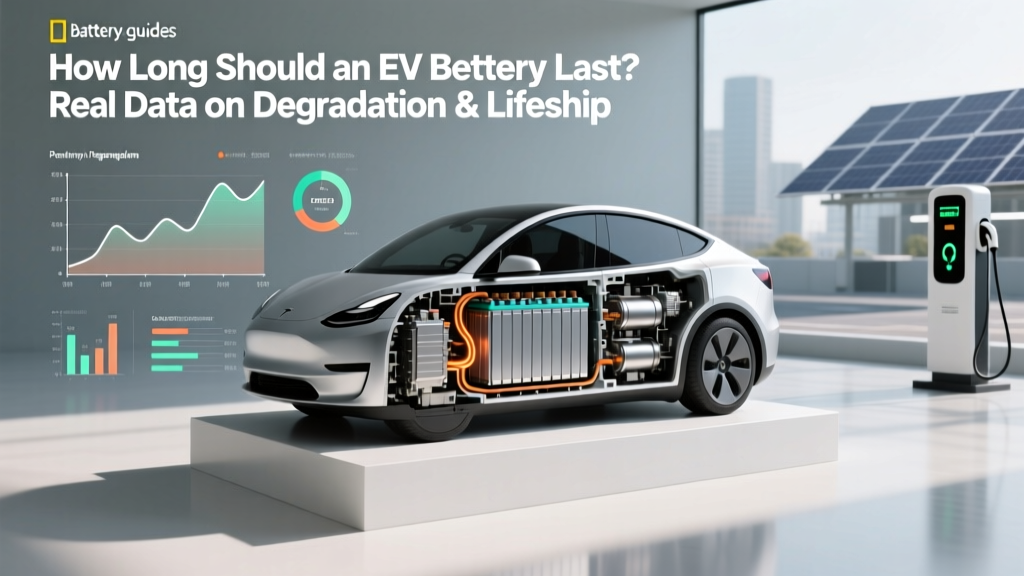
How Long Do EV Batteries Actually Last?
The short answer: almost certainly longer than you'll own the vehicle. But the data matters more than reassurance.
Modern liquid-cooled EV batteries, including the Ultium pack in the Hummer EV, are designed to retain a significant portion of their original capacity well past 150,000 miles. Here's what real-world degradation data tells us:
- Geotab fleet data (2024 analysis of ~10,000 EVs): Average annual degradation across all models was approximately 1.8% per year, meaning a typical EV retains about 82% capacity after 10 years.
- Tesla fleet data (2024 Impact Report): Model S/X vehicles showed approximately 12% degradation at 150,000 miles, with the curve flattening significantly after the initial 20,000-mile break-in period.
- Chevy Bolt EV (early Ultium-adjacent chemistry): Owner-reported data on forums and Recurrent Auto studies show 5–8% degradation at 80,000 miles for mostly Level 2-charged vehicles.
Several factors make the Hummer EV's battery particularly resilient to noticeable degradation:
- Oversized buffer: With ~26–34 kWh of buffer, even meaningful degradation is partially absorbed before the driver notices range loss.
- Low C-rate in daily use: A 246 kWh pack delivering 30 kWh for a 100-mile drive is operating at roughly 0.12C — an extremely gentle discharge rate that minimizes stress.
- Active liquid thermal management: The Ultium system maintains cell temperatures within an optimal window during both charging and discharging.
What the Hummer EV Battery Warranty Covers
GM backs the Hummer EV's battery with its standard EV powertrain warranty, which is among the more straightforward in the industry:
| Component | Coverage |
|---|---|
| High-voltage battery pack | 8 years / 100,000 miles (whichever comes first) |
| Capacity retention threshold | 70% of original usable capacity |
| Electric drive units (motors) | 8 years / 100,000 miles |
| Power electronics (inverters, chargers) | 8 years / 100,000 miles |
| Thermal management system | 8 years / 100,000 miles |
| What triggers a claim | Usable capacity drops below 70% threshold within warranty period |
| Remedy | Repair, module replacement, or full pack replacement at GM's discretion |
The 70% threshold is industry-standard — Tesla, Ford, Hyundai, and most others use the same benchmark. For the Hummer EV, 70% of an estimated 212–220 kWh usable capacity means the warranty guarantees at least ~148–154 kWh of usable energy. That still translates to roughly 220+ EPA-adjusted miles of range, which is more than most EVs offer when new.
Importantly, the warranty covers defects and abnormal degradation, not damage from accidents, flooding, or improper modifications. Always review your specific warranty booklet, as terms can vary slightly by model year. For official details, refer to GMC's warranty information page.
EV Battery Replacement Cost: What Hummer EV Owners Should Expect
This is the question that generates the most anxiety — and the most misinformation. Let's ground it in data.
| Vehicle / Pack Size | Estimated Pack Cost (parts) | Estimated Labor | Total Range |
|---|---|---|---|
| Compact EV (60–75 kWh, e.g., Bolt, Model 3 RWD) | $8,000–$14,000 | $2,000–$4,000 | $10,000–$18,000 |
| Mid-size EV (80–100 kWh, e.g., Model Y, Ioniq 5) | $12,000–$20,000 | $2,500–$5,000 | $14,500–$25,000 |
| Large EV (100–130 kWh, e.g., Model S, F-150 Lightning ER) | $18,000–$28,000 | $3,000–$6,000 | $21,000–$34,000 |
| Hummer EV (~246 kWh gross) | $35,000–$55,000 | $5,000–$10,000 | $40,000–$65,000 |
The Hummer EV's replacement cost is undeniably high — a direct consequence of its unprecedented battery size. However, several factors provide crucial context:
- Full pack replacement is rare. The Ultium architecture is modular (24 modules). If degradation or a fault is localized, GM can replace individual modules rather than the entire pack, reducing cost dramatically — potentially to $3,000–$8,000 per module including labor.
- Battery prices continue to fall. Pack-level pricing has dropped from ~$400/kWh in 2015 to approximately $110–$130/kWh in 2025–2026, according to BloombergNEF. By the time a Hummer EV might need a replacement (12–15+ years out), costs could be 30–50% lower.
- Most batteries outlive the vehicle. Data from Recurrent Auto shows that fewer than 2% of EVs in their studied fleet required battery replacement outside of recalls. The vast majority of EVs are scrapped or retired with their original battery still functional.
- Warranty covers the most critical period. If abnormal degradation occurs, the 8-year/100,000-mile warranty absorbs the cost.
Factors That Affect EV Battery Life — and How to Maximize It
Battery degradation isn't random. It's driven by specific, controllable factors. Here's what the electrochemistry tells us:
- Daily charge limit: Set to 80%. NMC cells experience accelerated degradation when held at high state-of-charge. Use 100% only when you need full range for a trip. (Note: LFP owners can skip this — LFP tolerates 100% well.)
- Avoid letting SoC sit below 10% for extended periods. Deep discharge stresses NMC chemistry. If storing the vehicle, leave it at 40–60%.
- Minimize consecutive DC fast charging. Occasional fast charging is fine — the Hummer's thermal management handles it well. But daily 350 kW sessions will accelerate degradation compared to Level 2 home charging.
- Use preconditioning before fast charging. The Hummer EV's navigation system will precondition the battery when a DC fast charger is set as your destination. This brings cells to optimal temperature (~77–95°F), reducing stress and improving charge speed.
- Don't baby it in cold weather — just plan for it. Cold temperatures temporarily reduce available capacity and increase resistance. This isn't permanent damage. Use seat/steering wheel heaters instead of cranking cabin heat to preserve range.
- Keep the thermal management system maintained. Coolant should be checked per the service schedule. The liquid cooling loop is the battery's lifeline.
The single most impactful habit: charge at home on Level 2 (240V) and set the charge limit to 80% for daily use. This single practice eliminates the majority of degradation vectors — high SoC stress, fast-charge heat, and deep cycling.
For the Hummer EV specifically, its massive battery is actually a longevity advantage. Because the pack is so large, typical daily driving (30–60 miles) uses only a small fraction of total capacity. This means the cells experience shallow cycles — and shallow cycles cause far less wear than deep ones. A Hummer EV driver doing a 40-mile round trip is cycling roughly 15–20% of the usable pack, which is among the gentlest use patterns in the EV world.
How to Monitor Your Hummer EV Battery Health (SoH)
State of Health (SoH) is a percentage representing your battery's current maximum capacity relative to its original capacity. Here's how to track it:
- myGMC App: The Hummer EV's connected services provide battery status information through the myGMC app. While GM doesn't surface a direct SoH percentage as of the 2026 model year, you can track estimated range at full charge over time as a proxy.
- OBD-II diagnostic tools: Third-party OBD-II readers paired with apps like LeafSpy (for Nissan) or EV-specific diagnostic tools can read cell-level voltage data and estimated capacity. For GM Ultium vehicles, the diagnostic ecosystem is still maturing, but dealership-level tools (GDS2) provide full SoH data.
- Dealer health check: Request a battery health report during routine service. GM dealerships can pull a detailed SoH assessment showing capacity retention, cell voltage variance, and module-level data.
- Manual tracking: Charge to a consistent level (e.g., 80%) once a month and note the estimated range displayed. If that number drops significantly over 6–12 months, it may warrant a dealer visit.
For a deeper look at battery monitoring across EV brands, fueleconomy.gov's EV technology page provides government-backed information on battery performance and efficiency standards.
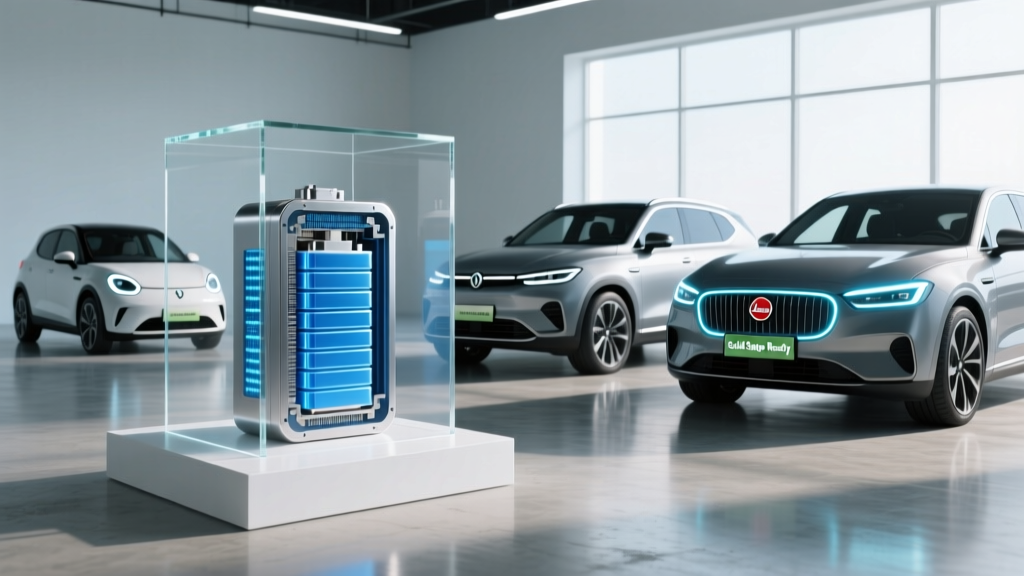
Looking Ahead: Solid-State and Next-Gen Battery Technology
Next-generation battery technologies are advancing rapidly, but realistic timelines matter:
- Solid-state batteries: Toyota, Samsung SDI, and QuantumScape are targeting limited production beginning in 2027–2029. These promise 20–40% higher energy density, faster charging, and improved safety. However, initial deployment will likely be in low-volume or premium applications. Mass-market availability is not expected before 2030–2032.
- Silicon-dominant anodes: Companies like Sila Nanotechnologies and Group14 are already supplying silicon-enhanced anode materials that boost energy density by 10–20% over traditional graphite. GM has invested in this space, and incremental silicon-anode adoption is expected across the Ultium lineup through the late 2020s.
- Sodium-ion batteries: CATL and other manufacturers are producing sodium-ion cells for lower-cost, lower-range applications. These won't replace NMC in a vehicle like the Hummer EV, but they may appear in budget EVs and stationary storage by 2027.
- LMFP (Lithium Manganese Iron Phosphate): A hybrid chemistry blending LFP's safety and cost with improved energy density. Expected to appear in mid-range EVs by 2027–2028.
For current Hummer EV owners and buyers: the Ultium NMC pack is a mature, well-engineered system. Waiting for solid-state is not a practical strategy — these technologies are years from mainstream availability and will debut in new vehicle platforms, not as retrofits.
Frequently Asked Questions
How long do EV batteries last in years and miles?
Modern liquid-cooled EV batteries, including the Hummer EV's Ultium pack, are designed to retain 70–85% of their original capacity after 150,000–200,000 miles or 12–15 years. Fleet data from Geotab and Recurrent Auto supports an average degradation rate of 1.5–2.0% per year under normal use. Most EV batteries outlast the vehicle's useful life.
How much does it cost to replace a Hummer EV battery?
A full pack replacement for the Hummer EV is estimated at $40,000–$65,000 in 2026, given the ~246 kWh gross capacity. However, full pack replacements are extremely rare. The Ultium system's 24-module design allows individual module replacement at $3,000–$8,000 per module. Battery costs continue to decline and will likely be significantly lower if replacement is needed 10–15 years from now.
What does the Hummer EV battery warranty cover?
GM covers the high-voltage battery, drive units, power electronics, and thermal management system for 8 years or 100,000 miles. The warranty guarantees the battery will retain at least 70% of its original usable capacity. If it falls below that threshold within the warranty period, GM will repair or replace the affected components at no cost.
How do I check my Hummer EV battery's State of Health?
Use the myGMC app for basic battery status, track your estimated range at a consistent charge level over time, or request a detailed SoH report from a GM dealership. Third-party OBD-II diagnostic tools are becoming available for Ultium vehicles but the dealer-level GDS2 system provides the most comprehensive data.
LFP vs NMC — which chemistry is better?
Neither is universally better; it depends on your priorities. NMC offers higher energy density and better cold-weather performance, making it the right choice for long-range and high-performance vehicles like the Hummer EV. LFP offers longer cycle life, lower cost, better thermal stability, and can be routinely charged to 100%, making it ideal for standard-range and daily-driver EVs. For a 9,000-pound truck needing 329 miles of range, NMC is the only practical option.
Does frequent DC fast charging damage the Hummer EV battery?
Occasional DC fast charging is well within the battery's design parameters — the Ultium system's active thermal management protects the cells during high-power sessions. However, exclusive reliance on DC fast charging (e.g., daily 350 kW sessions with no Level 2 charging) will accelerate degradation compared to primarily home Level 2 charging. The best practice is to use Level 2 for daily needs and DC fast charging for road trips.
Will solid-state batteries be available as a Hummer EV upgrade?
No. Solid-state batteries are expected to enter limited production in 2027–2029 and will debut in new vehicle platforms designed around them. Retrofitting a solid-state pack into an existing Hummer EV is not feasible due to differences in pack geometry, management systems, and structural integration. The current Ultium NMC pack is the battery this vehicle will use throughout its production life.