From Raw Minerals to Megawatt-Hours: Inside Tesla's Battery Manufacturing
If you've ever searched how is Tesla battery made, the answer spans chemistry labs, gigafactory production lines, and thermal-management engineering. Tesla doesn't build a single battery type — it sources cells from multiple suppliers (Panasonic, CATL, LG Energy Solution) and integrates them into structural packs that differ by model, trim, and even production month. Understanding what's inside your Tesla's battery, how it's assembled, and how it degrades over time is the single most important factor in predicting long-term ownership costs.
This guide dissects Tesla's battery cell chemistry, pack architecture, real-world degradation data from high-mileage fleets, and what it actually costs to replace a pack out of warranty. We'll also cover how to monitor State of Health (SoH) and which daily habits meaningfully extend battery life.
Cell Chemistry: LFP vs NMC vs NCA in Tesla's Lineup
Tesla uses three primary cathode chemistries across its 2025–2026 fleet. The chemistry determines energy density, cycle life, cold-weather performance, and cost — and it's the first thing any buyer should verify before purchase, because it affects daily charging habits.
| Attribute | LFP (Lithium Iron Phosphate) | NMC (Nickel Manganese Cobalt) | NCA (Nickel Cobalt Aluminum) |
|---|---|---|---|
| Used In | Model 3 RWD, Model Y RWD (Standard Range) | Model 3/Y Long Range, Cybertruck | Model S/X, some Model 3 Performance |
| Cell Supplier | CATL (prismatic) | LG Energy Solution, Panasonic | Panasonic (cylindrical 4680/2170) |
| Energy Density | ~160–180 Wh/kg (lower) | ~220–260 Wh/kg (higher) | ~250–270 Wh/kg (highest) |
| Typical Cycle Life | 3,000–5,000+ cycles | 1,000–2,000 cycles | 1,000–1,500 cycles |
| Cold Performance | Moderate loss; slower charge in freezing temps | Better low-temp charge acceptance | Best low-temp performance |
| Recommended Daily SoC | 100% (Tesla recommends periodic full charge for BMS calibration) | 80% daily; 100% for trips only | 80% daily; 100% for trips only |
| Cobalt Content | None | Low-to-moderate | Low (aluminum replaces some cobalt) |
| Cost per kWh (est.) | ~$80–100 | ~$110–140 | ~$120–150 |
LFP trade-off, plainly stated: You gain cycle life and can charge to 100% daily without accelerated degradation, but you sacrifice roughly 10–15% energy density compared to NMC. That's why LFP-equipped Model 3 RWD carries a ~57.5 kWh usable pack yielding an EPA-estimated 272 miles, while the NMC Long Range AWD version with a ~75 kWh usable pack reaches 363 miles EPA. If your commute is under 100 miles round-trip and you want maximum calendar life, LFP is the pragmatic choice. For road-trippers and cold-climate owners, NMC or NCA delivers more range per kilogram and faster DC charging in winter.
How Tesla Battery Packs Are Assembled
The journey from raw cell to finished pack involves several stages, whether at Giga Nevada (Panasonic partnership), Giga Texas, or Giga Shanghai:
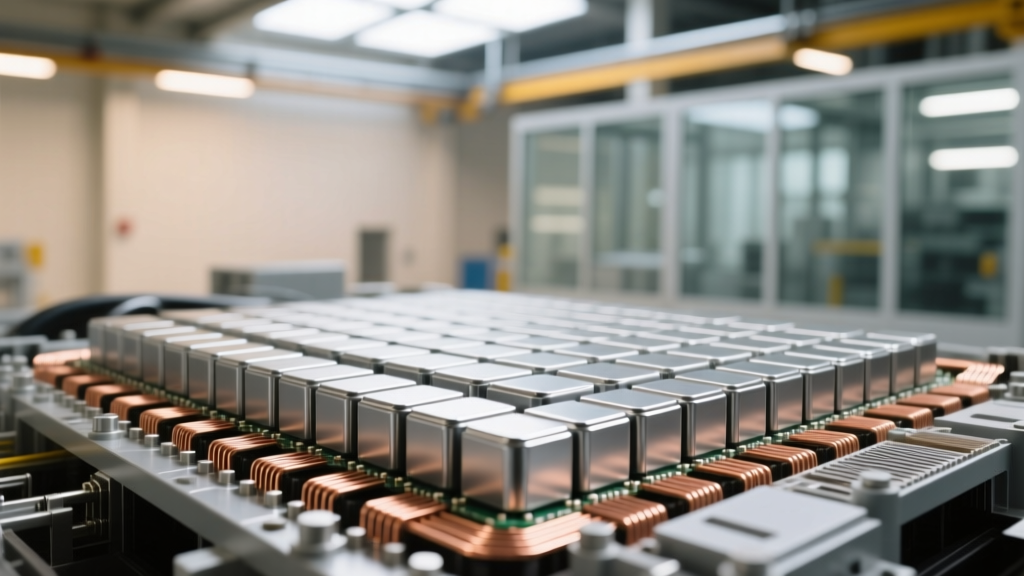
- Cell production: For Panasonic-supplied cylindrical cells (2170 and 4680 form factors), electrode slurry is coated onto copper (anode) and aluminum (cathode) foils, dried, calendered, slit, and wound into a jelly roll. The jelly roll is inserted into a steel or nickel-plated can, filled with electrolyte, and sealed. For CATL LFP cells, prismatic formats use stacked electrodes in a rectangular aluminum casing.
- Formation and aging: Cells undergo initial charge/discharge cycles (formation) to stabilize the solid-electrolyte interphase (SEI) layer. They then age for days to weeks while impedance and capacity are measured to bin cells by performance.
- Module and pack integration: Cells are grouped into modules (or directly into the pack in Tesla's structural battery pack design, where 4680 cells are bonded between upper and lower sheet-metal panels with structural foam). Cooling channels, busbars, the Battery Management System (BMS), contactors, and pyro-fuses are installed.
- Thermal management: Tesla uses a glycol-water coolant loop running through serpentine tubes or cooling plates bonded to cells. The BMS actively heats or cools the pack to keep cells in the ~20–40°C optimal window during driving and charging.
- Structural role (4680 packs): In Model Y vehicles built at Giga Texas with 4680 cells, the battery pack serves as a stressed member connecting front and rear castings, reducing vehicle mass and part count. This is a manufacturing innovation, not a chemistry change — but it makes out-of-warranty replacement more complex.
The BMS is arguably as important as the cells themselves. It monitors individual cell-group voltage (to within millivolts), temperature at dozens of points, and current flow, constantly balancing cells to prevent drift. Tesla's BMS also manages preconditioning — warming the pack before you arrive at a Supercharger so the cells can accept peak kW without lithium plating.
Real-World Degradation: What the Data Shows
Tesla's 2024 Impact Report (the most recent comprehensive dataset published) showed that Model 3/Y packs retain approximately 85% of original capacity at 200,000 miles. Model S/X data, which has a longer fleet history, indicates roughly 88% retention at the same mileage. These numbers are fleet averages — individual results depend heavily on climate, charging habits, and whether the vehicle is frequently DC fast-charged.
| Mileage | Model 3/Y Avg. Capacity Retained | Model S/X Avg. Capacity Retained | Notes |
|---|---|---|---|
| New | 100% | 100% | Baseline |
| 30,000 mi | ~95–97% | ~96–97% | Initial steep drop as SEI stabilizes |
| 60,000 mi | ~92–94% | ~93–95% | Curve flattens significantly |
| 100,000 mi | ~89–92% | ~90–93% | Linear slow degradation phase |
| 150,000 mi | ~87–90% | ~89–91% | Variance widens by climate/usage |
| 200,000 mi | ~83–87% | ~86–89% | Most packs still above warranty threshold |
Key insight: Degradation is not linear. You lose the most capacity in the first 20,000–30,000 miles (roughly 3–5%) as the SEI layer matures, then degradation slows dramatically to approximately 0.5–1% per year for the next decade. This is why the fear of a sudden "battery cliff" is largely unfounded — packs fade gradually, and most will outlast the vehicle's body, suspension, and interior.
Independent data from Recurrent Auto, which tracks over 15,000 EVs in real-world conditions, confirms that Tesla packs in temperate climates (California, the Southeast) degrade 2–4% less over five years compared to vehicles in Arizona or the upper Midwest, where sustained heat or extreme cold cycles accelerate electrolyte breakdown.
What Tesla's Battery Warranty Actually Covers
Tesla's high-voltage battery warranty is one of the more straightforward in the industry, but the details matter — especially the capacity-retention threshold.
| Model | Battery Warranty | Capacity Threshold | Drive Unit Warranty |
|---|---|---|---|
| Model 3 RWD (LFP) | 8 years / 100,000 miles | 70% retention minimum | 8 yr / 100,000 mi |
| Model 3 Long Range / Performance | 8 years / 120,000 miles | 70% retention minimum | 8 yr / 120,000 mi |
| Model Y (all trims) | 8 years / 120,000 miles | 70% retention minimum | 8 yr / 120,000 mi |
| Model S / Model X | 8 years / 150,000 miles | 70% retention minimum | 8 yr / 150,000 mi |
| Cybertruck | 8 years / 120,000 miles | 70% retention minimum | 8 yr / 120,000 mi |
What's covered: Defects in materials or workmanship, and capacity loss below 70% of the original usable kWh within the warranty period. Tesla will repair, replace, or remanufacture the pack at their discretion. A remanufactured pack may be installed — one that meets the same 70% threshold but is not necessarily brand-new.
What's NOT covered: Damage from accidents, flooding, fire, unauthorized modifications, or using the vehicle as a stationary power source beyond intended V2H/V2L capabilities. Cosmetic corrosion of the pack casing that doesn't affect function is also excluded.
Warranty transfer: Tesla's battery warranty transfers automatically to subsequent owners — no registration step required. This is a significant resale-value advantage over some competitors that require warranty transfer paperwork.
Battery Replacement Cost: What to Budget For
Out-of-warranty Tesla battery replacement is expensive but rarely needed during typical ownership. According to service invoices shared by owners and independent repair shops, here's the current cost landscape for 2025–2026:
| Model / Pack | Battery Size (Usable) | Parts Cost (est.) | Labor (est.) | Total Range |
|---|---|---|---|---|
| Model 3 RWD (LFP, CATL) | ~57.5 kWh | $8,000–$11,000 | $1,500–$2,500 | $9,500–$13,500 |
| Model 3/Y LR (NMC, 2170) | ~75 kWh | $12,000–$16,000 | $1,500–$2,500 | $13,500–$18,500 |
| Model Y (4680 structural) | ~72 kWh | $13,000–$18,000 | $2,500–$4,000 | $15,500–$22,000 |
| Model S/X (NCA) | ~95–100 kWh | $15,000–$22,000 | $2,000–$3,500 | $17,000–$25,500 |
| Cybertruck (4680) | ~123 kWh | $20,000–$28,000 | $3,000–$5,000 | $23,000–$33,000 |
When is replacement actually needed? Most Tesla packs don't require replacement during normal ownership. Based on fleet data, the median pack reaches 70% capacity at roughly 250,000–350,000 miles — well beyond the mileage at which most vehicles are scrapped for other reasons. Complete pack failure (sudden, non-degradation) is rare and typically covered under warranty if it occurs within the coverage period.
Cost-reduction options: Independent EV repair shops (such as Electrified Garage and others) can sometimes perform module-level repairs on older Model S/X packs for $5,000–$10,000, replacing only degraded modules rather than the full pack. For newer unibody-pack designs (4680 structural packs), module-level repair is not currently feasible — the pack is replaced as a unit.
Factors That Accelerate (or Slow) Battery Degradation
Battery longevity isn't random — it's largely determined by five controllable factors. Understanding these lets you add years and tens of thousands of miles to your pack's useful life.
Daily Habits That Maximize Battery Life
- Set charge limits correctly: For NMC/NCA packs, set daily charge to 80%. For LFP, charge to 100% at least once per week for BMS calibration. Reserve 100% charges on NMC/NCA for road trips and depart immediately after reaching full.
- Minimize DC fast charging when possible: Frequent Supercharging (3+ times per week) at 150–250 kW adds thermal stress. For daily use, Level 2 home charging at 7–11.5 kW is gentler. Supercharging on road trips is perfectly fine — it's the daily pattern that matters.
- Precondition before fast charging: Navigate to a Supercharger in the Tesla app or nav so the car warms the pack. Cold cells charged at high power risk lithium plating, which causes permanent capacity loss.
- Avoid prolonged storage at extreme SoC: Don't leave the car sitting at 100% or below 10% for weeks. If storing for vacation, set to ~50% and leave plugged in so the BMS can manage thermal conditions.
- Manage extreme heat exposure: In desert climates, park in shade or a garage when possible. Sustained pack temperatures above 40°C (104°F) accelerate electrolyte decomposition. Tesla's thermal management mitigates this, but reducing ambient heat load helps.
- Don't obsess over regen braking settings: Standard regen doesn't harm the battery. The BMS limits regen power when the pack is cold or near 100% SoC automatically.
How to Monitor Your Tesla's Battery Health (SoH)
Tesla doesn't display a single "State of Health" percentage in the vehicle UI the way some competitors do, but several methods let you track degradation:
In-Car Method: The Range Calculation
Navigate to the charging screen and set the display to show "percentage" rather than "miles." Charge to 100% (or calculate proportionally from a known SoC). Compare the displayed estimated range at 100% to the original EPA-rated range for your specific model and wheel configuration. For example, if your Model 3 Long Range originally rated 363 miles EPA and now shows 330 miles at 100%, your pack is at approximately 91% SoH.
Caveat: The in-car range estimate fluctuates based on recent driving efficiency and ambient temperature. For a more accurate reading, use the method below.
Third-Party Apps: Tessie, TeslaFi, or Recurrent
Apps like Tessie and TeslaFi log charge sessions and calculate SoH by comparing energy added (kWh from the charger, adjusted for charging losses of ~5–10%) against the change in SoC percentage. Over multiple charge cycles, they build a reliable SoH trend line. Recurrent provides a free battery health report that compares your pack's degradation against their fleet database of similar vehicles in your climate zone.
Service Mode (Advanced)
Tesla's Service Mode (accessible via a hidden gesture on the software screen) displays "Nominal Full Pack" in kWh — the BMS's current estimate of total usable capacity. Compare this to the original nominal capacity for your pack (e.g., ~75 kWh for Model 3 LR) for a direct SoH percentage. This is the most accurate owner-accessible metric but requires comfort with diagnostic menus.
What's Next: Solid-State, Silicon Anodes, and Dry Electrode Coating
Tesla's battery R&D roadmap extends well beyond current chemistries, but timelines matter. Here's a realistic assessment of emerging technologies as of 2026:
4680 dry electrode coating: Tesla has been ramping dry electrode manufacturing at Giga Texas, eliminating the solvent-drying step in cell production. This reduces factory footprint by ~70% and energy consumption per cell. As of early 2026, 4680 cells with dry electrodes are in production Model Y vehicles, but yield and throughput are still scaling. This is a manufacturing innovation that reduces cost rather than a chemistry leap that increases range.
Silicon-dominant anodes: Replacing graphite anodes with silicon can theoretically increase energy density by 20–40%. Tesla has used silicon-carbon composite anodes in small percentages for years, but a full silicon-dominant anode remains in development across the industry. Companies like Sila Nanotechnologies and Group14 are supplying early silicon-anode materials, but widespread automotive deployment at scale is expected no earlier than 2028–2030. Expect incremental silicon content increases in Tesla cells rather than a sudden switch.
Solid-state batteries: Fully solid-state cells (replacing liquid electrolyte with a solid ceramic, sulfide, or polymer conductor) promise higher energy density, faster charging, and improved safety. Toyota, Samsung SDI, and QuantumScape have announced prototype demonstrations, but no automaker — Tesla included — has a solid-state pack in a production vehicle as of 2026. Realistic mass-production timelines remain 2029–2032 at the earliest, and initial deployment will likely be limited to premium, low-volume applications before reaching mainstream models.
Sodium-ion cells: CATL has begun mass-producing sodium-ion cells for lower-range applications. Tesla has not announced sodium-ion adoption, but the chemistry (lower cost, no lithium or cobalt, reduced energy density) could eventually appear in entry-level models or stationary Megapack storage. Watch for announcements around 2027–2028.
Frequently Asked Questions
How long do Tesla batteries last in years and miles?
Based on fleet data from Tesla's Impact Reports and independent tracking by Recurrent Auto, the median Tesla battery pack retains approximately 85% capacity at 200,000 miles. At typical US driving rates of 13,500 miles per year, that's roughly 15 years. Most packs will outlast the vehicle's useful economic life. Catastrophic failure is rare — degradation is gradual and predictable.
How much does it cost to replace a Tesla battery?
Out-of-warranty replacement ranges from approximately $9,500 for a Model 3 RWD (LFP) to $23,000–$33,000 for a Cybertruck. Most Model 3/Y Long Range replacements fall in the $13,500–$18,500 range including labor. However, fewer than 2% of Tesla vehicles require a battery replacement during the warranty period, and most packs survive well beyond 200,000 miles without falling below the 70% warranty threshold.
What does Tesla's battery warranty actually cover?
Tesla covers the high-voltage battery and drive unit for 8 years and 100,000–150,000 miles depending on the model. If your pack drops below 70% of its original usable capacity within that period, Tesla will repair, replace, or remanufacture it at no cost. The warranty transfers to subsequent owners automatically. It does not cover damage from accidents, floods, or unauthorized modifications.
How do I check my Tesla's battery health?
The simplest method is to charge to 100% and compare the displayed range to your model's original EPA rating. For more precision, use third-party apps like Tessie or TeslaFi that track SoH over multiple charge cycles, or access Service Mode to read the "Nominal Full Pack" kWh value directly from the BMS. Recurrent Auto also offers free battery health reports benchmarked against fleet data.
LFP vs NMC — which Tesla battery is better for me?
Choose LFP (Model 3/Y RWD) if you want maximum cycle life, don't mind slightly less range, and prefer the simplicity of charging to 100% daily. Choose NMC (Model 3/Y Long Range) or NCA (Model S/X) if you need maximum range, take frequent road trips, live in a cold climate where NMC/NCA charge faster in winter, or want the highest performance. Neither chemistry is "better" — they serve different ownership patterns.
Does frequent Supercharging damage the battery?
Occasional Supercharging on road trips has negligible impact. However, daily DC fast charging at 150–250 kW does accelerate degradation by approximately 1–3% over five years compared to exclusive Level 2 home charging, according to Recurrent's fleet analysis. The bigger risk is fast charging a cold pack without preconditioning — always navigate to the Supercharger so the car can warm the battery first.
Can I upgrade my Tesla's battery to a larger capacity later?
No. Tesla does not offer battery capacity upgrades after purchase. The pack, BMS, and vehicle software are matched at the factory. Some older Model S/X vehicles received replacement packs with slightly different capacities during warranty service, but this is not a configurable upgrade path.
Sources: Tesla 2024 Impact Report; fueleconomy.gov (EPA range data); Recurrent Auto fleet degradation database; Tesla owner's manuals and warranty documentation (tesla.com).