Why Battery Swap Tech Like Ample Is Changing the EV Conversation
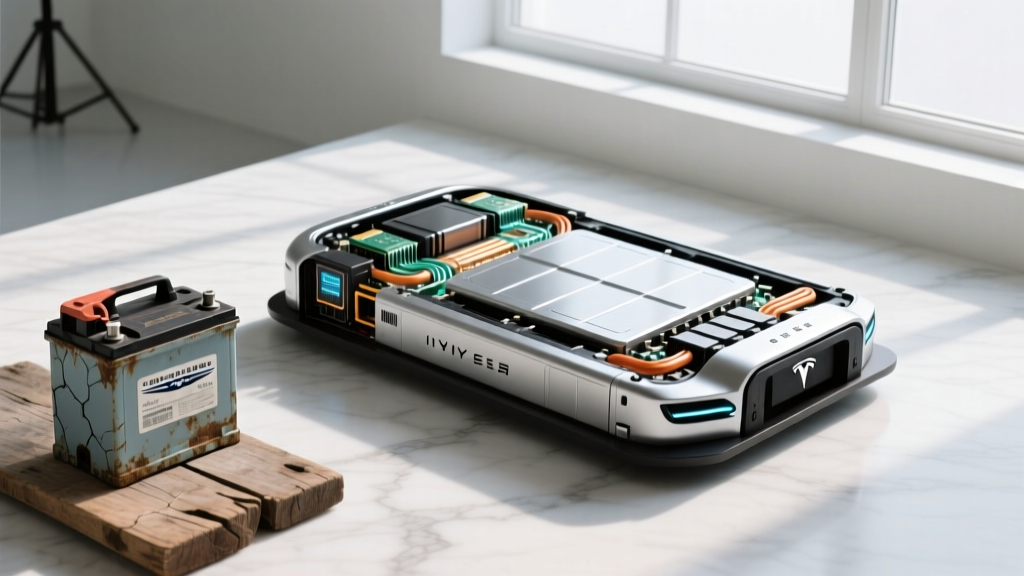
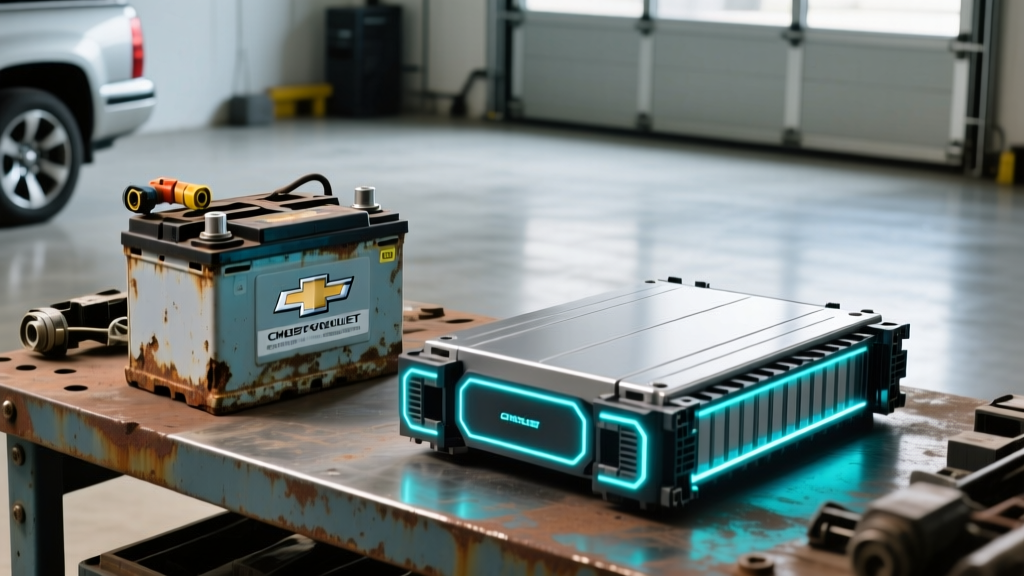
For most EV owners, the high-voltage traction battery is a sealed, warrantied black box bolted to the chassis. You charge it, you drive on it, and you trust the manufacturer's degradation curve. But what if you could physically swap that battery in minutes — treating it more like a propane tank than a permanent powerplant?
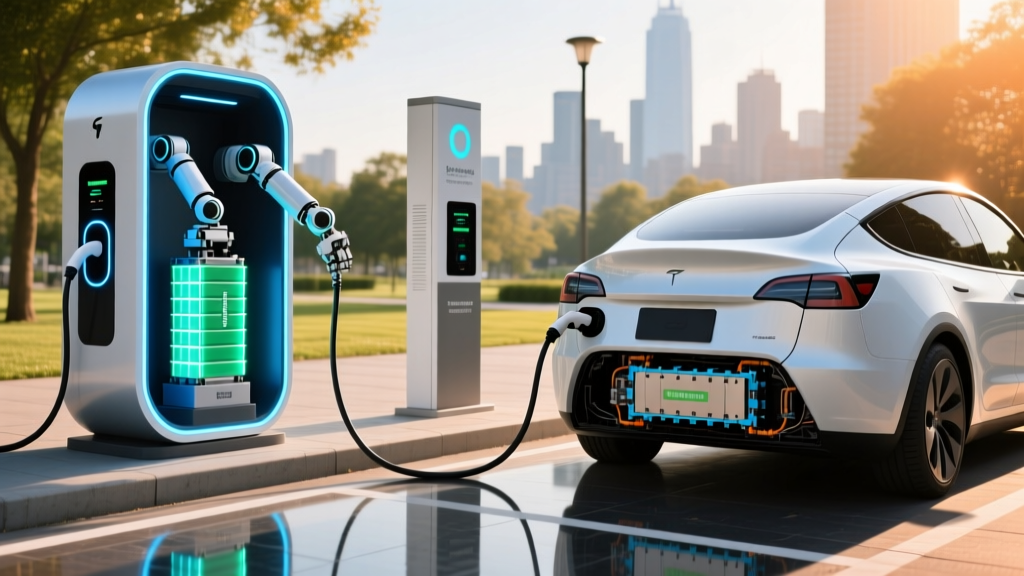
That's the premise behind Ample battery swap stations and similar battery-as-a-service (BaaS) models. Ample, a San Francisco-based company, has been piloting modular battery swap infrastructure primarily with commercial fleet vehicles — delivering a fully charged pack in roughly five minutes. The concept addresses two persistent EV pain points simultaneously: charging downtime and long-term battery degradation anxiety.
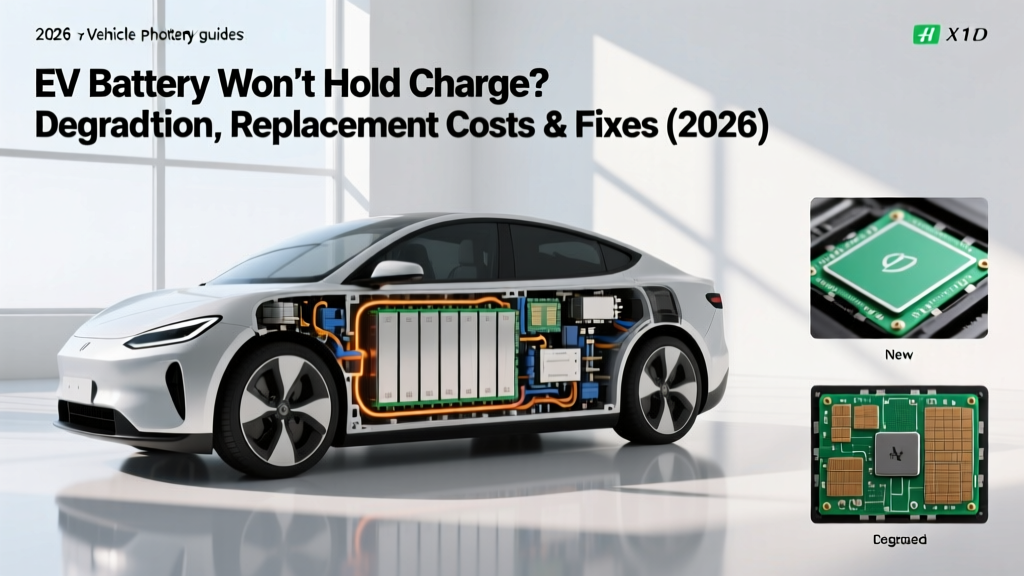
But before we evaluate whether swap-based models can scale to consumer EVs, you need a thorough understanding of the battery technology inside your current (or prospective) electric vehicle. This guide covers everything from cell chemistry to real-world degradation data, warranty terms, replacement costs, and how to maximize the lifespan of whatever pack you're driving.
LFP vs. NMC/NCA: Understanding Battery Chemistry Trade-Offs
Not all EV batteries are created equal. The cathode chemistry determines energy density, cycle life, thermal stability, cold-weather performance, and cost. In 2026, two dominant chemistries power the vast majority of passenger EVs sold in the US:
- NMC (Nickel Manganese Cobalt) and NCA (Nickel Cobalt Aluminum) — the traditional high-energy chemistry used in most long-range EVs
- LFP (Lithium Iron Phosphate) — the fast-growing, lower-cost chemistry now standard in many base-trim and standard-range models
| Attribute | LFP (LiFePO₄) | NMC / NCA |
|---|---|---|
| Energy density | ~160–180 Wh/kg (lower) | ~220–260 Wh/kg (higher) |
| Cycle life | 3,000–5,000+ cycles | 1,000–2,500 cycles |
| Cold-weather performance | More range loss below freezing | Better low-temp retention |
| Thermal stability | Excellent — less thermal runaway risk | Good but requires more active cooling |
| Cost per kWh | ~$80–100/kWh (pack level, 2026) | ~$110–140/kWh (pack level, 2026) |
| SoC recommendation | Can charge to 100% daily | Best kept 20–80% for daily use |
| Common in (2026 models) | Tesla Model 3 RWD, Model Y RWD, base BYD, some Ford & Rivian standard packs | Tesla Long Range, Hyundai Ioniq 5/6, BMW iX, most premium/long-range trims |
The practical takeaway: LFP is the better choice if you want maximum cycle life, can accept slightly less range per kilogram, and want the simplicity of charging to 100% without guilt. NMC/NCA wins for maximum range in a single charge and better winter performance. Neither chemistry is universally "better" — the right choice depends on your driving patterns and climate.
How Long Do EV Batteries Actually Last? Real Degradation Data
Battery degradation is measured as a percentage loss of original usable capacity over time and charge cycles. The good news, backed by fleet data and longitudinal studies: modern EV batteries are lasting significantly longer than early-generation packs from the 2011–2016 era.
- Year 1–2: ~2–5% capacity loss (initial formation period — steepest early curve)
- Year 3–5: ~1–2% additional loss per year (plateau phase)
- Year 8 (typical warranty end): ~8–15% total loss for NMC; ~5–10% for LFP
- 150,000 miles: Most NMC packs retain 85–90% SoH; LFP packs often retain 90–95%
- 200,000+ miles: Tesla fleet data shows median ~12% degradation at 200k miles for NMC packs; LFP-equipped Model 3 taxis in China reporting 90%+ SoH at 300k km (~186k miles)
Sources: Tesla Impact Reports, Recurrent Auto battery fleet studies, Geotab longitudinal EV battery data.
The degradation curve is not linear. Most packs experience a small initial drop (the "formation loss") in the first year or two, then settle into a very gradual, nearly flat decline for the remainder of their life. Catastrophic failure (sudden large capacity loss) is rare in modern packs with active thermal management.
EV Battery Warranties: What's Covered and What's Not
Federal law mandates a minimum 8-year/100,000-mile warranty on EV battery packs for emissions-related compliance, and most manufacturers meet or exceed this baseline. California Air Resources Board (CARB) states require 10 years/150,000 miles.
| Manufacturer | Duration | Mileage | Capacity Threshold |
|---|---|---|---|
| Tesla (all models) | 8 years | 100,000–150,000 mi (varies by model) | 70% retention |
| Hyundai / Kia (E-GMP) | 10 years | 100,000 mi | 70% retention |
| Ford (Mustang Mach-E, F-150 Lightning) | 8 years | 100,000 mi | 70% retention |
| BMW (iX, i4, i7) | 8 years | 100,000 mi | 70% retention |
| Rivian (R1T, R1S) | 8 years | 175,000 mi | 70% retention |
| Chevrolet (Equinox EV, Blazer EV) | 8 years | 100,000 mi | 60–70% retention |
What triggers a warranty claim: If your battery's State of Health (SoH) drops below the stated threshold (typically 70%) within the warranty period, the manufacturer will repair or replace the pack — usually by swapping in a refurbished unit with equivalent or better capacity. Individual module or cell replacement is increasingly common, which avoids full-pack replacement.
What voids coverage: Physical damage (collision, flood), unauthorized modifications to the battery management system (BMS), use of non-approved charging equipment that causes damage, or failure to follow basic maintenance requirements outlined in the owner's manual.
Battery Replacement Costs: When, How Much, and the Ample Swap Alternative
Here's the number that generates the most anxiety among prospective EV buyers — and it deserves honest, data-grounded treatment rather than fear-mongering.
| Vehicle / Pack Size | Chemistry | Full Pack Replacement | Module-Level Repair |
|---|---|---|---|
| Tesla Model 3 RWD (~60 kWh) | LFP | $8,000–$12,000 | $1,500–$3,500 |
| Tesla Model Y LR (~82 kWh) | NMC | $12,000–$16,000 | $2,000–$4,500 |
| Hyundai Ioniq 5 (~77.4 kWh) | NMC | $11,000–$15,000 | $2,000–$4,000 |
| Ford F-150 Lightning Ext. Range (~131 kWh) | NMC | $18,000–$25,000 | $3,000–$6,000 |
| Chevrolet Bolt EV (~65 kWh) | NMC | $9,000–$14,000 | $1,500–$3,000 |
Context that matters: According to data aggregated by Recurrent Auto, fewer than 2% of EVs in their studied fleet have required a battery replacement outside of warranty-covered recalls. The vast majority of EV batteries outlast the vehicle itself — most EVs are scrapped for collision damage, electronics failures, or economic obsolescence long before the traction battery reaches end-of-life.
Where Ample Battery Swap Fits In
Ample's modular battery swap approach fundamentally restructures the replacement-cost equation. Instead of owning a single battery that degrades over 10–15 years, fleet operators using Ample stations effectively subscribe to a battery pool. Each swap delivers a certified, health-checked pack — meaning no individual vehicle ever accumulates the full degradation burden.
As of 2026, Ample has focused its deployment on commercial fleets (delivery vans, medium-duty trucks) in partnership with OEMs like Stellantis and Mitsubishi Fuso. The modular design breaks the battery into smaller, individually swappable units rather than one monolithic pack. This offers two advantages:
- Lower per-swap cost: Replacing one degraded module at a swap station is far cheaper than a full-pack replacement.
- Continuous health management: Ample's stations test each returned battery, retiring degraded modules from the circulation pool before they affect vehicle performance.
For consumer EVs, battery swap remains niche in the US market. NIO offers swap stations extensively in China and has begun limited European expansion, but no major US-market consumer EV currently supports third-party battery swapping. The structural and electrical integration required makes retrofit unlikely — swap-capable vehicles must be designed from the ground up for it.
Factors That Accelerate (or Slow) Battery Degradation
Your battery's lifespan is not purely a function of time — it's a function of how you treat it. Here are the factors ranked by impact, based on cell-level testing and fleet telematics data:
- ✅ Avoid sustained high SoC (NMC only): Keeping an NMC pack at 100% for extended periods accelerates calendar aging. Set your daily charge limit to 80%. LFP owners can charge to 100% daily without concern — this chemistry tolerates full SoC well.
- ✅ Minimize DC fast charging frequency: Occasional road-trip fast charging is fine. Daily reliance on 150+ kW DCFC adds measurable wear. Fleet data from Geotab shows vehicles that fast-charge more than 3x/week degrade roughly 1–2% faster over 4 years than those primarily using Level 2.
- ✅ Manage extreme temperatures: Battery packs degrade fastest when held at high temperatures (>95°F / 35°C) at high SoC. Precondition your battery before fast charging (most modern EVs do this automatically when a DCFC is navigated to). In extreme cold, allow the pack to warm via preconditioning before demanding high regen or fast charging.
- ✅ Avoid deep discharge: Regularly running the battery below 10% SoC stresses cells. Aim to keep daily use between 20–80% for NMC, and don't let LFP sit at 0% for extended periods.
- ✅ Use Level 2 home charging as your baseline: A 7–11 kW Level 2 charger is the sweet spot — fast enough for overnight replenishment, gentle enough for daily use without thermal stress.
- ✅ Keep software updated: OEM battery management system (BMS) updates often refine thermal management and charging algorithms to reduce wear.
Monitoring Battery Health: How to Check Your State of Health (SoH)
State of Health (SoH) is the percentage of original usable capacity your battery currently retains. A brand-new pack is 100% SoH; a pack with 85% SoH that originally held 80 kWh now delivers roughly 68 kWh of usable energy.
How to check SoH in 2026:
- In-vehicle displays: Tesla provides a battery health estimate in the service menu (accessible via the touchscreen). Hyundai/Kia's Bluelink/Uvo connected services show SoH in the companion app. BMW's iDrive system includes a battery health indicator under vehicle status.
- OBD-II diagnostic tools: Devices like the OBDLink SX paired with apps such as EV Battery Health or Leaf Spy (for Nissan Leaf) can read BMS-reported SoH directly from the CAN bus.
- Third-party services: Companies like Recurrent offer battery health reports that compare your pack's degradation curve against fleet averages for your specific model and climate zone. Some dealerships now provide SoH certificates for pre-owned EV sales.
- Manual calculation: Track your kWh added during a full charge (from your charger's meter or app) against the pack's rated capacity. If your 77.4 kWh Ioniq 5 consistently accepts only ~68 kWh on a 10–100% charge, your SoH is approximately 88% (accounting for charging losses of ~5–8%).
Emerging Battery Tech: Solid-State, Silicon Anodes, and What's Realistic
Next-generation battery technologies are frequently announced with aggressive timelines. Here's a grounded assessment of what's on the horizon — and what's still years away from your driveway:
Solid-state batteries: These replace the liquid electrolyte with a solid conductor, promising higher energy density (potentially 400+ Wh/kg at the cell level), faster charging, and improved safety. Toyota has announced a solid-state EV for 2027–2028 production, and Samsung SDI is targeting 2027 for mass production. However, manufacturing scale-up and cost reduction remain significant hurdles. Realistic consumer availability at competitive pricing: 2028–2030 at the earliest, likely debuting in premium vehicles first.
Silicon-dominant anodes: Replacing graphite anodes with silicon can increase energy density by 20–40%. Companies like Sila Nanotechnologies and Group14 are supplying silicon-composite anode materials to manufacturers including Mercedes-Benz (for the upcoming G-Class EV) and Panasonic. This technology is closer to market — 2026–2027 production vehicles are incorporating partial silicon anodes, though full silicon dominance is still constrained by cycle-life challenges (silicon expands ~300% during lithiation).
Sodium-ion batteries: CATL and BYD have begun producing sodium-ion packs for lower-cost, shorter-range EVs in China. These eliminate lithium and cobalt entirely, trading energy density (~120–150 Wh/kg) for dramatically lower material cost. US-market availability is not expected before 2028 for passenger vehicles, though they may appear in stationary storage and micro-mobility applications sooner.
Frequently Asked Questions
How long do EV batteries last in years and miles?
Most modern EV batteries (2022+ production) are engineered to retain 70–90% of original capacity at 150,000–200,000 miles. In calendar years, that translates to 12–20 years of typical use (10,000–15,000 miles/year). LFP chemistry packs generally outlast NMC in cycle count, though NMC holds an edge in cold-climate energy retention. Fleet data consistently shows that the vast majority of EV batteries outlast the vehicle they're installed in.
How much does an EV battery cost to replace out of warranty?
Full pack replacement ranges from roughly $8,000 for a 60 kWh LFP pack (e.g., Tesla Model 3 RWD) to $25,000 for a 131 kWh NMC pack (e.g., F-150 Lightning Extended Range). However, module-level repairs — replacing only the degraded section of the pack — typically cost $1,500–$6,000 and are increasingly the standard service approach. Fewer than 2% of modern EVs require out-of-warranty battery replacement, according to Recurrent Auto fleet data.
What does the EV battery warranty actually cover?
Standard warranties guarantee that the battery will retain a minimum percentage of original capacity (typically 70%) for 8 years/100,000 miles (or 10 years/150,000 miles in CARB states). If SoH drops below the threshold within the warranty period, the manufacturer repairs or replaces the pack at no cost. Warranties do not cover physical damage from collisions, floods, or unauthorized modifications. Check your specific owner's manual for exact terms — they vary by model and trim.
How do I check and maximize my EV battery health?
Check SoH through your vehicle's connected app, in-car diagnostics menu, an OBD-II scanner with EV-compatible software, or a third-party service like Recurrent. To maximize longevity: set daily charge limits to 80% for NMC (100% is fine for LFP), rely on Level 2 home charging rather than daily DC fast charging, precondition the battery before fast charging and in extreme cold, avoid routinely draining below 10% SoC, and keep your vehicle's BMS software updated.
LFP vs. NMC — which battery chemistry is better for me?
Choose LFP if you prioritize maximum cycle life (3,000–5,000+ cycles), lower cost, the convenience of daily 100% charging, and enhanced thermal safety — and you can accept slightly lower energy density (meaning a marginally heavier pack for equivalent range). Choose NMC/NCA if you need maximum single-charge range, better cold-weather performance, or are buying a long-range/premium trim where NMC is the only option. Both chemistries are proven to last well beyond 150,000 miles with proper care.
Could Ample battery swap work for my personal EV?
As of 2026, Ample battery swap is deployed primarily for commercial fleets — delivery vans and medium-duty trucks — through partnerships with OEMs that design vehicles with modular, swap-compatible packs. Consumer passenger EVs in the US market are not currently designed for third-party battery swapping. The technology is viable and proven for fleet applications, but widespread consumer availability would require OEMs to adopt standardized, modular pack architectures — a shift that is not imminent for the US passenger vehicle market.