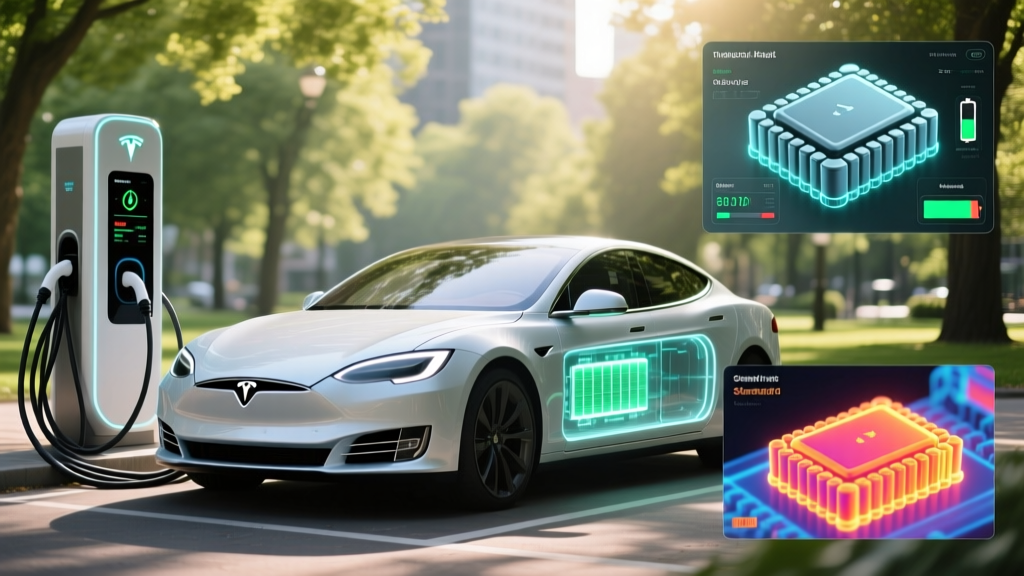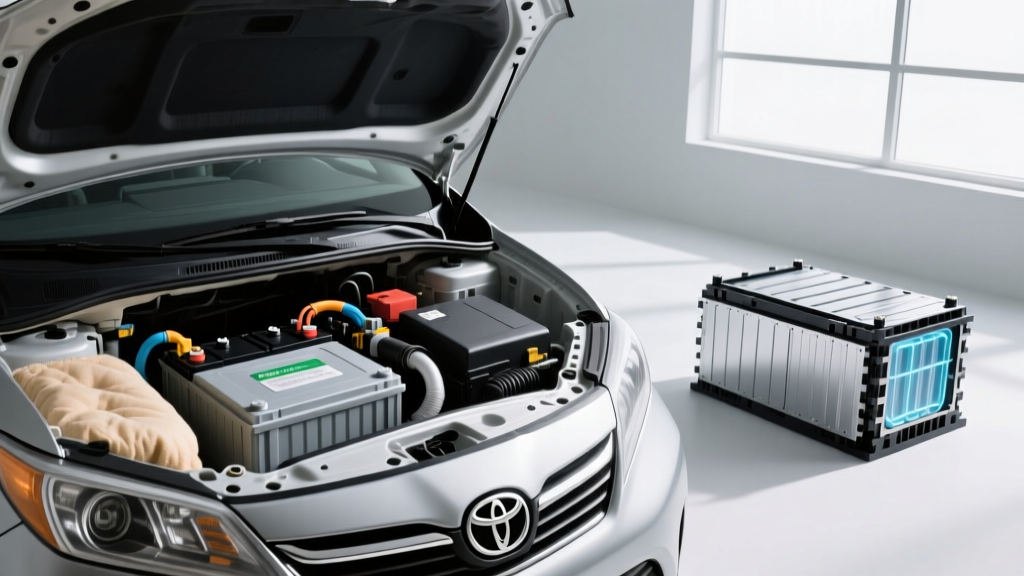
Search "how many batteries in a Tesla" and you'll find a surprisingly common point of confusion. The short answer is that every Tesla has one high-voltage traction battery pack (plus a separate 12V or 16V auxiliary battery for electronics). But inside that single pack, thousands of individual lithium-ion cells work together to deliver the range and performance Tesla owners expect. Understanding how those cells are arranged, what chemistry they use, and how they age over time is the key to making a smart EV purchase — and avoiding unnecessary anxiety about battery replacement.
This guide unpacks Tesla's battery architecture for the 2025–2026 model year lineup, compares LFP and NMC chemistries with real trade-off data, and gives you the numbers on degradation, warranty coverage, and out-of-pocket replacement costs.
One Pack, Thousands of Cells: Tesla's Battery Architecture
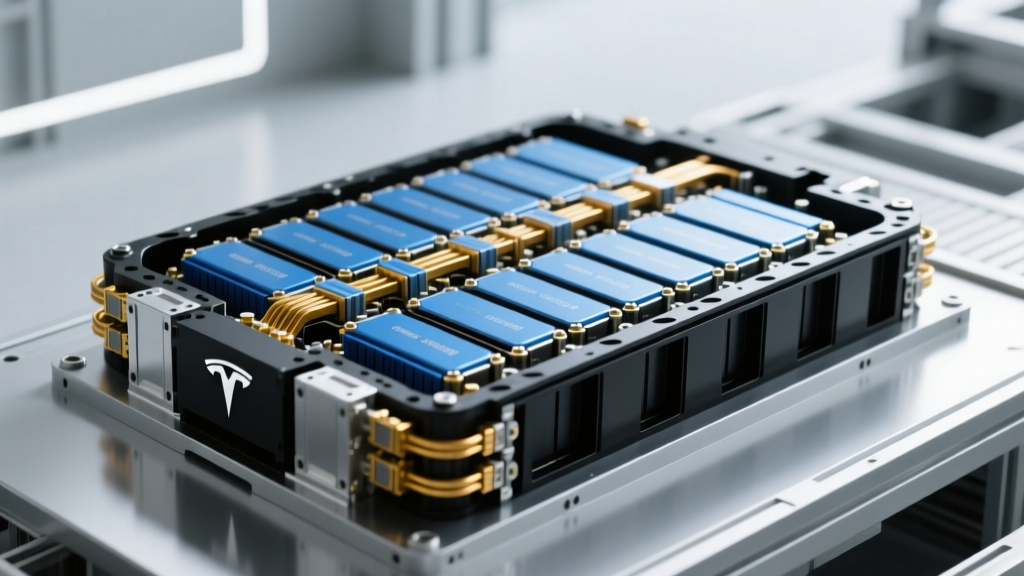
A Tesla battery pack is a single integrated unit mounted low in the vehicle chassis — what engineers call a "skateboard" platform. It is not a collection of removable batteries the way a golf cart uses six 6V lead-acid units. Instead, Tesla bundles thousands of small, cylindrical or prismatic lithium-ion cells into modules, then assembles those modules into one sealed, liquid-cooled pack.
The exact cell count varies by model and battery size:
- Model 3 Standard Range (LFP, ~60 kWh usable): Uses prismatic cells from CATL. Cell count is lower and arranged differently than cylindrical packs — typically several hundred large-format prismatic cells.
- Model 3 Long Range / Model Y Long Range (~75–82 kWh usable): Historically used thousands of 2170-format cylindrical cells (approximately 4,416 cells in earlier packs, with newer structural packs using fewer, larger 4680-format cells).
- Model S / Model X (~100 kWh usable): Earlier versions used roughly 7,104 smaller 18650-format cells; newer refreshes have shifted to 2170 and other formats with fewer total cells but higher per-cell energy density.
- Cybertruck (~123 kWh usable): Uses Tesla's in-house 4680 cells in a structural battery pack where the cells themselves form part of the vehicle's frame.
The trend across the industry — not just Tesla — is toward fewer, larger cells. Bigger cells reduce packaging complexity, lower manufacturing cost per kWh, and simplify thermal management. But the fundamental principle remains: one sealed, warrantied pack, not a user-serviceable array of individual batteries.
LFP vs NMC: Which Tesla Battery Chemistry Is Right for You?
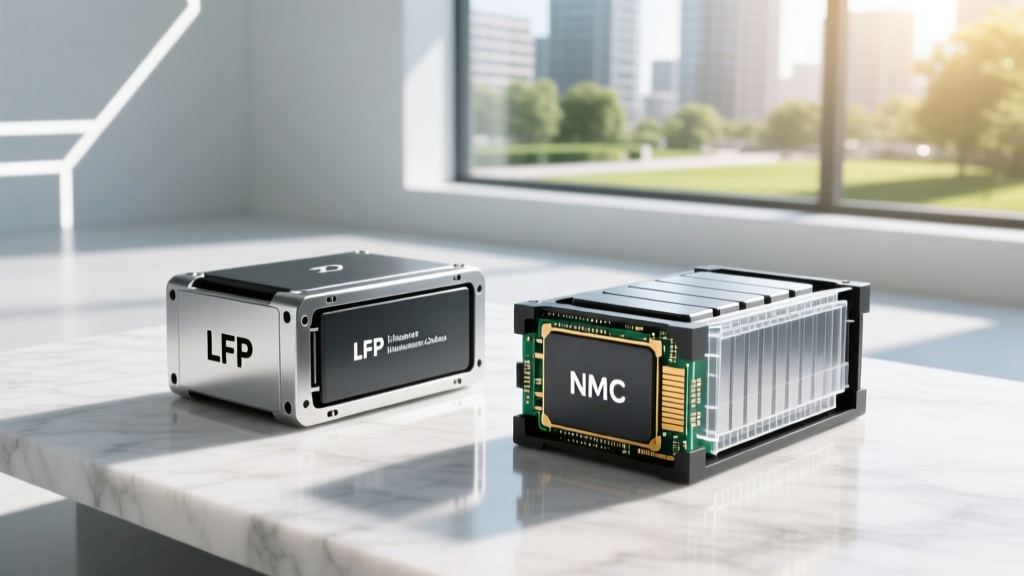
Tesla currently uses two primary cathode chemistries across its lineup, and the choice has real implications for your daily charging habits, range, and long-term ownership experience.
| Attribute | LFP (Lithium Iron Phosphate) | NMC / NCA (Nickel Manganese Cobalt / Nickel Cobalt Aluminum) |
|---|---|---|
| Used in | Model 3 Standard Range, Model Y Standard Range (RWD) | Model 3 Long Range, Model Y Long Range/Performance, Model S, Model X, Cybertruck |
| Energy density | Lower (~160–180 Wh/kg cell-level) | Higher (~220–260 Wh/kg cell-level) |
| Typical pack size | ~57–60 kWh usable | ~75–123 kWh usable |
| Cycle life | 3,000–5,000+ cycles to 80% capacity | 1,000–2,000 cycles to 80% capacity |
| Recommended daily charge | 100% — Tesla recommends regular full charges | 80% daily, 100% only for trips |
| Cold-weather performance | More range loss in freezing temps (~30–40% at 20°F) | Better cold performance (~20–30% loss at 20°F) |
| Cost per kWh | Lower — no cobalt or nickel | Higher — commodity-sensitive materials |
| Thermal stability | Excellent — lower risk of thermal runaway | Good — requires more active thermal management |
The practical takeaway: If you charge at home every night and don't need 330+ miles of range, an LFP-equipped Standard Range Tesla is arguably the better long-term ownership play. You can charge to 100% daily without accelerating degradation, and the cells are rated for significantly more charge cycles. If you need maximum range, tow frequently, or live in a cold climate where every mile of buffer matters, NMC/NCA in a Long Range model is the stronger choice — but you must be disciplined about charging to 80% for daily use.
How Long Do Tesla Batteries Last? Real-World Degradation Data
Battery degradation is the gradual, irreversible loss of total capacity over time and charge cycles. It is not a cliff — it's a curve that is steepest in the first year or two, then flattens considerably.
According to Tesla's own 2023 Impact Report (the most recent comprehensive dataset published), Model 3 and Model Y vehicles retained approximately 88% of original battery capacity at 200,000 miles. Model S and Model X data showed roughly 85% retention at 150,000 miles. These figures align with independent fleet data from sources like Recurrent Auto, which tracks over 15,000 EVs in real-world conditions.
Typical Tesla Battery Degradation Curve (NMC, Long Range models):
- Year 1 / 15,000 mi: ~3–5% capacity loss (initial formation loss)
- Year 3 / 45,000 mi: ~7–9% total loss
- Year 5 / 75,000 mi: ~9–11% total loss
- Year 8 / 120,000 mi: ~12–15% total loss
- Year 10 / 150,000 mi: ~14–17% total loss
LFP packs generally show slower degradation in the middle years due to chemistry advantages, though they may exhibit slightly more variance in state-of-charge estimation.
For context, the average American drives about 13,500 miles per year according to FHWA data. At that rate, a Tesla battery retaining 85% capacity at 150,000 miles will last well over a decade — and in most cases, will outlive the rest of the vehicle.
Factors That Accelerate (or Slow) Battery Degradation
Not all miles and charge cycles are equal. Here's what actually moves the needle on long-term capacity retention:
Battery Care Best Practices
- Limit DC fast charging to road trips. Occasional Supercharging is fine, but daily use of 150–250 kW DC fast charging stresses cells with high heat and high C-rates. Tesla's own navigation system preconditions the battery before Supercharger sessions to mitigate this, but frequent fast charging still correlates with slightly higher degradation over 100,000+ miles.
- Follow the 80% rule for NMC. Storing an NMC battery at 100% state of charge for extended periods accelerates electrolyte decomposition. Charge to 80% daily and only push to 100% when you'll be driving immediately.
- Charge LFP to 100% regularly. Tesla explicitly recommends this for LFP packs. It helps the BMS (battery management system) calibrate accurately and does not harm LFP chemistry the way it would NMC.
- Avoid extreme state-of-charge storage. Don't leave any EV sitting at 100% or below 10% for weeks. If storing, aim for ~50% SoC.
- Use scheduled charging and preconditioning. Tesla's scheduled departure feature warms the battery before you drive, reducing the strain of cold-weather acceleration and regen braking on cold cells.
- Don't obsess over avoiding low SoC. Driving down to 10–15% occasionally is fine. The danger is prolonged storage at very low or very high SoC, not normal daily use across a wide range.
Tesla Battery Warranty: What's Covered and for How Long
Tesla's battery warranty is one of the stronger guarantees in the EV market, and it is structured to protect against both premature failure and excessive degradation.
| Model | Warranty Period | Mileage Limit | Capacity Retention Threshold |
|---|---|---|---|
| Model 3 Standard Range (LFP) | 8 years | 100,000 miles | 70% minimum |
| Model 3 Long Range / Performance | 8 years | 120,000 miles | 70% minimum |
| Model Y (all trims) | 8 years | 120,000 miles | 70% minimum |
| Model S / Model X | 8 years | 150,000 miles | 70% minimum |
| Cybertruck | 8 years | 120,000 miles | 70% minimum |
What this means in practice: If your Tesla battery drops below 70% of its original usable capacity within the warranty period, Tesla will repair or replace it at no cost. The replacement may be a new or remanufactured pack with at least 70% capacity — not necessarily a brand-new unit. Manufacturing defects and premature cell failures are covered regardless of capacity percentage.
The warranty does not cover damage from accidents, flooding, fire caused by external factors, or modifications to the battery system. It also does not cover normal degradation above the 70% threshold — a battery at 72% capacity at 119,000 miles is functioning within spec.
Tesla Battery Replacement Cost: When and How Much
Out-of-warranty battery replacement is the scenario that generates the most anxiety — and the most exaggerated internet claims. Here are the actual numbers based on service invoices shared by owners and independent repair shops as of 2025–2026:
| Model | Battery Size | Replacement Cost Range (Parts + Labor) |
|---|---|---|
| Model 3 Standard Range | ~60 kWh (LFP) | $12,000 – $16,000 |
| Model 3 Long Range / Model Y | ~75–82 kWh (NMC) | $14,000 – $20,000 |
| Model S / Model X | ~100 kWh | $18,000 – $25,000 |
| Cybertruck | ~123 kWh (4680 structural) | $20,000 – $30,000 (estimated) |
Critical context: Complete battery pack replacement outside of warranty is rare. Tesla service centers increasingly perform module-level repairs — replacing only the degraded or failed cell modules rather than the entire pack — which can reduce costs to $5,000–$10,000 depending on the issue. Most Tesla batteries, as the degradation data above shows, retain well above 70% capacity even at 200,000 miles. The scenario where a 10-year-old Tesla needs a $20,000 battery swap is statistically uncommon.
For comparison, a gasoline vehicle's engine or transmission replacement at similar mileage often costs $4,000–$8,000 — and unlike an EV battery, those failures are far more common in the 100,000–200,000 mile window.
How to Check Your Tesla's Battery Health (State of Health)
Tesla does not expose a direct State of Health (SoH) percentage in the vehicle's touchscreen the way some competitors (like Hyundai/Kia) do. But owners have several reliable methods to monitor battery condition:
- Range comparison method: Charge to 100% (or your known max SoC) and note the displayed range. Compare this to the EPA-rated range when the car was new. A Model 3 Long Range that displayed 358 miles at 100% when new but now shows 315 miles has roughly 88% SoH. This is approximate — displayed range is influenced by recent driving efficiency — but it's a useful trend tracker.
- Tesla Service Mode: On recent software versions, owners can access Service Mode through the touchscreen (tap the car icon → Software → hold model name for 3 seconds → type "service"). This reveals detailed battery data including nominal full-pack energy (kWh), which you can compare to the original spec.
- Third-party apps: Tools like TeslaFi and Tessie log charge sessions and calculate SoH over time using actual energy added vs. state-of-charge change. These are more accurate than the dashboard range estimate because they measure real kWh going into the pack.
- OBD-II diagnostics: While Teslas use a proprietary connector, third-party adapters and apps can pull BMS data including cell voltage variance, which indicates module-level health.
For buyers evaluating a used Tesla, requesting a Service Mode screenshot showing the current nominal full-pack kWh is the single most informative battery health check available without a physical inspection.
What's Next: Solid-State and Silicon-Anode Batteries
The next major leap in EV battery technology centers on two advances: solid-state electrolytes (replacing the liquid electrolyte in current lithium-ion cells) and silicon-dominant anodes (replacing graphite to dramatically increase energy density).
Solid-state batteries promise higher energy density (potentially 400+ Wh/kg at the cell level), faster charging without degradation, and near-elimination of thermal runaway risk. Toyota has announced solid-state EV prototypes targeting 2027–2028 production, and companies like QuantumScape are working with Volkswagen on commercialization. However, manufacturing scalability remains the unsolved challenge. Industry consensus places widespread solid-state availability in affordable consumer EVs at 2029–2032 at the earliest.
Silicon-anode batteries are closer to market. Companies like Sila Nanotechnologies (partnering with Mercedes-Benz) and Group14 (supplying Porsche) are shipping silicon-composite anode materials that boost energy density by 20–40% over graphite. Expect to see these in premium EVs by 2026–2027, with gradual trickle-down to mainstream models.
For current buyers: these technologies are worth tracking but should not delay a purchase. Today's lithium-ion packs — particularly LFP — already deliver 200,000+ mile lifespans with manageable degradation, and they will be supported by parts and service infrastructure for decades.
Frequently Asked Questions
Does a Tesla have multiple batteries?
Every Tesla has one high-voltage traction battery pack (the large unit under the floor that powers the motors) and one low-voltage auxiliary battery (a 12V lead-acid in older models or a 16V lithium-ion unit in 2022+ vehicles) that powers the electronics, lights, and touchscreen. The traction pack is what determines your range and is covered by the 8-year warranty.
How many individual cells are inside a Tesla battery pack?
It depends on the model and pack configuration. Older Model S/X packs used up to ~7,104 small 18650-format cells. Model 3/Y Long Range packs have used approximately 4,416 of the larger 2170-format cells. The newest structural packs using 4680 cells have fewer total cells — potentially under 1,000 — because each 4680 cell holds roughly five times the energy of an 18650.
Is it worth buying a Tesla with an LFP battery?
For most buyers who charge at home and drive under 270 miles between charges, yes. LFP batteries offer longer cycle life, can be charged to 100% daily without harm, cost less, and have excellent thermal stability. The trade-offs are lower total range (~272 EPA miles in the Model 3 RWD) and more noticeable range loss in freezing weather. If you regularly road-trip in winter or need maximum range, NMC in a Long Range model is the better fit.
Will I need to replace my Tesla battery?
Statistically, probably not during typical ownership. Tesla's own fleet data shows Model 3/Y batteries retaining ~88% capacity at 200,000 miles. Most vehicles are scrapped or sold for other reasons (body damage, outdated tech, owner preference changes) long before the battery reaches end-of-life. The 8-year warranty provides a strong safety net for the minority of packs that do experience premature issues.
Does frequent Supercharging damage the battery?
Occasional Supercharging on road trips has negligible impact. However, exclusive reliance on DC fast charging — especially in hot climates without adequate battery preconditioning — correlates with slightly higher degradation over 100,000+ miles. Tesla's thermal management system actively cools the pack during Supercharging, but the physics of high-current charging still generate stress. Aim for home Level 2 charging as your primary routine and Supercharge when needed.