If you're researching Tesla ownership, one question dominates the decision: how long do Tesla batteries actually last before degradation forces an expensive replacement? The short answer, backed by fleet data and warranty structures, is that most Tesla high-voltage traction batteries will outlast the vehicle itself — typically delivering 200,000+ miles with less than 15% capacity loss. But the nuance matters. Chemistry choice, charging habits, and climate all shift the curve.
This guide breaks down real degradation figures, the engineering differences between Tesla's LFP and NMC/NCA packs, what the warranty actually guarantees, and what a replacement costs if you're one of the rare owners who needs one.
Tesla Battery Lifespan: What the Data Actually Shows
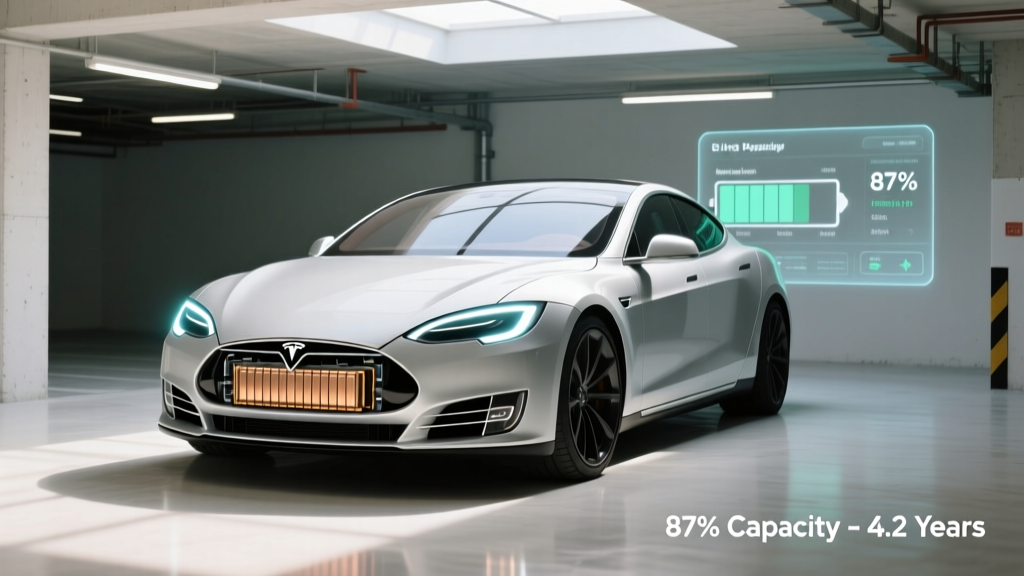
Tesla's 2023 Impact Report (the most recent comprehensive fleet data published) found that Model S and Model X vehicles retained approximately 88% of their original battery capacity after 200,000 miles. Model 3 and Model Y packs, which benefit from newer cell formats (2170 and 4680), show similar or slightly better retention curves in third-party fleet analyses.
To put that in perspective: the average American drives roughly 14,500 miles per year according to FHWA data. A Tesla battery retaining 85-90% capacity at 200,000 miles means roughly 13-14 years of service before reaching the threshold most owners would consider "degraded." Most vehicles are totaled, traded, or retired for non-battery reasons well before that point.
Based on aggregated fleet telemetry and third-party testing (Tessie, Recurrent Auto):
- Year 1 / 15,000 mi: ~3-5% loss (initial formation drop)
- Year 3 / 45,000 mi: ~6-8% total loss
- Year 5 / 75,000 mi: ~8-10% total loss
- Year 8 / 120,000 mi: ~10-13% total loss
- Year 10+ / 150,000-200,000 mi: ~12-15% total loss
Note: Degradation is non-linear — the steepest drop occurs in the first 10,000-20,000 miles, then the curve flattens significantly.
LFP vs NMC/NCA: Which Tesla Battery Chemistry Do You Have?
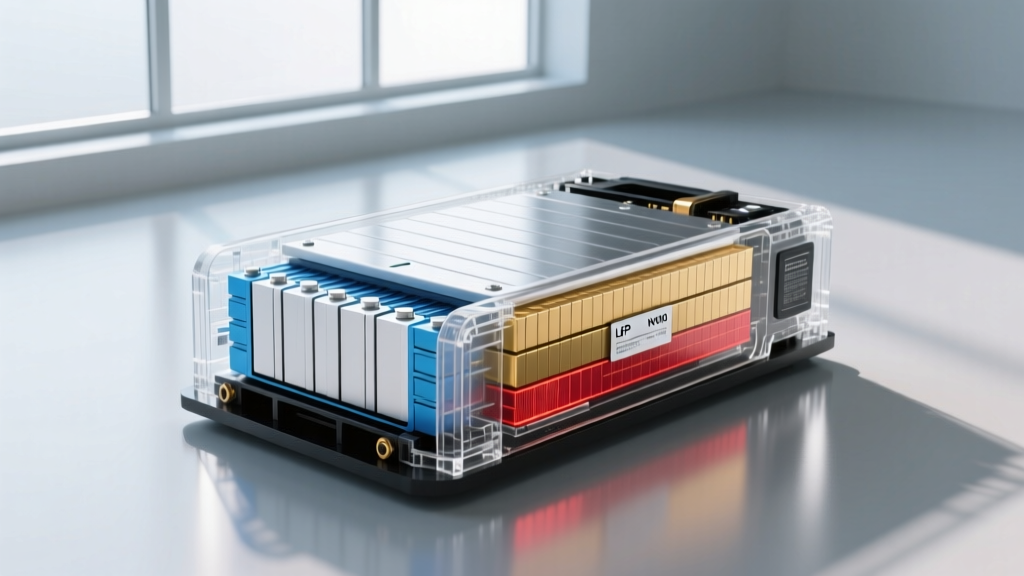
Tesla uses two distinct cathode chemistries across its 2026 lineup, and the choice has major implications for longevity, range, and daily charging habits.
| Attribute | LFP (Lithium Iron Phosphate) | NMC / NCA (Nickel Manganese Cobalt / Nickel Cobalt Aluminum) |
|---|---|---|
| Models/Trims | Model 3 RWD, Model Y RWD (Standard Range) | Model 3/Y Long Range & Performance, Model S, Model X, Cybertruck |
| Energy Density | Lower (~160 Wh/kg cell-level) | Higher (~250-270 Wh/kg cell-level) |
| Cycle Life | 3,000-5,000+ cycles to 80% SoH | 1,000-2,000 cycles to 80% SoH |
| Calendar Life | Excellent — slower calendar degradation | Good — slightly faster calendar aging |
| Cold Performance | Weaker — more range loss below freezing | Better low-temp performance |
| Charging to 100% | Recommended weekly (BMS calibration needs full charges) | Daily limit to 80-90% preferred |
| Cost | Lower — no cobalt or nickel | Higher — commodity-sensitive materials |
| Typical Usable Capacity (2026) | ~57-60 kWh (Model 3 RWD) | ~75-82 kWh (Long Range), ~100 kWh (Model S/X) |
The practical takeaway: If you plan to keep a Tesla for 10+ years and want maximum cycle life with simpler daily charging (charge to 100% freely), LFP is the longevity winner. If you need maximum range per charge and don't mind managing charge limits, NMC/NCA delivers more miles today at a modest long-term cycle-life trade-off.
What Does Tesla's Battery Warranty Actually Cover?
Tesla's battery and drive unit warranty is one of the more straightforward in the industry, but understanding the specifics prevents surprises.
| Model | Warranty Period | Mileage Limit | Capacity Retention Threshold |
|---|---|---|---|
| Model 3 RWD (LFP) | 8 years | 100,000 miles | 70% minimum |
| Model 3 Long Range / Performance | 8 years | 120,000 miles | 70% minimum |
| Model Y (all trims) | 8 years | 120,000 miles | 70% minimum |
| Model S / Model X | 8 years | 150,000 miles | 70% minimum |
| Cybertruck | 8 years | 120,000 miles | 70% minimum |
What triggers a warranty claim? If your battery's usable capacity drops below 70% of its original as-built capacity within the warranty period, Tesla will repair or replace it. The replacement may be a new or remanufactured pack — Tesla's warranty language specifies a pack that meets the 70% threshold, not necessarily a brand-new unit.
What's excluded: Damage from accidents, flooding, fire, improper charging equipment, or unauthorized modifications. Normal degradation above 70% is not covered, even if it feels significant to the owner. For full warranty terms, always consult Tesla's official warranty documentation.
Tesla Battery Replacement Cost: What Would You Actually Pay?
Out-of-warranty battery replacement is the nightmare scenario most prospective EV buyers fear. Here's what it costs in practice — and how often it actually happens.
| Model | Battery Size | Estimated Pack Cost | Labor & Ancillary | Total Estimate |
|---|---|---|---|---|
| Model 3 RWD (LFP) | ~57-60 kWh | $8,000 - $11,000 | $2,000 - $3,500 | $10,000 - $14,500 |
| Model 3/Y Long Range | ~75-82 kWh | $12,000 - $16,000 | $2,000 - $3,500 | $14,000 - $19,500 |
| Model S / Model X | ~100 kWh | $15,000 - $22,000 | $3,000 - $4,500 | $18,000 - $26,500 |
| Cybertruck | ~123 kWh (est.) | $18,000 - $25,000 | $3,000 - $5,000 | $21,000 - $30,000 |
Context that matters: According to fleet data aggregated by Recurrent Auto, fewer than 1.5% of EV batteries across all brands have been replaced outside of recall campaigns. The vast majority of Tesla packs reach end-of-vehicle life (salvage, trade-in, or high-mileage retirement) still above 70% capacity. A battery replacement for a Tesla is statistically less likely than an engine or transmission replacement on a comparable-age ICE vehicle.
Tesla's remanufactured battery program also offers lower-cost options for older vehicles, and as cell production scales (particularly 4680 cells at the Austin Gigafactory), pack-level pricing continues a gradual downward trend.
Five Factors That Accelerate (or Preserve) Tesla Battery Health
Battery degradation is electrochemistry, not mystery. These five factors move the needle most:
1. State of Charge Habits
For NMC/NCA packs, routinely charging to 100% and letting the car sit accelerates calendar degradation. Tesla's in-app charge limit (set to 80% for daily use) exists for a reason. LFP packs are the exception — Tesla recommends charging to 100% at least once per week for accurate BMS calibration.
2. DC Fast Charging Frequency
Supercharging at 150-250 kW generates significant cell heat. Occasional road-trip Supercharging has negligible long-term impact, but daily DC fast charging (especially without preconditioning) adds thermal stress. Tesla's battery preconditioning feature — which activates when you navigate to a Supercharger — mitigates this by warming or cooling cells to optimal temperature before high-power charging begins.
3. Extreme Temperature Exposure
Prolonged exposure to ambient heat above 95°F accelerates calendar aging. Cold doesn't degrade the battery permanently, but it temporarily reduces available capacity and slows charge acceptance. Garage parking in hot climates meaningfully extends pack life. Tesla's thermal management system (active liquid cooling/heating) is among the best in the industry, but it can't fully eliminate environmental exposure when parked.
4. Depth of Discharge Cycles
Running the battery to very low SoC (below 10%) frequently adds stress. Shallow cycles (e.g., 30%-80%) are gentler than full 0%-100% swings. This is why the 80% daily limit and avoiding sub-10% storage matters.
5. Mileage and Time (Calendar Aging)
Even a garage-kept Tesla that's rarely driven will lose capacity over time. Calendar aging is driven by the electrochemical reality that lithium-ion cells slowly degrade at any state of charge. Storing at ~50% SoC minimizes this effect for vehicles that sit for weeks.
- ☑ Set daily charge limit to 80% (NMC/NCA) or 100% (LFP — weekly minimum)
- ☑ Enable Scheduled Departure with preconditioning for cold-weather commutes
- ☑ Use Level 2 home charging as primary — reserve DCFC for road trips
- ☑ Avoid leaving the car below 10% SoC for extended periods
- ☑ Park in shade or a garage in hot climates when possible
- ☑ For long storage (2+ weeks), leave plugged in with charge limit at 50%
- ☑ Keep Tesla app and firmware updated for latest BMS optimizations
How to Check Your Tesla's Battery Health (State of Health)
Tesla doesn't expose a single "battery health percentage" in the vehicle UI the way some competitors do. Here's how to assess SoH:
Method 1: Range Comparison. Charge to 100% (LFP) or your known max (NMC at 100% test) and note the projected range. Compare to the original EPA-rated range when new. A Model 3 Long Range that originally displayed 330 miles at 100% but now shows 295 miles has experienced roughly 10-11% degradation. Note: projected range fluctuates with temperature and recent driving efficiency, so average several full-charge readings.
Method 2: Third-Party Apps. Apps like Tessie and Stats pull telemetry from Tesla's API and calculate estimated SoH using energy-in vs. energy-out data over full charge cycles. These are generally accurate within 1-2% and provide trend tracking over time.
Method 3: Tesla Service Diagnostic. If you suspect abnormal degradation (e.g., approaching warranty thresholds), a Tesla Service Center can run a full battery health diagnostic that measures actual usable kWh against the as-built baseline.
What's Next: Solid-State, Silicon Anodes, and Future Tesla Batteries
The battery landscape is evolving, but it's critical to separate announced research from production reality.
Silicon Anode Cells: Tesla has been incrementally increasing silicon content in anodes (particularly in 4680 cells) to boost energy density. These are already in production in limited applications but represent incremental gains, not a step-change.
Solid-State Batteries: Companies like Toyota, QuantumScape, and Samsung SDI have demonstrated solid-state prototypes promising higher energy density, faster charging, and improved safety. However, no solid-state battery is in mass production for any consumer vehicle as of early 2026. Realistic timelines for affordable, high-volume solid-state EV batteries remain 2028-2032, based on current manufacturing scale-up trajectories. Tesla has not announced a solid-state program.
Dry Electrode Manufacturing: Tesla's 4680 cell program at Giga Texas continues to refine dry electrode coating processes, which reduce manufacturing cost and energy while enabling thicker electrodes for higher capacity. This is the most consequential near-term Tesla battery improvement to watch — it directly affects pack cost and availability rather than requiring a chemistry revolution.
For current buyers: today's LFP and NMC cells from CATL, Panasonic, and LG Energy Solution are mature, well-understood products with extensive degradation data. Waiting for solid-state is not a practical purchase strategy.
Frequently Asked Questions
How long do Tesla batteries last in years?
Based on fleet data, most Tesla batteries retain 85-90% capacity at 10-13 years of average driving (14,500 miles/year). Many will remain functional with usable capacity for 15-20 years, though range will be noticeably reduced by that point.
How much does it cost to replace a Tesla battery?
Out-of-warranty replacement ranges from approximately $10,000 for a Model 3 RWD pack to $26,500+ for a Model S/X pack, including labor. However, fewer than 1.5% of EV batteries across all brands have required replacement outside recalls, according to Recurrent Auto data.
Does Tesla's warranty cover battery degradation?
Yes — if capacity drops below 70% within 8 years or the applicable mileage limit (100,000-150,000 miles depending on model), Tesla will repair or replace the pack. Normal degradation above 70% is not covered.
Is LFP better than NMC for Tesla longevity?
For pure cycle life and calendar longevity, LFP is superior — it can endure 3,000-5,000+ charge cycles to 80% SoH versus 1,000-2,000 for NMC. The trade-offs are lower energy density (less range per kWh), weaker cold-weather performance, and lower total range in comparable vehicles.
Does Supercharging damage Tesla batteries?
Occasional Supercharging has minimal measurable impact. Daily DC fast charging without preconditioning adds cumulative thermal stress. Tesla's battery preconditioning system (activated when navigating to a Supercharger) significantly mitigates this by bringing cells to optimal temperature before high-power charging.
Can I check my Tesla battery health myself?
Yes. Compare your 100% charge projected range to the original EPA rating, use third-party apps like Tessie for API-based SoH tracking, or request a diagnostic from Tesla Service. There is no built-in "health percentage" display in the Tesla UI.
Sources: Tesla 2023 Impact Report, Recurrent Auto battery longevity research, Tesla Battery and Drive Unit Warranty, FHWA annual mileage statistics.