The single most persistent question among EV shoppers isn't about range or charging speed — it's about longevity. If you're spending $40,000 to $70,000 on an electric vehicle, you need to know whether the battery will survive the life of the car. The short answer, backed by a growing body of fleet data and manufacturer warranty records, is that most modern EV batteries will outlast the vehicle they're installed in. But the nuances matter enormously: chemistry type, charging habits, climate, and thermal management all shape how quickly your battery loses capacity over time.
This guide breaks down exactly how long EV batteries last in 2026, what degradation looks like in real numbers, how LFP and NMC chemistries compare, what warranties actually cover, and what a replacement would cost in the unlikely event you need one.
The Real Answer: How Long Do EV Batteries Last?
Based on aggregated fleet data from sources including Geotab's long-term battery health study of over 10,000 electric vehicles, the average EV battery loses approximately 1.8% to 2.3% of its original capacity per year under typical use. That translates to roughly 85-90% of original capacity retained after 10 years.
In mileage terms, most batteries are engineered for 1,500 to 3,000 full charge cycles before reaching 70-80% of original capacity — the threshold at which manufacturers consider meaningful degradation. For a vehicle with 300 miles of EPA range, 1,500 cycles equals roughly 450,000 miles; 3,000 cycles pushes past 900,000 miles. In practice, very few drivers will accumulate that mileage before retiring the vehicle.
- Year 1: ~2-3% loss (initial formation drop)
- Years 2-5: ~1.5-2% loss per year (linear phase)
- Years 6-10: ~1-1.5% loss per year (slowing degradation)
- Year 10 cumulative: ~82-88% capacity retained
- Year 15 cumulative: ~75-82% capacity retained
Source: Geotab fleet data, Recurrent Auto battery reports. Individual results vary by chemistry, climate, and charging patterns.
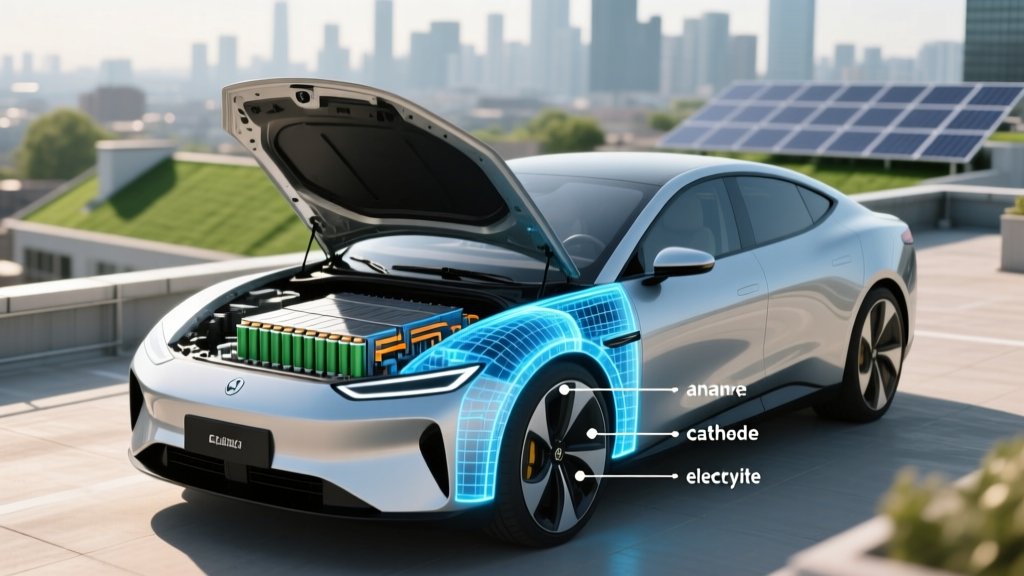
The critical takeaway: degradation is not linear. Batteries experience a slightly steeper drop in the first year as the electrolyte forms a solid electrolyte interphase (SEI) layer on the anode, then settle into a slow, predictable decline. This is well-documented across Tesla, Hyundai, BMW, and Volkswagen fleet data.
LFP vs NMC vs NCA: Which Chemistry Lasts Longer?
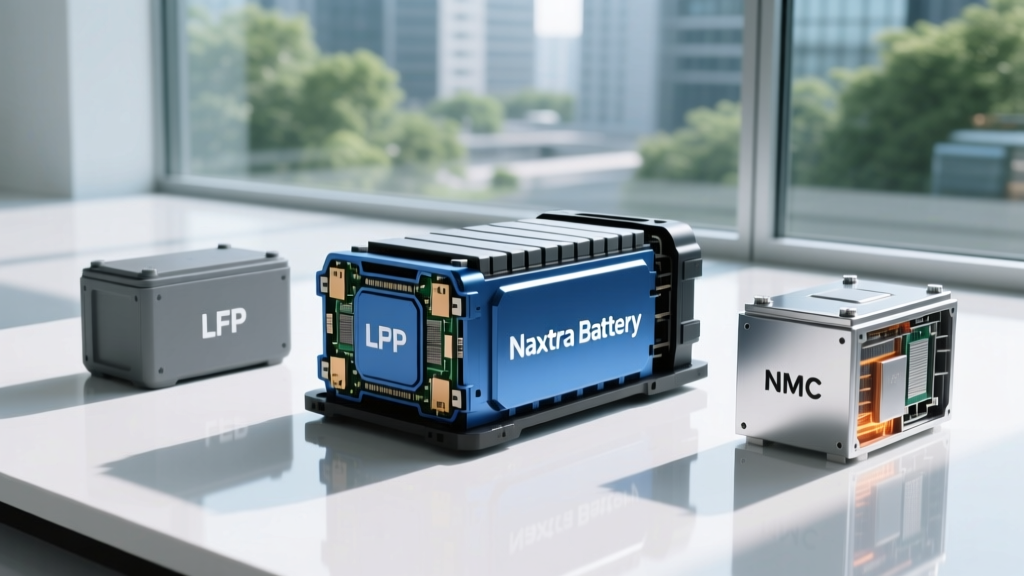
Battery chemistry is the single largest variable in longevity. In 2026, the two dominant chemistries in passenger EVs are lithium iron phosphate (LFP) and nickel manganese cobalt (NMC), with nickel cobalt aluminum (NCA) appearing in select Tesla and Panasonic applications.
| Attribute | LFP (Lithium Iron Phosphate) | NMC (Nickel Manganese Cobalt) | NCA (Nickel Cobalt Aluminum) |
|---|---|---|---|
| Cycle Life | 3,000-5,000+ cycles | 1,500-2,500 cycles | 1,500-2,000 cycles |
| Energy Density | Lower (~160 Wh/kg cell-level) | Higher (~250-280 Wh/kg) | Highest (~260-300 Wh/kg) |
| Cold-Weather Performance | Moderate — more range loss below freezing | Better low-temp discharge | Good low-temp discharge |
| Thermal Stability | Excellent — inherently safer | Good with active thermal mgmt | Good with active thermal mgmt |
| Cost | Lower — no cobalt or nickel | Higher — cobalt/nickel exposure | Higher — cobalt content |
| Charging to 100% Daily | Recommended (flat voltage curve needs calibration) | Not ideal — accelerates degradation | Not ideal — accelerates degradation |
| Common In (2026 Models) | Tesla Model 3 RWD, Model Y RWD, Ford Mustang Mach-E Select, BYD models | Hyundai Ioniq 5/6, Kia EV6/EV9, VW ID.4, BMW iX, most long-range trims | Tesla Model S/X, select Panasonic cells |
The bottom line on chemistry: If your priority is maximum cycle life and you don't need the highest energy density, LFP is the clear longevity winner. Tesla now recommends charging LFP-equipped vehicles to 100% at least once per week for battery management system (BMS) calibration. NMC offers more range in a lighter, smaller package and remains the choice for long-range and performance trims, but benefits from staying between 20-80% State of Charge (SoC) for daily driving.
What Does the Battery Warranty Actually Cover?
Federal law mandates that EV battery warranties cover a minimum of 8 years or 100,000 miles (whichever comes first). In California Air Resources Board (CARB) states, that extends to 10 years or 150,000 miles. Most manufacturers meet or exceed these minimums. Here's how the major brands structure coverage in 2026:
| Manufacturer | Coverage Period | Capacity Threshold | Remedy |
|---|---|---|---|
| Tesla | 8 yr / 100,000-150,000 mi (varies by model) | 70% retention | Repair or replace to meet threshold |
| Hyundai / Kia | 10 yr / 100,000 mi | 70% retention | Repair or replace modules/pack |
| Ford | 8 yr / 100,000 mi | 70% retention | Repair or replace |
| Volkswagen | 8 yr / 100,000 mi | 70% retention | Repair or replace |
| GM (Chevrolet/Cadillac) | 8 yr / 100,000 mi | 70% retention (60% on some older models) | Repair or replace |
| BMW | 8 yr / 100,000 mi | 70% retention | Repair or replace |
Critical nuance: The warranty threshold of 70% capacity does not mean the battery is "dead" at that point. A battery at 70% of its original 80 kWh capacity still holds 56 kWh — enough for substantial daily driving. The warranty is a floor, not a cliff. Most batteries never approach this threshold within the warranty period. According to data from Recurrent Auto, the average 3-year-old Tesla Model 3 retains approximately 94-96% of its original range.
Warranty claims typically cover manufacturing defects, premature cell failure, and capacity loss below the stated threshold under normal use. They generally do not cover damage from accidents, flooding, unauthorized modifications, or use outside manufacturer specifications.
How Much Does an EV Battery Replacement Cost?
This is where fear-mongering often eclipses reality. The vast majority of EV batteries never need full replacement during the vehicle's usable life. When replacement is necessary — typically due to a manufacturing defect caught under warranty, physical damage, or extreme age — costs vary dramatically by pack size and vehicle:
| Vehicle (Representative) | Pack Size (kWh) | Est. Out-of-Warranty Cost | Notes |
|---|---|---|---|
| Tesla Model 3 RWD (LFP) | ~60 kWh | $12,000 - $16,000 | Module-level repair often possible |
| Tesla Model Y Long Range | ~75 kWh | $14,000 - $20,000 | Structural pack complicates repair |
| Hyundai Ioniq 5 Long Range | 77.4 kWh | $15,000 - $22,000 | Modular design allows partial replacement |
| Ford F-150 Lightning Ext. Range | ~131 kWh | $25,000 - $35,000 | Largest consumer pack; highest cost |
| Chevrolet Equinox EV | ~85 kWh | $14,000 - $18,000 | Ultium modular platform |
Several factors reduce the real-world sting of these numbers. First, most replacements happen under warranty at zero cost to the owner. Second, the growing practice of module-level repair — replacing only the degraded or failed cell modules rather than the entire pack — can cut costs by 50-70%. Third, the independent EV repair ecosystem has expanded significantly by 2026, with third-party shops offering refurbished packs at 40-60% of OEM pricing.
Battery cell prices have also continued their long-term decline. According to BloombergNEF data, average lithium-ion pack prices fell below $120/kWh at the pack level in 2025, down from over $400/kWh in 2013. This trend continues to compress replacement costs year over year.
What Actually Degrades an EV Battery? Key Factors
Battery degradation is driven by electrochemical wear. Not all miles and charges are equal. Here are the primary accelerants, ranked by impact:
1. High State of Charge (SoC) Storage
Parking an NMC or NCA battery at 100% SoC for extended periods is the single most damaging habit. At high voltage, the electrolyte oxidizes faster and the cathode structure degrades. For NMC/NCA owners, setting a daily charge limit of 80% (or even 70% for short commutes) meaningfully extends pack life. LFP batteries are an exception — their flatter voltage curve means the BMS needs regular 100% charges for accurate state-of-charge estimation, and LFP chemistry is far more tolerant of high-SoC storage.
2. Frequent DC Fast Charging at High Power
DC fast charging (Level 3) at 150-350 kW generates substantial heat inside the cells. While modern thermal management systems actively cool the pack during fast charging, repeated high-power sessions accelerate SEI layer growth and lithium plating on the anode. Occasional road-trip fast charging is perfectly fine; daily reliance on 250+ kW chargers when Level 2 is available will measurably increase degradation over a 5-year period.
3. Extreme Temperatures
Both hot and cold extremes stress batteries. Sustained ambient temperatures above 95°F (35°C) accelerate chemical degradation, while repeated charging in sub-freezing conditions without preconditioning can cause lithium plating — a permanent and potentially safety-relevant failure mode. Vehicles with active liquid thermal management (Tesla, Hyundai/Kia, GM Ultium, BMW) handle this far better than passively cooled packs.
4. Deep Discharge Cycles
Regularly driving the battery down to 0-5% SoC stresses the cells. The battery management system (BMS) maintains a buffer (typically 3-5 kWh below the displayed 0%), so you're never truly empty, but habitually running the pack very low is still unnecessary wear.
5. Calendar Aging
Even a garage-parked EV that's rarely driven will lose capacity over time. Calendar aging is driven by slow chemical reactions that occur regardless of use. Storing at approximately 50% SoC in a cool environment minimizes this effect.
- NMC/NCA daily limit: Set charge limit to 80% for daily driving; charge to 100% only before long trips.
- LFP daily limit: Charge to 100% at least weekly per manufacturer guidance for BMS calibration.
- Minimize DCFC frequency: Use Level 2 (home/work) as your primary charging method; fast-charge for road trips.
- Precondition before fast charging: Enable navigation-to-charger preconditioning (Tesla, Hyundai, Ford, BMW) to bring the battery to optimal temperature.
- Avoid prolonged storage at extremes: If storing for 2+ weeks, set SoC to ~50% and park in shade or a garage.
- Cold-weather charging: Always precondition in freezing temperatures; use scheduled departure/charging features.
- Monitor SoH periodically: Check battery health quarterly (see next section).
How to Check Your EV Battery's State of Health (SoH)
State of Health (SoH) is the percentage of original capacity your battery currently holds. A new battery is 100% SoH; one that's degraded to hold 90% of its original kWh is at 90% SoH. Monitoring this metric helps you track degradation trends and plan ahead.
Built-In Vehicle Tools
Most 2026 EVs display some form of battery health information in the infotainment or mobile app. Tesla provides estimated range at 100% (comparing this to the original EPA range gives a rough SoH). Hyundai and Kia include a battery health indicator in their connected services app. GM's Ultium-based vehicles display battery conditioning status and estimated range metrics.
OBD-II Diagnostic Apps
For more granular data, OBD-II dongles paired with apps like LeafSpy (Nissan Leaf), TeslaFi, Scan My Tesla, or Car Scanner ELM OBD2 can read the BMS directly, reporting actual usable kWh, cell voltage variance, and calculated SoH. This is the most reliable method for independent verification.
Third-Party Battery Reports
Services like Recurrent Auto offer free battery health reports by connecting to your vehicle's telematics data. These reports benchmark your degradation against a fleet of identical vehicles, giving you context for whether your pack is aging normally, faster, or slower than average. This is particularly useful when buying or selling a used EV.
Dealer Diagnostics
Any authorized dealer can run a full battery health diagnostic, typically as part of a service visit. Request a printout showing measured capacity in kWh versus original rated capacity. This is the gold standard for pre-purchase inspections on used EVs.
Emerging Battery Technology: What's Next?
The battery landscape is evolving rapidly, but it's essential to separate laboratory breakthroughs from production reality. Here's where the most discussed next-generation technologies stand as of 2026:
Silicon-Anode Batteries
Replacing graphite anodes with silicon can theoretically boost energy density by 20-40%. Companies like Sila Nanotechnologies and Group14 Technologies have begun supplying silicon-composite anode materials to manufacturers. Mercedes-Benz's upcoming G-Class EV is expected to feature silicon-anode cells. The challenge remains cycle life — silicon expands ~300% during lithiation, causing mechanical fatigue. Expect limited production adoption through 2027-2028, with broader availability by 2029-2030.
Solid-State Batteries
Solid-state cells replace the liquid electrolyte with a solid conductor, promising higher energy density, faster charging, and improved safety. Toyota has announced a solid-state battery targeting 2027-2028 production, initially in limited volumes for premium models. Samsung SDI and QuantumScape are also advancing prototypes. However, manufacturing scalability and cost remain significant hurdles. Realistic mass-market availability is 2029 at the earliest, more likely 2030-2032. Solid-state batteries are not available in any production vehicle as of 2026.
Sodium-Ion Batteries
CATL and BYD have begun producing sodium-ion cells for entry-level EVs, primarily in the Chinese market. Sodium-ion chemistry eliminates lithium entirely, reducing cost and supply-chain risk, but at significantly lower energy density (~120-140 Wh/kg). These are suited for urban runabouts and may appear in budget-focused models globally by 2027-2028.
For buyers today, these technologies are forward-looking context, not purchase-decision factors. Current LFP and NMC batteries are mature, well-understood, and backed by robust warranties and real-world track records.
Frequently Asked Questions
How long do batteries in electric cars last in real-world use?
Based on fleet data from Geotab and Recurrent Auto, the average EV battery retains 85-90% of its original capacity after 10 years of typical use. In mileage terms, most modern lithium-ion packs are designed for 1,500-3,000+ full charge cycles, equating to 300,000-500,000+ miles before reaching 70-80% capacity. Most vehicles are retired or sold long before the battery reaches end of life.
How much does it cost to replace an EV battery out of warranty?
Full pack replacement costs range from approximately $12,000 for smaller packs (60 kWh, Tesla Model 3 RWD) to $35,000 for the largest consumer packs (131 kWh, F-150 Lightning Extended Range). However, module-level repair — replacing only the failed cell groups — typically costs $3,000-$8,000 and is increasingly common. Most replacements occur under the manufacturer's 8-year/100,000-mile warranty at no cost to the owner.
What does the EV battery warranty cover, and what's excluded?
Standard battery warranties cover capacity loss below 70% of original capacity (measured in kWh) over 8 years or 100,000 miles, whichever comes first. CARB states extend this to 10 years/150,000 miles. Coverage includes manufacturing defects, premature cell failure, and BMS issues. Exclusions typically include physical damage (collision, flooding), unauthorized modifications, and damage from operating outside manufacturer specifications.
Is LFP or NMC better for battery longevity?
LFP (lithium iron phosphate) is the clear winner for cycle life, offering 3,000-5,000+ cycles compared to NMC's 1,500-2,500 cycles. LFP also tolerates daily 100% charging and high-SoC storage better. The trade-off is lower energy density (less range per pound) and slightly worse cold-weather performance. If you plan to keep your EV for 10+ years and don't need maximum range, LFP is the longevity-optimal choice.
Does fast charging damage my EV battery?
DC fast charging generates heat and accelerates degradation compared to Level 2 charging, but the effect is moderate with modern thermal management systems. Occasional fast charging (road trips, a few times per month) has minimal impact. Daily fast charging at 150+ kW when Level 2 is available will measurably increase long-term degradation. Use preconditioning (navigation to charger) to reduce thermal stress.
Can I check my battery health myself?
Yes. Compare your vehicle's displayed range at 100% charge to the original EPA range for a rough SoH estimate. For precise data, use an OBD-II diagnostic app (TeslaFi, Scan My Tesla, Car Scanner) to read actual usable kWh from the BMS. Services like Recurrent Auto provide free fleet-benchmarked battery health reports by connecting to your car's telematics.
Should I be worried about battery replacement cost when buying an EV?
For most buyers, no. The combination of an 8-year/100,000-mile warranty, declining cell prices, module-level repair capability, and the fact that most batteries outlast the vehicle itself means catastrophic battery cost is a low-probability event. Focus instead on choosing the right chemistry for your use case, following basic care practices, and monitoring SoH periodically.