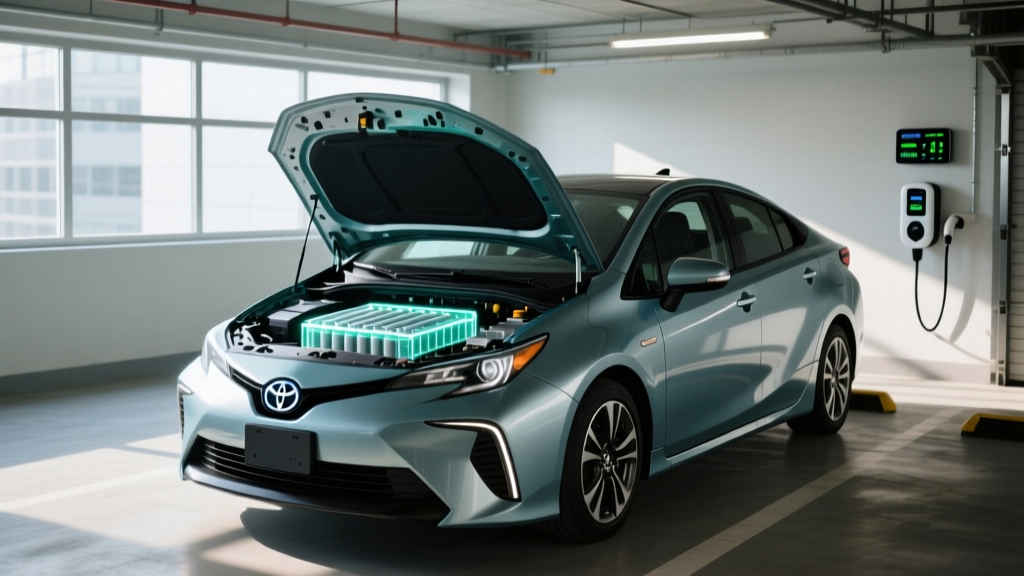
The Toyota Prius has been on American roads for over two decades, which means we now have genuine long-term data on its high-voltage hybrid battery. If you own a Prius, are shopping for one, or are considering a used model, the traction battery is likely your biggest longevity question. The short answer: most Prius hybrid batteries last 12–15 years or 150,000–200,000 miles before needing replacement, and many outlive the car itself. The Prius Prime plug-in hybrid follows a similar trajectory, though its larger battery and deeper cycling introduce slightly different wear patterns.
This guide breaks down the exact numbers — chemistry, degradation curves, warranty coverage, replacement pricing, and what you can actually do to extend battery life. We cover both the standard Prius HEV and the Prius Prime PHEV through the 2026 model year.
How Long Do Prius Batteries Actually Last?
Toyota designs the Prius hybrid battery for a service life that matches or exceeds the vehicle's expected lifespan. Based on fleet data, owner surveys, and Toyota's own engineering targets, here is what the evidence shows:
- Standard Prius (HEV): 150,000–200,000 miles or 12–15 years before meaningful capacity loss affects fuel economy or triggers a warning. Many original batteries in 2004–2010 models are still in service past 200,000 miles.
- Prius Prime (PHEV): Similar mileage expectancy, though the larger battery (13.6 kWh usable in 2023–2026 models) cycles more deeply during EV-mode driving. Toyota engineers the Prime with a larger buffer to compensate.
- Failure rate: Independent data from fleet operators and repair networks suggests fewer than 5% of Prius vehicles require a traction battery replacement before 150,000 miles. The vast majority of replacements happen between 150K and 250K miles.
For context, the average American drives roughly 13,500 miles per year according to the Federal Highway Administration. That means a Prius battery typically provides 11–15 years of service — long enough for most original owners to have sold or traded the vehicle by the time replacement becomes necessary.
Prius Battery Chemistry: NiMH vs. Lithium-Ion
Unlike full battery-electric vehicles that use NMC or LFP lithium-ion cells, the standard Prius has historically relied on nickel-metal hydride (NiMH) chemistry. This is a deliberate engineering choice by Toyota, and understanding the trade-offs explains why the Prius battery lasts as long as it does.
| Attribute | NiMH (Prius HEV) | Lithium-Ion / NMC (Prius Prime, most BEVs) | LFP (some BEVs) |
|---|---|---|---|
| Energy density | Low (~60–80 Wh/kg) | High (~200–260 Wh/kg) | Moderate (~150–180 Wh/kg) |
| Cycle life | Very high (1,000–2,000+ cycles with shallow depth) | High (1,000–2,000 cycles) | Very high (3,000–5,000+ cycles) |
| Cold-weather performance | Good — less capacity loss than early Li-ion | Moderate — loses 15–30% range below freezing | Poor — significant cold-weather capacity loss |
| Cost per kWh | Lower (mature, commodity tech) | Higher (but declining) | Lower than NMC |
| Self-discharge rate | Higher (~20%/month) | Low (~2–3%/month) | Low (~2–3%/month) |
| Typical application | HEV shallow-cycling (Prius, Camry Hybrid) | PHEV and BEV deep-cycling | BEV high-cycle, cost-sensitive models |
Why NiMH works for the standard Prius: The HEV battery is small (roughly 1.3 kWh total, with only ~0.4–0.6 kWh usable) and never deeply discharged. The car's power management system keeps state of charge (SoC) in a narrow 40–80% window, meaning each charge-discharge cycle uses only a fraction of total capacity. This shallow cycling is the single biggest reason NiMH Prius batteries last so long — the cells are barely stressed.
The Prius Prime difference: The PHEV variant uses a lithium-ion (NMC-type) battery pack — 13.6 kWh usable in current-generation models — because it needs the energy density for its 44-mile EPA electric-only range. This battery cycles more deeply and more frequently when driven in EV mode, but Toyota still maintains a substantial top/bottom buffer to protect long-term health.
Degradation Data: What Owners Actually See
Battery degradation in a Prius is measured differently than in a full EV. For the standard HEV, you won't notice range loss — instead, degradation manifests as slightly reduced fuel economy and more frequent engine starts as the battery holds less charge. For the Prime, you'll see a gradual reduction in electric-only miles.
Typical Prius HEV Battery Degradation Curve (NiMH):
| Age / Mileage | Capacity Retention | Noticeable Impact |
|---|---|---|
| Year 1–3 / 0–40K mi | 97–100% | None |
| Year 4–6 / 40K–80K mi | 93–97% | Minimal — perhaps 1–2 MPG drop in city driving |
| Year 7–10 / 80K–140K mi | 85–93% | Moderate — engine runs more often, slight MPG reduction |
| Year 11–15 / 140K–200K mi | 70–85% | Noticeable — reduced regen effectiveness, more engine use |
| Year 15+ / 200K+ mi | Below 70% | Potential warning light, may trigger replacement need |
Prius Prime (Li-ion) degradation: Data from early Prime owners (2017–2022 models) shows roughly 8–12% capacity loss over 5–7 years of regular EV-mode use, translating to about 3–5 fewer electric miles from a full charge. This aligns with broader PHEV lithium-ion battery data from fueleconomy.gov and owner-community tracking.
Key insight: the Prius Prime's battery degrades faster in percentage terms than the standard HEV's NiMH pack, but because the Prime starts with a much larger battery, the practical impact on daily driving is modest. A Prime that originally delivered 44 electric miles may deliver 38–40 after seven years — still highly usable.
Toyota's Hybrid Battery Warranty Explained
Toyota's warranty coverage for the hybrid battery is among the strongest in the industry and applies identically to both the Prius HEV and Prius Prime.
| Coverage Item | Terms |
|---|---|
| Duration | 10 years / 150,000 miles (whichever comes first) |
| Capacity retention threshold | Toyota does not publish a specific SoH% threshold — coverage applies if the battery fails to function normally or triggers a hybrid system warning |
| What's covered | Hybrid battery pack, battery control module, inverter, and related hybrid system components |
| Transferable? | Yes — warranty transfers to subsequent owners automatically |
| Prior model years (pre-2020) | 8 years / 100,000 miles (some states extended to 10/150K under CARB rules) |
What this means practically: If your 2024 Prius battery fails at year 8 and 110,000 miles, Toyota replaces it at no cost. The 10-year/150K-mile warranty covers the vast majority of vehicles through their first ownership cycle and well into second ownership. California and states that follow CARB emissions rules (including New York, Massachusetts, Colorado, and others) mandated 10/150K coverage even before Toyota standardized it nationally for 2020+ models.
Always verify your specific model year's warranty in your owner's manual or through a Toyota warranty lookup, as terms can vary by state and model year.
Prius Battery Replacement Cost: 2026 Pricing
When a Prius battery does eventually need replacement — typically at 150,000–250,000 miles — here is what it costs in the current market:
| Option | Model Coverage | Parts Cost | Labor | Total Range |
|---|---|---|---|---|
| New OEM battery (Toyota dealer) | All Prius generations | $2,000–$2,800 | $300–$600 | $2,300–$3,400 |
| Remanufactured battery (aftermarket) | Gen 2–Gen 4 (2004–2022) | $1,000–$1,800 | $300–$500 | $1,300–$2,300 |
| New aftermarket Li-ion upgrade | Gen 2–Gen 3 (2004–2015) | $1,800–$2,500 | $300–$500 | $2,100–$3,000 |
| Prius Prime battery (OEM) | 2017–2026 Prime | $3,200–$4,500 | $400–$700 | $3,600–$5,200 |
| Individual module replacement | Gen 2–Gen 4 NiMH | $30–$80 per module | $200–$400 | $400–$1,200 |
Important context: The standard Prius NiMH battery contains 28 individual modules (Gen 3/4). Often, only one or two modules degrade significantly, and independent hybrid specialists can test and replace individual modules for a fraction of a full pack replacement. This is not a DIY-friendly job — high-voltage safety training is essential — but it's a legitimate cost-saving option at a qualified hybrid repair shop.
The Prius Prime's lithium-ion battery is a more integrated unit and typically requires full-pack replacement. However, because the Prime's battery is under warranty for 10 years/150K miles and degradation data shows these packs holding up well, very few Prime owners have faced out-of-pocket replacement costs as of 2026.
Factors That Shorten (or Extend) Prius Battery Life
Not all Prius batteries age identically. The spread between a battery that fails at 120,000 miles and one that runs past 250,000 is largely driven by these variables:
Heat exposure
NiMH and lithium-ion cells both degrade faster at sustained high temperatures. Prius owners in Arizona, Texas, and the Southeast tend to see slightly faster capacity loss than those in moderate climates. The battery's cooling fan (located near the rear seat) is critical — a clogged or failing fan accelerates degradation. Clean the battery air intake filter every 30,000–50,000 miles.
State of charge habits (Prius Prime)
For the Prime PHEV, regularly leaving the battery at 100% SoC for extended periods (days without driving) accelerates lithium-ion degradation. Toyota's system manages this with a built-in buffer, but if you're storing the car for a week or more, aim to leave it at roughly 50–60% charge.
Driving pattern
Ironically, the Prius battery stays healthiest when the car is driven regularly. Long periods of inactivity (weeks without starting) allow NiMH self-discharge to pull the pack into a low-SoC state that stresses cells. Daily or near-daily driving with normal regenerative braking cycles keeps cells balanced and conditioned.
Cooling system maintenance
The hybrid battery has its own dedicated cooling fan and duct. Dust, pet hair, and debris can block airflow, causing the battery to run hotter than designed. This is the single most overlooked maintenance item that affects battery longevity. Inspect and clean the cooling fan intake (usually located near the rear passenger seat) at every oil change.
Prius Battery Care Checklist
- Clean battery cooling fan intake every 30,000–50,000 miles (or annually in dusty/pet households)
- Drive the vehicle at least once per week to prevent deep self-discharge
- For Prius Prime: avoid leaving at 100% SoC for more than 24–48 hours when possible
- Address hybrid system warning lights immediately — don't ignore early cell-imbalance codes
- Keep up with scheduled hybrid system checks at Toyota service intervals
- In hot climates, park in shade or use a sunshade to reduce cabin/battery heat soak
- For Prime owners: use Level 2 (240V) charging over repeated DC fast charging when available
How to Check Your Prius Battery Health
Unlike full EVs that often provide a State of Health (SoH) percentage in the infotainment system, the Prius does not display battery health directly to the driver. Here are your options for monitoring:
OBD-II scanner with hybrid battery app
Tools like the OBDLink SX or Carista adapter, paired with apps such as Dr. Prius or Hybrid Assistant, can read individual module voltages, battery temperature, and estimated SoH. A healthy pack shows module voltages within 0.2V of each other under load. A module that deviates by 0.3V or more is a candidate for replacement.
Toyota dealer diagnostic
Any Toyota service department can run a hybrid battery health check using Toyota's Techstream diagnostic software. This produces a module-by-module voltage report and overall battery assessment. Request this at your regular service visit — it typically takes 10–15 minutes and may be included free with scheduled maintenance.
Fuel economy as a proxy
If your Prius has historically averaged 50 MPG and you notice a sustained drop to 44–46 MPG without changes in driving pattern, tire pressure, or weather, the battery may be losing capacity. This is a rough indicator — confirm with a diagnostic scan before considering replacement.
Prius Prime: EV range tracking
For Prime owners, the simplest health check is tracking your fully charged EV range over time. If your 2024 Prime initially showed 44 miles of EV range at full charge and now consistently shows 38–39 miles after 30,000 miles, that's roughly 12% degradation — normal and not a concern. A sudden drop of more than 15–20% warrants a dealer diagnostic.
Emerging Battery Tech: What's Next for Toyota Hybrids
Toyota has been heavily investing in next-generation battery technology, and some of it will eventually filter down to the Prius lineup:
Bipolar NiMH (current generation): The 2023+ Prius already uses Toyota's bipolar NiMH battery design, which reduces internal resistance and improves power density compared to older module designs. This is a mature, proven technology that contributes to the current generation's improved performance and efficiency.
Bipolar lithium-ion: Toyota has announced plans to introduce bipolar Li-ion batteries in hybrid models in the late 2020s. These promise higher energy density and lower cost than current hybrid packs, potentially enabling longer electric-only assist and further fuel-economy gains.
Solid-state batteries: Toyota holds the most solid-state battery patents of any automaker and has announced limited production of solid-state BEVs around 2027–2028. However, solid-state technology for hybrid applications is likely further out — realistically 2030 or beyond — because the cost premium is harder to justify in a vehicle with a small battery pack. These are announced and forward-looking timelines, not current availability.
What this means for current owners: If you're buying a 2025 or 2026 Prius, you're getting proven, mature battery technology with a two-decade track record. The next major chemistry leap for the Prius is still several years away and will likely debut in a new generation rather than as a retrofit.
Frequently Asked Questions
How long does a Prius battery last in years?
Most Prius hybrid batteries last 12–15 years under normal driving conditions. Many original batteries in early-generation Prius vehicles (2004–2010) are still functioning at 15–20 years old, though with measurable capacity reduction. Toyota's 10-year/150,000-mile warranty provides a strong floor for expected lifespan.
How much does it cost to replace a Prius battery?
A new OEM replacement battery for a standard Prius costs $2,300–$3,400 installed at a Toyota dealer. Remanufactured batteries run $1,300–$2,300 installed. Individual module replacement at a hybrid specialist can cost as little as $400–$1,200 if only one or two cells have degraded. The Prius Prime's larger lithium-ion battery costs $3,600–$5,200 for a full OEM replacement.
Is the Prius battery covered under warranty?
Yes. For 2020 and newer model years, Toyota covers the hybrid battery for 10 years or 150,000 miles, whichever comes first. This warranty is fully transferable to subsequent owners. Pre-2020 models carry an 8-year/100,000-mile warranty, though CARB states extended this to 10/150K for those model years as well.
Can I replace just one Prius battery module instead of the whole pack?
Yes, on NiMH-equipped Prius models (all standard HEVs through 2026), individual modules can be tested and replaced by a qualified hybrid technician. This is cost-effective when only 1–2 of the 28 modules have degraded significantly. A full voltage-balance test identifies the weak cells. This is not a DIY task — the pack operates at 200V+ and requires proper safety protocols.
Does the Prius Prime battery degrade faster than the standard Prius?
In percentage terms, slightly yes — the Prime's lithium-ion battery undergoes deeper charge-discharge cycles during EV-mode driving. However, Toyota engineers a substantial buffer into the pack, and real-world data shows only 8–12% capacity loss over 5–7 years. Because the Prime starts with a much larger battery (13.6 kWh usable vs. ~0.5 kWh usable in the HEV), the practical impact on daily driving is minimal.
What kills a Prius battery fastest?
Excessive heat is the number-one degradation accelerator. A blocked battery cooling fan, sustained triple-digit ambient temperatures, or frequent high-load driving in hot weather all shorten battery life. For the Prime, prolonged storage at 100% charge also accelerates wear. Regular cooling-system maintenance and moderate SoC habits are the most effective longevity strategies.
Is it worth replacing the battery on a high-mileage Prius?
Often, yes. A $2,300–$3,400 battery replacement on a Prius with 180,000 miles can extend the vehicle's life by another 80,000–100,000 miles. Given the Prius's low operating costs (50+ MPG, minimal maintenance), the per-mile cost of a battery replacement is typically 2–4 cents — far less than buying a new vehicle. The math favors replacement unless the car has other major mechanical issues.