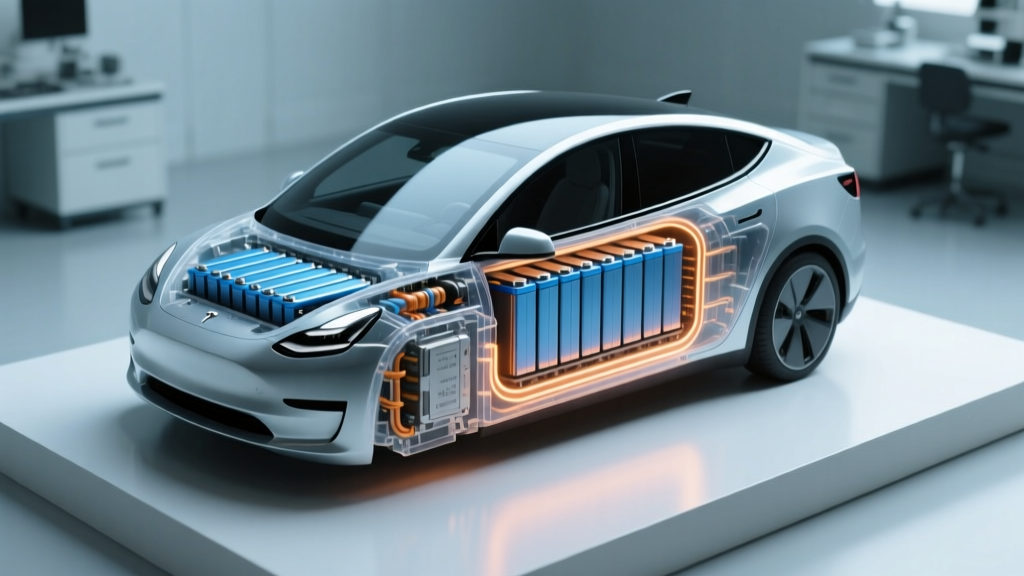
If you are shopping for an electric vehicle or already own one, the single most expensive component inside the car is the high-voltage traction battery — the home electric battery that stores the energy you use every day. It is also the component that generates the most questions: How long will it last? What will it cost to replace? Does fast-charging ruin it? And which chemistry — LFP or NMC — should you actually choose?
This guide answers those questions with real data from manufacturer warranties, third-party fleet studies, and chemistry engineering fundamentals. We will walk through the trade-offs of modern battery chemistries, what degradation actually looks like over 100,000+ miles, how federal warranty mandates protect you, and the daily habits that meaningfully extend battery life.
LFP vs NMC/NCA: Which Battery Chemistry Fits Your Driving?
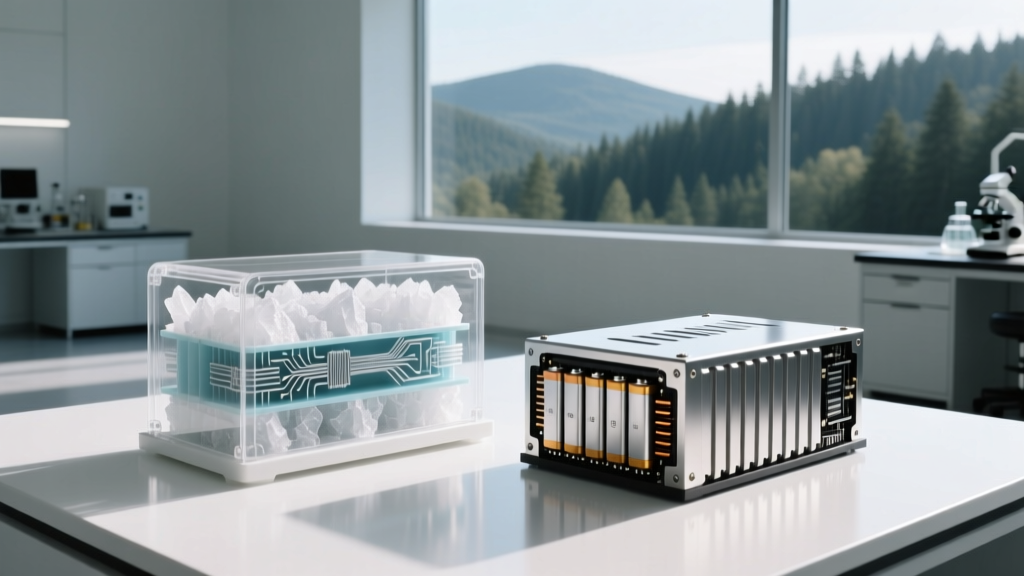
Not all EV batteries are built the same. The two dominant lithium-ion chemistries in 2026 passenger vehicles are LFP (lithium iron phosphate) and NMC/NCA (nickel manganese cobalt / nickel cobalt aluminum). The choice between them affects your range, charging habits, cold-weather performance, and long-term durability.
| Attribute | LFP (Lithium Iron Phosphate) | NMC/NCA (Nickel-based) |
|---|---|---|
| Energy Density | Lower (~160-180 Wh/kg cell-level) | Higher (~220-300 Wh/kg cell-level) |
| Typical Range Impact | Shorter range for same pack weight; common in Standard Range trims | Longer range per kWh; used in Long Range and Performance trims |
| Cycle Life | 3,000-5,000+ full cycles before 80% capacity | 1,000-2,000 full cycles before 80% capacity |
| Recommended Daily SoC | 100% daily charging is fine — actually recommended for BMS calibration | 80% daily recommended; 100% for trips only |
| Cold-Weather Performance | Weaker — greater range loss below freezing (~30-40% loss) | Better low-temp performance (~20-30% loss) |
| Thermal Stability / Safety | Excellent — higher thermal runaway threshold | Good but lower thermal runaway margin |
| Cost (cell-level) | Lower — no cobalt or nickel | Higher — commodity-sensitive (Ni, Co prices) |
| Common In (2026 models) | Tesla Model 3/Y RWD, Ford Mustang Mach-E Select (LFP variant), BYD models | Tesla LR/Performance, Hyundai Ioniq 5/6, Rivian, most long-range EVs |
The bottom line: If your daily commute is under 60 miles round-trip and you have reliable home charging, an LFP battery is arguably the better long-term ownership play — you can charge to 100% nightly without guilt, and the cycle-life advantage is substantial. If you regularly drive 200+ miles between charges or live in a cold climate where every mile of range matters, NMC/NCA's energy density and cold-weather edge make it the stronger pick.
How Long Do EV Batteries Actually Last?
The short answer: far longer than most buyers assume. Data from fleet operators and long-term owners consistently shows that modern liquid-cooled EV batteries lose roughly 5-10% of original capacity over the first 100,000 miles, with the degradation curve flattening significantly after the initial break-in period.
Typical Degradation Trajectory (fleet-averaged data, liquid-cooled packs):
- Year 1 / 15,000 mi: ~2-4% loss (initial "break-in" drop)
- Year 3 / 45,000 mi: ~5-7% total loss
- Year 5 / 75,000 mi: ~7-9% total loss
- Year 8 / 120,000 mi: ~10-14% total loss
- Year 10 / 150,000 mi: ~12-18% total loss (varies heavily by climate and charging habits)
Sources: Geotab fleet battery health study, Tesla Impact Reports, Recurrent Auto battery data.
A 2026 Tesla Model Y Long Range with an EPA-estimated 320 miles of range when new might realistically deliver ~280-290 miles at 100,000 miles — still comfortably sufficient for most drivers. The battery does not "fall off a cliff" at a specific mileage; degradation is gradual and asymptotic.
The critical context: most EV batteries will outlast the vehicle they are installed in. The average age of a scrapped passenger vehicle in the US is roughly 15-17 years. At typical US driving rates (~13,500 miles/year per FHWA data), that is 200,000+ miles — and even at that mileage, a well-maintained NMC pack will likely retain 80-85% of original capacity.
What Does the EV Battery Warranty Actually Cover?
Federal law in the United States mandates that EV batteries carry a minimum warranty of 8 years or 100,000 miles (whichever comes first). In California Air Resources Board (CARB) states — which include California, New York, Massachusetts, and over a dozen others — the mandate extends to 10 years or 150,000 miles for vehicles certified under CARB rules.
| Manufacturer | Warranty Period | Mileage Limit | Capacity Retention Threshold |
|---|---|---|---|
| Tesla (Model 3/Y) | 8 years | 100,000-120,000 mi (varies by trim) | 70% minimum |
| Hyundai / Kia | 8 years / 10 years (CARB states) | 100,000 / 150,000 mi | 70% minimum |
| Ford (Mach-E, F-150 Lightning) | 8 years | 100,000 mi | 70% minimum |
| GM (Ultium platform) | 8 years | 100,000 mi | 70% minimum (some models 60% for EREV) |
| Rivian | 8 years | 175,000 mi (Large Pack) | 70% minimum |
| BMW | 8 years | 100,000 mi | 70% minimum |
What triggers a warranty claim: If your battery's State of Health (SoH) drops below the stated threshold (usually 70% of original capacity) within the warranty period, the manufacturer must repair or replace it at no cost. In practice, the vast majority of claims involve defective modules or BMS (battery management system) faults rather than wholesale capacity loss — because, as the degradation data above shows, normal wear rarely breaches the 70% threshold within 8 years.
What is NOT covered: Damage from accidents, flooding, improper modifications, or use of non-approved charging equipment. Gradual capacity loss above the threshold (e.g., dropping to 72% at year 7) is considered normal wear and is not a warranty event.
EV Battery Replacement Cost: What to Budget and When
If your battery fails outside warranty — or you are buying a used EV with high mileage — replacement cost is a legitimate consideration. Prices have fallen dramatically over the past decade (from ~$300/kWh in 2015 to roughly ~$100-130/kWh at the pack level in 2026), but a full replacement is still a major expense.
| Vehicle Class / Example | Battery Size | Estimated Pack Cost (2026) | Labor + Diagnostics | Total Installed Range |
|---|---|---|---|---|
| Compact EV (e.g., Chevy Bolt EV/EUV) | 65 kWh | $6,500 - $8,500 | $1,500 - $2,500 | $8,000 - $11,000 |
| Mid-size sedan/crossover (e.g., Tesla Model 3, Hyundai Ioniq 5) | 75-84 kWh | $8,000 - $11,000 | $1,500 - $3,000 | $9,500 - $14,000 |
| Long-range / large SUV (e.g., Model Y LR, Rivian R1S) | 100-135 kWh | $11,000 - $17,000 | $2,000 - $4,000 | $13,000 - $21,000 |
| Electric truck (e.g., F-150 Lightning Extended) | 131 kWh | $14,000 - $18,000 | $2,500 - $4,500 | $16,500 - $22,500 |
When is replacement actually needed? Almost never for normal owners. The scenarios where replacement occurs are: post-collision damage, manufacturing defects that manifest early (covered by warranty), or extreme high-mileage fleet use (200,000+ miles with heavy DC fast-charging). For a typical single-owner driver covering 12,000-15,000 miles per year, the battery will retain sufficient capacity for the entire ownership period.
Also worth noting: many replacements involve swapping individual modules rather than the entire pack. A single degraded module in a modular pack (as used by BMW, Rivian, and some Hyundai/Kia platforms) can be replaced for $1,500-$3,500, restoring the pack to near-original balance.
Five Factors That Actually Affect Battery Longevity
Battery degradation is not random. It is driven by measurable, controllable factors. Here is what the electrochemistry tells us matters most:
1. State of Charge (SoC) Habits
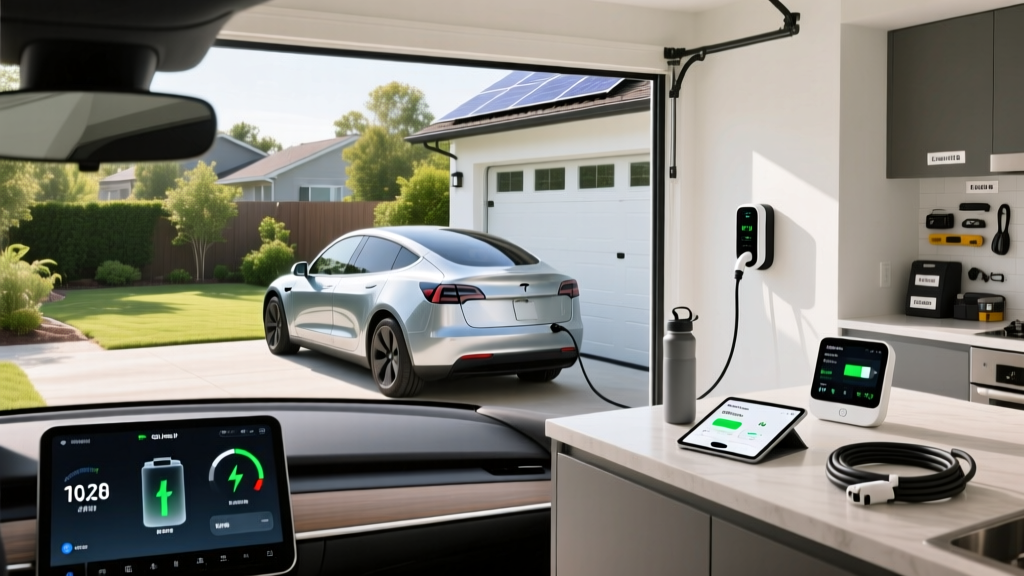
Lithium-ion cells experience the most stress at the extremes — sitting at 100% SoC or near 0% for extended periods. For NMC/NCA batteries, daily charging to 80% and avoiding letting the pack sit below 10% for days at a time can meaningfully slow degradation. LFP batteries are more tolerant of 100% SoC and actually benefit from periodic full charges for BMS cell-balancing accuracy.
2. DC Fast-Charging Frequency
Occasional DC fast charging (1-2 sessions per week) has a minimal impact on modern liquid-cooled packs. However, daily reliance on 150-350 kW DC fast charging — especially without preconditioning — accelerates wear. Tesla's own data has shown that Model 3 vehicles charged primarily on Superchargers vs. Level 2 home charging showed only a ~1-2% additional capacity loss over 100,000 miles. Meaningful, but not catastrophic.
3. Temperature Extremes
Batteries degrade faster when exposed to sustained high temperatures (above 95°F / 35°C ambient, which translates to higher cell temps). Hot-climate owners in Arizona, Texas, or Southern California may see slightly faster degradation than Pacific Northwest owners. Cold weather does not cause permanent degradation but temporarily reduces available capacity and slows charging speeds — preconditioning mitigates this.
4. Charging Speed and Thermal Management
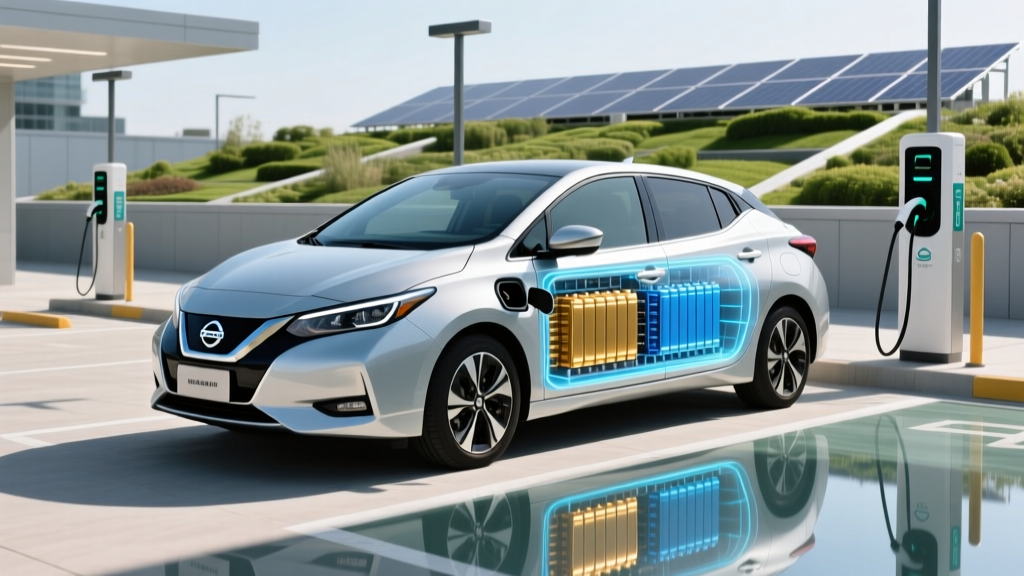
Vehicles with active liquid cooling (Tesla, Hyundai E-GMP, GM Ultium, Rivian) manage heat far better than older passive-cooled designs (early Nissan Leaf). This is the single biggest engineering reason modern EV batteries outlast their predecessors.
5. Depth of Discharge Patterns
Shallow cycles (e.g., charging from 40% to 80%) are gentler on cells than deep cycles (10% to 100%). In practice, you do not need to obsess over this — just avoid habitually running the pack to near-zero and leaving it there.
How to Check and Monitor Your Battery's State of Health (SoH)
State of Health (SoH) is the percentage of original capacity your battery can still hold. A new battery is 100% SoH; a battery that held 75 kWh when new but now holds 67.5 kWh is at 90% SoH.
Built-in tools:
- Tesla: The mobile app displays battery health percentage under the "Service" menu on newer software versions. You can also check the "Battery Health" test via the service menu in-car.
- Hyundai/Kia: The EV-specific menu in the infotainment system shows battery condition. Dealership scan tools provide detailed SoH readouts.
- Ford: The FordPass app includes battery health indicators. A full diagnostic is available at dealerships.
- GM (Ultium): The myChevrolet/myCadillac app provides battery status; dealerships can run a full SoH report.
Third-party tools:
- OBD-II dongles + apps: Devices like the OBDLink MX+ paired with apps such as EV Health or LeafSpy (for Nissan Leaf) can read detailed BMS data including individual cell voltages, pack SoH, and cycle counts.
- Recurrent Auto: This service connects to your vehicle's telematics and provides ongoing battery health reports with fleet comparisons.
When to check: At purchase (especially used EVs), annually, and before any long road trip where you need to know your realistic range ceiling. If you notice a sudden drop in displayed range that does not correlate with weather changes, schedule a dealer diagnostic — it could indicate a module imbalance rather than normal degradation.
Emerging Battery Tech: Solid-State and Silicon Anodes
The next generation of battery technology is in active development, but buyers should calibrate expectations against engineering timelines, not press-release hype.
Solid-state batteries replace the liquid electrolyte with a solid material (ceramic, sulfide, or polymer), promising higher energy density (~400-500 Wh/kg cell-level), faster charging, and improved safety. Toyota has announced pilot production of solid-state cells targeting 2027-2028 in limited models, with a goal of 750 km (~466 miles) of range. Samsung SDI and QuantumScape are also in advanced testing phases. However, manufacturing scale-up, cost reduction, and cycle-life validation remain unsolved challenges at volume. Realistic mass-market availability: 2029-2032.
Silicon anode technology incrementally boosts energy density by replacing some graphite in the anode with silicon, which can store roughly 10x more lithium ions per gram. Companies like Sila Nanotechnologies and Group14 are supplying early production cells. Expect to see silicon-dominant anodes in premium EVs by 2027-2028, offering 10-20% range gains within the same pack volume. This is an evolution, not a revolution — but a meaningful one for long-range applications.
Sodium-ion batteries are emerging as a low-cost alternative for entry-level EVs, trading energy density for dramatically lower raw material costs (no lithium, cobalt, or nickel). CATL and BYD have begun production. Expect these in budget-oriented city EVs by 2027, but not in long-range vehicles.
None of these technologies are available in production vehicles you can buy today. If you need an EV now, current LFP and NMC chemistries are mature, well-understood, and backed by robust warranties.
Frequently Asked Questions
How long do EV batteries last in years and miles?
Most modern liquid-cooled EV batteries retain 85-90% of original capacity at 100,000 miles and 80-85% at 150,000 miles. In years, that translates to 10-15 years of normal driving before capacity loss becomes noticeable in daily use. Federal warranty mandates require manufacturers to guarantee at least 70% capacity for 8 years/100,000 miles (10 years/150,000 miles in CARB states).
How much does an EV battery cost to replace in 2026?
Full pack replacement costs range from roughly $8,000-$11,000 for a mid-size EV (75-84 kWh pack like a Tesla Model 3 or Ioniq 5) to $16,000-$22,500 for a large truck or SUV pack (130+ kWh). However, most replacements involve individual modules ($1,500-$3,500) rather than full packs, and the vast majority of owners will never need a replacement during their ownership.
What does the battery warranty cover?
EV battery warranties cover capacity loss below a stated threshold (typically 70% of original capacity) and manufacturing defects for 8 years/100,000 miles under federal mandate. They do not cover damage from accidents, flooding, modifications, or use of non-approved charging equipment. Check your specific manufacturer's warranty terms for exact thresholds and CARB-state extensions.
How do I check and maximize my EV battery health?
Check SoH through your vehicle's built-in app (Tesla app, FordPass, Hyundai EV menu) or an OBD-II diagnostic tool. To maximize longevity: charge NMC batteries to 80% daily (100% for LFP), avoid leaving the pack at 0% or 100% for extended periods, minimize daily DC fast-charging reliance, precondition in cold weather, and park in shade or a garage in hot climates when possible.
LFP vs NMC — which battery chemistry is better?
Neither is universally "better." LFP wins on cycle life (3,000-5,000 cycles vs. 1,000-2,000), cost, safety, and daily charging convenience (100% SoC is fine). NMC wins on energy density (more range per pound), cold-weather performance, and suitability for long-range driving. Choose LFP if your daily driving is under 60 miles and you charge at home. Choose NMC if you need 300+ miles of range or drive frequently in freezing temperatures.
Does fast charging damage my EV battery?
Occasional DC fast charging has a small, measurable effect — Tesla's fleet data shows roughly 1-2% additional capacity loss over 100,000 miles for vehicles that primarily Supercharge versus primarily home-charge. Modern liquid-cooled packs with preconditioning handle fast charging well. The concern is daily 350 kW charging without preconditioning over years — that accelerates wear. For most owners mixing home Level 2 charging with occasional road-trip fast charging, the impact is negligible.
Will solid-state batteries make current EVs obsolete?
Not in the near term. Solid-state batteries remain in pilot production as of 2026, with mass-market availability realistically 2029-2032 at the earliest. Current LFP and NMC batteries are mature, affordable, and offer 250-350+ miles of range with 10-80% DC fast charging in 18-25 minutes. If you need an EV now, there is no practical reason to wait for solid-state.