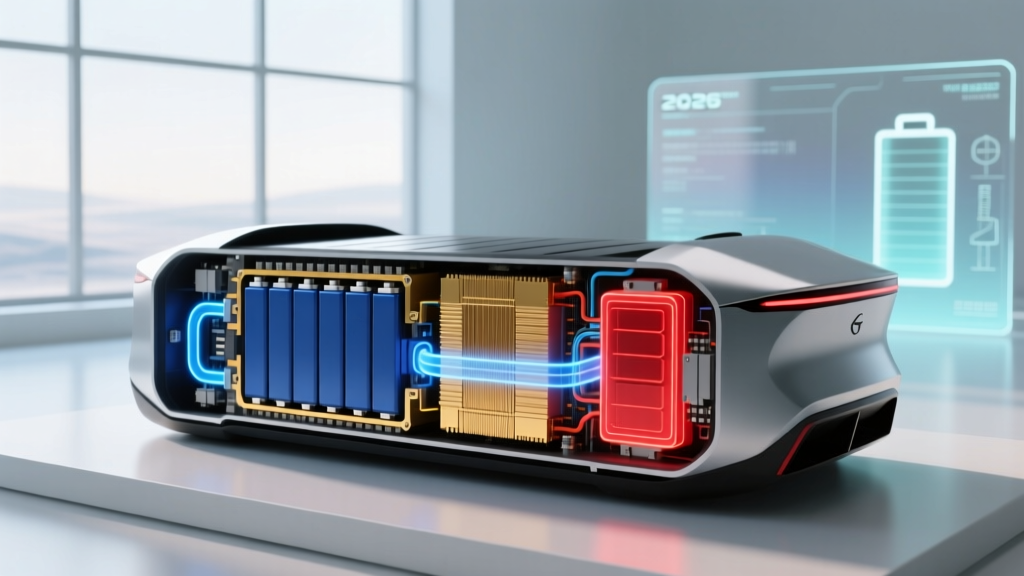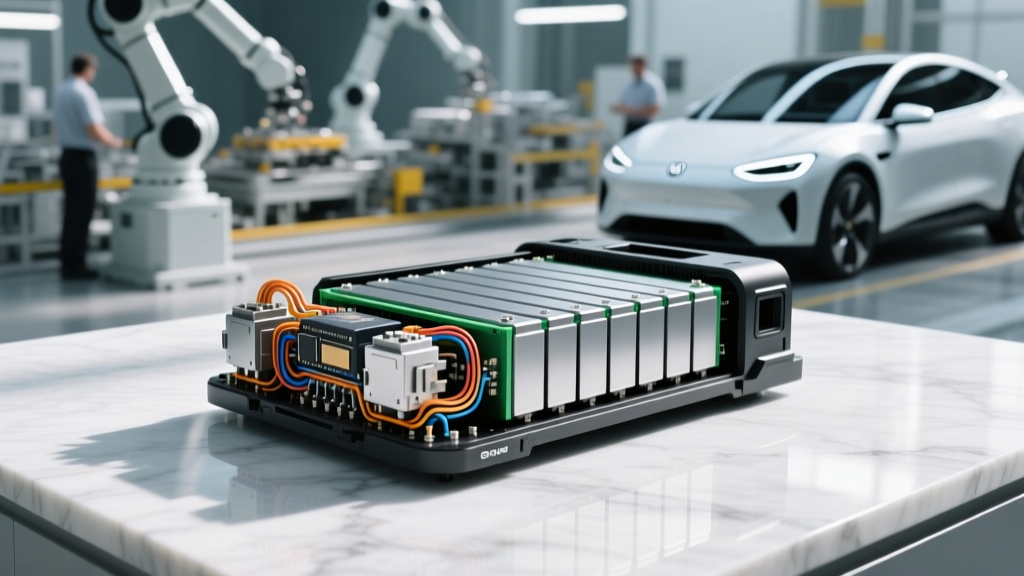
General Motors has placed its biggest EV bet on what it calls the GMP battery program — a tightly integrated system of Ultium cells, modular packs, and the Ultifi software platform designed to scale from a $30,000 Chevrolet Equinox EV to a $100,000+ Cadillac Escalade IQ. For buyers and current owners, the real questions are less about branding and more about longevity: How long will an Ultium pack last? What does the warranty actually cover? And if something goes wrong at mile 160,000, what does replacement cost?
This guide breaks down the GMP battery program's chemistry choices, real-world degradation data, warranty fine print, and the ownership economics that determine whether a GM electric vehicle is a sound long-term buy.
What the GMP Battery Program Actually Is
The GMP battery program is GM's umbrella term for its next-generation battery development, manufacturing, and lifecycle management strategy. It encompasses three layers:
- Ultium cells: Large-format pouch and prismatic lithium-ion cells produced primarily through the Ultium Cells joint venture with LG Energy Solution at plants in Ohio, Tennessee, and Michigan.
- Modular pack architecture: A flexible tray system that accommodates 6 to 24 modules, enabling battery capacities from roughly 50 kWh to over 200 kWh across GM's EV lineup.
- Ultifi software platform: An end-to-end battery management and vehicle software layer that handles cell balancing, thermal conditioning, over-the-air updates, and State of Health (SoH) reporting.
GM's strategy diverges from competitors in one important way: rather than locking into a single cell format, the GMP battery program uses both pouch cells (higher energy density, used in larger vehicles like the Silverado EV and Escalade IQ) and prismatic cells (lower cost, longer cycle life, targeted at high-volume models like the Equinox EV and Blazer EV). This dual-format approach gives GM supply-chain flexibility but means battery specs vary meaningfully between models.
Ultium Chemistry: NMC vs LFP Trade-Offs
The majority of Ultium packs shipping in 2025–2026 model-year vehicles use nickel-manganese-cobalt (NMC) cathode chemistry with an NCMA (nickel-cobalt-manganese-aluminum) variant that GM and LG developed to reduce cobalt content by approximately 70% compared to earlier LG cells. However, GM has confirmed it will introduce lithium iron phosphate (LFP) cells into the Ultium ecosystem for entry-level trims, following the lead of Tesla and Ford.
Here's how the two chemistries compare in the context of the GMP battery program:
| Attribute | NMC/NCMA (Ultium Primary) | LFP (Entry-Level Ultium) |
|---|---|---|
| Energy Density (cell-level) | ~250–290 Wh/kg | ~160–200 Wh/kg |
| Typical Cycle Life | 1,000–1,500 full cycles | 2,500–4,000+ full cycles |
| Cold-Weather Performance | Better at sub-freezing temps | Reduced range, slower charge in cold |
| Recommended Daily SoC | 80% for daily; 100% for trips | 100% OK regularly |
| Cost per kWh (cell) | ~$110–$130 | ~$80–$100 |
| Best Suited For | Long-range, performance, towing | Daily commuting, cost-sensitive buyers |
| Current GM Models | Lyriq, Blazer EV, Silverado EV, Escalade IQ, Hummer EV | Equinox EV (select trims), upcoming Bolt EV successor |
Which is better? It depends on your use case. If you regularly drive 300+ miles between charges, tow, or live in a cold climate, NMC's higher energy density and superior cold performance justify its higher cost and slightly shorter cycle life. If you commute 40 miles round-trip and charge nightly at home, LFP's longer lifespan and tolerance for 100% daily charging make it the more durable, lower-cost choice.
How Long Do GM EV Batteries Last? Degradation Data
GM designs Ultium packs for a minimum useful life of 150,000 to 200,000 miles before reaching the 70% capacity retention threshold that defines end-of-warranty life. Real-world data from early Ultium vehicles (2023–2024 Lyriq, Hummer EV) and legacy GM EVs (Bolt EV/EUV with LG NMC cells) paint a more detailed picture:
Typical Ultium Degradation Curve (NMC/NCMA):
- Year 1 / ~15,000 mi: 2–4% capacity loss (initial formation drop)
- Year 3 / ~45,000 mi: 5–8% total loss
- Year 5 / ~75,000 mi: 8–12% total loss
- Year 8 / ~120,000 mi: 12–18% total loss
- Year 10 / ~150,000 mi: 15–22% total loss (approaching 70–85% SoH)
Sources: GM warranty documentation, Recurrent Auto battery data, owner-reported data on Chevy Bolt EV fleets showing ~10% average degradation at 100,000 miles.
For context, a 2025 Chevrolet Equinox EV 3LT with a 85 kWh (usable) Ultium pack and an EPA range of 319 miles would realistically deliver approximately 270–285 miles of range at the 5-year mark under typical mixed driving. Highway-heavy driving at 75+ mph or frequent DC fast charging in hot climates can accelerate this by 2–4 percentage points.
The Bolt EV/EUV fleet (2017–2023, pre-Ultium LG cells) provides the longest-running GM data set. According to EPA/fueleconomy.gov, well-maintained Bolt packs are averaging 88–92% State of Health at 80,000 miles — suggesting that Ultium packs, with improved thermal management and cell chemistry, should equal or exceed this trajectory.
GMP Battery Program Warranty: What's Covered
GM's EV battery warranty aligns with the federal minimum established under EPA and CARB guidelines, but the specifics matter when you're reading the fine print:
| Warranty Element | GM Coverage (2025–2026 Models) |
|---|---|
| Duration | 8 years / 100,000 miles (whichever comes first) |
| Capacity Retention Threshold | Below 70% of original usable capacity |
| What Triggers a Claim | Battery SoH drops below 70% as measured by GM diagnostic tools |
| Remedy | Repair, module replacement, or full pack replacement at GM's discretion |
| Defect Coverage | Manufacturing defects covered for full 8yr/100k term regardless of SoH |
| Transferability | Fully transferable to subsequent owners |
| Exclusions | Damage from accidents, flooding, unauthorized modifications, or improper charging equipment |
Critical nuance: GM, like most automakers, reserves the right to replace only the defective modules rather than the entire pack. In the Ultium architecture, a pack contains 6 to 24 modules depending on the vehicle. A single failed module in a 20-module Silverado EV pack can be swapped individually — this is a cost advantage of the modular design, but it means a warranty claim may not restore your battery to "like new" capacity. The repaired pack must simply meet the 70% threshold.
California and states that have adopted CARB's Advanced Clean Cars II rules (including Colorado, Maine, Massachusetts, New York, Oregon, Vermont, Virginia, and Washington) may require extended battery durability warranties — up to 10 years / 150,000 miles for certain components. Check your state's specific requirements via your local DMV or air resources board.
EV Battery Replacement Costs: The Real Numbers
The most common fear among prospective EV buyers is a catastrophic out-of-warranty battery replacement bill. Here's what GM EV battery replacement actually costs in 2025–2026, based on dealer parts pricing, third-party repair shops, and GM's own service bulletins:
| Vehicle / Pack Size | Full Pack Replacement | Single Module Repair | Typical Need Timeline |
|---|---|---|---|
| Equinox EV (~85 kWh) | $14,000–$18,000 | $1,200–$2,500 | Rarely needed before 180,000+ mi |
| Blazer EV (~102 kWh) | $18,000–$23,000 | $1,500–$3,000 | Rarely needed before 170,000+ mi |
| Silverado EV (~200 kWh) | $28,000–$38,000 | $2,000–$4,000 | Rarely needed before 160,000+ mi |
| Lyriq (~102 kWh) | $18,000–$22,000 | $1,500–$2,800 | Rarely needed before 170,000+ mi |
| Hummer EV (~212 kWh) | $32,000–$42,000 | $2,200–$4,500 | Rarely needed before 150,000+ mi |
The honest context most articles omit: Complete pack failures outside of warranty are extremely rare in modern EVs. The more common scenario is gradual capacity loss — and most owners sell or trade their vehicles before degradation becomes functionally problematic. According to data from Recurrent Auto's analysis of over 15,000 EVs, fewer than 1.5% of EV batteries are replaced for non-crash reasons. When replacement is needed, GM's modular Ultium design allows individual module service at a fraction of full-pack cost.
For vehicles with massive packs like the Hummer EV or Silverado EV 4WT, the replacement cost is high in absolute terms but represents a smaller percentage of the vehicle's original MSRP ($85,000–$110,000). For the Equinox EV starting around $33,000, a full pack replacement at $14,000–$18,000 is proportionally more significant — which is why the 8-year warranty matters most for lower-priced models.
Factors That Accelerate (or Preserve) Battery Life
Battery degradation isn't random — it's driven by measurable electrochemical stressors. The GMP battery program's Ultifi software manages many of these automatically, but owner behavior still has a meaningful impact over 5–10 years:
Habits That Preserve Battery Health:
- ✅ Charge to 80% daily on NMC packs; reserve 100% for road trips (LFP packs can charge to 100% regularly)
- ✅ Use Level 2 home charging (7–11 kW) as your primary charging method
- ✅ Enable preconditioning before DC fast charging — Ultium's thermal management works best when the pack is warmed to optimal temperature (~95–105°F cell temp)
- ✅ Keep the vehicle plugged in during extreme heat or cold so the BMS can actively manage pack temperature
- ✅ Avoid leaving the vehicle at 100% SoC for extended periods (more than 24–48 hours)
Habits That Accelerate Degradation:
- ❌ Exclusive reliance on DC fast charging (daily 150–350 kW sessions increase cell stress)
- ❌ Frequent deep discharges below 10% SoC
- ❌ Storing the vehicle at 100% SoC in hot weather (above 90°F ambient)
- ❌ Repeatedly towing at max capacity in high temperatures without cooldown periods
- ❌ Aftermarket modifications that bypass the BMS or alter thermal management
GM's Ultium thermal management system uses a liquid cooling/heating loop that actively conditions the battery during charging and driving. This system is significantly more capable than the passive air-cooling used in early Nissan Leaf models and comparable to Tesla's Octovalve system. In practice, this means that a Silverado EV owner who DC fast-charges twice a week on a commute will see only marginally more degradation than one who charges exclusively at home — the active thermal system mitigates most of the heat-related stress. But the chemistry still prefers slower charging when time allows.
How to Check Your GM EV Battery Health (SoH)
State of Health (SoH) is the percentage of original usable capacity your battery currently holds. A brand-new pack is at 100% SoH; at 70% SoH, the battery has lost 30% of its original energy storage and is considered at end-of-warranty life.
GM provides several ways to monitor your Ultium pack's SoH:
- In-vehicle display: Most 2024–2026 GM EVs (Lyriq, Blazer EV, Equinox EV, Silverado EV) display estimated range and energy consumption in the driver information center. While this doesn't show SoH as a percentage directly, you can estimate it by comparing your current full-charge range to the original EPA figure. If your Lyriq originally showed 314 miles at 100% and now shows 280 miles at 100% (accounting for temperature and driving style), your SoH is approximately 89%.
- myChevrolet / myCadillac / myGMC app: The GM companion apps provide battery status, charge history, and energy usage data. Some model years include a battery health indicator under the "Vehicle Health" section.
- Dealer diagnostic scan: Any GM dealer can run a battery diagnostic using the GDS2 (Global Diagnostic System) tool, which reads individual cell voltages, module balance, internal resistance, and calculated SoH. This is the most accurate method and is free during warranty service visits.
- OBD-II third-party tools: Devices like the OBDLink SX paired with apps such as Torque Pro or EV-specific scanners can read battery data from the CAN bus. Accuracy varies, and GM does not officially support third-party SoH readings for warranty claims.
Pro tip: If you're buying a used GM EV, request a dealer battery diagnostic printout before purchase. This document shows module-level voltage variance — a key indicator of pack health. Cells that vary by more than 0.1V at rest may indicate a weak module that could trigger a warranty claim.
Beyond Ultium: Solid-State and Silicon Anode Timelines
The GMP battery program extends beyond current Ultium cells. GM has invested in two next-generation technologies that could reshape EV battery economics — but neither is available in production vehicles today:
Silicon Anode Cells: GM has partnered with Silicon anode developer startups to increase cell energy density by 20–40% over current graphite anodes. GM has indicated silicon anode cells could enter limited production by 2028–2029, likely in performance-oriented models first. These cells offer higher energy density but face cycle-life challenges that must be resolved before mass deployment.
Solid-State Batteries: GM has publicly stated it is developing solid-state battery technology but has not committed to a production timeline. Industry-wide, solid-state batteries — which replace the liquid electrolyte with a solid conductor — promise faster charging, higher energy density, and improved safety. However, manufacturing scale-up remains the primary barrier. Realistic industry estimates place solid-state batteries in limited premium EV production no earlier than 2029–2031, with cost-competitive mass production likely in the early 2030s.
What this means for today's buyers: Current Ultium NMC and LFP cells are mature, well-tested technologies. Waiting for solid-state is not a practical purchase strategy — the timeline is uncertain, and early solid-state vehicles will carry significant price premiums. If a GM EV meets your range, price, and feature needs today, the battery technology is ready for real-world ownership.
Frequently Asked Questions
How long do GM EV batteries last in real-world use?
Based on current Ultium degradation data and legacy Bolt EV fleet data, GM EV batteries typically retain 80–88% of original capacity at 100,000 miles and 70–85% at 150,000 miles. Most packs will outlast the vehicle's functional life. The 8-year/100,000-mile warranty provides a safety net, but actual replacement before 200,000 miles is uncommon.
How much does a GM EV battery cost to replace?
Full pack replacement ranges from approximately $14,000 (Equinox EV, 85 kWh) to $42,000 (Hummer EV, 212 kWh). However, GM's modular Ultium design allows individual module replacement at $1,200–$4,500 per module, which is the more common repair scenario. Complete pack failures outside of warranty are rare — fewer than 1.5% of EV batteries require non-crash replacement according to fleet data.
What does the GM battery warranty cover?
GM covers the high-voltage battery for 8 years or 100,000 miles against capacity loss below 70% and manufacturing defects. The warranty is fully transferable to subsequent owners. GM may repair individual modules rather than replace the full pack. Damage from accidents, flooding, or unauthorized modifications is excluded. CARB-adopting states may have extended warranty requirements.
How do I check my GM EV battery health?
You can estimate SoH by comparing your current full-charge range to the original EPA figure, use the myChevrolet/myCadillac/myGMC app's battery status features, or request a dealer diagnostic scan using GM's GDS2 tool for precise module-level data. The dealer scan is the most accurate method and is recommended for used-vehicle purchases.
Is LFP or NMC better in a GM EV?
NMC (specifically GM's NCMA variant) offers higher energy density, better cold-weather performance, and faster charging — making it better for long-range driving, towing, and cold climates. LFP offers longer cycle life (2–3x more cycles), lower cost, and tolerance for daily 100% charging — making it better for daily commuting and budget-conscious buyers. Neither is universally superior; the right choice depends on your driving patterns.
Does DC fast charging damage my Ultium battery?
Occasional DC fast charging (1–3 times per week) has a minimal impact on Ultium pack health thanks to active liquid thermal management. However, exclusive reliance on DC fast charging — especially at 350 kW — will accelerate degradation by an estimated 2–5% over 100,000 miles compared to primarily Level 2 charging. For optimal longevity, use Level 2 home charging as your primary method and reserve DC fast charging for road trips.
Will solid-state batteries make my current GM EV obsolete?
Not in any practical timeframe. Solid-state batteries are not expected in production EVs before 2029–2031, and early models will be expensive and limited. Current Ultium packs are designed to last 150,000–200,000+ miles. By the time solid-state reaches cost parity, today's EVs will have already delivered most of their useful life. Buy for your needs today rather than speculating on future chemistry.