General Motors' Ultium platform is the backbone of its electric-vehicle strategy, powering everything from the Chevrolet Equinox EV to the GMC Hummer EV pickup. But beyond the marketing, what is special about Ultium battery technology compared to competing architectures from Tesla, Hyundai, or Ford? The answer lies in a combination of cell chemistry, modular pouch-cell design, a wireless battery management system, and a highly flexible skateboard chassis that GM claims can scale from affordable crossovers to heavy-duty trucks.
This guide breaks down the engineering choices behind Ultium, how its NMC chemistry compares to LFP alternatives, what real-world degradation data shows, and what ownership looks like over the long term — warranty coverage, replacement costs, and best practices for maximizing battery health.
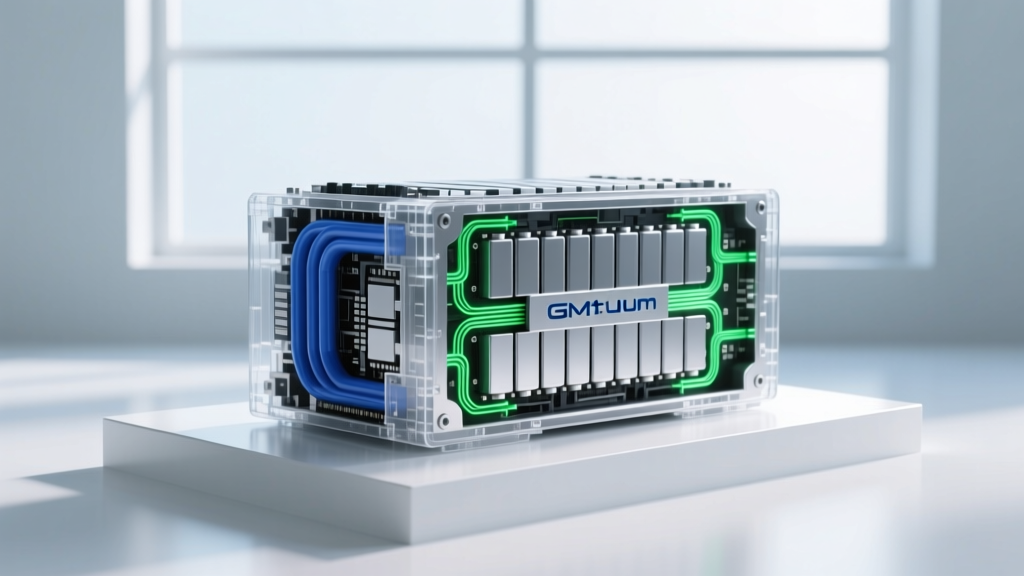
Ultium Architecture: Pouch Cells, Modules, and the Wireless BMS
Unlike Tesla's cylindrical 4680 cells or Hyundai's prismatic-cell packs, Ultium uses large-format pouch cells supplied primarily by LG Energy Solution (through the Ultium Cells joint venture plants in Ohio, Tennessee, and Michigan). These pouch cells are stacked into modules, and modules are arranged either horizontally or vertically within the pack — giving GM unusual flexibility in pack sizing.
Ultium packs range from approximately 50 kWh (Chevrolet Equinox EV base trims) up to a massive 24-module, ~212 kWh usable pack in the GMC Hummer EV. Most mainstream Ultium vehicles — the Cadillac Lyriq, Chevrolet Blazer EV, and Silverado EV — use packs in the 85–102 kWh range.
The standout engineering feature is the wireless Battery Management System (wBMS), co-developed with Analog Devices. By eliminating most of the physical wiring harness between cell modules and the central controller, GM reduced pack weight by roughly 10% compared to a conventional wired BMS, simplified manufacturing, and made module-level diagnostics more granular. Fewer wires also means fewer potential points of failure in high-voltage connections over the vehicle's lifespan.
Ultium Cell Chemistry: NCMA vs. LFP Trade-Offs
Ultium cells use an NCMA (Nickel-Cobalt-Manganese-Aluminum) cathode — a variant of NMC chemistry that adds aluminum to improve thermal stability and reduce cobalt content. GM states Ultium cells use approximately 70% less cobalt than the cells in the first-generation Chevrolet Bolt EV, which lowers both cost and supply-chain ethical concerns.
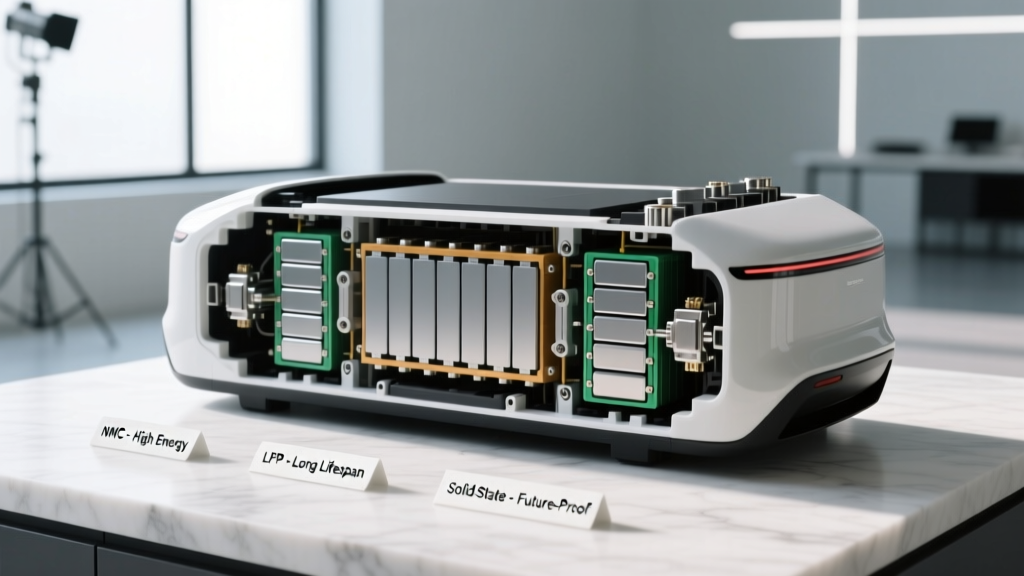
Here's how NCMA/NMC stacks up against LFP (lithium iron phosphate), the chemistry used in Tesla Model 3/Y Standard Range and many Chinese-market EVs:
| Attribute | NCMA / NMC (Ultium) | LFP |
|---|---|---|
| Energy density (cell-level) | ~260–300 Wh/kg | ~160–200 Wh/kg |
| Typical pack range (EPA) | 250–380+ mi depending on pack | 200–270 mi typical |
| Cycle life (to 80% SoH) | ~1,000–1,500 cycles | ~2,500–4,000+ cycles |
| Cold-weather performance | Better low-temp conductivity | More range loss below 32°F |
| Thermal runaway risk | Moderate (managed by cooling) | Very low inherent risk |
| Cost per kWh (cell) | ~$100–120/kWh | ~$75–95/kWh |
| Recommended daily SoC | 80–90% for longevity | Can charge to 100% regularly |
| Best suited for | Long-range, performance, trucks | Budget models, daily commuters, fleet |
The practical takeaway: NCMA gives Ultium vehicles the energy density needed for 300+ mile ranges in large, heavy vehicles like the Silverado EV and Hummer EV — something LFP currently can't match without excessive pack weight. But LFP's superior cycle life and tolerance for 100% daily charging make it the better choice for cost-sensitive, shorter-range models. GM has not yet adopted LFP for any Ultium production vehicle as of the 2026 model year, though industry reports suggest future base trims could shift to LFP.
How Long Do Ultium Batteries Last? Degradation Data
EV batteries don't "die" suddenly — they gradually lose capacity over time and charge cycles. State of Health (SoH) measures remaining capacity as a percentage of the original. A new Ultium pack starts at 100% SoH; most warranties guarantee it stays above 60–70% for the coverage period.
Based on early fleet data, third-party telemetry from sources like Recurrent Auto, and GM's own engineering projections, here's what Ultium degradation looks like:
- Year 1 / 15,000 mi: ~2–4% capacity loss (initial "break-in" curve)
- Year 3 / 45,000 mi: ~6–9% total loss (SoH ~91–94%)
- Year 5 / 75,000 mi: ~8–12% total loss (SoH ~88–92%)
- Year 8 / 100,000 mi: ~10–15% total loss (SoH ~85–90%)
- Year 10+ / 150,000 mi: ~15–20% loss projected (SoH ~80–85%)
Note: These are projections based on NMC/NCMA fleet averages. Individual results depend heavily on climate, charging habits, and thermal management usage. The Ultium platform's active liquid cooling/heating system helps moderate extremes, but consistent DC fast charging in hot climates accelerates wear.
For context, a Chevrolet Blazer EV with a 102 kWh pack and a 320-mile EPA range losing 12% capacity over five years would still deliver approximately 282 miles of range — still highly usable. Most Ultium packs are projected to outlast the vehicles they're installed in, with the battery reaching 70–80% SoH around 200,000+ miles under typical use.
GM Ultium Battery Warranty: What's Covered
GM provides a dedicated EV battery warranty separate from the standard bumper-to-bumper and powertrain coverage. Here are the key terms for 2025–2026 model-year Ultium vehicles:
| Coverage Element | Detail |
|---|---|
| Duration | 8 years / 100,000 miles (whichever comes first) |
| Capacity retention threshold | 60% of original capacity (some sources cite 70% — confirm with dealer at purchase) |
| What's covered | Battery pack, modules, BMS, thermal management components |
| What's NOT covered | Damage from accidents, modifications, improper charging equipment, or neglect |
| Transferable | Yes — warranty transfers to subsequent owners |
| Deductible | $0 for warranty-covered battery repairs |
The 60% threshold is lower than some competitors. Hyundai/Kia guarantees 70% capacity retention over 10 years/100,000 miles on the Ioniq 5 and EV6, and Tesla's warranty varies by model but generally targets 70% over 8 years/100,000–150,000 miles. GM's threshold means the battery must lose a substantial amount of capacity before a warranty claim is triggered — but given typical NCMA degradation curves, hitting below 60% within the warranty period would be highly unusual under normal ownership.
Ultium Battery Replacement Cost: What Owners Should Budget
Out-of-warranty battery replacement is the single biggest fear for prospective EV buyers. Here's the reality for Ultium packs:
| Vehicle | Pack Size | Estimated Pack Cost | Labor & Programming | Total Estimate |
|---|---|---|---|---|
| Chevrolet Equinox EV | ~85 kWh | $8,500–$11,000 | $2,000–$3,500 | $10,500–$14,500 |
| Cadillac Lyriq | ~102 kWh | $10,000–$13,500 | $2,500–$4,000 | $12,500–$17,500 |
| Chevrolet Silverado EV | ~200 kWh | $18,000–$25,000 | $3,000–$5,000 | $21,000–$30,000 |
| GMC Hummer EV | ~212 kWh | $20,000–$28,000 | $3,500–$5,500 | $23,500–$33,500 |
Key context: These are worst-case full-pack replacement figures. Ultium's modular design means individual modules can often be replaced rather than the entire pack — a single module replacement might cost $1,500–$3,500 depending on the vehicle and which module is degraded or faulty. This modularity is a significant cost advantage over some competitors' monolithic pack designs.
In practice, full pack replacements are rare. Data from the Consumer Reports EV reliability surveys and Recurrent Auto consistently show that fewer than 5% of modern EVs require battery replacement within the first 10 years — and the vast majority of those cases involve manufacturing defects covered under warranty, not natural degradation.
Factors That Affect Ultium Battery Longevity
Not all miles are created equal when it comes to battery wear. These are the factors with the greatest impact on Ultium NCMA cell health:
- Daily charge limit: Set to 80% for daily driving. Reserve 100% charges for road trips. NCMA chemistry degrades faster when held at high SoC for extended periods.
- DC fast charging frequency: Occasional DC fast charging (1–2 times per week) is fine. Daily 350 kW sessions accelerate degradation. Use Level 2 home charging as your primary method.
- Extreme heat exposure: Avoid leaving the vehicle parked in direct sun at high SoC in summer. The Ultium thermal management system helps, but passive heat soak still stresses cells. Precondition while plugged in when possible.
- Extreme cold: Always precondition the battery before fast charging in freezing weather. Cold cells accept charge slower and are more susceptible to lithium plating if charged at high rates without warming.
- Storage: If storing for 2+ weeks, leave the battery at 50–60% SoC. Avoid storing at 100% or below 20%.
- Regen braking settings: Aggressive one-pedal driving doesn't significantly harm the battery, but very high regen currents in cold weather can stress cells before they're warmed. Let the thermal management system do its job.
The Ultium platform's liquid-cooled thermal management system is one of its strengths. Active cooling during fast charging and active heating during cold-weather preconditioning help keep cells in the optimal 20–40°C (68–104°F) window, which significantly slows calendar and cycle degradation compared to passively cooled packs.
How to Check Ultium Battery Health (State of Health)
GM provides several ways to monitor your Ultium pack's State of Health:
In-vehicle: The myChevrolet, myCadillac, or myGMC app (depending on your brand) displays estimated range and charging behavior, but does not currently show a direct SoH percentage on the dashboard the way some competitors do.
Dealer diagnostic: Any GM dealer can run a full battery health report using the GDS2 (Global Diagnostic System) tool, which reads individual module voltages, internal resistance, and calculated SoH. Request this during routine service visits — it's typically free and takes about 15 minutes.
Third-party telemetry: Services like Recurrent Auto (free enrollment) connect to your vehicle's telematics and provide ongoing SoH tracking, range trend analysis, and comparisons against similar vehicles in their fleet. This is the most transparent way to monitor degradation over time without relying on dealer visits.
OBD-II tools: Advanced OBD-II readers with EV-specific software (such as the OBDLink MX+ paired with apps like ABRP or EVNotify) can read battery management data on some GM models, though Ultium's newer architecture may limit third-party access compared to older platforms like the Bolt.
What Comes After Ultium? Solid-State and Silicon Anode Context
GM has invested heavily in solid-state battery research through partnerships and its internal R&D programs. Solid-state batteries replace the liquid electrolyte with a solid material, promising higher energy density (~400–500 Wh/kg at the cell level), faster charging, and dramatically reduced fire risk. However, as of 2026, solid-state EV batteries remain in pre-production testing phases.
Realistic timeline: Industry analysts project limited solid-state production vehicles from major OEMs beginning in 2028–2030, initially in low-volume, premium applications. Mass-market solid-state EVs at price parity with current lithium-ion vehicles are not expected before 2032–2035.
GM has also explored silicon anode technology, which replaces graphite anodes with silicon to boost energy density by 20–40%. Silicon anode cells are closer to production — several startups are shipping cells to OEMs for testing — but challenges with anode swelling during charge cycles remain. Expect silicon-enhanced anodes to appear in production EVs around 2027–2029, potentially as an incremental upgrade to existing Ultium-style packs rather than a full platform replacement.
For buyers today: Ultium's NCMA chemistry is mature, well-understood, and supported by a growing North American supply chain. Waiting for solid-state means waiting at least 3–5 years for limited availability at premium pricing.
Frequently Asked Questions
How long do Ultium EV batteries last in years and miles?
Based on NCMA degradation curves and early fleet data, Ultium packs are projected to retain 80–85% of original capacity at 150,000 miles and 10+ years of typical use. Most Ultium batteries will outlast the vehicles they're installed in. Full degradation below 60% (the warranty threshold) within 10 years would be unusual under normal driving and charging habits.
How much does it cost to replace an Ultium battery?
Full pack replacement ranges from approximately $10,500 (Equinox EV, 85 kWh) to $33,500 (Hummer EV, 212 kWh) including parts and labor. However, Ultium's modular design allows individual module replacement at $1,500–$3,500 per module in many cases. Most battery issues within the first 8 years/100,000 miles are covered under GM's warranty at no cost to the owner.
What does the GM Ultium battery warranty cover?
GM covers the battery pack, modules, BMS, and thermal management components for 8 years or 100,000 miles. The warranty guarantees the pack will retain at least 60% of its original capacity. The warranty is transferable to subsequent owners and carries a $0 deductible for covered repairs.
How do I maximize my Ultium battery's lifespan?
Set your daily charge limit to 80%, use Level 2 home charging as your primary method, minimize DC fast charging in extreme heat, always precondition in cold weather, and avoid long-term storage at very high or very low SoC. The Ultium thermal management system handles a lot automatically, but these habits further reduce degradation.
Is NCMA (Ultium) chemistry better than LFP?
It depends on the use case. NCMA offers significantly higher energy density, making 300+ mile ranges feasible in large vehicles — essential for trucks and SUVs. LFP offers far superior cycle life (2,500–4,000+ cycles vs. 1,000–1,500), lower cost, and tolerance for daily 100% charging — making it better for budget models and high-mileage commuters. For Ultium's target vehicles (large crossovers, trucks, luxury sedans), NCMA is currently the correct engineering choice.
Can I check my Ultium battery health myself?
GM's mobile apps show range and charging data but not a direct SoH percentage. For a precise SoH reading, request a battery health report from your GM dealer (free, ~15 minutes) or enroll in a free third-party service like Recurrent Auto, which tracks your battery's capacity trend over time via connected vehicle telematics.