When shoppers ask "what battery for my car," they're usually wrestling with three concerns: Will it last? How much will it cost to replace? And does the chemistry matter? The short answers: modern EV traction batteries routinely outlast 150,000 miles with under 15% capacity loss, full replacements run $5,000–$20,000 depending on pack size, and chemistry absolutely matters — it dictates range, charging behavior, cold-weather performance, and daily care habits.
This guide breaks down the two dominant chemistries in 2026 EVs — lithium iron phosphate (LFP) and nickel manganese cobalt (NMC/NCA) — with hard data on degradation, warranty coverage, replacement economics, and the daily habits that extend battery life. We'll also cover how to monitor State of Health (SoH) and what's realistically coming next in solid-state and silicon-anode tech.
LFP vs NMC/NCA: Which Battery Chemistry Fits Your Driving?
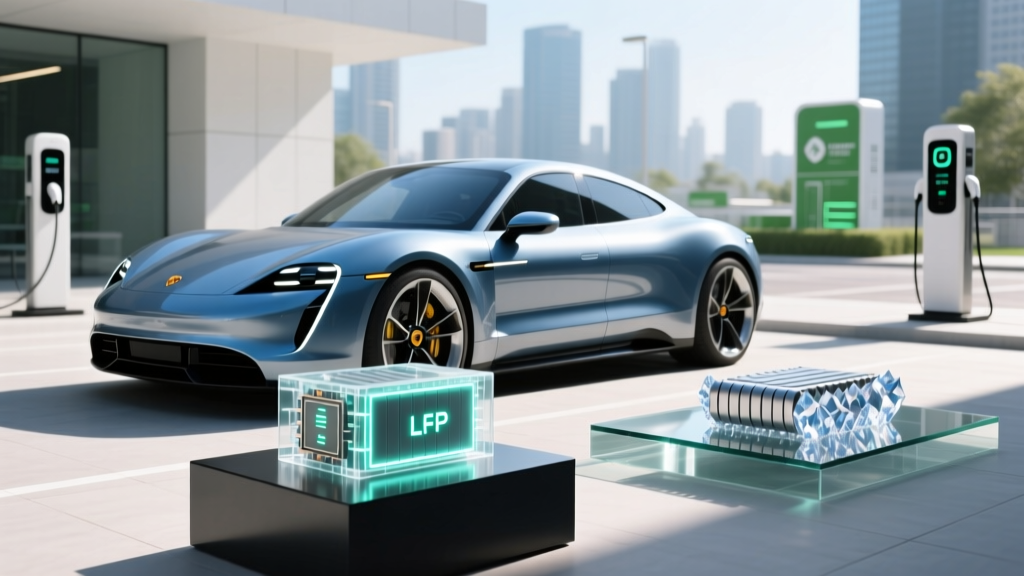
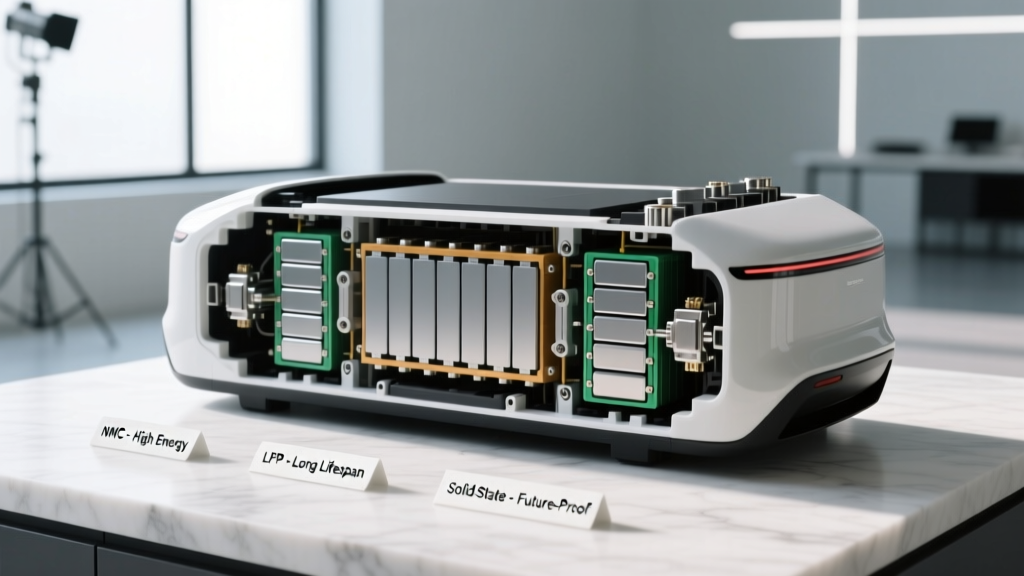
The high-voltage traction battery is the most expensive component in any EV. In 2026, virtually every new EV sold in the U.S. uses one of two lithium-ion chemistries: LFP or NMC (sometimes NCA, a close variant). The choice isn't about "better" or "worse" in the abstract — it's about which trade-offs align with your driving pattern, climate, and budget.
| Attribute | LFP (Lithium Iron Phosphate) | NMC / NCA (Nickel-based) |
|---|---|---|
| Energy density | ~160–180 Wh/kg (lower) | ~220–260 Wh/kg (higher) |
| Typical pack size | 50–65 kWh | 72–100+ kWh |
| Range per charge | 200–270 mi EPA | 280–400+ mi EPA |
| Cycle life | 3,000–5,000+ cycles | 1,500–2,500 cycles |
| Cold-weather performance | Weaker — more range loss below 32°F | Better low-temp discharge and regen |
| Daily charging to 100% | Recommended (improves BMS calibration) | 80% preferred for daily; 100% for trips only |
| Fast-charge tolerance | Excellent — less degradation from DCFC | Good, but frequent 150+ kW sessions accelerate wear |
| Cost per kWh (pack level) | ~$100–115/kWh | ~$130–150/kWh |
| Critical mineral exposure | No cobalt or nickel | Requires cobalt, nickel — supply-chain risk |
| Common in (2026 examples) | Tesla Model 3 RWD, Ford Mustang Mach-E Select (LFP variant), BYD models | Hyundai Ioniq 5 Long Range, Rivian R1T, Chevrolet Silverado EV, BMW iX |
Choose LFP if: You mostly commute under 200 miles round-trip, can charge at home daily, live in a moderate climate, and want maximum longevity with minimal care. LFP's cycle life is exceptional — Tesla and BYD data suggest these packs can exceed 3,000 full cycles before hitting 80% capacity, which translates to 500,000+ miles in a 270-mile-range vehicle.
Choose NMC/NCA if: You need maximum range for road trips, tow frequently, live in a cold climate where every mile of range matters in winter, or want the fastest DC fast-charging speeds. NMC's higher energy density gives you more miles per kilogram, and its cold-weather discharge performance is measurably better.
One critical ownership difference: LFP batteries should be charged to 100% at least once a week. This isn't a suggestion — it's how the battery management system (BMS) calibrates its state-of-charge estimate. NMC owners should set a daily limit of 80% and reserve 100% charges for the morning of a road trip.
How Long Do EV Batteries Actually Last?
The fear of a dead battery at 80,000 miles is a relic of early EVs. Modern thermal management systems, improved cell chemistry, and smarter BMS software have pushed real-world lifespans well beyond initial expectations.
Real-world degradation data points (sourced from fleet and owner studies):
- Tesla Model 3/Y (NMC, 2019–2023): Average 8–12% capacity loss at 100,000 miles, based on Tesla's 2023 Impact Report and third-party fleet data from Recurrent Auto. Degradation curve flattens significantly after the first 30,000 miles.
- Chevrolet Bolt EV/EUV (NMC, 2017–2023): GM's Ultium-era data and owner reports show ~6–10% loss at 80,000 miles. The Bolt's liquid-cooled pack has been one of the most durable in its class.
- Tesla Model 3 RWD (LFP, 2021–2025): Early fleet data from Recurrent shows under 5% degradation at 60,000 miles — consistent with LFP's superior cycle life.
- Hyundai/Kia E-GMP platform (NMC, Ioniq 5/EV6): Owner-reported data indicates ~7–10% loss at 80,000 miles. Hyundai's aggressive battery preconditioning and thermal management contribute to strong longevity.
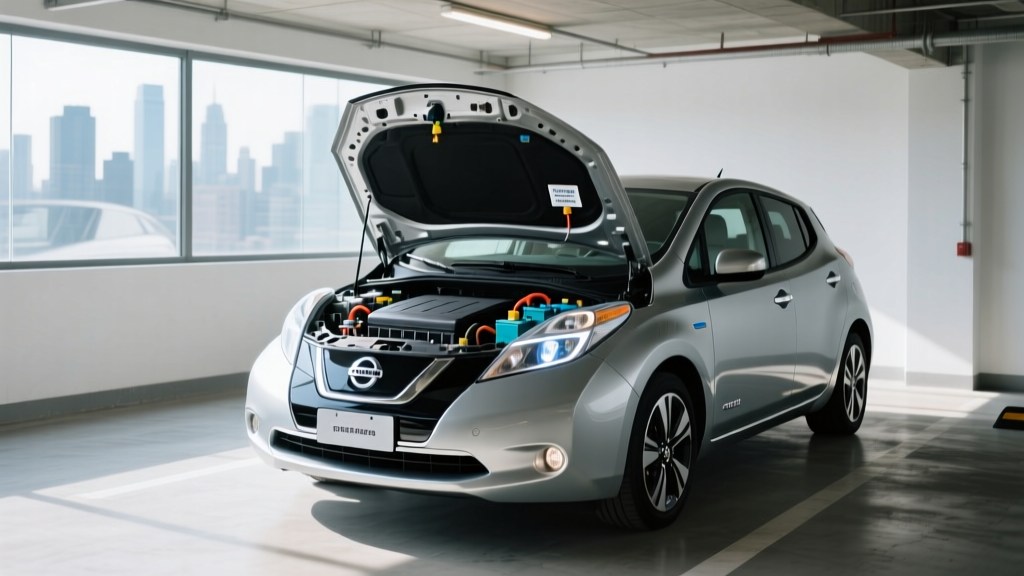
- Nissan LEAF (passive air-cooled, 2011–2017): The cautionary tale — early LEAFs without active thermal management saw 20–30% degradation by 80,000 miles, especially in hot climates. Modern liquid-cooled packs have largely solved this.
The general pattern across chemistries: expect 2–5% capacity loss in the first year (the "break-in" drop), then a gradual linear decline of roughly 1–2% per year or ~1% per 10,000 miles. Most modern packs will retain 85–90% of original capacity at 100,000 miles and 75–85% at 150,000 miles.
For context, the average American drives ~13,500 miles per year (FHWA data), meaning a 150,000-mile battery lifespan covers roughly 11 years of typical use — longer than most people keep a car.
What Does the EV Battery Warranty Actually Cover?
Federal law mandates a minimum 8-year/100,000-mile warranty on EV battery packs, and California Air Resources Board (CARB) states require 10 years/150,000 miles. But the details matter — especially the capacity retention threshold.
| Manufacturer (2026 models) | Warranty Term | Capacity Retention Threshold | Notes |
|---|---|---|---|
| Tesla (Model 3/Y RWD, LFP) | 8 yr / 100,000 mi | 70% | Covers defects and capacity below threshold |
| Tesla (Model 3/Y LR, NMC) | 8 yr / 120,000 mi | 70% | Longer mileage coverage for Long Range |
| Hyundai / Kia (Ioniq 5, EV6, EV9) | 10 yr / 100,000 mi | 70% | Among the longest terms in the industry |
| Ford (Mach-E, F-150 Lightning) | 8 yr / 100,000 mi | 70% | Standard across Ford EV lineup |
| Chevrolet (Blazer EV, Silverado EV) | 8 yr / 100,000 mi | 70% | GM's Ultium platform warranty |
| Rivian (R1T, R1S) | 8 yr / 175,000 mi | 70% | Highest mileage cap — aimed at adventure/truck use |
| BMW (iX, i4) | 8 yr / 100,000 mi | 70% | Includes battery preconditioning for longevity |
The 70% threshold is standard across the industry. That means the manufacturer will repair or replace the battery only if its capacity drops below 70% of original within the warranty period. A pack at 72% capacity at 95,000 miles is functioning "within spec" even though you've lost nearly a third of your range.
In practice, warranty claims for capacity degradation are rare. Most claims involve manufacturing defects — bad cells, BMS faults, or coolant leaks — which typically surface in the first 12–18 months. The 70% floor is conservative enough that normal degradation rarely triggers it within the warranty window.
How Much Does It Cost to Replace an EV Battery?
This is the question that generates the most anxiety — and the most misinformation. Let's ground it in actual numbers.
| Vehicle / Pack Size | Estimated Replacement Cost (2026) | Context |
|---|---|---|
| Tesla Model 3 RWD (~57 kWh LFP) | $7,000–$9,000 | Smaller pack, lower $/kWh chemistry |
| Tesla Model Y LR (~75 kWh NMC) | $10,000–$14,000 | Mid-size pack, widely serviced |
| Hyundai Ioniq 5 (~77 kWh NMC) | $11,000–$15,000 | Modular pack allows partial replacement |
| Ford F-150 Lightning Ext. Range (~131 kWh NMC) | $18,000–$22,000 | Largest consumer pack on the market |
| Rivian R1T Max Pack (~149 kWh NMC) | $18,000–$25,000 | Large pack, limited service network |
| Chevrolet Bolt EV (~65 kWh NMC) | $9,000–$12,000 | Post-recall replacement pricing stabilized |
These are out-of-warranty costs including parts and labor at manufacturer-authorized service centers. Independent EV shops and refurbished packs can reduce costs by 30–40% for older models.
When is replacement typically needed? For most 2020+ EVs with liquid-cooled packs, the honest answer is: probably never during original ownership. A battery retaining 75–80% capacity at 150,000 miles is still perfectly usable — you've just lost 50–60 miles of range on a 300-mile car. Full replacement becomes relevant only when capacity drops below 60–65%, which current data suggests takes 200,000+ miles for most modern packs.
Also worth noting: many manufacturers can replace individual battery modules rather than the entire pack. A Hyundai Ioniq 5 with one degraded module out of 24 might need a $2,000–$3,000 module swap rather than a full pack replacement. Tesla, Rivian, and GM also support modular repair on certain platforms.
Five Factors That Accelerate (or Slow) Battery Degradation
Battery wear isn't random — it's driven by specific, measurable factors. Here's what matters most, ranked by impact:
1. State of charge habits (highest impact)
- Sitting at 100% SoC for extended periods stresses NMC cells. Set your daily charge limit to 80% (or 50% if your commute is short).
- Letting the battery sit below 10% for days also accelerates wear. Plug in when you get home, even if you don't need a full charge.
- LFP exception: charge to 100% weekly for BMS calibration. Daily 100% is acceptable for LFP.
2. Temperature extremes
- Sustained exposure to ambient temperatures above 95°F accelerates electrolyte breakdown. Garage parking matters in Phoenix summers.
- Cold doesn't permanently degrade the battery, but charging a cold pack (below 32°F) without preconditioning causes lithium plating — a permanent capacity loss mechanism.
- Always use battery preconditioning before DC fast charging in cold weather. Tesla, Hyundai, and Ford all offer automated preconditioning when you navigate to a charger.
3. DC fast-charging frequency
- Exclusive DCFC use (no Level 2 home charging) correlates with 2–4% additional degradation over 100,000 miles vs. primarily L2 charging, per Idaho National Laboratory research.
- The effect is real but modest. If you must rely on DCFC, try to stay under 150 kW when time allows, and avoid charging above 80% on DCFC — the charge curve tapers sharply, adding time and heat without much range gain.
4. Depth of discharge
- Shallow cycles (e.g., 60%–80% SoC) cause less wear than deep cycles (10%–90%). If you have home charging, topping up nightly is better than draining to near-empty and recharging fully.
5. Calendar aging
- Batteries degrade even when not driven. A car sitting at 50% SoC in moderate temperatures loses roughly 1–2% capacity per year from calendar aging alone. This is unavoidable but minor.
How to Check Your Battery's State of Health (SoH)
State of Health (SoH) is the percentage of original capacity your battery can still hold. A new battery is 100% SoH; a battery that holds 75 kWh out of its original 82 kWh is at ~91.5% SoH. Here's how to monitor it:
In-vehicle displays: Tesla shows estimated range at 100% charge, which you can compare to the original EPA figure to approximate SoH. Hyundai and Kia's infotainment systems include a dedicated battery health screen on 2024+ models. BMW's iDrive displays a battery health percentage under vehicle settings.
OBD-II diagnostic apps: Tools like LeafSpy (Nissan LEAF), TeslaFi or Tessie (Tesla), and Car Scanner ELM OBD2 (Hyundai/Kia/GM) read the BMS directly and report SoH, cell voltage variance, and degradation curves. A $30–50 OBD-II dongle plus a free or low-cost app gives you dealer-level data.
Third-party services: Recurrent Auto offers a free battery health report that compares your pack's degradation to a fleet of identical vehicles. You connect via the vehicle's telematics API (no hardware needed), and it tracks your SoH over time. This is particularly useful for used-EV buyers who want to verify a seller's claims.
Dealer diagnostic: Any authorized service center can run a full battery health check, typically as part of a scheduled service visit. Ask specifically for a "battery capacity test" or "SoH report" — it's usually free under warranty.
What's Next: Solid-State and Silicon-Anode Batteries
Next-generation battery tech is real, but timelines matter. Here's where things stand in 2026:
Solid-state batteries replace the liquid electrolyte with a solid material, promising higher energy density (~400+ Wh/kg), faster charging, and reduced fire risk. Toyota has announced a solid-state EV for 2027–2028, and Samsung SDI is piloting production lines. However, manufacturing yield, cost ($300+/kWh currently vs. ~$120 for NMC), and scalability remain unsolved for mass production. Expect solid-state to appear first in limited-production luxury vehicles (>$80,000 MSRP) before reaching mainstream models, likely not before 2030.
Silicon-anode batteries (used in part by companies like Sila Nanotechnologies and Group14) increase energy density by 20–40% by replacing graphite anodes with silicon composites. These are entering production now — the 2026 Mercedes G-Class EV uses a silicon-anode pack from Sila. Expect this tech to spread to premium EVs over the next 2–3 years, with cost reductions enabling mainstream adoption by ~2028–2029.
Sodium-ion batteries are emerging as a low-cost alternative to LFP for entry-level EVs, with CATL and BYD shipping cells in Chinese-market vehicles. Energy density is lower (~120–140 Wh/kg), but cost per kWh is 30–40% below LFP. U.S. availability is not expected before 2028.
The practical takeaway: if you need an EV now, today's LFP and NMC batteries are mature, well-understood, and backed by extensive warranty coverage. Waiting for solid-state means waiting at least 3–5 years for mainstream availability at reasonable prices.
Frequently Asked Questions
How long do EV batteries last in years and miles?
Modern liquid-cooled EV batteries (2020+) typically retain 85–90% capacity at 100,000 miles and 75–85% at 150,000 miles. In years, that's roughly 10–15 years of average driving before capacity drops to the 70% warranty threshold. Many packs will exceed 200,000 miles before requiring replacement. Early-generation EVs (2011–2017) with passive cooling degraded faster, but this is not representative of current technology.
How much does an EV battery cost to replace in 2026?
Out-of-warranty replacement costs range from roughly $7,000 for a compact pack (Tesla Model 3 RWD, ~57 kWh) to $22,000–$25,000 for large truck packs (F-150 Lightning Extended Range, Rivian R1T Max Pack). Mid-size SUVs like the Ioniq 5 or Model Y fall in the $10,000–$15,000 range. Modular repair — replacing individual degraded modules rather than the full pack — can reduce costs to $2,000–$5,000 on platforms that support it.
What does the battery warranty cover, and what voids it?
Standard EV battery warranties cover manufacturing defects and capacity loss below 70% of original capacity for 8 years/100,000 miles (10 years/150,000 miles in CARB states and for Hyundai/Kia). Coverage includes the battery pack, BMS, and associated cooling systems. Warranties are typically voided by physical damage (collision, flood), unauthorized modifications to the battery or BMS, or use of non-approved charging equipment that damages the pack. Normal fast-charging and high-mileage use do not void the warranty.
How do I check and maximize my EV battery health?
Check SoH using your vehicle's built-in battery health display, an OBD-II app like TeslaFi or Car Scanner, or a free service like Recurrent Auto. To maximize longevity: set NMC daily charge limits to 80%, charge LFP to 100% weekly, avoid letting the pack sit at very low or very high SoC for extended periods, use battery preconditioning before DC fast charging in cold weather, and park in shade or a garage during extreme heat. Moderate DC fast-charging use (under 150 kW when possible) also helps.
LFP vs NMC — which battery is better for daily commuting?
For daily commuting under 200 miles round-trip with home charging, LFP is the stronger choice. Its cycle life (3,000–5,000+ cycles) far exceeds NMC, it tolerates daily 100% charges, it's cheaper per kWh, and it avoids cobalt/nickel supply-chain concerns. NMC is better when you need maximum range (300+ miles), tow frequently, or live in a cold climate where LFP's lower energy density and weaker cold-weather performance become meaningful drawbacks.
Can I upgrade my EV to a larger or newer battery later?
In most cases, no. Battery packs are engineered for specific vehicle platforms, and swapping to a different chemistry or capacity requires compatible BMS software, cooling systems, and structural integration. Some manufacturers (notably Tesla and Renault) have explored battery upgrade programs for specific models, but these are exceptions. Plan to buy the battery capacity you need at purchase.
For authoritative data on EV efficiency and range, consult fueleconomy.gov. For current federal EV tax credit rules that may affect your purchase decision, see the IRS clean vehicle credit page. Battery safety and recall information is available at NHTSA.gov.