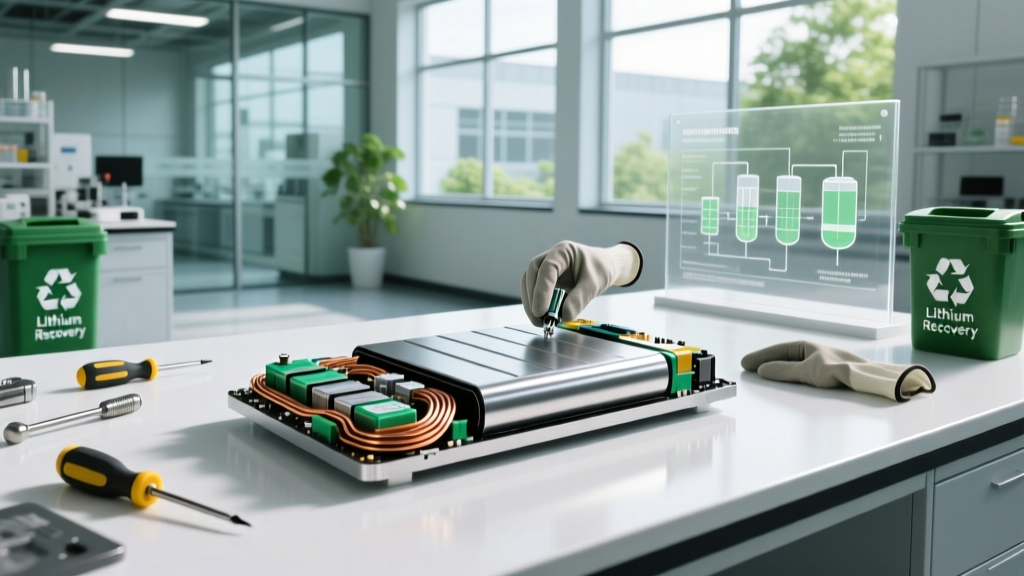
The question of where your EV battery comes from — and how long it will actually last — matters as much as the sticker on the window. General Motors has bet bigger than almost any legacy automaker on domestic battery production, investing over $7 billion in a network of GM battery plants across the United States through its Ultium Cells joint venture with LG Energy Solution. As of early 2026, three major facilities are operational or ramping: Lordstown, Ohio; Spring Hill, Tennessee; and Lansing, Michigan. These plants supply the pouch-format NCMA (nickel-cobalt-manganese-aluminum) cells that power everything from the Chevrolet Equinox EV to the GMC Hummer EV.
But production geography is only half the story. For buyers and current owners, the real concerns are chemistry, degradation, warranty protection, and the realistic cost of replacement if something goes wrong out of warranty. This guide covers all of it — with real data, not marketing claims.
Ultium Inside: What GM Battery Plants Actually Produce
The Ultium platform is GM's modular battery architecture, designed to underpin vehicles ranging from the compact Chevrolet Bolt successor to heavy-duty Silverado EV trucks. The cells produced at GM's US battery plants use NCMA chemistry — a variant of NMC that adds aluminum to the cathode for improved thermal stability and slightly lower cobalt content.
Ultium pouch cells are manufactured in large-format modules that stack into battery packs ranging from roughly 50 kWh (Chevrolet Equinox EV) to 200+ kWh (GMC Hummer EV). GM claims the aluminum-rich NCMA formulation reduces cobalt usage by about 70% compared to its earlier NMC cells used in the original Bolt EV, lowering both cost and supply-chain risk.
The three primary GM battery plants as of 2026:
- Lordstown, Ohio (Ultium Cells LLC): First to open (2022), producing cells for Cadillac Lyriq, Chevrolet Silverado EV, and Blazer EV. Capacity: ~35 GWh annually at full ramp.
- Spring Hill, Tennessee: Began production in 2024, supplying cells for Cadillac and GMC models built at the adjacent Spring Hill assembly plant.
- Lansing, Michigan: The newest facility, ramping through 2025–2026, focused on next-generation cells for upcoming affordable EV models.
GM also announced a fourth plant in New Carlisle, Indiana, targeting 2027 production — but this remains in the pre-operational phase and should be considered announced/preliminary.
LFP vs NMC vs NCMA: Battery Chemistry Trade-Offs Explained
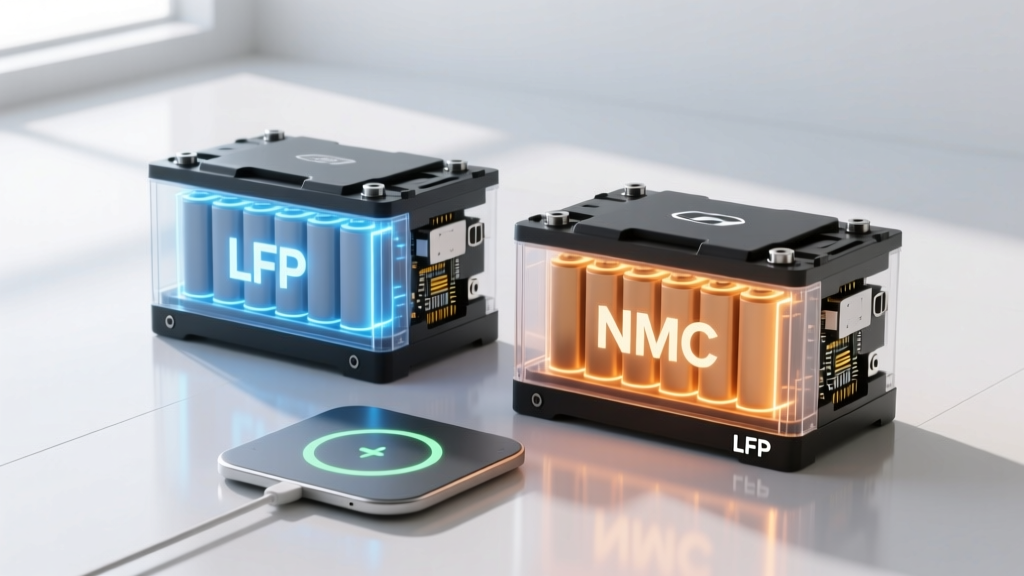
Not all EV batteries are created equal. The chemistry inside the cells determines energy density, lifespan, cold-weather performance, and cost. Here is how the three dominant chemistries in the 2026 US market compare:
| Attribute | LFP (Lithium Iron Phosphate) | NMC (Nickel Manganese Cobalt) | NCMA (Ultium / GM) |
|---|---|---|---|
| Energy Density | ~160 Wh/kg (lower) | ~220–260 Wh/kg (high) | ~240–270 Wh/kg (high) |
| Cycle Life | 3,000–5,000+ cycles | 1,000–2,000 cycles | 1,200–2,500 cycles (est.) |
| Cold Performance | Moderate loss (~15–25%) | Better low-temp output | Good; aluminum aids stability |
| Cost per kWh | $80–$100 (lowest) | $110–$140 | $100–$130 (reduced cobalt) |
| Max Charge to 100% | Yes — recommended periodically | 80% daily; 100% for trips | 80% daily; 100% for trips |
| Thermal Stability | Excellent (safest) | Good with BMS management | Very good (Al improves) |
| Typical Use Case | Standard-range / affordable EVs | Long-range / performance EVs | GM Ultium platform vehicles |
Which is better? It depends on your priorities. LFP wins on longevity, cost, and safety — making it ideal for daily commuters who can charge to 100% without worry. NMC/NCMA wins on energy density, giving more range per pound, which matters for large SUVs and trucks. GM's NCMA formulation sits between the two: better energy density than LFP, with improved cycle life over older NMC thanks to the aluminum content.
Notably, several 2026 models from other manufacturers — including the Tesla Model 3 Standard Range and some BYD imports — use LFP. GM has not announced LFP adoption for any current Ultium vehicle, sticking with NCMA across its lineup.
Real Degradation Data: How Much Capacity Do EV Batteries Actually Lose?
Battery degradation is the gradual, irreversible loss of usable capacity over time and charge cycles. It is not a cliff — it is a curve that is steepest in the first year or two, then flattens considerably.
Based on aggregated fleet data from sources including Geotab's long-term EV battery health study and owner-reported data from Recurrent Auto (now part of Cox Automotive), here are realistic degradation benchmarks for modern liquid-cooled EV batteries:
Typical Degradation Trajectory (Liquid-Cooled NMC/NCMA Packs):
- Year 1: 2–4% capacity loss (initial formation loss)
- Year 2–3: ~1–2% per year
- Year 4–5: ~1% per year
- Year 8 (typical warranty end): 88–93% State of Health (SoH) retained
- Year 10–12: 82–90% SoH retained for well-maintained packs
For context: a Chevrolet Equinox EV 2LT with an EPA-estimated 319 miles of range and a usable battery capacity of roughly 85 kWh would realistically deliver about 280–295 miles after five years of typical use — still well above most daily driving needs.
LFP batteries tend to degrade more slowly, with many data points showing 95%+ retention at year five. However, LFP's lower energy density means the starting range is lower, so the practical impact narrows.
Key caveat: These figures assume liquid-cooled packs with active thermal management. Older passively-cooled batteries (such as the original 2011–2017 Nissan Leaf) degraded significantly faster — sometimes 20–30% loss within five years in hot climates. Every current GM Ultium vehicle uses active liquid cooling.
Battery Warranty Terms: What GM (and Others) Actually Cover
Federal law mandates a minimum EV battery warranty of 8 years / 100,000 miles for emissions-related components, which the EPA classifies traction batteries under. Most automakers, including GM, meet or exceed this baseline.
| Manufacturer | Duration | Mileage | Capacity Threshold | Notes |
|---|---|---|---|---|
| GM (Chevrolet/Cadillac/GMC) | 8 years | 100,000 miles | Below 70% SoH | Covers defects + excessive degradation |
| Hyundai / Kia | 10 years | 100,000 miles | Below 70% SoH | Industry-leading duration |
| Tesla (Model Y/3) | 8 years | 120,000 miles (LR) | Below 70% SoH | 100k mi for Standard Range |
| Ford (Mach-E, F-150 Lightning) | 8 years | 100,000 miles | Below 70% SoH | Components + degradation |
| Rivian | 8 years | 175,000 miles | Below 70% SoH | Higher mileage limit |
What "below 70% SoH" means in practice: If your battery's usable capacity drops below 70% of its original rated capacity within the warranty period, the manufacturer is obligated to repair or replace it at no cost. For a vehicle with an 85 kWh usable pack, that threshold is roughly 59.5 kWh. In real-world terms, hitting 70% within 8 years would require abnormally severe usage or a manufacturing defect — most packs retain 88%+ at that point.
The warranty covers cell defects, module failures, and BMS (battery management system) faults. It does not cover damage from collisions, flooding, improper charging equipment, or unauthorized modifications.
EV Battery Replacement Cost: What to Expect If You're Out of Warranty
This is the topic that generates the most fear — and the most misinformation. Let's anchor the discussion with actual numbers.
| Vehicle / Battery Size | Battery kWh (Usable) | Estimated Pack Cost | Labor + Install | Total Range |
|---|---|---|---|---|
| Chevrolet Equinox EV | ~85 kWh | $10,000–$14,000 | $2,000–$3,500 | $12,000–$17,500 |
| Tesla Model Y Long Range | ~75 kWh | $9,000–$13,000 | $2,500–$4,000 | $11,500–$17,000 |
| Ford F-150 Lightning Ext. Range | ~131 kWh | $18,000–$25,000 | $3,000–$5,000 | $21,000–$30,000 |
| GMC Hummer EV | ~212 kWh | $30,000–$42,000 | $4,000–$6,000 | $34,000–$48,000 |
| Hyundai Ioniq 5 | ~77.4 kWh | $9,500–$13,500 | $2,000–$3,500 | $11,500–$17,000 |
Critical context: Full pack replacement is rare. Most out-of-warranty battery issues involve a single degraded or failed module, which can be replaced individually for $1,500–$4,000 including labor. GM's Ultium architecture is designed for module-level service — technicians can swap individual modules without replacing the entire pack.
Cell costs have also been declining steadily. Battery pack prices averaged approximately $115–$130/kWh at the cell level in 2025, according to BloombergNEF, down from $200+/kWh just five years prior. By the time a 2026-model EV is out of warranty in 2034, replacement costs are projected to be significantly lower than today's figures.
Most EV batteries outlast the vehicles they're installed in. The average US vehicle age is 12.6 years (per S&P Global Mobility), and modern liquid-cooled packs are designed to retain 80%+ capacity at 15–20 years of typical use. The "I'll need a $20,000 battery at 100,000 miles" narrative does not match the data.
What Affects Battery Life — and What You Can Control
Degradation is inevitable, but the rate varies enormously based on how the battery is used and treated. Here are the primary factors, ranked by impact:
High Impact:
- Extreme heat exposure: Sustained ambient temperatures above 95°F accelerate chemical degradation. Parking in shade or a garage matters more than most owners realize.
- Frequent DC fast charging at peak rates: Regularly charging at 150+ kW generates significant heat inside cells. Occasional fast charging is fine; daily 350 kW sessions will accelerate wear.
- Consistently storing at 100% SoC: For NMC/NCMA batteries, sitting fully charged (especially in heat) stresses the cathode. Daily charging to 80% and charging to 100% only before long trips is optimal.
Moderate Impact:
- Deep discharges to 0%: Regularly draining the battery completely stresses the anode. Keeping SoC between 10–90% for daily use is ideal.
- Cold-weather fast charging without preconditioning: Charging a cold battery at high power can cause lithium plating. Always use the vehicle's preconditioning feature (navigation to a charger typically triggers this automatically on GM Ultium vehicles).
Low Impact:
- Regenerative braking intensity: Moderate regen settings produce negligible additional wear compared to aggressive settings. The BMS manages charge acceptance rates to protect the pack.
- Level 2 home charging speed: Whether your home charger delivers 7.2 kW or 11.5 kW has minimal effect on long-term degradation.
How to Check and Monitor Your Battery's State of Health
State of Health (SoH) is a percentage representing your battery's current maximum capacity relative to its original capacity. A new battery is 100% SoH; a battery that can only hold 75 kWh of its original 85 kWh is at ~88% SoH.
How to check SoH in GM Ultium vehicles:
- In-vehicle display: The myChevrolet, myCadillac, or myGMC app provides a battery health indicator, though it is often displayed as a bar graph rather than a precise percentage.
- Dealer diagnostic scan: A GM dealer can run a full battery diagnostic using the GDS2 (Global Diagnostic System) tool, which provides module-level SoH data, internal resistance readings, and cell voltage variance. Request this during routine service visits.
- OBD-II third-party tools: Devices like the OBDLink MX+ paired with apps such as Torque Pro or EV-specific tools can read battery SoH data from the vehicle's CAN bus. Accuracy varies by vehicle and app.
- Manual calculation: Charge to 100%, note the displayed range, and compare it to the original EPA-rated range (adjusted for the fact that displayed range uses different algorithms). This is approximate but free.
For Tesla owners, the infotainment system provides a more direct battery health estimate under Settings > Service. Hyundai/Kia's Bluelink/UVO connected services also push battery health data to the owner's smartphone app.
Looking Ahead: Solid-State, Silicon Anodes, and What's Realistic
Next-generation battery technologies are frequently hyped, so it is worth separating what is in production from what remains in the lab.
Silicon-dominant anodes: Companies like Sila Nanotechnologies and Group14 are shipping silicon-composite anode materials to select manufacturers now. These anodes can increase energy density by 15–25% compared to graphite. GM has not announced silicon-anode adoption for current Ultium cells, but the architecture is designed to accommodate future cell chemistries without major pack redesigns. Expect limited production vehicles with silicon anodes by 2027–2028.
Solid-state batteries: Toyota, Nissan, and Samsung SDI have all announced solid-state prototypes promising faster charging, higher energy density, and improved safety. However, no solid-state EV battery is in mass production for consumer vehicles as of early 2026. Toyota has stated a target of 2027–2028 for limited production, but industry analysts at BloombergNEF and Reuters consider 2029–2030 more realistic for meaningful scale. Solid-state should be considered forward-looking / announced — not currently available.
Sodium-ion batteries: CATL and BYD have begun producing sodium-ion cells for lower-cost, shorter-range EVs in China. These offer lower energy density but dramatically lower material costs and better cold performance. US adoption remains unlikely before 2028 due to supply-chain and regulatory differences.
The practical takeaway: if you are buying an EV in 2026, you are buying NCMA, NMC, or LFP chemistry — all of which are mature, well-understood, and backed by extensive degradation data. Waiting for solid-state means waiting at least 3–4 more years with no guarantee of affordable pricing at launch.
GM Battery Plants and the §30D Federal Tax Credit Connection
There is a direct link between where your EV battery is manufactured and whether you qualify for the federal clean vehicle tax credit under IRS §30D. As of 2026, the $7,500 credit is split into two $3,750 halves:
- $3,750 for battery components: A percentage of battery components must be manufactured or assembled in North America. GM's domestic Ultium Cells plants directly satisfy this requirement for vehicles like the Equinox EV, Blazer EV, and Silverado EV.
- $3,750 for critical minerals: A percentage of critical minerals must be sourced from the US or a free-trade-agreement partner. This is where many vehicles — even those assembled in the US — lose eligibility.
Additional §30D requirements include:
- Vehicle MSRP cap: $55,000 for sedans; $80,000 for SUVs, vans, and trucks
- Buyer adjusted gross income cap: $150,000 (single), $225,000 (head of household), $300,000 (joint)
- Point-of-sale transfer option available at participating dealers
GM's investment in domestic battery plants gives its vehicles a structural advantage on the battery-component half of the credit. However, buyers should verify eligibility on a per-vehicle, per-trim basis at fueleconomy.gov, as sourcing requirements tighten annually and specific trim configurations may differ.
Frequently Asked Questions
How long do EV batteries last in years and miles?
Modern liquid-cooled EV batteries (NMC, NCMA, LFP) are designed to retain 80–90% of original capacity at 150,000–200,000 miles and 12–15 years of typical use. Data from Geotab's fleet study of over 10,000 EVs shows average annual degradation of approximately 1.8% per year across all chemistries, meaning a typical pack retains ~85% capacity at year 8. Most batteries outlive the vehicle's useful economic life.
How much does an EV battery cost to replace?
Full pack replacement ranges from approximately $12,000–$17,500 for mid-size EVs (75–85 kWh) to $34,000–$48,000 for large packs like the GMC Hummer EV (~212 kWh). However, full replacements are rare — most out-of-warranty issues involve individual module failures costing $1,500–$4,000 to repair. Cell-level costs continue to decline year over year.
What does the EV battery warranty cover?
GM covers its Ultium batteries for 8 years or 100,000 miles (whichever comes first) against defects and capacity loss below 70% State of Health. Hyundai/Kia extends this to 10 years. The warranty covers cell, module, and BMS failures but excludes collision damage, flood damage, and unauthorized modifications. If SoH drops below the threshold within the warranty period, the manufacturer repairs or replaces the pack at no cost.
How do I check my EV battery's health?
GM owners can check battery health via the myChevrolet/myCadillac/myGMC app, request a detailed GDS2 diagnostic scan at a dealer, or use an OBD-II reader with EV-compatible software. For a quick estimate, charge to 100% and compare displayed range to the original EPA estimate. A significant, sustained drop (more than 10–12% below original) warrants a dealer visit.
LFP vs NMC — which battery chemistry is better for daily driving?
For pure daily commuting with home charging, LFP is arguably superior: it tolerates 100% daily charging, lasts more cycles, and costs less. For long-range needs, towing, or cold-climate driving where energy density matters, NMC/NCMA delivers more range per kilogram. GM's NCMA Ultium cells prioritize energy density and are well-suited to larger vehicles. Neither chemistry is universally "better" — the right choice depends on your driving pattern.
Does frequent DC fast charging damage my battery?
Occasional DC fast charging (a few times per week) has a small, measurable effect on long-term degradation — typically adding 0.3–0.5% additional capacity loss per year compared to Level 2-only charging. Daily 350 kW charging sessions in hot climates will accelerate wear more noticeably. The practical recommendation: use Level 2 at home for daily needs, reserve DC fast charging for road trips, and always enable battery preconditioning before fast charging.