When you hear "Germany salt battery," you're likely encountering a colloquial or mistranslated reference to sodium-ion battery research advancing out of German institutions and startups. Sodium-ion (Na-ion) cells use abundant sodium salts in their cathodes instead of lithium, promising lower material costs and reduced supply-chain risk. But in 2026, sodium-ion packs are not yet available in any US-market passenger EV. So where does this chemistry actually stand, and how does it compare to the lithium-ion batteries — LFP (lithium iron phosphate) and NMC/NCA (nickel manganese cobalt / nickel cobalt aluminum) — that power every EV you can buy today?
This guide breaks down real-world EV battery chemistry, degradation data, warranty coverage, replacement economics, and care practices, while placing the Germany salt battery concept in its proper forward-looking context.
EV Battery Chemistry 101: LFP, NMC, and the Sodium-Ion Question
Every EV sold in the US today uses a lithium-ion traction battery. The two dominant chemistries are LFP and NMC (or its close cousin NCA, used by Tesla in some long-range packs). They differ in cathode composition, which cascades into trade-offs across energy density, lifespan, cold-weather behavior, and cost.
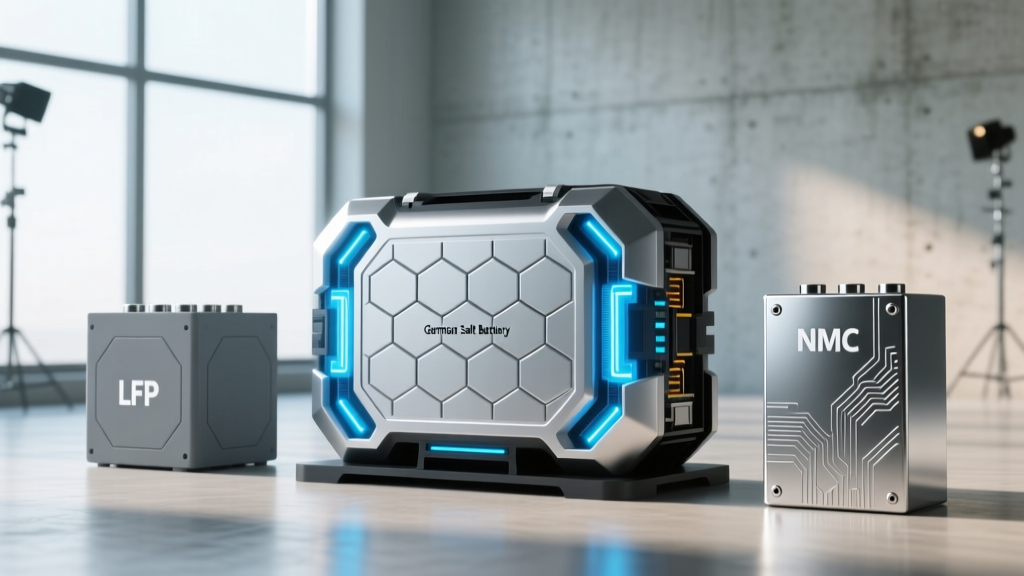
| Attribute | LFP (LiFePO₄) | NMC / NCA | Sodium-Ion (Na-ion) |
|---|---|---|---|
| Energy density (cell-level) | ~160–180 Wh/kg | ~220–300 Wh/kg | ~120–160 Wh/kg |
| Cycle life (to 80% capacity) | 3,000–5,000+ cycles | 1,500–2,500 cycles | 2,000–4,000 cycles (lab data) |
| Cold performance (−10°C) | Moderate loss (~15–25% range drop) | Better low-temp conductivity (~10–20% drop) | Reported strong cold tolerance (lab) |
| Raw material cost | Low (no cobalt, no nickel) | High (cobalt, nickel exposure) | Very low (sodium is abundant) |
| Thermal stability | Excellent (high thermal runaway threshold) | Good (requires more BMS management) | Promising (inherent safety) |
| US-market EV availability (2026) | Yes — Tesla Model 3/Y RWD, Ford Mustang Mach-E Select, Rivian Standard | Yes — most long-range/performance trims | No — pre-commercial for passenger EVs |
| Key adopters globally | BYD, Tesla (Standard Range), CATL | Hyundai/Kia, GM, BMW, VW, Tesla LR | CATL (China, limited); German research consortia |
Where Does the "Germany Salt Battery" Fit?
German research groups — including teams at the Karlsruhe Institute of Technology (KIT) and startups backed by the Fraunhofer network — have published extensively on sodium-ion cathode materials using layered oxide and Prussian blue analog structures. These cells use sodium salts rather than lithium salts in the electrolyte and cathode, eliminating dependence on lithium, cobalt, and nickel mining entirely.
The appeal is clear: sodium is roughly 1,000× more abundant than lithium in Earth's crust, and can be sourced from salt flats and even seawater. But energy density remains the bottleneck. A sodium-ion pack delivering 300 miles of EPA range would be substantially heavier and bulkier than an equivalent NMC pack, making it better suited to city cars, stationary storage, and light commercial vehicles rather than long-range US-market sedans and SUVs.
Timeline reality: CATL began limited sodium-ion battery production in China in 2024–2025 for entry-level EVs and energy storage. European and German Na-ion projects remain in pilot-line or prototype phases as of 2026. Expect first commercial sodium-ion EVs in Europe no earlier than 2028–2030, and US-market availability later than that, if at all.
How Long Do EV Batteries Last? Real Degradation Data
The most common fear among prospective EV buyers is that the battery will need a costly replacement within a few years. The data tells a different story: modern lithium-ion EV batteries are engineered to outlast the vehicles they're installed in.
Typical Degradation Trajectories (Aggregated Owner & Fleet Data)
- Year 1–2 (0–30,000 mi): ~2–5% capacity loss. This initial drop is the steepest part of the curve as the solid electrolyte interphase (SEI) layer stabilizes.
- Year 3–5 (30,000–75,000 mi): ~1–2% loss per year. Degradation flattens into a slow, linear decline.
- Year 6–8 (75,000–120,000 mi): Total retained capacity typically 85–92% for NMC, 88–95% for LFP.
- Year 10+ (150,000+ mi): Many packs still retain 80–88% of original capacity. Data from Tesla's 2024 Impact Report showed Model 3/Y batteries retaining ~85% capacity at 200,000 miles on average.
Sources: fueleconomy.gov, Tesla Impact Reports, Recurrent Auto battery data (2024–2025 fleet analysis), Geotab fleet studies.
LFP chemistries consistently show slower degradation than NMC, particularly when routinely charged to 100% — a practice that NMC manufacturers advise against but LFP manufacturers (including Tesla for its Standard Range models) actually recommend periodically for cell balancing.
EV Battery Warranty Terms: What's Actually Covered
Federal law mandates that EV batteries carry a minimum warranty of 8 years / 100,000 miles. California Air Resources Board (CARB) states extend this to 10 years / 150,000 miles for vehicles certified to CARB standards. Most manufacturers meet or exceed these floors.
| Manufacturer / Model | Warranty Period | Mileage Cap | Capacity Threshold |
|---|---|---|---|
| Tesla Model 3/Y (LFP, RWD) | 8 years | 100,000 mi | 70% retention |
| Tesla Model 3/Y (NMC, Long Range) | 8 years | 120,000 mi | 70% retention |
| Hyundai Ioniq 5 / Ioniq 6 | 10 years | 100,000 mi | 70% retention |
| Ford Mustang Mach-E | 8 years | 100,000 mi | 70% retention |
| Chevrolet Equinox EV / Blazer EV | 8 years | 100,000 mi | 60% retention |
| Rivian R1T / R1S | 8 years | 175,000 mi | 70% retention |
| BMW i4 / iX | 8 years | 100,000 mi | 70% retention |
The capacity threshold matters. A 70% threshold means the manufacturer will replace or repair the battery if its usable capacity falls below 70% of the original kWh rating within the warranty window. Given the degradation data above, very few batteries hit this threshold under normal use — it would require roughly 30% loss, which typically takes well beyond 150,000 miles even under harsh conditions.
What's covered: Defects in materials/workmanship and excessive capacity loss below the stated threshold. What's not: Damage from accidents, flooding, improper modifications, or use of non-approved charging equipment. Always review your specific owner's manual and warranty booklet.
How Much Does an EV Battery Replacement Cost?
If your battery does fail outside of warranty — or if you're buying a used EV with a degraded pack — replacement costs are significant but have been declining as cell prices fall and the refurbishment market matures.
| Vehicle / Battery Size | Battery kWh | New OEM Pack (est.) | Refurbished / Reman (est.) |
|---|---|---|---|
| Tesla Model 3 RWD (LFP) | ~60 kWh | $12,000–$15,000 | $7,000–$9,000 |
| Tesla Model Y Long Range (NMC) | ~75 kWh | $14,000–$18,000 | $9,000–$12,000 |
| Hyundai Ioniq 5 | ~77.4 kWh | $15,000–$20,000 | $10,000–$14,000 |
| Ford Mustang Mach-E Extended Range | ~91 kWh | $18,000–$23,000 | $12,000–$16,000 |
| Chevrolet Silverado EV | ~200 kWh | $30,000–$40,000 | $20,000–$28,000 |
| Rivian R1T (Large Pack) | ~135 kWh | $22,000–$28,000 | $14,000–$18,000 |
Two critical context points: (1) Most EV batteries never need full replacement. Module-level repairs — swapping individual degraded cell modules rather than the entire pack — are increasingly available and cost $2,000–$6,000 depending on the vehicle. (2) Battery cell prices have fallen from over $1,000/kWh in 2010 to roughly $100–$130/kWh in 2026 at the pack level, according to BloombergNEF data, and are projected to continue declining.
When replacement is needed, it's typically at 150,000–250,000+ miles or 12–18+ years — at which point the vehicle's residual value is often lower than the replacement cost, making refurbishment, trade-in, or recycling the practical choice.
Factors That Affect Battery Lifespan (and What You Can Control)
Not all miles are created equal. The rate at which your EV battery degrades depends on how you charge, drive, and store it.
Battery Longevity Checklist for EV Owners
- Avoid routine DC fast charging above 150 kW. Occasional road-trip fast charging is fine, but daily use of 250–350 kW chargers accelerates degradation by increasing internal cell temperature and lithium plating risk. Level 2 home charging (7–11 kW) is the gentler daily option.
- Keep State of Charge (SoC) between 20–80% for NMC. For LFP, Tesla recommends charging to 100% at least weekly for cell balancing. Check your owner's manual — chemistry dictates the rule.
- Precondition before fast charging. Most modern EVs automatically precondition the battery when you navigate to a DC fast charger. This warms the cells to optimal temperature (~35–40°C), enabling faster charging and reducing stress. If your EV has manual preconditioning, use it in cold weather.
- Minimize prolonged storage at 100% or 0% SoC. If storing an EV for weeks, set the charge limit to ~50% and keep it plugged in with a scheduled departure or maintenance mode if available.
- Park in shade or a garage in extreme heat. Sustained ambient temperatures above 95°F (35°C) with a high SoC accelerate calendar aging. Battery thermal management systems help, but they can't fully compensate for a 110°F parking lot.
- Use regenerative braking moderately in cold weather. High regen rates on a cold battery (below 50°F / 10°C) can stress cells. Many EVs automatically reduce regen when the battery is cold — don't override this.
- Keep your EV's software updated. Over-the-air (OTA) updates often include improved battery management algorithms, thermal strategies, and charge-curve optimizations that extend pack life.
How to Check and Monitor Battery State of Health (SoH)
State of Health (SoH) is the percentage of original battery capacity that remains usable. A new EV starts at 100% SoH; a battery at 85% SoH retains 85% of its original kWh capacity.
In-vehicle displays: Most EVs don't show a direct SoH percentage on the dashboard. However, you can infer health by comparing your actual range at a full charge to the original EPA rating. If your Model 3 Long Range (EPA 341 mi) consistently shows 295–305 mi at 100% charge after three years, that's roughly 87–89% SoH — healthy and expected.
Third-party tools and apps:
- Tesla: Use the built-in "Battery Health" test (available in Service Mode on 2023+ models) or third-party apps like Tessie or Stats, which read SoH data from the vehicle's CAN bus.
- OBD-II scanners: Devices like the OBDLink MX+ paired with apps such as EV Notify, Car Scanner, or ABRP (A Better Route Planner) can read battery health metrics from most non-Tesla EVs (Hyundai, Kia, Ford, VW, BMW).
- Dealer diagnostics: A service center can run a full battery health report, often free during routine service visits. Request this when buying a used EV.
- Recurrent Auto: This service connects to your EV's telematics (with your permission) and provides ongoing SoH tracking, range trends, and degradation benchmarking against similar vehicles in their fleet database.
When buying used: Always request a battery health report before purchase. A pre-purchase inspection (PPI) at a dealership or qualified EV service center should include a capacity test. Some manufacturers, including Nissan and Chevrolet, have faced class-action scrutiny over early-generation battery degradation — research the specific model year and chemistry before committing.
Emerging Battery Technologies: Solid-State, Silicon Anode, and Beyond
The battery landscape is evolving rapidly, but it's essential to separate laboratory breakthroughs from showroom reality.
Solid-State Batteries
Solid-state cells replace the liquid electrolyte with a solid ceramic, sulfide, or polymer separator, promising higher energy density (potentially 400–500 Wh/kg at the cell level), faster charging, and improved safety. Toyota has announced solid-state battery prototypes targeting 2027–2028 production in limited models. QuantumScape (backed by VW) and Samsung SDI are also advancing solid-state cells through pilot production. However, manufacturing scalability, cost, and cycle-life validation remain unsolved challenges. Realistic US-market timeline: 2029–2032 for limited availability in premium vehicles.
Silicon Anode Batteries
Replacing graphite anodes with silicon can boost energy density by 20–40%. Companies like Sila Nanotechnologies (supplying Mercedes-Benz for the upcoming G-Class electric) and Amprius are commercializing silicon-dominant anodes. Expect these to appear in select 2026–2028 premium EVs as a near-term range boost rather than a wholesale chemistry replacement.
Sodium-Ion (The "Germany Salt Battery" Connection)
As discussed, sodium-ion's primary value proposition is cost and supply-chain independence, not range. Its future in the US is most likely in stationary energy storage, light-duty urban EVs, and potentially as a buffer layer in hybrid battery packs (CATL has demonstrated an AB battery architecture mixing sodium-ion and lithium-ion cells in one pack). Passenger EV availability in the US remains speculative beyond 2030.
LFP vs NMC: Which Battery Chemistry Should You Choose?
There is no universal "better" — the right choice depends on your driving patterns, climate, and ownership horizon.
Choose LFP If:
- You want maximum cycle life and plan to keep the vehicle 8+ years or 150,000+ miles
- You primarily drive in moderate or warm climates (LFP's cold-weather performance is adequate but not class-leading)
- You prefer the simplicity of charging to 100% regularly without degradation anxiety
- You're buying a standard-range model and ~250–270 miles of EPA range meets your daily needs
- Lower purchase price matters — LFP packs cost ~15–20% less than equivalent NMC packs
Choose NMC/NCA If:
- You need 300+ miles of EPA range for frequent road trips or long commutes
- You live in a cold climate (NMC handles sub-freezing temps with less range loss)
- Performance trims matter — NMC's higher energy density enables more kWh in the same physical pack size
- You're buying a long-range or AWD/performance model where NMC is the only option offered
Frequently Asked Questions
How long do EV batteries last in years and miles?
Based on fleet data from Tesla, Geotab, and Recurrent Auto, modern EV batteries retain 80–90% of their original capacity at 150,000–200,000 miles (roughly 10–15 years of average driving). Many packs will function at usable capacity levels (above 70% SoH) well beyond 200,000 miles. The battery is not a wear item like brake pads — it degrades gradually and rarely fails catastrophically.
How much does an EV battery cost to replace in 2026?
Full pack replacement ranges from roughly $12,000 for a 60 kWh LFP pack (Tesla Model 3 RWD) to $30,000–$40,000 for a 200 kWh pack (Chevrolet Silverado EV). Refurbished or remanufactured packs cost 40–50% less. Module-level repairs, where only degraded cell groups are replaced, can cost $2,000–$6,000. Most owners never need a replacement — the battery typically outlasts the vehicle's economic life.
What does the EV battery warranty actually cover?
Federal law requires a minimum of 8 years / 100,000 miles of battery warranty coverage. CARB states extend this to 10 years / 150,000 miles. The warranty covers defects and capacity loss below a stated threshold (typically 70% retention, though GM uses 60% on some models). It does not cover accident damage, improper modifications, or misuse. Check your specific warranty booklet for exact terms.
How do I check my EV battery health?
Compare your full-charge range display to the original EPA rating for a rough SoH estimate. For precise data, use OBD-II tools (OBDLink MX+ with Car Scanner or EV Notify), Tesla's built-in Battery Health test, or services like Recurrent Auto that track SoH over time via telematics. Always request a battery health report when purchasing a used EV.
LFP vs NMC — which is better for daily driving?
For daily commuting and moderate-range needs, LFP is the more durable and cost-effective choice, offering 3,000–5,000+ cycle life and the freedom to charge to 100% without accelerated degradation. For long-range needs (300+ mi), cold climates, or performance driving, NMC's higher energy density makes it the practical choice. Neither chemistry is "better" universally — match the chemistry to your use case.
Is the Germany salt battery (sodium-ion) available in any EV I can buy today?
No. As of 2026, no US-market passenger EV uses sodium-ion batteries. CATL has begun limited sodium-ion production in China for entry-level vehicles and energy storage, and German research institutions continue to advance the technology. Realistic availability in European EVs is 2028–2030 at the earliest, with US-market adoption likely later. For now, LFP and NMC remain the only proven, warrantied chemistries available to American EV buyers.