The Ford F-150 Lightning arrived with a promise that sounded almost too good for a full-size pickup: two massive battery options, competitive towing, and a price that undercut legacy trucks before incentives. But for buyers and current owners, the real question isn't peak horsepower or 0-60 times — it's what happens to that battery over 100,000 miles. Understanding Ford Lightning battery capacity means understanding the chemistry inside the pack, how it degrades, what the warranty actually protects, and what replacement would cost if the worst happens.
This guide covers the Standard Range and Extended Range packs in detail, with real degradation benchmarks, warranty specifics, and practical ownership strategies for maximizing battery longevity.
Ford Lightning Battery Capacity: Pack Sizes and Chemistry
The F-150 Lightning offers two lithium-ion battery configurations, both using NMC (nickel manganese cobalt) cathode chemistry. Ford does not offer an LFP (lithium iron phosphate) option in the Lightning lineup as of the 2026 model year, which distinguishes it from competitors like the base Tesla Cybertruck and some Rivian configurations that have adopted LFP for standard-range trims.
| Specification | Standard Range | Extended Range |
|---|---|---|
| Usable Capacity | ~98 kWh | ~131 kWh |
| Cathode Chemistry | NMC | NMC |
| EPA Range | ~240 miles | ~320 miles |
| Peak DC Fast Charge | ~150 kW | ~150 kW (sustained higher) |
| 10-80% DC Charge Time | ~44 minutes | ~41 minutes |
| Level 2 Charge Rate | ~11.3 kW (standard) / ~19.2 kW (optional) | ~19.2 kW |
| Available Trims | Pro, XLT | XLT, Lariat, Platinum |
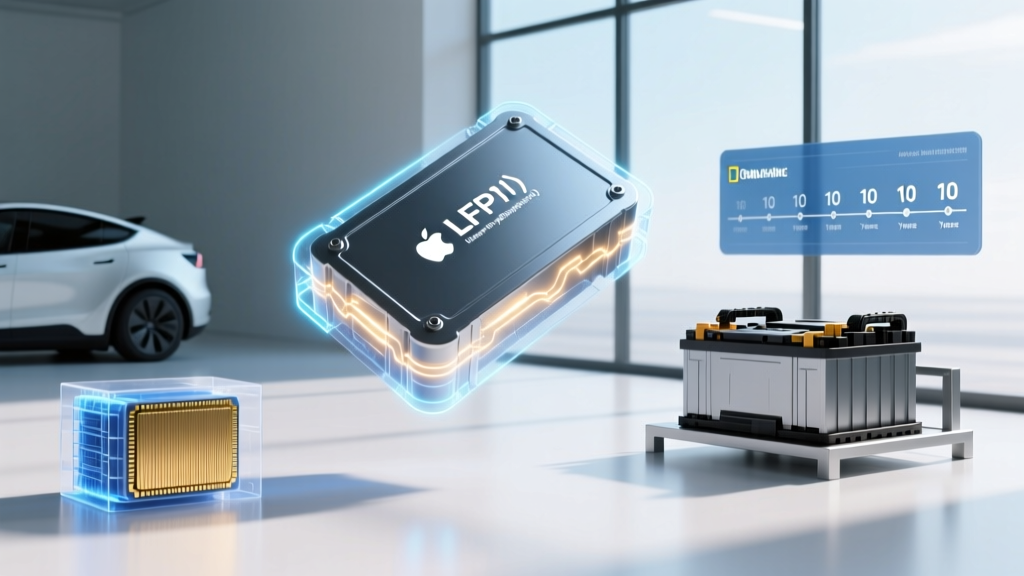
Why NMC and not LFP? NMC chemistry delivers higher energy density — critical for a full-size truck where the Extended Range pack already weighs over 1,800 pounds. Switching to LFP would require either a heavier pack for the same range or accepting less range. The trade-off is that NMC cells are more sensitive to sustained high states of charge and extreme temperatures, which affects long-term care recommendations.
LFP vs NMC: The Chemistry Trade-Off
| Factor | NMC (Lightning) | LFP |
|---|---|---|
| Energy Density | Higher (~250 Wh/kg cell-level) | Lower (~170-190 Wh/kg) |
| Cycle Life | ~1,500-2,000 full cycles to 80% SoH | ~3,000-5,000+ full cycles to 80% SoH |
| Cold-Weather Performance | Better low-temp discharge | Reduced performance below 32°F |
| Max Charge Recommendation | 80% daily (100% for trips) | 100% regular charging acceptable |
| Cost per kWh | Higher (cobalt/nickel dependent) | Lower (iron/phosphate abundant) |
| Thermal Runaway Risk | Moderate | Very low |
Real-World Degradation: What the Data Shows
Battery degradation is the gradual loss of maximum charge capacity over time. Every lithium-ion cell loses some capacity from the moment it leaves the factory, but the rate of loss depends heavily on usage patterns, climate, and charging habits.
Typical NMC Degradation Benchmarks
Based on aggregated fleet data from sources like Geotab's EV battery health study and owner-reported data from F-150 Lightning forums, NMC packs in light-duty EVs follow a recognizable curve:
- Year 1 (0-15,000 mi): 1-3% capacity loss (initial formation period)
- Years 2-4 (15,000-60,000 mi): ~0.5-1% per year (steady-state degradation)
- Years 5-8 (60,000-120,000 mi): ~0.5% per year if well-maintained
- Expected capacity at 100,000 miles: ~90-94% of original (well-managed pack)
- Expected capacity at 150,000 miles: ~85-90% (conservative estimate)
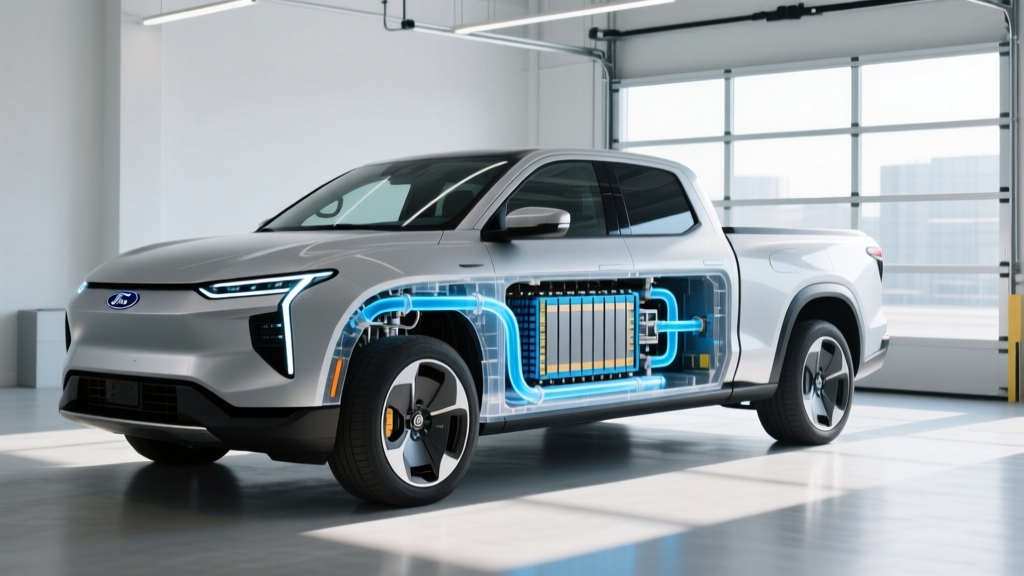
The Lightning's active liquid thermal management system keeps cells within an optimal temperature window during charging and driving, which significantly slows degradation compared to passively cooled packs. Ford's battery management system (BMS) also maintains a top and bottom buffer — the 131 kWh "usable" figure already excludes a reserve that protects the cells from the most damaging extremes of full charge and full discharge.
Real-world caveat: Owners in hot climates (Arizona, Texas) who frequently DC fast-charge and regularly charge to 100% may see degradation at the higher end of these ranges. Conversely, owners in moderate climates who primarily use Level 2 home charging and stay between 20-80% SoC often report minimal perceptible range loss even past 50,000 miles.
Ford Lightning Battery Warranty: What's Actually Covered
Ford provides a high-voltage battery warranty that is competitive with the broader EV market and compliant with federal emissions warranty requirements for zero-emission vehicles.
| Coverage Element | Terms |
|---|---|
| Duration | 8 years or 100,000 miles (whichever comes first) |
| Capacity Retention Threshold | Below 70% of original usable capacity |
| What's Covered | Battery replacement or repair to restore above 70% capacity; defects in materials/workmanship |
| What's NOT Covered | Damage from accidents, modifications, improper charging equipment, or neglect |
| Transferable? | Yes, to subsequent owners within the warranty period |
| California/ CARB States | 10 years / 150,000 miles (extended ZEV warranty in CARB-adopting states) |
The 70% threshold is industry-standard — Tesla, GM, Hyundai, and most other manufacturers use the same benchmark. In practical terms, a Lightning Extended Range owner would need to see usable capacity drop below ~92 kWh (from the original ~131 kWh) to trigger a warranty claim. Given typical NMC degradation curves, reaching that threshold within 8 years/100,000 miles would require unusually aggressive usage or a manufacturing defect.
Important note for CARB-state residents: If you register your Lightning in California, Colorado, Maine, Massachusetts, New York, Oregon, Vermont, Washington, or other states that have adopted California's extended ZEV warranty standards, your battery coverage extends to 10 years / 150,000 miles. Check your state's current CARB adoption status, as this list has been expanding.
EV Battery Replacement Cost: Ford Lightning and the Broader Market
Battery replacement is the single biggest fear among prospective EV buyers. The numbers are significant, but context matters enormously — most EV batteries outlast the vehicles they're installed in, and out-of-warranty replacements remain rare.
| Vehicle / Pack Size | Battery Size | Estimated Replacement Cost |
|---|---|---|
| Ford F-150 Lightning Standard Range | ~98 kWh | $15,000 - $22,000 |
| Ford F-150 Lightning Extended Range | ~131 kWh | $20,000 - $30,000 |
| Tesla Model Y (comparison) | ~75 kWh | $12,000 - $16,000 |
| Chevy Silverado EV | ~200 kWh (max) | $28,000 - $40,000+ |
| Hyundai Ioniq 5 (comparison) | ~77.4 kWh | $11,000 - $15,000 |
These figures include the battery pack and labor but can vary by region, dealer, and whether Ford offers refurbished/remanufactured packs (which reduce cost). As of 2026, Ford has been expanding its battery recycling and remanufacturing partnerships, which should gradually bring out-of-warranty replacement costs down over the next several years.
When is replacement actually needed? The vast majority of EV battery replacements occur due to manufacturing defects caught within the warranty period, not gradual degradation. Catastrophic failures (internal short circuits, coolant intrusion) are rare. For the Lightning specifically, there have been no widespread battery failure campaigns as of early 2026 — a positive signal given the truck has been on sale since mid-2022 with tens of thousands of units on the road.
Factors That Affect Lightning Battery Life
NMC chemistry rewards moderate habits. Here's what actually moves the needle on long-term capacity retention:
Battery Care Best Practices for the F-150 Lightning
- Daily charging limit: Set to 80%. Use the FordPass app or in-vehicle settings to cap charge at 80% for daily use. Reserve 100% for road trips or when you need maximum range. Sustained time at 100% SoC accelerates NMC degradation.
- Avoid frequent DC fast charging when possible. DC fast charging generates significant heat. Occasional use on road trips is fine — the thermal management system handles it. But if you have Level 2 home access, use it as your primary charging method. The charge curve also tapers significantly above 80%, making the last 20% slow and heat-intensive.
- Don't let the pack sit at very low SoC. Storing the Lightning for weeks at below 10% SoC stresses NMC cells. If parking for an extended period, aim for ~50% charge.
- Precondition before fast charging. The Lightning's navigation system can precondition the battery when you route to a DC fast charger. This brings cells to optimal temperature for faster, healthier charging. Always use this feature.
- Extreme heat is worse than extreme cold. While cold reduces range temporarily (expect 15-30% range loss below 20°F), it doesn't cause permanent degradation. Sustained high ambient temperatures (>95°F) combined with high SoC are more damaging long-term. Garage parking helps in hot climates.
- Use scheduled charging. Set your Lightning to finish charging just before you leave rather than sitting at 80%+ for hours. This minimizes time at elevated SoC.
Monitoring Battery Health: Checking State of Health (SoH)
State of Health (SoH) is the percentage of original battery capacity that remains available. A new pack is at 100% SoH; a pack that can only hold 90% of its original energy is at 90% SoH.
Through the FordPass App: Ford provides basic battery status information through the FordPass app, including current range estimates and charging status. However, Ford does not display a direct SoH percentage to owners in the app as of the 2026 model year — a common limitation across many OEMs.
Through OBD-II diagnostics: Third-party apps like LeafSpy (for Nissan) have no direct Lightning equivalent, but OBD-II dongles paired with apps such as Car Scanner or FORScan can read battery module-level data from the Lightning's BMS, including individual cell voltages and estimated capacity. This is the most granular method available to owners.
Dealer diagnostic: Ford dealerships can run a full battery health report that provides an SoH estimate. Request this during routine service visits, especially as you approach the 8-year/100,000-mile warranty boundary. If capacity drops near the 70% threshold, having documented dealer reports strengthens any warranty claim.
Practical proxy method: Track your real-world range over time under similar conditions (same route, similar temperatures, same tire pressure). If your Lightning Extended Range consistently delivered 300 miles in 70°F weather when new but now delivers 270 under identical conditions, your pack is at roughly 90% SoH. This isn't lab-precise, but it's directionally useful.
Emerging Battery Technology: What's on the Horizon
Current Lightning owners won't see these technologies in their trucks, but they shape the future of replacement packs and next-generation vehicles:
Solid-state batteries: Companies like Toyota, QuantumScape, and Samsung SDI are developing solid-state cells that promise higher energy density, faster charging, and improved safety (no liquid electrolyte to leak or ignite). Realistic commercial availability in production vehicles: 2028-2030 for premium models, with mainstream adoption likely post-2030. Ford has invested in solid-state startup Solid Power, but no production timeline has been announced.
Silicon-dominant anodes: Replacing graphite anodes with silicon can boost energy density by 20-40%. Companies like Sila Nanotechnologies and Group14 are scaling production. Expect silicon-enhanced anodes in mainstream EVs by 2027-2028, potentially improving range without increasing pack size.
Sodium-ion batteries: CATL and other manufacturers are commercializing sodium-ion cells that eliminate lithium, cobalt, and nickel entirely. Energy density is lower than NMC, making them better suited for smaller, affordable EVs and stationary storage. Timeline: 2026-2028 for initial vehicle applications, unlikely for full-size trucks due to weight constraints.
None of these technologies are available in production vehicles today. Any claims that solid-state batteries are "just around the corner" should be treated skeptically — the gap between lab demonstration and automotive-grade mass production is typically 5-8 years.
Frequently Asked Questions
How long do Ford Lightning batteries last?
Based on NMC degradation data and Ford's warranty structure, a Lightning battery should retain 85-94% of its original capacity at 100,000 miles with reasonable care. Many NMC packs in other EVs have surpassed 150,000 miles while remaining above the 70% warranty threshold. The battery will likely outlast other major vehicle components. Full pack failure outside the warranty period is uncommon — most "end of life" EV batteries are retired at 70-80% SoH, still functional but with reduced range.
How much does a Ford Lightning battery cost to replace?
Out-of-warranty replacement estimates are $15,000-$22,000 for the Standard Range pack and $20,000-$30,000 for the Extended Range pack, including labor. Within the 8-year/100,000-mile warranty (or 10/150k in CARB states), replacement is covered at no cost if capacity drops below 70%. These costs are expected to decline as Ford scales remanufacturing programs and battery raw material prices stabilize.
What does the Ford Lightning battery warranty cover?
Ford covers the high-voltage battery for 8 years or 100,000 miles against capacity loss below 70% of original and defects in materials or workmanship. In CARB-adopting states, coverage extends to 10 years/150,000 miles. The warranty is transferable to subsequent owners. It does not cover damage from accidents, aftermarket modifications, or use of non-certified charging equipment.
How do I check my Lightning's battery health?
The FordPass app shows basic battery status but not a direct SoH percentage. For detailed diagnostics, use an OBD-II scanner with FORScan or a similar app to read BMS data, or request a battery health report from your Ford dealer during service visits. Tracking real-world range over time under consistent conditions provides a practical SoH estimate.
Is NMC or LFP better for the Ford Lightning?
For a full-size truck requiring maximum range and towing capability, NMC is the appropriate choice — its higher energy density keeps pack weight manageable while delivering 320 miles of EPA range in the Extended Range model. LFP offers superior cycle life and can be charged to 100% regularly, but its lower energy density would mean either a heavier pack or reduced range. Ford has not announced LFP plans for the Lightning.
Does fast charging damage the Lightning battery?
Occasional DC fast charging on road trips causes negligible long-term degradation thanks to the Lightning's active liquid thermal management. However, exclusive reliance on DC fast charging (daily or multiple times per week) does accelerate capacity loss compared to Level 2 home charging. The charge curve also tapers sharply above 80%, meaning the final portion of a fast-charge session generates disproportionate heat for minimal range gained. Use Level 2 as your daily method and DC fast charging for trips.
What happens if my Lightning battery degrades past 70%?
If your battery falls below 70% capacity within the warranty period, Ford will repair or replace the pack to restore it above that threshold. Outside the warranty period, you can continue driving — the truck simply has reduced range. A Lightning Extended Range at 70% SoH still holds ~92 kWh, roughly equivalent to a new Standard Range pack. Many owners find reduced-range driving acceptable rather than paying for an out-of-warranty replacement.
Sources: EPA range and efficiency data via fueleconomy.gov; Ford F-150 Lightning specifications via Ford.com; battery degradation benchmarks via Geotab EV Battery Health Study. Tax credit eligibility per IRS §30D — verify current-year rules, MSRP caps, and income limits before purchase.