Why Ford's CATL Battery Strategy Matters in 2026
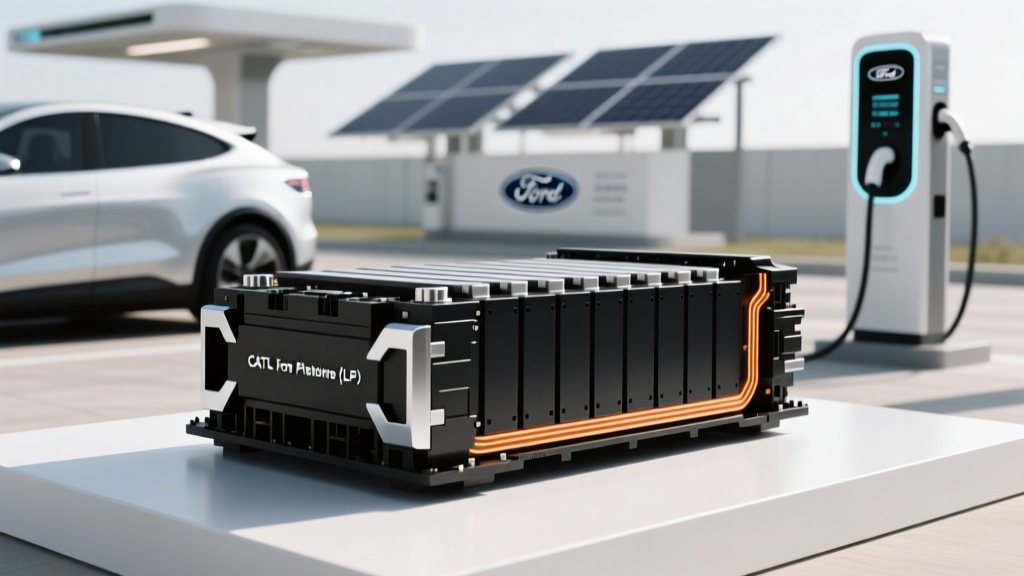
Ford's decision to source LFP (lithium iron phosphate) battery cells from CATL — the world's largest battery manufacturer — represents one of the most consequential supply-chain pivots in American EV history. The Ford CATL battery plan began with the F-150 Lightning standard-range model and expanded into the Mustang Mach-E, giving buyers access to a chemistry that prioritizes longevity and cost over maximum energy density.
For buyers and owners, this matters because battery chemistry dictates how your EV ages, how it performs in cold weather, what it costs to replace, and even how you should charge it daily. This guide breaks down the technical realities of Ford's LFP strategy, what the data says about degradation, and what ownership looks like over a decade.
LFP vs NMC: The Chemistry Trade-Offs Explained
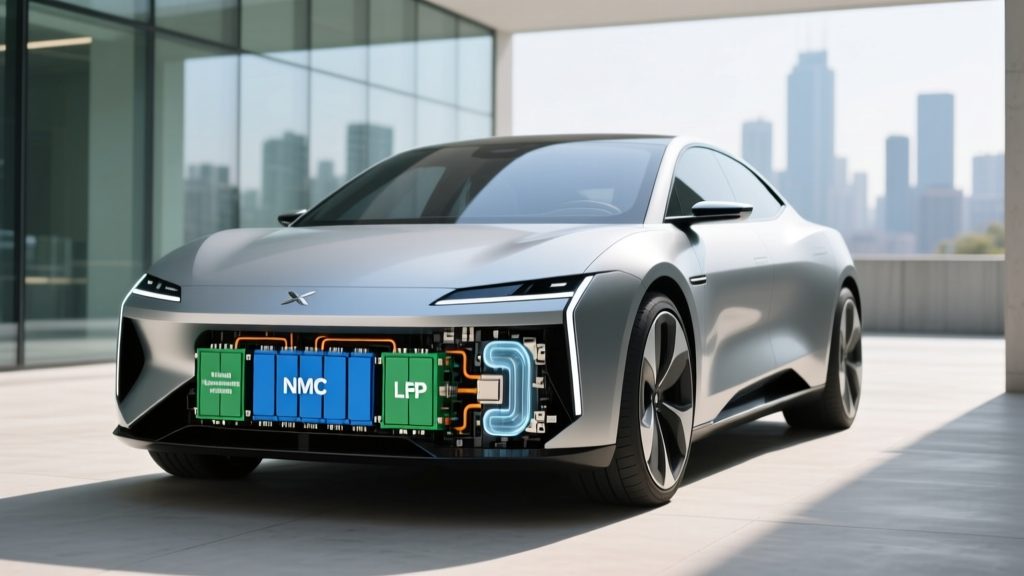
Every EV battery uses a specific cathode chemistry that determines its characteristics. Ford's CATL-supplied packs use LFP (LiFePO₄), while extended-range models and most competitors use NMC (nickel manganese cobalt) or NCA (nickel cobalt aluminum). Neither is universally "better" — they optimize for different priorities.
| Attribute | LFP (Ford/CATL) | NMC / NCA |
|---|---|---|
| Energy density | ~160–180 Wh/kg (lower) | ~220–260 Wh/kg (higher) |
| Cycle life | 3,000–5,000+ cycles | 1,000–2,000 cycles |
| Calendar life | 15–20+ years typical | 10–15 years typical |
| Cold-weather performance | Greater range loss below 32°F (~30–40% loss) | Moderate range loss below 32°F (~20–30% loss) |
| Thermal stability / safety | Excellent — higher thermal runaway threshold | Good — requires more active thermal management |
| Cost per kWh | ~$80–100/kWh (cell-level, 2026) | ~$110–140/kWh (cell-level, 2026) |
| Daily charging recommendation | 100% SoC OK — Ford recommends periodic full charges for BMS calibration | 80% SoC daily; 100% only for trips |
| Cobalt / ethical sourcing | Zero cobalt, zero nickel | Contains cobalt and nickel (supply-chain concerns) |
| Used in | F-150 Lightning Std Range, Mach-E Select (LFP trims) | F-150 Lightning Ext Range, Mach-E GT, most Tesla/Hyundai/Kia |
The bottom line: LFP sacrifices ~15–20% energy density (meaning a heavier or physically larger pack for the same range) in exchange for dramatically longer cycle life, lower cost, better thermal safety, and cobalt-free sourcing. For a daily-driver truck or commuter SUV, the trade-off strongly favors LFP. For maximum range in a performance variant, NMC remains the choice.
How Long Do Ford's LFP Batteries Actually Last?
This is the question that drives most battery anxiety. The answer, backed by fleet data and chemistry fundamentals, is that most EV batteries outlast the vehicles they're installed in — especially LFP.
- Year 1: ~2–4% capacity loss (initial formation loss, common to all lithium-ion)
- Years 2–5: ~0.5–1% per year additional loss under normal use
- Year 8 / 100,000 miles: Typical LFP packs retain ~88–93% of original capacity
- Year 10 / 150,000 miles: Typical LFP packs retain ~84–90% of original capacity
- Projected end-of-life (70% capacity): 200,000–350,000+ miles for LFP under moderate use
Sources: fueleconomy.gov EV technology overview, Geotab fleet battery health studies, Recurrent Auto battery degradation reports.
For context, the average American drives ~13,500 miles per year (FHWA data). At that rate, an LFP pack in a Ford vehicle would need 15–25 years to reach 70% capacity — well beyond the typical vehicle lifespan. NMC packs degrade somewhat faster, typically retaining 82–88% at year 8, but still comfortably exceed warranty thresholds.
The critical insight: battery degradation is not linear. Most loss occurs in the first 12–18 months, after which the curve flattens significantly. LFP's flatter degradation curve is one of its strongest advantages.
Ford's Battery Warranty: What's Covered and What Isn't
Ford provides a high-voltage battery warranty that exceeds the federal minimum. Understanding exactly what it covers prevents surprises.
| Term | Coverage |
|---|---|
| Duration | 8 years / 100,000 miles (whichever comes first) |
| Capacity retention threshold | 70% of original usable capacity |
| What triggers a claim | Battery falls below 70% SoH as measured by Ford's diagnostic tool, or a cell/module defect causes failure |
| Remedy | Ford will repair or replace battery components to restore capacity above 70% — may use refurbished modules |
| Exclusions | Damage from accidents, flooding, improper modifications, or use outside published guidelines |
| Transferability | Yes — warranty transfers to subsequent owners automatically |
| CARB states | 10 years / 150,000 miles in California and states adopting CARB emissions rules |
The 70% threshold is industry-standard (Tesla, Hyundai, GM use similar benchmarks). In practice, very few LFP packs have triggered warranty claims. Ford's module-level repair approach — replacing individual degraded modules rather than the entire pack — keeps costs lower and reduces waste.
Battery Replacement Cost: The Numbers Nobody Wants to Hear (But Should Know)
If your battery fails outside warranty — or you buy a high-mileage used EV — replacement cost is a legitimate concern. Here's what the data shows for 2026:
| Vehicle / Pack Size | Chemistry | Full Pack Replacement | Module Repair |
|---|---|---|---|
| F-150 Lightning Std Range (~98 kWh usable) | LFP (CATL) | $12,000–$16,000 | $2,000–$5,000 per module section |
| F-150 Lightning Ext Range (~131 kWh usable) | NMC | $18,000–$25,000 | $3,000–$7,000 per module section |
| Mustang Mach-E Select LFP (~72 kWh usable) | LFP (CATL) | $8,000–$12,000 | $1,500–$4,000 per module section |
| Mustang Mach-E Ext Range (~91 kWh usable) | NMC | $14,000–$20,000 | $2,500–$6,000 per module section |
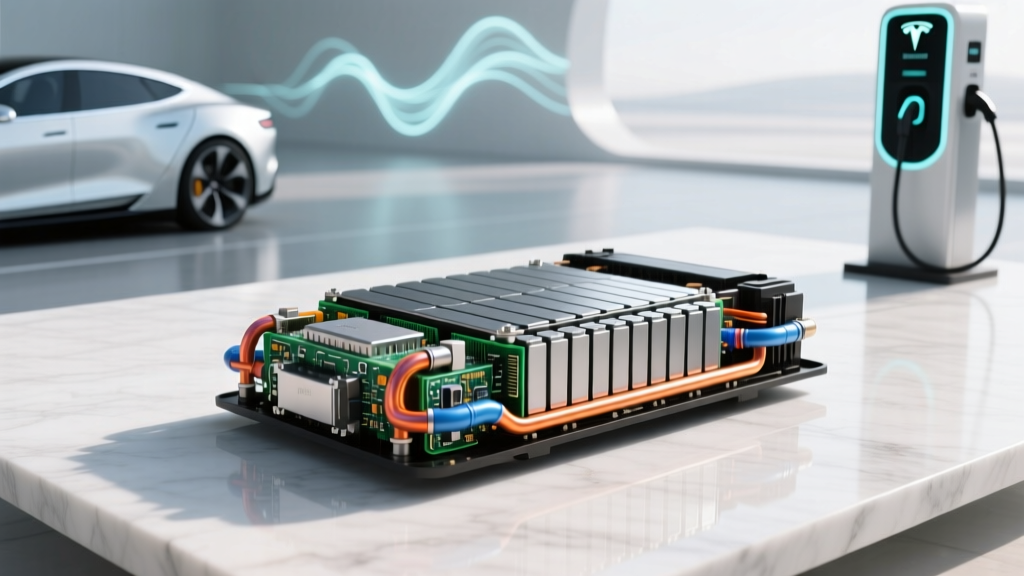
Critical context: Full pack replacement is rare. When batteries do need service, it's almost always a module-level repair — one or two degraded modules swapped out for $2,000–$5,000, not a five-figure pack replacement. Cell-level failures in LFP chemistry are statistically uncommon, and Ford's modular pack architecture makes targeted repairs feasible.
Also worth noting: LFP pack costs are falling. CATL's cell pricing dropped below $80/kWh at scale in 2025, and pack-level costs (including BMS, cooling, housing) are trending toward $120–140/kWh. A 98 kWh LFP pack that might cost $16,000 to replace in 2026 could cost $10,000–$12,000 by 2030.
What Actually Kills an EV Battery (And What Doesn't)
Misinformation about battery longevity is rampant. Here's what the data actually shows about factors that accelerate degradation:
- Sustained high SoC + heat: Storing an NMC battery at 100% in hot climates (Phoenix, Las Vegas) for weeks accelerates calendar aging. LFP is far more tolerant of 100% SoC storage.
- Frequent DC fast charging in extreme heat: Repeatedly pulling 150+ kW into a hot battery without preconditioning stresses cells. Ford's thermal management mitigates this, but it's not zero-impact.
- Deep discharges to 0%: Letting any lithium-ion battery sit at or near 0% SoC for extended periods can cause copper dissolution in the anode. Keep it above 10% when parked for days.
- Occasional DC fast charging: 1–2 fast charges per week on a modern, thermally-managed pack has minimal measurable impact over 100,000 miles.
- Cold-weather driving: Cold reduces available range temporarily (the battery isn't damaged — lithium plating risk is managed by the BMS limiting charge rate when cold).
- Daily Level 2 charging: This is actually ideal for battery health. Slow charging generates less heat and is the gentlest way to charge.
For Ford's LFP packs specifically, the daily-charge recommendation is different from NMC. Ford explicitly recommends charging LFP packs to 100% at least once per week to allow the battery management system (BMS) to accurately calibrate state-of-charge estimates. This is because LFP's voltage curve is extremely flat — the BMS needs the top-end voltage reference to calculate remaining capacity accurately.
How to Check and Maximize Your Ford's Battery Health
Ford provides several ways to monitor State of Health (SoH), and third-party tools offer additional granularity.
- ✅ FordPass app: Displays estimated range and charging status. While it doesn't show a raw SoH percentage, consistent range drops over months can indicate degradation.
- ✅ OBD-II diagnostic tools: Apps like OBD2 scanner + Car Scanner ELM or FORScan (Ford-specific) can read the BMS-reported SoH percentage directly from the vehicle's CAN bus.
- ✅ Dealer health check: Ford dealerships can run a full battery diagnostic that produces an SoH report — request this during routine service or before warranty expiration.
- ✅ For LFP owners — charge to 100% weekly: This calibrates the BMS and prevents range-estimate drift. Set your charge limit to 100% for at least one session per week.
- ✅ For NMC owners — charge to 80% daily: Reserve 100% charges for road trips. Set your daily charge limit in FordPass or the vehicle's charge settings.
- ✅ Precondition before DC fast charging: Navigate to a DC fast charger using the vehicle's built-in nav (this triggers battery preconditioning, warming the pack for optimal charge speed and reduced stress).
- ✅ Avoid parking at 0% or 100% for weeks: If storing the vehicle, aim for ~50% SoC for NMC or ~60–80% for LFP.
- ✅ Use Level 2 as your primary charge method: A home 240V Level 2 charger at 32–48 amps (~7.7–11.5 kW) is the healthiest daily charging method for any chemistry.
Emerging Battery Tech: What's Next After LFP
Ford's CATL partnership addresses today's needs, but the industry is pursuing several next-generation technologies. Here's a realistic timeline — no hype, just engineering constraints:
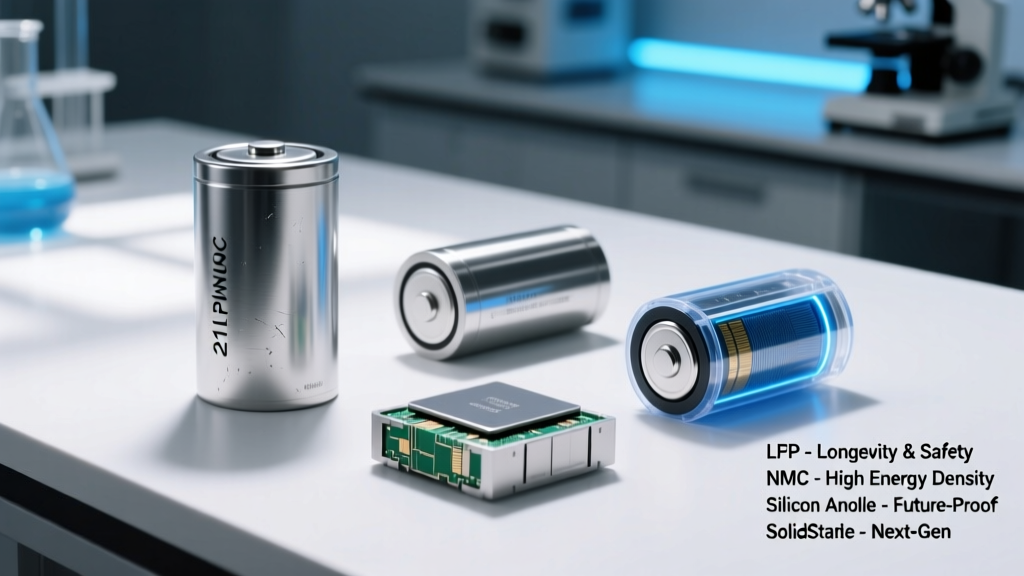
Silicon-dominant anodes: Companies like Sila Nanotechnologies and Group14 are replacing graphite anodes with silicon to boost energy density 20–40%. Limited commercial deployment began in 2025 (Mercedes G-Wagon EV). Expect broader adoption in Ford vehicles by 2028–2030. Benefit: more range in the same pack size, particularly useful for LFP's density disadvantage.
Semi-solid-state batteries: These replace the liquid electrolyte with a gel or ceramic composite, improving safety and enabling lithium-metal anodes. Toyota, Samsung SDI, and CATL itself have announced semi-solid cells for production. Realistic timeline for volume production in affordable vehicles: 2028–2032. Early deployments will be in premium models at high cost.
True solid-state batteries: Full solid electrolyte cells promise 2x energy density and ultra-fast charging. Multiple companies have demonstrated lab prototypes, but manufacturing at automotive scale remains unsolved. Realistic timeline: 2032–2035+ for mainstream vehicles. Do not delay a purchase waiting for solid-state.
Sodium-ion batteries: CATL has begun mass-producing sodium-ion cells (no lithium required) for low-cost, short-range applications. These are unlikely to appear in Ford's US lineup before 2029+ but could power future budget EVs with 150–200 mile range at dramatically lower cost.
Frequently Asked Questions
How long do Ford's CATL LFP batteries last?
Based on fleet degradation data, Ford's LFP packs typically retain 88–93% capacity at 8 years / 100,000 miles and are projected to reach 70% capacity (the industry "end-of-life" threshold) at 200,000–350,000+ miles. For the average driver covering 13,500 miles per year, that translates to 15–25 years of usable service life.
How much does a Ford EV battery cost to replace?
Full pack replacement runs $8,000–$16,000 for LFP packs (Mach-E Select, F-150 Lightning Std Range) and $14,000–$25,000 for NMC packs (Mach-E Extended Range, F-150 Lightning Ext Range). However, full replacements are rare — most out-of-warranty repairs involve module-level service at $2,000–$5,000.
What does Ford's battery warranty actually cover?
Ford covers the high-voltage battery for 8 years / 100,000 miles (10 years / 150,000 miles in CARB states) against capacity loss below 70% of original usable capacity and manufacturing defects. The warranty is transferable to subsequent owners. It does not cover damage from accidents, floods, or unauthorized modifications.
Is LFP better than NMC for a daily driver?
For most daily drivers, yes. LFP offers longer cycle life (3,000–5,000+ cycles vs 1,000–2,000), lower cost, better thermal safety, and the convenience of charging to 100% daily without degradation concerns. The trade-off is ~15–20% lower energy density (meaning slightly less range for the same pack weight) and greater cold-weather range loss. If you need maximum range or live in extreme cold, NMC may be preferable.
Does frequent DC fast charging damage my Ford's battery?
Occasional DC fast charging (1–3 times per week) has minimal measurable impact on modern, thermally-managed packs. The risk increases with very frequent use (daily) in hot climates without preconditioning. Ford's BMS actively manages charge rates and temperatures to mitigate damage. For daily charging, Level 2 at home remains the healthiest option.
How do I check my Ford EV's battery State of Health?
Use an OBD-II scanner with Ford-compatible software (FORScan is the most popular) to read BMS-reported SoH directly. You can also request a battery health report from your Ford dealer during service. The FordPass app shows range estimates but not raw SoH percentage — watch for consistent range decreases over months as an indirect indicator.
Will Ford's CATL battery affect my federal tax credit eligibility?
The IRS §30D clean vehicle credit has specific battery component and critical mineral sourcing requirements that change annually. Ford has worked to qualify LFP-equipped models by assembling packs domestically and sourcing minerals from FTA-partner countries, but eligibility varies by model year, trim, and the buyer's income (AGI caps: $150K single / $300K joint) and vehicle MSRP (caps: $55K sedans / $80K trucks/SUVs). Always verify current eligibility on fueleconomy.gov before purchasing, as sourcing rules tighten each year.