If you own a 2003 Chevrolet Tahoe, swapping the 12V under-hood battery is a $150, 15-minute job at any auto parts store. But if you're considering trading that Tahoe for a modern electric vehicle, the battery conversation changes entirely. An EV's high-voltage traction battery is a multi-thousand-dollar, chemistry-dependent system that powers everything from propulsion to cabin heating — and understanding how it works, degrades, and is warrantied is the single most important homework assignment for any prospective EV buyer.
This guide bridges that gap. We'll briefly cover the 2003 Chevrolet Tahoe battery for owners still running that platform, then dive deep into modern EV traction battery technology: chemistries, degradation data, warranties, replacement costs, and the care habits that maximize lifespan.
The 2003 Chevrolet Tahoe Battery: A Quick Baseline
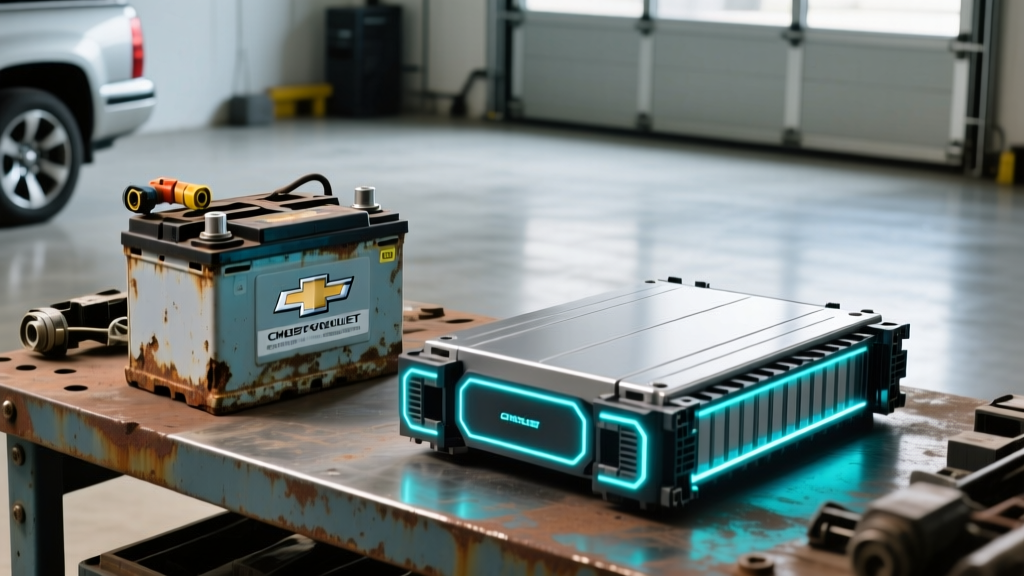
The 2003 Chevrolet Tahoe uses a conventional Group 78 or Group 75 12V lead-acid battery (typically 700–800 cold cranking amps). It starts a 5.3L or 4.8L V8 engine and powers accessories. Replacement cost: $120–$220 at retail. Expected lifespan: 3–5 years. It has nothing in common with an EV's high-voltage traction battery, which stores 60–100+ kWh of energy and weighs 700–1,200 lbs.
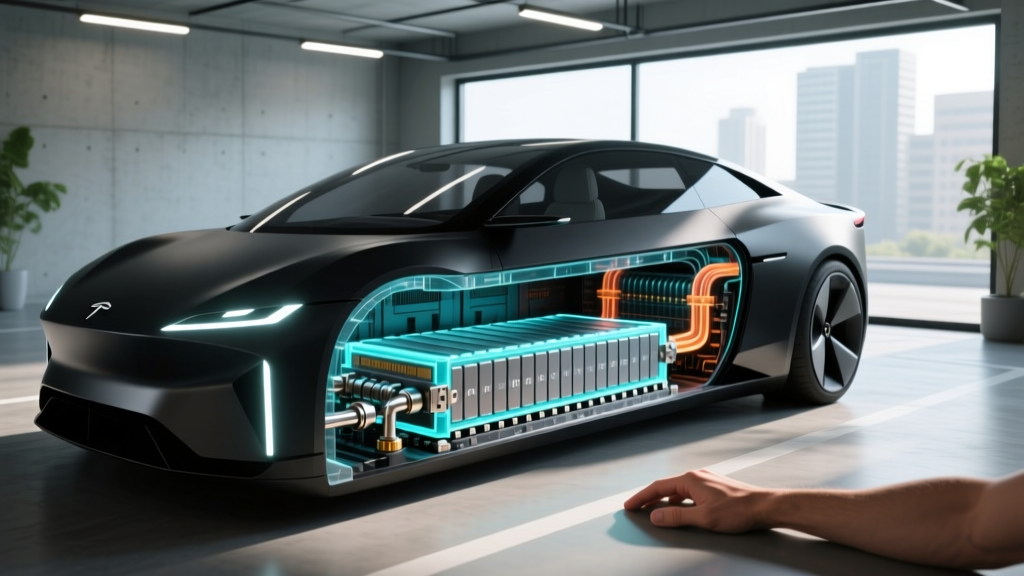
Why mention this? Because many EV shoppers coming from trucks like the Tahoe conflate "battery replacement" with the quick swap they're used to. An EV traction battery is a structural, liquid-cooled, chemistry-managed energy system. Let's break down what that means.
EV Battery Chemistry: LFP vs NMC/NCA Explained
Two dominant lithium-ion chemistries power today's EVs, and the choice between them affects range, longevity, cold-weather performance, and price.
| Attribute | LFP (Lithium Iron Phosphate) | NMC / NCA (Nickel Manganese Cobalt / Nickel Cobalt Aluminum) |
|---|---|---|
| Energy Density | ~160–180 Wh/kg (lower) | ~220–260 Wh/kg (higher) |
| Typical Range per Pack Size | Shorter range for same weight/volume | Longer range for same weight/volume |
| Cycle Life | 3,000–5,000+ full cycles | 1,000–2,000 full cycles |
| Cold-Weather Performance | Greater range loss below freezing (~30–40%) | Better cold performance (~20–30% loss) |
| Charging to 100% Regularly | Recommended (helps BMS calibration) | Not recommended (accelerates degradation) |
| Cobalt Content | None (lower ethical/supply-chain risk) | Contains cobalt and nickel |
| Cost per kWh (pack level) | ~$90–$110 | ~$120–$145 |
| Notable 2026 Applications | Tesla Model 3 RWD, Ford Mustang Mach-E Select (base), Rivian R1S Standard | Hyundai Ioniq 5 Long Range, BMW iX, Chevrolet Silverado EV 4WT |
The bottom line: LFP wins on longevity and cost — ideal for daily commuters who charge at home and don't need maximum range. NMC/NCA wins on energy density and cold performance — better for road-trippers, towing, and northern-climate drivers. Neither is universally "better"; the right choice depends on your driving pattern.
How Long Do EV Batteries Actually Last? Degradation Data
This is the question that stalls more EV purchases than any other. The data, however, is reassuring: most modern EV batteries outlast the vehicles they're installed in.
Typical EV Battery Degradation Curve (fleet & owner-reported data, 2020–2025 models):
- Year 1 / 15,000 miles: ~2–5% capacity loss (initial "break-in" drop)
- Year 3 / 45,000 miles: ~6–9% cumulative loss
- Year 5 / 75,000 miles: ~8–12% cumulative loss
- Year 8 / 120,000 miles: ~10–15% cumulative loss (NMC); ~7–10% (LFP)
- Year 10+ / 150,000+ miles: ~12–20% cumulative loss (varies heavily by care habits)
A 2023 Recurrent Auto study of over 15,000 EVs found that the average battery retained roughly 90% of original capacity after 100,000 miles — and degradation curves flatten significantly after the initial break-in period.
For context, a 2003 Chevrolet Tahoe's original engine might last 200,000 miles with diligent maintenance. An EV battery losing 15% capacity over 150,000 miles still delivers, say, 255 miles from a 300-mile EPA-rated pack — still very usable for daily driving.
EV Battery Warranties: What's Covered and for How Long
Federal law mandates a minimum 8-year / 100,000-mile warranty on EV battery packs (with a capacity retention threshold). Most automakers exceed this baseline. Here's what the major brands offer as of the 2026 model year:
| Manufacturer | Duration | Mileage | Capacity Retention Threshold |
|---|---|---|---|
| Tesla (Model 3/Y LFP) | 8 years | 100,000 miles | 70% |
| Tesla (Model S/X, Long Range) | 8 years | 150,000 miles | 70% |
| Hyundai / Kia | 10 years | 100,000 miles | 70% |
| General Motors (Ultium platform) | 8 years | 100,000 miles | 70% |
| Ford | 8 years | 100,000 miles | 70% |
| BMW | 8 years | 100,000 miles | 70% |
| Rivian | 8 years | 175,000 miles (Max Pack) | 70% |
Key detail: The warranty triggers if your battery falls below the stated retention threshold — typically 70% of original capacity. If your 300-mile EPA-rated EV drops to 215 miles of range at 80,000 miles, that's roughly 72% retention and still within warranty spec. The warranty covers defects and abnormal degradation, not gradual wear that stays above the threshold.
Also note: the warranty covers the high-voltage traction battery, not the 12V auxiliary battery (which, just like your 2003 Tahoe's 12V, is a consumable item with a typical 3–5 year lifespan).
EV Battery Replacement Cost: What It Actually Takes
Here's where fear often outpaces reality. Yes, an out-of-warranty EV battery replacement is expensive — but it's also rare. The vast majority of EVs are retired, wrecked, or traded in before the traction battery needs replacement.
| Vehicle / Pack Size | Battery Capacity | Replacement Cost (Parts + Labor) | When Typically Needed |
|---|---|---|---|
| Tesla Model 3 RWD (LFP) | ~60 kWh | $12,000–$16,000 | Rarely before 200,000+ mi |
| Hyundai Ioniq 5 Long Range | ~77.4 kWh | $15,000–$20,000 | Rarely before 180,000+ mi |
| Ford F-150 Lightning Extended | ~131 kWh | $22,000–$30,000 | Rarely before 150,000+ mi |
| Chevrolet Silverado EV 4WT | ~200 kWh | $30,000–$40,000+ | Too new for fleet data |
| Nissan Leaf (40 kWh pack) | ~40 kWh | $8,000–$12,000 | 100,000–150,000 mi (passive cooling) |
Important context: Module-level repair is increasingly common. Many shops can replace individual failed modules within a pack for $2,000–$5,000 rather than swapping the entire battery. This is analogous to replacing one cylinder head rather than an entire engine block.
Compare this to a 2003 Chevrolet Tahoe: a transmission replacement runs $3,000–$5,000, and an engine rebuild can hit $5,000–$8,000. The EV battery is a bigger single-ticket item, but it's also the only major drivetrain component — there's no transmission, no exhaust system, no timing chain, no catalytic converter to fail.
What Affects EV Battery Lifespan? Care Habits That Matter
Not all miles are equal when it comes to battery wear. The same pack can last 150,000 miles or 300,000+ miles depending on how it's treated.
Battery Care Best Practices:
- Limit DC fast charging to road trips. Frequent 150+ kW DC fast charging accelerates degradation. Daily Level 2 home charging (7–11 kW) is the gentlest method. Think of DCFC like running a marathon every day vs. a daily jog.
- Follow the 20–80% rule for NMC/NCA. Keeping state of charge between 20% and 80% dramatically reduces stress on nickel-based cells. Most EVs let you set a charge limit in the app. (LFP owners: charge to 100% at least weekly for BMS calibration.)
- Precondition before fast charging. A cold battery charges slowly and unevenly. Use your EV's navigation to a DCFC — the car will warm the battery en route. This is why preconditioning matters: it brings the pack to optimal temperature (~70–95°F) for accepting charge.
- Avoid prolonged 100% or 0% storage. If leaving your EV for a week or more, park it at ~50% SoC. Sitting at 100% in summer heat is the single worst thing you can do to an NMC pack.
- Use a garage or shaded parking in extreme heat. Sustained ambient temperatures above 100°F accelerate electrolyte breakdown. Active thermal management helps, but it can't fully offset a sun-baked parking lot in Phoenix.
- Don't baby it too much. Modern battery management systems (BMS) are sophisticated. They enforce top/bottom buffers (typically 5–10% of gross capacity is unusable), manage temperature, and balance cells. Drive normally and let the BMS do its job.
Monitoring Battery Health: How to Check Your State of Health (SoH)
State of Health (SoH) is the percentage of your battery's original capacity that remains usable. Unlike the 2003 Tahoe's battery — where you just wait for it to fail on a cold morning — EV owners have real-time visibility into pack health.
Built-in methods:
- Tesla: Service menu (hold model name on About screen) shows battery health percentage.
- Hyundai/Kia: EV-specific menu in the infotainment cluster shows SoH.
- GM Ultium vehicles: OnStar diagnostics and the myChevrolet/myCadillac app report battery condition.
- BMW: iDrive system includes a battery health report accessible via the Connected Drive portal.
Third-party tools:
- OBD-II dongles + apps like OBDeleven, LeafSpy (Nissan Leaf), or Scan My Tesla can read cell-level voltage data and calculate SoH from raw BMS data.
- Recurrent Auto offers a free battery health report that compares your pack's degradation against a fleet of identical vehicles.
A healthy battery should show 90%+ SoH at 50,000 miles and 80%+ at 100,000 miles. If your SoH drops sharply (e.g., 5% in a single month), that indicates a potential module failure and warrants a warranty claim.
Emerging Battery Tech: Solid-State and Silicon Anodes
The next frontier in EV batteries promises step-change improvements — but timelines remain cautious.
Solid-state batteries replace the liquid electrolyte with a solid ceramic or polymer, enabling lithium-metal anodes. The theoretical payoff: 50–80% more energy density, faster charging, and reduced fire risk. Toyota has announced a solid-state pack targeting 2027–2028 production vehicles with ~750 km (WLTP) range. Samsung SDI and QuantumScape are also in pilot production. However, manufacturing yield, cost, and cycle-life durability at scale remain unsolved challenges. This technology is not yet available in any production vehicle as of 2026.
Silicon-dominant anodes (replacing graphite) are closer to reality. Sila Nanotechnologies and Group14 are supplying silicon-carbon anode materials to manufacturers like Mercedes-Benz and Panasonic. These offer 20–40% energy density gains and are expected in production EVs by 2027–2028.
Sodium-ion batteries from CATL and BYD are entering low-cost, short-range EVs in China. They trade energy density for raw-material cost savings (no lithium, cobalt, or nickel). U.S. availability remains uncertain but could target fleet and budget segments by 2028+.
None of these technologies should delay a current EV purchase. Today's lithium-ion packs, managed properly, already deliver 150,000–200,000+ miles of usable service.
Frequently Asked Questions
How long do EV batteries last in years and miles?
Based on fleet data from Recurrent Auto and manufacturer reports, modern liquid-cooled EV batteries routinely last 150,000–250,000 miles (10–15+ years) before degradation makes the vehicle impractical for primary use. LFP chemistries tend to outlast NMC in cycle count, though NMC offers better cold-weather range retention.
How much does an EV battery cost to replace?
Full pack replacement ranges from $8,000 (small packs like the Nissan Leaf 40 kWh) to $30,000+ (large packs like the Silverado EV 200 kWh). However, module-level repairs cost $2,000–$5,000, and the vast majority of EVs never need a full replacement during typical ownership. For comparison, a 2003 Chevrolet Tahoe battery costs $120–$220 — but that 12V battery needs replacing every 3–5 years, while an EV traction battery is designed for the vehicle's entire service life.
What does the EV battery warranty cover?
Federal law requires a minimum 8-year/100,000-mile warranty guaranteeing the battery retains at least 70% of its original capacity. Some brands, like Hyundai and Kia, extend this to 10 years. The warranty covers defects and abnormal degradation — not damage from accidents, flooding, or unauthorized modifications. Always check your specific vehicle's warranty documentation, as terms vary by model and trim.
How do I check and maximize my EV battery health?
Check SoH through your vehicle's built-in diagnostics menu or a third-party OBD-II tool. Maximize lifespan by favoring Level 2 home charging over DC fast charging, keeping NMC packs between 20–80% SoC for daily use, preconditioning before fast charging, and avoiding prolonged storage at 100% or 0% charge. See the U.S. Department of Energy's EV technology guide for additional best practices.
LFP vs NMC — which battery chemistry is better for me?
Choose LFP if: you charge primarily at home, drive under 250 miles daily, live in a mild climate, and want maximum cycle life. Choose NMC/NCA if: you need maximum range for road trips, frequently tow, live in a cold climate, or need the fastest DC charging speeds. Both chemistries are proven and warrantied for 8+ years.
Whether you're keeping a 2003 Chevrolet Tahoe on the road with a fresh Group 78 battery or stepping into a 2026 EV with a liquid-cooled 80 kWh NMC pack, understanding what's under the hood — or under the floor — is the key to confident ownership. Modern EV batteries are not the ticking time bombs that early internet forums suggested. They're engineered, warrantied, and monitored systems that, with basic care, will likely outlast the rest of the car.