Why Flywheel Batteries Keep Coming Up in EV Conversations
If you've spent time in EV forums or energy-storage discussions, you've likely encountered the term flywheel batteries — mechanical energy storage systems that spin a rotor at extreme speeds to store kinetic energy. They're used in grid frequency regulation, some transit systems, and even motorsport hybrid recovery (Formula 1's KERS being the most famous example). But can they power your next electric car?
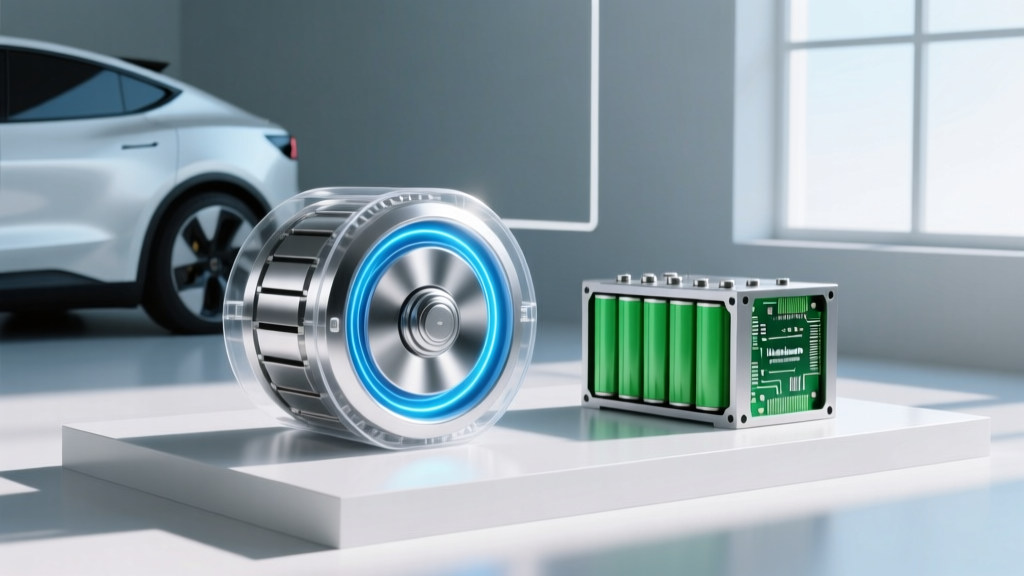
The short answer: not today, and probably not in your ownership lifetime. Flywheel systems excel at rapid charge-discharge cycling and have exceptional cycle life (hundreds of thousands of cycles), but their energy density is roughly 1/10th to 1/20th that of modern lithium-ion cells by weight. A flywheel pack storing 75 kWh — enough for a mid-size EV — would weigh several thousand pounds and require a vacuum-sealed housing with magnetic bearings. That makes them impractical for passenger vehicles where every kilogram matters for range.
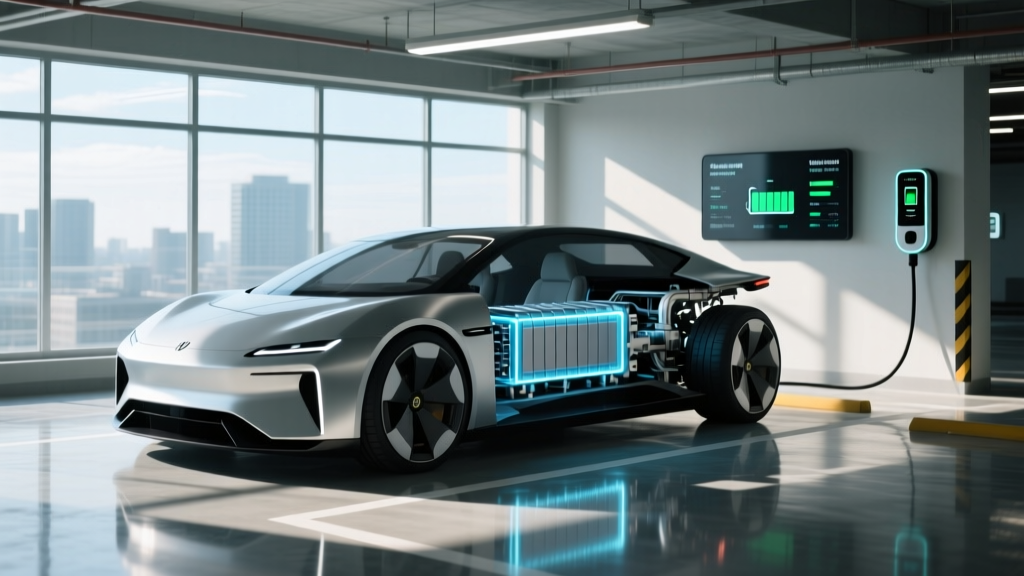
What flywheel tech does illuminate is the broader question every EV buyer should be asking: how does the battery actually work, how long will it last, and what will it cost me? This guide answers those questions with hard data on the lithium-ion chemistries that actually power today's EVs.
LFP vs. NMC/NCA: The Chemistry That Defines Your EV
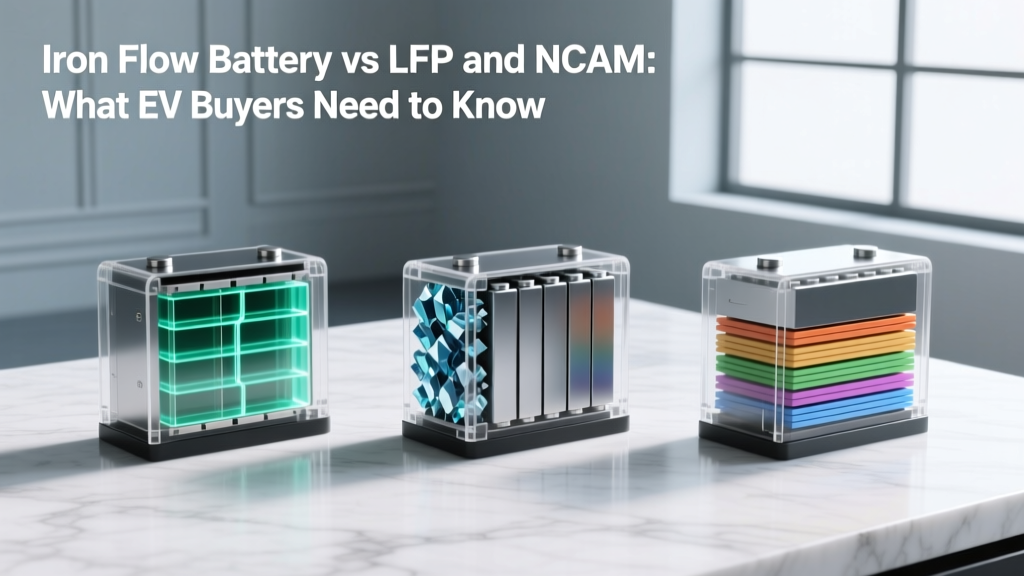
Every battery-electric vehicle sold in the U.S. today uses one of two dominant lithium-ion cathode chemistries: LFP (lithium iron phosphate, LiFePO4) or NMC/NCA (nickel manganese cobalt / nickel cobalt aluminum). The choice affects your range, charging habits, longevity, and even whether you should charge to 100%.
| Attribute | LFP (Lithium Iron Phosphate) | NMC / NCA (Nickel-based) |
|---|---|---|
| Energy Density (cell-level) | ~160-180 Wh/kg | ~220-300 Wh/kg |
| Cycle Life (to 80% SoH) | 3,000-5,000+ cycles | 1,000-2,000 cycles |
| Cold-Weather Performance | Moderate — more range loss below 32°F | Better — less capacity fade in cold |
| Thermal Stability | Excellent — very low thermal runaway risk | Good — requires more active management |
| Cost per kWh (2026) | ~$75-$95/kWh (cell) | ~$100-$135/kWh (cell) |
| Charge-to-100% Recommendation | Yes — regular 100% charges are fine | No — daily limit 80-90% recommended |
| Notable 2026 Vehicles Using | Tesla Model 3 RWD, Model Y RWD, Ford Mustang Mach-E Select (LFP option), BYD models | Tesla Model 3 Long Range, Hyundai Ioniq 5/6, Chevrolet Equinox EV, BMW iX, Rivian R1T/R1S |
| Critical Mineral Concern | None — iron and phosphate are abundant | Cobalt and nickel sourcing (affects §30D tax credit eligibility) |
Which is better? It depends on your driving pattern. If you commute under 80 miles daily, charge at home, and plan to keep your EV for 10+ years, LFP's superior cycle life and lower cost make it the pragmatic choice. If you need maximum range per charge (road trips, towing, cold-climate driving), NMC/NCA's higher energy density is worth the trade-off. Neither chemistry is universally superior — the right answer is the one that matches your use case.
How Long Do EV Batteries Actually Last?
The fear that EV batteries "need replacing every few years like a laptop" is not supported by fleet data. According to analysis by Geotab's fleet study of over 10,000 EVs, the average lithium-ion EV battery loses roughly 1.5% to 2.5% of capacity per year under normal use. That translates to:
| Vehicle Age | Typical Capacity Retained | Example: 80 kWh Pack Usable Capacity |
|---|---|---|
| Year 1 | ~97-98% | ~78 kWh |
| Year 3 | ~93-95% | ~75 kWh |
| Year 5 | ~88-92% | ~72 kWh |
| Year 8 | ~82-88% | ~68 kWh |
| Year 10 | ~78-85% | ~65 kWh |
| Year 15 | ~70-80% | ~60 kWh |
Real-world context: A 2024 Tesla Model Y Long Range with an EPA range of 310 miles and an NMC pack might realistically deliver 270-285 highway miles at 70 mph in moderate weather when new. By year 8, that same car might deliver 240-260 miles — still entirely usable for most drivers. The battery doesn't "die"; it gradually holds less energy, just like your smartphone, but at a far slower rate.
LFP-equipped vehicles tend to show even slower degradation in fleet data, often retaining 90%+ capacity at year 5. This is why LFP packs are increasingly common in high-mileage fleet and ride-share applications.
What Does the Battery Warranty Actually Cover?
Federal law mandates a minimum of 8 years / 100,000 miles for EV battery warranties in the U.S. (California and states adopting CARB standards require 10 years / 150,000 miles). But the fine print matters enormously.
| Manufacturer | Warranty Period | Capacity Retention Threshold | Notes |
|---|---|---|---|
| Tesla (Model 3/Y RWD — LFP) | 8 yr / 100,000 mi | 70% | Standard; covers defects and excessive degradation |
| Tesla (Model 3/Y LR/AWD — NMC) | 8 yr / 120,000 mi | 70% | Longer mileage for Long Range trims |
| Hyundai / Kia | 10 yr / 100,000 mi | 70% | Among the longest coverage in the industry |
| General Motors (Ultium-based) | 8 yr / 100,000 mi | 70% | Covers Bolt EV/EUV, Equinox EV, Blazer EV, Silverado EV |
| Ford (Mustang Mach-E, F-150 Lightning) | 8 yr / 100,000 mi | 70% | Includes battery components and excessive degradation |
| Rivian (R1T / R1S) | 8 yr / 175,000 mi | 70% | Highest mileage threshold among major OEMs |
| BMW (i4, iX, i7) | 8 yr / 100,000 mi | 70% | Standard for BMW's BEV lineup |
Critical detail: The 70% threshold means the manufacturer only replaces or repairs the battery if it degrades below 70% of original capacity within the warranty window. Based on fleet data, the vast majority of EVs never hit this threshold during the warranty period — it's designed as a backstop, not an expectation. Also note: warranties typically cover the high-voltage traction battery only, not the 12V auxiliary battery that powers electronics and starts the vehicle's systems.
For current warranty specifics and consumer protections, the U.S. Department of Energy's EV technology page on fueleconomy.gov provides a reliable baseline.
EV Battery Replacement Cost: What to Actually Expect
Replacement cost is the single most cited fear among prospective EV buyers. Let's put numbers to it — and add the context that matters.
| Vehicle / Pack Size | Battery Chemistry | Replacement Cost (Parts + Labor) | When Typically Needed |
|---|---|---|---|
| Tesla Model 3 RWD (~57 kWh) | LFP | $8,000 – $12,000 | Rarely before 200,000+ miles |
| Tesla Model Y Long Range (~75 kWh) | NMC | $12,000 – $16,000 | Rarely before 180,000+ miles |
| Hyundai Ioniq 5 (~77.4 kWh) | NMC | $12,000 – $18,000 | Rarely before 175,000+ miles |
| Ford F-150 Lightning Extended (~131 kWh) | NMC | $20,000 – $30,000 | Rarely before 150,000+ miles |
| Chevrolet Equinox EV (~85 kWh) | NMC (Ultium) | $12,000 – $17,000 | Rarely before 175,000+ miles |
| Rivian R1T Max Pack (~149 kWh) | NMC | $22,000 – $32,000 | Rarely before 150,000+ miles |
Context that matters: Most EV batteries outlive the vehicles they're installed in. The average age of a scrapped passenger vehicle in the U.S. is roughly 15-16 years. Given degradation rates of ~2% per year, a battery at year 15 would still retain 70-80% capacity — diminished but functional. Full pack replacement is most commonly needed due to physical damage (collision, flooding) or rare manufacturing defects, not wear-out. Cell-level repair (replacing individual modules rather than the entire pack) is increasingly offered by OEMs and independent shops, reducing out-of-warranty costs to $3,000-$8,000 depending on the failure.
What Affects Battery Life — and What You Can Control
Not all miles are created equal when it comes to battery wear. These factors have the most measurable impact on long-term State of Health (SoH):
Battery Care Checklist for Maximum Longevity
- Avoid sustained 100% State of Charge: For NMC/NCA packs, set your daily charge limit to 80-90%. Charge to 100% only when you'll drive immediately (road trips). LFP packs tolerate 100% better — Tesla recommends periodic 100% charges for LFP to recalibrate the BMS.
- Minimize DC fast charging frequency: Occasional DCFC (road trips) is fine. Daily DCFC at 150+ kW accelerates degradation by an estimated 0.5-1.0% additional per year vs. Level 2 home charging, based on fleet studies. The heat generated at high C-rates stresses cells.
- Precondition before fast charging: Most modern EVs do this automatically when you navigate to a charger. A cold battery charged at high power suffers more stress. Preconditioning warms the pack to ~95-104°F for optimal charge acceptance.
- Avoid extreme SoC in extreme heat: A fully charged battery sitting in 110°F+ ambient heat (Phoenix, Death Valley) degrades faster. If parking in extreme heat for days, aim for ~50% SoC.
- Don't baby it excessively: The difference between "perfect" battery care and "normal" care is roughly 3-5% additional capacity retention over 10 years. Drive your car. The BMS is doing significant work behind the scenes to protect the pack.
How to Check and Monitor Your Battery's State of Health
State of Health (SoH) is the percentage of original capacity your battery currently holds. A new EV has 100% SoH; at 70% SoH, you've hit the typical warranty replacement threshold. Here's how to check it:
- In-vehicle displays: Tesla's app (under "Battery Health" in newer software), Hyundai's EV menu, and BMW's iDrive provide SoH estimates directly. Accuracy varies — these are BMS-calculated approximations.
- OBD-II diagnostic tools: Devices like the OBDLink SX paired with apps such as Leaf Spy (Nissan Leaf) or Scan My Tesla pull raw BMS data including measured capacity in kWh, cell voltage variance, and degradation estimates. This is the most accurate consumer-accessible method.
- Dealer diagnostics: A service center can run a full capacity test, typically requiring a controlled discharge cycle. Most OEMs will provide this during warranty inspections on request.
- Third-party services: Companies like Recurrent (now part of Cox Automotive) offer battery health reports based on connected-car telemetry — useful when buying a used EV.
Practical tip for used-EV buyers: Before purchasing, compare the vehicle's current estimated range at 100% SoC (shown on the dash) to the original EPA figure. A 2021 Tesla Model 3 Long Range (EPA 353 mi) showing 315 mi at 100% has roughly 89% SoH — healthy for a 4-5 year old vehicle.
Emerging Battery Tech: What's Real vs. What's Hype
Headlines promise revolution every quarter. Here's what's actually on the horizon, with realistic timelines:
Solid-state batteries: These replace the liquid electrolyte with a solid conductor, potentially offering 40-50% higher energy density, faster charging, and improved safety. Toyota has announced a solid-state EV for 2027-2028, but production volumes are expected to be very limited initially. Samsung SDI targets 2027 for mass production. Realistic expectation: limited availability in premium vehicles by 2028-2029, mainstream adoption not before 2031-2032.
Silicon-dominant anodes: Companies like Sila Nanotechnologies and Group14 are replacing graphite anodes with silicon, which can store roughly 10x more lithium ions per atom. This boosts energy density by 20-40% at the cell level. Already appearing in limited applications (Mercedes G-Class 580e PHEV uses a silicon-anode pack from Sila). Realistic expectation: growing adoption in premium and performance EVs through 2026-2028.
Sodium-ion batteries: CATL and BYD have begun producing sodium-ion cells that use no lithium, cobalt, or nickel — dramatically cheaper but with ~30-40% lower energy density. Ideal for budget city EVs and stationary storage. Realistic expectation: available in Chinese-market budget EVs now; U.S. market entry uncertain, likely 2028+ if at all.
Flywheel batteries in automotive: As noted, flywheel systems remain impractical for passenger EVs due to weight, volume, and safety (a rotor spinning at 50,000+ RPM contains enormous kinetic energy). They're relevant to grid storage and motorsport but are not on any OEM's passenger-vehicle roadmap. Realistic expectation: no passenger-vehicle application foreseeable.
For authoritative and up-to-date EV battery research, the National Renewable Energy Laboratory (NREL) publishes ongoing analysis of energy storage technologies.
Frequently Asked Questions
How long do EV batteries last in years and miles?
Based on fleet data, most modern EV batteries retain 78-85% capacity at year 10 and 70-80% at year 15. In mileage terms, most packs are designed for 200,000+ miles before reaching the 70% warranty threshold. Many will exceed 300,000 miles with usable capacity, especially LFP packs.
How much does it cost to replace an EV battery?
Full pack replacement ranges from approximately $8,000 for a small LFP pack (Tesla Model 3 RWD) to $30,000+ for a large NMC pack (F-150 Lightning Extended Range, Rivian Max Pack). However, full replacement due to degradation alone is rare — most packs outlive the vehicle. Module-level repairs cost $3,000-$8,000.
What does the EV battery warranty cover?
Federally mandated minimum coverage is 8 years / 100,000 miles against defects and excessive degradation below 70% of original capacity. CARB states (California and adopting states) require 10 years / 150,000 miles. Coverage applies to the high-voltage traction battery, not the 12V auxiliary battery. Always check your specific manufacturer's terms.
How do I check and maximize my EV battery health?
Monitor SoH through your vehicle's app, OBD-II diagnostic tools, or dealer inspections. To maximize longevity: limit daily charge to 80-90% for NMC packs, minimize daily DC fast charging, precondition before fast charges, and avoid leaving the vehicle at 100% SoC in extreme heat for extended periods.
LFP vs. NMC — which battery chemistry is better?
Neither is universally better. LFP offers longer cycle life (3,000-5,000+ cycles vs. 1,000-2,000), lower cost, better thermal safety, and tolerance for 100% charging — making it ideal for daily commuting and long ownership. NMC offers higher energy density (more range per kWh of battery weight) and better cold-weather performance — making it better for road trips, towing, and cold climates. Choose based on your driving pattern.
Are flywheel batteries a viable alternative for EVs?
Not for passenger vehicles. Flywheel systems offer exceptional cycle life and rapid power delivery but have energy density roughly 1/10th to 1/20th that of lithium-ion by weight. They're used in grid storage and motorsport but add prohibitive weight and volume for automotive use. All current and announced passenger EVs through 2030 use lithium-ion variants.
Will solid-state batteries make my current EV obsolete?
Not anytime soon. Solid-state production is expected to begin in limited volumes around 2027-2028 in premium vehicles, with mainstream availability not expected before 2031+. Current lithium-ion EVs will remain supported, chargeable, and practical for well over a decade. The transition will be gradual, not sudden.