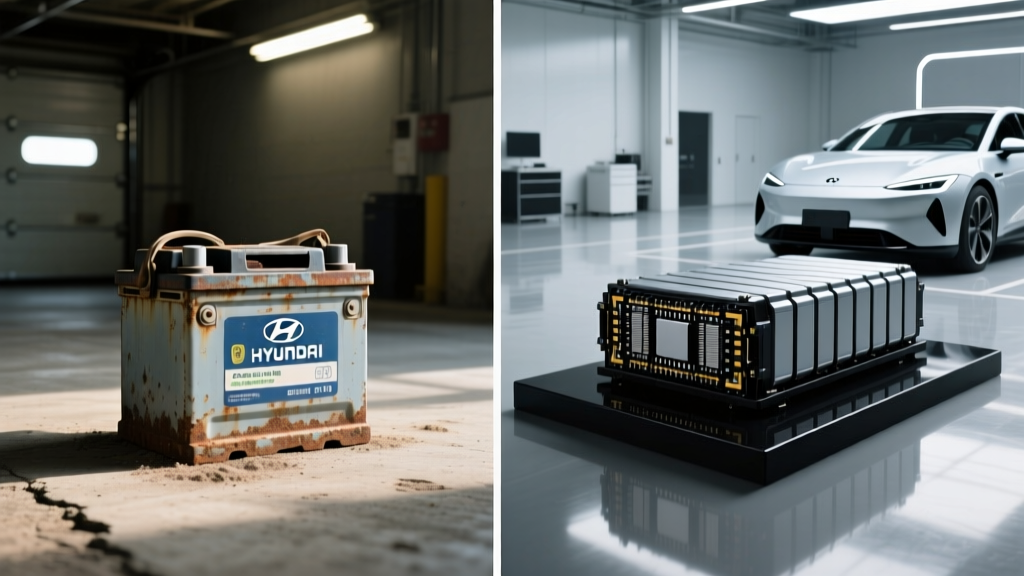
If you've ever replaced the 12-volt battery in a mid-2000s sedan, you already have an intuitive sense of how car batteries age, fail, and cost real money to swap. A 2009 Hyundai Sonata battery — typically a Group 12V lead-acid unit costing $120 to $220 at an auto-parts store — is a maintenance item most gas-car owners expect to replace every three to five years. But when shoppers start researching electric vehicles, they encounter a completely different beast: a high-voltage lithium-ion traction battery that costs thousands of dollars, is engineered to outlast the vehicle itself, and uses chemistry that would be unrecognizable to that Sonata's original engineer.
This guide bridges that gap. We'll explain how modern EV traction batteries work, how long they actually last, what warranties cover, what replacements cost in 2026, and how they differ fundamentally from the humble 12V battery you might have swapped in a 2009 Sonata. We'll also compare the two dominant chemistries — LFP and NMC/NCA — and look at the emerging tech that will shape the next decade of EV ownership.
The 2009 Hyundai Sonata Battery vs. an EV Traction Pack: Two Completely Different Animals
The first thing to understand is that a conventional gas car like the 2009 Hyundai Sonata actually has two electrical systems, and only one is the battery you replace at AutoZone. The 12V lead-acid battery's job is narrow: crank the starter motor, power accessories when the engine is off, and stabilize the alternator's output. It stores roughly 0.5 to 0.7 kWh of energy and weighs about 35 to 45 pounds.
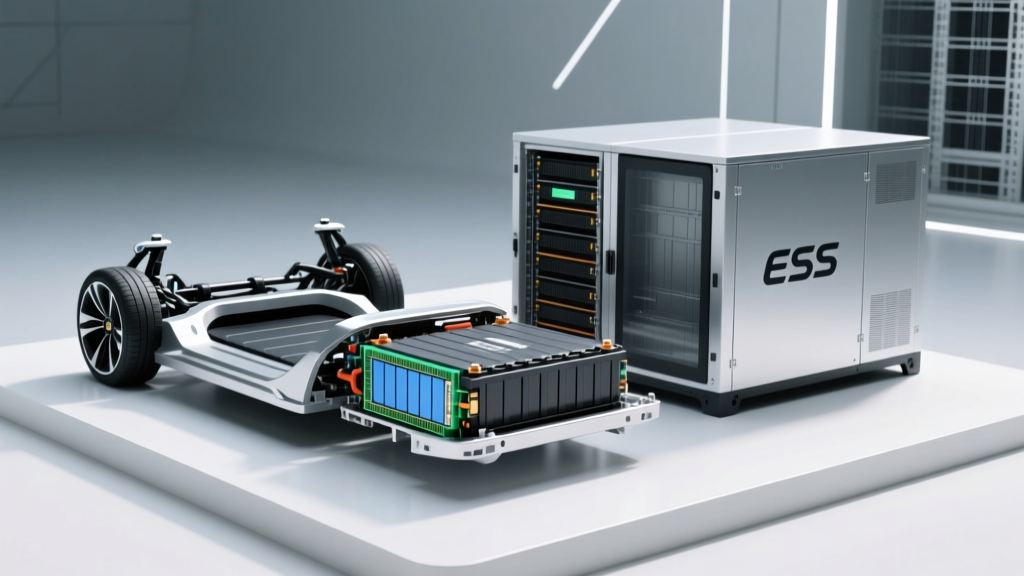
An EV's high-voltage traction battery, by contrast, is the vehicle's entire energy source. A 2026 Hyundai Ioniq 5, for example, carries an 84.0 kWh (usable) NMC pack weighing over 1,000 pounds — more than 100 times the energy capacity of that Sonata's 12V battery. Even a smaller EV like the Chevrolet Bolt EV uses a 65 kWh pack. These packs operate at 350 to 800 volts, are liquid-cooled, and are managed by sophisticated battery management systems (BMS) that balance individual cells, regulate temperature, and buffer the top and bottom of the state-of-charge window to prevent damage.
Notably, EVs also have a 12V auxiliary battery (or increasingly, a 12V lithium-iron-phosphate unit) that powers lights, infotainment, and control electronics. When EV owners talk about "the battery," they mean the traction pack. The 12V battery is still a service item, but it's a minor one.
Battery Chemistry Explained: LFP vs. NMC/NCA Trade-Offs
Two lithium-ion chemistries dominate the 2026 EV market, and the choice between them shapes range, longevity, cold-weather behavior, and price.
NMC (Nickel Manganese Cobalt) and the closely related NCA (Nickel Cobalt Aluminum) chemistries offer the highest energy density — more kWh per kilogram of battery weight. This translates directly to longer range in a given vehicle, or a lighter, smaller pack for a given range. Most long-range EVs — Tesla Model 3 Long Range, Hyundai Ioniq 5, Ford Mustang Mach-E Extended Range — use NMC or NCA packs. The trade-off is higher raw-material cost (cobalt and nickel are expensive and geopolitically sensitive) and somewhat faster degradation over very high cycle counts.
LFP (Lithium Iron Phosphate) uses no cobalt or nickel, making it cheaper and less supply-chain-constrained. LFP cells tolerate deeper cycling and can be charged to 100% daily without accelerated degradation — a significant daily-ownership advantage. The trade-off is lower energy density (roughly 20-30% less than NMC by weight), meaning heavier packs for equivalent range, and noticeably reduced performance in freezing temperatures. Tesla uses LFP in its standard-range Model 3 and Model Y, and Ford offers LFP in the base Mustang Mach-E.
| Attribute | LFP (Lithium Iron Phosphate) | NMC / NCA |
|---|---|---|
| Energy density (cell-level) | ~160-180 Wh/kg | ~230-300 Wh/kg |
| Typical cycle life | 3,000-6,000+ cycles | 1,500-3,000 cycles |
| Daily charging to 100% | Recommended (no penalty) | Not recommended (accelerates degradation) |
| Cold-weather performance | Weaker (range loss more pronounced below freezing) | Better (though still loses 15-30% in extreme cold) |
| Cost per kWh (cell-level, 2026) | ~$60-80/kWh | ~$95-120/kWh |
| Cobalt / nickel content | None | Significant (supply-chain and ethical considerations) |
| Common in | Tesla Model 3 RWD, base Model Y, Ford Mach-E Select, BYD models | Tesla Long Range, Hyundai Ioniq 5/6, Kia EV6, most premium EVs |
Neither chemistry is universally "better." If you drive mostly in moderate climates, charge at home, and want the longest possible pack life with minimal babysitting, LFP is arguably the more practical choice. If you need maximum range, tow frequently, or live in a region with harsh winters, NMC/NCA's energy density and cold-weather edge matter more.
How Long Do EV Batteries Actually Last? Real-World Degradation Data
This is the question that dominates EV purchase anxiety, and the data is reassuring. Modern liquid-cooled EV batteries, managed by sophisticated BMS software, degrade far more slowly than early EV skeptics predicted.
According to long-term fleet data published by Recurrent Auto, which tracks over 15,000 EVs in real-world conditions, the average EV battery retains roughly 90-95% of its original capacity after 5 years / 100,000 miles. Degradation is not linear: there's typically a steeper drop in the first year or two (2-5%), followed by a long, slow plateau. Many EVs at 150,000 to 200,000 miles still retain 80-85% of original capacity.
| Age / Mileage | Typical State of Health (SoH) | Notes |
|---|---|---|
| New | 100% | Factory baseline |
| 1 year / 15,000 mi | 95-98% | Initial formation loss |
| 3 years / 45,000 mi | 92-96% | Plateau phase begins |
| 5 years / 75,000 mi | 90-94% | Still well within warranty threshold |
| 8 years / 120,000 mi | 85-92% | Approaching typical warranty period end |
| 10 years / 150,000 mi | 82-90% | Most packs still functional; some may approach 70% threshold |
| 15 years / 200,000+ mi | 75-85% | Outliers; many packs still operational but with noticeable range reduction |
For context, a 2026 Hyundai Ioniq 5 with its EPA-estimated 305-mile range and an NMC pack losing 10% over five years would still deliver roughly 275 miles — more than adequate for the vast majority of daily driving and road trips. Compare that to the 2009 Hyundai Sonata, whose 2.4L four-cylinder engine would be burning more oil, losing compression, and requiring increasingly expensive maintenance at 150,000 miles.
Real-world data from fueleconomy.gov and owner forums corroborates these figures. Early Nissan Leafs (which used passively air-cooled packs) degraded much faster — sometimes losing 20-30% in five years — but that generation of battery management is long gone from the market.
What the Battery Warranty Actually Covers (and What It Doesn't)
Federal law mandates that EV batteries carry a minimum warranty of 8 years / 100,000 miles (10 years / 150,000 miles in California and states that follow CARB emissions standards). Most manufacturers meet or exceed this baseline. The warranty guarantees that the battery will retain a minimum percentage of its original capacity — typically 70% — over the warranty period.
| Vehicle | Warranty Period | Capacity Retention Threshold | Chemistry |
|---|---|---|---|
| Tesla Model 3 Long Range | 8 yr / 120,000 mi | 70% | NMC |
| Tesla Model 3 RWD | 8 yr / 100,000 mi | 70% | LFP |
| Hyundai Ioniq 5 | 10 yr / 100,000 mi | 70% | NMC |
| Ford Mustang Mach-E | 8 yr / 100,000 mi | 70% | NMC / LFP (varies by trim) |
| Chevrolet Equinox EV | 8 yr / 100,000 mi | 60% (Ultium platform) | NMC |
| BMW i4 | 8 yr / 100,000 mi | 70% | NMC |
Important nuances: the warranty covers capacity loss below the threshold, not any reduction in range. If your 300-mile EV drops to 215 miles (roughly 72% SoH), you're still above a 70% threshold and the warranty hasn't been triggered. Damage from accidents, flooding, unauthorized modifications, or improper charging equipment is excluded. And the warranty follows the vehicle, not the owner — a key point for used-EV buyers.
EV Battery Replacement Costs: The Numbers Behind the Fear
Replacement cost is the single biggest source of EV purchase anxiety, and it deserves honest, contextual treatment. Yes, a full traction-battery replacement is expensive. No, it is not something most owners will ever face.
| Vehicle / Pack Size | Battery Cost (OEM) | Labor | Total Estimate | Typical Replacement Trigger |
|---|---|---|---|---|
| Chevrolet Bolt EV (65 kWh, NMC) | $9,000 - $12,000 | $1,500 - $3,000 | $10,500 - $15,000 | Post-warranty failure; rare before 150k mi |
| Tesla Model 3 (82 kWh, NMC) | $12,000 - $16,000 | $2,000 - $3,500 | $14,000 - $19,500 | Collision damage or extreme degradation outlier |
| Hyundai Ioniq 5 (84 kWh, NMC) | $13,000 - $18,000 | $2,000 - $4,000 | $15,000 - $22,000 | Very rare; mostly post-warranty |
| Ford F-150 Lightning (131 kWh, NMC) | $20,000 - $30,000 | $3,000 - $5,000 | $23,000 - $35,000 | Extremely rare; largest packs cost most |
| Nissan Leaf (40 kWh, NMC) | $6,500 - $9,000 | $1,000 - $2,000 | $7,500 - $11,000 | Older air-cooled packs; more common need |
Several things to note. First, these costs have been declining steadily. In 2015, a Nissan Leaf replacement pack cost over $15,000; today it's roughly half that. Second, module-level repair is increasingly common: rather than replacing the entire pack, a technician can swap individual degraded modules for $2,000 to $5,000. Third, the used and refurbished battery market is growing, offering packs at 40-60% of OEM pricing for out-of-warranty vehicles.
For comparison, a 2009 Hyundai Sonata at 180,000 miles might need a transmission rebuild ($2,500-$4,000), head gasket replacement ($1,500-$2,500), or catalytic converter ($800-$1,500) — costs that gas-car owners accept as routine. The difference is that EV battery replacement is a single large line item rather than a cascade of smaller ones, making it psychologically more alarming even though the total powertrain maintenance cost over 200,000 miles typically favors the EV.
Factors That Accelerate (or Preserve) Battery Life
Not all miles are equal when it comes to battery degradation. The following factors have the most measurable impact on long-term State of Health:
- DC fast-charging frequency: Occasional road-trip fast charging is fine. Daily reliance on 150+ kW DC fast charging, especially without preconditioning, accelerates degradation. Studies suggest limiting DCFC to 2-3 sessions per week when possible. Peak charge rate (kW) matters less than sustained thermal stress.
- State of charge habits: For NMC packs, storing the battery at 100% SoC for extended periods (days or weeks) stresses the cells. The sweet spot is 20-80% for daily use, with 100% reserved for trips. LFP packs are the exception — manufacturers recommend periodic 100% charges to recalibrate the BMS.
- Extreme temperatures: Sustained exposure to ambient temperatures above 95°F accelerates chemical degradation. Liquid cooling mitigates this significantly, but parking in shade or a garage still helps. Extreme cold doesn't cause permanent damage, but charging a frozen battery without preconditioning can cause lithium plating — a form of irreversible capacity loss.
- Depth of discharge: Shallow cycles (e.g., 40-70%) are gentler than deep cycles (10-90%). You don't need to obsess over this, but avoiding regular drain-to-near-zero is beneficial.
- Calendar aging: Batteries degrade even when not driven. A 10-year-old EV with 30,000 miles will still show measurable capacity loss, though less than one with 150,000 miles.
Monitoring Battery Health: How to Check Your SoH
Most modern EVs provide at least some State of Health (SoH) information, though the level of detail varies by manufacturer:
Tesla: The in-car display shows estimated range at full charge, which you can compare to the original EPA figure. Third-party apps like Tessie or TeslaFi log detailed SoH data by pulling from the vehicle's API. Tesla does not display a direct SoH percentage in the UI.
Hyundai / Kia: The EV-specific menu in the infotainment system shows battery health information, and the BlueLink / Kia Connect app provides SoH estimates. Dealership diagnostic tools give a more precise reading.
Ford: The FordPass app and in-car diagnostics provide battery health indicators. A full SoH report requires a dealership OBD-II scan.
Universal OBD-II tools: Devices like the OBDLink SX or vLinker, paired with apps such as ABRP (A Better Route Planner) or Car Scanner, can read battery SoH, cell voltages, and pack temperature from most EVs. These are inexpensive ($30-$60) and invaluable for used-EV buyers.
For anyone purchasing a used EV, a pre-purchase battery health check — either via OBD-II scan or a dealership diagnostic — is as essential as a compression test was for a used 2009 Sonata. According to IIHS and industry data, battery SoH is the single most important factor in a used EV's value and remaining useful life.
What's Next: Solid-State, Silicon Anodes, and Realistic Timelines
Several next-generation battery technologies are in active development, but it's important to separate laboratory milestones from production reality.
Solid-state batteries replace the liquid electrolyte with a solid material (ceramic, sulfide, or polymer), promising higher energy density (potentially 400+ Wh/kg at the cell level), faster charging, and improved safety (no flammable electrolyte). Toyota has announced a solid-state battery targeting 2027-2028 production, initially in limited-run vehicles. Samsung SDI and QuantumScape are also advancing prototypes. However, manufacturing scale, cost, and cycle-life durability remain unsolved challenges. Realistic mass-market availability is 2030 or later. These batteries are not available in any production vehicle today.
Silicon-dominant anodes (replacing graphite) can increase energy density by 20-40% and enable faster charging. Companies like Sila Nanotechnologies and Group14 are supplying silicon-anode materials to battery manufacturers, with initial automotive applications appearing in 2025-2027 models in limited trims. This is an incremental improvement rather than a revolution, but it will meaningfully extend range in the near term.
Sodium-ion batteries use abundant, cheap sodium instead of lithium. CATL has begun production for Chinese-market EVs. Energy density is lower than LFP, making sodium-ion best suited for affordable city cars and stationary storage. U.S. availability is uncertain in the near term.
None of these technologies will make today's EVs obsolete. Battery packs are designed to last 15-20 years, and the EV you buy in 2026 will still be competitive and well-supported for its entire lifespan.
Frequently Asked Questions
How long do EV batteries last in years and miles?
Based on fleet data from Recurrent Auto and manufacturer reports, most modern liquid-cooled EV batteries retain 85-92% of original capacity at 8 years / 120,000 miles. Many packs reach 200,000+ miles before dropping below the 70% warranty threshold. Realistic lifespan is 15-20 years for most owners.
How much does it cost to replace an EV battery?
Full pack replacement ranges from roughly $7,500 (small packs like the Nissan Leaf) to $35,000 (large packs like the F-150 Lightning Extended Range), including labor. Module-level repairs cost $2,000-$5,000. Most owners never need a replacement — the battery typically outlasts the vehicle's economic life.
What does the EV battery warranty cover?
Federal law mandates a minimum of 8 years / 100,000 miles (10/150k in CARB states). The warranty covers capacity loss below a stated threshold (usually 70% of original capacity). It does not cover accident damage, misuse, or unauthorized modifications. Some manufacturers, like Hyundai, offer 10-year / 100,000-mile coverage.
How do I check and maximize my EV battery health?
Use your vehicle's built-in battery health display, the manufacturer's companion app, or an OBD-II scanner with an EV-compatible app (Car Scanner, Tessie). To maximize longevity: limit DC fast charging to a few times per week, keep NMC packs between 20-80% for daily use (LFP can go to 100%), precondition before fast charging in cold weather, and avoid leaving the car at 100% SoC for extended periods.
LFP vs. NMC — which battery chemistry is better for me?
Choose LFP if you want the longest cycle life, can charge to 100% daily without worry, live in a moderate climate, and don't need maximum range. Choose NMC/NCA if you need the longest possible range per charge, regularly drive in freezing temperatures, or want the lightest possible pack. Both chemistries are proven and will outlast the vehicle with normal care.
Is a 2009 Hyundai Sonata's 12V battery the same as an EV battery?
No. The 2009 Sonata's battery is a 12V lead-acell lead-acid unit storing about 0.6 kWh, used only to start the engine and run accessories. An EV's traction battery stores 60-130+ kWh at 350-800V and powers the entire vehicle. EVs also carry a separate 12V battery for auxiliary systems, but it's a minor service item, not the main energy source.